

Yeti LTe
Wheel Sizes: 29’’ front and rear (mixed wheel compatible)
Suspension Travel:
- Frame: 160 mm
- Fork: 170 mm
Geometry Highlights:
- Sizes offered: S, M, L, XL
- Headtube angle: 64º
- Reach (size Large): 485 mm
- Chainstay length (all sizes): 449 mm
Drive System Highlights:
- Motor: Bosch CX / CX-R
- Torque: 100 Nm
- Power: 750 W
- Battery: Bosch 800 Wh
- Display: Bosch Kiox 400C Top Tube Display
Frame Material: Carbon fiber
Price: Complete bikes from $10,300 to $14,900
Blister’s Measured Weight: 52.4 lbs / 23.77 kg (size Large, T3 X0 Transmission build kit)
Test Locations: Colorado & New Mexico
Reviewers:
- Dylan Wood: 5’10.5”, 165 lbs / 179 cm, 74.8 kg
- Simon Stewart: 6’, 170 lbs / 183 cm, 77.1 kg
Test Duration: 4 months
Intro
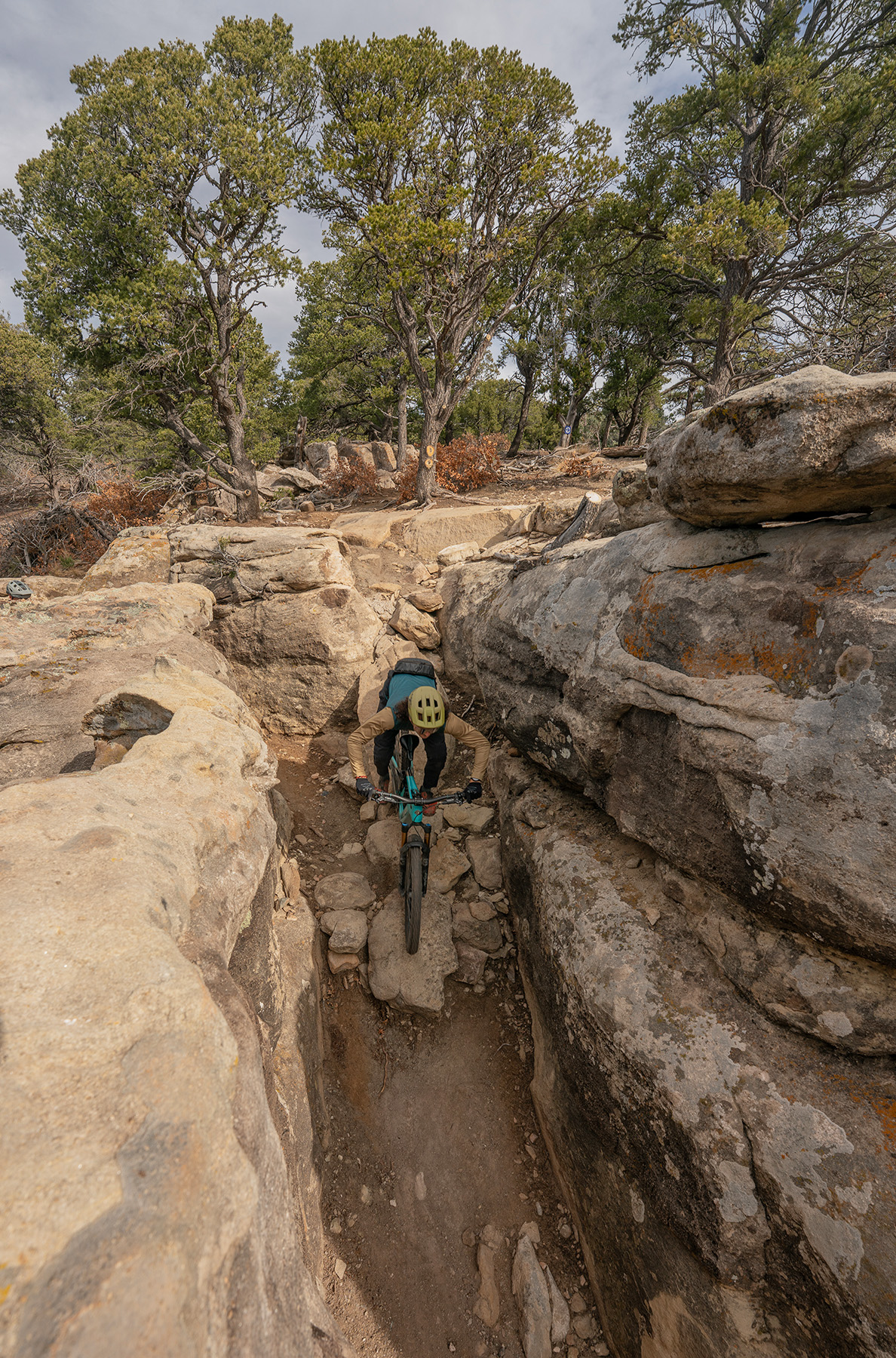
It’s been almost exactly four years since Yeti launched their first eMTB, the 160E. Today, the new LTe takes the place of the 160E in Yeti’s eMTB lineup. The LTe is a race-oriented eMTB with many of the same features and details as the 160E, though this new bike swaps the 160E’s Shimano EP8 drive system for Bosch’s CX motor. Let’s get into all the details on this new eMTB.
The Frame
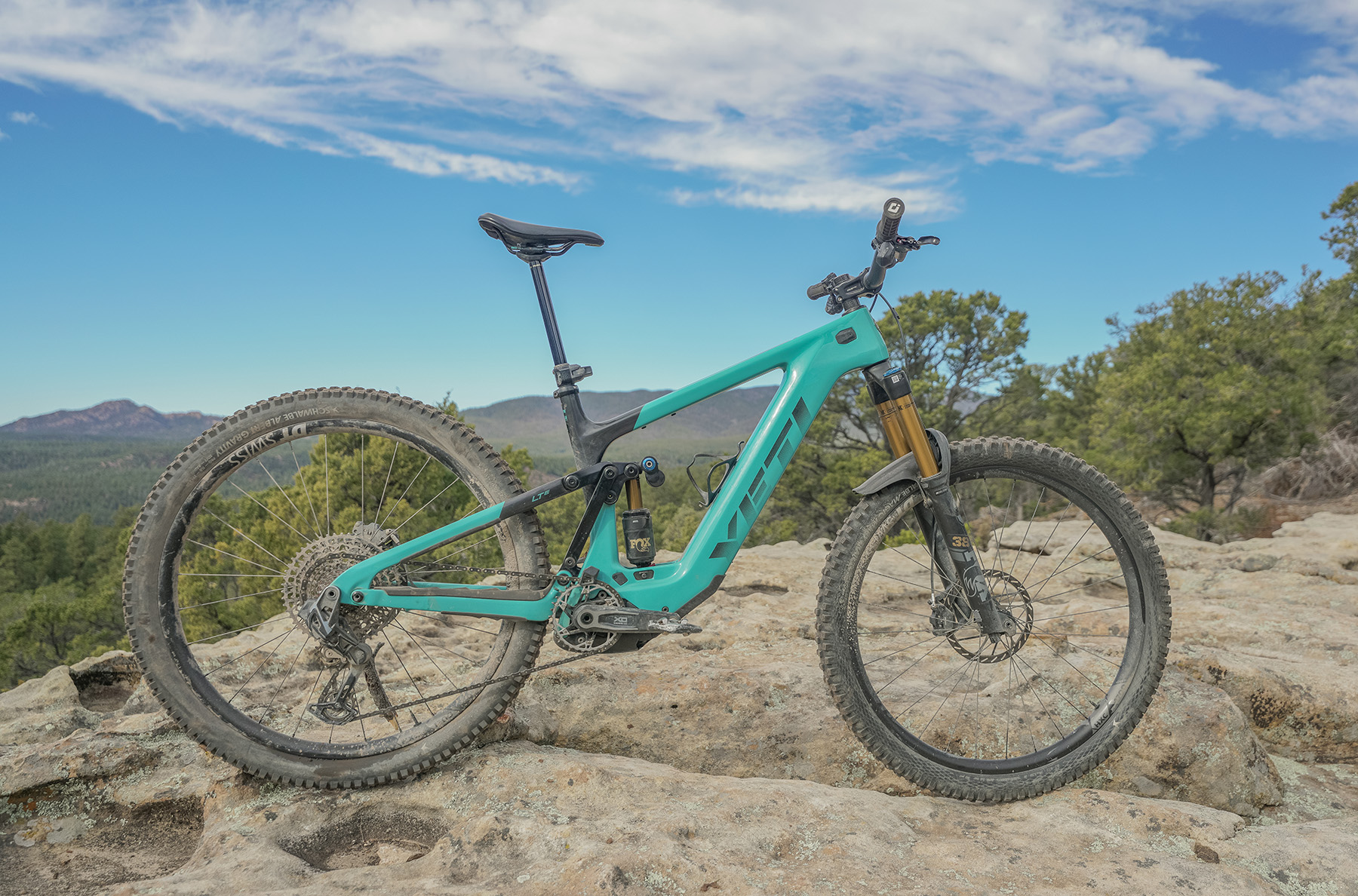
Yeti is using their “Sixfinity” design on the new LTe, which we’ve now seen on each of their eMTBs. This is a 6-bar layout driving a vertically mounted rear shock, providing 160 mm of rear suspension travel. While Yeti’s unpowered bikes (except for the ASR) feature their signature “Switch Infinity” suspension design, a motor occupies the valuable real estate where the sliding Switch Infinity assembly is typically mounted, and Yeti has designed Sixfinity specifically for use on their electrified mountain bikes. Similarly to Switch Infinity, the lower “Switch Link” on the LTe moves upward during the first half of the travel, then back downward for the second half.
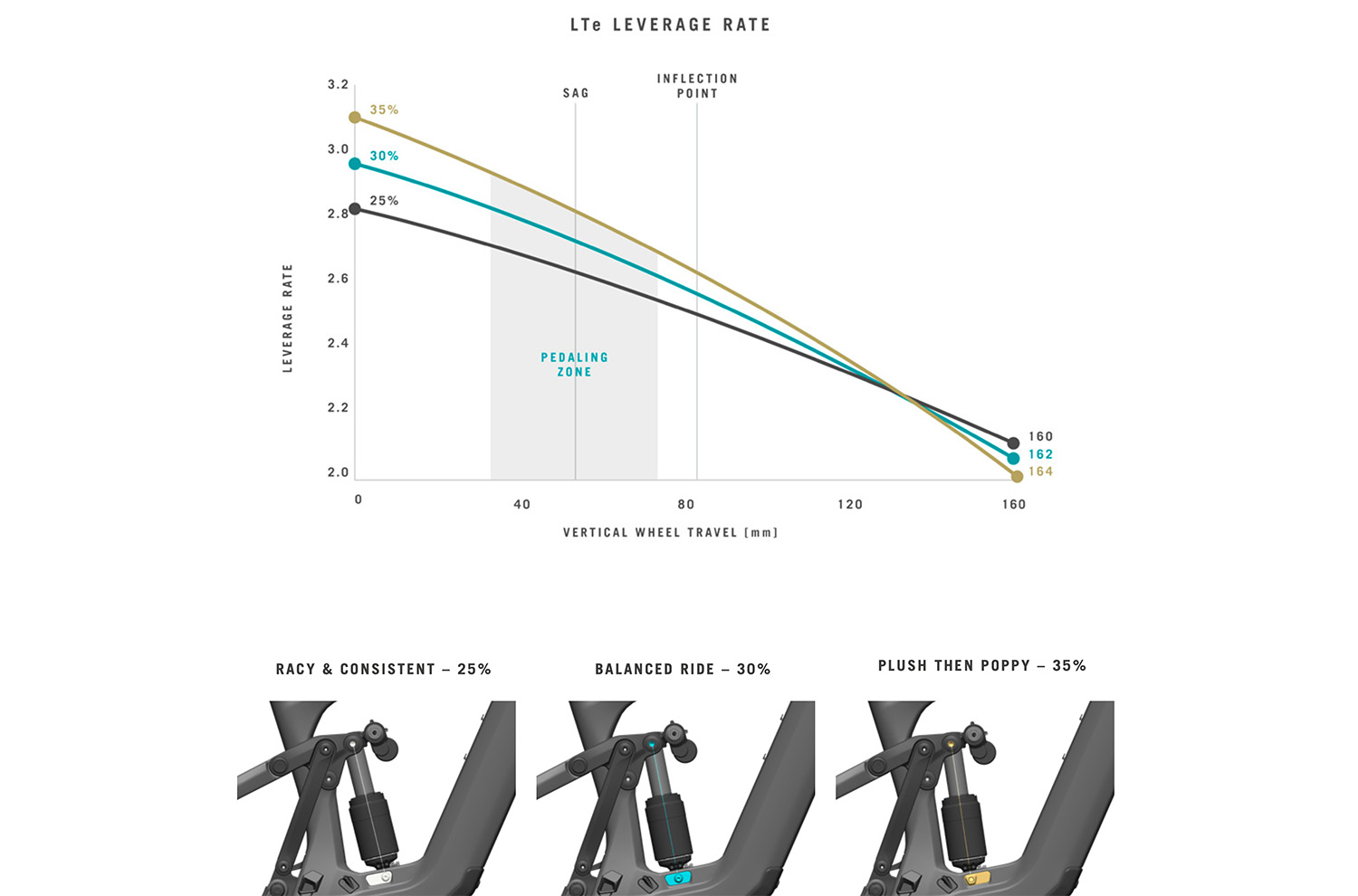
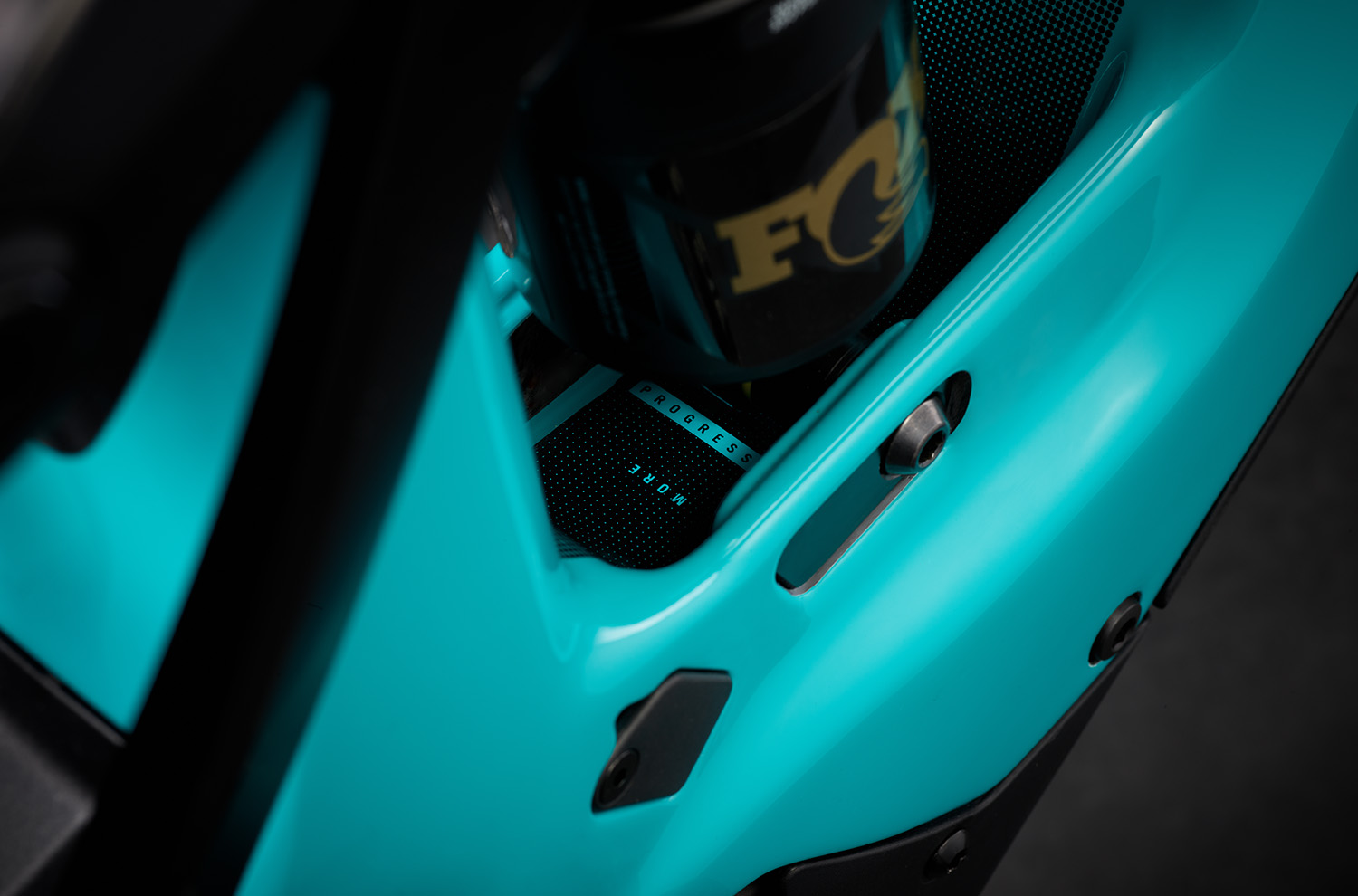
As with the 160E it replaces, Yeti designed the LTe with three suspension leverage curves, depending on the position of the flip chip above the bottom bracket, where the shock mounts. With leverage curve options of 25%, 30%, and 35%, the LTe lets riders choose how progressive they would like the suspension to feel.
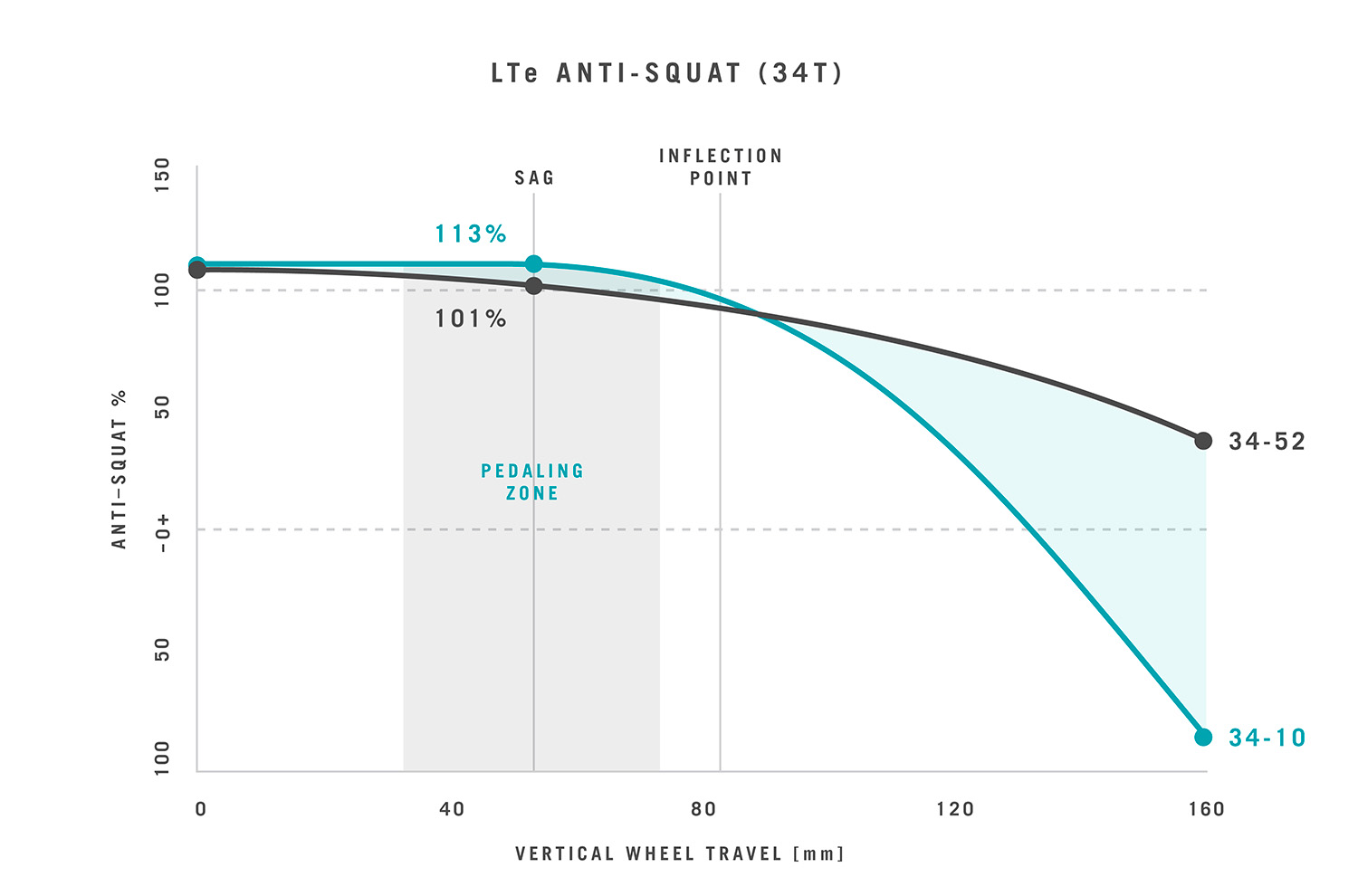
Because the LTe is a full-power eMTB, Yeti tuned the suspension to provide less anti-squat than their unpowered MTBs, as well as their light-assist MTe. Opting for a more traction-rich experience inside the “pedaling zone” around 30% of rear travel, the LTe has about 101% anti-squat when using a 34-tooth front chainring and in the largest, 52-tooth cog in the rear. Then, as the Switch Link moves down for the deepest portion of the LTe’s travel, the anti-squat greatly reduces to mitigate things that negatively affect downhill performance, such as pedal kickback.
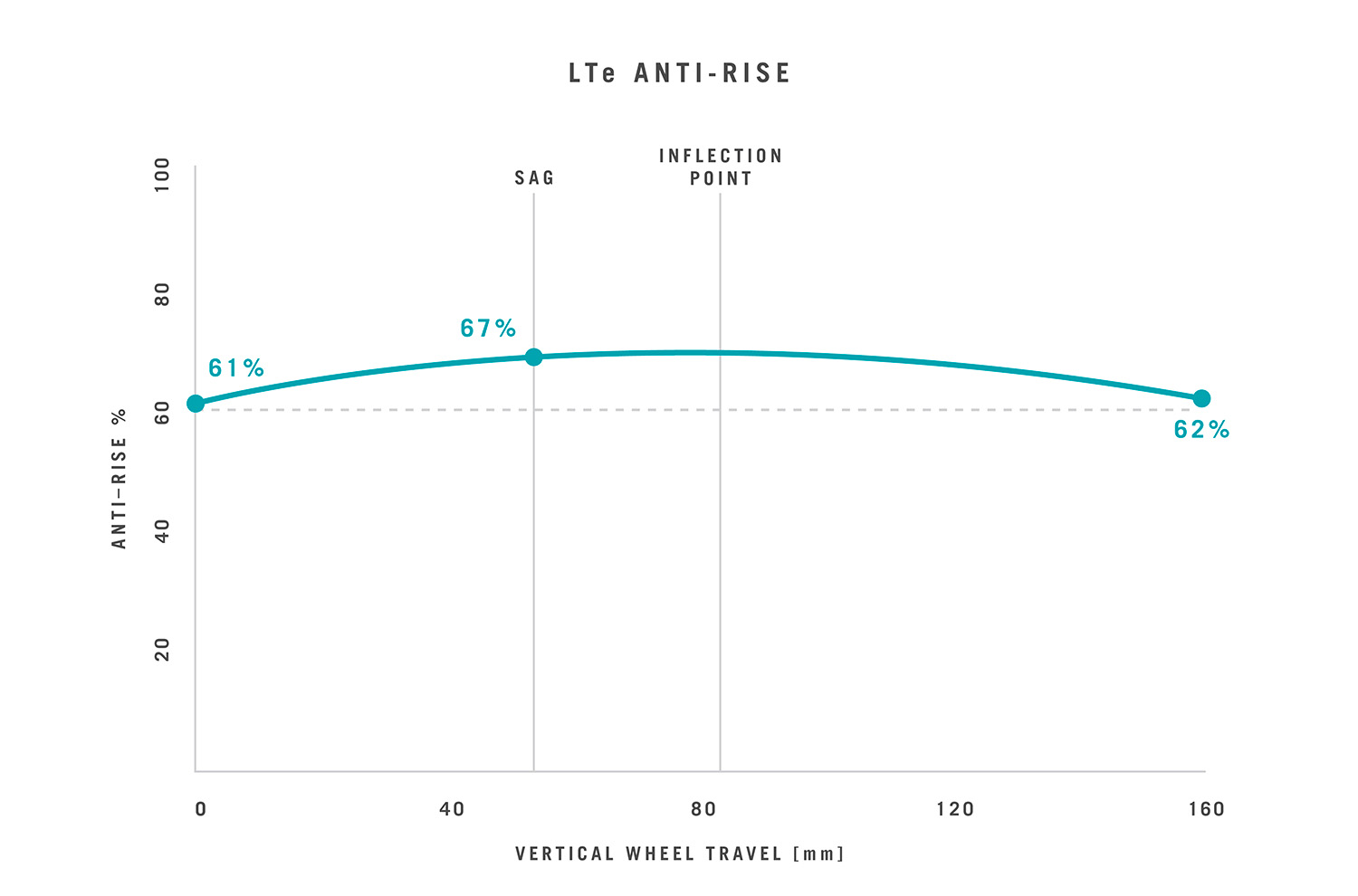
Consistency and predictability are Yeti’s stated aims for the LTe’s anti-rise. With a very flat and linear anti-rise curve, Yeti designed the LTe’s suspension to feel similar throughout its entire travel under braking forces, with the goal of preserving the LTe’s geometry while still providing adequate traction.
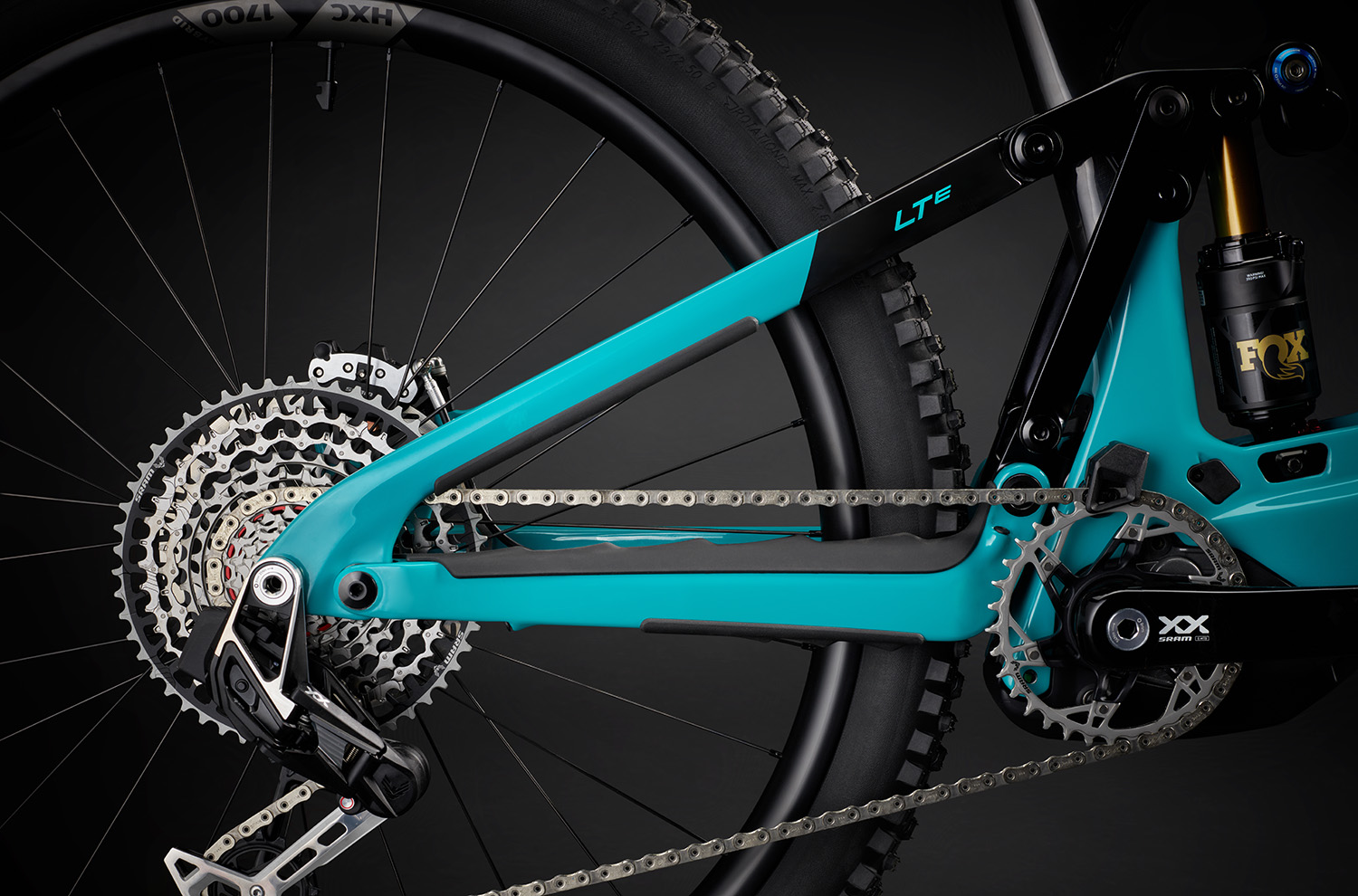
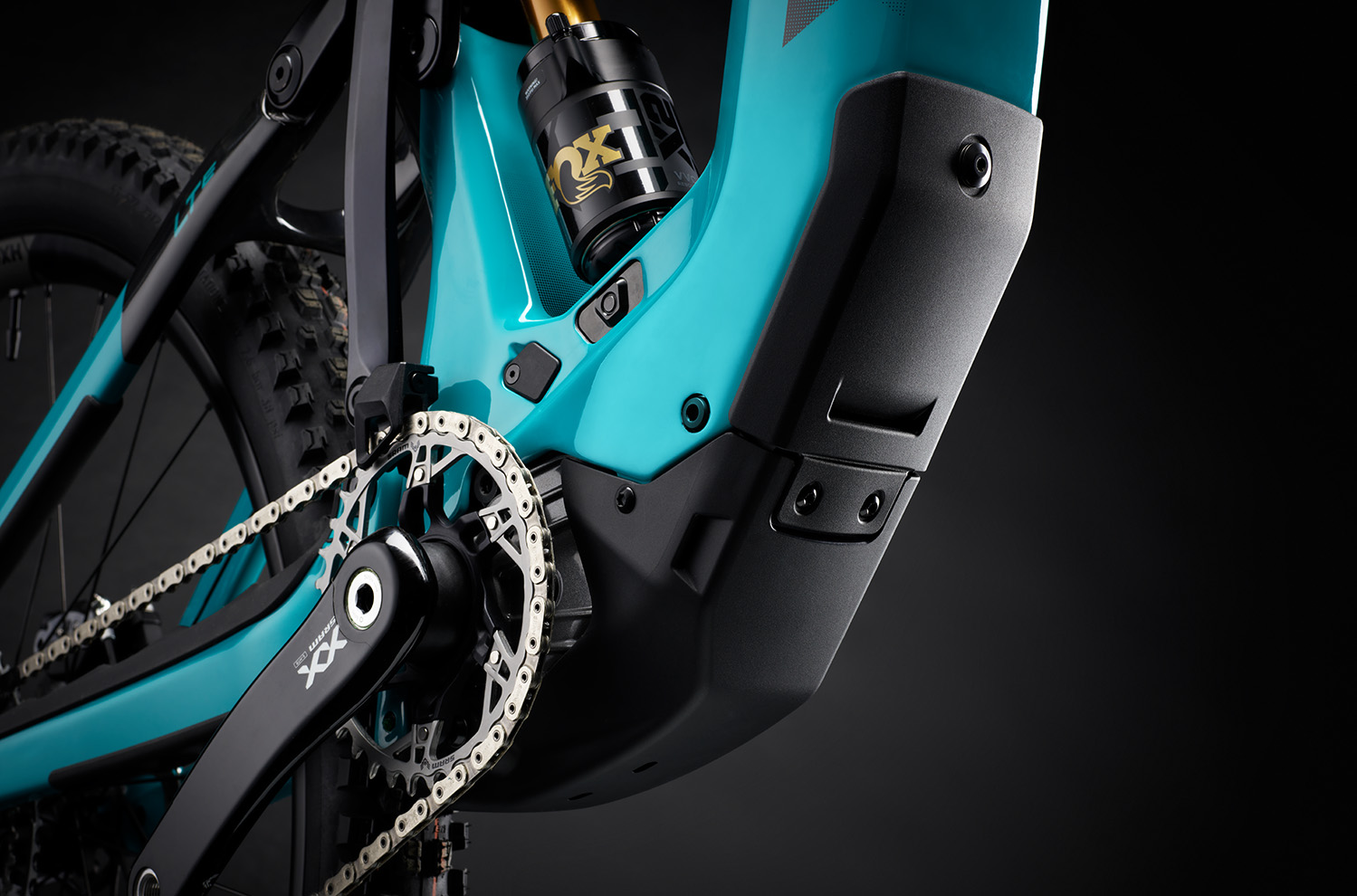
The LTe is only available in their high-modulus carbon fiber, which they refer to as “Turq.” This carbon is reinforced in key areas with a material called Vectran, a high-performance multifilament like Kevlar, to offer more impact resistance, stiffness, and overall strength. The LTe also has an integrated downtube guard that doubles as an access door for the battery, allowing the battery to be accessed and removed without the need to also remove the motor. This removable guard also allows for access to internal cables.
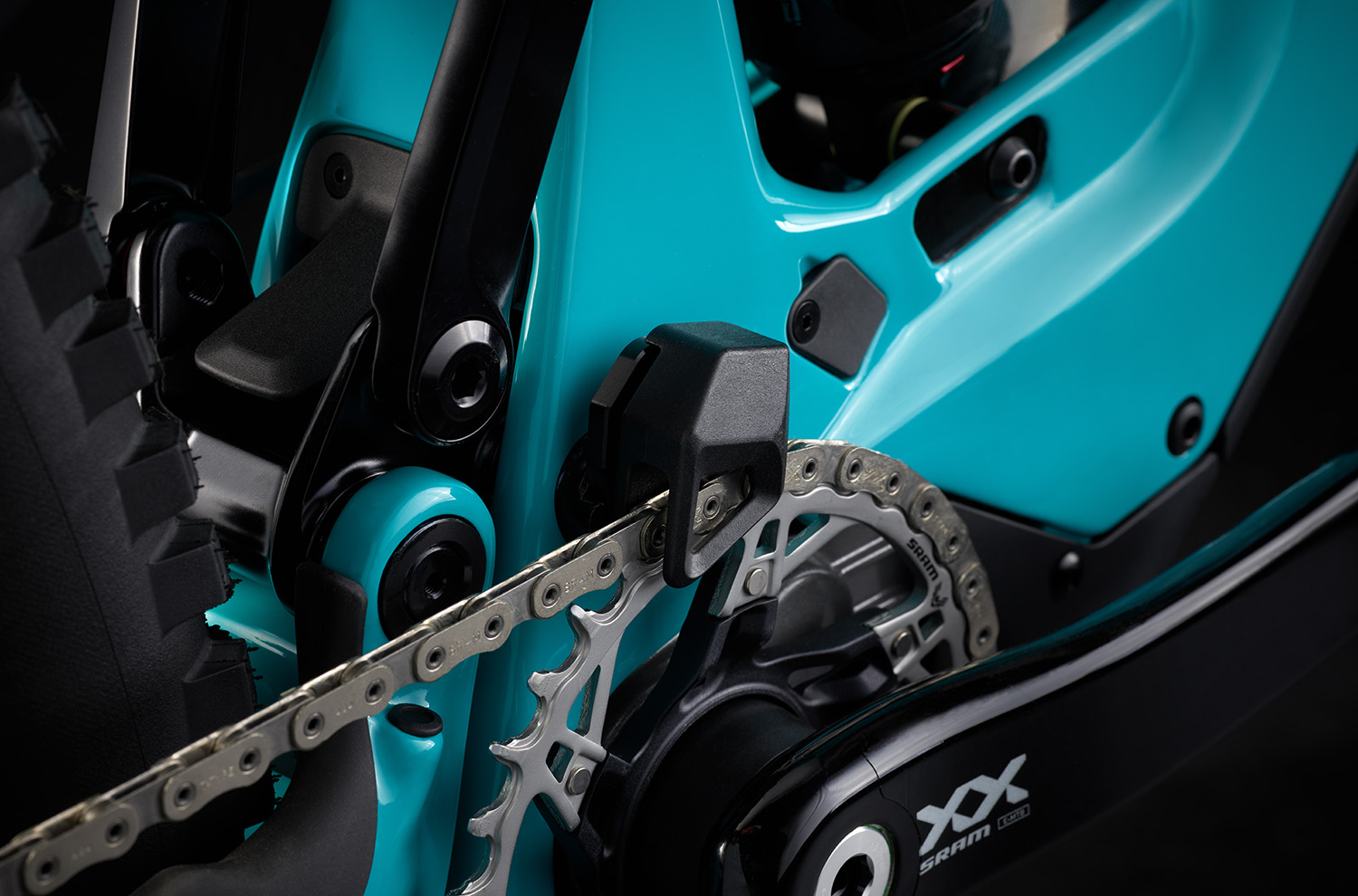
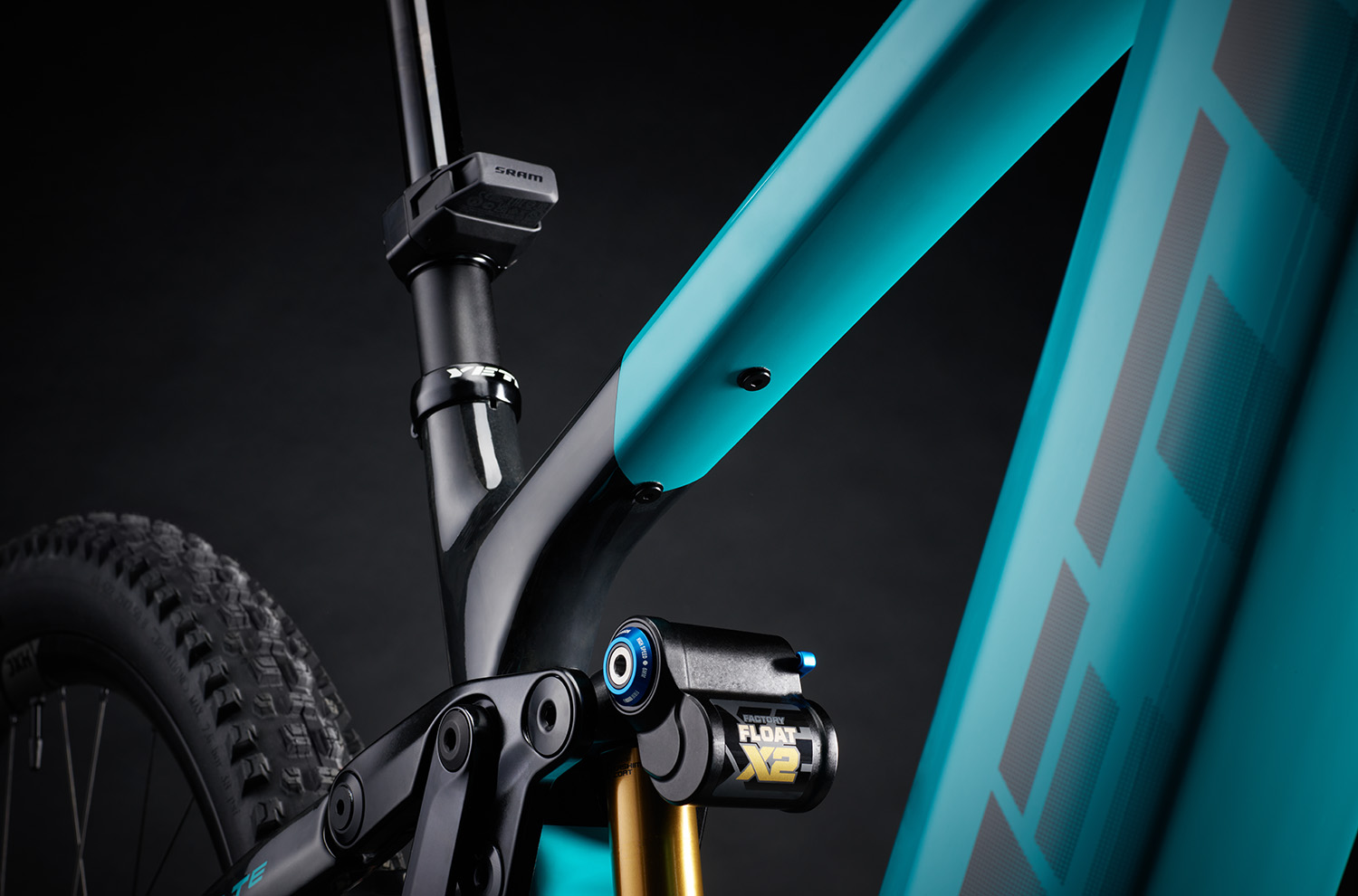
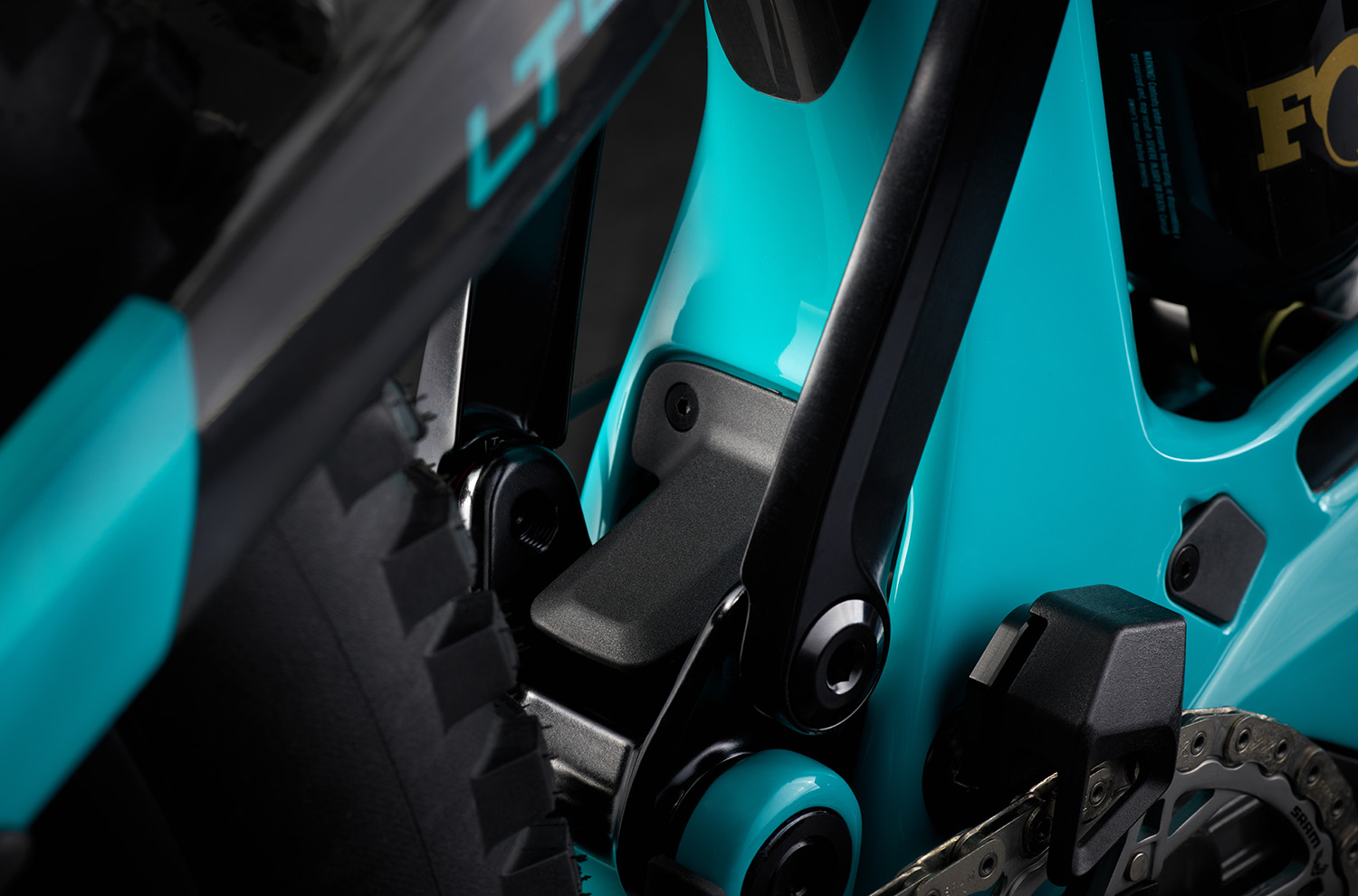
There’s also a fender above the lower Switch Link that keeps debris out of this area with lots of moving parts. Additionally, an integrated chainguide is featured, very similar to the one we first saw on the ASR, then saw on the MTe. Finally, the LTe features a pair of bosses under the top tube, designed as an accessory mount to accommodate things like tools or a tube.
Drive System
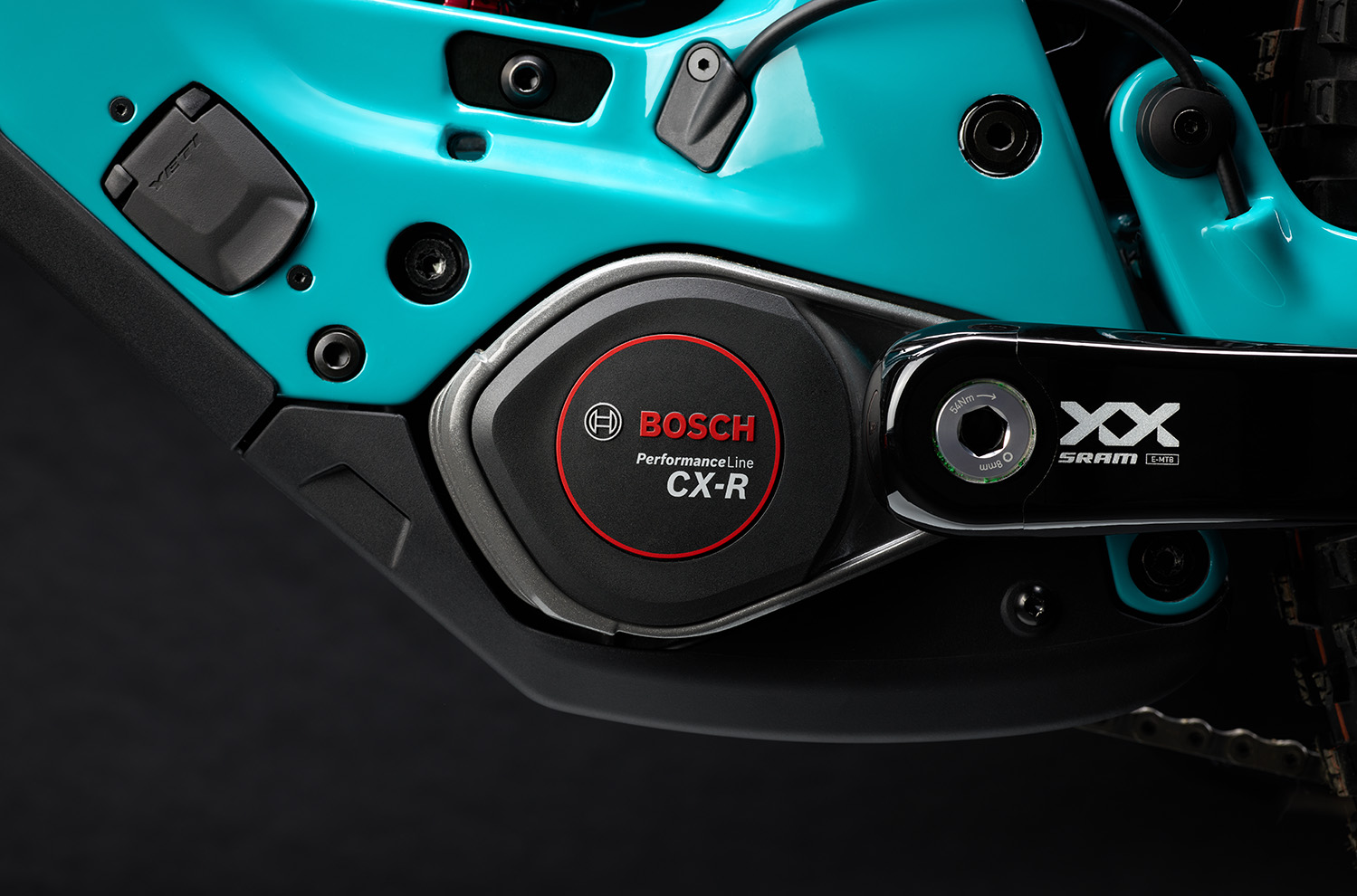
While the 160E featured Shimano’s EP8 motor, the new LTe features Bosch’s Gen 5 Performance Line CX and CX Race Edition drive systems. With the latest June 2025 software update, Bosch’s CX motor now provides up to 750 watts of power and 100 nm of torque with up to 400% assist, a notable increase from EP801’s 600 watts and 85 nm.
The C2 & T3 build kits of the LTe feature the standard CX motor, while the T4 edition uses the CX Race Edition motor. The Race motor offers the same watt and torque numbers as standard CX, but the Race motor uses lighter components and also adds on a “Race” assist level, which Bosch claims allows you to accelerate faster and also reach top speed faster. Reaching top speed faster may seem like a given, since it accelerates faster, but the programming on non-Race motors also tapers power as it reaches the top assist speed (20 mph), whereas the Race motor pulls right up to the limit with no tapering. Race mode also has Extended Boost, which is where the motor continues to supply power after the rider stops pedaling (also commonly called over-run). Non-Race-motor-equipped bikes also have Extended Boost, but Race mode lengthens the distance the power stays on — Bosch is very clear in their description of Race mode in that it requires experience and skill to manage.
All build kits of the LTe feature Bosch’s 800 Wh battery, an upgrade from the 160E’s 630 Wh battery. If you wish, you can also swap the stock 800 Wh battery for a smaller 600 WH one for a weight savings of around 900 grams, or 2 pounds. Additionally, the LTe is compatible with Bosch’s Powermore 250 range extender, bringing the total available watt hours up to 1050.
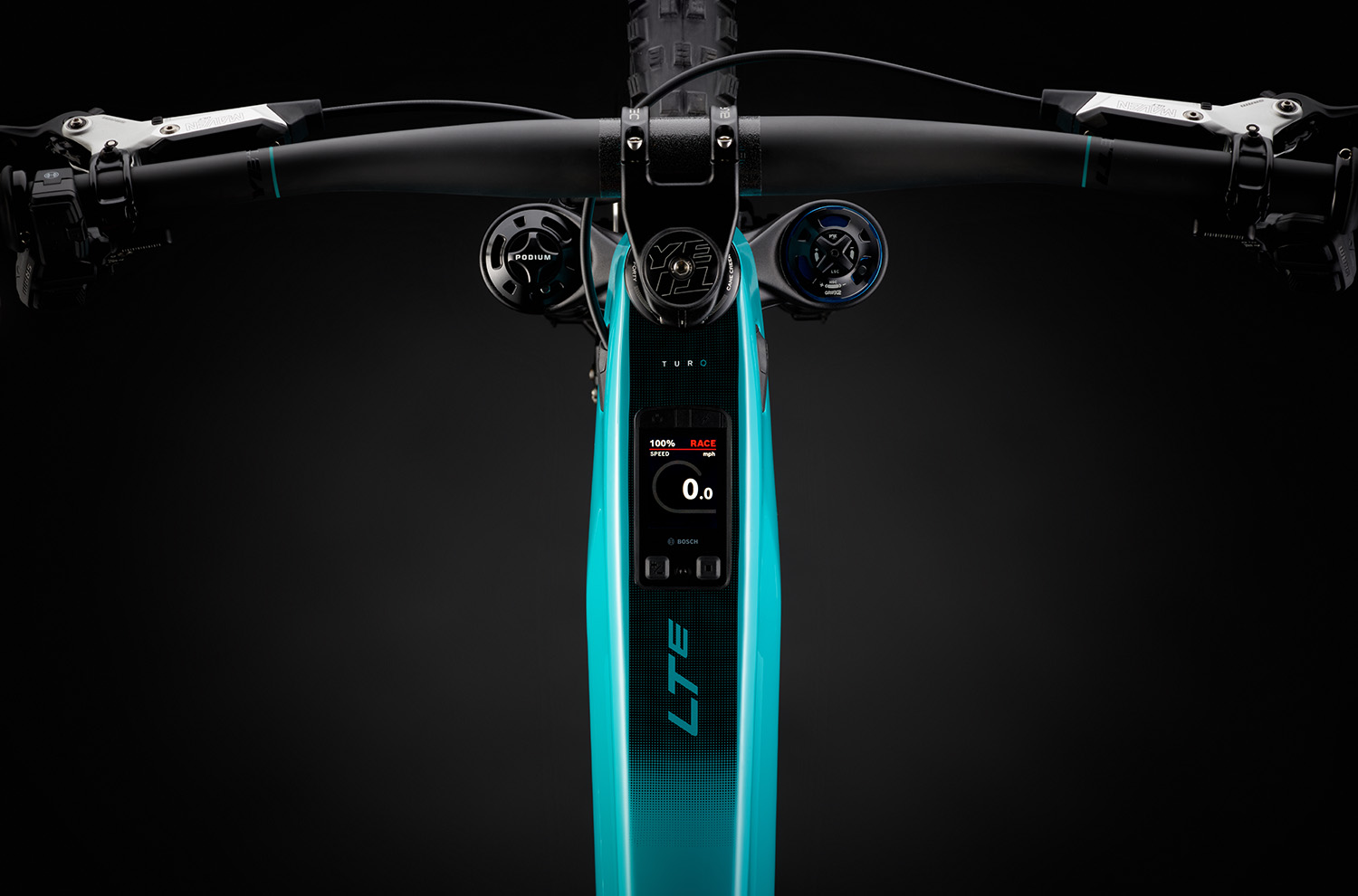
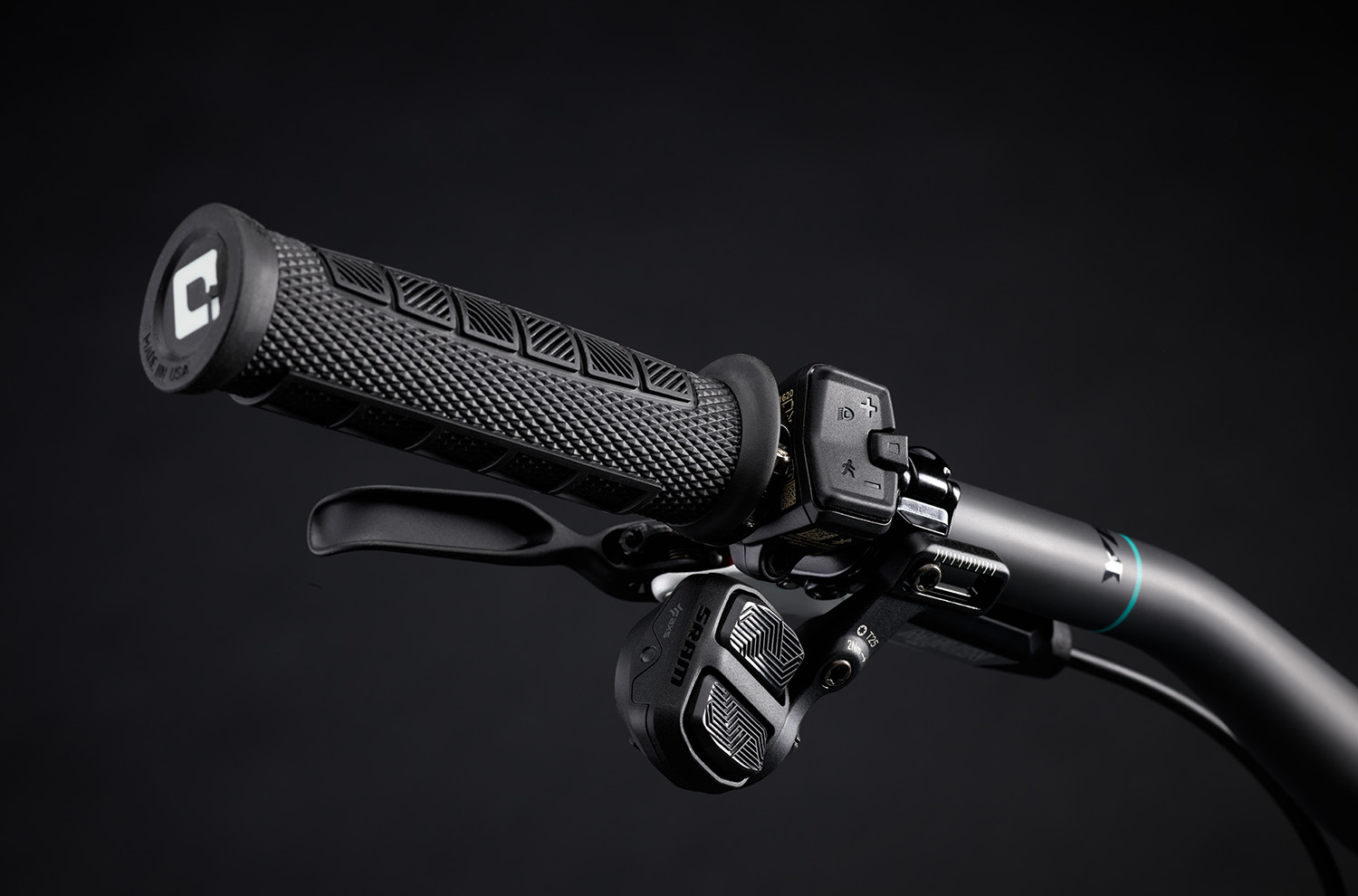
Yeti’s new LTe also features Bosch’s new integrated Kiox 400C top tube display. The Kioc 400C (C standing for “color”) display has several different pages that give loads of information. Not only is the battery percentage number displayed at the top of every page, but this new display also gives you information like rider watts, cadence, ride distance, ride time, max speed, and more. It also features a navigation page that, when paired with the Bosch eBike Flow app, can display real-time, turn-by-turn navigation. Additionally, this system features a USB-C charging port, capable of powering up smaller devices such as a phone.
Fit & Geometry
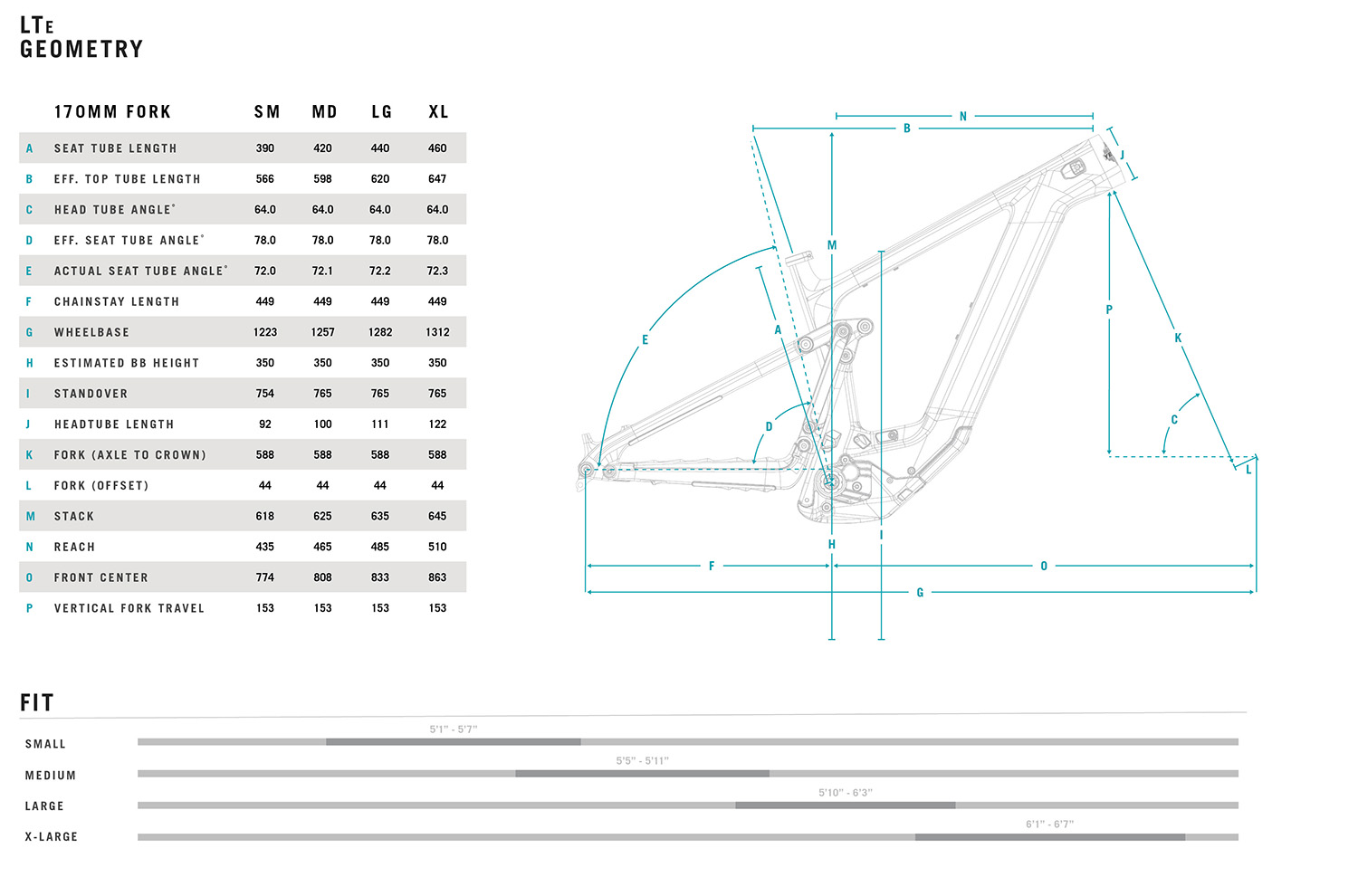
The LTe is available in four sizes, Small through Extra Large, recommended for riders ranging from 5’1” to 6’7”. Looking at the geometry chart, the LTe has modern, Enduro-focused numbers that are a bit different than the outgoing 160E. Yeti increased the reach number by 5 mm in each size, sitting at 485 mm for the Large LTe. They also increased the stack height by around 10 mm for each size, increased the chainstay length by 3 mm to 449 mm for each size, and slackened the head tube angle by 0.5° to 64°.
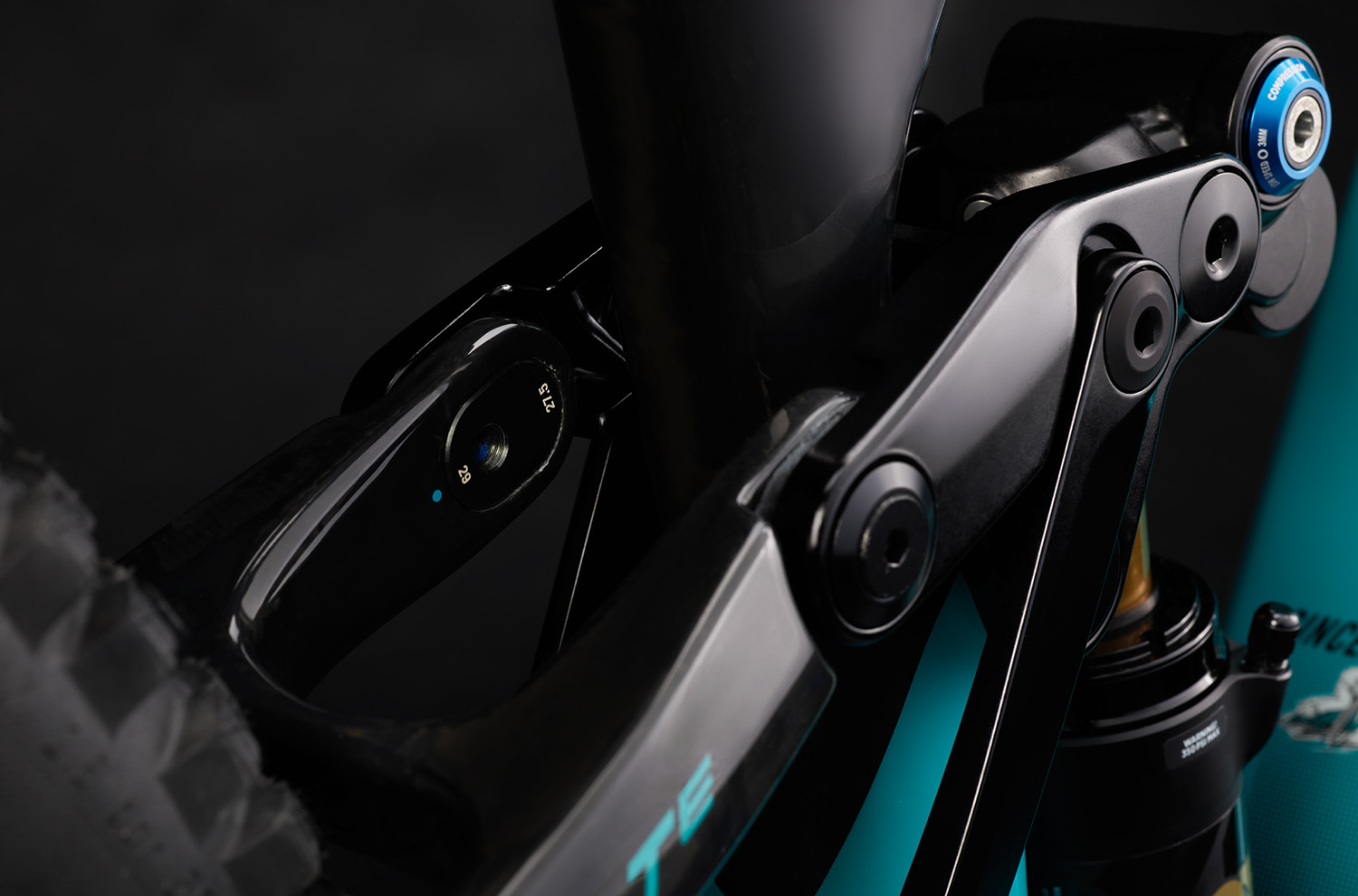
It’s also worth mentioning that while the LTe is only available to purchase as a full 29er, it can be run as a mixed-wheel setup, too. There are a pair of flip chips that Yeti prefers to call “wheel chips,” where the seat stays meet the upper rocker link. Switching the orientation of these chips allows you to run a 27.5” wheel out back without changing the geometry of the LTe apart from a small change in chainstay length.
The full geometry for the LTe is below:
The Builds
Yeti is offering three build kits for the LTe. All of the builds get SRAM Maven brakes and Transmission shifting, with the base C2 build featuring SRAM’s cable-actuated Transmission 90 drivetrain, and the other two featuring electronic Transmission AXS derailleurs.
Yeti also specs Fox suspension on each build kit. There’s a Fox 38 fork up front on the C2 and T3 builds, and Fox’s inverted Podium aboard the T4. The C2 build kit uses a Fox Float X rear shock, and the T3 and T4 build kits use the burlier Fox Float X2 rear shock. Additionally, all build kits get RockShox’s new Reverb AXS B1 dropper post, in pretty long drop lengths relative to each size, too.
The full build details are as follows:
- Drivetrain: SRAM Eagle 90 Transmission
- Brakes: SRAM Maven Bronze (200 mm Centerline rotors)
- Fork: Fox 38 Performance (170 mm)
- Shock: Fox Float X Performance
- Wheels: DT Swiss H1900 30 mm
- Dropper post: RockShox Reverb AXS B1 (SM:150 mm, MD:175 mm, LG/XL:200 mm)
- Drivetrain: SRAM X0 Eagle AXS Transmission
- Brakes: SRAM Maven Silver (200 mm HS2 rotors)
- Fork: Fox 38 Factory Grip X2 (170 mm)
- Shock: Fox Float X2 Factory
- Wheels: DT Swiss HXC1700 Carbon 30 mm
- Dropper post: RockShox Reverb AXS B1 (SM:150 mm, MD:175 mm, LG/XL:200 mm)
- Drivetrain: SRAM XX Eagle AXS Transmission
- Brakes: SRAM Maven Ultimate (200 mm HS2 rotors)
- Fork: Fox Podium Factory 38 (170 mm)
- Shock: Fox Float X2 Factory
- Wheels: DT Swiss HXC1700 Carbon 30 mm
- Dropper post: RockShox Reverb AXS B1 (SM:150 mm, MD:175 mm, LG/XL:200 mm)
Full Review
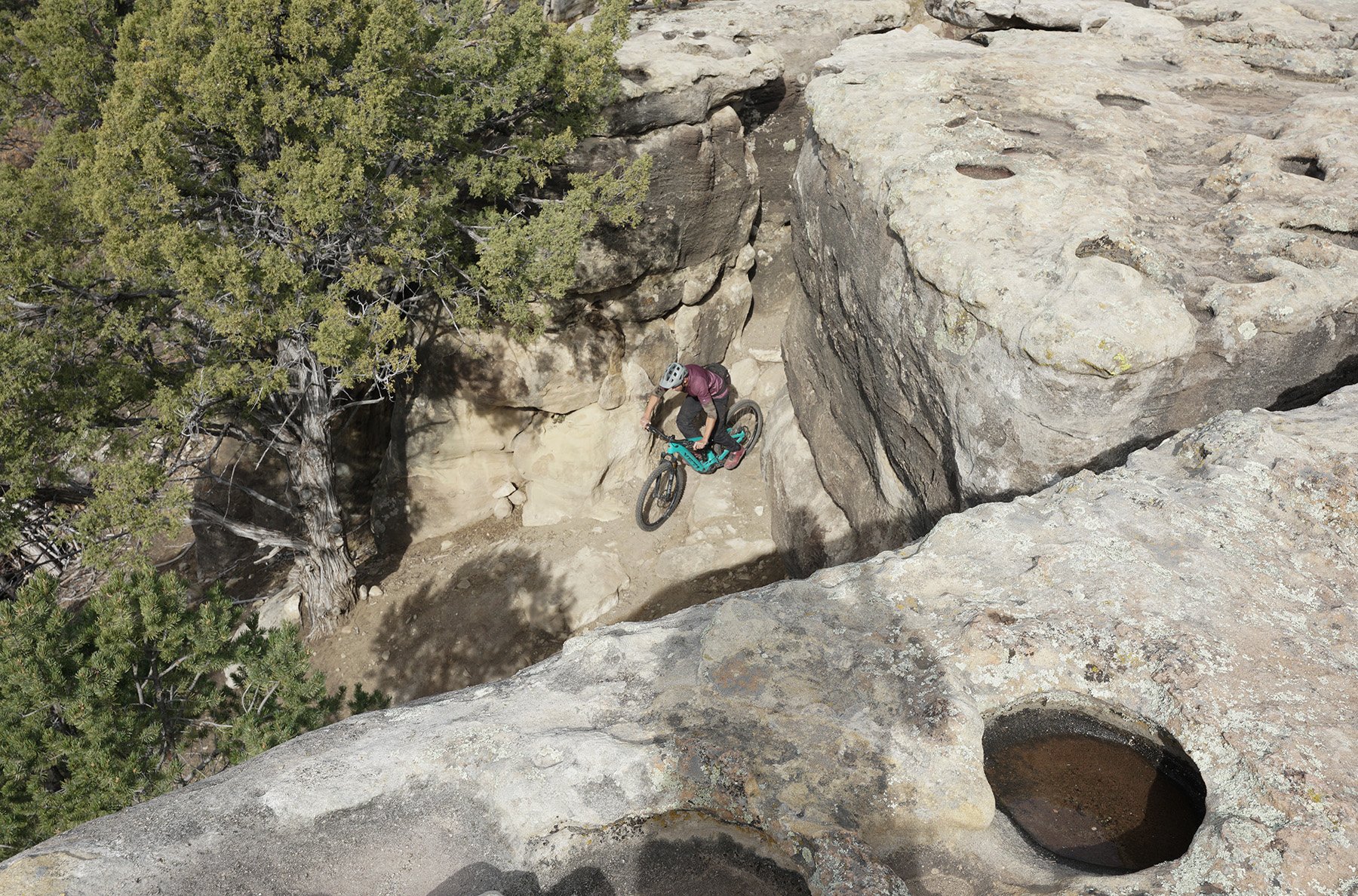
Dylan Wood (5’10.5”, 165 lbs / 179 cm, 74.58 kg): I spent a lot of time on the MTe, Yeti’s light-assist, mid-travel eMTB, earlier this spring and summer. My first impressions of a Yeti eMTB with their six-bar “Sixfinity” suspension design were very positive, with the MTe’s suspension providing loads of traction. So, when I caught wind of the LTe, a longer-travel, full-power, more race-inspired eMTB from Yeti, I was quite curious how it would perform, given the MTe’s prowess. After four months and almost 500 miles aboard the LTe, Simon and I are ready to share our thoughts.
Fit & Sizing
Dylan: With pretty similar geometry to the MTe, I found the LTe’s fit to be quite familiar and comfortable, and generally in line with a lot of modern longer-travel bikes. Yeti’s suggested sizing does run a bit bigger than most other brands, and they suggest the Large LTe for riders 5’10”-6’3” (178 -191 cm). Despite being at the shorter end of this spectrum, I found the Large LTe to fit well and be a good match for the fast trails I tend to ride most. I have gotten along best with bikes that have a reach number around 470-480 mm, and the Large LTe’s reach number of 485 mm isn’t far outside of that.
The LTe’s relatively long 449 mm chainstay length results in a fore-aft weight distribution that naturally loads the front wheel more than I’m used to. And while I like to run a low bar height on most other bikes, I found myself preferring the LTe with one 10 mm spacer between the stem and the top cap. Here, I set myself up with a descending body position that felt like it optimized the front and rear wheel traction of the LTe the best. After cutting the bars down to 760 mm, configuring the cockpit, and setting my seat height a bit higher than usual due to the short 160 mm cranks on the LTe, I was able to get a comfortable and functional fit out of the Large LTe.
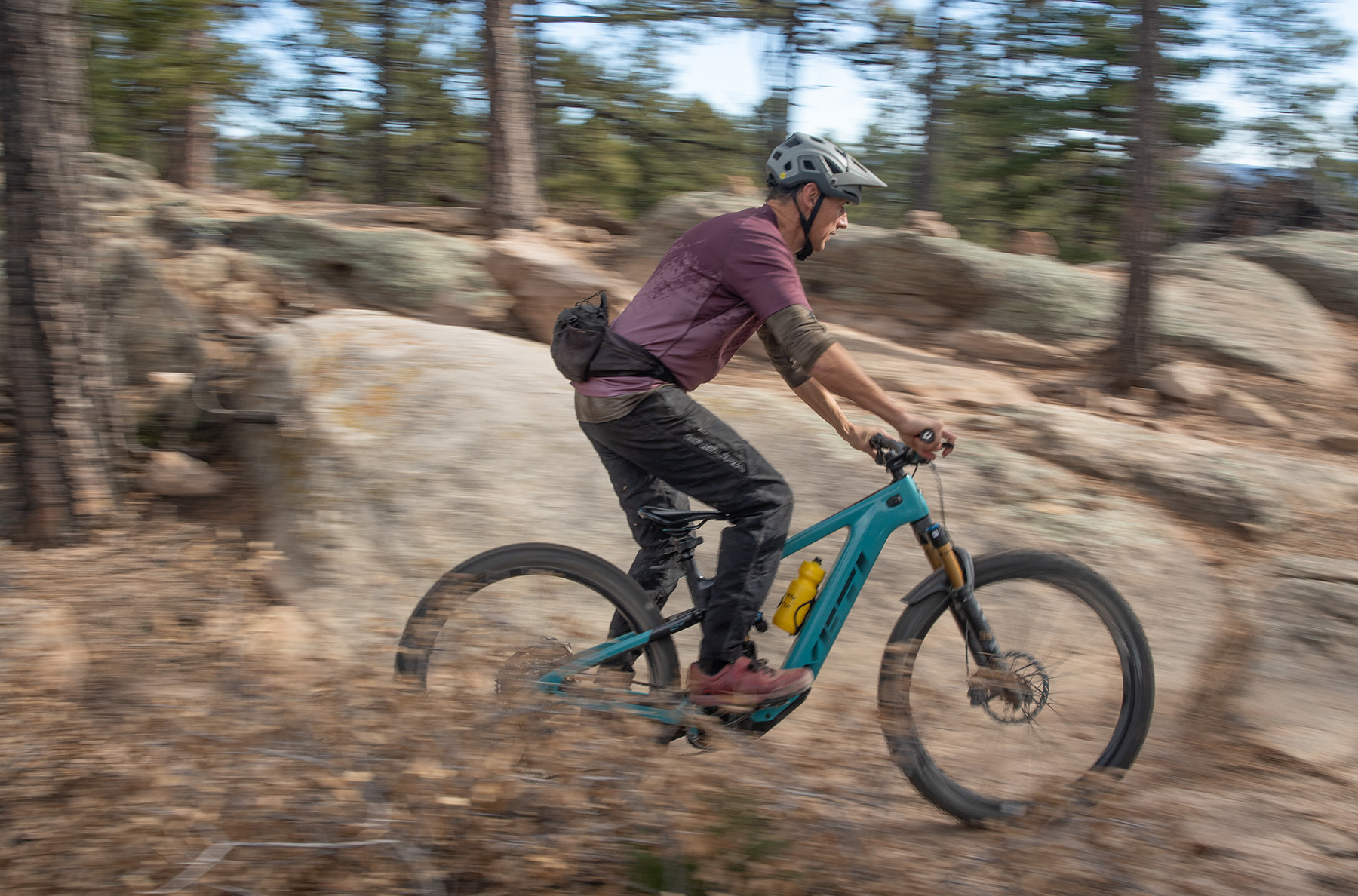
Simon Stewart (6′, 170 lbs / 183 cm, 77.1 kg): Landing right in the middle of Yeti’s suggested sizing for the size Large LTe, I expected it to be a good fit. However, when I got on the LTe after I managed to pry it away from Dylan, my first reaction was that it felt cramped in the seated riding position. A closer look revealed Dylan had the saddle positioned nearly all the way forward on the rails, which, when combined with the decently steep 78º effective seat tube angle, had a substantial shortening effect on the 485 mm reach.
After moving the saddle back to a more centered position, the cramped feeling went away, but the LTe doesn’t feel particularly roomy either — another case of fit being influenced by all of the geometry numbers, not just the reach. Dylan moved the saddle forward to experiment with his body position when climbing ridiculously steep, fall-line, moto trails in Crested Butte, but I was happier with the saddle in a more centered position. Overall, I think the LTe fits more on the compact side than the geometry numbers suggest.
Even though Dylan found himself liking a higher-than-average bar height on the LTe and had more spacers under the stem than he usually does, I still wanted the bars a bit higher. Yeti calls out the LTe as having a “higher stack height.” Maybe that’s true compared to their other bikes, but I wouldn’t call 635 mm of stack height for a size Large high at all. Swapping the 10 mm spacer Dylan had on top of the stem to under the stem helped, but had I spent more time on the LTe, I would’ve swapped in a higher-rise handlebar. That said, I found the seated riding position to be quite comfortable, but I prefer a higher bar height when standing with the seat dropped while descending.
I have been spending time on the Cannondale Moterra, which has a similar reach (484 mm) and longer chainstays (455 mm), so I was already accustomed to a more forward weight distribution and didn’t need any time to get used to the LTe’s fore-aft balance. In fact, the Yeti’s chassis balance became one of the things I really liked about it — more on that below.
Climbing
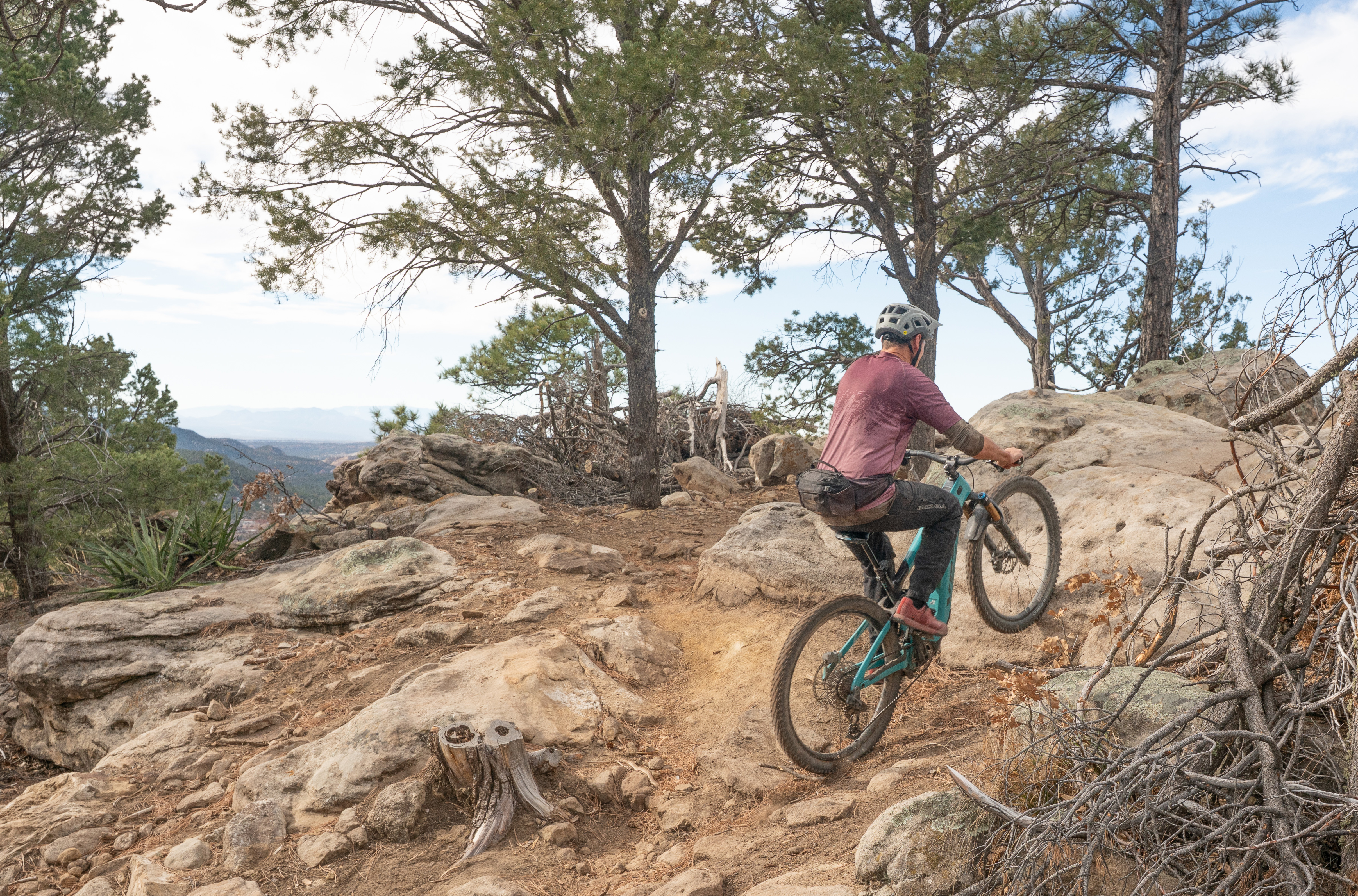
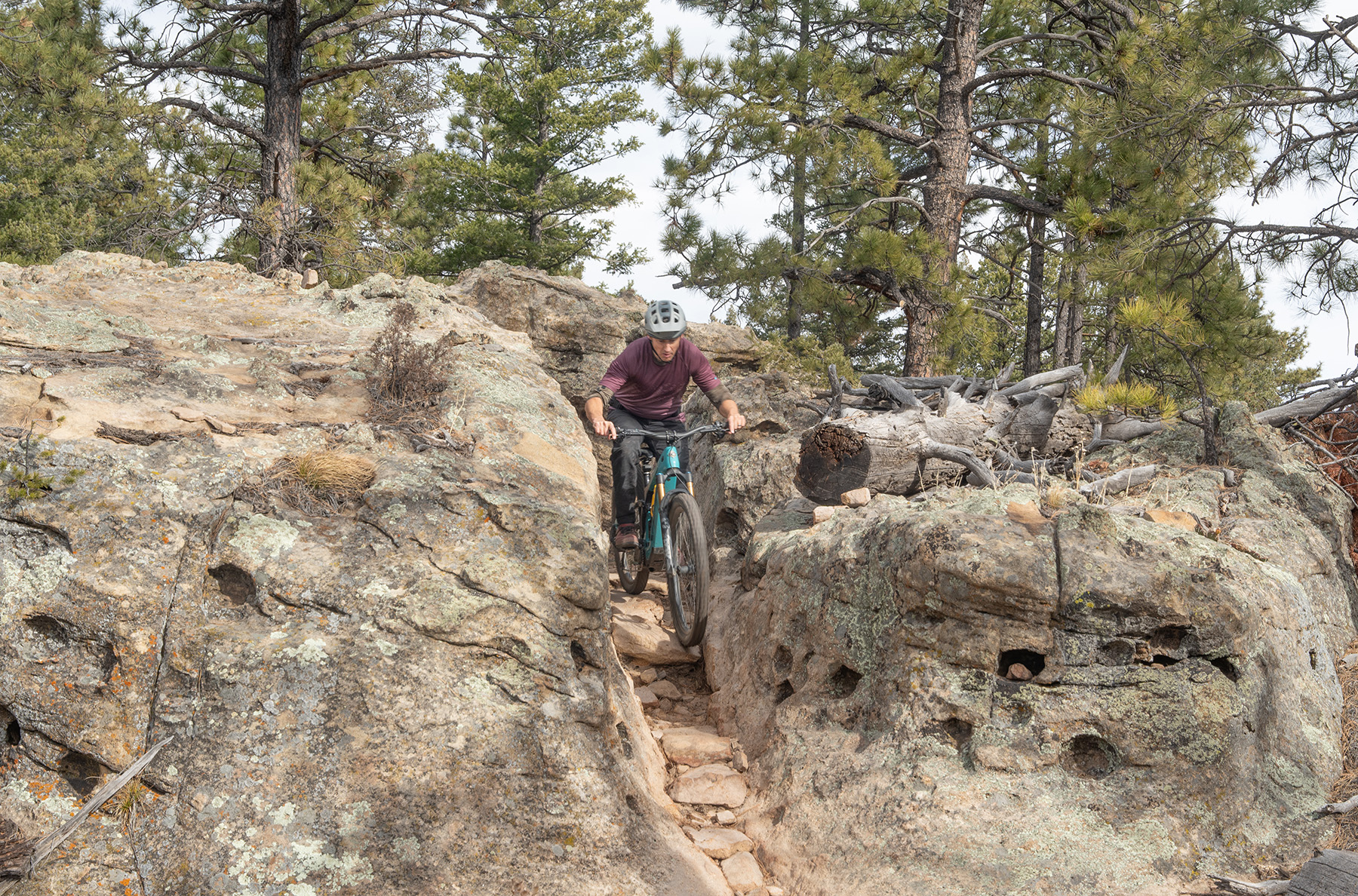
Dylan: With active, traction-rich suspension and a powerful Bosch Gen 5 CX motor, the LTe is incredibly capable at climbing up steep, technical trails or making quick work of flat and windy approaches.
The LTe’s plush and supple suspension feel is first apparent when climbing up rocky, rooty trails. The rear suspension is very active on the way up, keeping the rear wheel engaged with the trail and resulting in excellent traction. The LTe provides a very comfortable climbing experience, with the suspension taking care of much of the terrain under the bike, allowing the rider to stay seated most of the time. Plus, when riding along roads or paved paths to access trails, the climb switch on the Fox Float X2 rear shock does a good job of firming up the suspension feel and preventing the bike from feeling wallowy when the terrain isn’t as rough.
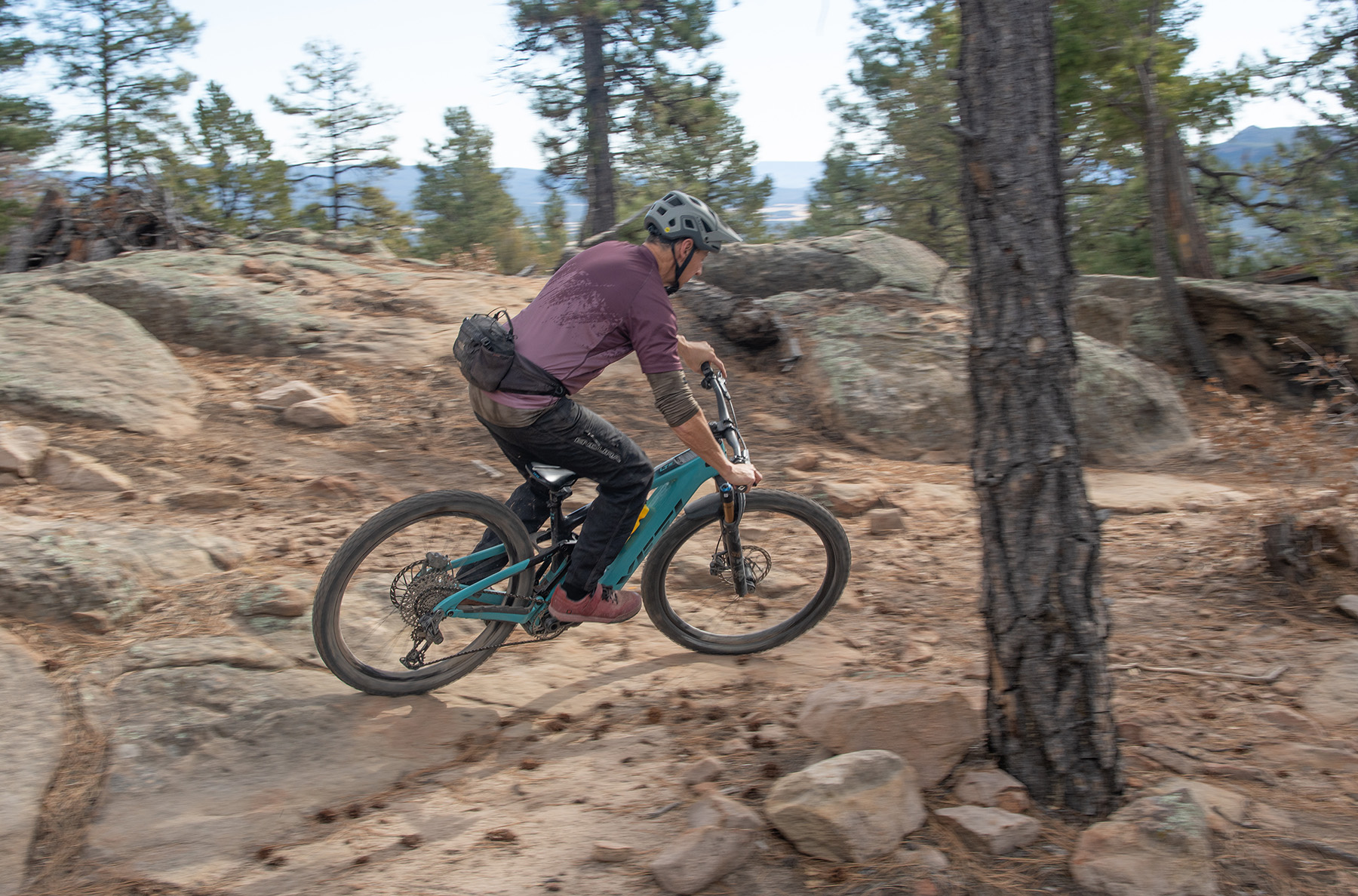
Without a motor, the LTe’s quite active suspension would probably feel fairly sluggish. But add the powerful Bosch CX motor in, and the LTe feels very quick on the way up. With the latest Gen 5 update providing up to 100 nm of torque and 750 watts of power, the LTe is about as quick and powerful as Class 1 eMTBs get. With plenty of boost on tap and the rear wheel staying in contact with the ground effectively, the LTe is very good at keeping its speed on the way up.
Additionally, these traits also make the LTe a very good technical climber. By keeping good momentum on the way up, this bike is only limited by your own technical climbing proficiency and balance when tackling steep, tricky sections of trail. That being said, the most powerful climbing modes can be a bit hard to manage on the steepest of trails, and I did find reducing the power here very helpful for keeping the front end of the bike down and the rear wheel from spinning out.
Simon: My time on the LTe was a good bit shorter than Dylan’s, and unfortunately, I wasn’t able to subject it to my favorite benchmark climbing test. Like Dylan, I found the LTe to be a very good technical climber, and I think it would have done really well. Unlike Dylan, I prefer to attack the gnarly climbs in the highest power mode, and I found the LTe’s weight distribution helps the front wheel stay weighted even under the substantial power of the motor.
Compared to many other full-power eMTBs, which can be a bit of a wrestling match when climbing super steep terrain, the LTe is one of the easier ones to manage. When combined with the controlled power delivery of the available 750 watts and the aforementioned weight balance, it encourages the rider to seek out very technically challenging, high-consequence climbs.
Descending
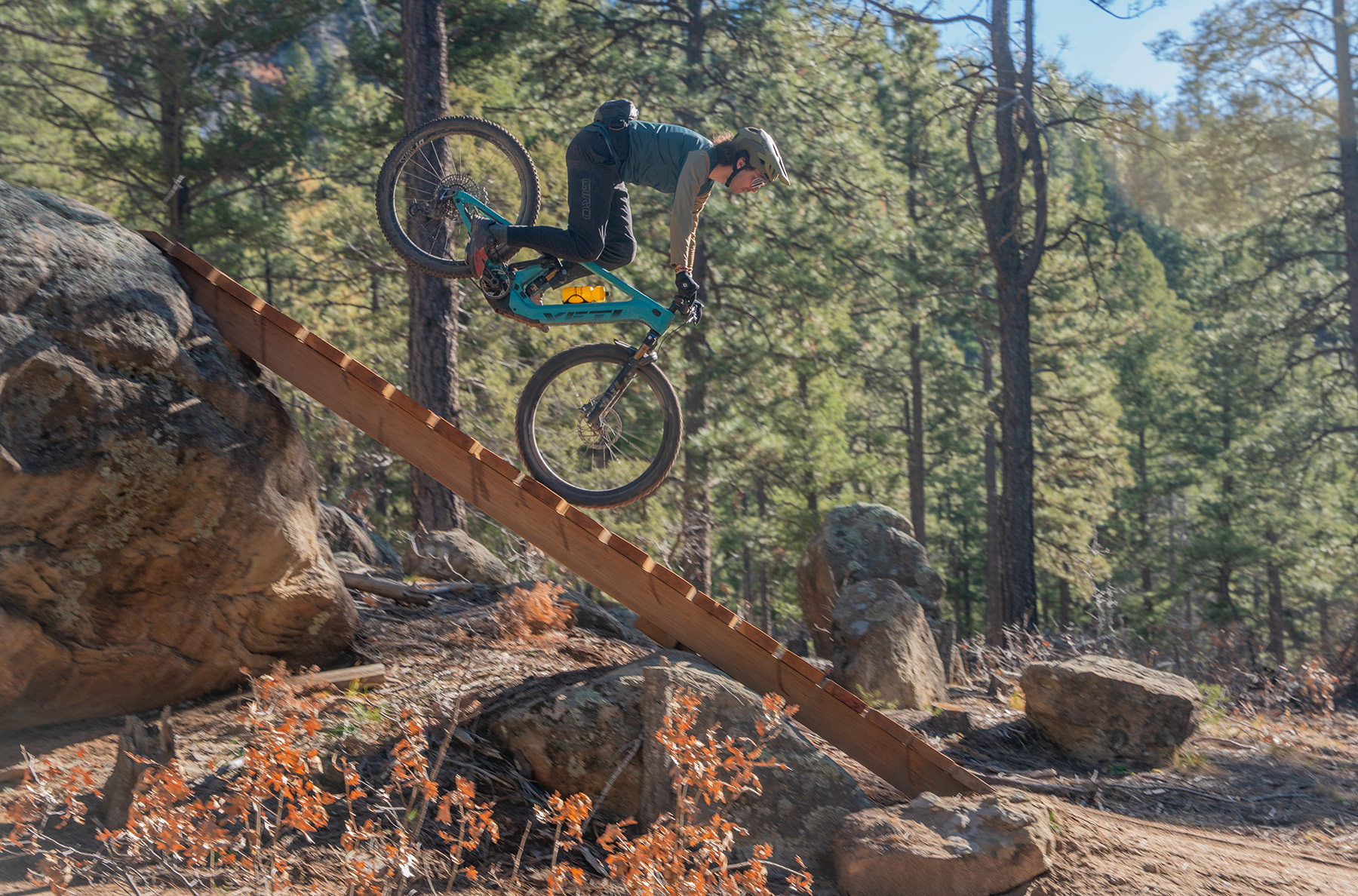
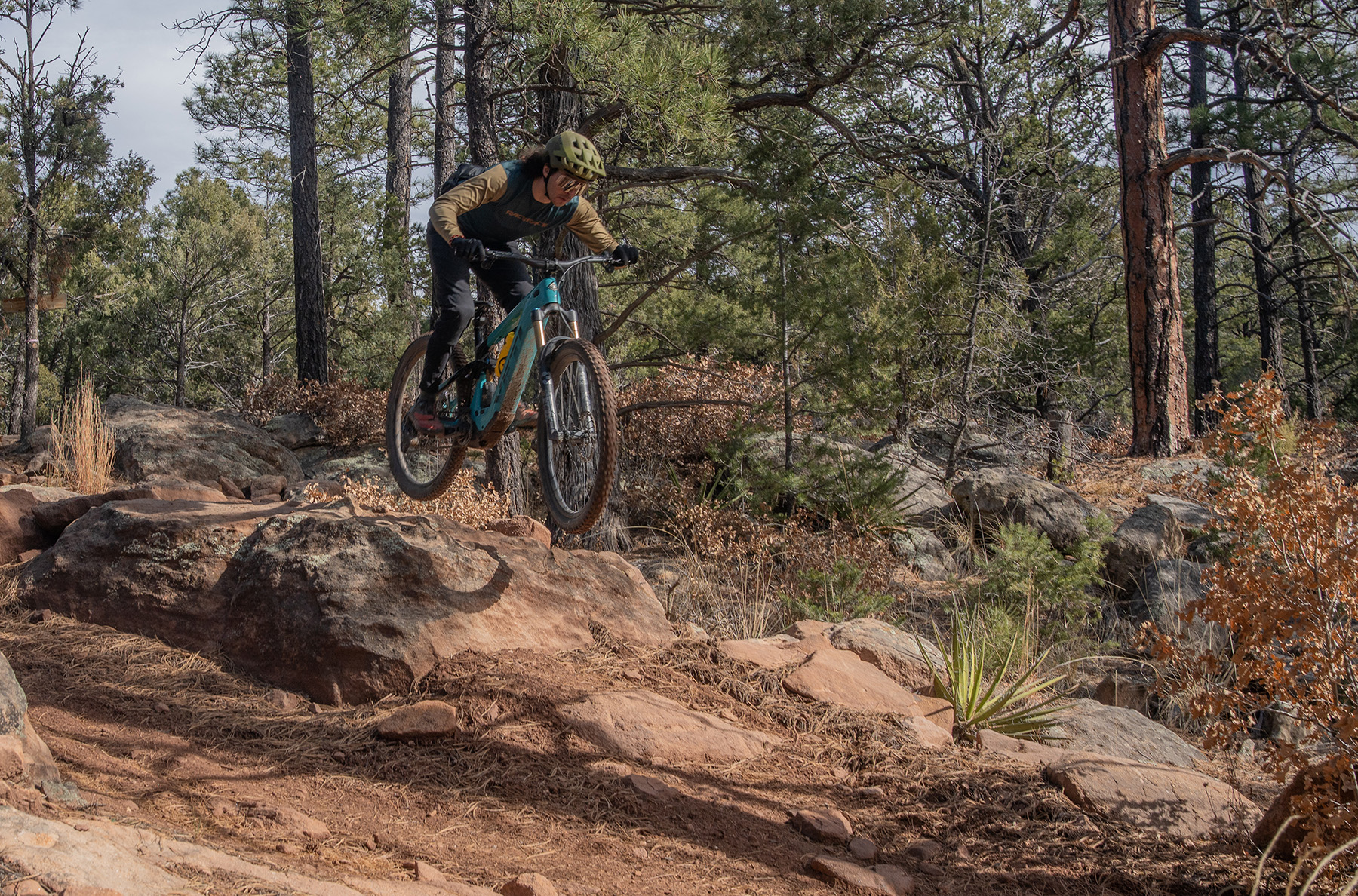
Dylan: Point the LTe downhill, and its descending-focused intentions become quite clear. The LTe has a mix of stability, plushness, and forgiveness that encourages you to stay off the brakes, take the A-line, and tackle big and demanding features. The LTe has a ton of traction on the way down. Even on rough trails, both wheels (equipped with especially supple Schwalbe radial casing tires) keep confidence-inspiring contact with the ground. This great traction also remains intact under braking forces, where the bike’s geometry and suspension kinematics remain consistent and predictable. Pair this with 52 pounds of weight and stable geometry, and the LTe provides a very composed platform when descending. The downside of many eMTBs is a lack of quickness on the way down, but the flip side of this is lots of inertia. It’s quite hard to knock the LTe off line when you’ve committed to it. The LTe’s geometry combines stable steering, a roomy cockpit, and relatively long chainstays to create a bike that handles well over a variety of terrain styles but truly shines on fast and steep trails. The bike’s inherent stability complements the plush suspension quite nicely. Plus, I found its reach and chainstay lengths to be very balanced, resulting in great fore-aft weight distribution and a big, forgiving sweet spot. Like the MTe, I found the LTe to be without the typical demanding feel of Yeti’s unpowered bikes — while the LTe is very accommodating to a fast and aggressive style, it’s also compliant enough to happily cruise along at more moderate paces without much rider input.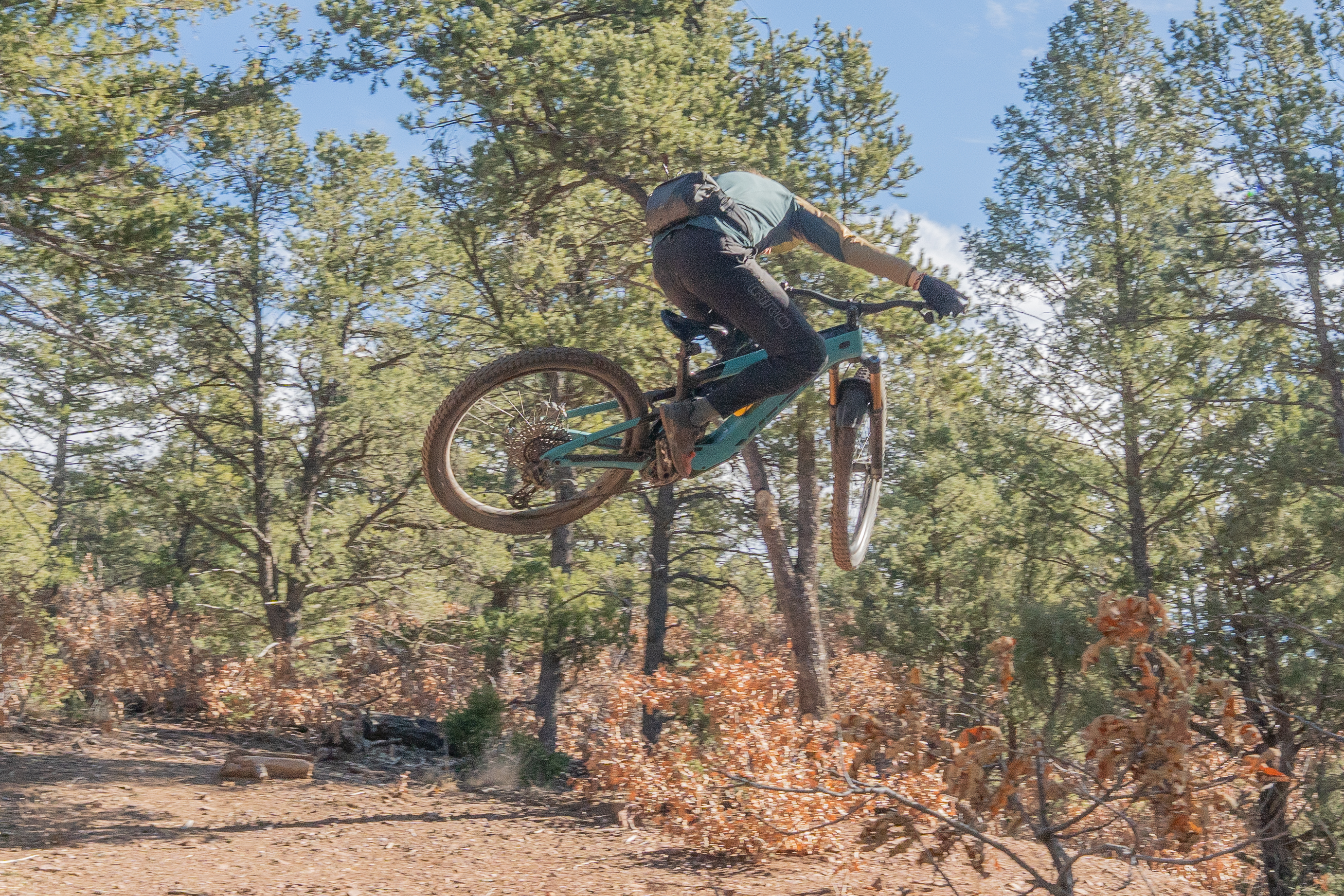
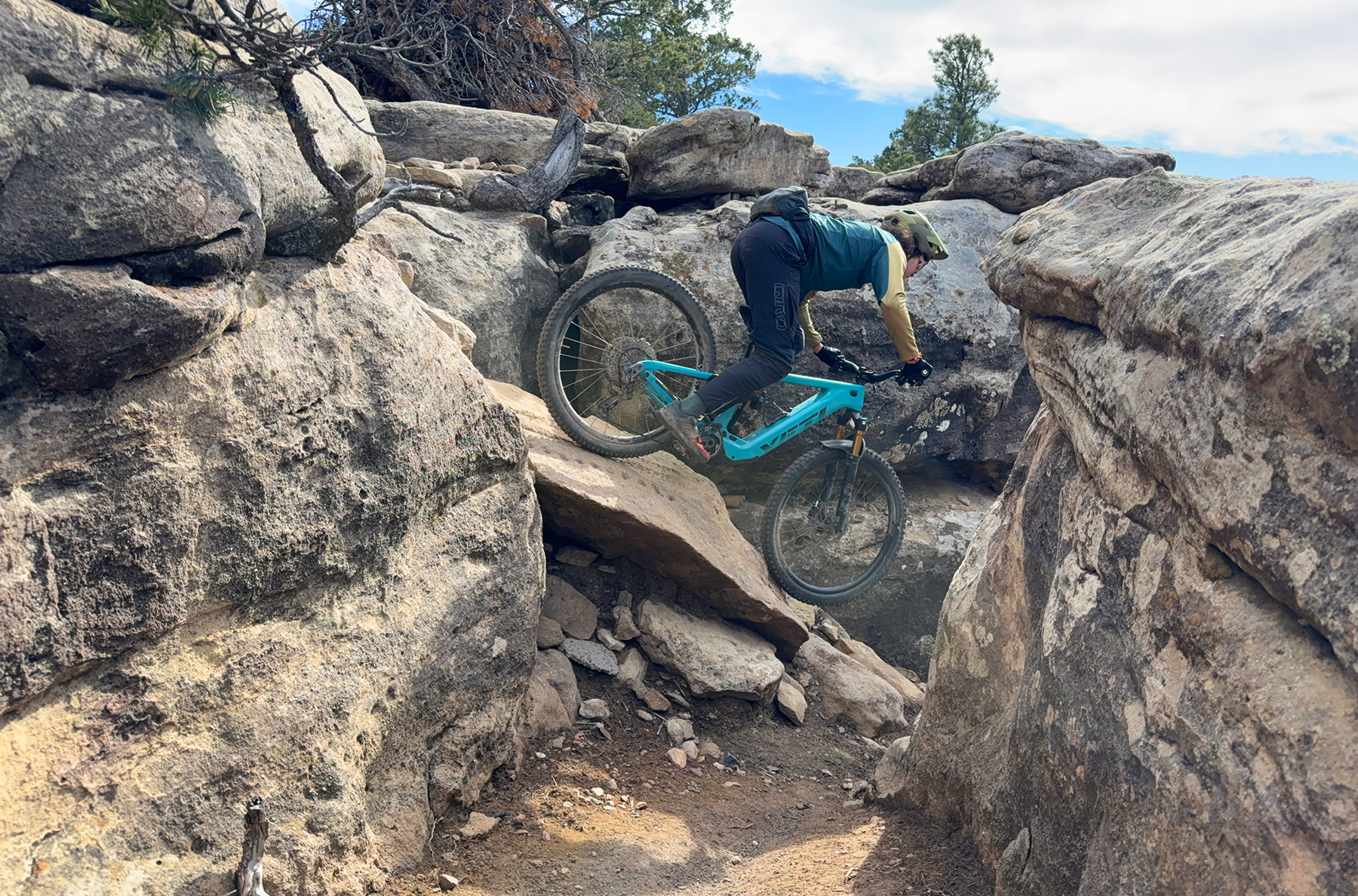
This mix of stability and ground-hugging traction inspires loads of confidence and encourages fast speeds, aggressive lines, and taking on big features. The LTe is one of the most downhill-capable bikes I’ve ridden, motorized or not. The other side of the coin here is that the LTe is not the most engaging bike on mellow, flowy trails. Pumping the LTe is not very rewarding, as much of the energy ends up in its suspension. But that’s not what the LTe was made for, and when this long-travel eMTB is in its ideal terrain — fast, chunky, and demanding — it truly stands out.
I also appreciated the level of customization available with the LTe. I split my time on this bike between running it as a full 29er and as a mixed-wheel bike with a smaller 27.5” wheel out back. Overall, there weren’t many surprises here, with the bike exhibiting the typical behaviours associated with this change. As a full 29er, it traversed terrain more efficiently, kept its speed better over rough terrain, and put me in a more aggressive body position with more of my weight biased forward on the bike. As a mullet, the weight distribution was a bit more rearward, more tush-to-tire clearance was available, and the LTe felt a bit sharper in corners. Perhaps most importantly, though, the geometry and suspension felt nearly identical in both modes, making them easy to swap between — with one caveat that I’ll discuss later.
Additionally, the LTe’s suspension leverage curve chip allowed for helpful customization while still retaining its supple and capable feel in each mode. I found myself preferring the most linear 25% position the best, where the suspension felt the most consistent throughout its travel. This position also felt the firmest throughout the first half of the travel, making the LTe feel a bit more rewarding when pumping terrain and pushing into corners. This felt like the most race-oriented mode overall. In the most progressive position at 35%, the LTe’s suspension feels a bit more plush and supple off the top, then more supportive and poppy deeper into the suspension. I found myself liking this position the most on trails with lots of jumps, rollers, and big berms. In this position, the LTe feels a bit easier to get into the air, where loading up the suspension in a bunny hop or up a takeoff results in better pop, helpful for getting this big bike free from gravity momentarily. It also feels smooth and supportive on landings, with a nice ramp-up throughout its travel to prevent blowing through the 160 mm of rear travel. The middle 30% leverage setting is a good middle ground between the two, and a really safe bet for rides with a variety of flow and tech, or outings where you don’t know what kind of riding you’re getting into
Simon: Dylan did a nice job of describing the LTe’s downhill performance, and I agree with him on all counts. The LTe is an exceptionally talented descender.
I spent most of my time in the 30% (Middle) leverage setting and adapted well to it, given the variety of trails I rode. If you were doing lots of bike park laps, the more progressive 35% setting would be a good option, and if you were looking to go as fast as possible, then the 25% setting makes the most sense.
Even in the 30% setting, the LTe’s plushness immediately stands out. It is one of the plushest eMTBs I’ve ridden. When getting heavy eMTBs airborne, they typically don’t have very forgiving landings, especially when landing to flat. The physics are hard to ignore; 50-plus pounds of bike in addition to the rider’s weight hitting the ground with considerable force is a lot for the suspension to manage. On the LTe, though, the touchdown is wonderfully soft and controlled with plenty of bottom-out resistance, so much so that I didn’t shy away from big drops to flat that I usually avoid on eMTBs.
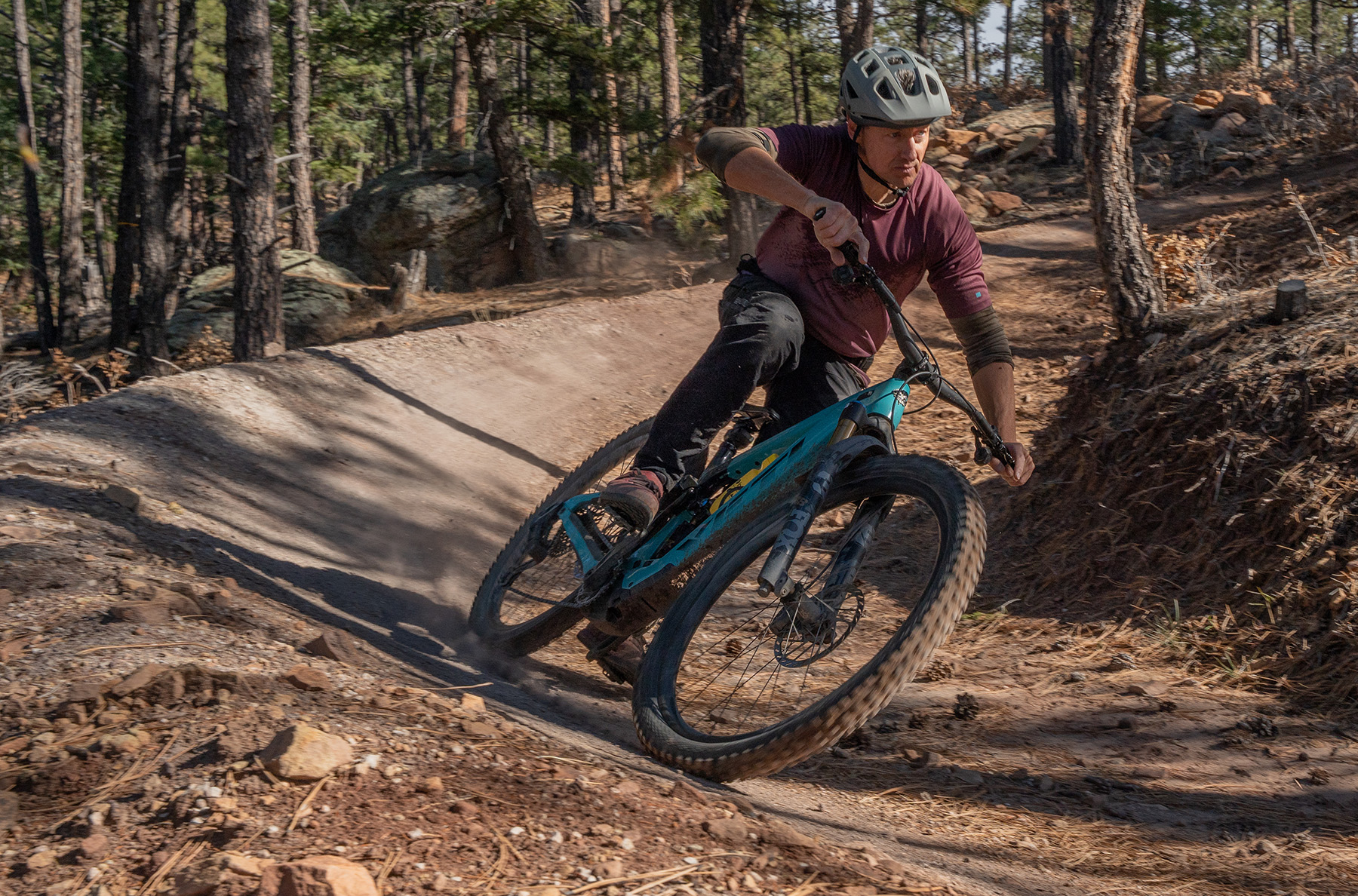
I’ll also add that I really enjoyed cornering on the LTe. It responds beautifully to steering input from your feet, causing the rear end to step out predictably into controlled drifts. I have to admit I wasn’t expecting that playful side of the LTe, given how glued down and stable it is.
Drive System and Range
Dylan: This was my first time aboard Bosch’s Gen 5 Performance Line CX motor, and I’m a huge fan. Simon has gone very in-depth about the latest CX system in his review of the drive system as well as his review of the Santa Cruz Bullit, and I agree with almost everything he’s said, but I do have a few thoughts specific to the LTe.
This is a very powerful, race-oriented drive system that pairs well with the high-speed intentions of the LTe. Maxxing out its torque, watts, responsiveness, and assist level in “Turbo” mode allows this eMTB to be as fast as just about any Class 1 e-bike out there. Out of curiosity, I put down some all-out uphill efforts on the LTe and ended up with some e-bike KOMs, whatever that is worth, and I would be very curious to see how the CX-R motor would do with its “Race” mode.
Its large 800 Wh battery also makes some long rides possible, and it is almost necessary for a bike with such a thirsty motor. When riding it in the maxxed-out Turbo mode, I could get about 30 miles (48 km) with 5,000 feet (1500 m) of elevation gain — not much more than I could get out of light-assist eMTBs with about 600 Wh of available power. Granted, I could finish these rides about 10% faster on the LTe, which, over the course of a long ride, is a significant time advantage.
While the LTe is compatible with Bosch’s Powermore 250 range extender for even longer rides, there are some quirks here. On my Large LTe, the range extender barely fits, and the mounting bracket for the extender must be slid all the way up on the water bottle bosses to avoid contact with the reservoir of the Float X2 rear shock. Additionally, the Large LTe is not compatible with Bosch’s water bottle cage, meaning that if, between rides, I wanted to switch between having a range extender down there and a water bottle, I would need to remove the mounting bracket and install a traditional water bottle cage. Not the end of the world by any means, but if the water bottle bosses were just a bit higher, this wouldn’t be a problem, and I would still have room for a standard water bottle in the front triangle.
I also appreciated the very wide range of assist modes available and the ability to fine-tune each one. Whether you are trying to get the most out of the LTe’s battery, tuning the Eco mode to match the pace of an unpowered mtb, or playing around with settings to see what feels the most efficient to you, the CX drive system on the LTe can really be almost anything you want it to be. While the available power makes for an exciting and dynamic experience on the trail, it doesn’t always have to be like that — it can always be turned down if needed.
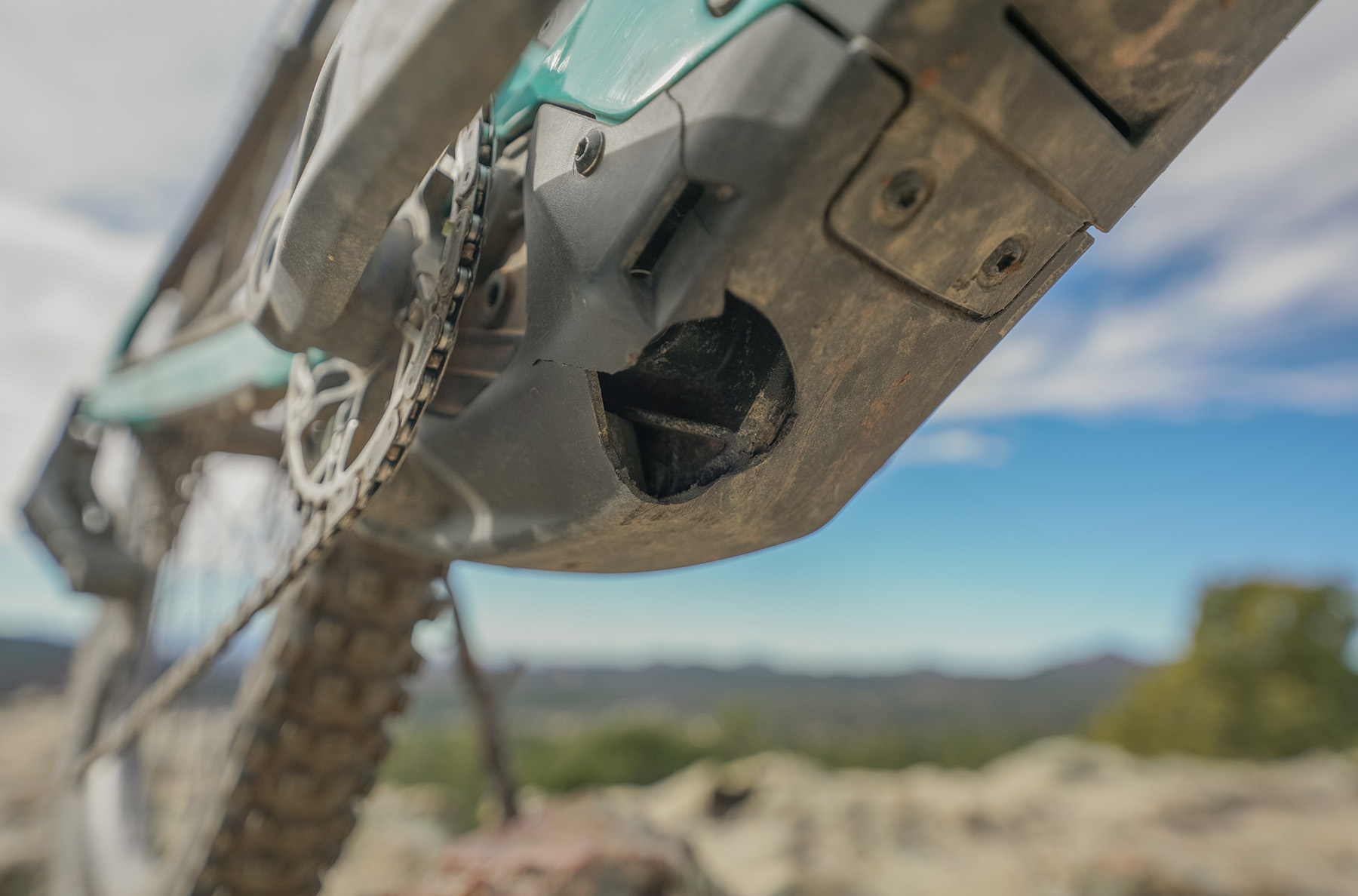
Another interesting quirk is that I broke the motor guard of the LTe twice during my test period. While the guard is enforced in most places, there is essentially a void between the plastic and the motor that creates a weak spot. Much of our eMTB riding in Crested Butte is on torn-up moto trails, and it’s not uncommon for a sizable rock to kick up and contact the bike. Unfortunately, I must have found this weak spot on the motor guard at least twice, resulting in a hole in the plastic. This didn’t really affect how the bike or the motor performed, but it did collect some trail debris and left the motor vulnerable to potential damage. The guard was easy to replace, but some more reinforcement could potentially solve this problem altogether.
The LTe is the first bike we’ve tested with Bosch’s new Kiox 400C top tube display, and I found it to be a nice update. I prefer to keep my phone in my pocket while out riding, and this display brings a lot of valuable data right to the top tube. While Bosch’s older Smart Display was fine for displaying general info, it’s really nice to see the exact battery percentage, range estimations, and more without having to look at the Flow app on my phone, or even stop riding, let alone take a hand off the handlebars. Why not have more data available to see?
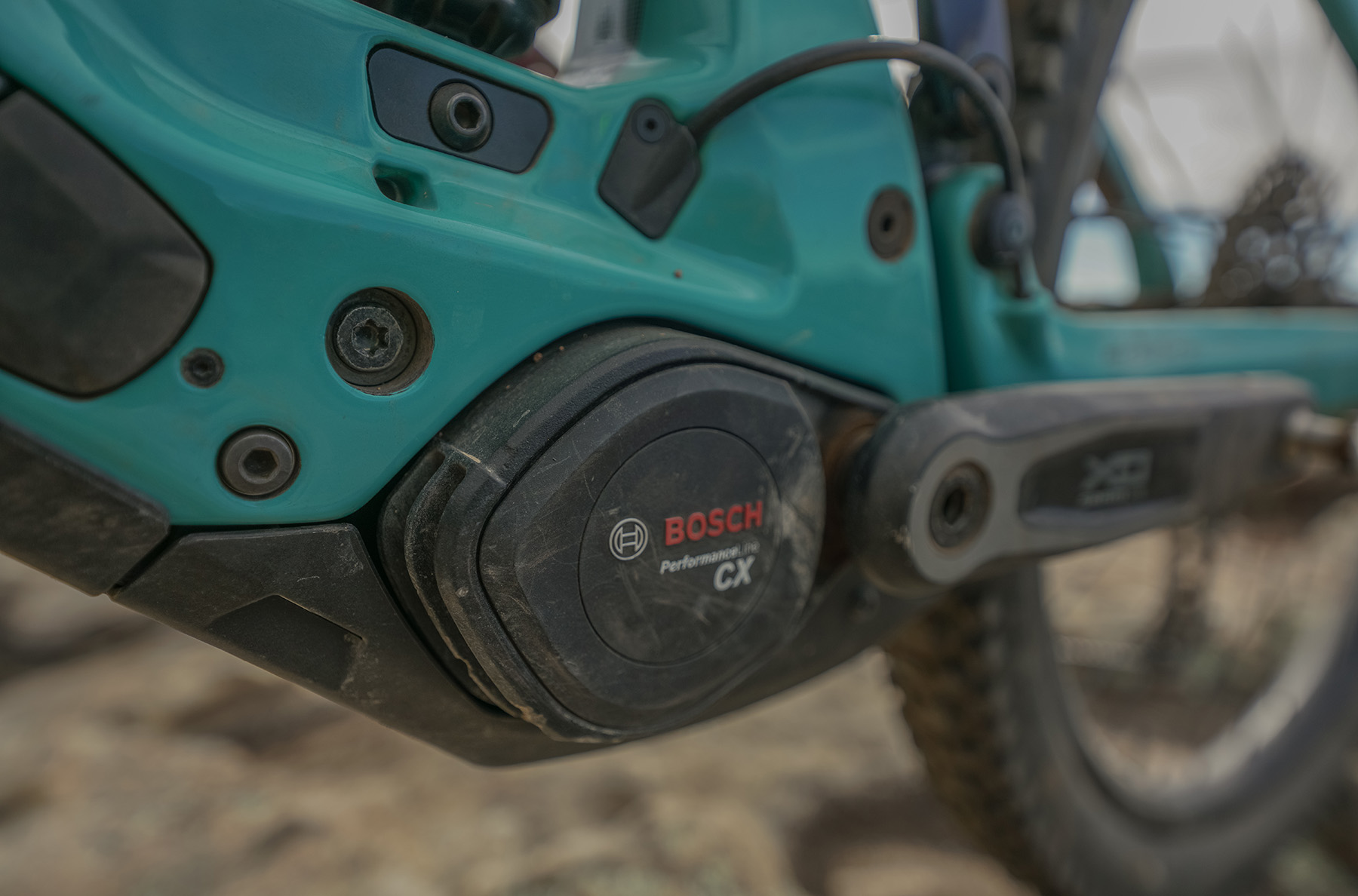
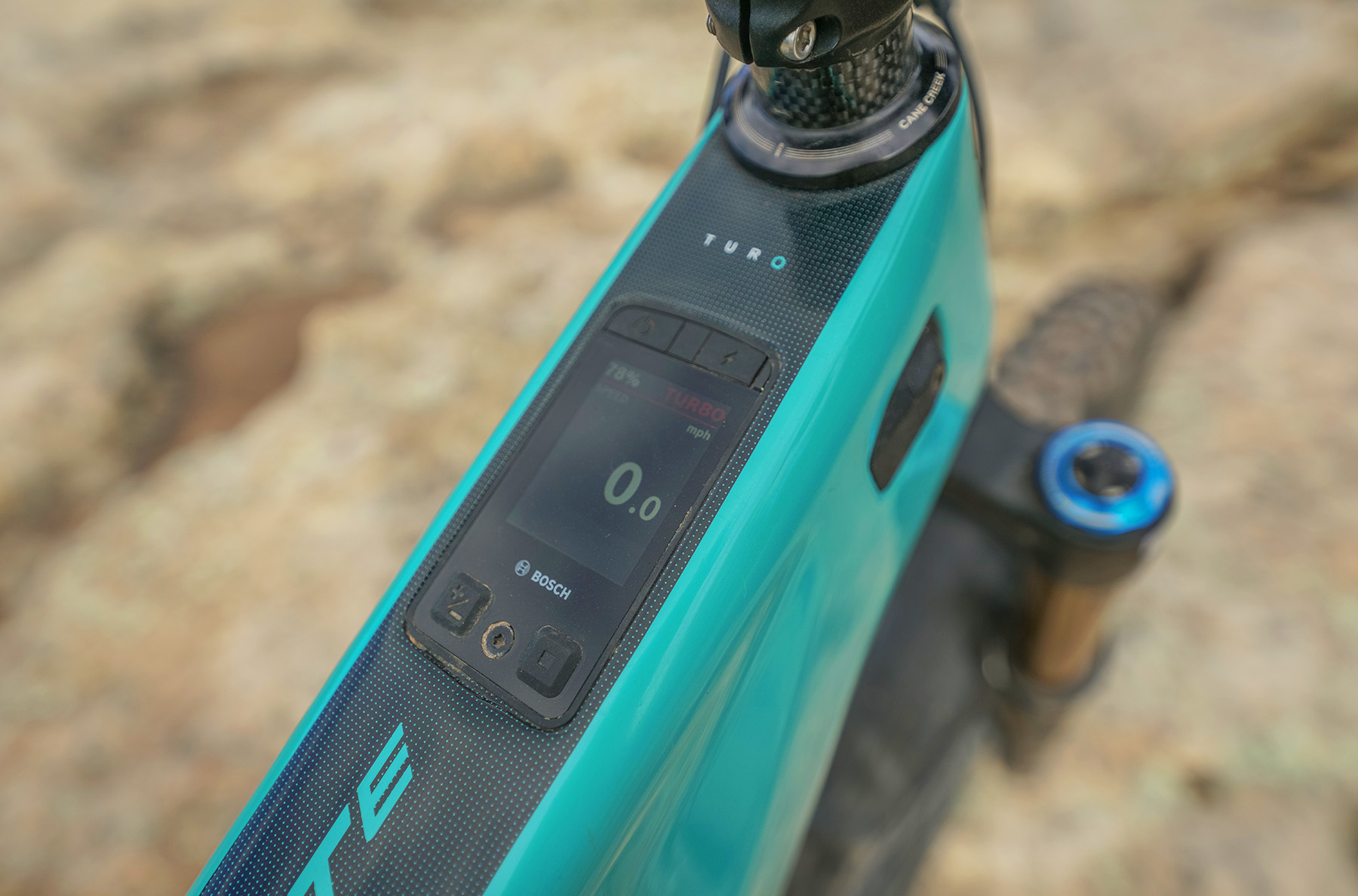
Simon: It’s no secret that I’m a huge fan of the Bosch CX drive system, and the latest Gen 5 iteration has raised the bar even higher with more power and torque, plus the much-needed addition of a full-featured integrated top tube display.
Having only spent time on Bosch CX-equipped eMTBs with the smaller 600 Wh battery, it was interesting to ride the LTe with the 800 Wh battery. I’m a fan of the 600 Wh battery in the Santa Cruz Vala and Bullit for the inherent weight savings and the impact on handling. The Bullit has similar travel and build specs to the LTe and weighs 47.83 lbs / 21.69 kg (size Large), whereas the LTe is 52.4 lbs / 23.77 kg (size Large). Although not a giant difference, the Bullit feels noticeably lighter, more responsive, and easier to get off the ground.
Weight aside, the LTe’s larger battery is reassuring and gives you the confidence to keep the LTe in the highest power mode on longer rides without worrying about the range. The Bullit, on the other hand, requires adding Bosch’s 250 Wh range extender to get a similar experience. Additionally, attaching the range extender to the LTe (which Dylan noted is a bit quirky) nets you a whopping 1050 Wh of combined battery capacity, giving it massive ride potential.
The Build
Dylan: The T3 X0 Transmission build kit we tested leaves little to be desired in the realm of upgrades, and its price reflects that.
The Fox Factory suspension front and back was certainly a highlight here. The 38 fork felt smooth and supportive, and it was a good match for the LTe. Additionally, I thought the Float X2 shock performed well and was nicely tuned to the LTe, with lots of adjustment to please even the pickiest of riders. I found Yeti’s suspension calculator to be very accurate and helpful, and after inputting my weight and settings, I didn’t find myself straying far from the recommended settings.
Per usual, I enjoyed SRAM’s X0 Eagle AXS Transmission drivetrain on the LTe, and I still think it pairs wonderfully with eMTBs, as I find myself shifting under power more often on a bike with a motor. With such a big bike, skimping on brakes is really not wise, and I am glad that Yeti put SRAM’s Maven Silver brakes on the LTe. These burly stoppers always felt powerful enough, even on long, steep descents in which they did not get any breaks.
Schwalbe’s Magic Mary Trail Pro 2.5 Ultra Soft and Albert Gravity Pro 2.5 Soft radial tires were also a highlight on the LTe, complementing its already plush suspension feel by adding yet another layer of suppleness between the chassis and the trail.
The SRAM Reverb AXS B1 dropper on every build is also a great touch, and while I don’t really have any issues with cable-actuated droppers, I did enjoy the consistency of the electric remote to the Reverb AXS dropper. The DT Swiss HXC1700 Carbon 30mm wheelset on the LTe was also a highlight, offering precise steering without a harsh feel. Plus, they stayed tensioned and true throughout my entire test period, which is always a bonus. However, when switching between rear wheel sizes, it is a bit annoying to remove the internal magnet that is glued to the rim tape at the valve stem. You have to unseat the tire, peel off the magnet, and then repeat the same process on the new wheel you are using. I don’t see anything wrong with using an external magnet, and if I were swapping between two different rear wheels for the LTe, I would go as far as buying another magnet for the extra 27.5” wheel.
Simon: I agree with Dylan that the Yeti’s T3 XO build likely won’t need much in the way of upgrades. Still, there may be some parts that don’t align with everyone’s personal tastes, but all the parts Yeti chose are high quality and proven.
Ok, now to my personal preferences. Thanks to a lot of time spent working on SRAM’s race truck and in many bike shops, I’ve rebuilt countless Reverbs over the years. So, I applaud RockShox for getting rid of the pesky oil in the new Reverb AXS B1, which now uses only air to support the rider’s weight. They also gave it much-needed longer travel options, as well as the ActiveRide feature, which intentionally provides a bit of squish when dropped below full extension — ironic, given that seatpost squish has been a thorn in their side since the first Reverb hit the market.
I found the ActiveRide feature to be surprisingly beneficial when climbing steep, techy terrain. I nearly always drop the saddle a hair to give me room to be more active, and having a bit of give in the post helps keep my body calmer when I’m not riding as smoothly as I should be, which I’m pretty sure translates into cleaning more tricky sections.
Given the LTe’s weight and the speeds it is capable of, I can’t imagine riding it with less powerful brakes than the SRAM Maven Silvers it comes with — the Mavens are, without a doubt, my brakes of choice for eMTBs.
I can see why Dylan was annoyed by the internal wheel magnet (which is a crucial sensor for the drive system — it won’t provide any assist without it), especially on a bike that can be configured with different wheel sizes. The flip side is that external magnets have a tendency to collect metal debris and need to be cleaned periodically to avoid drive system errors. There are pros and cons to both approaches.
Lastly, I echo Dylan’s comments on the Fox Factory suspension and SRAM Transmission drivetrain, and agree that the Schwalbe tires with radial casings add a nice, supple trail feel on top of the already plush Sixfinity suspension platform.
Who’s It For?
The Yeti LTe is a descending-oriented eMTB with composed, stable geometry and extremely impressive suspension performance. The Bosch CX motor helps the bike tackle comically steep and technical climbs, while the active suspension keeps the rear wheel glued to the trail on the way up. On the way down, a hefty chassis, smooth suspension, and stable geometry create a platform that allows the rider to push their limits of speed on descents. Advanced and expert riders looking to go as fast as possible on the way down should take a close look at the LTe. However, more intermediate riders looking for a planted and confident ride on the way down can also appreciate how the LTe handles complex terrain without requiring much rider input.
Simon: I think it’s worth noting that, while the LTe definitely encourages a lot of pace, it also doesn’t demand it. Riders apprehensive that the LTe might follow in the footsteps of other game-on, race-inspired bikes in Yeti’s lineup, such as the SB160, can rest easy knowing that the LTe can be quite rewarding at more civilized speeds without heaps of aggression.
Bottom Line
The Yeti LTe is a full-power eMTB built with one priority: going very fast on demanding terrain. Its traction-rich Sixfinity suspension, stable geometry, and race-oriented Bosch Gen 5 CX motor make it a monster on steep, technical climbs. These same traits, plus a healthy amount of wheel configuration and suspension leverage adjustability, make it one of the most downhill-capable eMTBs I’ve ridden. It’s not the most playful or engaging option on mellow trails, but when the terrain turns fast, rough, and consequential, the LTe rewards aggressive riding with huge confidence, consistency, and speed. For riders who value descending performance above all else and want a powerful motor to maximize laps and elevation, the LTe delivers in a big way.
Deep Dive Comparisons
BLISTER+ members and those who purchase our Digital Access Pass can check out our Deep Dive comparisons linked below. Get our Digital Access Pass to view all our Deep Dives and Flash Reviews, or become a BLISTER+ member today to get access to that and a LOT more, including the best worldwide Outdoor Injury Insurance, exclusive deals and discounts on skis, personalized gear recommendations from us, and much more.
Deep Dive: Yeti LTe
We compare the Yeti LTe to the Yeti SB 160, Yeti MTe, Santa Cruz Bullit, Santa Cruz Vala, Pivot Shuttle AM, Mondraker Dune XR, Cannondale Moterra SL, and Norco Sight VLT.
Blister’s Flash Reviews and Deep Dives are accessible to those who purchase one of our paid subscriptions
To get our comprehensive Deep Dives and our initial, unfiltered reports on new gear, become a member and receive many other services, deals, and discounts.
If you’re already an active member, please log in.
(If you’re already logged in and a member in good standing and seeing this message in error, please refresh this page in your browser.)
Love the shots of you guys riding at Glorietta!
Great review.