

2025-2026 K2 Alchemist
Test Location: Alyeska Resort, AK
Test Duration: 16 days
Available Sizes: 154, 157, 159W, 160, 163, 164W
Blister’s Measured Weight (160 cm): 3.24 kg / 7.14 lb
Stated Nose-Waist-Tail Widths (160 cm): 30.1-25.3-29.5 cm
Stated Sidecut Radius (160 cm): 7.98 m
Rocker Profile: Traditional camber with rockered nose
Stated Flex Rating: 9/10
Core Construction: Bamboo / aspen / paulownia + carbon tail “fork” + “spectral braid” + fiberglass laminate
Base: Sintered 4001
Reviewer: 5’11”, 175 lbs / 180 cm, 79 kg
Stance: +25 / 0, 22’’
Boots Used: Nitro Select, Thirty Two TM-2 XLT, K2 Evasion
Bindings Used: Now O-Drive, Jones Apollo, Jones Mercury FASE
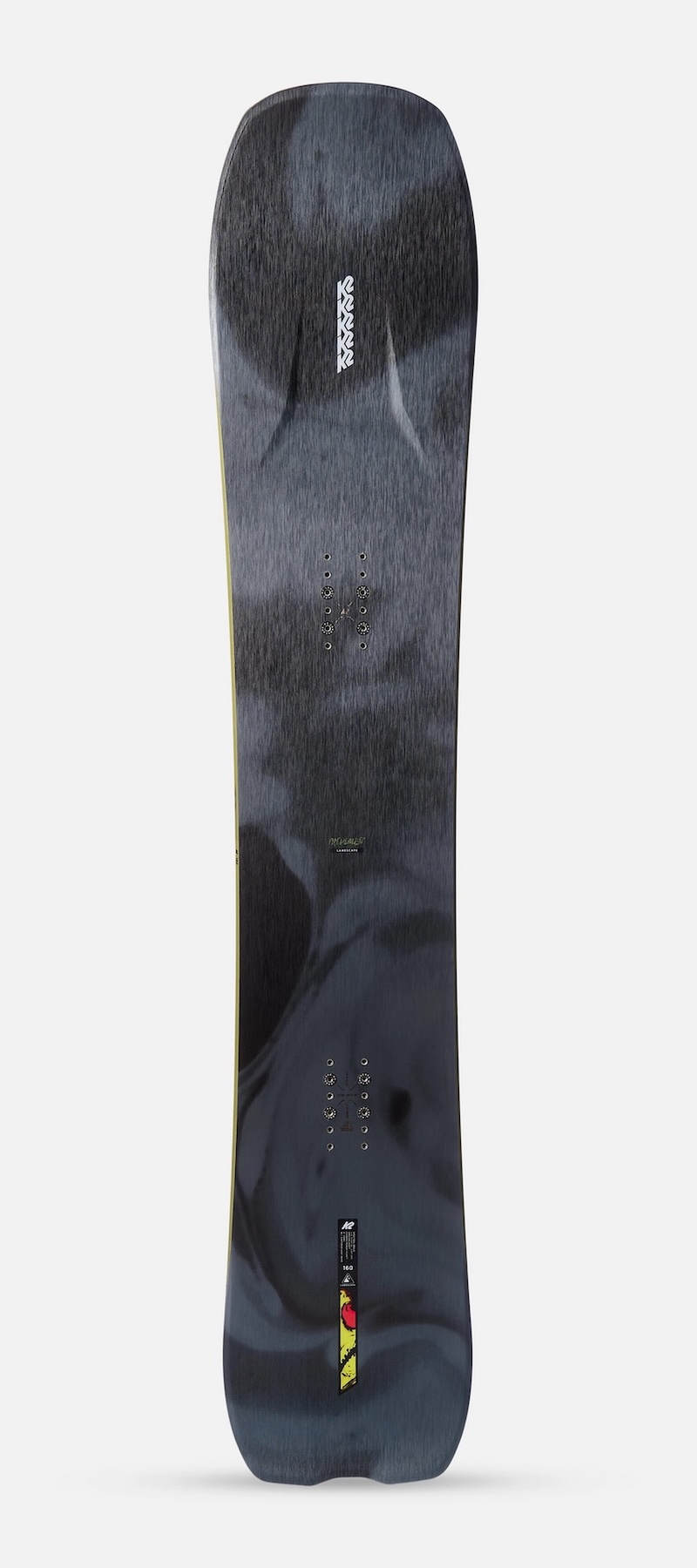
Intro
The K2 Landscape Collection is a lineup of five boards — including the Alchemist reviewed here — designed to embody the full spectrum of Freeriding, from deep soulful carving to tweaked-out methods. The Alchemist stands out as the stiffest, most aggressive of the bunch, built with speed, technical terrain, and powder in mind.
I’m always on the hunt for a quiver-of-one board that can handle the full scope of conditions I might find in my (sometimes unpredictable) local maritime snowpack — from deep, untracked powder to firm groomers and icy, off-piste sections — without feeling sketchy or making me want to switch boards. On paper, the Alchemist looked like it could have that sort of potential; its stiff directional shape bodes well for both flotation and carving, and its high-end construction claimed to tame chatter and plow through variable snow.
Naturally, I was eager to get this board on the snow and see how it stacked up, and now I can share what I’ve found.
What K2 Says about the Alchemist
“The North Star in the K2 Snowboarding snowboard offering, and the marquee of the Landscape Collection, the Alchemist is a hard-charging, directional Freeride board for the skilled rider.
A thirty-five-year history, collaborative rider input, and premium technology culminate in delivering the most aggressive and precision-crafted snowboard we’ve ever made. The Alchemist holds its ground as the most premium offering on Freeride snowboarding today.”
Construction
The Alchemist features several of K2’s flagship materials and construction techniques, as you’d expect from the board that K2 boldly claims to be “the most premium freeride snowboard on the market.”
In terms of the wood core, 30° aspen and bamboo stringers underfoot lend stiffness, with tip-to-tail bamboo stringers claiming to improve damping and long-term durability. Lightweight paulownia runs through the body and into the tips to reduce swing weight.
Pre-cambered carbon inlays in the tail are meant to add support and extra pop, while K2’s “Spectral Braid” runs along the length of the board to reportedly increase torsional stiffness where needed and maintain flex elsewhere. K2’s proprietary “SpaceGlass” fiberglass inserts add structural reinforcement at key zones, with the goal of improved edge hold and durability, particularly at the contact points.
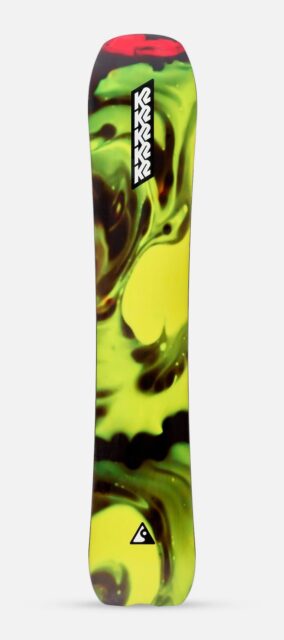
One of the Alchemist’s most distinctive features is its “Recess3D” nose structure, designed to further minimize chatter and reduce swing weight.
At 3.25 kg (7.14 lb) for our 160 cm Alchemist, it’s not the lightest board in this category, but its weight distribution feels balanced. And, as we’ll get into later, the overall damping and composure on edge make the extra grams worthwhile.
For reference, here are our measured weights for the Alchemist and some other comparable models:
- Weston Gnarnia (162 cm): 2.98 kg / 6.57 lb
- Jones Storm Chaser (152 cm): 3.05 kg / 6.7 lb
- Arbor Iguchi Pro Camber (162 cm): 3.074 kg / 6.77 lbs
- Nitro Squash (159 cm): 3.09 kg / 6.81 lb
- Jones Howler (160W): 3.205 kg / 7.06 lb
- Arbor Carter Camber (158 cm): 3.211kg / 7.07 lb
- K2 Alchemist (160 cm): 3.24 kg / 7.14 lb
- Jones Storm Wolf (162 cm): 3.30 kg / 7.27 lbs
- Head E.B.I. LYT (161 cm): 3.527 kg / 7.77 lbs
To cap off the build, the Alchemist has a snow-shedding topsheet that works well in most conditions, though it can accumulate light icing when transitioning from slushy lower-mountain runs to sub-freezing upper elevations.
The Alchemist’s sintered 4001 base from Crown is reportedly K2’s hardest and fastest, and it performs well in my experience. Compared to softer sintered bases like the United Shapes Deep Reach’s Sintered 2100, the Alchemist’s base is far more durable and has better wax retention. After several spring sessions involving vicious freeze-thaw cycles and early-morning bulletproof groomers (think frozen cheese grater), the base still looked fresh and retained wax exceptionally well. Where other boards in my test quiver showed drying, discoloration, and the base fuzzing along the edge, the Alchemist’s base remained smooth and fast.
Shape
At first glance, the Alchemist’s directional shape follows the mold of modern pow-groomer boards. Despite its longer, blunted nose, the general feel of the Alchemist is quite balanced and does not necessarily feel like a powder-specific shape when hitting jumps and getting airborne.
In shallow to moderate powder (<16”), the Alchemist’s nose feels floaty, giving the board a nice center of gravity that isn’t too far aft. In properly deep, heavy snow, I have found the nose prone to diving and sometimes feeling catchy — though that’s not uncommon for stiff, non-powder-specific boards in the Freeride category.
The payoff comes in firmer conditions, where the Alchemist’s nose is very effective in dissipating chatter and feels exceptionally damp. The bowled out, recessed nose seems to alter the flex pattern a bit, too, making for smoother, easier entrance and exit in turns, regardless of speed. This is appreciated in a stiffer board like the Alchemist, which could otherwise feel hard to muscle and maneuver at slower speeds.
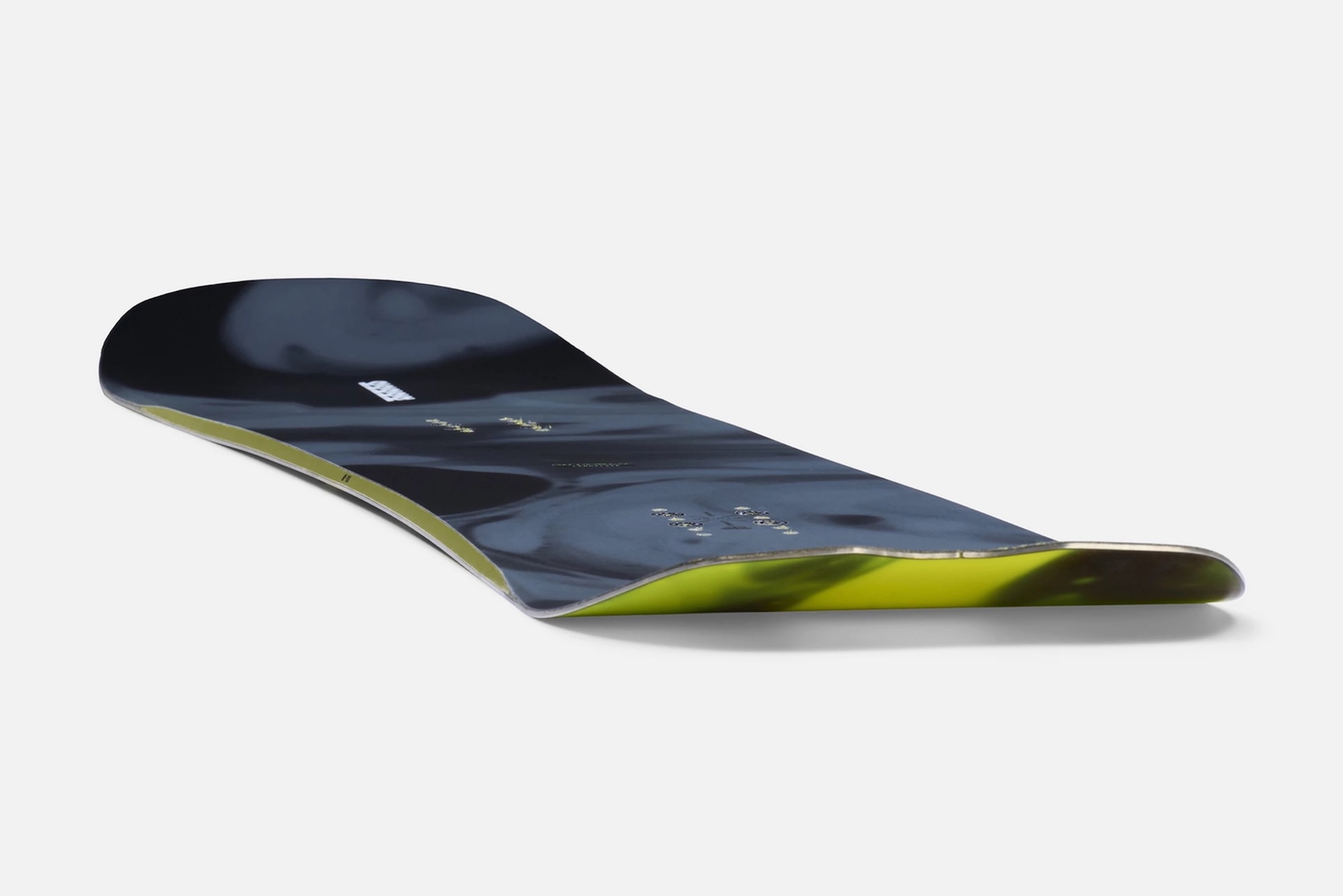
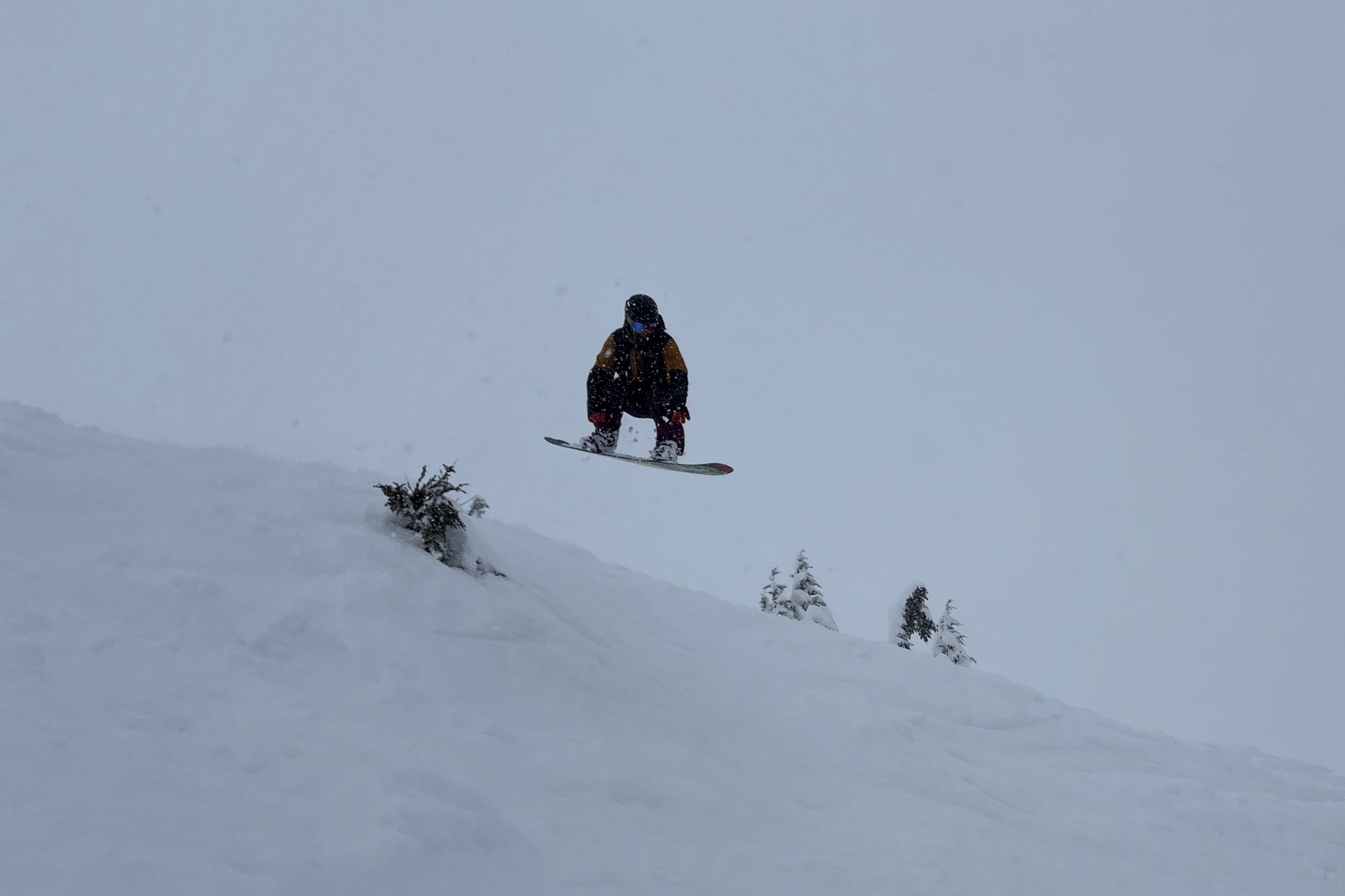
The overall shape reminds me of the Jones Howler; like that board, the Alchemist has a very supportive tail, feeling composed and supportive while riding fast or putting down the landing gear on jumps and drops. At higher speeds, leaning back and allowing the tail to do the work of absorbing bumps and chatter is a great quality in a board designed for fall-line riding. The subtle fish shape does a good job of keeping the nose up on shallow to moderately deep powder days, while the kicked up end of the tail makes riding and landing switch easy.
The directional shape, camber profile, and sidecut radius (7.98 m @ 160 cm) come together to also make the Alchemist a carving machine, longing to lay trenches. It can lock in and lay short, squiggly carves, or drive through longer, laid-out turns. It is also highly receptive to rider input — if you really load up the Alchemist, there’s some impressively explosive energy return.
Rocker / Camber Profile
The Alchemist features a modestly rockered nose with traditional camber running the length of the board, well aft of the rear binding, before transitioning into a relatively short tail that kicks up with about 38 mm of splay. In my mind, this is an excellent camber profile for a harder-charging Freeride deck like the Alchemist, and I’ve grown to love the rockered nose mated to ample traditional camber for a variety of reasons (more on that in the Full Review portion).
The first benefit of this camber profile is the impressive edge hold and stability, resulting in confident carving at higher speeds. The heavy dose of camber translates to a lively, poppy feel, great for freeriding and hitting features, while the rocker profile at the nose and bit of tail splay plays well on both hardpack and moderately deep powder without introducing chatter.
Flex Pattern
The Alchemist is the stiffest board in K2’s lineup, rated at 9/10, which feels spot on in my experience.
While quite stiff, it maintains a surprisingly playful and poppy character — unlike some ultra-stiff decks such as the Ride Commissioner (10/10), which can feel a bit dead in comparison. The Alchemist’s overall flex feels most comparable to the Jones Mountain Twin Pro (rated by Jones at 8/10), or like a Jones Howler with a slightly stiffer tail and midsection. The Alchemist’s flex pattern is noticeably stouter than that of the Head E.B.I. LYT (6/10), Weston Gnarnia (8/10), or Arbor Iguchi Camber (7/10).
Longitudinally, the Alchemist transitions from a very stiff tail to a moderately stiff zone between the bindings, then softens slightly (but only slightly) toward the nose. This design gives the Alchemist a confidence-inspiring, planted feel on landings and through choppy terrain, while the slightly softer mid-section adds a bit of pop and liveliness. The nose’s subtle compliance helps with float in deeper snow and is reasonably “butterable,” which is impressive for a board this stiff.
Torsionally, the Alchemist feels powerful and precise, translating into excellent edge hold across a wide range of conditions. It’s not brutally rigid like the Ride Commissioner, and there’s enough play to make it maneuverable at slow to moderate speeds. Still, the board truly comes alive when ridden fast with intention — that’s where its stability and control shine.

FULL REVIEW
Powder
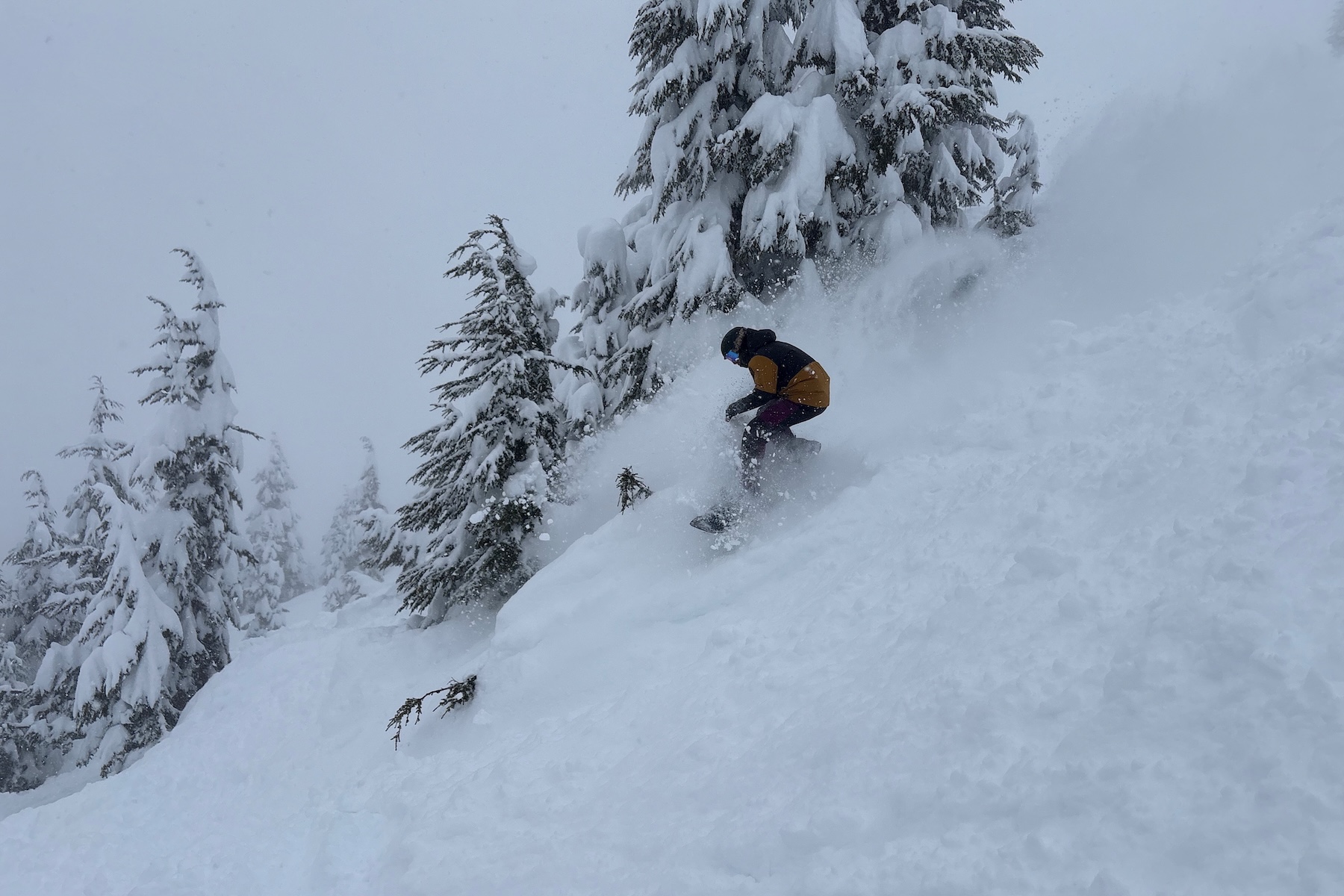
Although the Alchemist is not a powder-specific shape, it generally performed well on a variety of spring storm days, ranging from light dustings to moderately deep, heavy, wet powder.
The nose did a good job staying afloat in fresh snow up to 16”, feeling well balanced and centered, but the Alchemist features enough taper and volume reduction in the tail to still alleviate the back-leg burn that deep snow can induce. Still, speed and steepness were key — the Alchemist felt a little sluggish and hard to throw around while riding deeper snow in low-angle terrain.
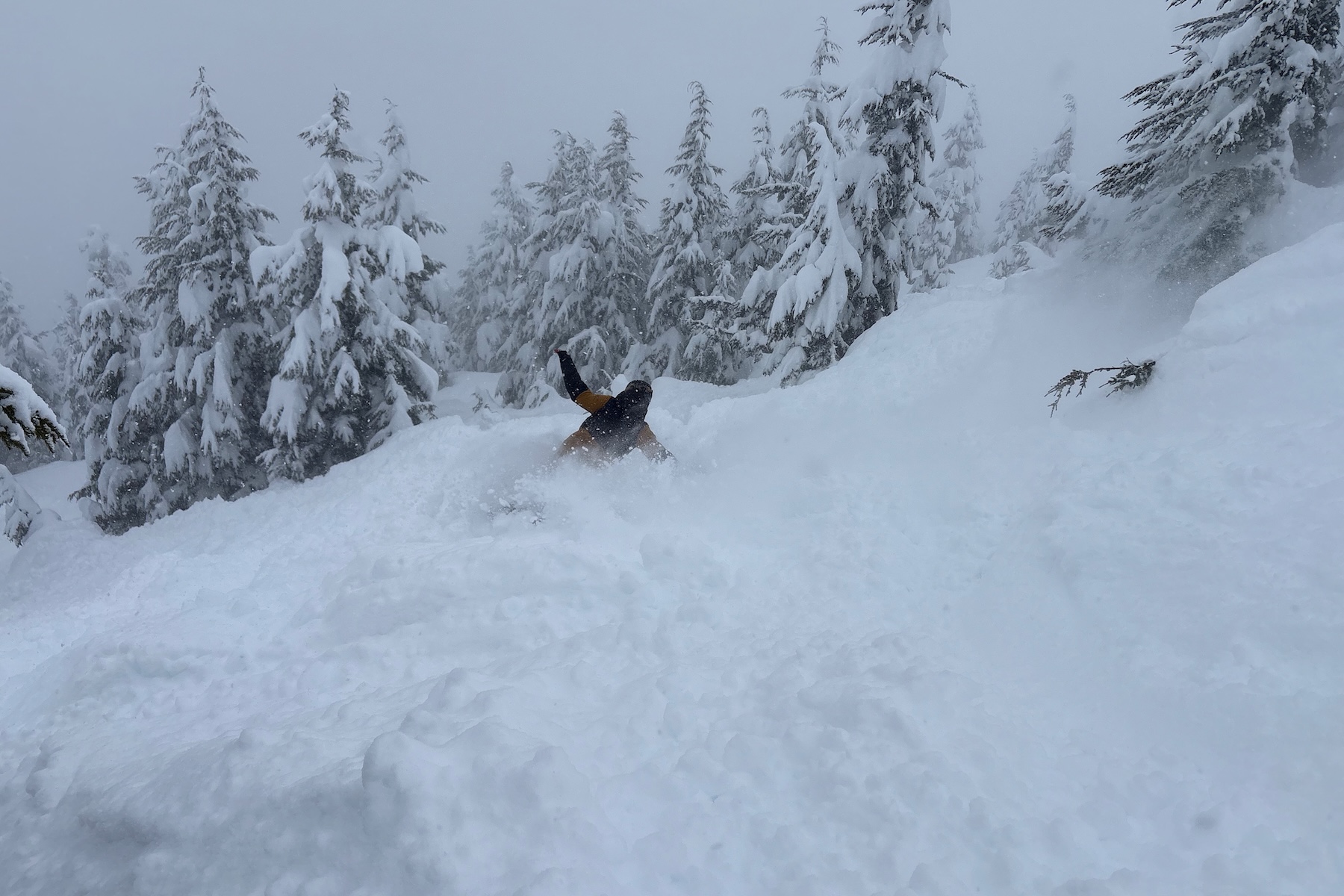
On one bottomless powder day with especially heavy snow, I had trouble getting the nose to resurface once it had started to dive under — particularly when landing on low-angle slopes in waist-deep snow. The stiffness that makes the Alchemist so stable elsewhere became a bit of a liability here, making it tough to pull the nose back up once submerged. Setting my stance fully rearward in the insert packs helped a bit, but it still wasn’t as easy nor as fast in these conditions as a powder-specific shape like the Jones Storm Wolf, Jones Storm Chaser, Weston Japow, United Shapes Deep Reach, or Amplid Snowmellier.
While it’s not the surfiest or easiest board in slow and deep scenarios, the Alchemist is a great tool for racing the crowds back to the lift line on a powder day. It’s almost unnervingly comfortable and stable while straightlining and can iron out unexpected hidden bumps and chunder without fuss.
Soft Chop
The Alchemist feels particularly well-suited to blasting through soft chop and tracked-out snow. This board’s stiff tail and spine help to dissipate impacts when crossing through and hitting all sorts of chop with relative ease.
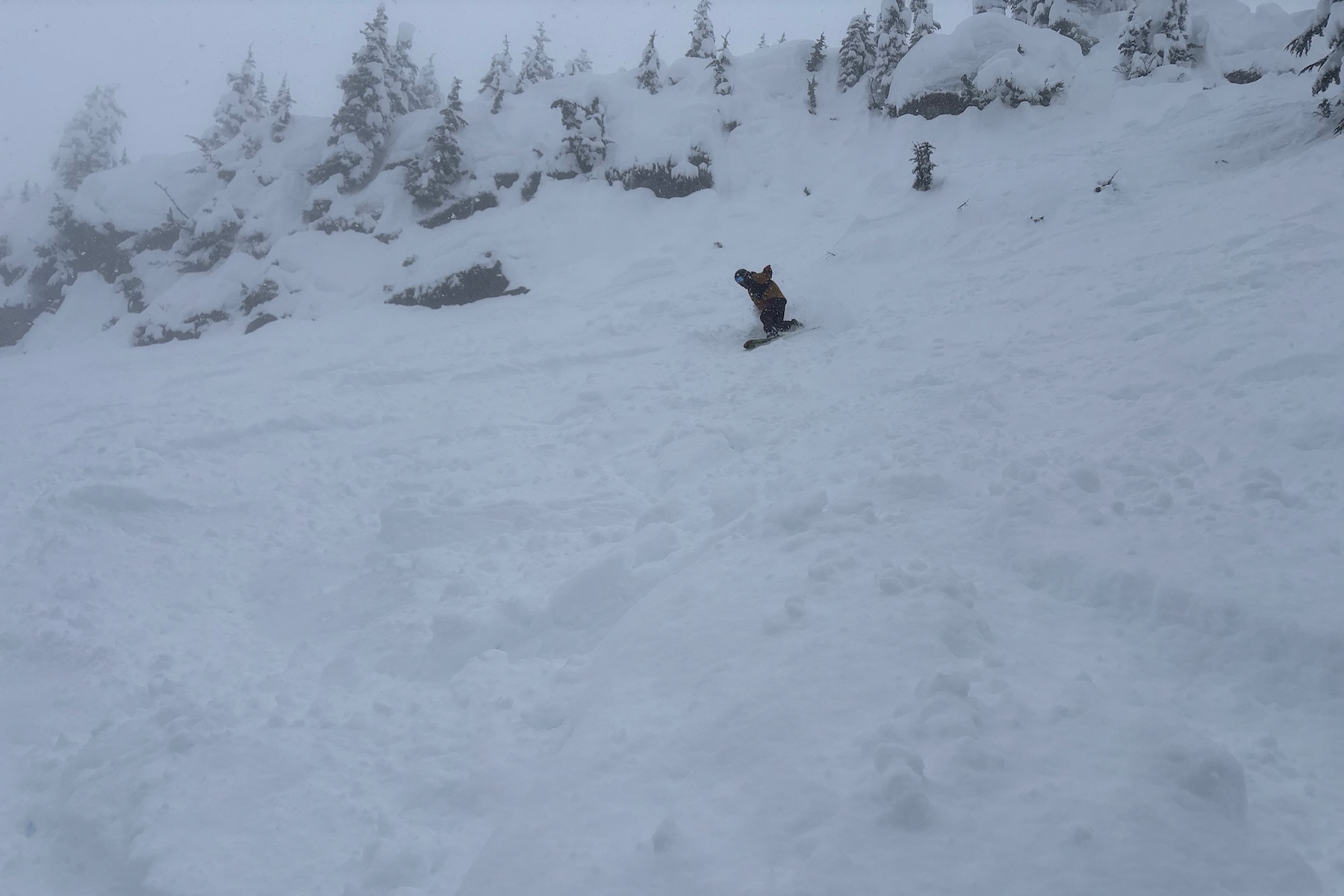
Once again, speed does seem to help with the Alchemist’s general maneuverability — it’s not a low-speed cruiser, but it feels more responsive the harder you’re pushing it. As long as the snow is soft enough to push around, the Alchemist feels grounded and stable, especially when leaning back and letting the back half of the board do the work.
The Jones Howler is also a great board for soft chop, and it’s noticeably easier to throw around than the Alchemist at lower speeds or in tighter terrain, while also being easier to recover on when getting knocked off balance. However, for straightlining through open, alpine terrain with cut-up pow, the Alchemist is about as stable and damp as it gets.
Boards like the Jones Howler, Weston Gnarnia, Arbor Iguchi Pro, or Head E.B.I. LYT are happier to cruise around and play when called upon. But if you prefer leaning back and blasting through rough snow, the Alchemist is a damp, go-fast monster truck.
Crud and Variable Snow
Riding the Alchemist over the spring presented a whole range of desirable and undesirable conditions, from wet isothermal snow to windboard and refrozen coral reef — sometimes all on the same run. While no board is exactly fun in some of those conditions, the Alchemist is better than most at keeping things under control in foul snow.
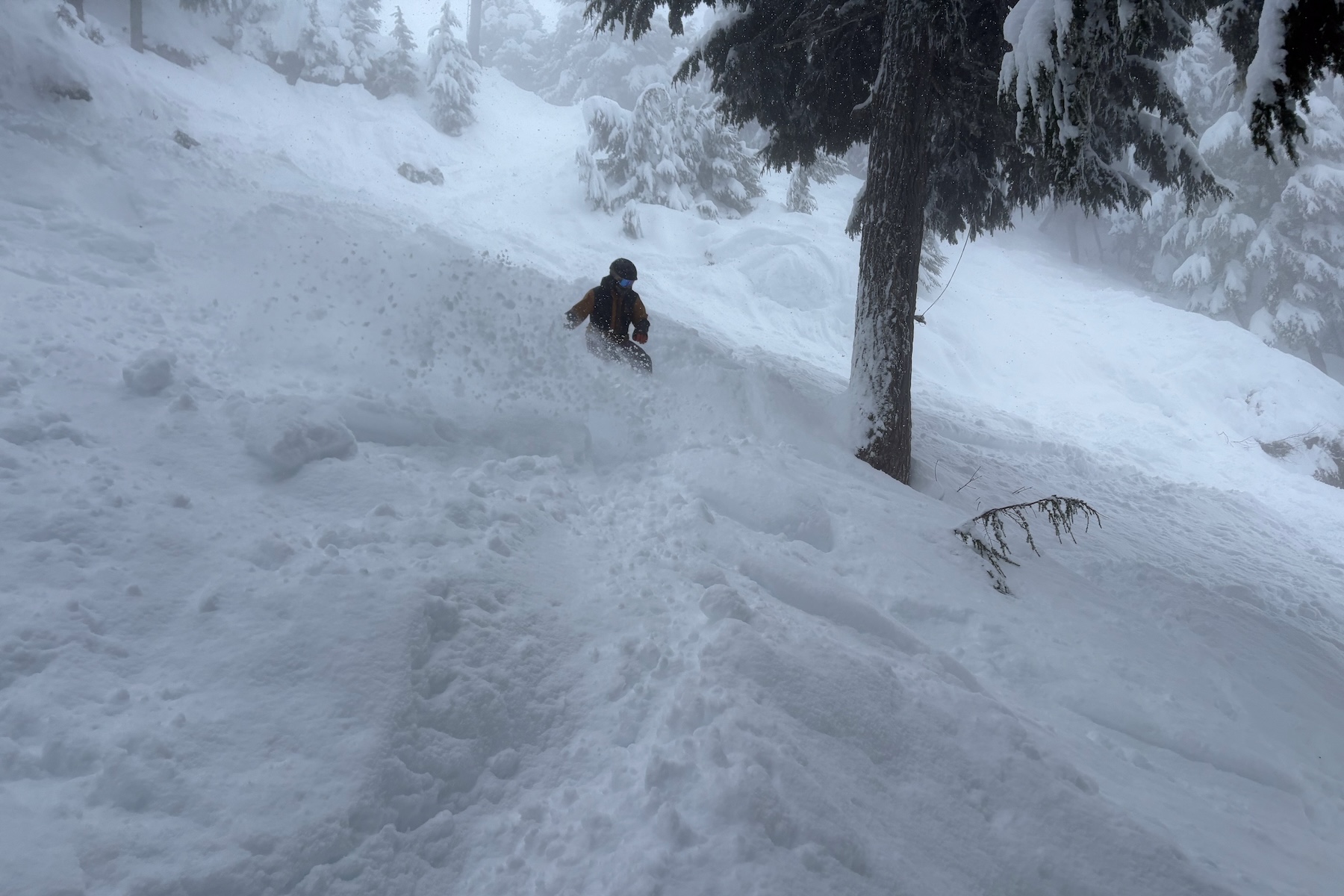
Perhaps the most notable trait here is how damp and composed the Alchemist feels on rough, undulating terrain / snow. The board does an impressive job of muting out feedback and keeping chatter to a minimum. Similar to its powder and soft-chop performance, the Alchemist feels most maneuverable with speed and/or steeper terrain, but remains agile enough to dodge problematic snow and terrain in less ideal conditions.
That said, the Alchemist is very much an advanced-to-expert-level board, and it requires an attentive and deliberate pilot. For windboard and crust, the stiff spine and tail can smash right through, as long as you keep the nose on top. Icy chunder is less ideal, where the Alchemist’s torsional stiffness can induce a bit of extra skipping at the edges, but we’re talking about conditions that aren’t much fun to ride on any board.
Groomers
The Alchemist’s strong and lively flex does a great job returning the energy put into it. I had plenty of fun taking advantage of that on groomers at moderate to fast speeds, trying to lay the board as far over on edge as I could. The edge hold was impressive and the board begged to be pushed with increasing speed and weight-loading. Here again, the Alchemist is exceptionally stable and does well with small-bump compliance, dissipating vibrations from the snow with little to no chatter in the nose.
For an all-round Freeride board, carving the Alchemist is predictable and doesn’t require a ton of rider input. While the Alchemist definitely prefers to go fast, especially in softer and more variable conditions, it can cruise on piste. For mellow carving, the board is quick to transition from edge to edge, feeling smooth and fairly easy for a stiffer (longitudinally and torsionally) board.
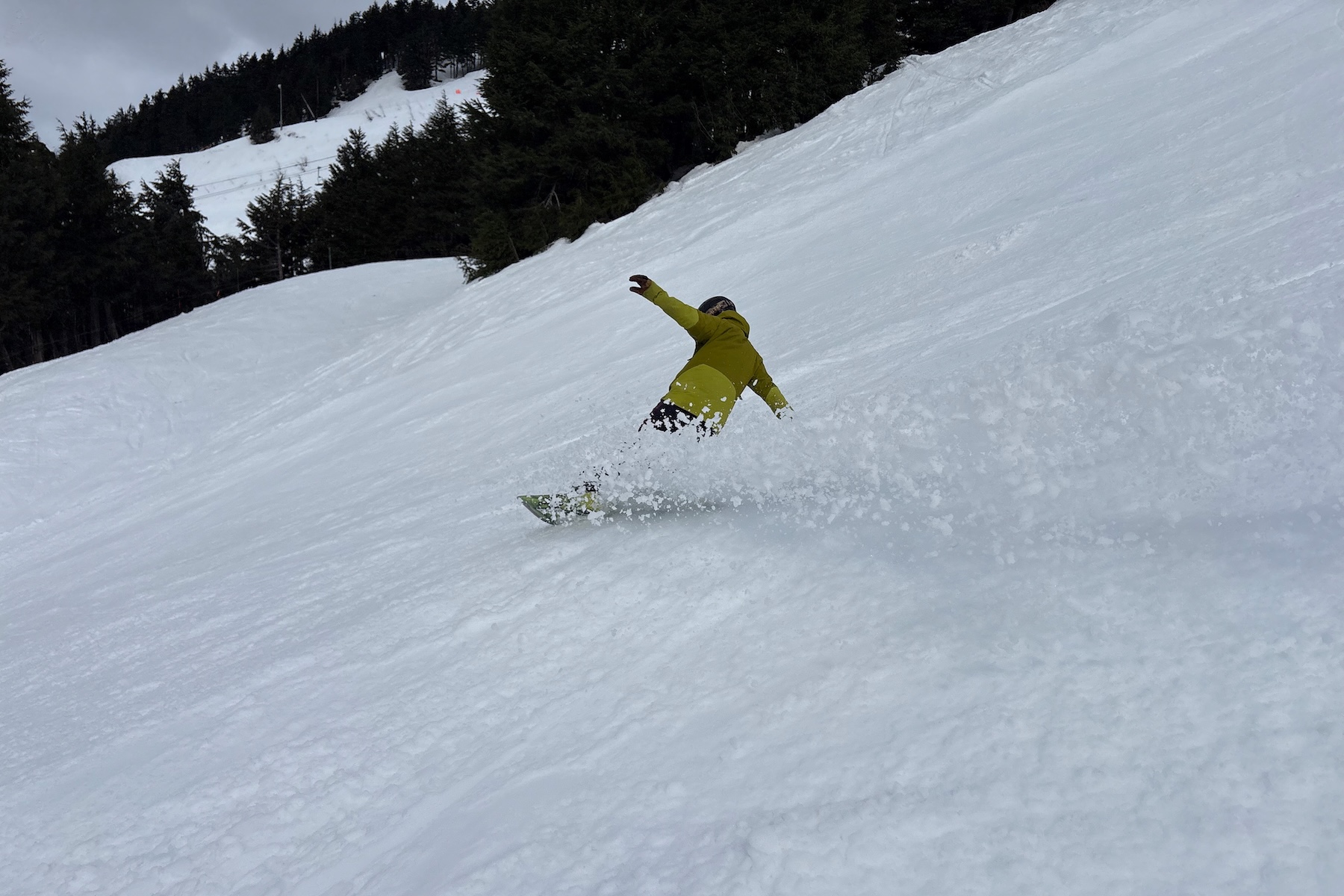
While K2 did a great job making a well-rounded yet hard-charging shape, I prefer more dedicated ‘Pow-Groomer’ shapes like the Head E.B.I. LYT and Nitro Squash if I’m mostly staying on piste. Those boards offer a more playful and intuitive carving experience, which has led to some amateur eurocarve attempts on my part. By comparison, getting that same fully loaded, laid-over feel on the Alchemist takes noticeably more speed and guts. In those cases where I did have the Alchemist fully laid over, I am happy to report that I had no issues with my US Men’s size 9 boot having any toe or heel drag (despite the 160 cm Alchemist’s modest 25.3 cm waist width).
Who’s It For?
The Alchemist is ideal for advanced to expert riders seeking a stiff and stable Freeride board — one that stays composed at high speeds yet remains lively enough for freestyle riders who like to send side hits and natural features into questionable terrain or conditions. It’s a strong candidate for a one-board quiver for go-fast riders; it handles most powder days with confidence, is a great carver for its class, and feels exceptionally locked-in and stable when conditions are less than ideal.
There are plenty of better options out there for folks looking for a softer, more playful, and jib-friendly option that still performs in powder. But if the priority is high-speed stability and control in everything from deep snow to variable, firm hardpack, the K2 Alchemist really stands out.
Bottom Line
The K2 Alchemist is a high-speed fiend, but a surprisingly versatile one for folks drawn to this class of Freeride boards.
Falling firmly on the stiffer side of the spectrum, the Alchemist is incredibly stable and does an effective job of muting chatter when it matters the most. Its directional shape offers adequate float for most powder days (<16”), while still providing impressive edge hold to lay trenches in soft groomers — all while remaining energetic when pushed hard. For experienced riders asking for stability and response while going fast, it’s hard to look past the Alchemist.