

Intro
Another year, another wheel standard for mountain bikers to speculate about — and get us worried that our current bike is about to become obsolete.
The past few months, we’ve heard more than a few rumors of 32” wheels being raced in the 2026 XC World Cup. And after BMC openly tested a 32” prototype during practice in Andorra, the rumors looked to be coming true. Since then, we’ve seen some boutique brands taking preorders for 32” XC and Trail bikes.
So where is 32” actually going to go? Will it garner race results that usher in a new big-wheel craze for racers and recreational riders alike? We’ve seen everything from excitement to cynicism from friends and industry folk, so we asked our reviewers to share their predictions.
Xan Marshland
I’m optimistic that 32” wheels will be great in certain applications, but I’m 50-50 on whether that greatness will show itself on the World Cup circuit.
But… I kind of want one.
First off: will they fit enough riders? It seems that the majority of World Cup downhill racers have already reached a consensus on max rear wheel size for a 200 mm DH bike. Almost every racer is now running a 27.5” rear wheel, even when a full 29er is available.
Take your rear travel down by ~40 mm, though, and you see a more even split between 27.5” and 29” rear wheels, both with Enduro World Cup pros and casual consumers. Then, take your rear travel down an additional ~40 mm, and you’re in the realm of a modern XC race bike.
Since 32” wheels are 3” (~76 mm) bigger in diameter than 29” wheels, you’d want to cap your 32” XC bike at about 84 mm of rear travel to maintain similar ass clearance to your 160 mm 29er.
With modern XC bikes running up to 120 mm of rear travel, compromises may need to be made somewhere. Humans are adaptable, though, and buzzing your tire a few times a lap doesn’t necessarily mean losing a race.
Let’s say these bikes do fit. Will they actually meet the demands of a modern XC course?
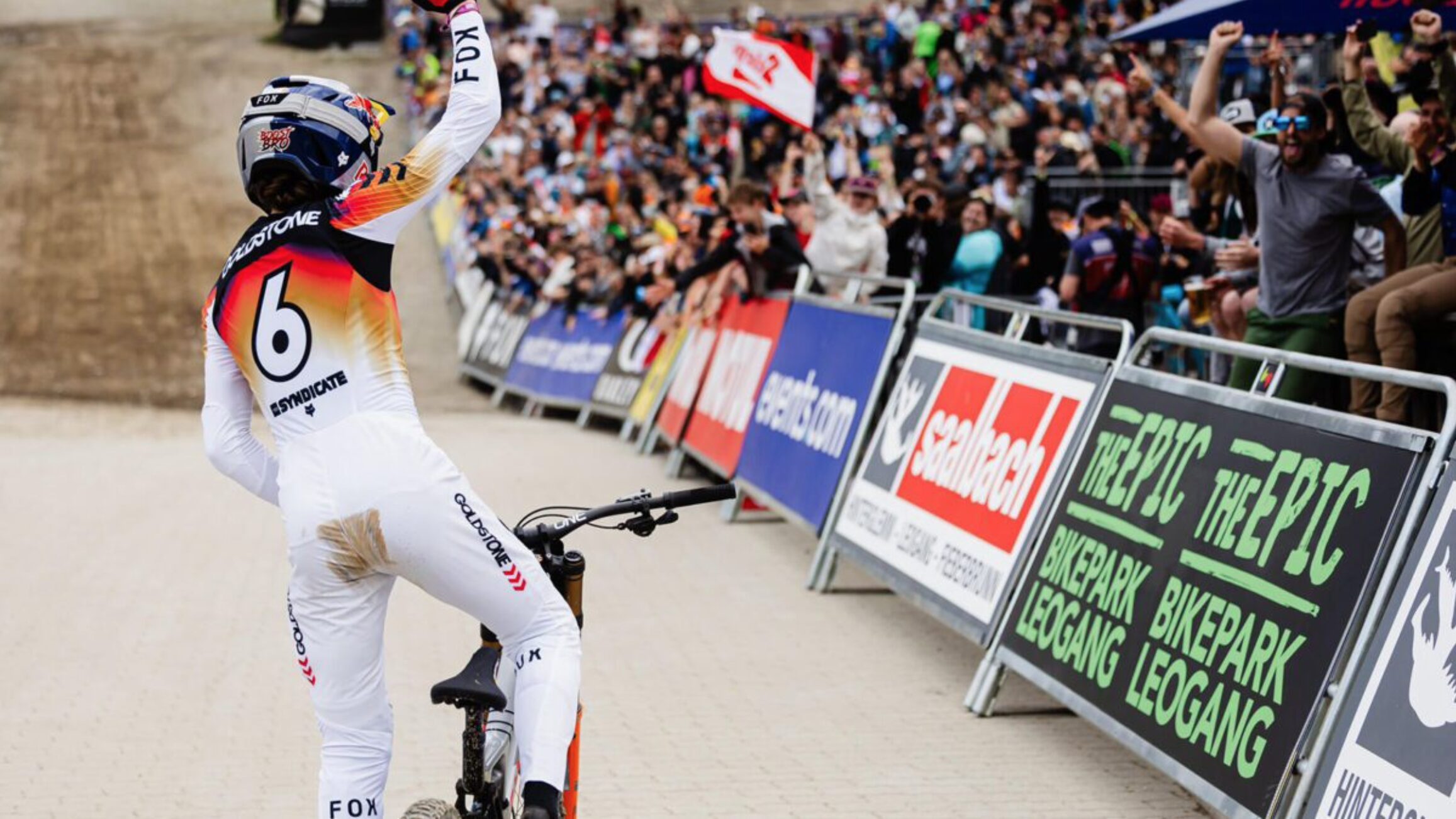
In case you missed it, World Cup XC is sick right now. Courses emphasize bike handling more than ever, and racers are charging into drops, gaps, and tech on minimal suspension and paper-thin tires.
Throwing the bike around while braking, accelerating, and cornering clearly matters. Adding a bunch of rotating mass to the equation isn’t a guaranteed success.
But what if you don’t accelerate, brake, or corner like a World Cup racer on a twisty, technical course? The stability, superior rollover, and greater contact patch of bigger wheels could have some major benefits outside of the scope of World Cup XC.
In particular, I’m thinking about a bike race that hasn’t evolved much: Leadville. For that matter, backcountry gravel riding, touring, bikepacking, marathon XC, and really, all of the various subgenres of endurance off-road riding strike me as excellent places for huge wheels.
If your top priority is covering miles and miles of varied terrain, choose the wheel that rolls over stuff and maintains its momentum.
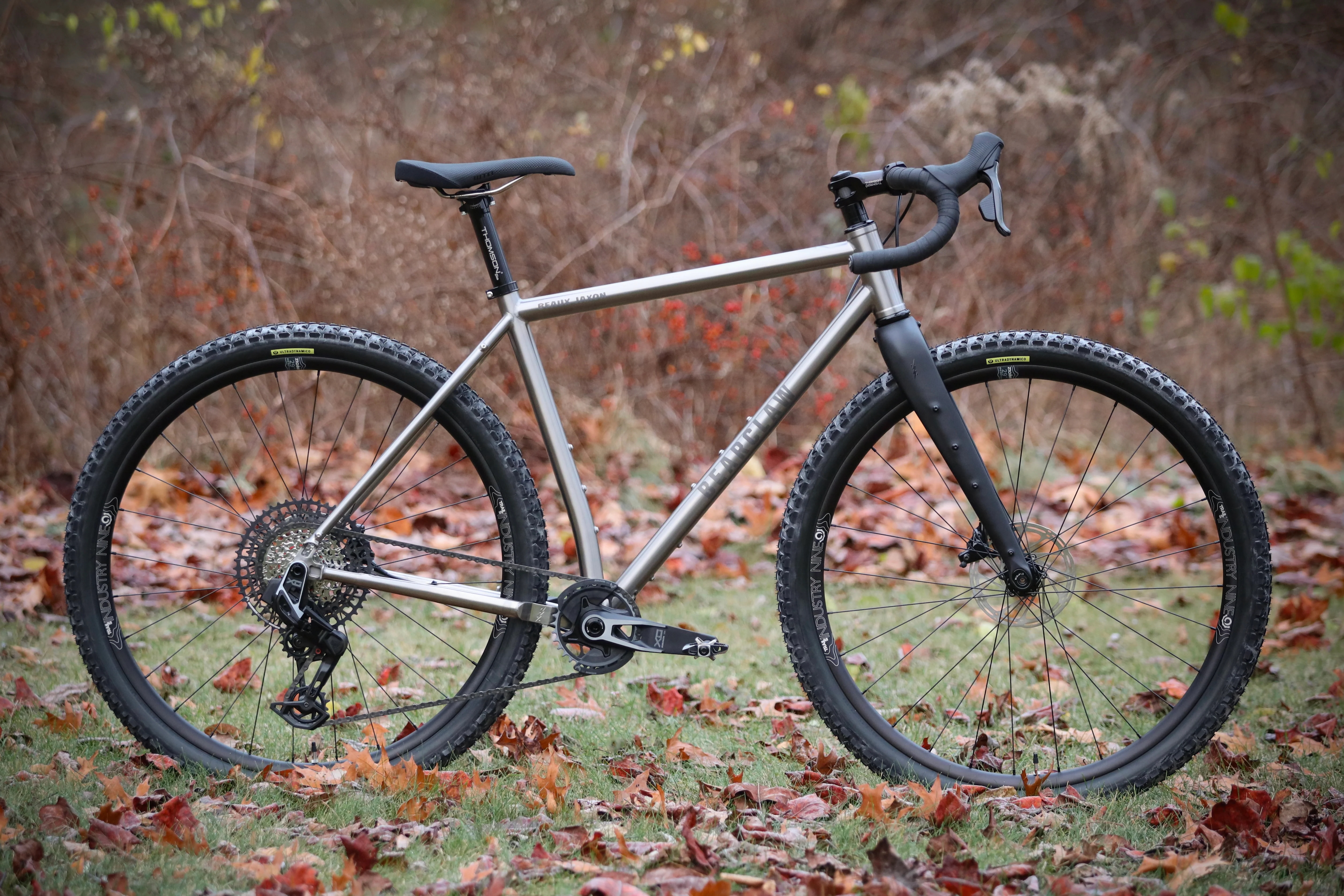
32” wheels could be a lighter, faster rolling version of the plus tire trend from 10 years ago – reaping similar benefits in their increased contact patch, but without heavy, wide, and vague feeling tires. I can think of a few 80+ mile loops in the Utah desert that would be faster and more comfortable for most riders if they were on a 32” bike with sub-2” tires and a fast-rolling gravel tread.
The problem is that we’ll likely need some notable World Cup success for this to happen. So hopefully someone puts my skepticism to rest and wins on one soon. Then in a few years, I’ll romantically pedal my 32” adventure rig away from the race tape and into the sunset.
Zack Henderson
Will 32” wheels see notable race results on the XC World Cup this year?
My crystal ball says yes, but with a caveat that we’re not totally sure which teams will have 32’’ bikes. I’m guessing that most teams will be spending the offseason at least testing 32’’ wheels, and it’ll be interesting to see what sorts of wild prototypes are rolling around the pits next year. If that part of the prediction is true, and some of the fastest teams are able to get bikes on track for next year, we’ll likely see a 32’’ win because of the marginal gains they might afford on certain tracks.
32’’ wheels should preserve momentum more effectively thanks to their better rollover. Accelerating takes more energy than maintaining speed, so they could bring big gains in energy preservation, depending on the track. Their larger contact patch should also allow running more efficient tires without paying too much of a grip penalty. We’ll see whether the tire availability challenge can be solved by all teams, but with Maxxis making a 32’’ Aspen, we may see teams simply busting out their trusty Sharpies.
Will 32” wheels actually sell to regular consumers?
Of course — I can already hear the hype train rumbling down the tracks. Especially with XC and Gravel riding being quite popular in a lot of places now, I think 32’’ wheels will be the next big thing that folks want to try. I’m very curious to see how manufacturers go about adapting such big wheels to frames that fit average to shorter riders, but for now, I can at least envision taller riders who favor more endurance-style riding getting excited about the proposed benefits of 32’’ wheels.
In what applications will they excel beyond World Cup XC?
This feels murkier to me still. I already mentioned Gravel riding above as a near-certain application (at least in my mind), and I could see some folks who favor short travel Trail bikes dabbling in 32’’ front / 29’’ rear mullet setups, especially if they live in areas with more open, pedally terrain.
For the rest of us, I’m curious to see what manufacturers come up with. I’m sure that 32’’ bikes (or at least ones with a 32’’ front wheel) will be made for the Trail and maybe even Enduro segments, but whether they’ll “excel” is a big question. Bigger wheels will mean more weight, less strength, and less stiffness, all of which start to sound like tough compromises as you move up the scale of more gravity-oriented riding. The packaging constraints will likely also require some odd compromises, particularly in rear suspension design.
Where’s the limit on travel?
I’m guessing that anything beyond a 140 mm or 150 mm fork will start to feel extremely tall when combined with such a big wheel — and I for one don’t like the idea of running a short and aggressively dropped stem for several reasons. Rear travel-wise, I think the limit may be shorter, though different suspension designs (i.e., ones with mostly vertical or even rearward wheelpaths) might be able to accommodate. Still, I don’t see there being much of a chance of 32’’ rear wheels seeing any sort of broad adoption beyond XC and Gravel.
As we slide up the spectrum from Trail to Enduro to Downhill, I think 32’’ wheel adoption rates will diminish. I’m not sure that I can imagine riders choosing a 32’’ wheel at the rear. Let’s keep in mind that a lot of riders — even taller ones — have found themselves preferring 27.5’’ rear wheels over the 29’’ ones that most were running just a couple of years ago. With such a massive size difference between 27.5’’ and 32’’ wheels, I also can’t really imagine anyone running an ultra mullet of such proportions. Add in the greater premium on strength and lateral stiffness, and I think 32’’ wheels may find an impenetrable ceiling on the gravity side of things.
David Golay
Will 32” wheels see notable race results on the XC World Cup this year?
There are definitely going to be some folks racing 32’’ wheels this year; I’m less sure how well they’re going to do. My thinking has less to do with whether or not bigger wheels might be theoretically faster in some situations, and more about which teams and riders are going to take a gamble on racing them.
There is definitely some testing and experimentation going on right now, but I’m a little skeptical that all the requisite parts — forks, wheels, tires, etc. — will be fully baked and ready to go when the season starts. I’d bet on most of the top contenders playing it a little safer and sticking with 29’’ wheels for the time being; what happens in 2027 will be more telling.
Will 32” wheels actually sell to regular consumers?
They’re the future, and you’ll all be eating crow when 32’’ dirt jump bikes are the norm in a few years.
Just kidding. I do think that some 32’’ bikes will hit the market, and some curious folks will buy them. They might even be great for the right riders. But I don’t think 32’’ wheels are going to take over the MTB world as a whole the way 29’’ ones did, for reasons we’ll get to in a minute.
In what applications will they excel beyond World Cup XC?
I bet 32’’ wheels see some adoption in the adventure / bikepacking realm, and maybe trickle into gravel bikes a bit. I also wouldn’t be surprised to see some companies try mega mullet setups with 32’’ front and 29’’ rear wheels for shorter-travel Trail bikes and the like, but:
Where’s the limit on travel?
I think the travel limit is relatively short. I don’t have an exact number in my head, but the packaging starts to get rough pretty quickly as you go up in travel. Stack height and tire-to-butt clearance are obvious ones, but there are more subtle issues, too.
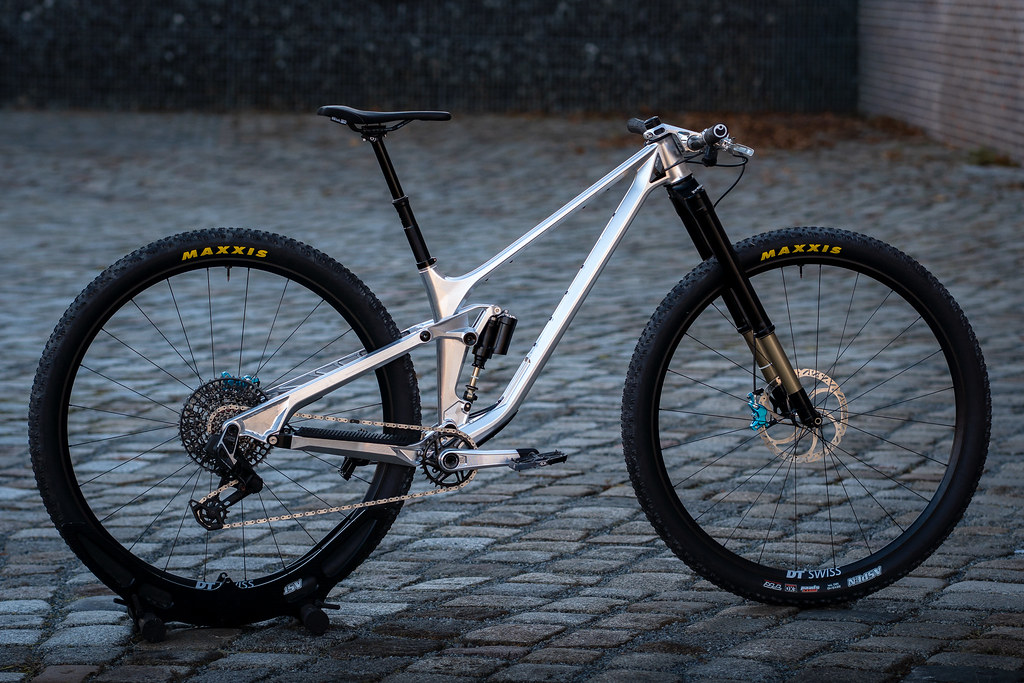
Axle path, for example. Without going too far off into the weeds, a larger rear wheel generally results in the axle moving farther forward at bottom out. Pair that with the added clearance needed for the bigger rear wheel and tire, and you’re quickly looking at some combination of really long chainstays, a high-pivot + idler layout, and/or a massively kinked seat tube and slack actual seat tube angle for it all to fit as you move up in travel.
Those things are doable, and I’m sure we’ll see some experimentation there; I also just think that the limitations will prove substantial enough that we ultimately don’t go too far down that particular evolutionary branch.
We’ve also already seen World Cup DH bikes pull back from full 29er setups, with mullets (mostly) taking over there. That feels like a pretty clear indication that we’re bumping up against the practical wheel size limits for DH bikes, and I don’t see Enduro or All-Mountain bikes being so different there as to make a massive leap in wheel size suddenly make sense.
Remember, we’re talking about a big step up in size from 29ers. Nominal wheel sizing is pretty stupid (that’s a separate topic), but if we use the tire bead seat diameter as the most consistent reference, the gap between a 29’’ wheel and a 32’’ one is 1 mm bigger than going from a 26’’ wheel to a 29er.
Simon Stewart
Will 32” wheels see notable race results on the XC World Cup this year?
This is a tricky one to predict, given that the majority of the big brands prominent in the XC World Cup circuit are being notably secretive about their 32” development. BMC is the exception, with Titouan Carod openly riding a prototype during practice at the Andorra World Cup in June. I would be surprised if we didn’t see a BMC 32er on the start line in 2026, and given BMC Factory Racing has some ringers with both Leona Lecomte and Jordan Sarrou having won multiple XC World Cups, I’m leaning towards there being a decent chance we’ll see 32” wheels on the podium next season.
Will 32” wheels actually sell to regular consumers?
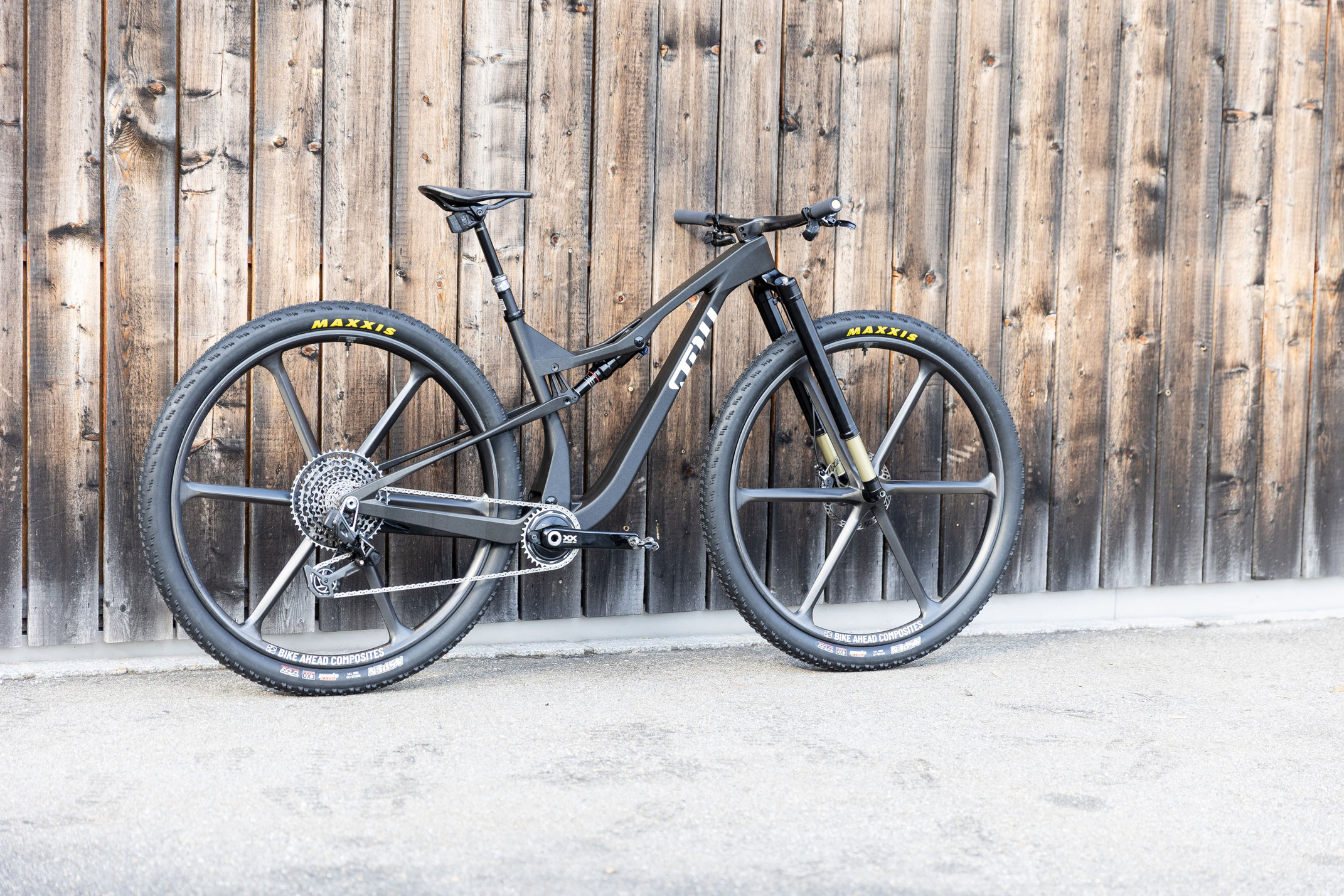
It’s looking very likely; the Stoll P32 is already available for pre-order.
In what applications will they excel beyond World Cup XC?
A few years from now, I think we’ll be surprised by how good they are in many different categories, but I’d put my money on the Trail category showing the most promise.
Where’s the limit on travel?
I’ve been on the front lines in the bike industry, media, and retail for pretty much all of the polarizing mountain bike innovations – disc brakes, dropper posts, and 29” wheels, to name a few. This has taught me to not be too quick to judge and to be patient, because there are a lot of incredibly smart and creative engineers behind those innovations.
I doubt we’ll see much of a limit on travel, and yes, I’m aware of the design challenges of the bigger wheels, but 29” bikes started with short travel and it took a good few years before bike companies figured out the geometry and we started to see longer travel. I think 32” wheels – well, at least one on the front – will likely find their way into all the categories.
What are your predictions for the future of 32″ wheels? Let us know below.
As a fully grown adult with a 29 inch inseam, I wasn’t sure about switching to 29 inch wheels on my MTB.
So I ride my Honzo ST as a mullet 29/27.5. Great fun and although changes the intended geometry, I find it very easy to ride up hill and a hoot down.
My Adventure bike is 29/29 but I could see where 32/32 might add some efficiency once you get them rolling. I can’t help but smile a little, with my small stature I would be teetering on my tip toes or sitting between the wheels, like those antique run bikes. I’ll likely stick with what I know and have now.
You guys could have asked the makers of 32er and even maybe the pioneer of this wheel size (DirtySixer) instead of adding speculation and approximation.
Hi David,
As a fan of Dirtysixer, and as someone who has excitedly swung a leg over a few of your bikes throughout my time in the industry, thanks for reaching out.
The purpose of this article was entirely for us to make speculations – in particular about the potential World Cup racing successes and mainstream adoption of 32” wheels. It’s interesting to see where our reviewers’ predictions align and differ, and it’ll be fun to see how accurate our predictions become in the future.
In addition to making educated guesses, we also host podcasts with in-depth conversations with product designers, athletes, and visionaries from across the bike industry.
So in short, there’s room for both. Speculation on industry trends and enjoying conversations with innovators is never mutually exclusive.