
Test Locations: Remote Alaska (arctic & subarctic)
Duration of Test: 3 years
Test Conditions: extensive solo and 2-person backcountry trips in variable conditions, ranging from dry alpine to shoulder-season snow
Specs (click button to expand)
Stated Weights (X-Mid Pro 2)
- Shelter: 17.9 oz / 509 g (Dyneema® floor) or 19.9 oz / 565 g (Silnylon floor)
- Stuff Sack: 0.3oz / 8g (Dyneema®) or 0.4 oz / 12 g (Silnylon)
- Optional DAC J Stakes: 7 g per 6” stake or 16 g per 8” stake
- “Typical Setup” (shelter, sack, 6 stakes): 21.0 oz / 595 g (Dyneema® floor) or 23.1 oz / 655 g (Silnylon floor)
Blister’s Measured Weight: 24.7 oz / 700 g*
- *Includes shelter w/ Silnylon floor + stuff sack + aftermarket guylines (detailed below)
Stated Dimensions:
- Length: 90” (229 cm)
- Width: 46” (117 cm)
- Peak Height: 46” (117 cm)
- Total Vestibule Area: 23 square feet (~2 square meter)
MSRP:
- X-Mid Pro 2 (tested): $679
- X-Mid 2: $319
Intro
If you’re in the market for a backcountry shelter, you’re spoiled for choice in today’s market. But that’s also why it can be so hard to narrow down your options and find the one that would best suit your particular use case.
If you look at freestanding tents, they vary from ultralight to extremely rugged and protective. There’s a similar spectrum when it comes to more minimalist alternatives like tarps and pyramid-style shelters. And then you’ve got the category of ‘trekking pole shelters,’ which ditch a dedicated set of tent poles and utilize your trekking poles to (typically) provide more protection and easier setup than more basic tarps.
For most of my life, I’ve spent multiple weeks or months each year in remote regions of Alaska, and I’ve brought all sorts of shelters with me over the years. Striking an ideal balance of weight, weather protection, and ease of use is no easy task for this use case.
But, currently, Durston’s X-Mid Pro 2 trekking-pole shelter is one of the best solutions I’ve found. Let’s dig into why:
Design, Materials, & Options
In short, the Durston X-Mid Pro 2 is the most intelligently designed lightweight shelter I’ve used in a lifetime of stumbling around the mountains with some sort of ‘tent’ in my pack.
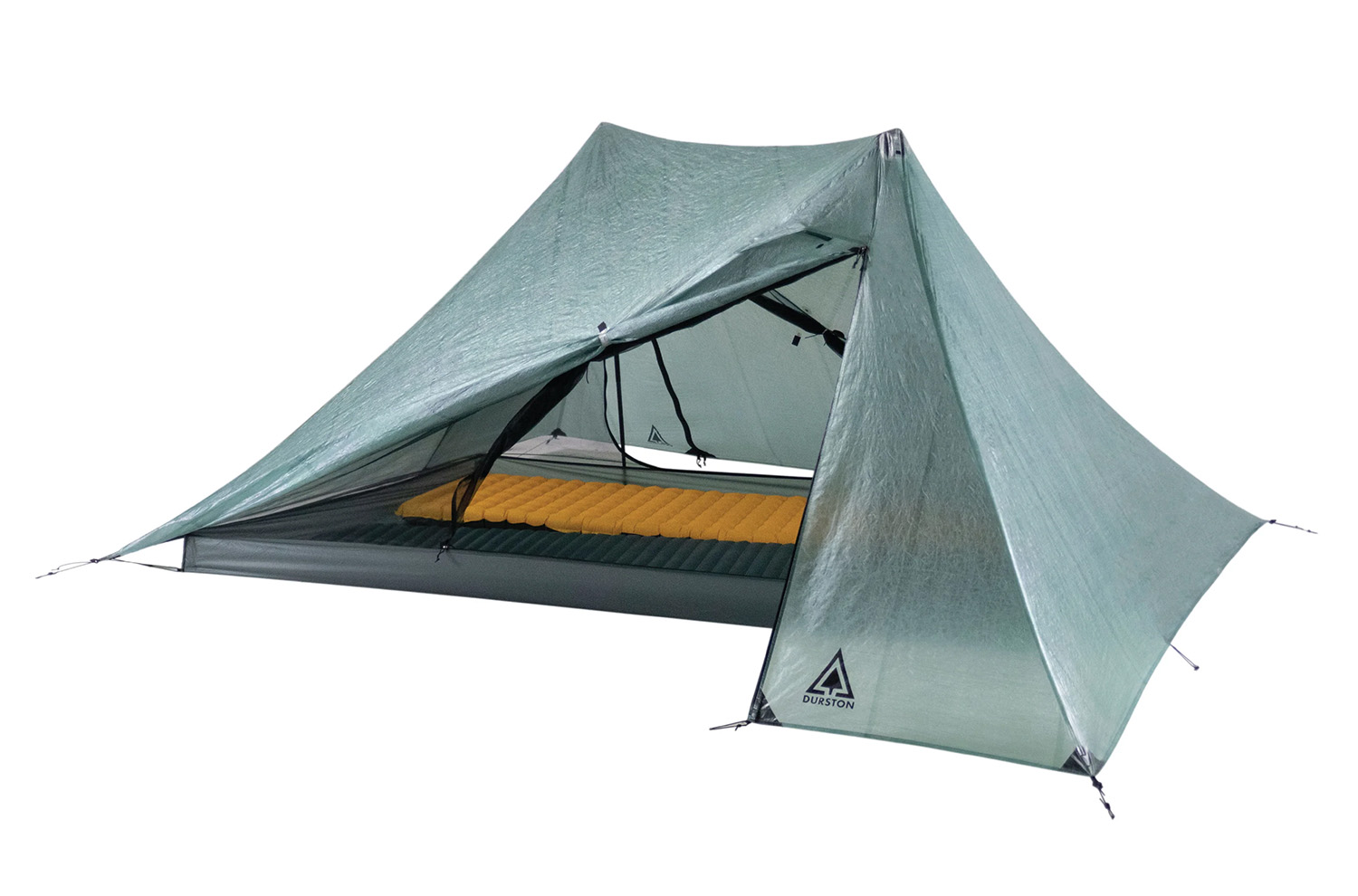
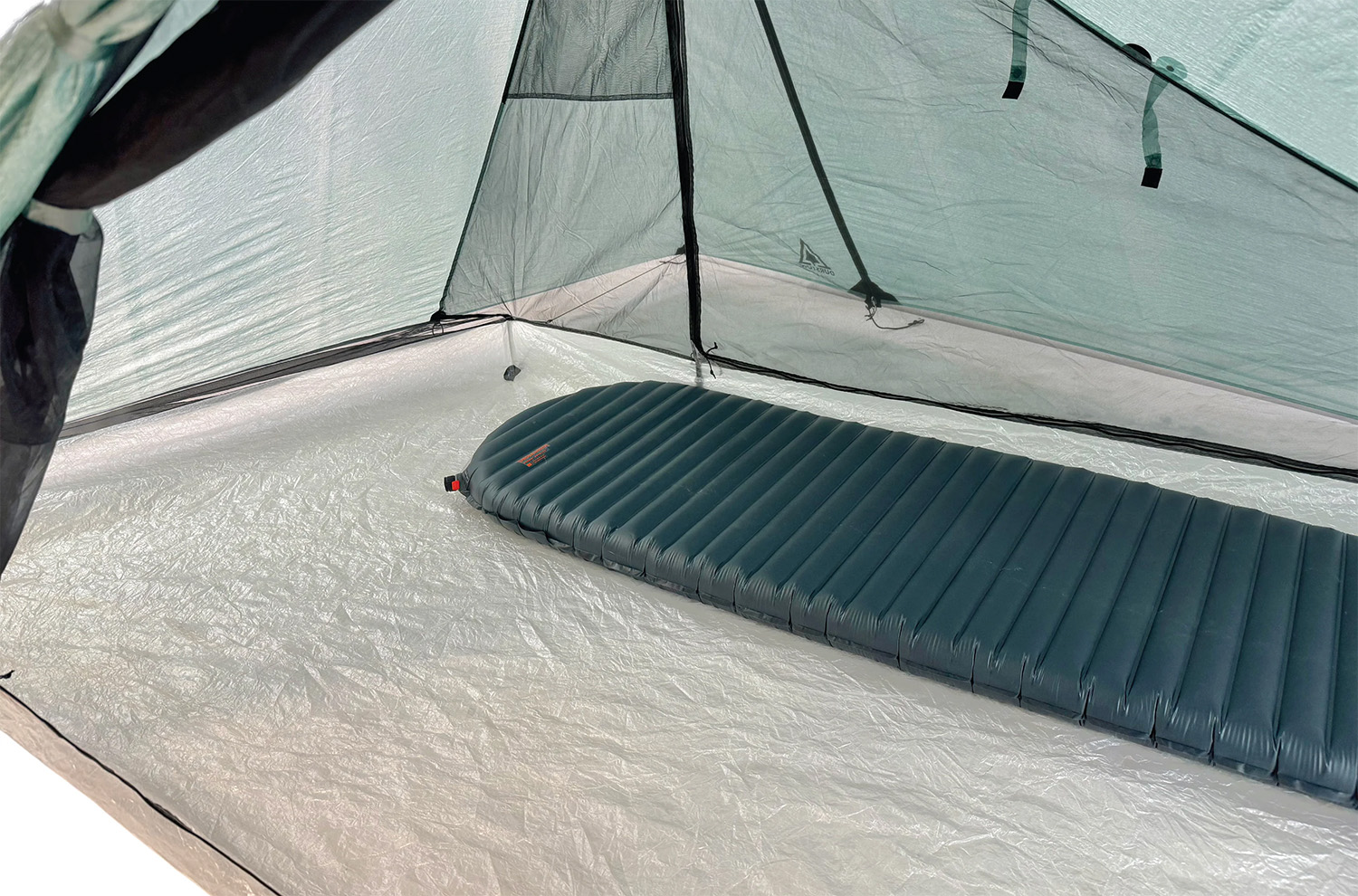
Durston’s X-Mid design utilizes a pair of trekking poles and a minimum of four stakes to be pitched, with no mandatory guylines. While the X-Mid Pro 2 is sewn into one “single-wall” unit, it features a sealed mesh interior covered by a fly that also forms dual vestibules. The floor is connected to the outer shell at two points at each corner, creating a true ‘bathtub-style’ structure once tensioned at the stake-out points.
There are small peak vents atop the X-Mid Pro 2’s dual doors, both of which are pretty large, not blocked by the trekking poles, and feature magnetic toggles to roll out of the way when needed.
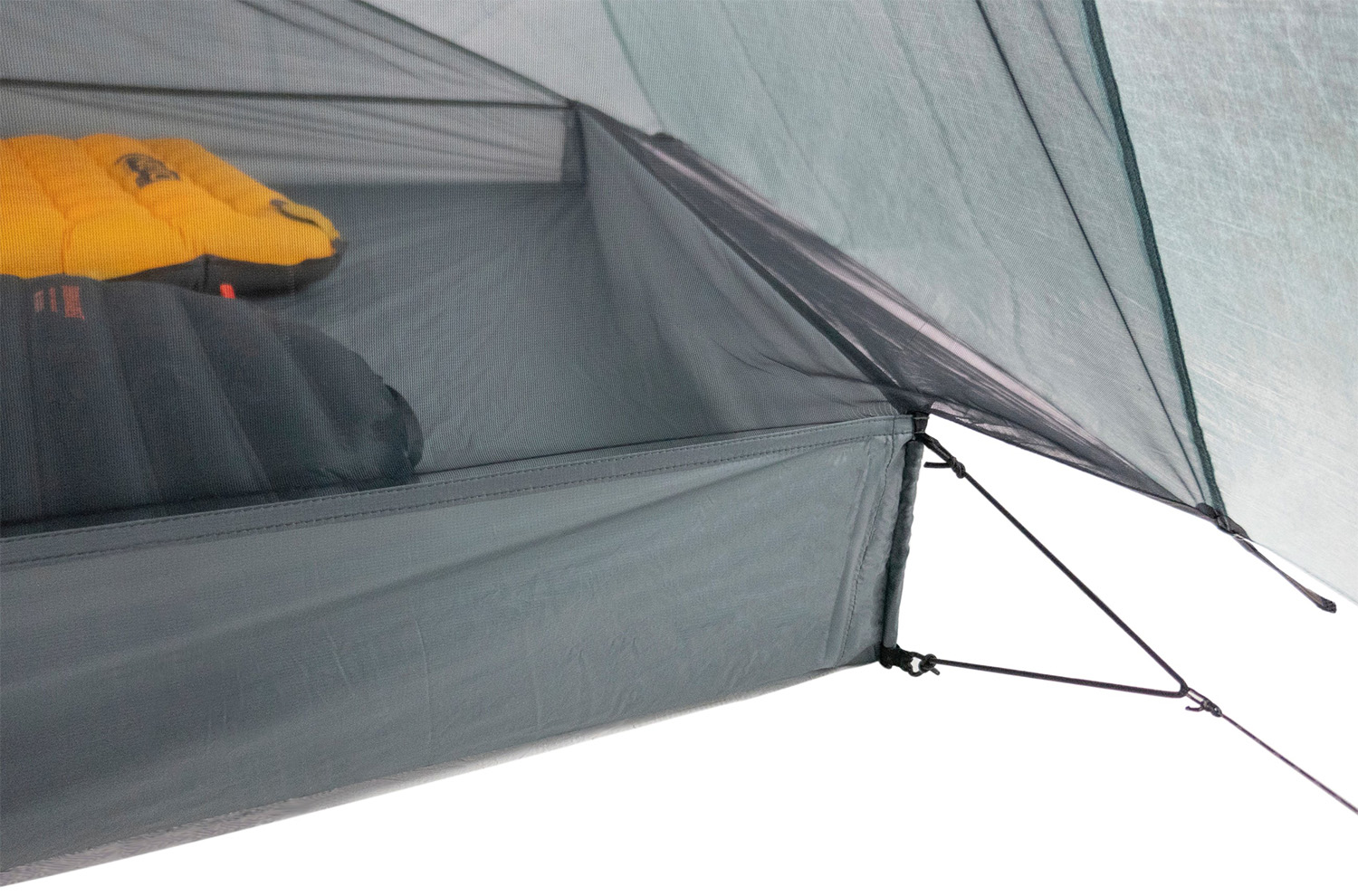
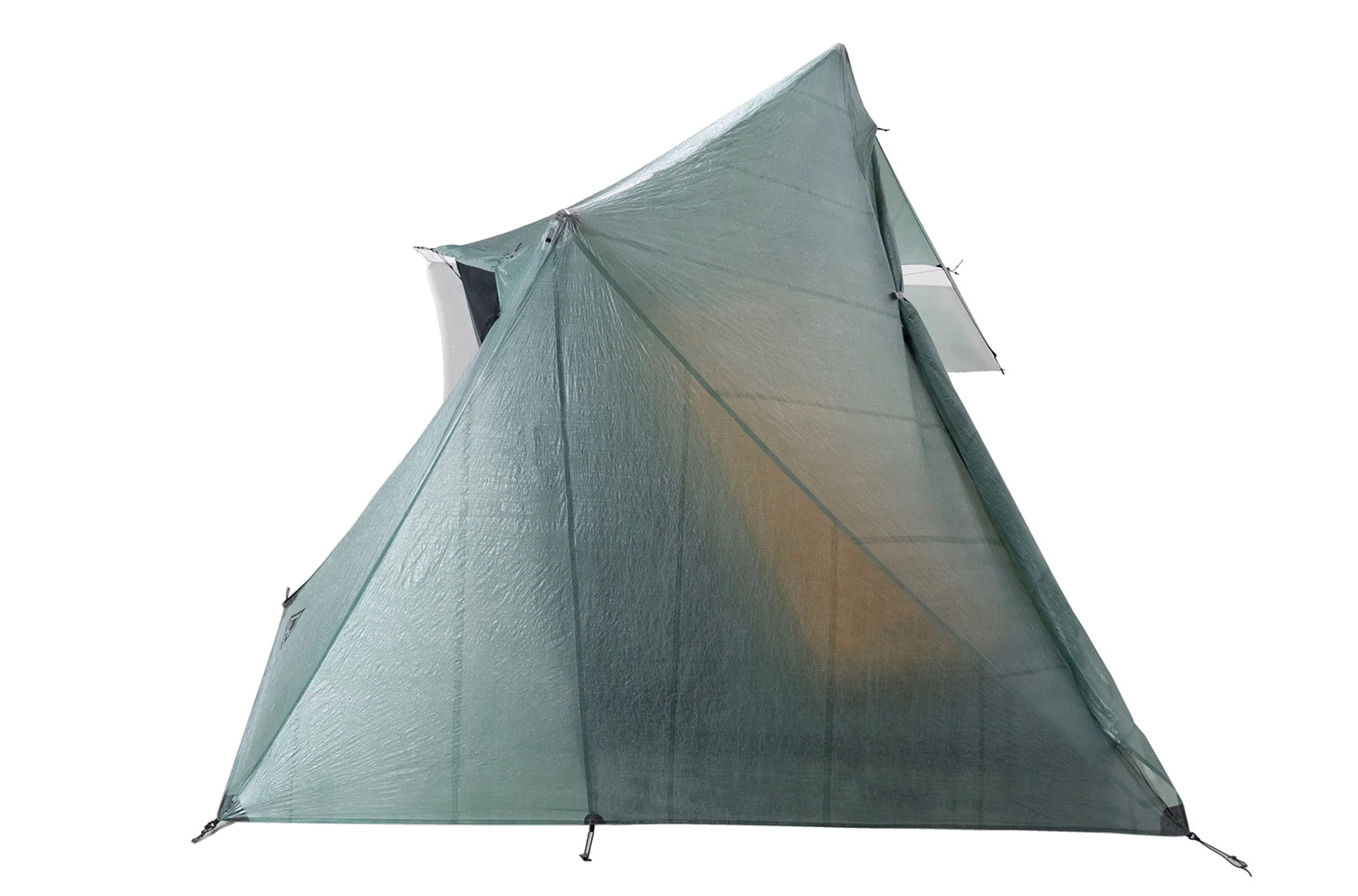
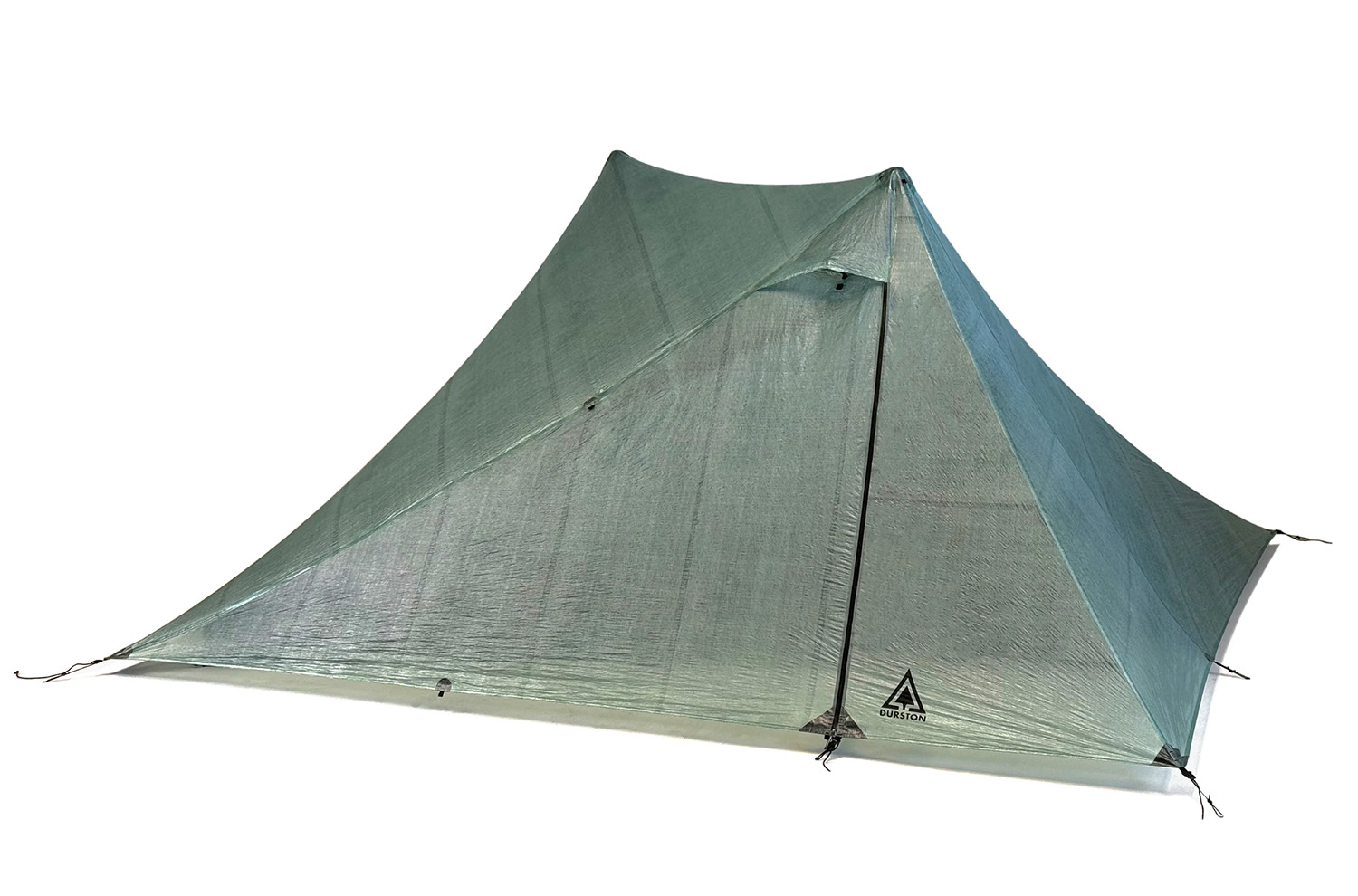
While the X-Mid’s design appears rectangular at first glance, the clever offset of the bathtub floor, relative to the outer shell, creates triangular vestibules on both sides without compromising internal living space. The result is exceptional space efficiency — I don’t think I’ve used any other tent that offers this much usable floor space relative to its weight and packed size.
The “Pro” version of the X-Mid reviewed here uses a high-end Dyneema Composite Fabric (0.55-oz) as the primary material for the fly / outer shell. Dyneema-branded fabrics use various implementations of ultra-high molecular weight polyethylene fibers (UHMWPE), which are known for their exceptionally high strength-to-weight ratios, water resistance, and lack of elasticity / stretching.
Durston also offers the standard X-Mid, which utilizes polyester for the shell fabric and is a true “double wall” design (i.e., inner mesh tent and separate fly / shell). On paper, the standard X-Mid 2 weighs at least 315 g / 11.1 oz more than the Pro version, but the Pro version (MSRP: $679) is a lot more expensive than the standard version (MSRP: $319).
Durston pairs the X-Mid Pro 2’s Dyneema outer shell with a woven 15D silnylon floor. Alternatively, you can save a reported 59 g (2.1 oz) by opting for a 0.66-oz Dyneema floor (for a $110 upcharge). I’ve been testing the X-Mid Pro 2 with the regular silnylon floor; more on that below.
The X-Mid Pro 2 doesn’t come with stakes or trekking poles as standard, but you can add eight DAC J stakes for a $10 upcharge.
Sizing & Variants
Durston offers multiple variations of this shelter, all of which feature similar geometry and setup, but with different dimensions and materials:
- X-Mid 1
- X-Mid Pro 1
- X-Mid 2
- X-Mid Pro 2
- X-Mid Pro 2+
- X-Mid Solid 1
- X-Mid Solid 2
The numbers in those names indicate the number of people they’re meant to house. As we just touched on, the “Pro” versions use lighter and more expensive Dyneema fabrics. The “Solid” versions still use polyester for the outer shell (like the standard versions) but feature less mesh in the inner tent in an effort to offer more protection in harsher weather.
Durston says that the X-Mid Pro 2 can fit two hikers up to 6’4″ (193 cm) tall, or a single person up to 7’0″ (213 cm).
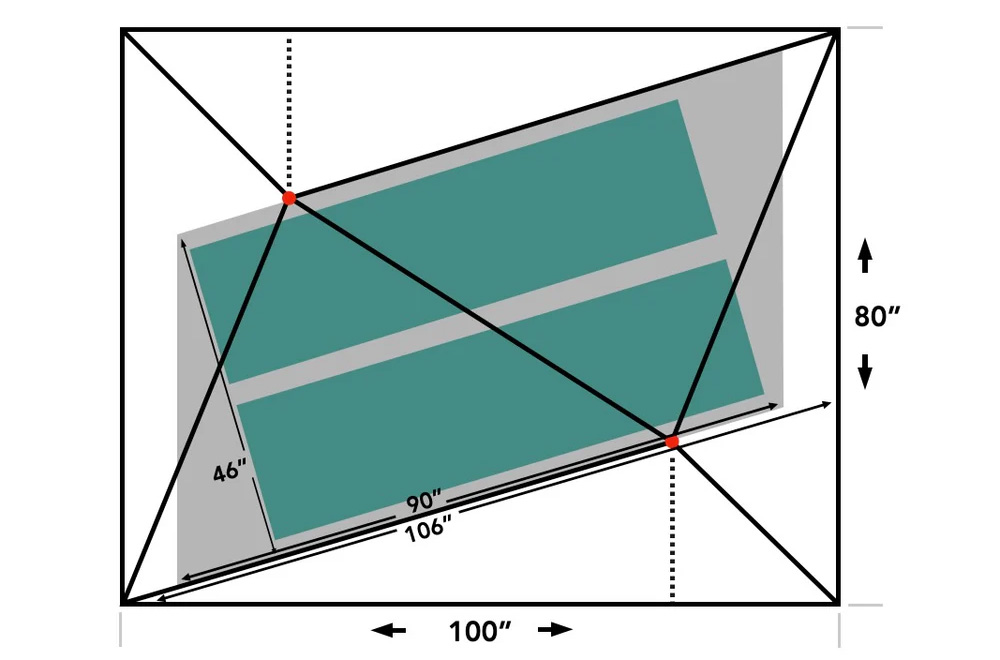
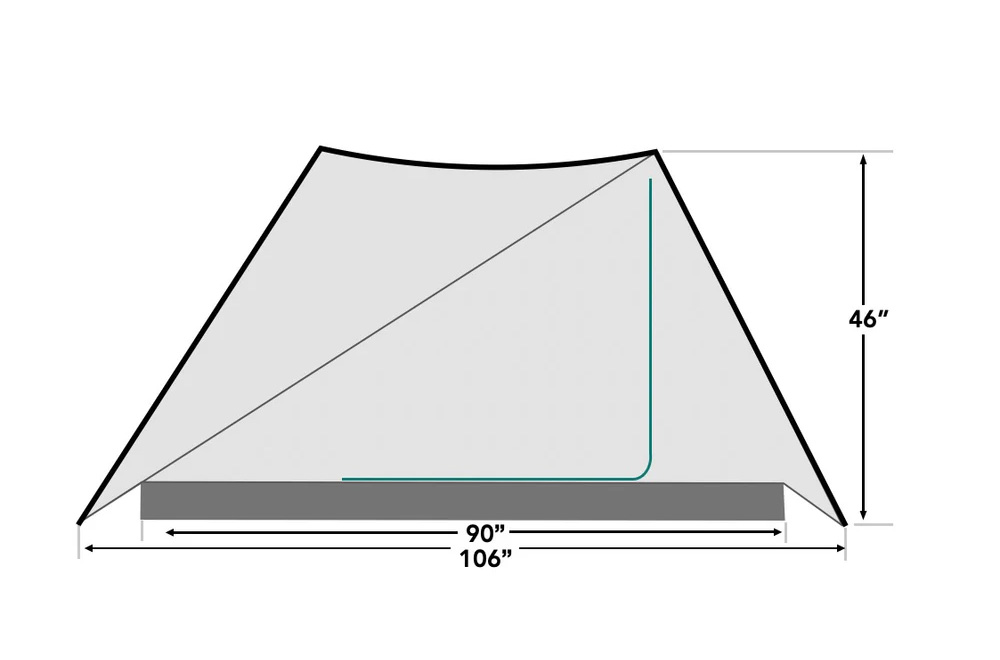
The X-Mid Pro 2 is 90” (229 cm) long, 46” (117 cm) wide, 46” (117 cm) tall at the highest point, and Durston says that each of its dual vestibules has an area of 11.6 square feet (~1 square meter).
Weight and Packability
The X-Mid Pro 2 punches well above its weight class. At about 655 g / 23.1 oz with the silnylon floor and six stakes, it’s incredibly light, given what it provides in terms of true two-person capacity, dual vestibules, and full protection from bugs and most weather.
[Note: My X-Mid Pro 2 shelter and stuff sack weighs 700 g / 24.7 oz without stakes but with some additional, non-standard guylines, which I’ll touch on below.]
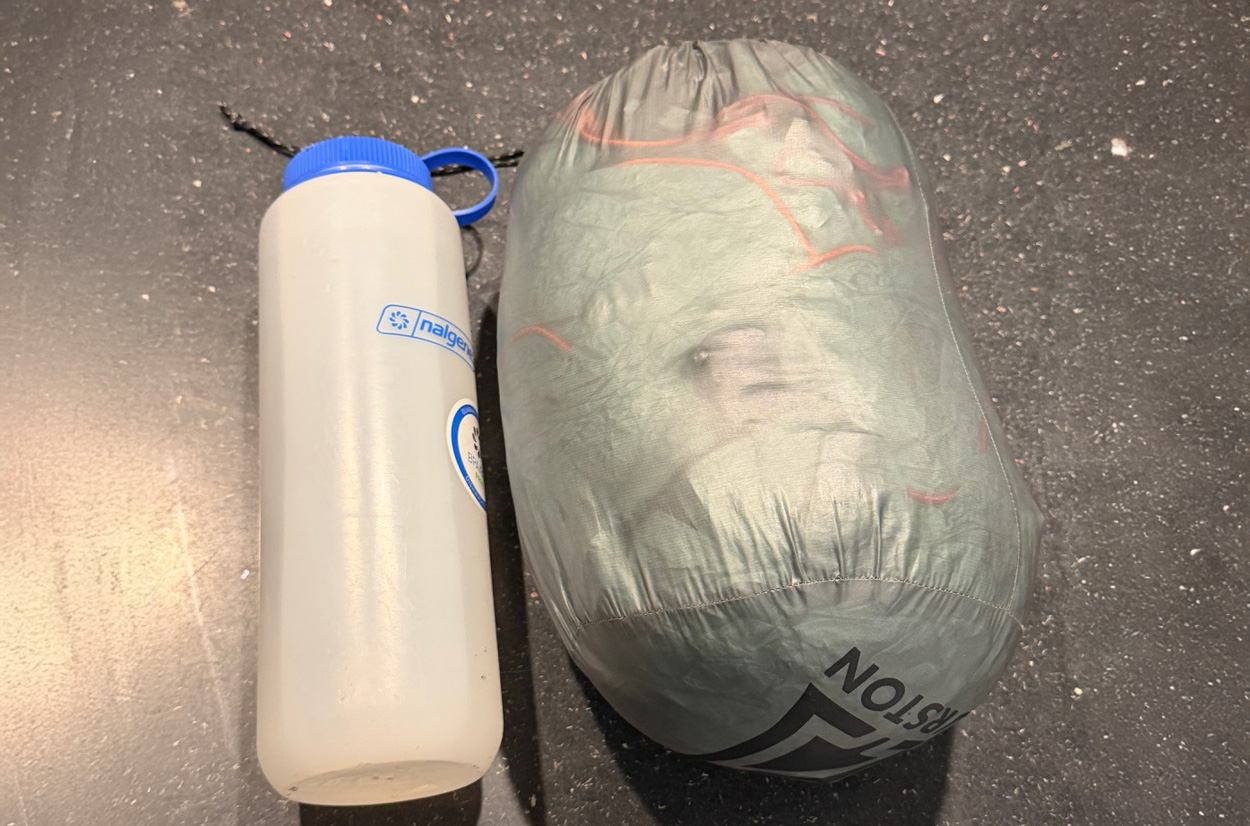
From my perspective, the use of silnylon on the floor gives the X-Mid Pro 2 a big advantage over full-Dyneema shelters on trips where volume matters. Full-Dyneema construction can be lighter, but it typically takes up more space because of Dyneema’s more rigid structure. Also, in my experience, Dyneema gains a bit of bulk when wet, whereas silnylon and silpoly tend to pack more tightly when wet.
For reference, my X-Mid Pro 2 with the silnylon floor packs down to be a little bigger than an American football.
Setup
In contrast to many ultralight shelters I’ve used, setting up the X-Mid Pro 2 is incredibly simple.
In calm weather, the tent can be pitched with four stakes and two trekking poles. Just stake out the four corners, insert the trekking poles, adjust them to the ideal height if needed, and you’re ready to go. Even in moderate winds, the X-Mid’s geometry tensions well and creates a fast, stable structure.
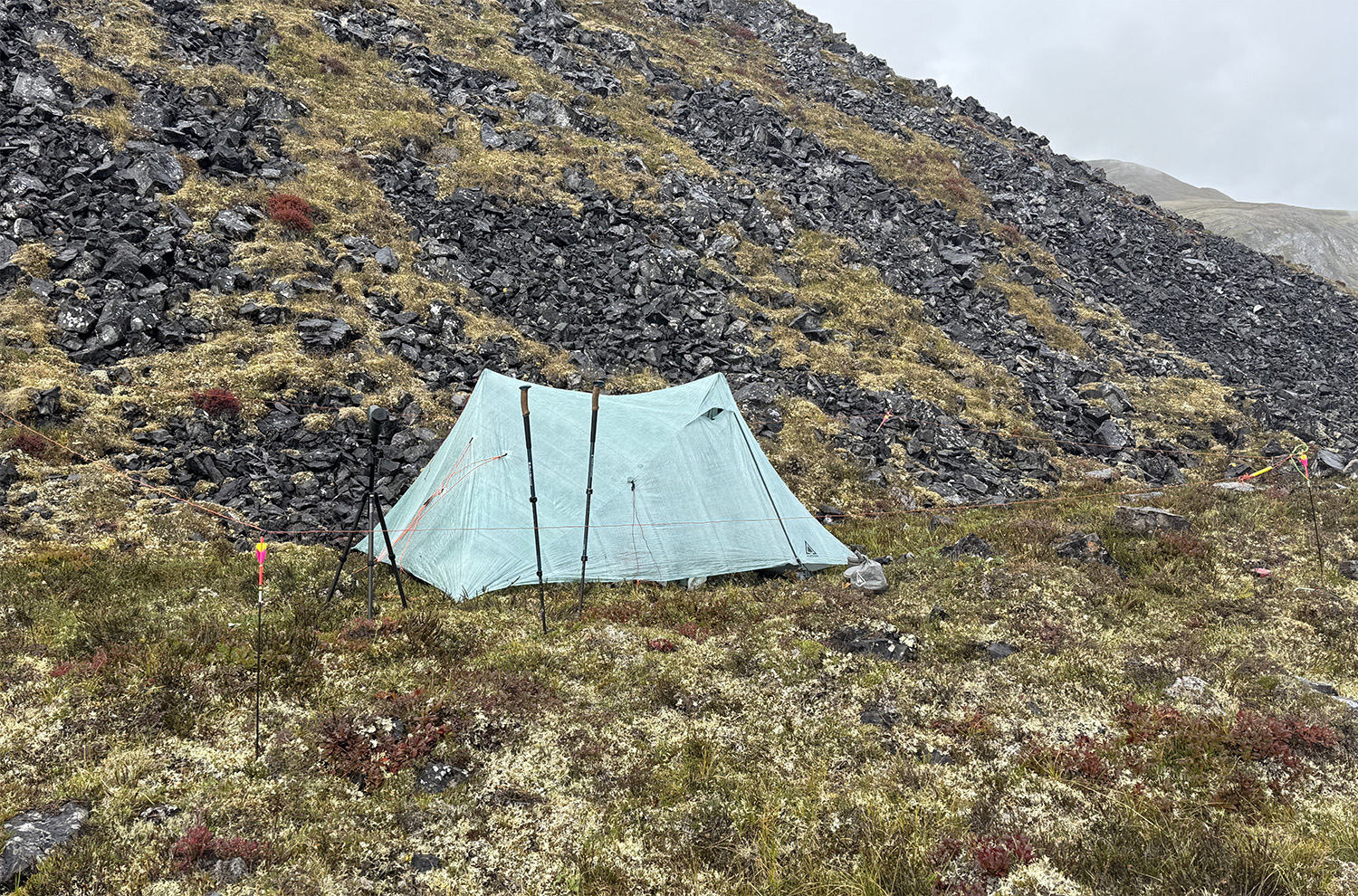
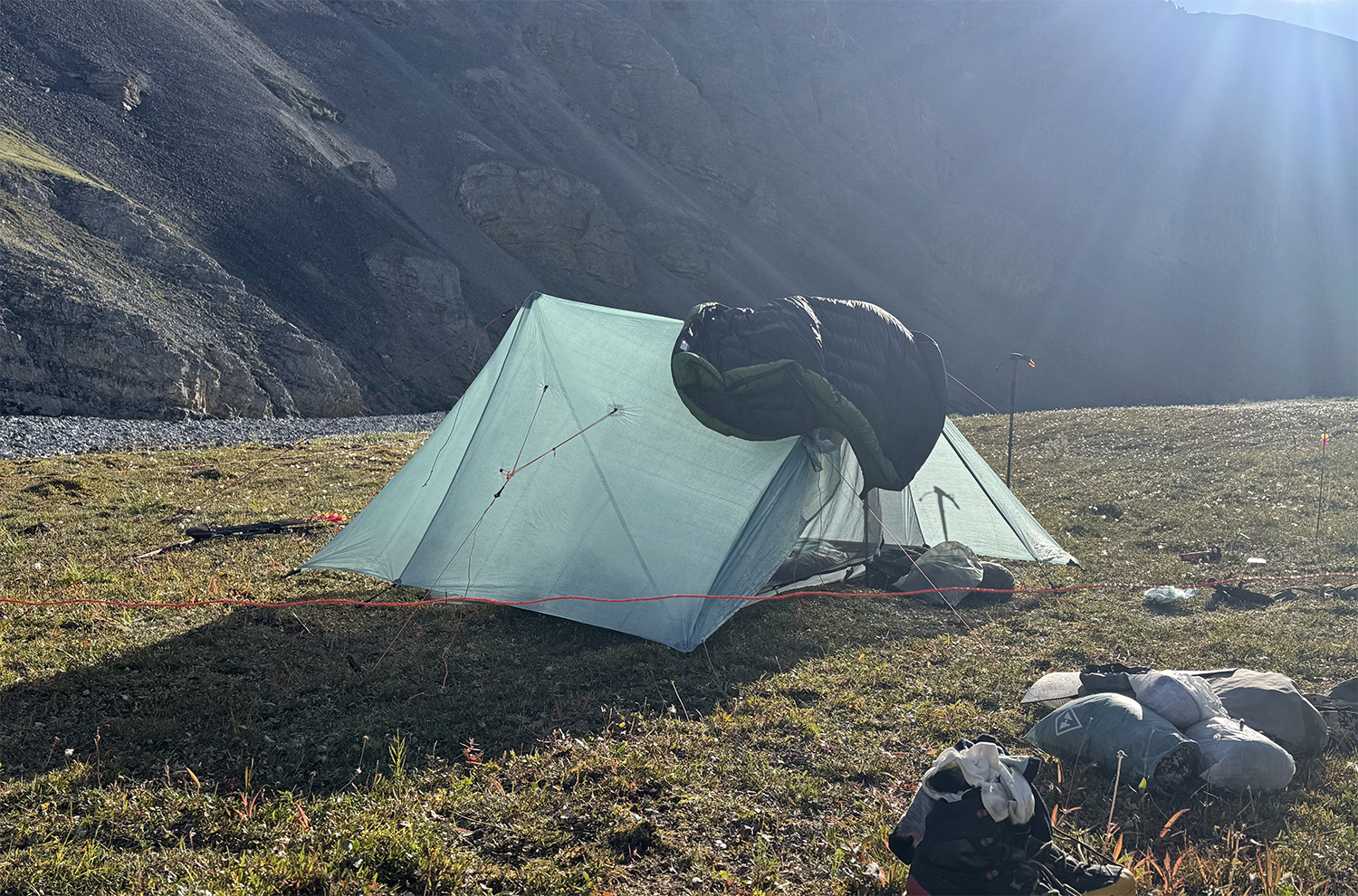
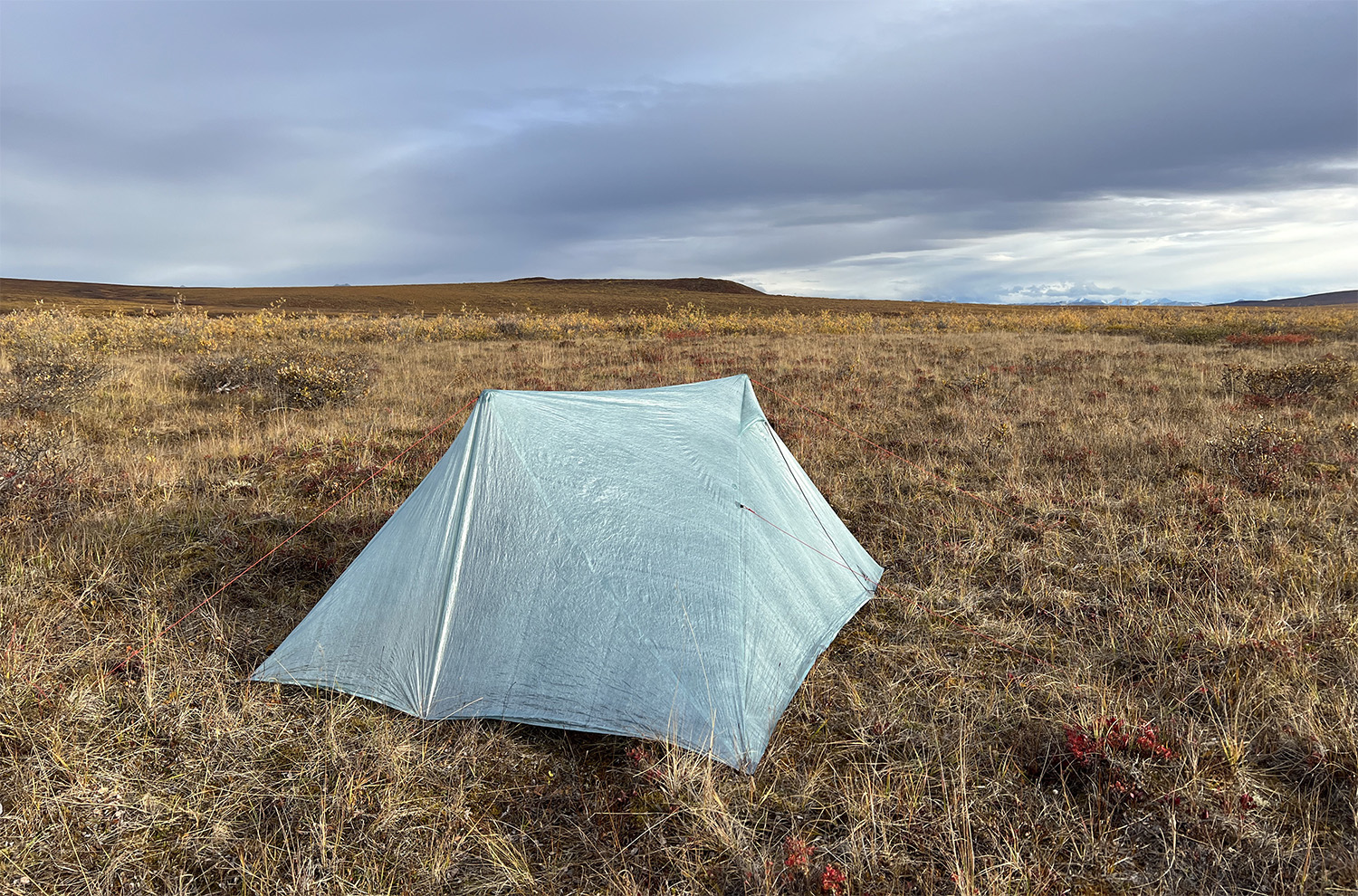
The X-Mid’s floor shape allows for small adjustments to accommodate uneven or sloped ground. I’m 6 feet tall (183 cm) and have never felt cramped or at risk of foot-box contact with the X-Mid Pro 2’s walls — even when using a thick inflatable pad and a lofty sleeping bag. This shelter’s internal space feels especially usable because of the high ceiling in the middle, allowing me to sit upright without brushing the walls.
To help deal with nastier weather, I’ve added Z-Packs glue-on guy-out points to increase stability on my X-Mid Pro’s flat panels. These aftermarket reinforcements aren’t rated for high tension (and I’m unsure how Durston would react to any damage related to their unsanctioned use), but they’ve worked well so far. I’ll say more about harsh-weather performance in a moment.
Livability
In the backcountry of Alaska, you inevitably end up spending a lot of time inside your shelter while waiting out our frequent storms. And, for me, livability is where the X-Mid Pro 2 truly stands out among comparably lightweight shelters.
The X-Mid Pro 2’s combination of smart geometry, high headroom, and dual vestibules makes it highly functional and comfortable — especially for solo use. I’ve taken it on several multi-week trips, and especially in those scenarios, being able to sit upright, organize gear, cook in the vestibule, and store wet items out of the sleeping area all made a big difference in my overall experience.
I mostly use the X-Mid Pro 2 as a solo shelter, but I’ve also used it a few times with my wife, and its 46” width is perfectly adequate for two normal-width sleeping pads. Durston’s roomier X-Mid Pro 2+ is worth considering if you need to fit two “wide” sleeping pads.
Like most “two-person” shelters, the X-Mid Pro 2 feels a little cramped during prolonged tent time in adverse weather, but the X-Mid Pro 2 is more generous in headroom and storage space than many of its competitors.
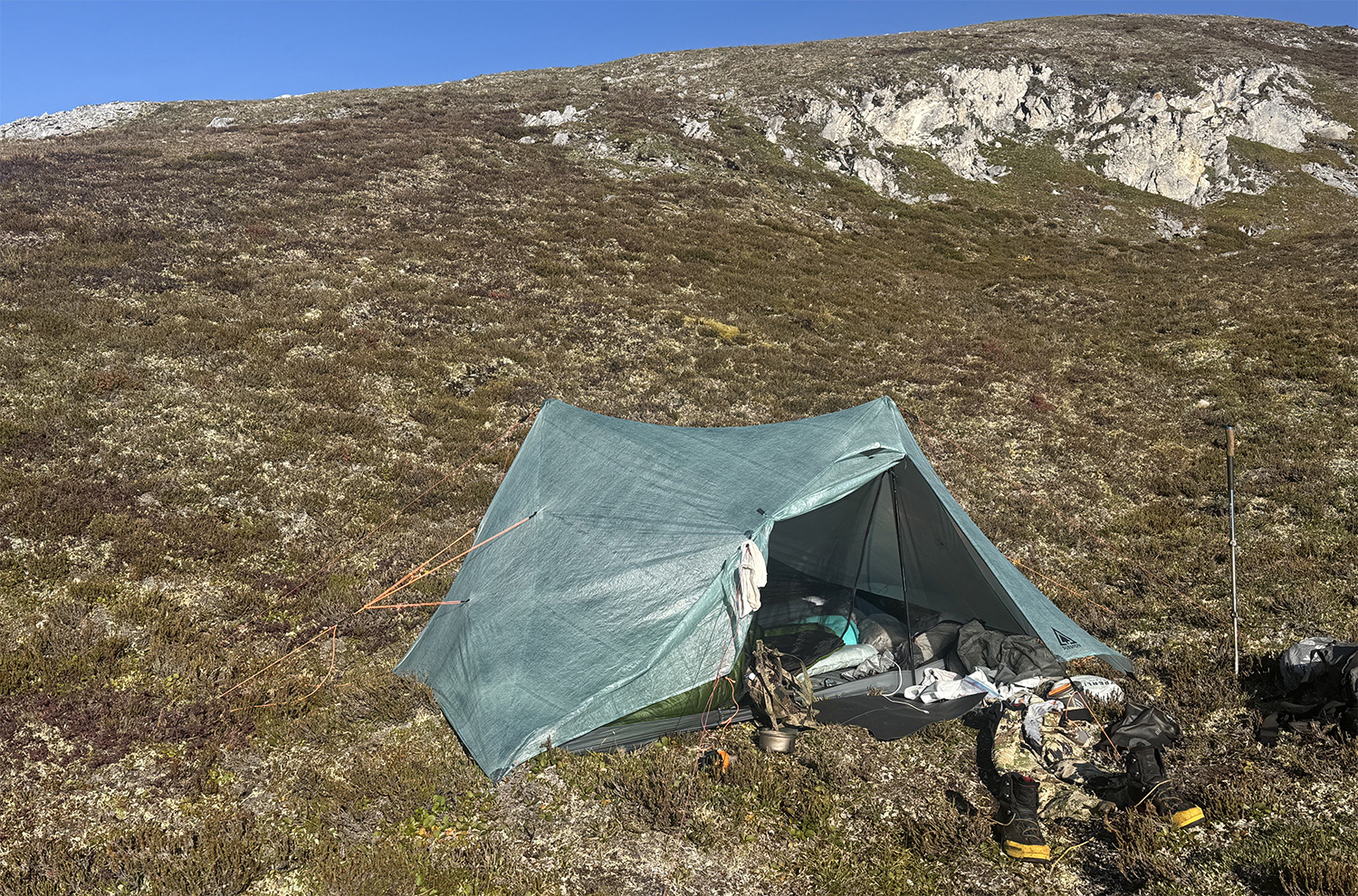
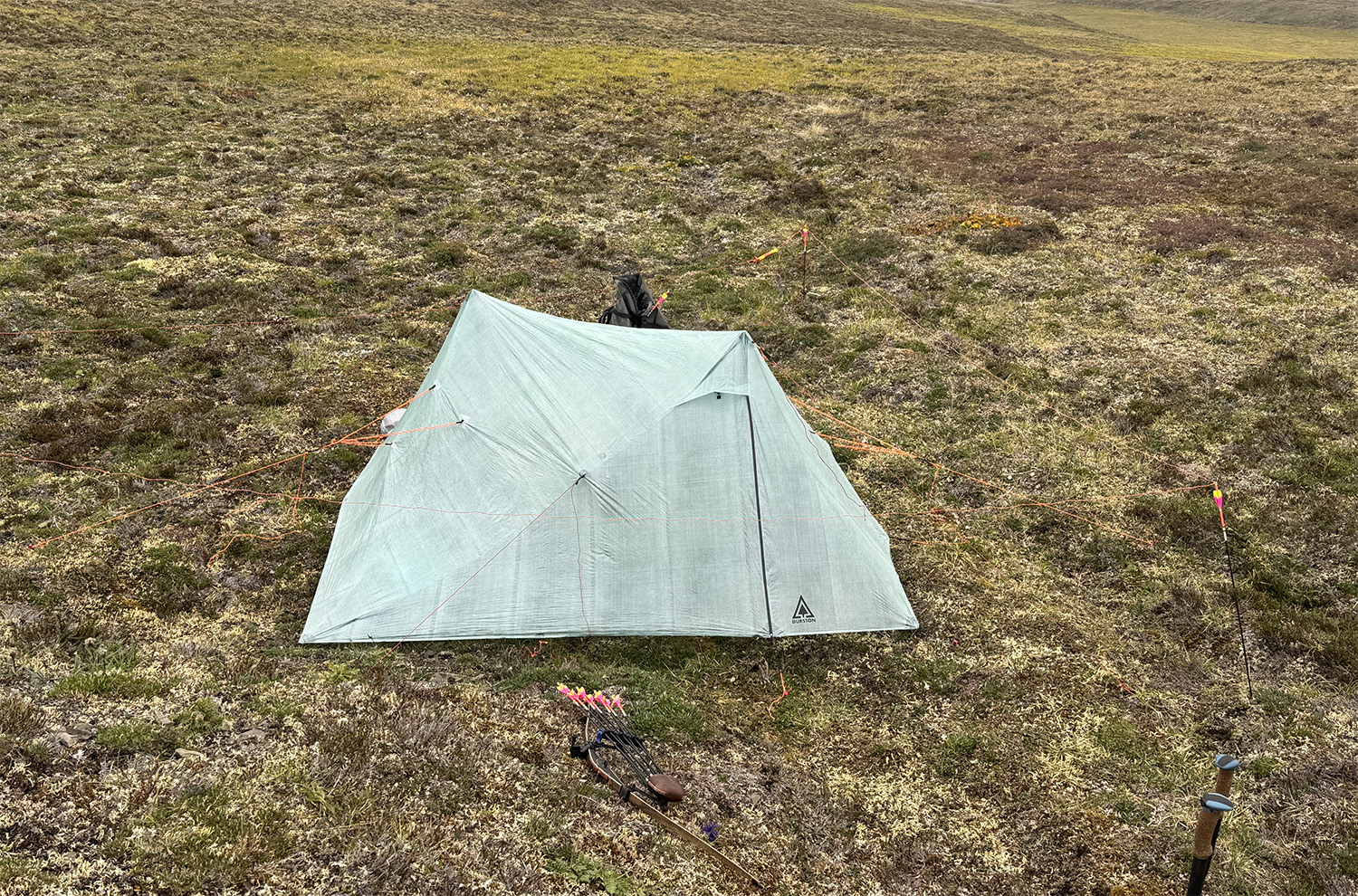
The X-Mid Pro 2’s dual doors and full-zip vestibules mean that each occupant can enter and exit easily, and each person gets their own vestibule for gear. These doors and zippers are also well designed. I can open and close the vestibule zippers one-handed without needing to hold down the floor, thanks to the pole-supported geometry. It’s another small detail that becomes meaningful in cold or wet conditions.
Weather Resistance
Over the past three years, I’ve used the X-Mid Pro 2 in steady rain, light snow, and winds up to around 30 mph (~48 kmh). Its steep walls shed rain and snow well, I’ve never had a zipper leak, and the non-elastic Dyneema fabric maintains good tension in wet conditions.
I’d label its ventilation as ‘solid’ for what it is. Condensation management is always a factor (especially with single-wall shelters), but the X-Mid Pro does a better job than most at mitigating this via its upper vents and generous airflow.
As mentioned, I opted to add additional guy-out points for high winds. The stock setup is respectably stable for its weight and livability, but the large side panels can bow in during gusts if not fully guyed out.
With my aftermarket reinforcements, the X-Mid Pro 2 has performed on par with most trekking-pole shelters I’ve used, and better than most tarptent-style setups. That said, the X-Mid Pro 2 isn’t quite as storm-worthy as a full pyramid tent like the Hyperlite Ultamid 2 when things get truly wild.
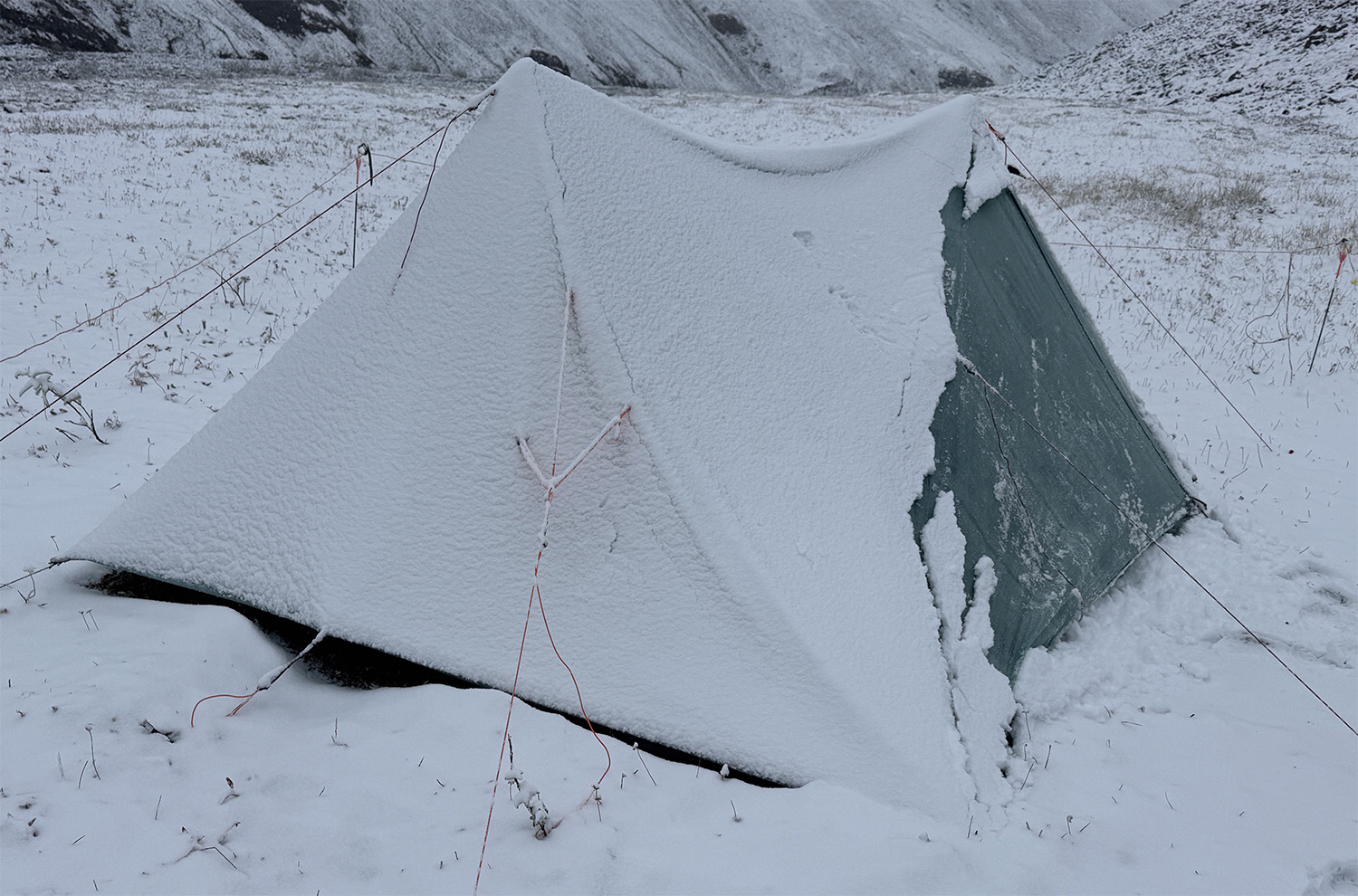
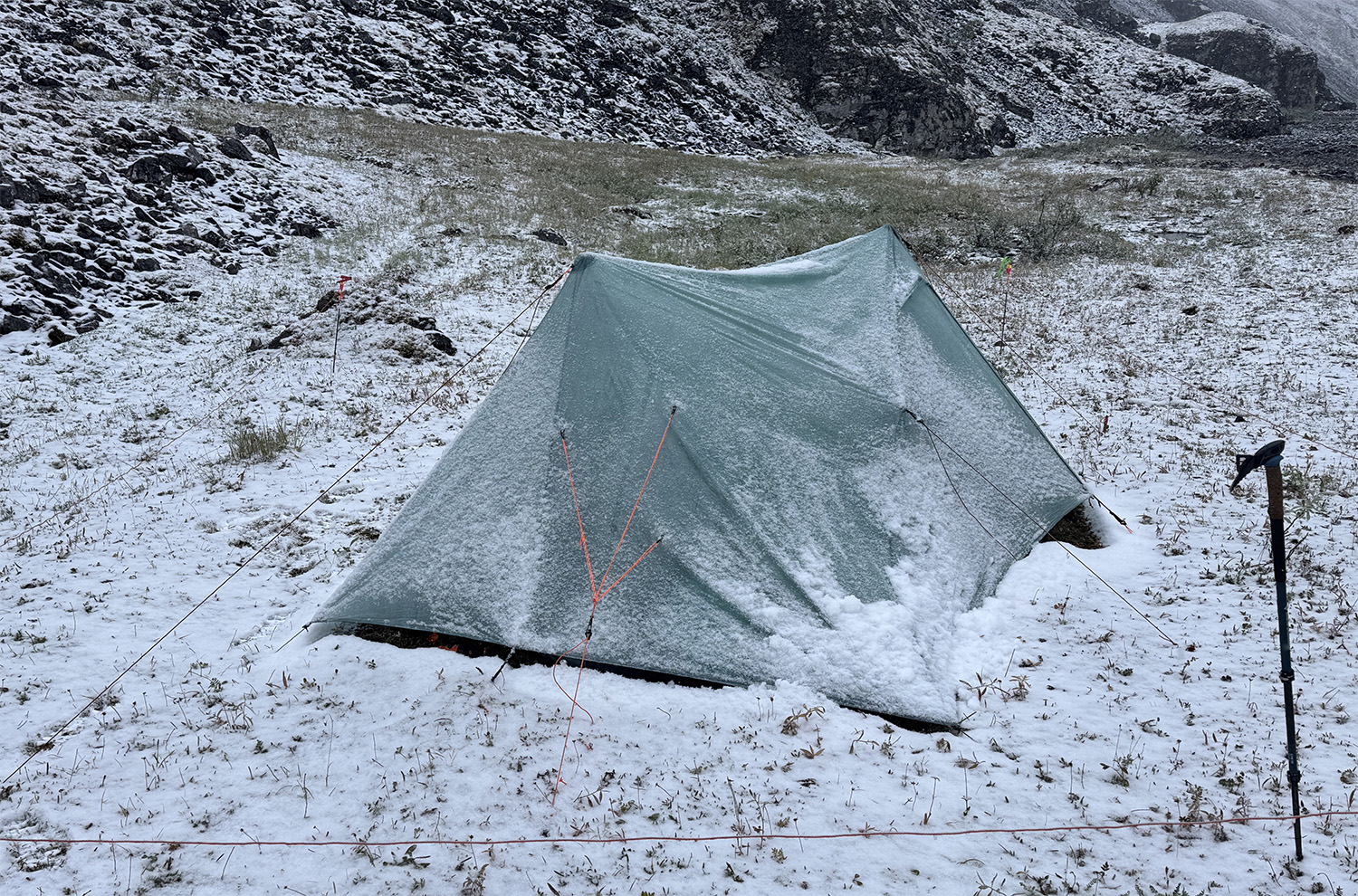
I’d love to see Durston offer a Pro version of the X-Mid with a solid-fabric inner for spindrift-heavy conditions or deep winter use. The mesh inner of the X-Mid Pro 2 is great for ventilation and bug protection, but it doesn’t provide much of a barrier to wind-driven snow.
That said, I’ve had the X-Mid Pro 2 in multiple snow events and haven’t had any structural or comfort issues. Its steep walls shed snow effectively, and I haven’t seen any alarming sag or stress on the fabric. The vestibules have remained dry, and having two of them makes it easy to keep wet or snowy gear separate from the sleeping area. Again, a solid inner would be a nice option for spindrift, but the X-Mid Pro 2 has performed very respectably in these conditions, given that it’s not specifically designed for extreme winds and snow.
Materials and Durability
As we touched on above, the X-Mid Pro 2’s outer material is 0.55-oz Dyneema Composite Fabric, and the standard floor is silnylon — a choice I’ve come to appreciate.
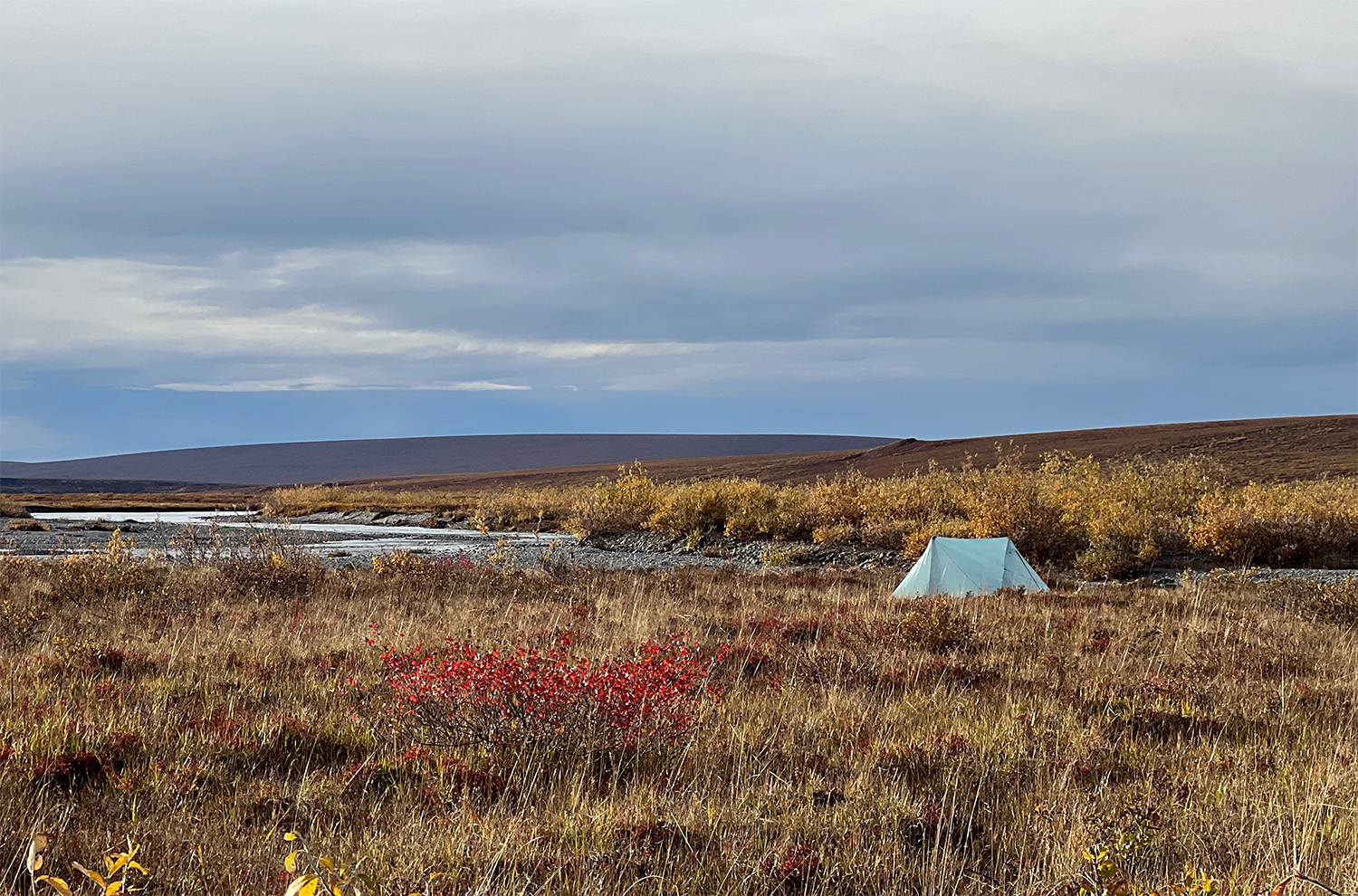
In my experience, a silnylon floor is more abrasion-resistant than DCF, and it packs smaller despite being a touch heavier. I’ve never used a groundsheet with my X-Mid Pro 2 and haven’t had to patch the floor after three years of fairly rugged use, albeit mostly in tundra where there isn’t a ton of thorny vegetation.
The X-Mid Pro 2’s zippers are also holding up well, and I’ve had no delamination or other fabric issues. The only user-mods I’ve done are the aforementioned glue-on guy-out points, and while I wouldn’t trust those in extreme wind, they’ve made the tent feel noticeably more stable in 30-mph gusts.

Comparisons
I’m always trying to figure out the best shelter solution for different types of backcountry outings, so I wanted to quickly go over how the X-Mid Pro 2 compares to a couple of the other standout options I’ve tested in the ultralight class:
X-Mid Pro 2 vs. Hyperlite Ultamid 2
The pyramid-style Ultamid 2 wins in terms of raw storm resistance and simplicity, but the X-Mid Pro 2 is easier to pitch, more livable, and better for most of my real-world use cases — especially solo or semi-solo trips.
I rarely feel like I’m sacrificing anything when switching from the Ultamid 2 to the X-Mid Pro 2, and the latter is faster to pitch and more comfortable to live in for most of my Alaska trips. For Alaska, the biggest separator between these two is that the X-Mid Pro 2 provides total bug protection in its stock form, while the Ultamid would require adding its optional insert (which would more than double its weight).
Aside from more extreme winds and snow, the other place where the Ultamid shines is in situations that require ‘creative’ pitching — e.g., little rocky ledges on steep slopes — where any floored tent would be almost unusable.
X-Mid Pro 2 vs. Tarptent Stratospire Li
The Stratospire Li is another very impressive trekking-pole shelter that’s arguably more wind-resistant out of the box and offers a solid-fabric inner-tent option. However, compared to the X-Mid Pro 2, the Stratospire Li is more complex to pitch and heavier overall. The X-Mid Pro wins on simplicity, weight, and packability while still being plenty robust for non-alpine use.

Who’s It For?
Anyone looking for a very light, roomy, weather- and bug-resistant shelter for 1-2 person trips should at least consider the X-Mid series.
There is a slightly longer learning curve with this sort of non-freestanding, trekking-pole shelter, compared to a more traditional pole-style tent. However, pitching the X-Mid is about as easy as it gets for a trekking-pole shelter, and I think the weight savings and packability you get in exchange will win over many first-time users of non-freestanding tents.
It’s not what I’d reach for if I knew I was going to be dealing with extreme wind and/or snow, but the X-Mid Pro 2 handles most conditions impressively well, given its weight, ease of use, and overall livability.
I’m a big fan of the predominantly Dyneema fabric of the X-Mid Pro 2, particularly because I spend a lot of time in serious precipitation and very much prioritize low weight — two things that Dyneema generally does better than silnylon and silpoly. However, the standard, slightly heavier X-Mid 2 seems like it would offer many of the same benefits at half the price of the ‘Pro.’ While I haven’t tested the non-Pro variant, it seems like a great value on paper.
Bottom Line
After years of use across some of the most remote and demanding terrain in Alaska, the Durston X-Mid Pro 2 has proven itself as the most balanced backcountry shelter I’ve ever carried.
It’s light enough for solo use, livable enough for extended trips, and spacious enough for two. It pitches as fast as some heavier freestanding shelters, handles real weather, and packs smaller than most tents in its class.
I’d still carry a full pyramid shelter for true winter basecamps or ridge-top adventures in bad weather. But for everything else — from coastal bushwhacks to Arctic tundra — this is the shelter I reach for first.
Thanks for a great review Paul. I’ve been using a Stratosphere Li for many years in all manner of bad weather and generally love it. They look very similar in design. It has the option of a mesh or solid inner which I appreciate. Overall it is really solid in strong wind, but I have had a couple of bad nights if the pegs are not 100% solid, eg snow pegs on warmish nights with a weak snow pack. One design issue contributing to this seems to be a pretty vertical vector for the tie down points, meaning they can pull the pegs up and out of the ground under wind load, unless inserted at a flatter angle than usual.
From the pics it looks like the peg ties pull more horizontally on the Durston, which might give a more robust hold? Have you experienced this issue with your tent?
Alex.
One thing to note when comparing the weight of the Pro to the Regular models is the size difference. The Pro2+ is the more comparable size.
Hi Alexander,
Great question. I have used the Stratospire Li about the same amount of days and in the same places as the X Mid. Prior to that I had a Stratospire 1+ that I used a lot including on one trip that turned in a full on blizzard and spent part of a night bracing against the wind with my body after a stake broke.
The Stratospire is a better shape in the wind and definitely stays a bit more stable in high winds. the downside is that it doesn’t shed snow quite as well. My biggest issue with the stratospire (both of the ones I’ve had) is that when it’s windy out the inner tent kind of billows and bounces around. it’s already a bit tighter in there than the X-Mid and on windy nights I get knocked in the head repeatedly by the inner.
I also agree with you about the tie outs on the Stratospire. the way the corners are constructed creates a pretty acute angle unless you really extend the guy lines. I’ve had stakes break and pull out just like you have. I’ve not had that issue to the same extent with the x-mid so far and I think you’re right that the angle of the guy lines makes that less likely.