

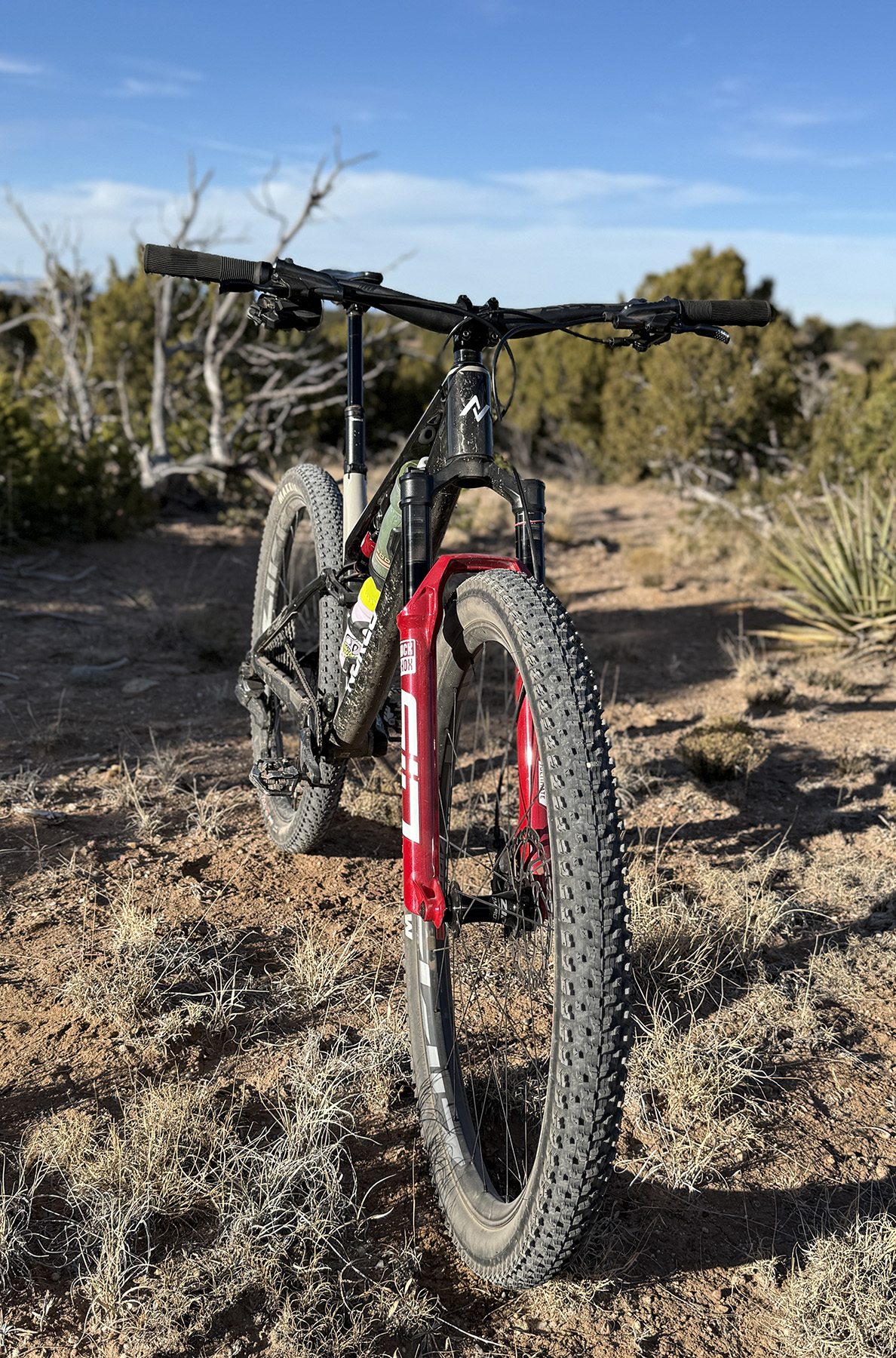
Norco Revolver 120
Wheel Size: 29”
Travel: 115 mm rear / 120 mm front
Geometry Highlights:
- Sizes Offered: S1-5
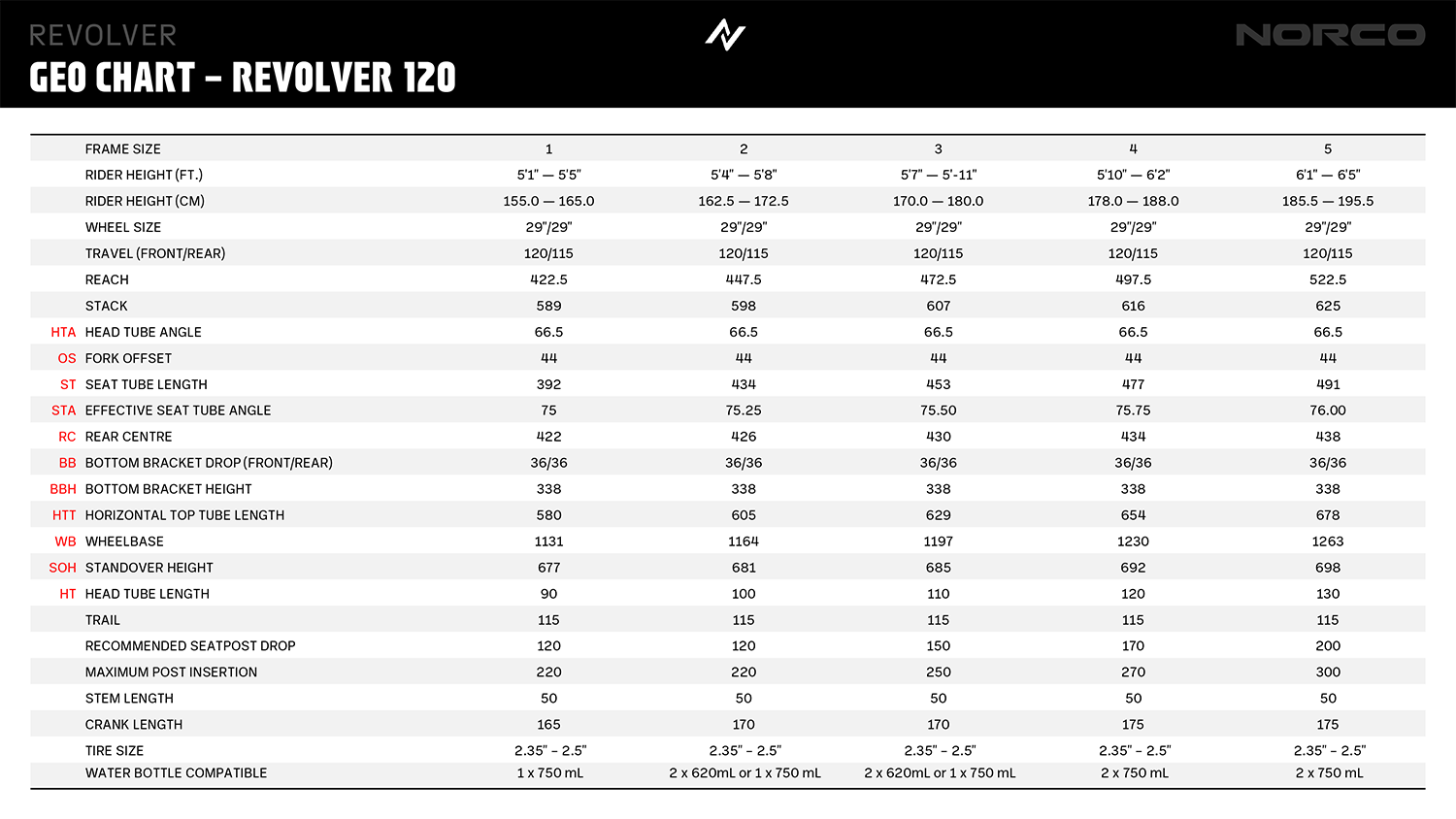
- Headtube Angle: 66.5°
- Reach: 472.5 mm (S3)
- Chainstay Length: 430 mm (S3)
Frame Material: Carbon fiber
Price: Complete bikes starting at $5,249 USD / $6,699 CAD
Blister’s Measured Weight: 25 lbs / 11.3 kg (size 3, C1 120 build kit)
Test Locations: Colorado, New Mexico
Reviewers:
- Dylan Wood (5’10.5”, 165 lbs / 179 cm, 74.8 kg)
- Simon Stewart (6’, 170 lbs / 183 cm, 77 kg)
Test Duration: 3 months
Norco Revolver 130
Wheel Size: 29”
Travel: 120 mm rear / 130 mm front
Geometry Highlights:
- Sizes Offered: S1-5
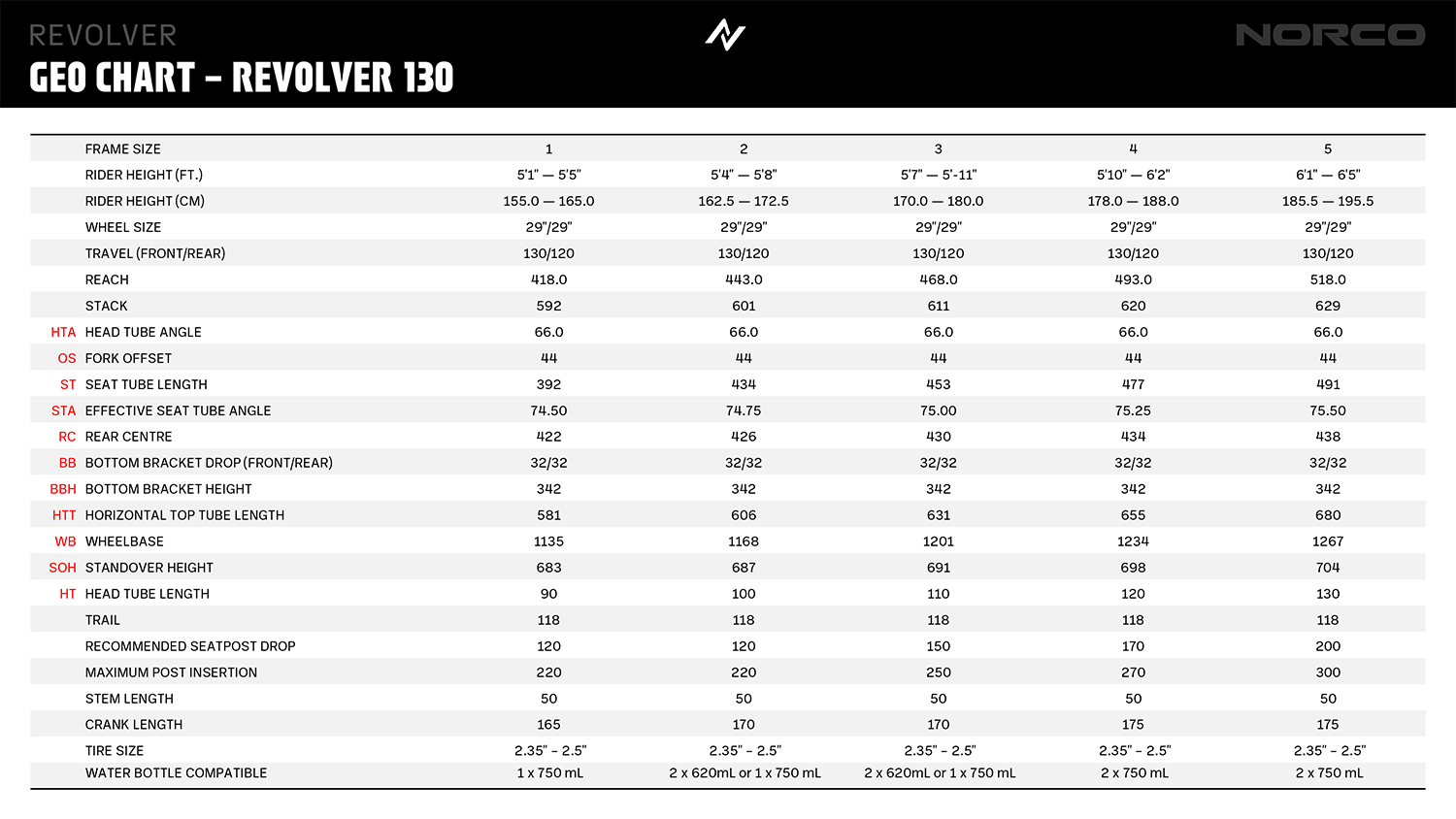
- Headtube Angle: 66°
- Reach: 468 mm (S3)
- Chainstay Length: 430 mm (S3)
Frame Material: Carbon fiber
Price: Complete bikes starting at $3,899 USD / $4,899 CAD
Intro
The Revolver name has been in Norco’s lineup since 2011, first appearing as a full-suspension XC bike with 100 mm of travel front and rear. Ever since then, Norco has been updating the Revolver, with the last update happening in early 2019.
That changes today, though, with the introduction of the all-new Revolver platform, which includes the Revolver 120 and Revolver 130. With modern geometry to keep up with today’s demanding XC race courses, Norco’s first “Flex-Pivot” suspension design, & more, this is one of the most significant evolutions of the Revolver. Let’s get into the details:
The Frame
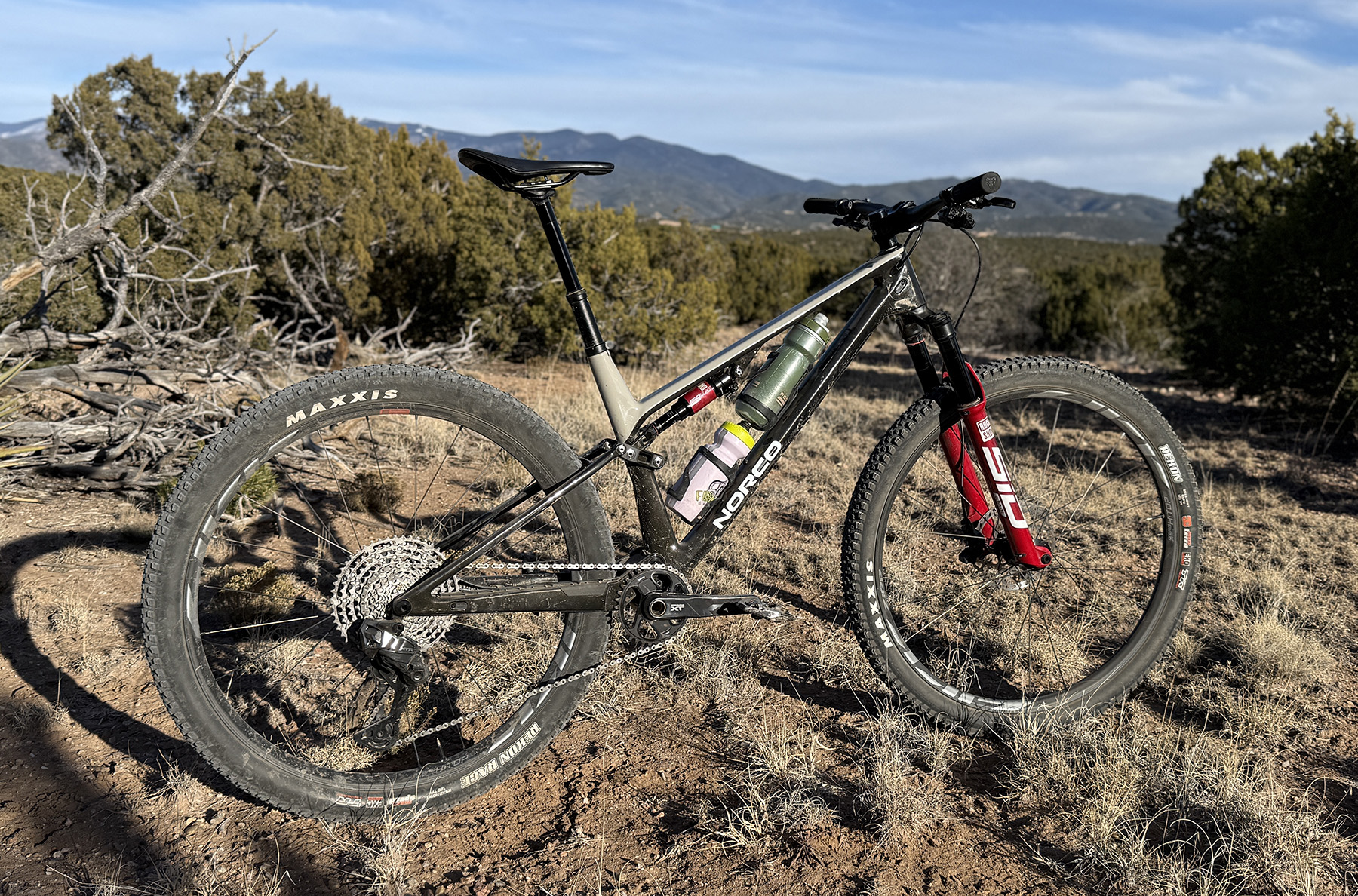
The Revolver 120 and 130 use the same frame, which is only available in carbon fiber. Interestingly, the new Revolvers are named for their fork travel, not their rear travel. The Revolver 120 packs 115 mm out back, while the 130 bumps that to 120 mm.
With a stated frame weight of 1830 grams (S3, hardware & plastics included, no rear shock), Norco is claiming a weight savings of 450 grams over the previous Revolver. A new flex-stay design on the Revolver frame is responsible for a significant chunk of the saved grams, allowing Norco to ditch a pivot that previously existed between the chainstays and seatstays. Norco also claims to have achieved this lighter frame by focusing on size-specific carbon layups for each frame. Norco also uses clear-coat paint on each frame, which they claim is half the weight of standard paint, and the new Revolver frames also use titanium hardware throughout to further boost weight savings.
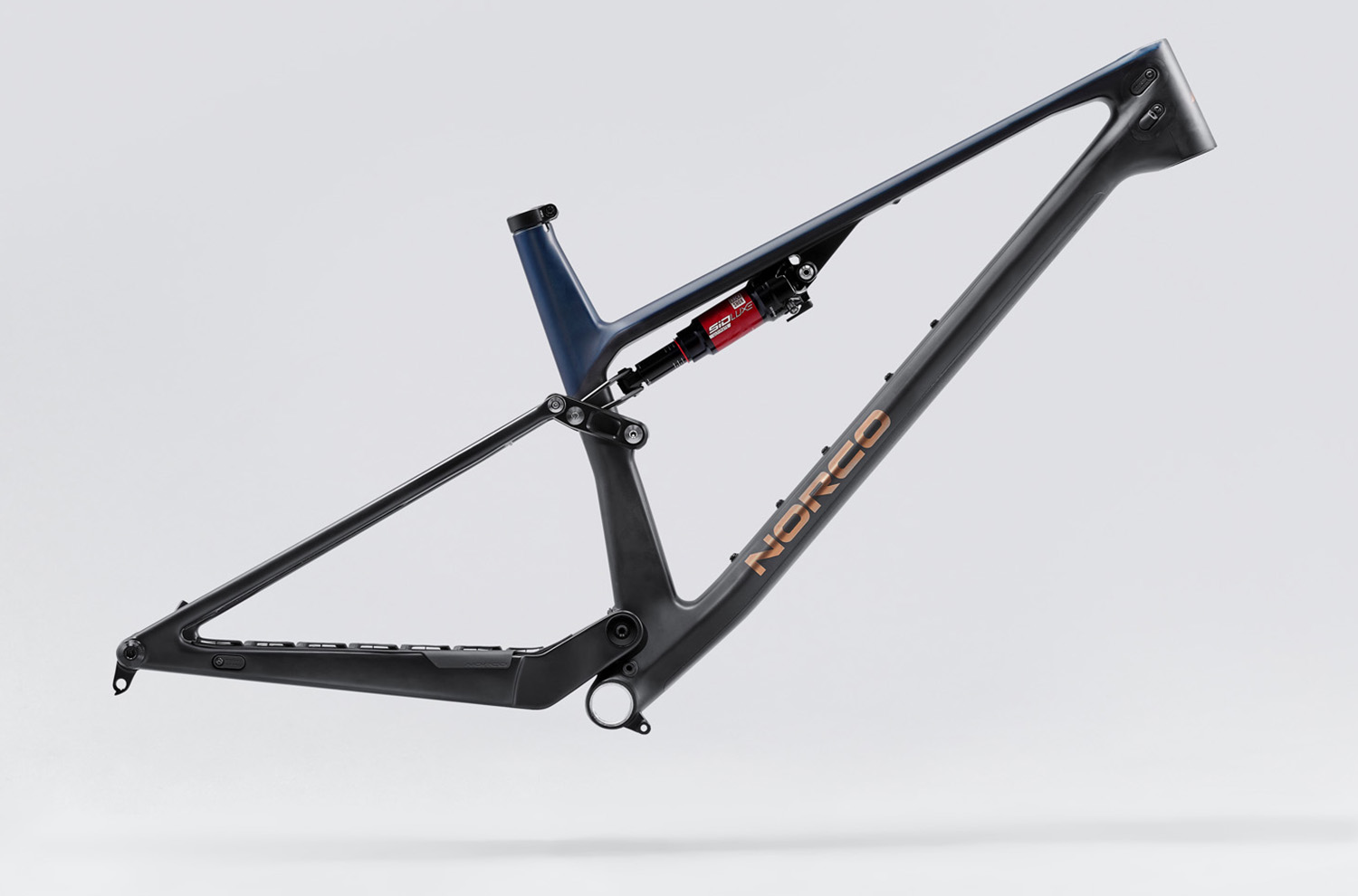
Norco hasn’t published any suspension leverage curve or anti-squat graphs for their new Revolvers, but they designed this new XC bike around the kinematics of compact XC air shocks. Norco also has shot for consistent anti-squat numbers throughout this bike’s rear travel to keep it pedaling predictably over varied terrain.
The Revolver frame can fit two water bottles inside the front triangle of every size but the smallest S1. Additionally, the new Revolver is SRAM UDH compatible, has an ISCG05 chainguide mount, uses a threaded bottom bracket, can fit tires up to 2.5” wide, and has guided internal cable routing that also supports a dual lockout. Norco also takes pains to mention that the new Revolvers do not use headset cable routing.
Fit & Geometry
The new Revolver also comes with modern geometry, bringing it up to speed with many other XC bikes that have been launched in the last couple of years. Norco equipped the Revolver with a slacker head tube angle, a lower bottom bracket, and size-specific chainstay lengths. Additionally, this new Revolver also features intentionally short seat tube lengths for each size, allowing riders to run longer dropper posts. With five sizes spanning from S1 to S5, Norco claims the new Revolver will fit riders from 5’1” to 6’5” (155-195.5 cm).
Looking at the geometry chart as a whole, nothing really pops out, and rather, a cohesive bike seems to take shape. Each size’s chainstay length is perhaps on the shorter end, but other than that, the latest Revolver seems to fit right in with today’s capable XC bikes.
The Builds
Norco offers the Revolver 120 and 130 in three different build kits each. The Revolver 120 uses RockShox suspension front and rear, while the Revolver 130 opts for Fox suspension both up front and out back. Hitting a low weight seems to be a priority across build kits, with the Revolver 120 SE coming in at a stated 25.35 lbs (11.5 kg), and the Revolver 130 C1 weighing in at 28.66lbs (13 kg), according to Norco.
Highlights from the available builds are as follows:
Revolver 120 C2 ($5,249 USD / $6,699 CAD)
- Drivetrain: Shimano Deore XT Di2
- Brakes: TBD
- Fork: RockShox SID Select Charger (120 mm)
- Shock: RockShox SIDLuxe Select+
- Wheels: TBD
- Dropper Post: TBD
Revolver 120 C1 ($7,999 USD / $9,500 CAD)
- Drivetrain: Shimano XTR Di2
- Brakes: TBD
- Fork: RockShox SID Ultimate 3P (120 mm)
- Shock: RockShox SIDLuxe Ultimate
- Wheels: TBD
- Dropper Post: TBD
Revolver 120 SE ($11,499 USD / $14,000 CAD)
- Drivetrain: SRAM XX Eagle AXS Transmission
- Brakes: TBD
- Fork: RockShox SID Ultimate Flight Attendant (120 mm)
- Shock: RockShox SIDLuxe Ultimate Flight Attendant
- Wheels: TBD
- Dropper Post: TBD
Revolver 130 C3 ($3,899 USD / $4,899 CAD)
- Drivetrain: Shimano Deore XT Di2
- Brakes: TBD
- Fork: Fox 34SL Performance Float Grip2 (130 mm)
- Shock: Fox Float SL Performance
- Wheels: TBD
- Dropper Post: TBD
Revolver 130 C2 ($5,249 USD / $6,699 CAD)
- Drivetrain: Shimano Deore XT Di2
- Brakes: TBD
- Fork: Fox 34SL Performance Float Grip2 (130 mm)
- Shock: Fox Float SL Performance
- Wheels: TBD
- Dropper Post: TBD
Revolver 130 C1 ($7,999 USD / $9,500 CAD)
- Drivetrain: Shimano Deore XT Di2
- Brakes: TBD
- Fork: Fox 34SL Factory Float GripX (130 mm)
- Shock: Fox Factory Float SL
- Wheels: TBD
- Dropper Post: TBD
In addition to the complete builds, Norco also offers the Revolver 120 in a frame-only option with a RockShox SIDLuxe Ultimate rear shock for $3,499 USD / $4,200 CAD.
Full Review: Revolver 120
When I think of Norco, I think of their boundary-pushing Trail and Enduro bikes, which skew toward the more aggressive downhill-oriented end of the spectrum. So, I wasn’t totally sure what to expect with their Revolver 120, which Norco claims is the lightest full-suspension frame the Canadian company has ever built. After a few months on the bike, it’s proven to be a pure XC bike through and through with some Norco personality to it.
Fit and Sizing
Dylan Wood (5’10.5”, 165 lbs / 179 cm, 74.8 kg): At my height, I am right in between the size 3 and 4 on Norco’s recommended sizing for the Revolver 120. After remembering my time on the size 4 Norco Fluid VLT 130, which felt a bit long, and after looking at the geometry chart, I felt more comfortable going with the 472.5 mm reach of the S3 compared to the 497.5 mm reach of the S4. While I’ve been happy with bikes with reach numbers ranging from 460-490, the XC race bikes I’ve ridden recently have all had reach numbers around 470 mm, and that has worked out very well for me in the past.
Upon first pedaling the Revolver 120, I was met with a pretty aggressive XC-oriented fit, with a stretched-out feel and a low stack height. While I usually prefer the stem pretty low on the steerer tube on most bikes, I found the fit to be a little too aggressive, causing some lower back discomfort. Instead, I preferred the fit the most with the stem with one 10 mm spacer between the stem and the top cap. Overall, I found the size 3 Revolver 120 to be a good fit, and I don’t think the S4 would have worked out very well for me.
Simon Stewart (6’, 170 lbs / 183 cm, 77 kg): I also spent time on the Fluid VLT 130 in the size S4, and currently have a S4 Sight VLT in for review, which, like the S4 Revolver and S4 Fluid VLT 130, has 497.5 mm of reach. I have to give it to Norco for consistency in their sizing, even if that means being consistently long for the respective sizes.
Norco’s recommended sizing chart puts me on a size S4 with no overlap into the size S3, but since I prefer a more compact fit for XC race bikes, the S3, at least on paper, looks like the better option. Additionally, the size S3 Revolver 120 matches up quite closely with the size Large Yeti ASR, which we reviewed, and I got along quite well with its fit.
Once Dylan passed the Revolver 120 on to me, I found the fit to feel quite similar to the ASR. I raised the stem an additional 10 mm from where Dylan had it to bring the handlebars closer to my preferred bar height, and if I had a 55 mm stem on hand (50 mm is stock), I would swap that in since I would like a hair more room in the cockpit when seated and standing.
Overall, I’m happy with the fit on the S3 Revolver 120, and I share the same perspective as Dylan that the S4 would’ve likely felt too long.
Lastly, I think Norco’s sizing chart recommends sizes that may feel a bit big for many riders, so if possible, try one first before settling on a size.
Climbing
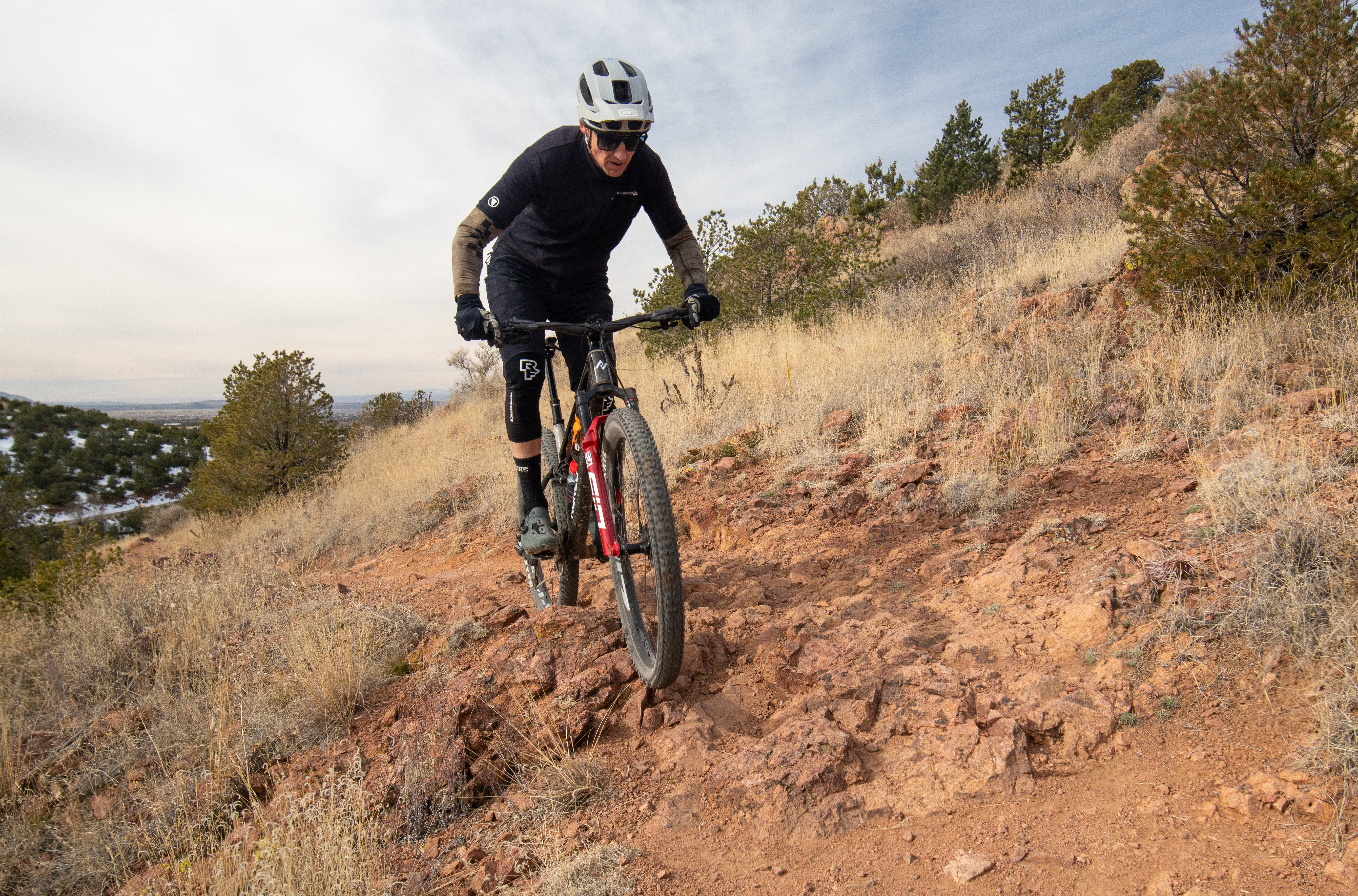
Dylan: The Revolver 120 is an incredibly efficient bike, worthy of the World Cup XC race moniker. Its suspension is very supportive under pedaling forces, even with the shock fully open. The Revolver 120 encourages the rider to put lots of effort into the pedals, and big efforts are rewarded with immediate acceleration.
The Revolver 120 is one of the most efficient, best-climbing XC bikes I’ve tested to date. Still, it delivers a respectable amount of traction to help it power up steep, technical climbs. The Maxxis Recon (front) and Recon Race (rear) tires don’t offer much inherent traction themselves, but are wide and supple enough to get enough purchase on the trail to avoid slipping out.
The lockout switches on the Rockshox SID fork and SIDLuxe rear shock do come in handy while climbing on smooth roads and trails. When both are locked out, the Revolver 120 feels almost fully rigid, with very little energy being lost to the suspension.
In total, this is a very capable and efficient XC bike that has just enough traction and comfort for it to feel at home on a variety of challenging and long climbs, not just short, smooth ones.
Simon: Like Dylan said, the Revolver 120 is exceptionally quick uphill — as one would expect, given its XC racing intentions. In comparison to a couple of other notably efficient flex-stay XC bikes we’ve tested (the Yeti ASR and Cannondale Scalpel), the Revolver 120 feels every bit as efficient while also feeling livelier and more energetic — it’s these last two traits that tilt the overall climbing speed in favor of the Revolver 120.
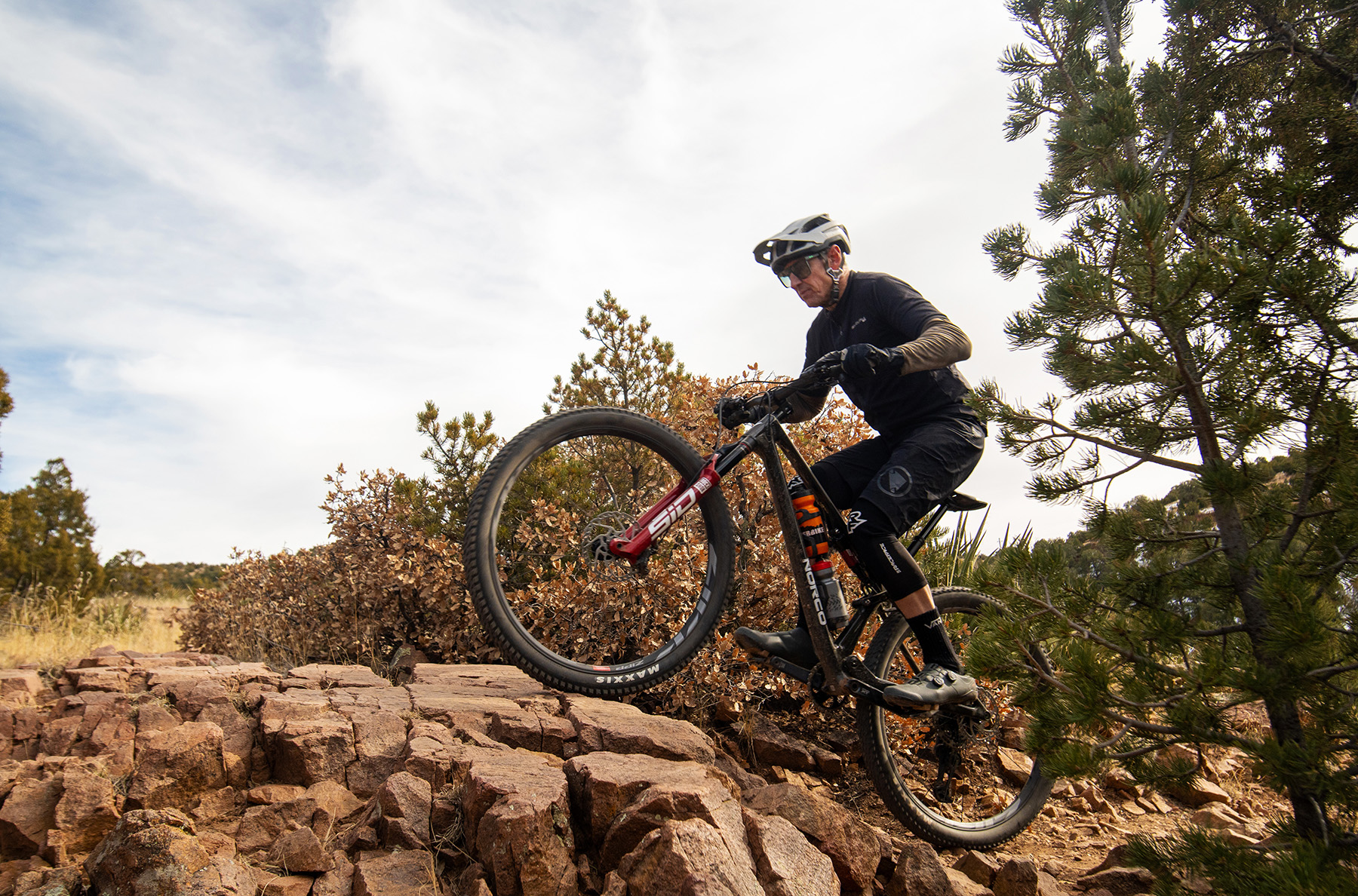
Without a doubt, the Revolver 120’s climbing efficiency and speed stand out, but it also fared quite well climbing technical terrain. It does require a fairly pronounced forward weight shift onto the nose of the saddle when the trail gets steep, and while the rear wheel traction is good overall, a smooth pedal stroke is necessary to keep the Maxxis Recon Race hooking up when it’s both steep and loose.
When tackling slow-speed, awkward technical sections, conditions that typically fall out of the typical comfort zone for an XC race bike, the Revolver 120 has a tendency to get bossed around by the terrain a bit and requires a lot of micro steering adjustments to hold its line.
While I never found the need to use the Revolver 120’s front and rear suspension lock-outs on trail, I did use them when riding to the trail on the road, and Dylan is spot on that it pretty much feels like riding a rigid bike — they’re proper lockouts.
Descending
Dylan: The Revolver 120 has a sporty, nimble feel on the way down, with one key trait that differentiates it from the broader class of XC race bikes.
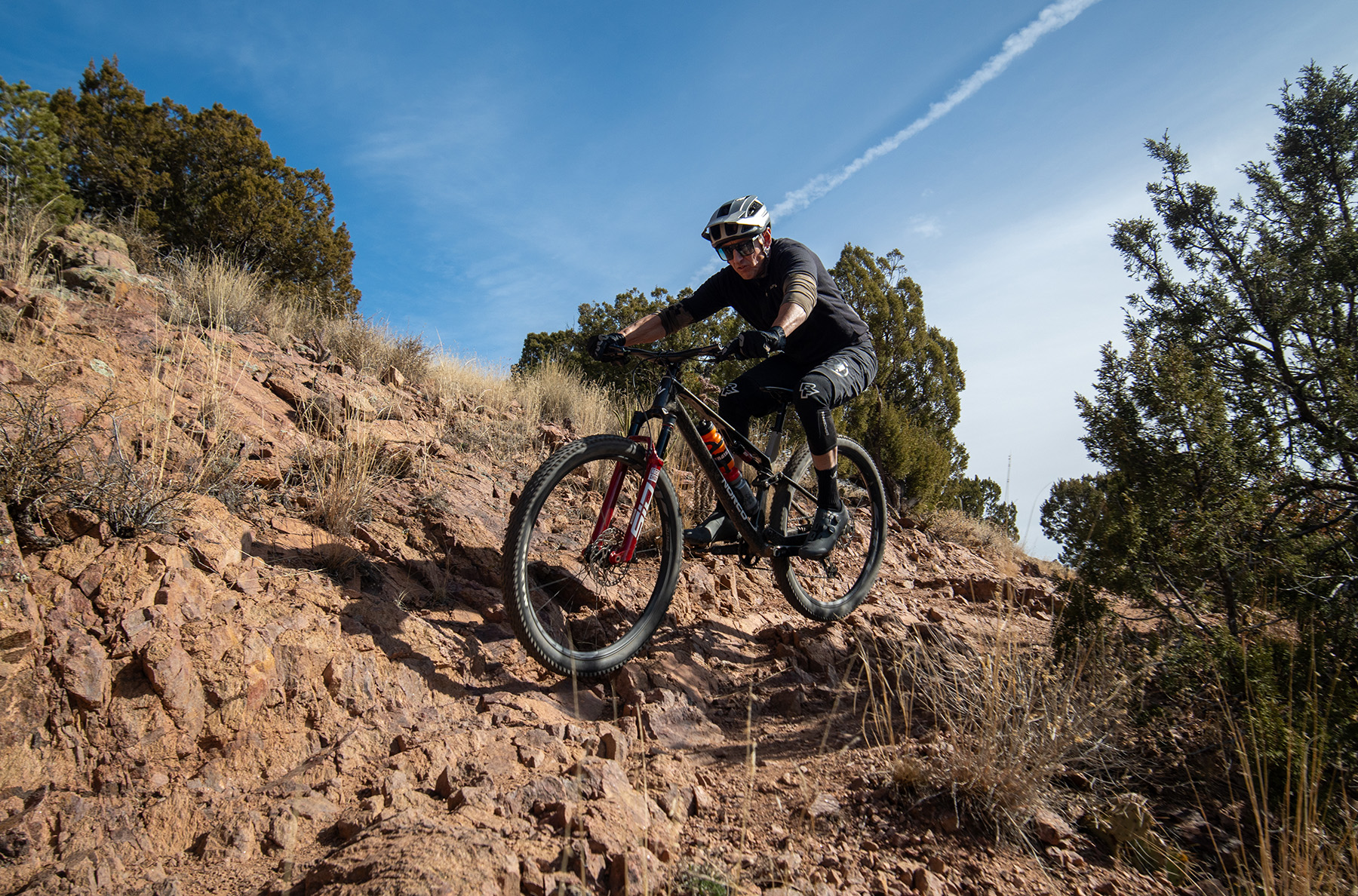
As with the other XC race bikes I’ve tested, expectations need to be slightly adjusted to enjoy descending on the Revolver 120 if you’re used to longer-travel, more descending-oriented bikes. Braking has to be done earlier, lines must be chosen more carefully, and more movement out of the chassis should be expected. While heavier bikes with more suspension float over rough terrain better, the Revolver 120 requires the rider to be more active and dynamic, handling a lot of the terrain themselves.
I found the recommended suspension settings for the Revolver 120 to be a bit stiff off the bat. After taking some air out of the fork and shock and running more sag, about 20% in the front and 30% in the rear, I found a pleasant mixture of poppiness and traction out of the Revolver 120. While it can feel a bit squirrely and unforgiving at first, every corner, rock garden, and jump hit on the Revolver 120 inspired more confidence to trust the bike and go faster on the way down. After several miles aboard the Revolver 120, I find myself riding at a pace not too far off from how fast I’d be moving on a Trail bike.
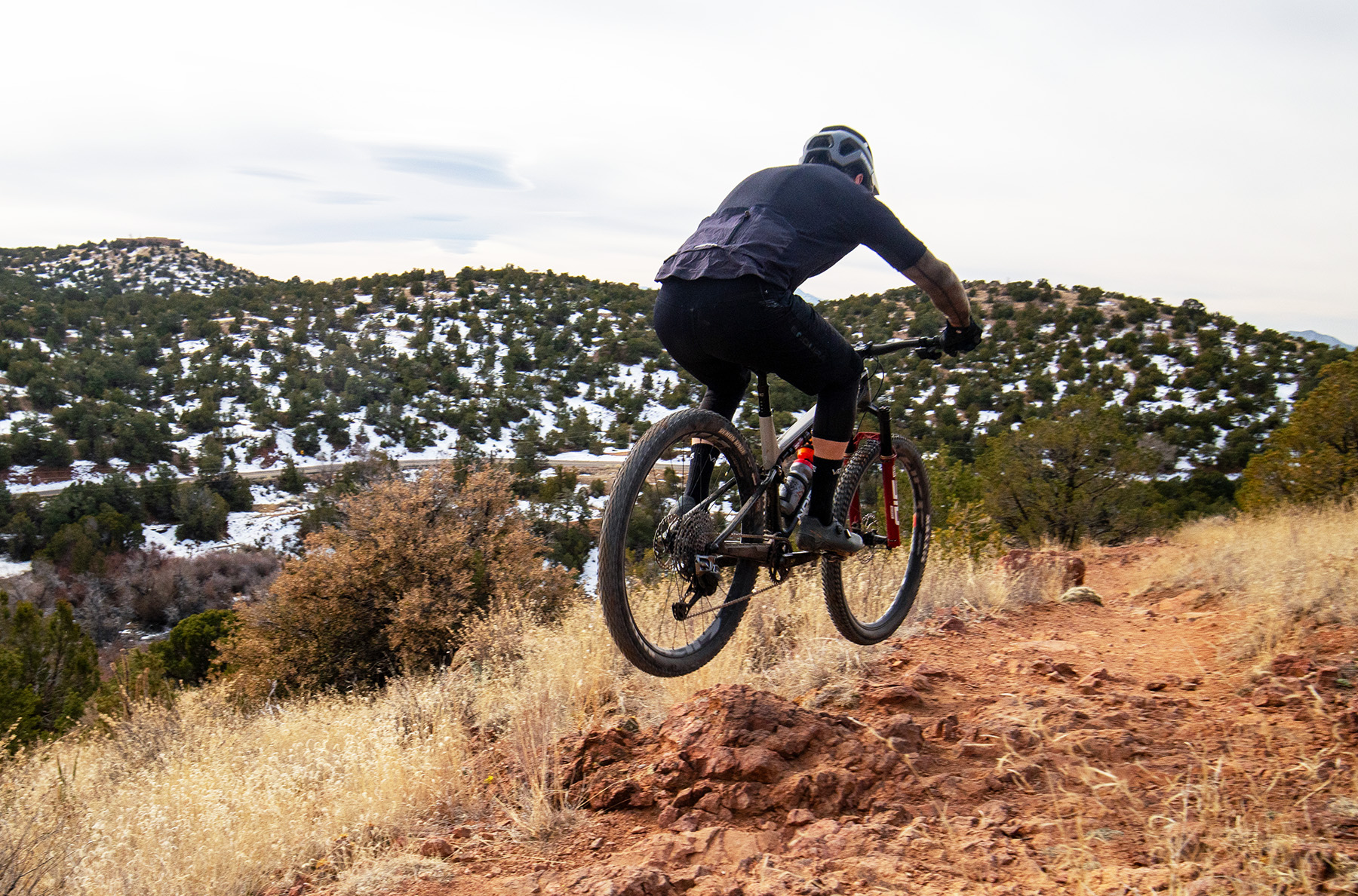
The Revolver 120 stands out for how poppy it is, though. When loading up the bike and getting it airborne, it almost feels like a pogo stick. This caught me off guard a few times at first, but after getting used to it, I really enjoyed how easy it was to get the Revolver in the air. The Revolver encourages the rider to gap over short rooty sections rather than blast through them. Plus, the Revolver 120 has a nimble, playful feel in the air, and is really enjoyable on mellower, flowy jump trails as well, though I’d be hesitant to take it off any large, consequential features.
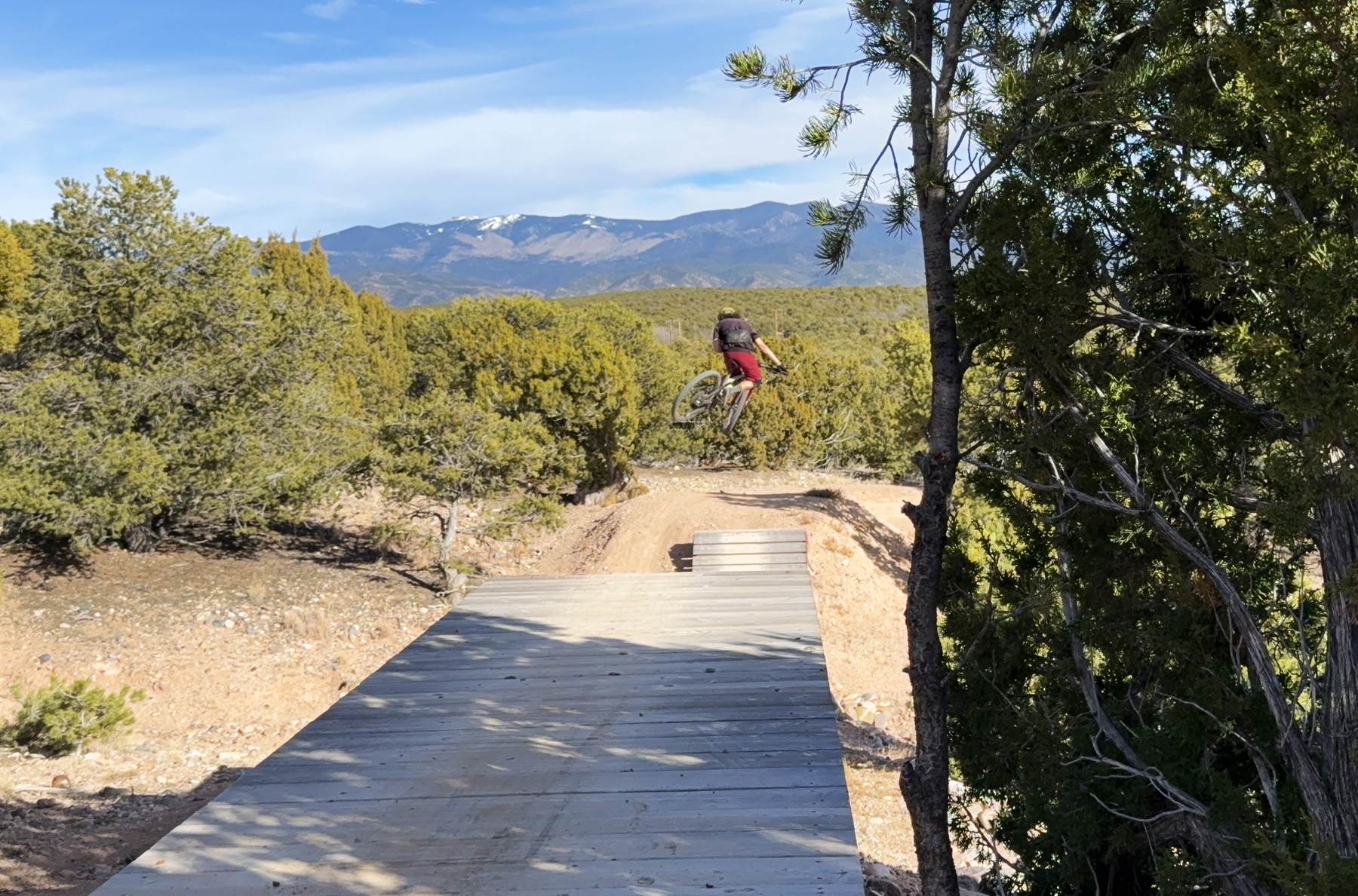
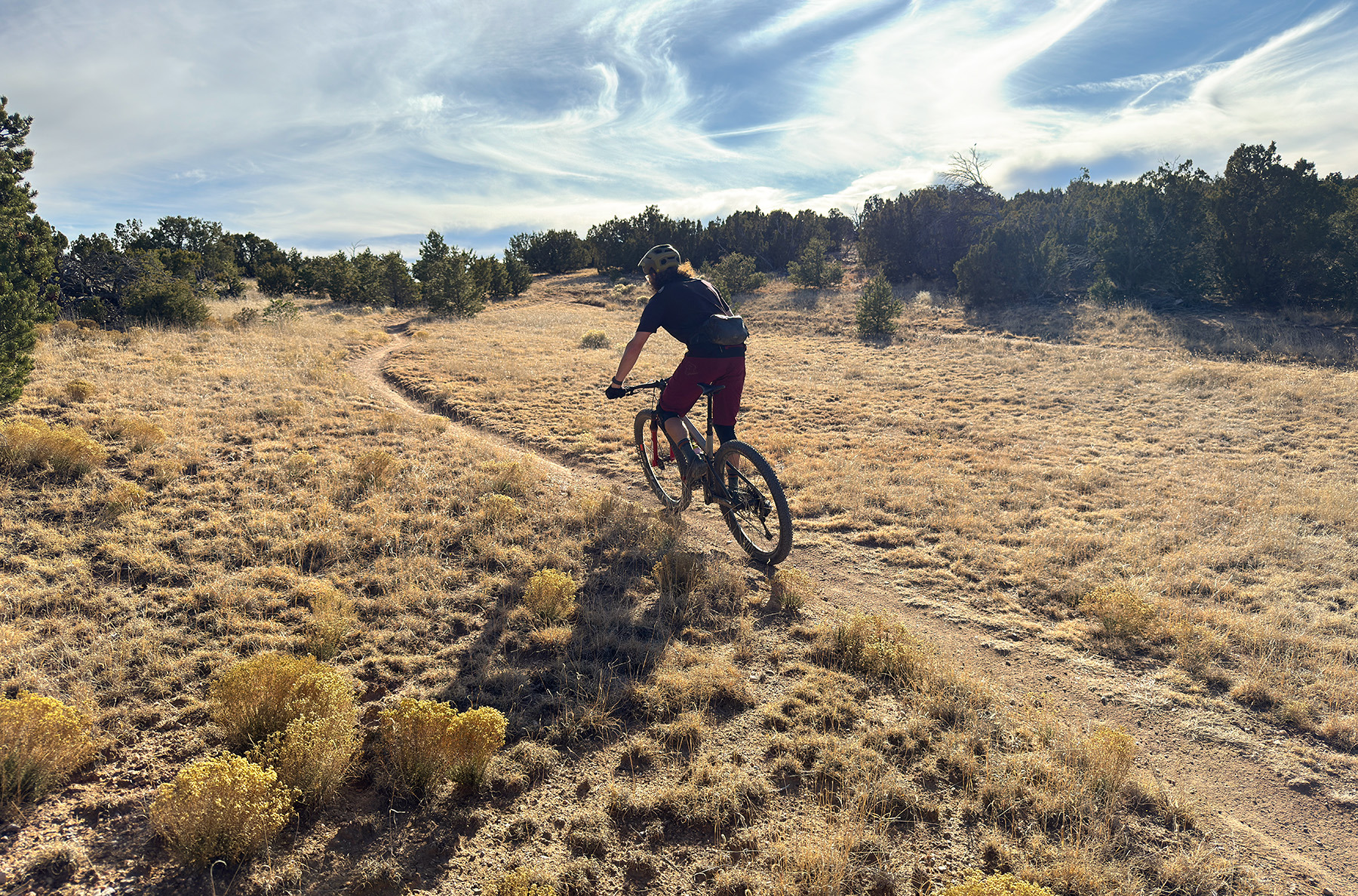
Simon: I agree with Dylan about how the Revolver 120 descends, especially how poppy and lively it is. I would say the Revolver 120 has one of the more playful personalities I’ve experienced on an XC race bike. The short 430 mm chainstays make it prone to slashing corners, and they also make the front end pop up into a manual almost violently fast — I almost looped it out on more than one occasion.
Like other modern XC bikes we’ve reviewed, the Revolver 120 can be really fun when descending steep, somewhat technical trails. Of course, as Dylan said, you have to pay attention to line selection and be very focused and active on it, which I find to be quite rewarding. The Revolver 120 is so light and flickable that quick line adjustments are easy to make, and often it’s helpful to use the energetic nature of the rear suspension to quickly pop it up and over obstacles rather than letting the suspension absorb them.
Overall, the Revolver 120 is playful and poppy, not typical traits of dedicated XC race bikes, which makes it stand out.
The Build
Dylan: The C1 build kit is very well-rounded and enjoyable, and provides the performance you’d expect at its price point. I’ve enjoyed RockShox’s SID fork and SIDLuze shock on many XC bikes, and the Revolver 120 is no exception. This suspension complemented the poppy, playful feel of the Revolver, while also providing just enough forgiveness and traction when needed.
The Shimano XTR Di2 drivetrain was a huge highlight on this bike. The electronic shifting was reliable and easy, with great, intuitive ergonomics out of the shifter. Shifting was quick and smooth, with very little delay, a feature that folks who are used to mechanical shifting will enjoy. I had no complaints about this drivetrain and would love to see it again on another bike in the future.
The Shimano XT brakes provided just enough power without adding unnecessary weight to the bike, while the Maxxis Recon and Recon Race tires were very fast-rolling and a great fit for this quick XC bike. You could certainly get some more traction out of the Revolver 120 by adding grippier tires, though.
My first experience with ZIPP wheels was aboard the Revolver 120, and I was happy with how the 1Zero Hitop S Carbon wheels performed on this bike. Mostly, they just did their job well and disappeared under me, which I think is a sign of a great wheelset.
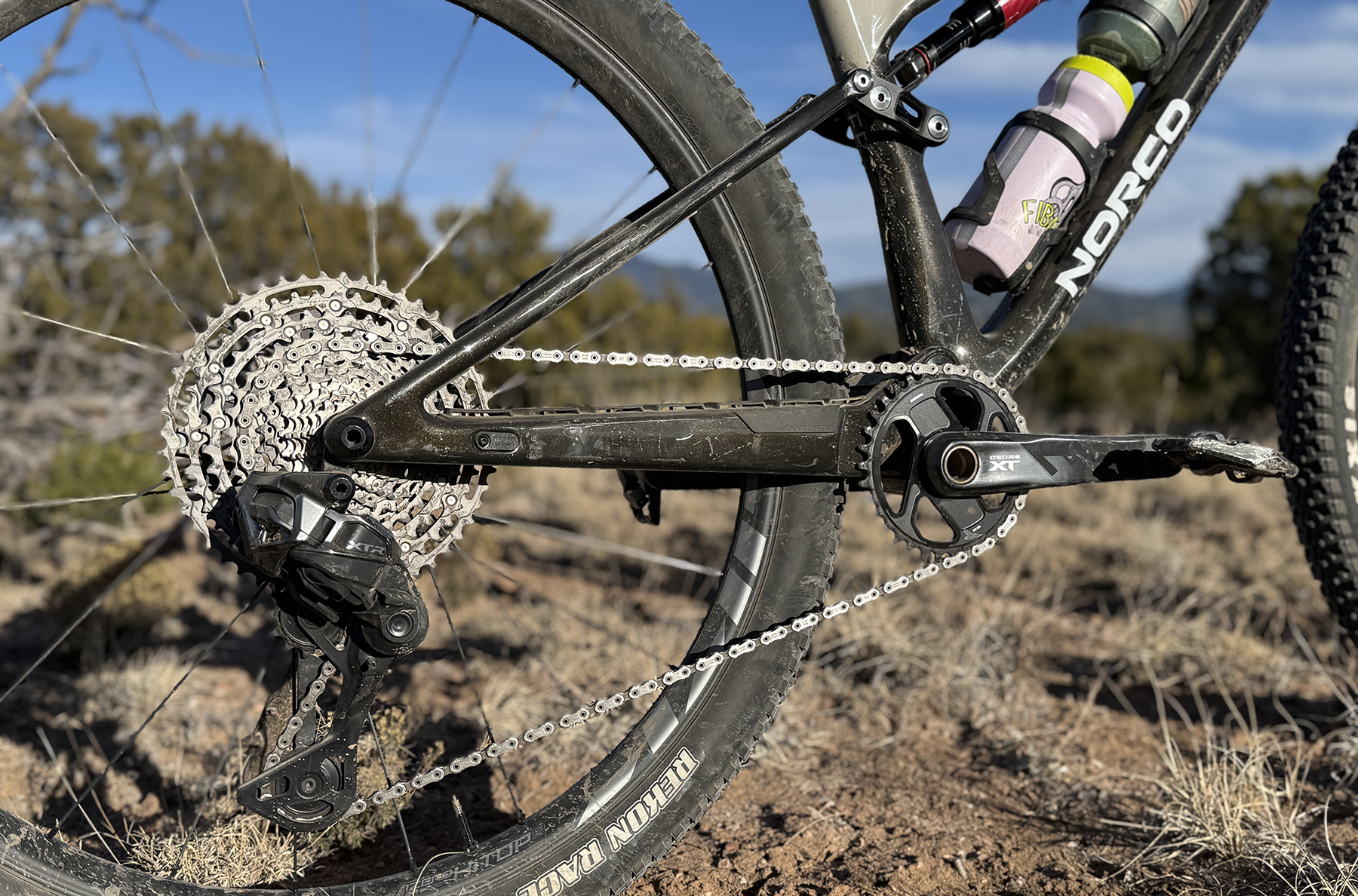
Simon: The C1 build on our Revolver 120 gave me my first experience with Shimano’s XTR Di2 drivetrain. I found it to be excellent and agree with Dylan that the shifting is textbook Shimano smooth, and quicker shifting than SRAM’s AXS Transmission drivetrains. Plus, they really nailed the tactile feel of the shift buttons.
One part I would probably change (and it’s entirely a personal preference) is the rather large 34-tooth chainring. I ride a lot of long, steep, and often technical climbs, and I kept pushing the shifter button looking for an easier gear. Yes, I know, get stronger, and then it wouldn’t be an issue, but it’s January in the mountains, and my fitness isn’t exactly peaking, so that’s my excuse…
Other than the chainring, I had no issues with the build on our C1 Revolver 120. I agree with Dylan that the XTR Di2 drivetrain is a highlight, and hopefully we’ll see more OE spec in the future.
I like the baked-in versatility to bump the rear travel up to 120 mm (from 115 mm), and then couple that with a 130 mm fork for a more Trail-focused build, although I know that’s a slippery slope, and before you know it, you have a 30+ lb XC race bike.
Who’s It For?
Dylan: The Revolver 120 is an excellent choice for folks who want to be the boss of their XC race bike, with both ascending and descending inputs resulting in rewarding output from the Revolver 120.
Simon: Its been said many times that XC races are won on the climbs, but XC race courses have gotten considerably more technical, and XC race bikes have consequently evolved into more capable all-around bikes. Still, XC race bikes need to be insanely efficient and fast uphill, and that’s where the Revolver 120 shines. For riders who will likely race their bike, the Revolver 120 is a fantastic place to hang a number plate.
I also think the Revolver has broad appeal outside the race tape. It would make a sweet addition to a quiver that may include Trail or Enduro bikes by putting a fresh spin on your local trails. It encourages you to ride fast, pick good lines, and hone your skills while enjoying a poppy, flickable, extremely efficient, and fast mountain bike.
Bottom Line
The Revolver 120 is yet another excellent, modern, flex-stay World Cup XC race bike, adding to this growing class, where a common formula has emerged across nearly every model. In such a crowded and homogeneous class, though, the Revolver 120 stands out for how efficient it is on the way up, and how poppy and energetic it is on the way down.
Deep Dive Comparisons
BLISTER+ members and those who purchase our Digital Access Pass can check out our Deep Dive comparisons linked below. Get our Digital Access Pass to view all our Deep Dives and Flash Reviews, or become a BLISTER+ member today to get access to that and a LOT more, including the best worldwide Outdoor Injury Insurance, exclusive deals and discounts on skis, personalized gear recommendations from us, and much more.
Deep Dive: Norco Revolver 120
We compare the Norco Revolver 120 to the Cannondale Scalpel, Yeti ASR, Revel Ranger, Yeti SB120, Niner JET 9 RDO, Kona Hei Hei, and Commencal T.E.M.P.O.
Blister’s Flash Reviews and Deep Dives are accessible to those who purchase one of our paid subscriptions
To get our comprehensive Deep Dives and our initial, unfiltered reports on new gear, become a member and receive many other services, deals, and discounts.
If you’re already an active member, please log in.
(If you’re already logged in and a member in good standing and seeing this message in error, please refresh this page in your browser.)
Nice review, per usual. I’ve heard that the Fox suspension on the 130 changes the ride characteristics of the frame considerably. Did you spend any time on the 130 variant? If so how did that change the bike?
Hi Bill, thanks for your comment. We only tested the 120. I think if I owned a 120, I might be tempted to try it as a 130, although it’s not an inexpensive swap by any means — and I really like it in the 120 configuration.
Great review. I’ve got a 130 coming shortly.
“Lastly, I think Norco’s sizing chart recommends sizes that may feel a bit big for many riders, so if possible, try one first before settling on a size.”
Not at all true if you are a true xc-focussed lycra geek (personally previously guilty). They are spot on.