

Pivot Shuttle LT
Wheel Size: 29’’ front / 27.5’’ rear (29’’ compatible)
Suspension Travel:
- Frame travel: 162/165 mm (short / long chainstay settings)
- Fork travel: 170 mm
Geometry Highlights:
- Sizes offered: S, M, L, XL
- Headtube angle (High): 64°
- Reach (size Large, High): 483 mm
- Chainstay length (size Large): 443 mm / 451mm (adjustable)
Drive System Highlights:
- Motor: Bosch CX-R
- Torque: 100 Nm
- Power: 750 W
- Battery: 800 Wh
- Display: Kiox 400C
- Remote: Mini Remote
Frame Material: Carbon fiber
Price: Complete bikes starting at $8,999 (build details below)

Intro
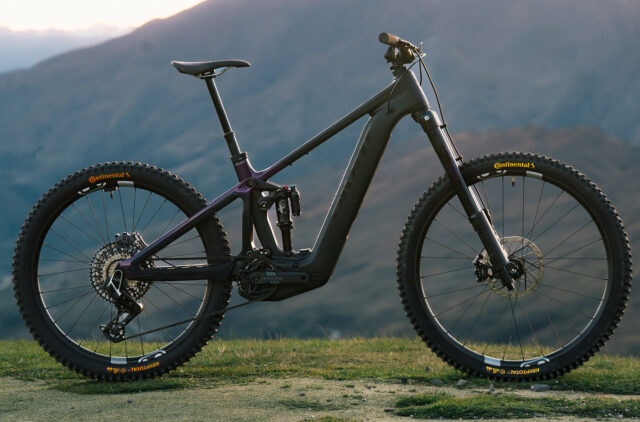
It’s only been a little over a year since Pivot updated the Shuttle LT, so needless to say, they’re moving fast down in Tempe, Arizona. Pivot has made the new Shuttle LT the most adjustable bike in its lineup, electrified or not, and has included some innovative technologies that give the sense it’s more like a full redesign than just an update. Pivot calls the new Shuttle LT “Enduro unleashed” so let’s dig in and check out what they’ve done with the latest version.
The Frame
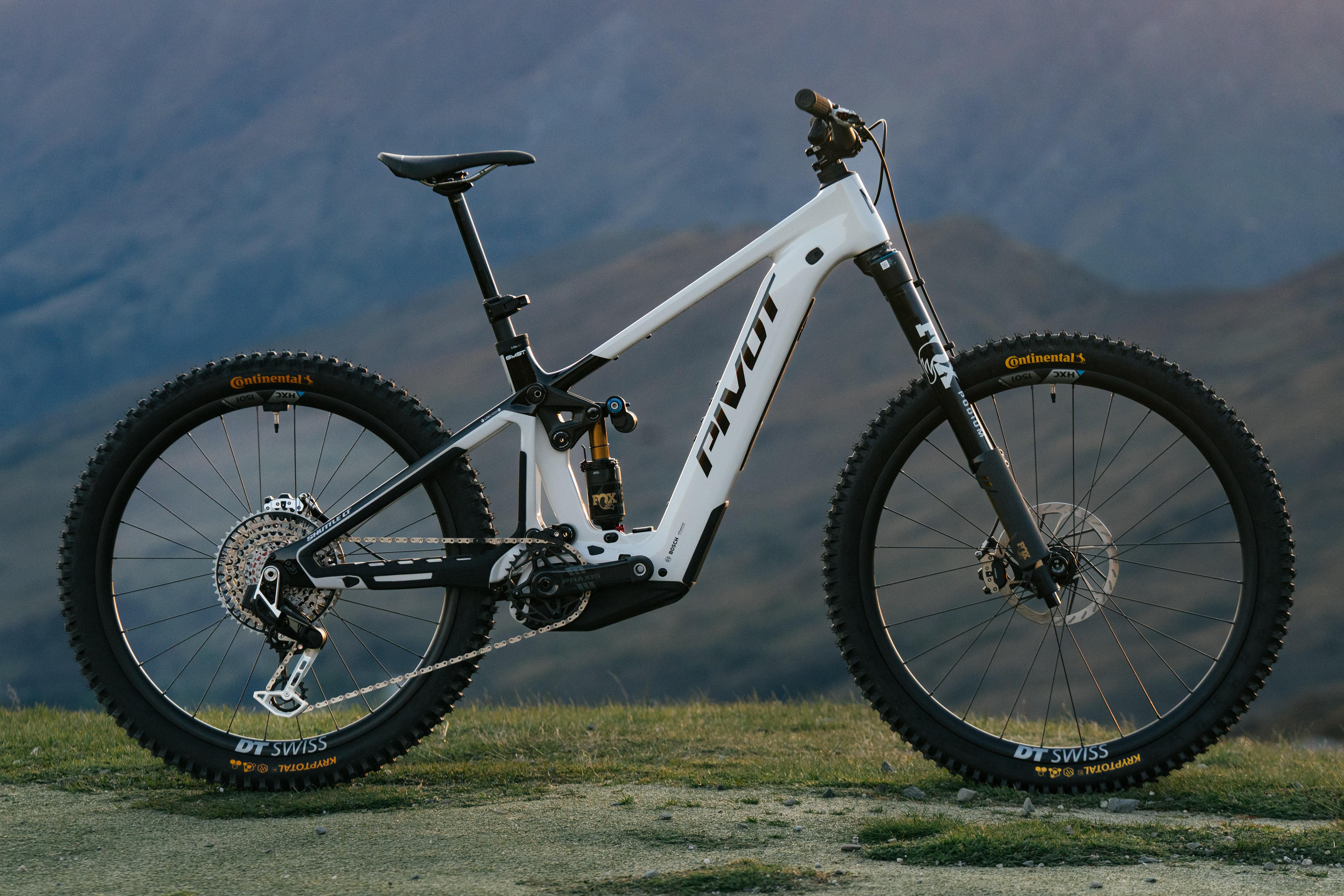
While the second-generation Shuttle LT felt more like an update to switch from Shimano to Bosch for the drive system, the new third-generation Shuttle LT looks more like a full redesign.
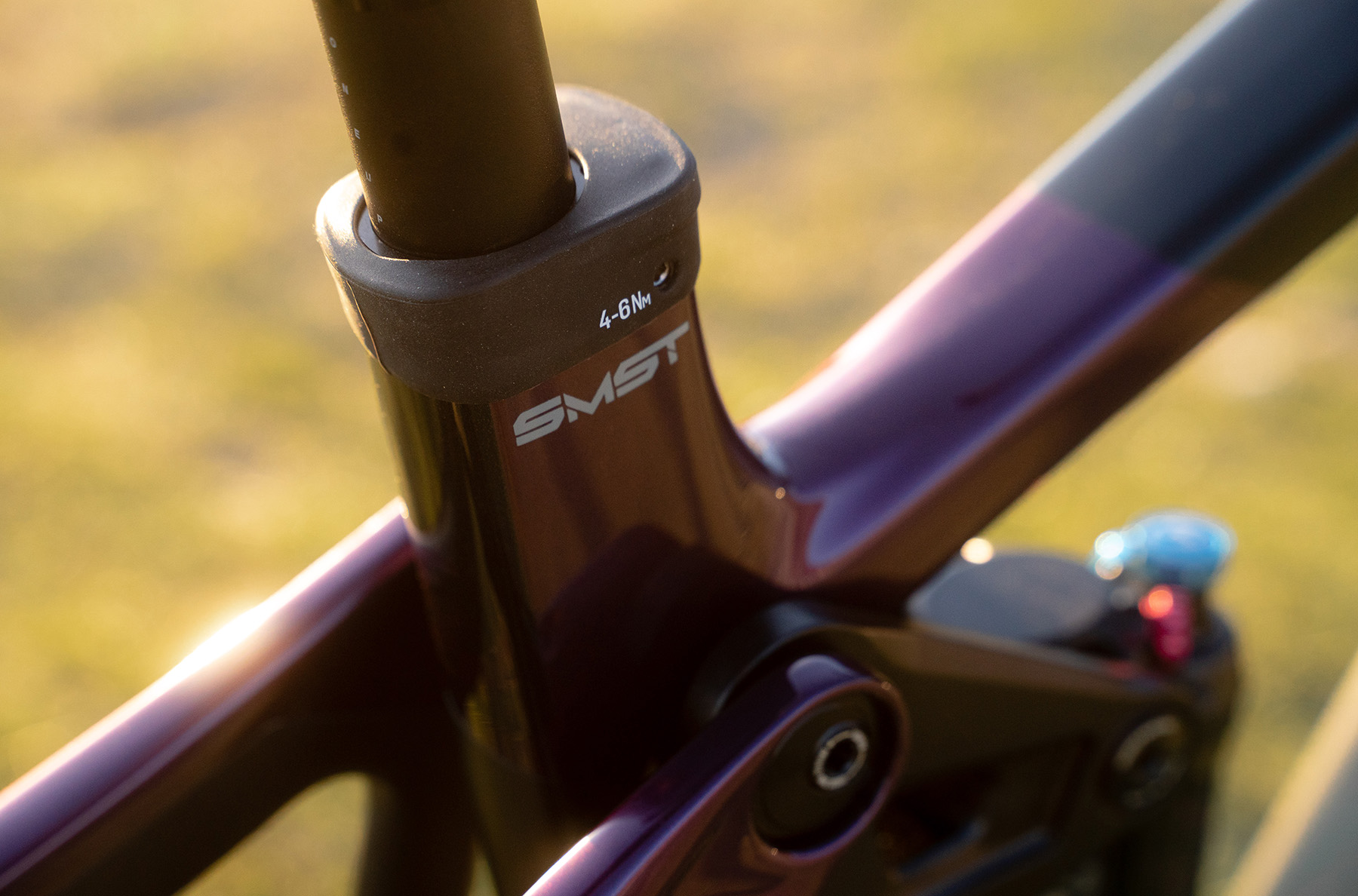
For starters, there’s the eye-catching seat tube, and it’s eye-catching because it is noticeably larger than the seatpost that goes in it. That’s because of the Slacky McSteepTube (SMST) insert, which allows you to adjust the seat tube angle by 1.5 degrees, independent of the other geometry settings.
Aside from the seat post, the new shuttle LT’s silhouette is visually similar to the previous model. But look a little closer, and you start to notice details like Pivot’s patented Swinger Dropout System, flip chips on the lower shock mount, new charge port location, and a new dual-port cable routing design.
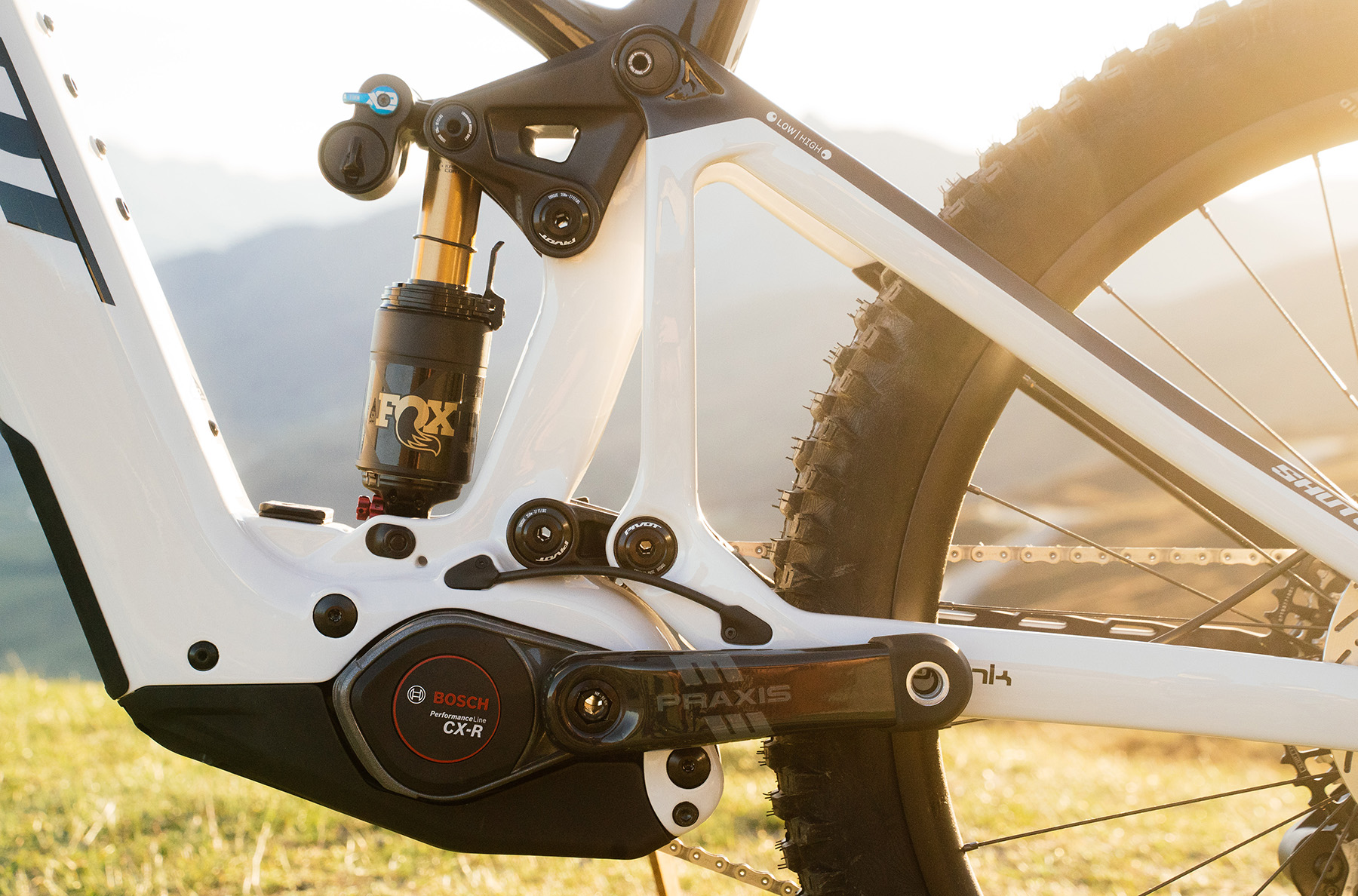
As far as the suspension layout, don’t expect Pivot to break up with dw-link anytime soon. They are firm believers that the design provides the right amount of anti-squat, small-bump sensitivity, traction, and stability to manage increasing eMTB drive system power outputs. In this latest configuration, it offers 162 mm or 165mm of travel, depending on the length of the adjustable chainstays, which are adjusted via the Swinger dropouts. The Long setting adds 8 mm to the rear center and increases the travel to 165 mm in the process.
The new progression flip chips on the lower shock mount allow riders to change the progressivity of the suspension curve, from 36.0% in the Progressive setting to 32.7% in the Linear one.
Also new is the removable battery system, which is designed to be easily removed for quick battery swaps, charging off the bike, and when you need to fly with it. Technically speaking, all eMTB batteries are “removable”; the difference is whether they are designed to be easily removed without having to pull the motor and other associated parts, like what was necessary with the outgoing Shuttle LT.
The Shuttle LT has the same floating battery mount technology as the prior one, which uses two independent nylon-composite mounts that allow the battery a bit of movement, which Pivot claims lets the frame handle impacts and cornering forces more naturally.
Other carry-over details include size-specific carbon layups, compatibility with 27.5” and 29’ rear wheels (with no geometry change thanks to the High / Low flip chips), and 157 mm Super Boost rear axle spacing.
Drive System
The outgoing Shuttle LT moved away from the Shimano EP801 motor to the Bosch CX drive system (as many brands have done). Not surprisingly, Pivot has stuck with Bosch and spec’d the new Gen 5 Performance Line CX motor and CX-R Race Edition motor in the new Shuttle LT.
Output is the same for both motors, at 750 watts of peak power, 100 Nm of torque, and 400 % assist. The CX-R brings a titanium spindle and ceramic bearings as upgrades over the CX motor, and is 90 grams lighter. Also unique to the CX-R is the addition of the “Race” mode, which ramps up responsiveness, increases Extended Boost, and provides full power all the way up to the max speed cut-off without tapering.
Pivot’s decision to make the 800 Wh battery fully removable, primarily to give it the versatility for off-the-bike charging and to make it easier to travel with when flying, has also opened the door to using the smaller, and two pound lighter 600 Wh battery should you want to.
The Pro and Team builds get the excellent new Kiox 400C integrated top tube display, while the Ride build has the System Controller display we’ve gotten very used to since it’s been around for a good few years now. The top tube cut-out to mount the displays is the same, so it’s possible to upgrade the System Controller to the Kiox 400C.
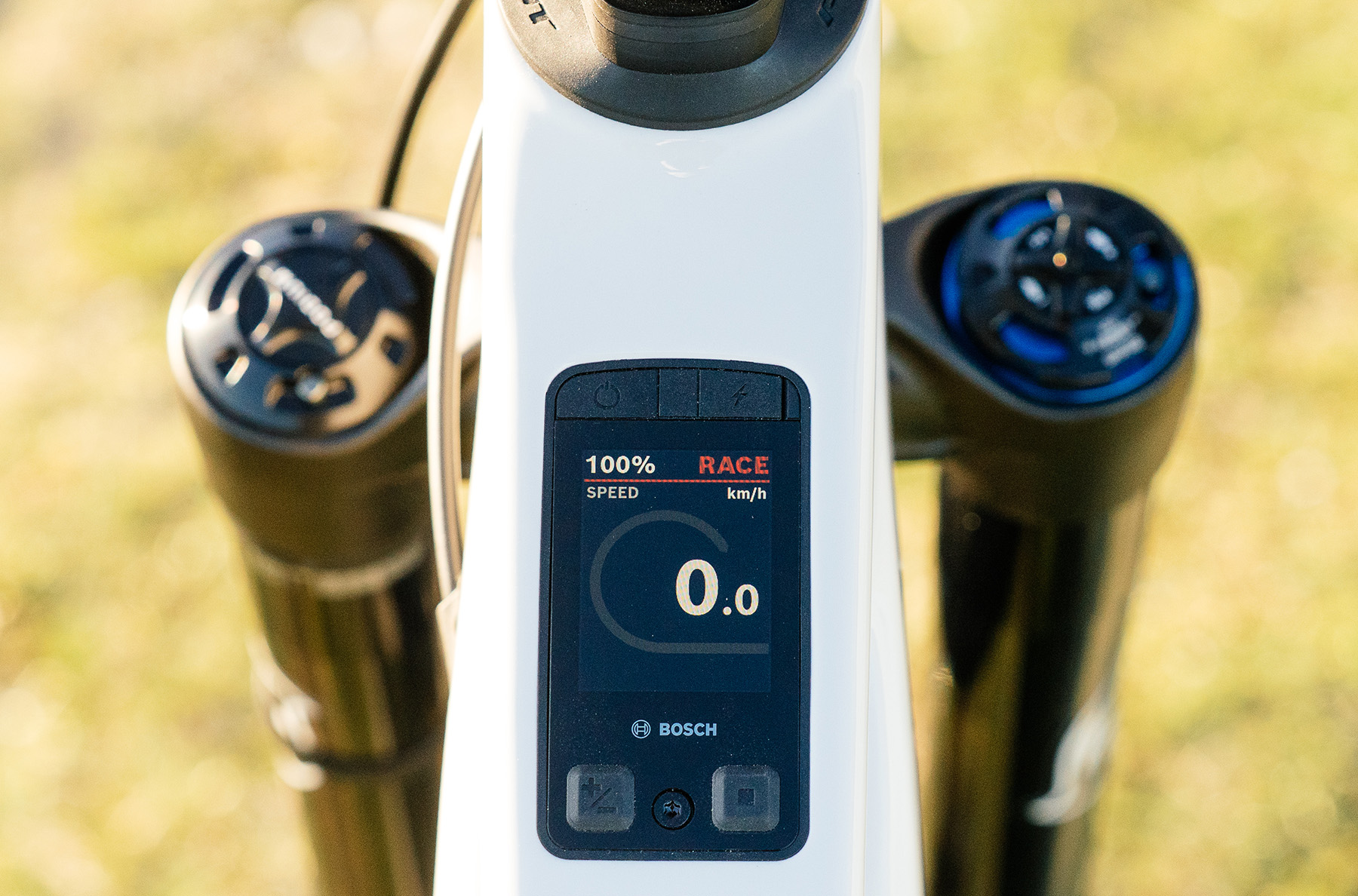
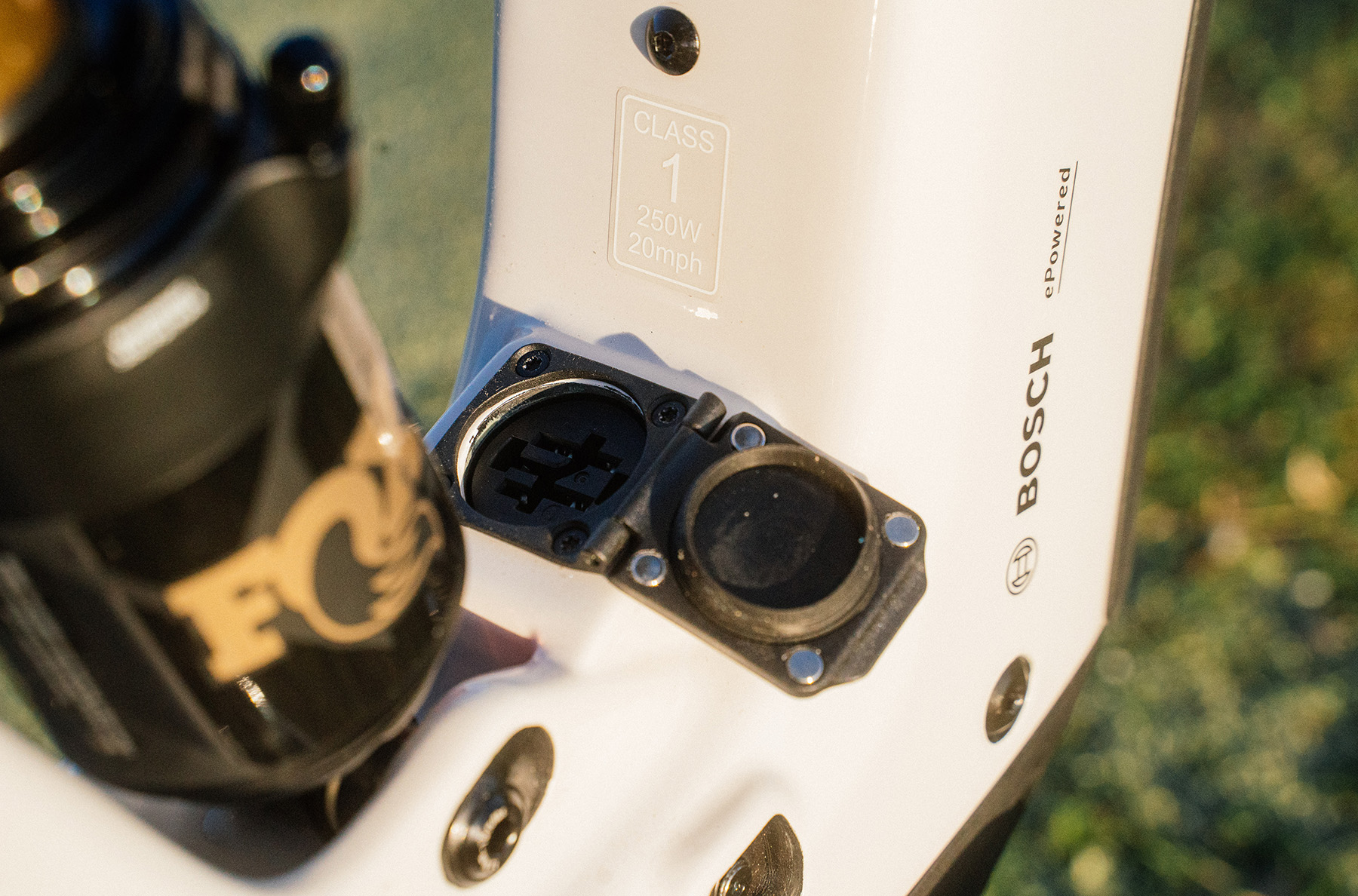
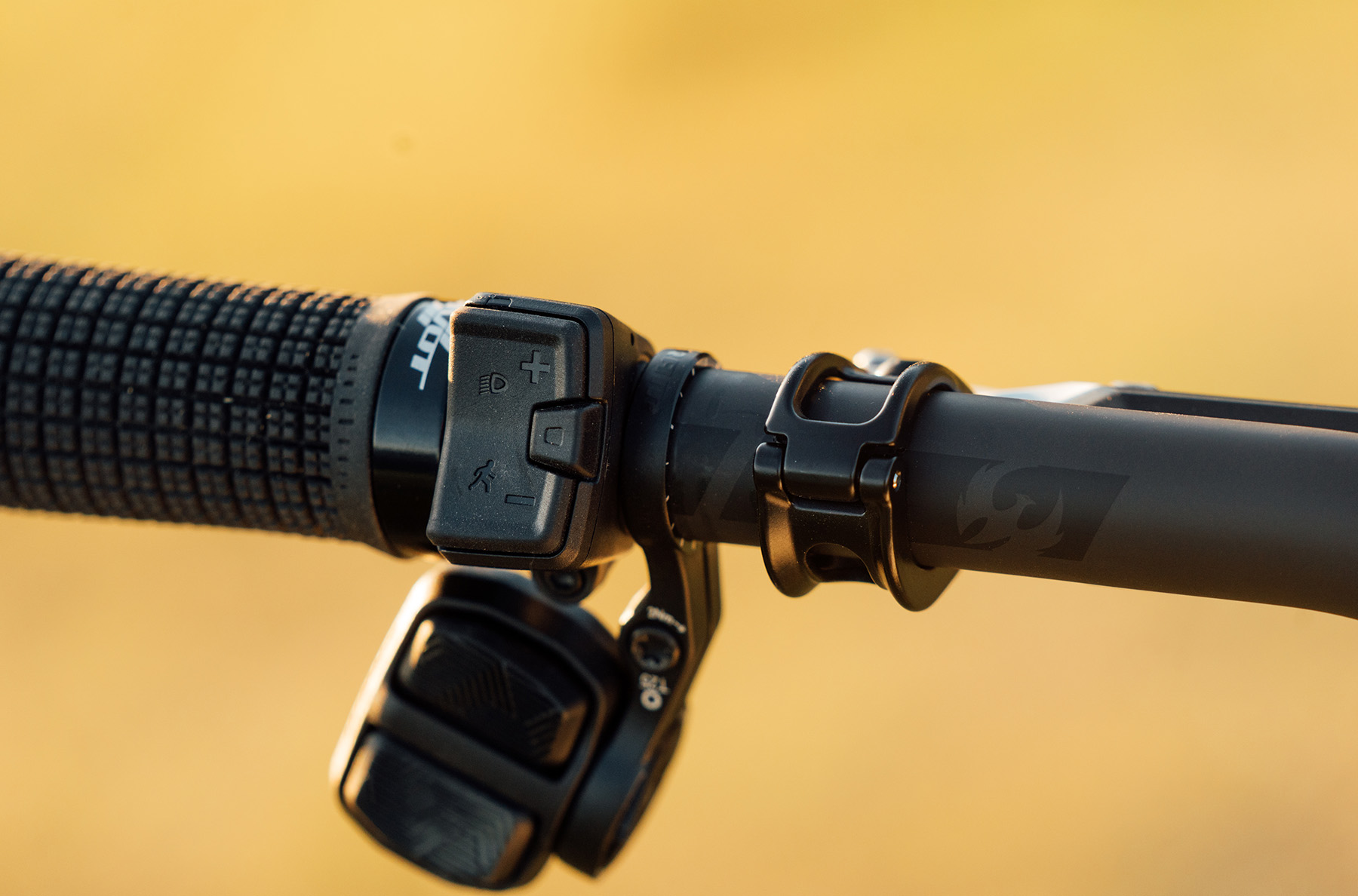
Pivot has relocated the charge point to the top of the downtube in front of the rear shock mount. It is positioned horizontally and has a water-tight magnetic cover. Pivot says the new location works better with the Powermore Range Extender because it shortens the distance from the Range Extender to the charge port, which means a shorter cable. It’s the first time I’ve seen a charge port in that orientation, so it will be interesting to see how it holds up. I’ve had charge port covers break and fall off on many eMTBs, and the thought of that happening to this one, which would then leave the charge port susceptible to filling up with water in wet conditions, doesn’t sound great.
Lastly, Pivot claims the 250 Wh PowerMore Range Extender is compatible with all geometry and rear shock configurations without interference, which is good to hear since we’ve had interference issues with shocks on other eMTBs we’ve tested.
Fit & Geometry
Adustability is the name of the game with the new Shuttle LT. The most novel adjustment is the SMST adjustable seat tube angle system that allows for 1.5º of adjustment with a clever reversible insert that lives in the seat tube. In the slack setting, it’s 76.5º, and when flipped to the steep setting, it’s 78.0º.
Moving to the back of the Shuttle LT, Pivot has implemented its Swinger Dropout System (also found in the Firebird). The Swinger dropouts provide 8 mm of chainstay length adjustment, from 443 mm to 451 mm. Switching between settings requires re-sizing the chain by one link set, but is otherwise straightforward.
[At least that’s the official line from Pivot; we were able to make the same chain length work in both settings on the Firebird.]
The new Shuttle LT retains the same High / Low geometry adjustment flip chip arrangement as the outgoing model. Pivot states the High setting (MX High) is for “precision and technical control, whereas the Low setting (MX Low) is for “maximum speed and descending stability”. Pivot has geometry charts for both settings, which is a departure from the previous Shuttle LT, which they recommended against running in the Low setting with a 27.5” rear wheel and didn’t publish a geometry chart for that setting.
All Shuttle LTs come from the factory with a mixed-wheel size configuration and ship in the High setting. Running it with a 29” rear wheel remains an aftermarket option, and the Low setting corrects the geometry for the larger wheel, maintaining the same geometry figures as the MX / High combo.
In the MX Low setting, the head tube angle is a slack 63.2º, but it’s not overly slack, and we’ve been on much slacker eMTBs (the Cannondale Mottera SL at 62.5º comes to mind). The stack height is quite high (even by my standards) at 664 mm, and the bottom bracket height gets fairly low at 335 mm, which can affect the motor clearance when negotiating technical ledges and rocky terrain in general. But then again, Pivot clearly calls out MX High for exactly that kind of riding, so if that’s your jam, run it in that setting.
Pivot’s published geometry figures for the new Shuttle LT are below:
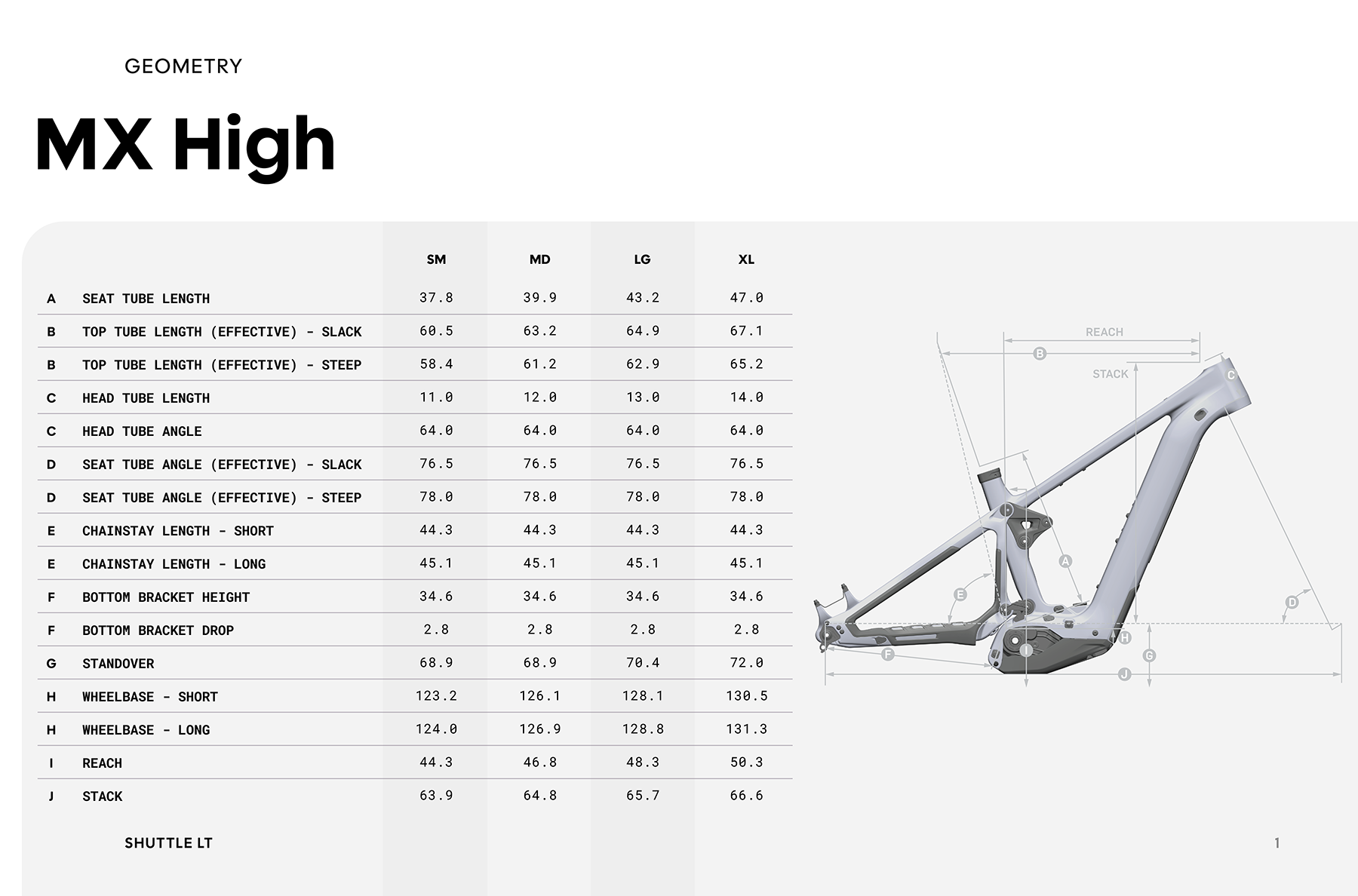
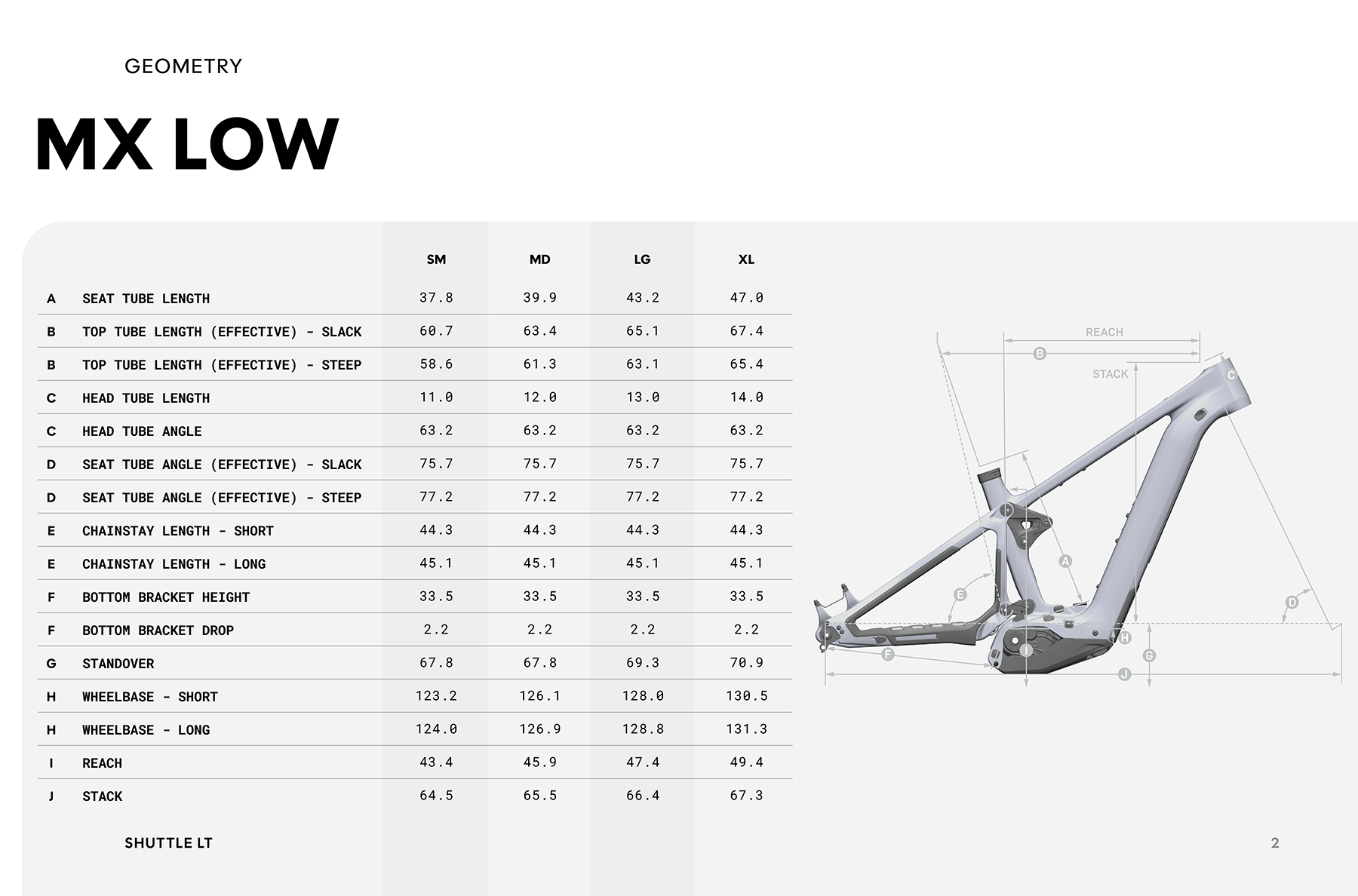
MX High setting puts the head tube angle at 64.0º with a bottom bracket height of 346 mm and a stack height of 657 mm (which is still plenty high). To me, it looks like those numbers could align well with Pivot’s description of the MX High setting’s ride characteristics.
On the fit side, the new Shuttle LT’s geometry numbers haven’t changed a ton from the outgoing model, with the biggest differences appearing on the Large and XL sizes. I reviewed the 1st Gen Shuttle LT (the second Gen version had very similar geometry) and remember being between size Medium and Large, which for me isn’t very common — I’m a size Large the majority of the time. I went with the size Medium since the Large (in the Low position) was quite a big bike with a 488 mm reach, a tall 654 mm stack, and a very long 650 mm effective top tube length. With a 468 mm reach (Low position), the Medium was also just outside my preferred range of 470 – 480 mm (at the time; my preference has grown to 475 – 485 mm since), but it was closer than the Large, and overall the the fit was good, but not surprisginly, it was a hair on the compact side for me.
Pivot has dialed back the reach of the size Large for the new Shuttle LT to 483 mm (MX High setting), which I think is a good move as it likely mean less riders will find themselves between sizes. The XL gets a similar drop to 503 mm. Additionally, while the SMST position doesn’t actually affect the reach number, it obviously will change the seated riding position fit, so keep that in mind as well.
Pivot has historically liked high stack heights on the Shuttle LT, and the new version continues that trend — the size Large gets 657 mm, which I’m a fan of.
The Builds
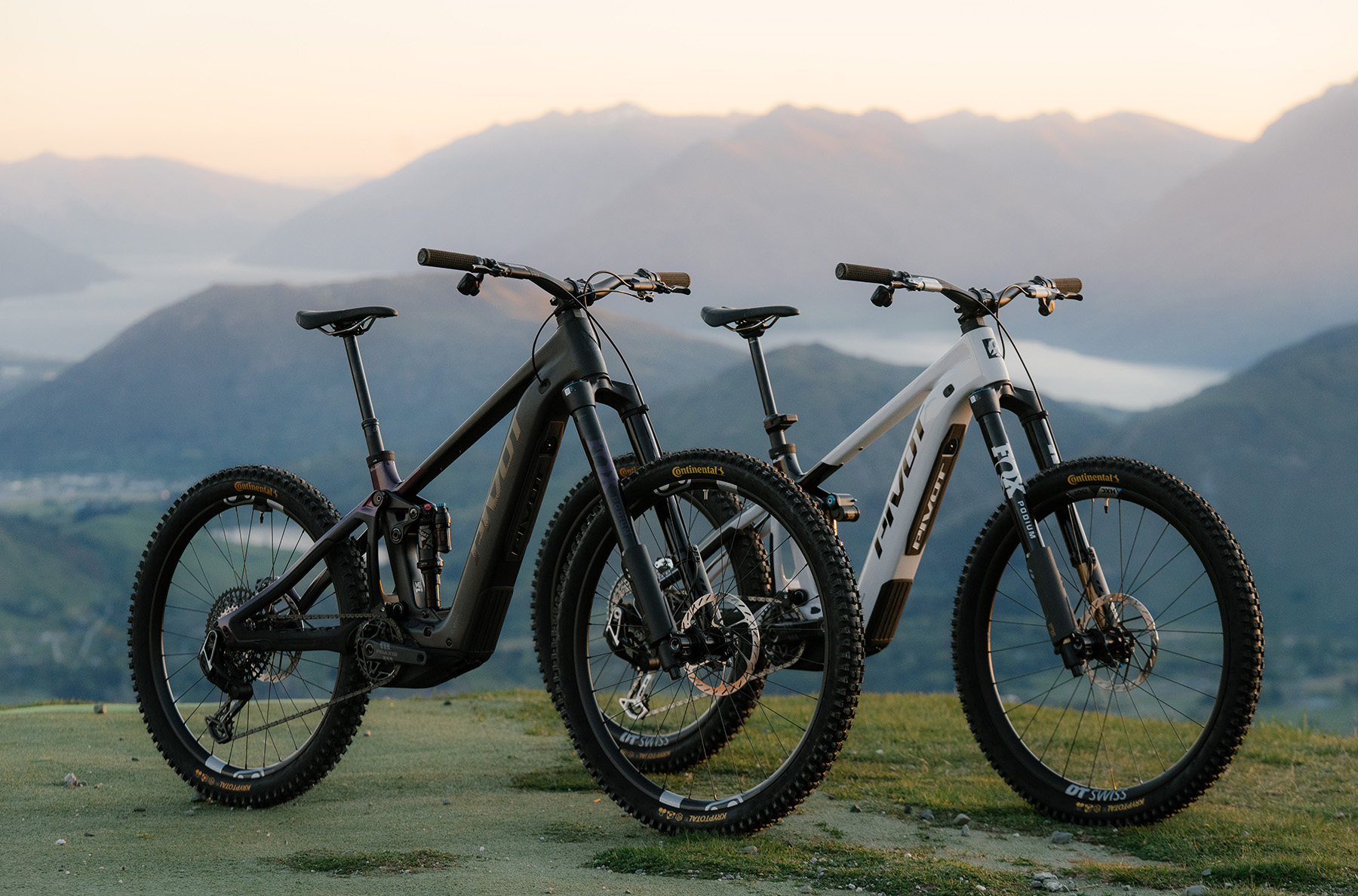
Pivot has historically been a fan of Bosch’s CX-R Race motor, spec’ing it in both prior-gen Shuttle LT and Shuttle AM builds, and not surprisingly, that continues with the new Shuttle LT getting the latest Gen 5 version of the CX-R Race motor. However, in contrast to the outgoing Shuttle LT, where all builds got the Bosch CX-R Race Edition motor, the new Shuttle LT’s entry-level “Ride” build now gets the Bosch CX motor, and only the Pro and Team builds get the hotrod Race motor.
Pivot is offering three builds for the Shuttle LT, starting with the Ride 70/90 build. Priced at a $8,999, this build gets a full complement of SRAM parts. The Ride 70/90 build replaces the Ride SLX/XT build on the outgoing Shuttle LT and marks the first time there are no Shimano parts on any Shuttle LT.
The SRAM 70/90 build pairs a SRAM 90 rear derailleur and shifter with a SRAM 70 chain and cassette. We’ve been impressed by the SRAM 90 Transmission’s performance when mated to eMTB drive systems, and it feels like you get similar top-notch shifting-under-load performance as SRAM AXS Transmission drivetrains, but with good old cables and springs instead of batteries and microchips.
The brakes are SRAM Mavens with 200 mm rotors attached to DT Swiss Hybrid H1900 wheels with Continental Kryptotal tires. Pivot specs the same tires on all three builds using a 2.4 Super Soft Enduro casing up front and a Soft Enduro casing out back. The decision to run a Super Soft casing in the front is noteworthy and should pay off with increased front wheel traction, but likely at the cost of decreased durability.
On the suspension front, it’s an all-Fox affair, with a Float X Performance rear shock and 38 Performance fork.
Moving up to the $12,499 Pro XO Eagle Transmission build gets you a Fox Podium Performance Elite, and also jumps to fully electronic shifting via SRAM’s Transmission. The rear derailleur is an XO unit, whereas the cassette and chain are both GX. Brakes get the next level up SRAM Maven Silvers, and the wheels get upgraded to DT Swiss Hybrid HX1501.
The final build in the lineup is the Team XX Eagle Transmission Build, which comes in at a lofty $14,999. This one gets a Fox Float X2 rear shock matched to a Fox Podium Factory Fork, and shifting is provided by SRAM’s top-tier XX Transmission kit. This build also gets SRAM Maven Ultimate brakes and DT Swiss’ HXC1501 Carbon wheels.
Additional upgrades include Bosch’s Powermore 250 Wh range extender for $599, and Fox’s DHX Live Valve Neo coil shock is available on the Team builds for an extra $1,450 USD.
Full build details are as follows:
- Drive Unit: Bosch Gen 5 Performance Line CX
- Battery: Bosch PowerTube 800 Wh
- Display: Bosch System Controller
- Remote: Bosch wireless Mini Remote
- Drivetrain: SRAM Eagle 70 / 90 Transmission
- Brakes: SRAM Maven (200 mm rotors)
- Fork: Fox 38 Performance (170 mm)
- Shock: Fox Float X Performance
- Wheels: DT Swiss Hybrid H1900
- Dropper Post: JD / Pivot YSP23GLS (S: 130–150 mm, M: 150–170 mm, LG-XL: 180 mm–200 mm)
- Drive Unit: Bosch Gen 5 Performance Line CX Race Edition
- Battery: Bosch PowerTube 800 Wh
- Display: Bosch Kiox 400C
- Remote: Bosch Mini Remote
- Drivetrain: SRAM GX / XO Eagle Transmission
- Brakes: SRAM Maven Silver (200 mm rotors)
- Fork: Fox Podium Performance Elite (170 mm)
- Shock: Fox Float X Performance Elite
- Wheels: Crank Brothers Synthesis DH
- Dropper Post: OneUP Dropper V3 (S: 150 mm, M: 180 mm, L-XL: 210 mm)
- Drive Unit: Bosch Gen 5 Performance Line CX Race Edition
- Battery: Bosch PowerTube 800 Wh
- Display: Bosch Kiox 400C
- Remote: Bosch Mini Remote
- Drivetrain: SRAM XX Transmission
- Brakes: SRAM Maven Ultimate (200 mm rotors)
- Fork: Fox Podium Factory (170 mm)
- Shock: Fox Float X2 Factory
- Wheels: DT Swiss Hybrid HXC1501 Carbon
Dropper Post: RockShox Reverb V2 (S: 150 mm, M:175 mm, L: 200 mm, XL: 225 mm)
Some Questions / Things We’re Curious About
(1) Adjustability can be overwhelming for some, and the Shuttle LT has tons of it — has Pivot gone too far?
(2) Has Bosch lost some of the CX-R motor’s exclusivity by giving it the same power numbers as the CX motor?
(3) Will riders miss the Shimano spec in the Ride build?
(4) Will the Slacky McSteepTube end up being a flash-in-the-pan gimmick, or will it prove to be genuinely useful and potentially start a new adjustable seat tube angle trend?
Bottom Line (For Now)
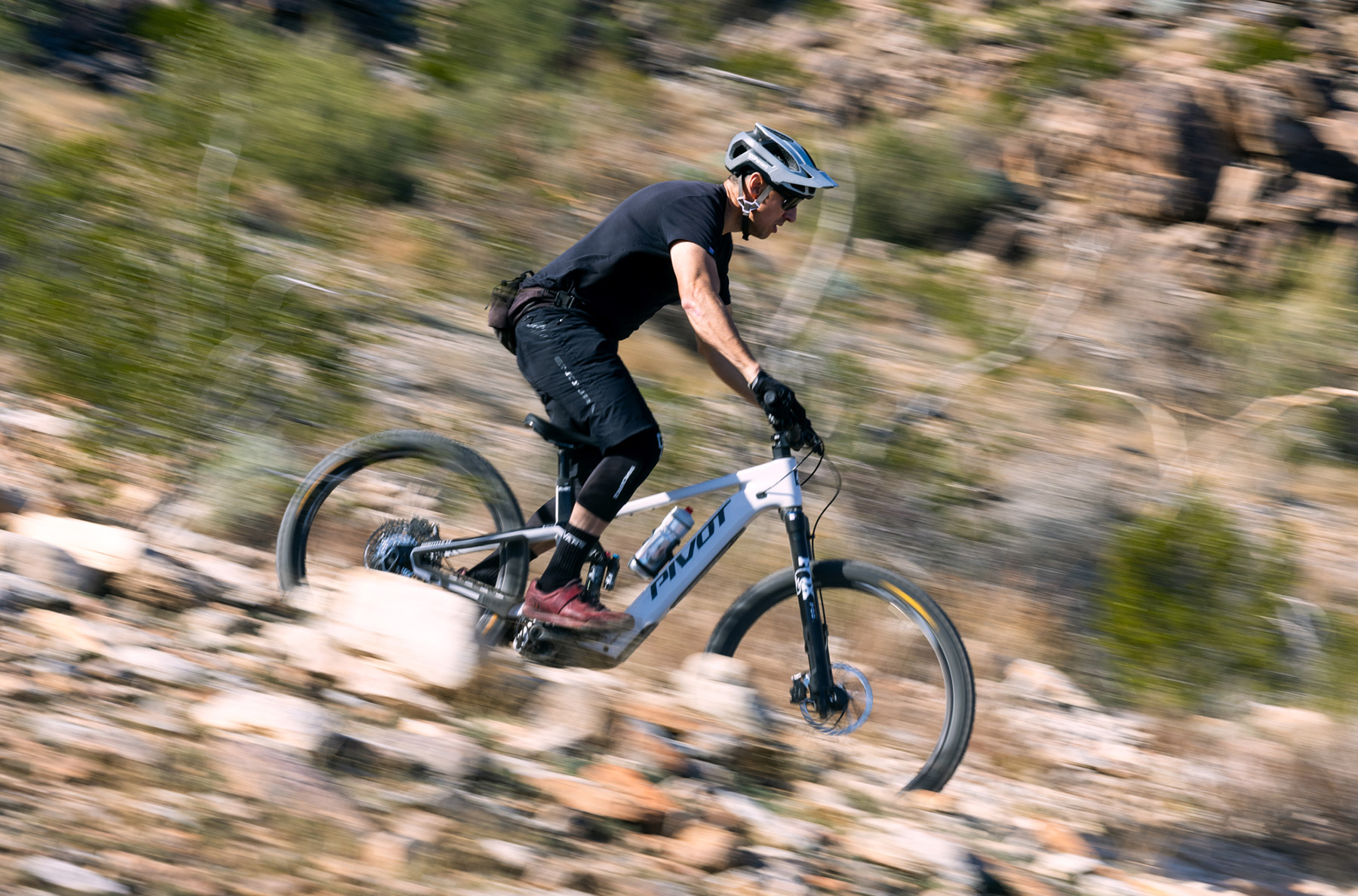
Now in its 3rd generation, the Pivot Shuttle LT is a significant departure from the previous model, offering class-leading adjustability and innovative details that add versatility and refinement to a bike that was already a very compelling option in the long-travel eMTB category. We’ve got a handful of rides on the Shuttle LT already, and have one on the way for a long-term review. Check out our early impressions below, and stay tuned for a Full Review down the line.
Flash Review: Our Initial On-Trail Impressions
BLISTER+ members and those who purchase our Digital Access Pass can check out the Flash Review below to read our initial on-trail impressions. Get our Digital Access Pass to view all our Flash Reviews and Deep Dives, or become a BLISTER+ member today to get access to that and a LOT more, including the best worldwide Outdoor Injury Insurance, exclusive deals and discounts on skis, personalized gear recommendations from us, and much more.

Flash Review: Pivot Shuttle LT
Pivot’s new Shuttle LT brings class-leading adjustability and Bosch’s CX-R Race motor to the fight for supremacy in the hotly contested full-power long-travel eMTB category. Check our first impressions.
Blister’s Flash Reviews and Deep Dives are accessible to those who purchase one of our paid subscriptions
To get our comprehensive Deep Dives and our initial, unfiltered reports on new gear, become a member and receive many other services, deals, and discounts.
If you’re already an active member, please log in.
(If you’re already logged in and a member in good standing and seeing this message in error, please refresh this page in your browser.)