

DJI Power 2000
MSRP: $1099
Capacity: 2048 Wh
Output: 3000 watts
Battery Type: LFP (lithium ferrophosphate)
Ports:
- AC Output × 4
- USB-C × 4
- USB-A × 4
- SDC × 2
- AC Input × 1
Dimensions: 448×225×324 mm (L×W×H)
Blister’s Measured Weight: 47.7 lb / 21.6 kg
Test Locations: Colorado and New Mex
Intro
Having been curious about off-grid charging options for eMTBs, we decided to test the DJI Power 2000 portable power station as a potential solution. At 2048 Wh of capacity, the Power 2000 is DJI’s largest offering, and given that we are charging big eMTB batteries, getting the highest capacity makes sense. In simpler terms, think of the Power 2000 as a big battery that stores a whole bunch of energy and features a built-in inverter to convert the direct current battery power into alternating current house power.
We’ve been putting the Power 2000 to the test in more areas than we thought, because what started as just looking for an option to recharge eMTB batteries in off-grid locations has turned into a bit of an eye-opening journey into the capabilities of modern portable power stations.
Design & Performance
Thanks to advancements in battery technology, storing electrical energy is now more accessible than ever. Forget those gas-powered generators and the dinosaur juice they consume, because portable power stations can do the same thing while also being quieter, cleaner, and better for the environment.
The DJI Power 2000 can store 2048 Wh of energy. To put that in perspective, eMTBs typically have between 400 Wh and 800 Wh of battery capacity, so it has, give or take, three times the capacity of the average eBike battery. When charging a depleted 600 Wh eMTB battery with the fully charged Power 2000, it takes almost exactly 600 Wh right off the top of the 2048 Wh of stored energy. I was expecting a bigger loss in the transfer of power from one battery to another, but that’s not how it went down; the efficiency of the transfer is surprisingly high.

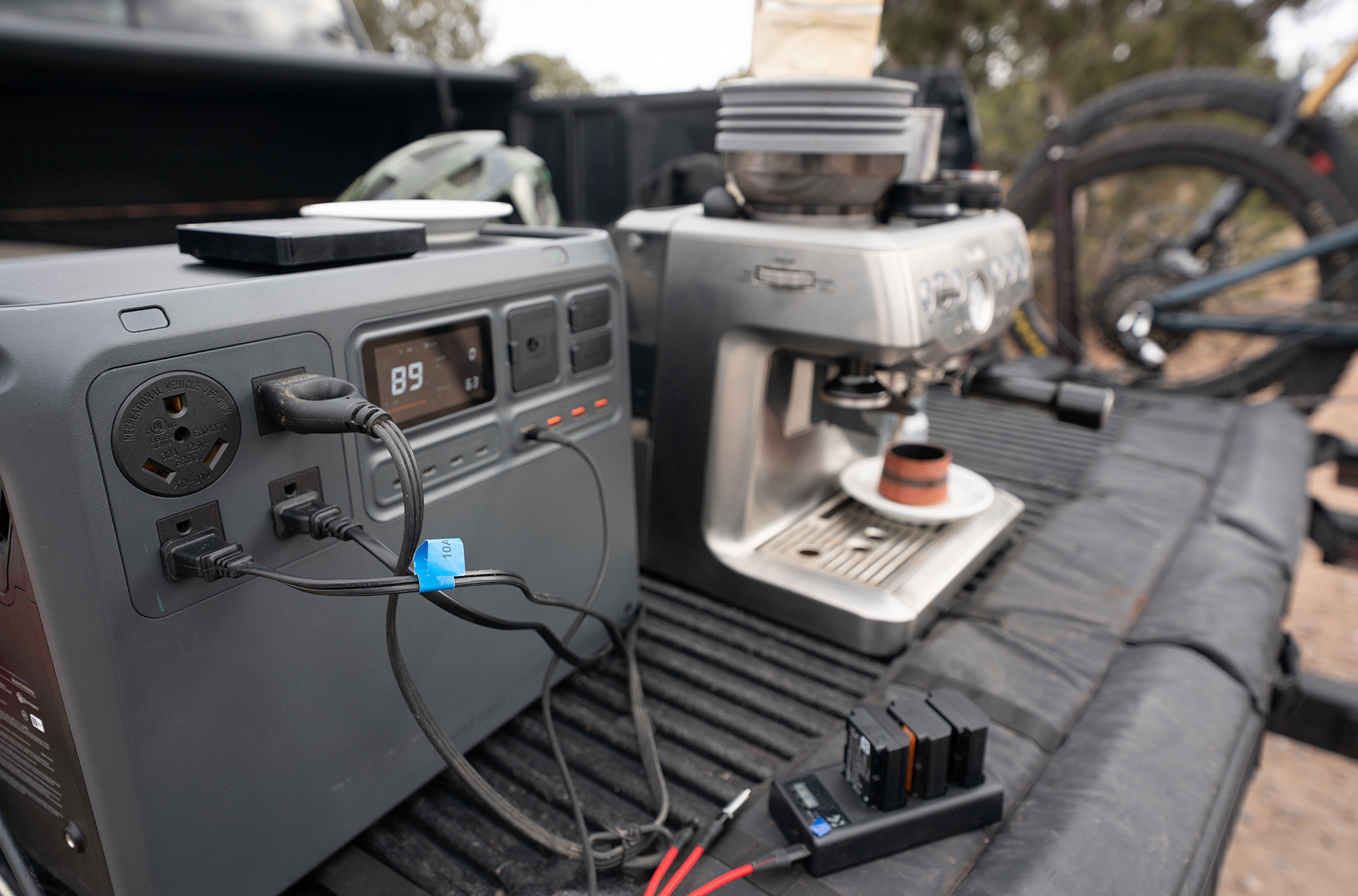
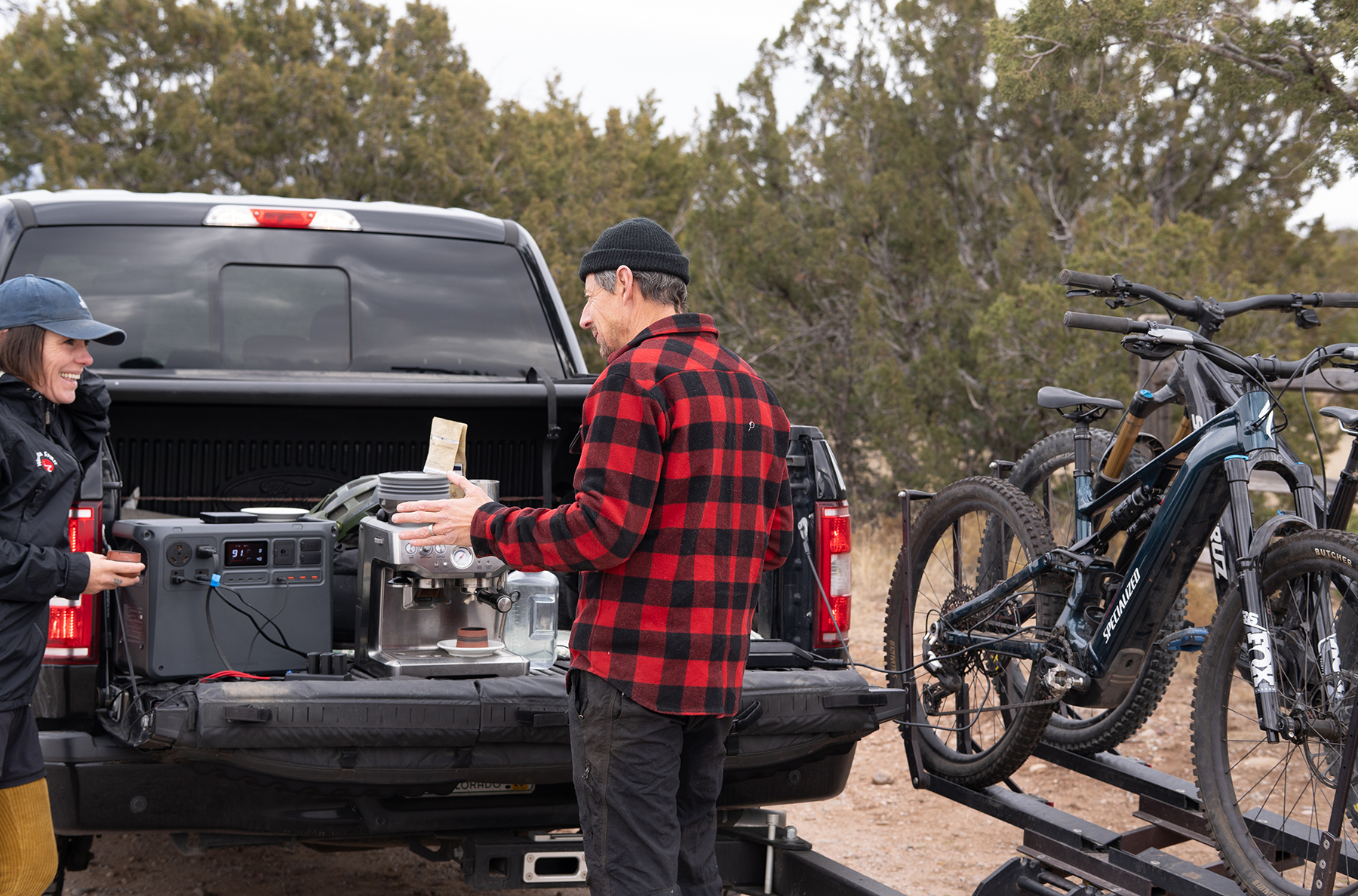
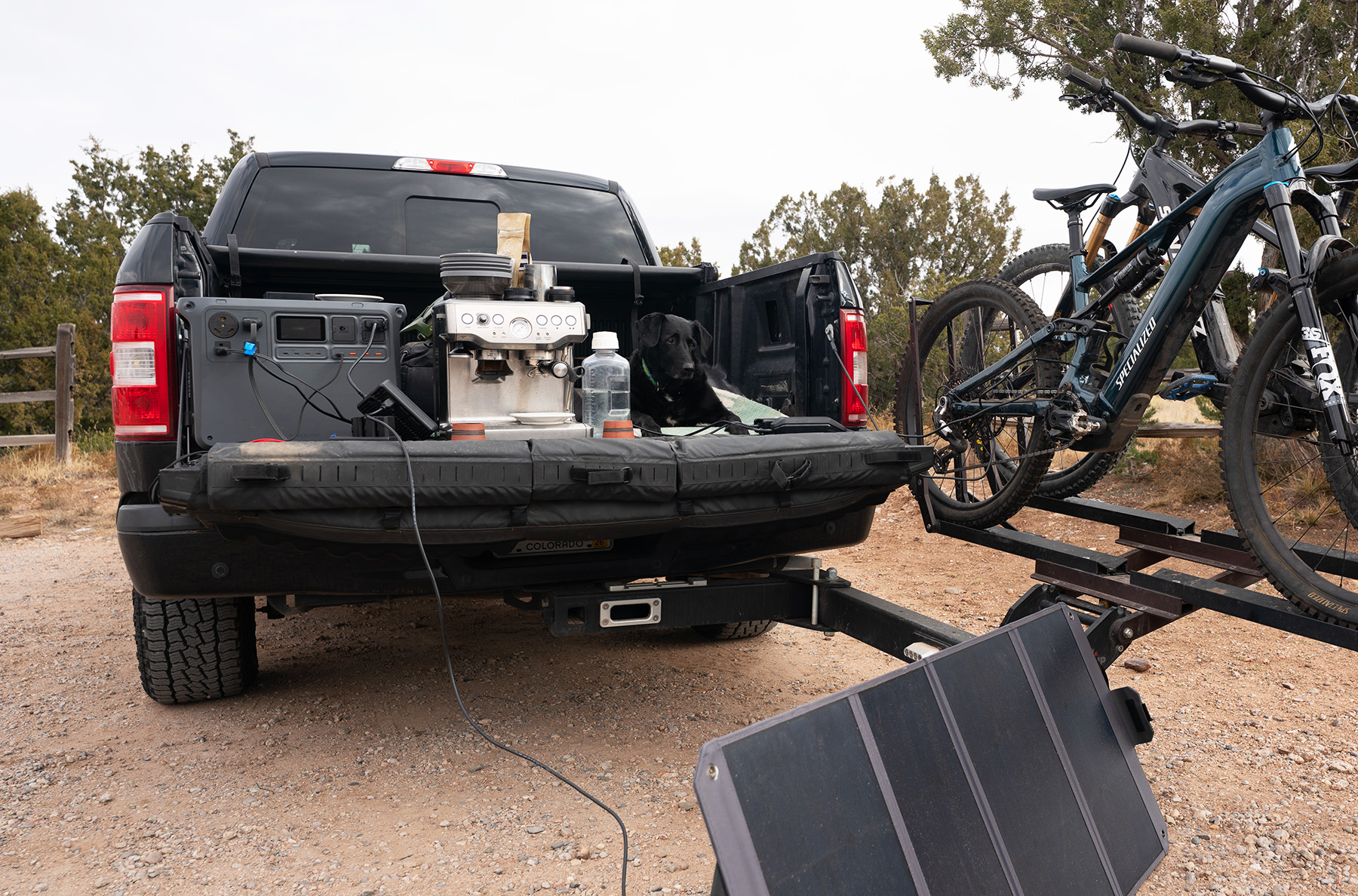
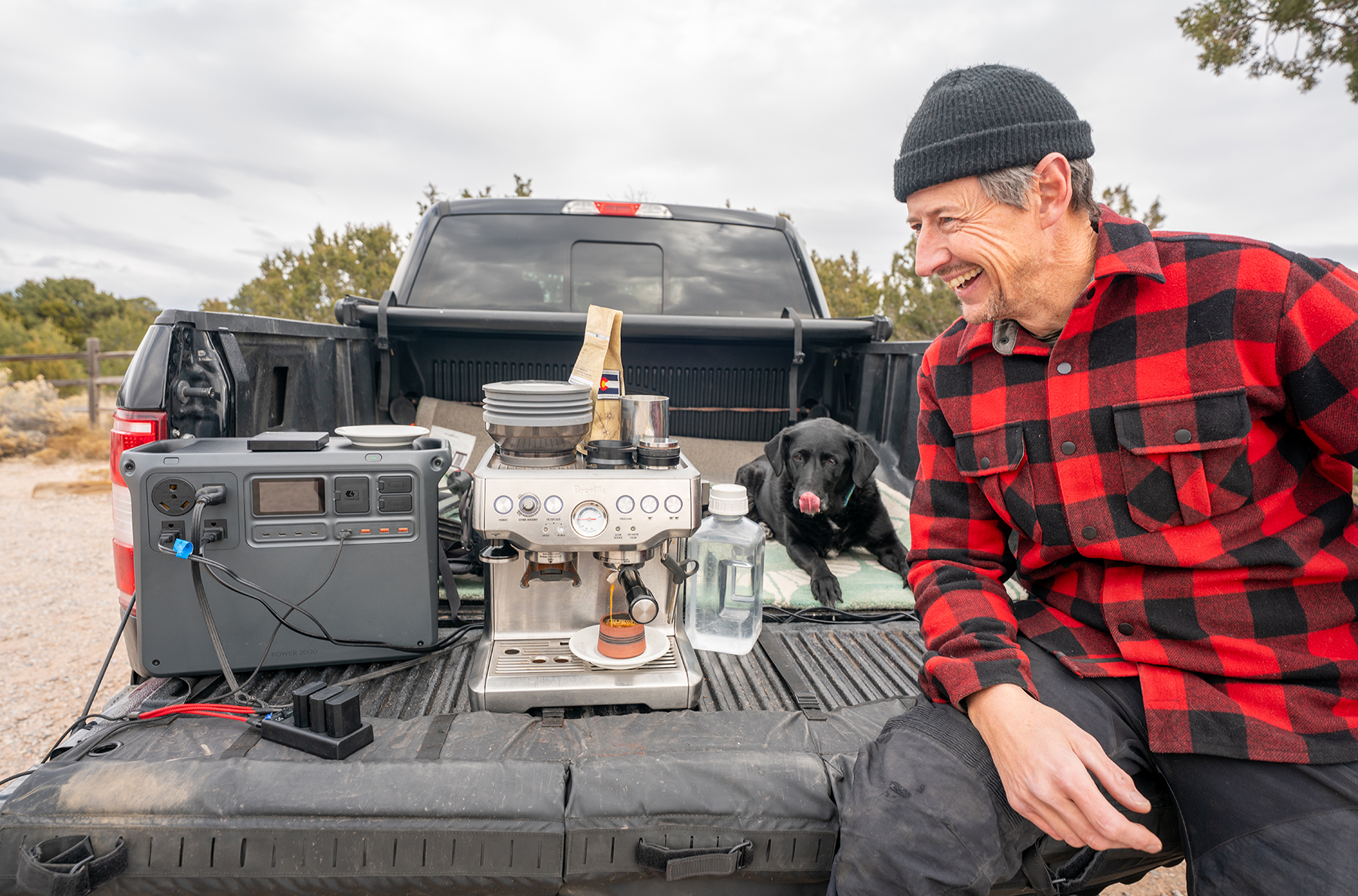
Which is great, because you then know how many eMTB batteries you can charge with simple arithmetic. On one photo shoot outing with three eMTBs, we had 360 Wh, 600 Wh, and 800 Wh batteries to charge. The Power 2000 has three 120-volt outlets (and one 240-volt), so we had two charging simultaneously and the third powering the espresso machine (because it’s essential to charge the riders, too). DJI claims the Power 2000 can output 3000 watts of stable power, so it had no problem powering all three outlets at the same time. After the eMTBs were back up to power and the espresso shots were drunk, we still had 200 Wh of power left. Compared with plugging the eMTB charger into a standard wall outlet, the charging times for each eMTB were about the same when using the Power 2000.

Recharging the Power 2000 happens quite quickly at home using the supplied charging cable plugged into a wall outlet, taking about an hour and a half to go from depleted to fully charged. It can also be charged using the optional car charger or via solar panels. We used a fairly small 100-watt solar panel, which isn’t big enough to fully offset what we were taking out, but it did put a bunch back in while we were out riding
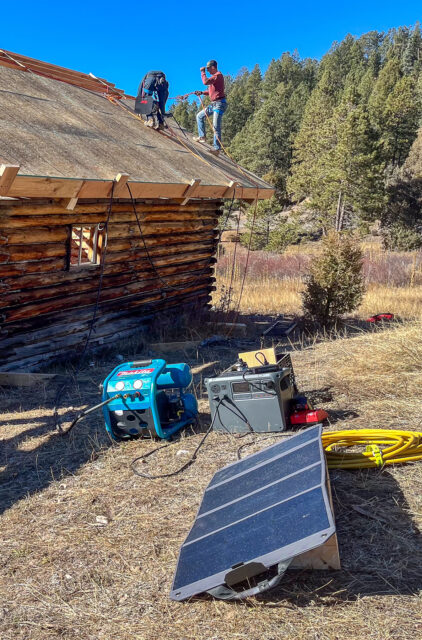
The Power 2000 can handle up to 1800 watts of solar power, and with that much power going in, DJI claims it will charge from zero to full in 75 minutes, which is faster than plugging it into grid power. I’ve now got some bigger panels on my Christmas wish list. This is my first foray into harnessing solar power, and I’m hooked — there’s just something incredibly satisfying about watching the sun charge an eBike.Justin Bobb, Blister sound engineer, snowboard reviewer, and all-around badass who is also a firefighter, helped me test the Power 2000 at the fire station and on the fire truck. He charged power tools, powered vacuum cleaners, and the aforementioned espresso machine (firefighters need a lot of coffee…), and came away very impressed. He also took it to an off-grid construction project to recharge power tools while building a cabin in the middle of nowhere. He used it for a weekend, recharging electric saws, drills, and chainsaws, relying on just the 100-watt solar panel to keep it replenished — thankfully, that took place in New Mexico, so there was no shortage of sunshine.
DJI offers an app that connects to the Power 2000 and provides more detailed information and customization options. With that said, I find the built-in screen has all the data I need, and the overall user experience is straightforward and intuitive.
Bottom Line
The Power 2000 has exceeded my expectations. I was just looking for a way to charge eMTB batteries off-grid; now I’m thinking about a remote office in the backcountry where there are sweet trails to test bikes, and the Power 2000 can fire up my Starlink, charge all the batteries, and, most importantly, make delicious espresso.
