
Boot: 2025-2026 K2 Cortex 140 Zonal BOA
Stated Flex: 140
Available Sizes: 22.5–28.5
Stated Last Width (size 26.5): 96–98 mm
Size Tested: 27.5
Stated Boot Sole Length (size 27.5): 315 mm
Blister’s Measured Weight (size 27.5):
- Shells, no Liners: L: 1947 & R: 1955 g
- Liners, no Footbeds: L: 475 g & R: 470 g
- Shells + Liners = 2422 & 2425 g
Test Location: Chugach Mountains, AK
Duration of Test: ~20 days
Additional Specs
Power Strap: 45 mm elastic w/ cam closure
Shell Materials:
- Cuff: TPU (heat-moldable)
- Lower Shell / Shoe: TPU (heat-moldable)
Stated Forward Lean: 15°
Stated Ramp Angle: 2.5°
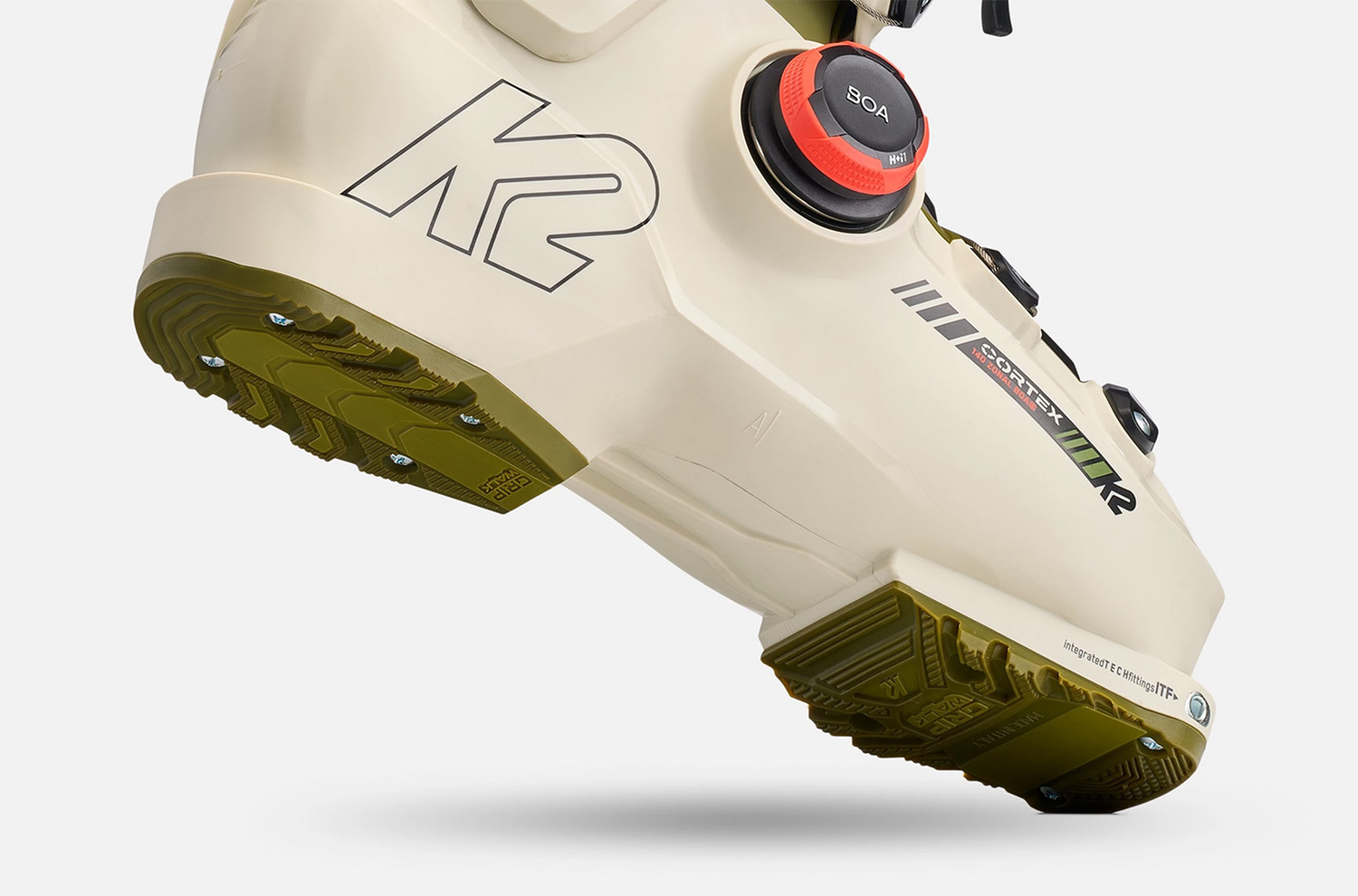
Soles: GripWalk (replaceable; ISO 23223)
Binding Compatibility: GripWalk & MN-certified bindings
Tech Fittings: toe-only (for uphill use with Hybrid bindings)
Intro
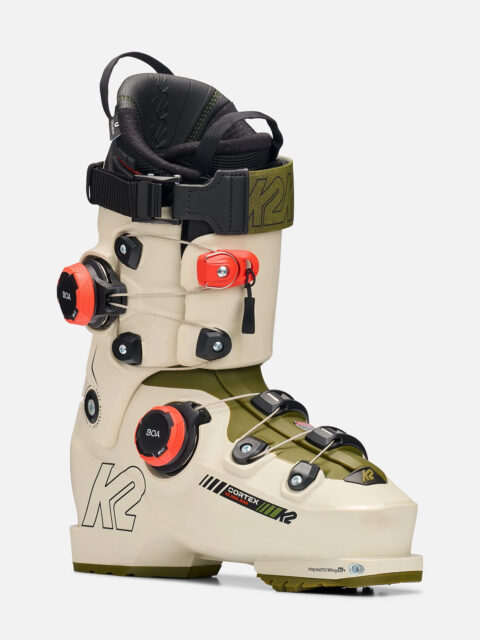
The Cortex 140 is the stiffest boot in K2’s new Cortex line, and it represents a very real departure from K2’s previous alpine boots.
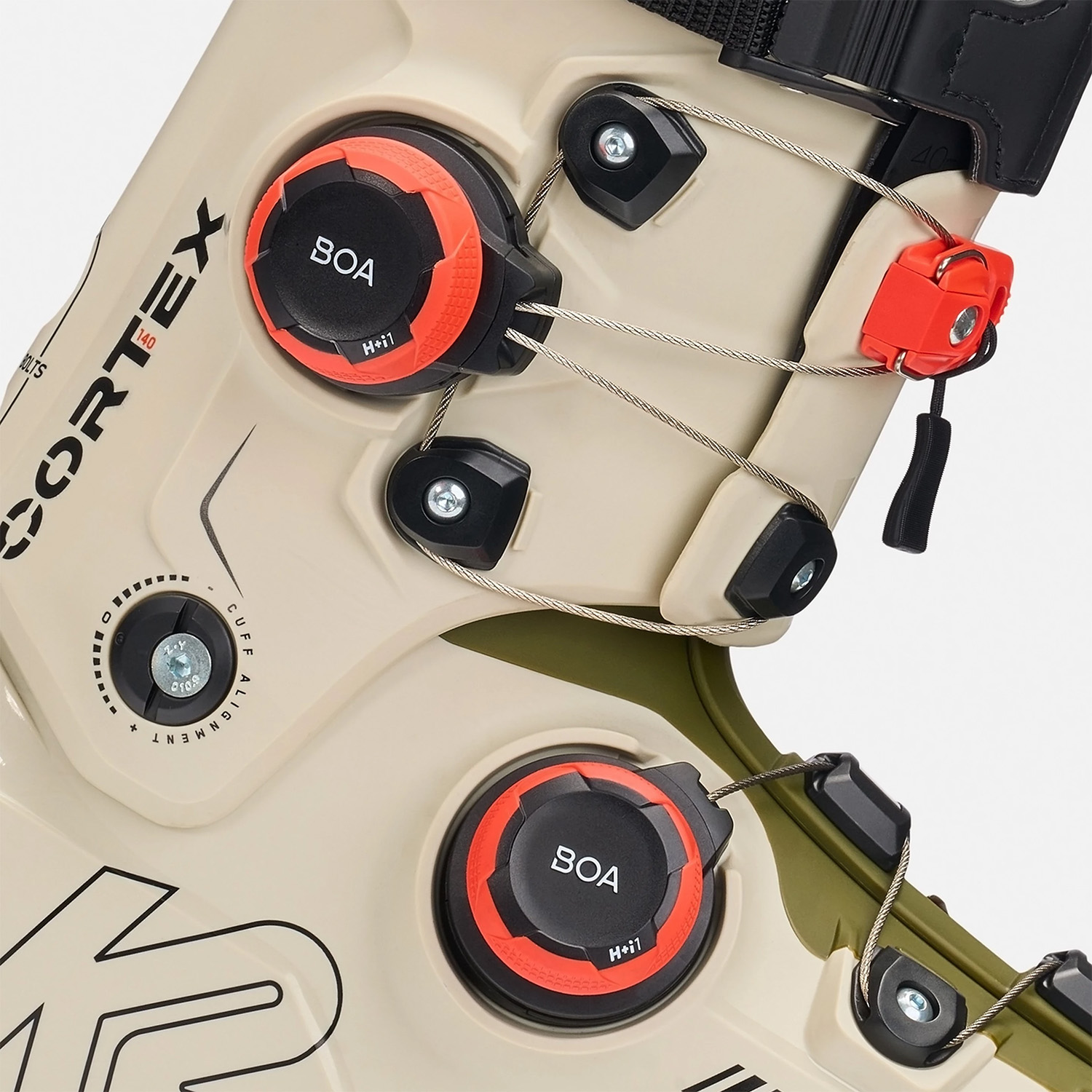
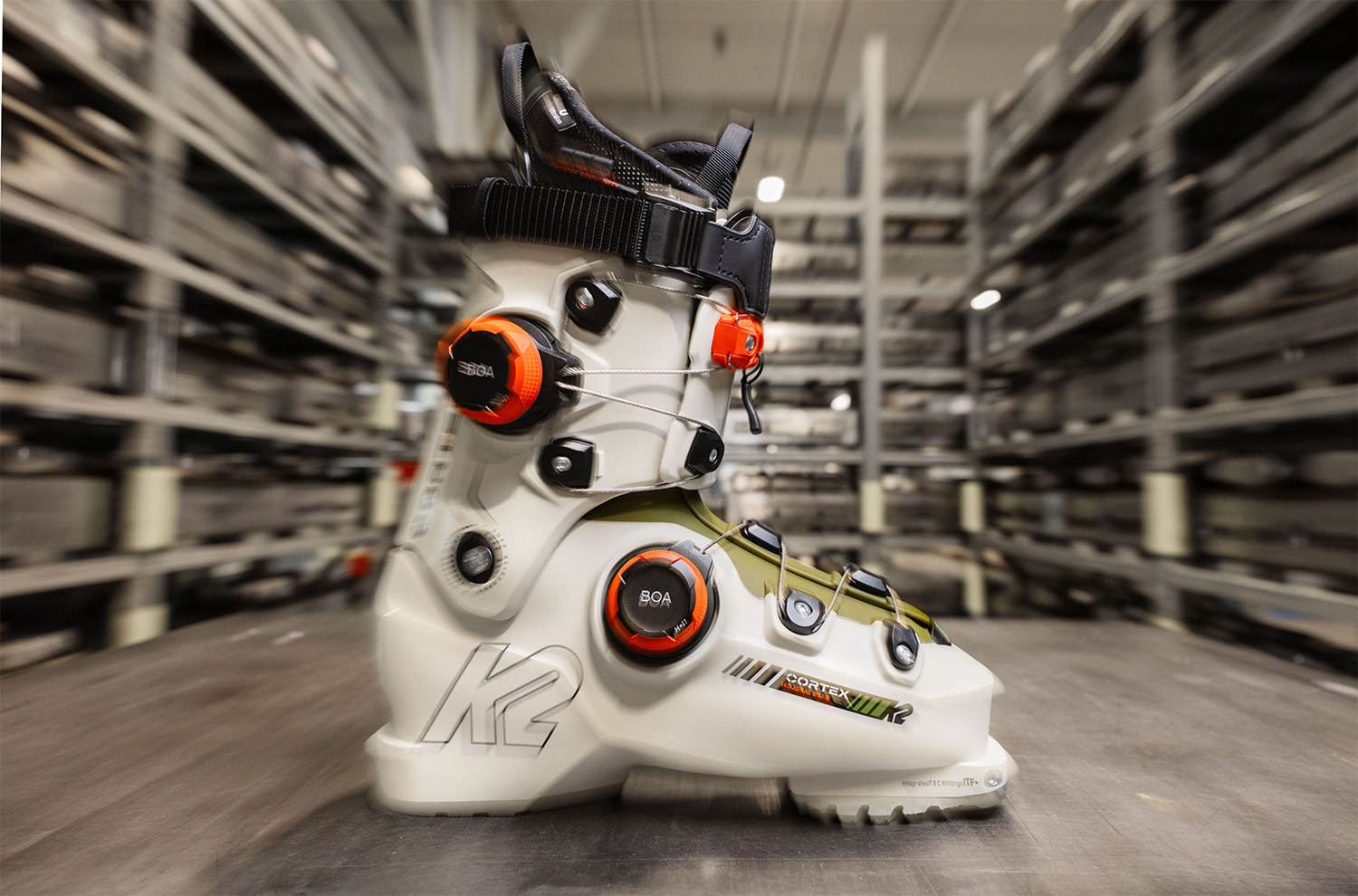
The most obvious change is the move to a dual-BOA closure for both the lower shell and upper cuff. However, the more important story here is the overall design philosophy and the traits K2 wanted to prioritize with these new Cortex boots: weight, stiffness, damping, and the use of a lower-volume, performance-oriented last.
Taken together, these elements put the Cortex 140 in a very different category from any K2 boot I’ve skied before, with specs akin to many race-boot-inspired designs elsewhere on the market.
After many days with the Cortex 140, I view it as an exciting new direction for K2 — and for others like me who prioritize the things K2 aimed to achieve with these new boots.
K2 Cortex Ski Boot Lineup
Here’s the list of K2’s 25/26 Cortex collection, and which sizes are available for each model:
- Cortex Zonal 140 BOA (size 22.5–28.5)
- Cortex Zonal 130 BOA (size 24.5–28.5)
- Cortex Zonal 120 BOA (size 24.5–28.5)
- Cortex 120 BOA (size 24.5–28.5)
- Cortex 110 BOA (size 24.5–28.5)
- Cortex Zonal 125 BOA W (size 22.5–27.5)
- Cortex Zonal 105 BOA W (size 22.5–27.5)
- Cortex 105 BOA W (size 22.5–27.5)
- Cortex 95 BOA W (size 22.5–27.5)
All the boots share the same last, and all feature a BOA closure for the lower shell. The “Zonal” models use an additional BOA system for the upper cuff, whereas the non-Zonal models use two traditional buckles. The Cortex 140, 130, and 125 W all feature an elastic power strap; the other models use static / non-elastic straps.
Design & Construction
The Cortex 140 pairs a dual-BOA shell layout with an elastic, Booster-style power strap and a stout, 2-piece or ‘overlap style’ shell. The Cortex 140 also includes an additional plastic reinforcement plate under the front part of the upper cuff, just in front of the shin (one of the primary ways it differs from the Cortex 130). The Cortex 140 also features tech fittings only at the toe.
The first thing that stood out when I picked up the Cortex 140 was its weight. At a little over 2400 grams per boot for my size 27.5, this is among the heaviest boots I’ve skied, and it feels most comparable in hand and on snow to a ‘race-inspired’ or ‘recreational race’ boot like the Head Raptor 140 RS.
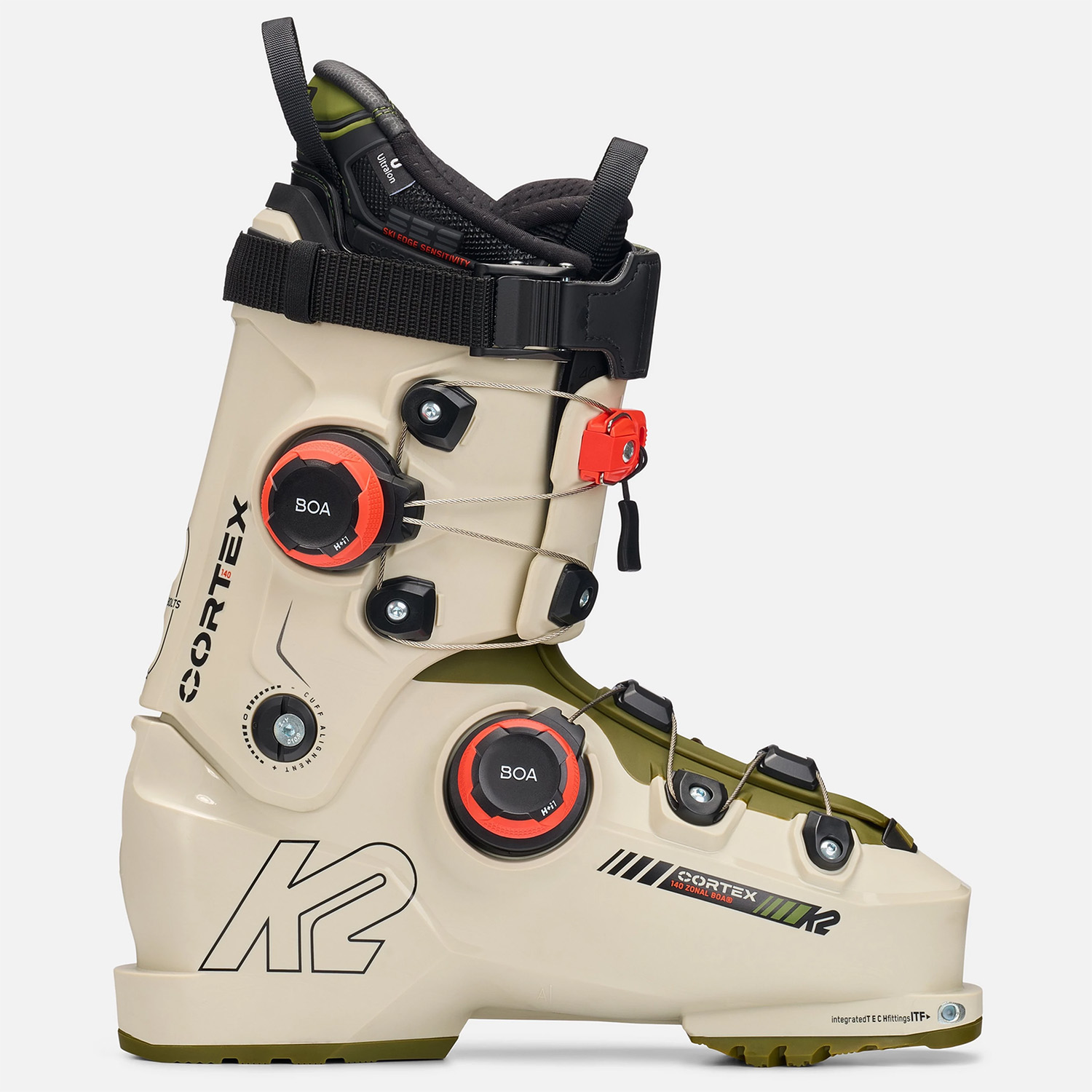
My assumption is that K2 arrived at this weight by using relatively softer plastics in greater quantities / thicknesses, rather than relying on stiffer, thinner shell materials. Personally, I’m a fan of this approach, especially for non-touring boots, and I think it pays real dividends in terms of damping and suspension. For reference, K2 says that all the Cortex boots utilize TPU plastic that allows you to heat-mold both the lower shell and upper cuff.
Despite the presence of tech fittings at the toe, this is not a boot I would consider a “hybrid,” “50/50,” or otherwise touring-friendly option. There’s no walk mode, and the mass alone makes it very downhill-focused. That said, the tech inserts at the toe do open up the potential for uphill skinning if you’re running a binding like the Marker Duke PT, CAST Freetour, Salomon / Atomic Shift, or other similar “hybrid” systems that use a tech toe only for their uphill modes.
Liner & Interface
The Cortex 140’s stock liner uses Ultralon foam from Intuition. Overall, it’s a very nice stock liner, particularly in the heel and ankle, where the Ultralon allows for a nice heat-mold. The liner is also relatively light, considering how burly the shell is. Because of my high instep, I ultimately transitioned to a ZipFit Gara liner for the latter part of this test, as I do in many lower-volume alpine boots. That said, I skied the stock liner enough to get a good sense of it, and it has some interesting features.
Most notably, there are lateral shim pockets on the sides of the liner that allow you to subtly increase or decrease edging responsiveness. The effect is fairly subtle, roughly comparable to making minor cuff-alignment adjustments to a boot shell’s cuff, but I could feel the difference when skiing with and without the shims installed. It’s not a game-changer, but it’s worth experimenting with. I also appreciated the Cortex 140’s rear spoiler and Velcro attachment points; I did end up using a spoiler in the long run, though with some caveats discussed later.
Fit & Last
As always, we highly, highly recommend trying on boots in person with an experienced bootfitter. Everyone’s foot is different, and fit should be the deciding factor for the vast majority of people in the market for new ski boots. If you’re looking for a good bootfitter in your area or somewhere you’ll be visiting, check out our list of Blister Recommended Shops.
With that caveat aside, in broad terms, the Cortex 140 fits my foot similarly to the “LV” versions of the Lange RX, RS, and Shadow boots, all of which have worked well for me over the years.
K2 lists the last width of the Cortex as 96–98 mm (size 26.5). This initially made me nervous, given my sensitivity around the 5th metatarsal head and ‘6th toe’ area. Still, I had no issues there with either the Cortex 140’s stock liner or my ZipFits, and my feet required no shell modifications to achieve a very snug fit that was comfortable enough for full days at the resort.
Compared to Lange’s LV boots, the heel pocket in the Cortex feels slightly narrower at the very bottom, while its instep height and toe box shape feel quite similar. I was able to use the same ZipFit liner I run in my Lange RX, RS, and Shadow boots without issue, which further reinforced how close the overall fit felt between these models.
I.e., if the Lange LV last works for you, I think there’s a good chance the Cortex will as well. If you’re not familiar with Lange’s LV fit, know that it tends to be roomier over the instep than many other ~98mm-last, “LV” boots from other brands.
Forward Lean & Stance
For reference, K2 says the Cortex boots’ forward lean is 15°, and their ramp angle is 2.5°.
Especially when skiing skis with more traditional, rearward mount points that need to be driven through the shovels, I felt like the Cortex’s stock liner — combined with the stock spoiler — didn’t give me quite enough forward lean for my preferences. So, I added a thicker Lange spoiler and got right where I needed to be. Once I transitioned to using the Cortex with my Zipfit Gara liners, which feel a little thicker in the cuff area, I found that the thinner stock K2 spoiler worked well and I’ve stuck with that.
GripWalk Soles
My personal belief is still that GripWalk soles are largely a solution without a problem. That said, I understand that some people feel that they create a meaningful improvement in walkability (vs. flat Alpine soles), and GripWalk is clearly here to stay. The Cortex boots come with replaceable GripWalk soles installed, but, mercifully for me at least, it was easy to get some Alpine (ISO 5355) sole blocks for them, and that’s what I’ve been using.

FULL REVIEW
Flex Pattern
Once boots are in a certain echelon of fore / aft stiffness, I think that it’s really tough to make a meaningful conclusion by flexing them in any way other than actively while skiing.
That said, the Cortex feels quite stiff during the ‘carpet test’ and feels like a legitimate 140, on par with other “140-flex” boots I’ve used, and far stiffer than K2’s older “140 flex” boots (e.g., Recon 140 & Recon Team).
When actually skiing, the Cortex 140’s flex continues to come across as very strong, and nicely progressive. I have had issues overflexing some other “140” boots like the Lange Heritage series, but I’ve not had that with the Cortex 140.
The Cortex 140 feels similarly progressive to the Head Raptor 140, in that it ramps up smoothly and quickly early in the boot’s flex pattern, rather than feeling like it doesn’t get stiffer until you’re flexing the boot as far forward as your ankle allows.
(Note on “Progressive” vs. “Linear” Flex: When we say that a boot has a “progressive” flex, what we mean is that the boot gets (progressively) stiffer, i.e., becomes more and more supportive as you flex the cuff of the ski boot forward. When we say that a boot has a “linear” flex, we mean that the amount of support it provides doesn’t increase significantly in stiffness, but stays pretty much the same whether you are flexing the cuff of the boot forward a little bit or a lot.)
Despite being quite progressive, the Cortex’s flex pattern also feels smooth and very well damped as it ramps up, without any notable harshness as it approaches its maximum level of support / stiffness.
Laterally and in the rearward directions, the Cortex 140 feels at least as powerful as any boot I’ve ever skied; no complaints there, either.
Overall On-Snow Performance
When skiing the Cortex 140 on firm snow and groomers, two things stand out immediately: excellent snow feel and outstanding damping / suspension.
The Cortex 140 provides very nice feedback underfoot, among the better boots I’ve used in this regard, though I would give a slight edge in pure ‘snow feel’ to the Head Raptor RS when using the same liner in both boots.
Despite letting me get a good idea of the snow and what my skis are doing underneath me, where the Cortex 140 really distinguishes itself is in damping or ‘suspension.’ It mutes out small vibrations and snow-surface irregularities better than the Lange Shadow 140 Pro, one of my current favorite all-round alpine boots.
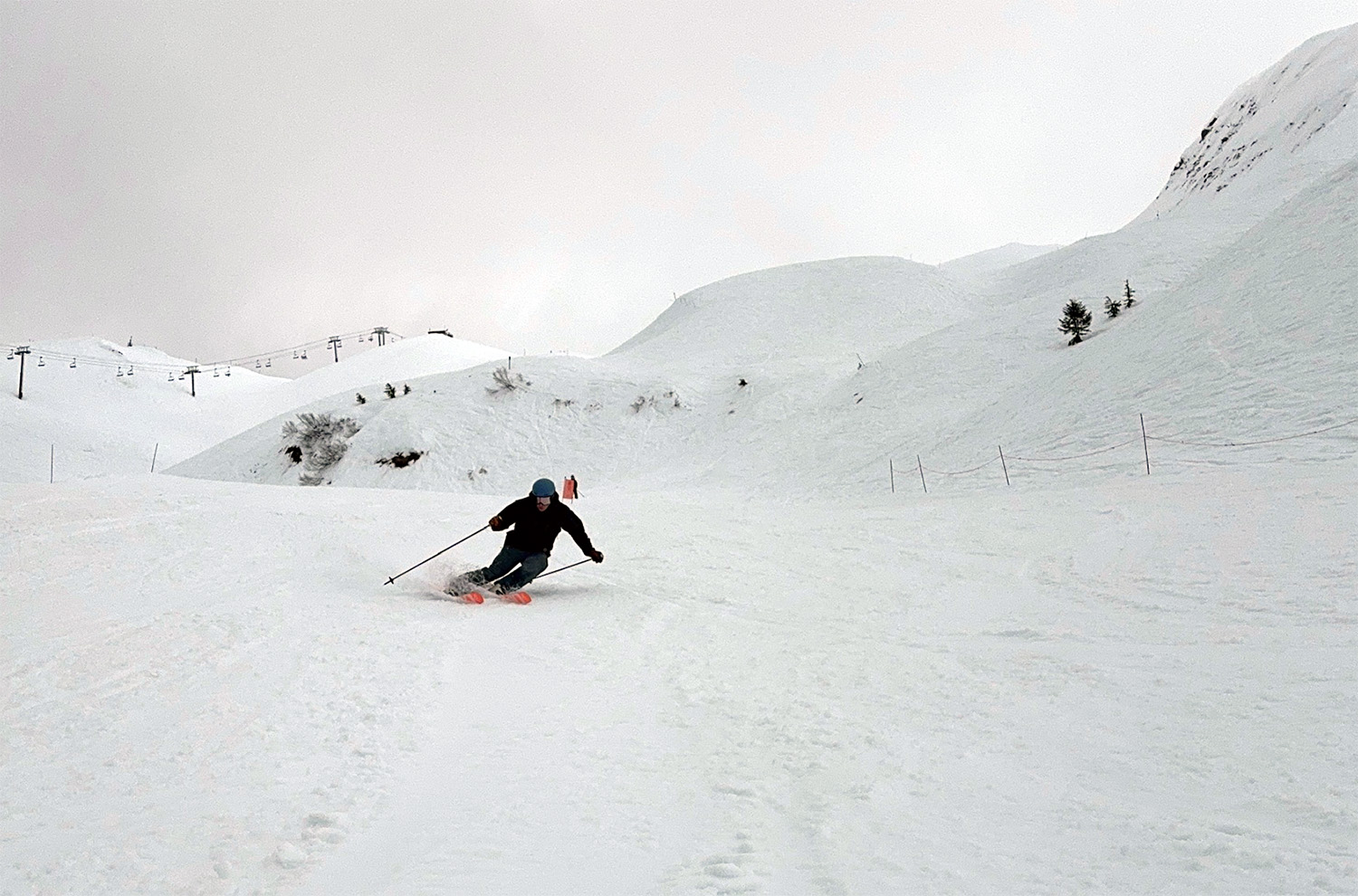
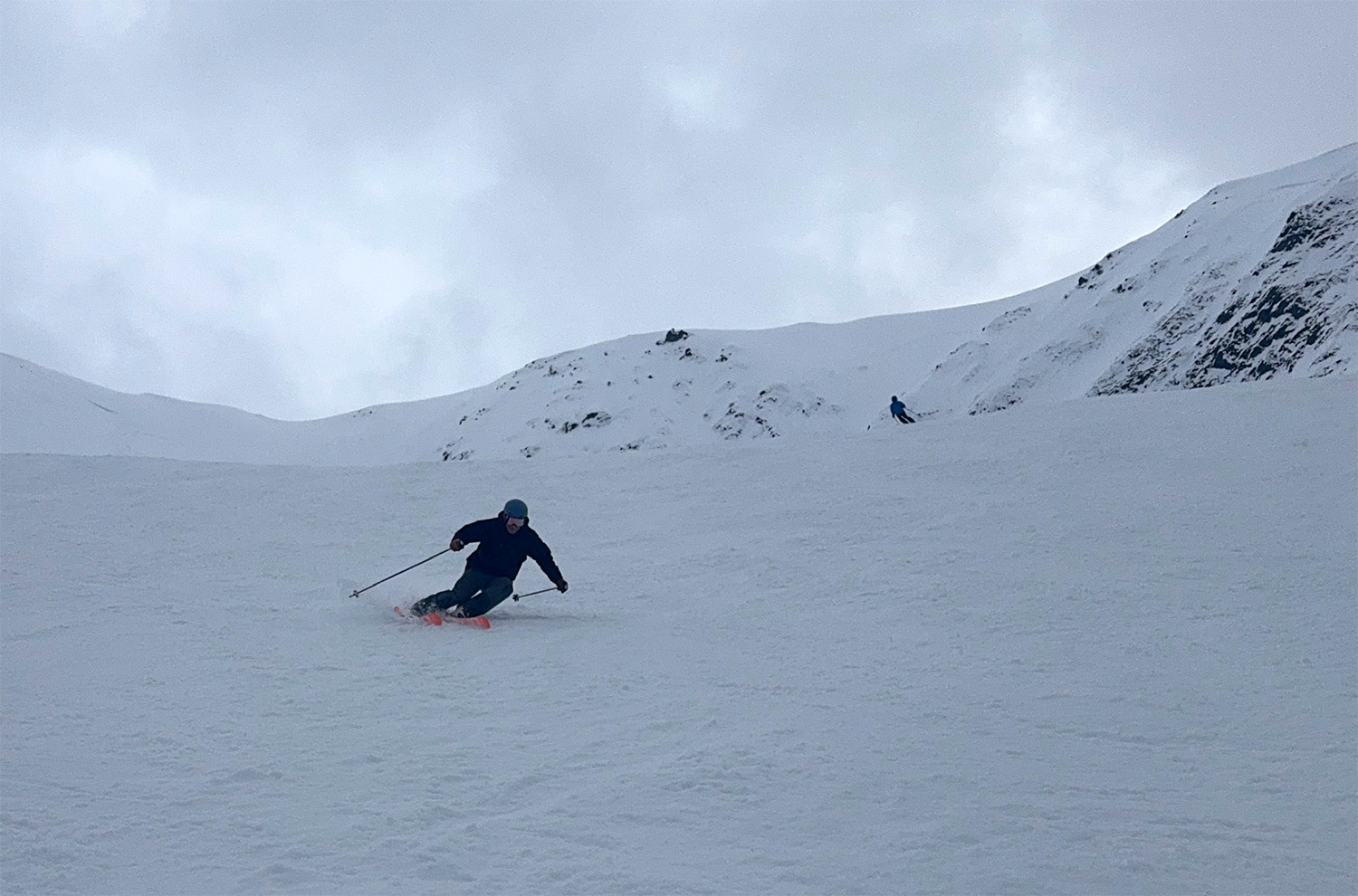
On carving skis and groomers, I’d label the Cortex 140’s overall performance as excellent. For what it’s worth, I did back-to-back runs on the same skis in the same conditions and consistently recorded slightly higher scores in my Carv app in the Cortex 140 vs. when I was wearing the Shadow 140.
The Cortex 140 doesn’t provide the same rebound or energy return as the Shadow, which is a defining trait of that boot, but instead feels more like a traditional, thick-walled, race-boot-inspired shell (e.g., Lange RS, Head Raptor, Atomic Redster CS / TX). I’d sum up the Cortex 140’s on-snow personality as calm, powerful, and composed.
Those same traits carry over into crud and variable conditions. The Cortex 140 remains very supportive and continues to mute impacts effectively. Compared to the Shadow 140, the Cortex 140 feels more damp and more muted, though less lively. It’s very much a boot that rewards a strong, forward stance and stays composed when conditions get rough, but it also provides excellent “backseat” support when needed.
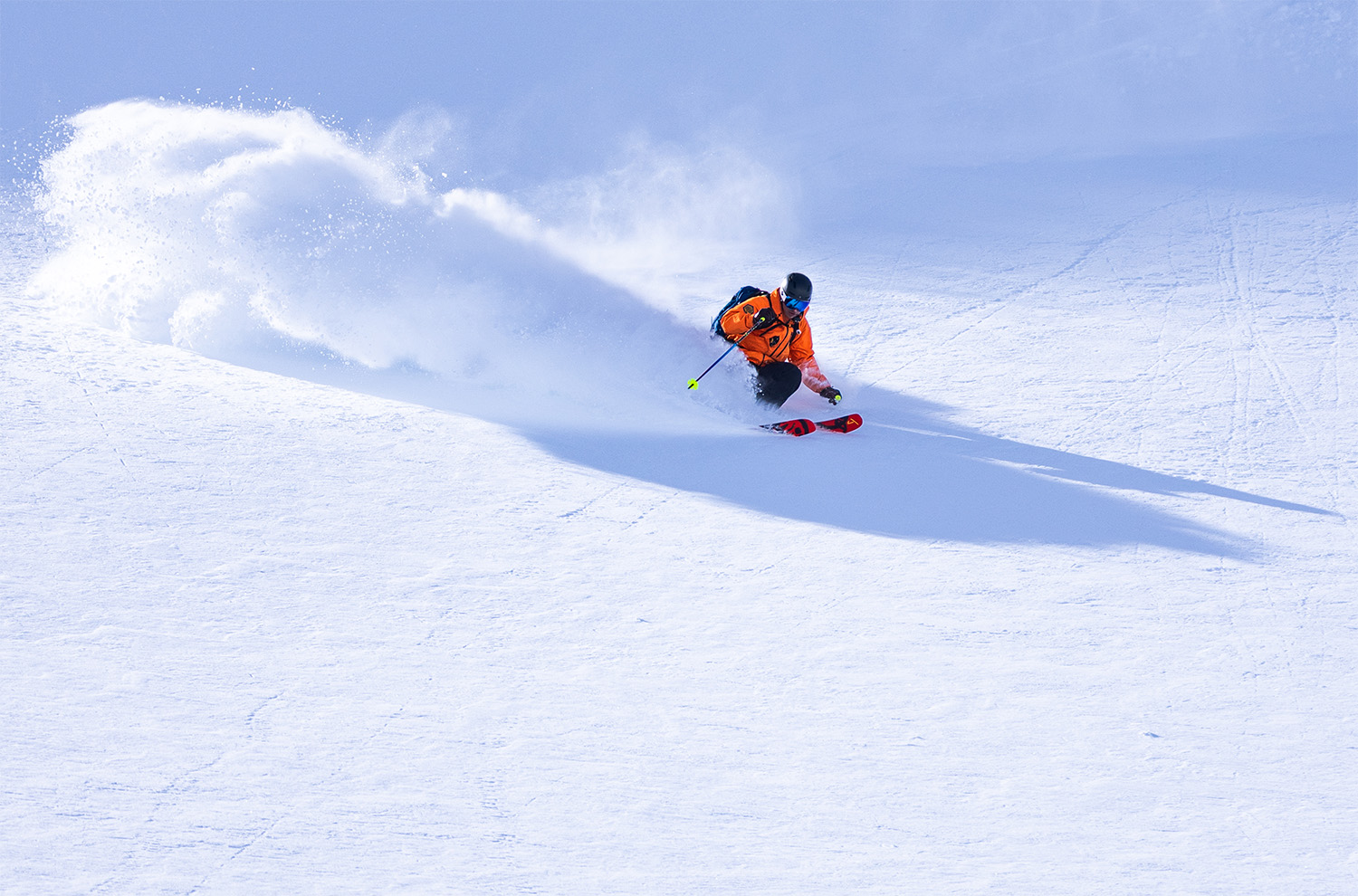
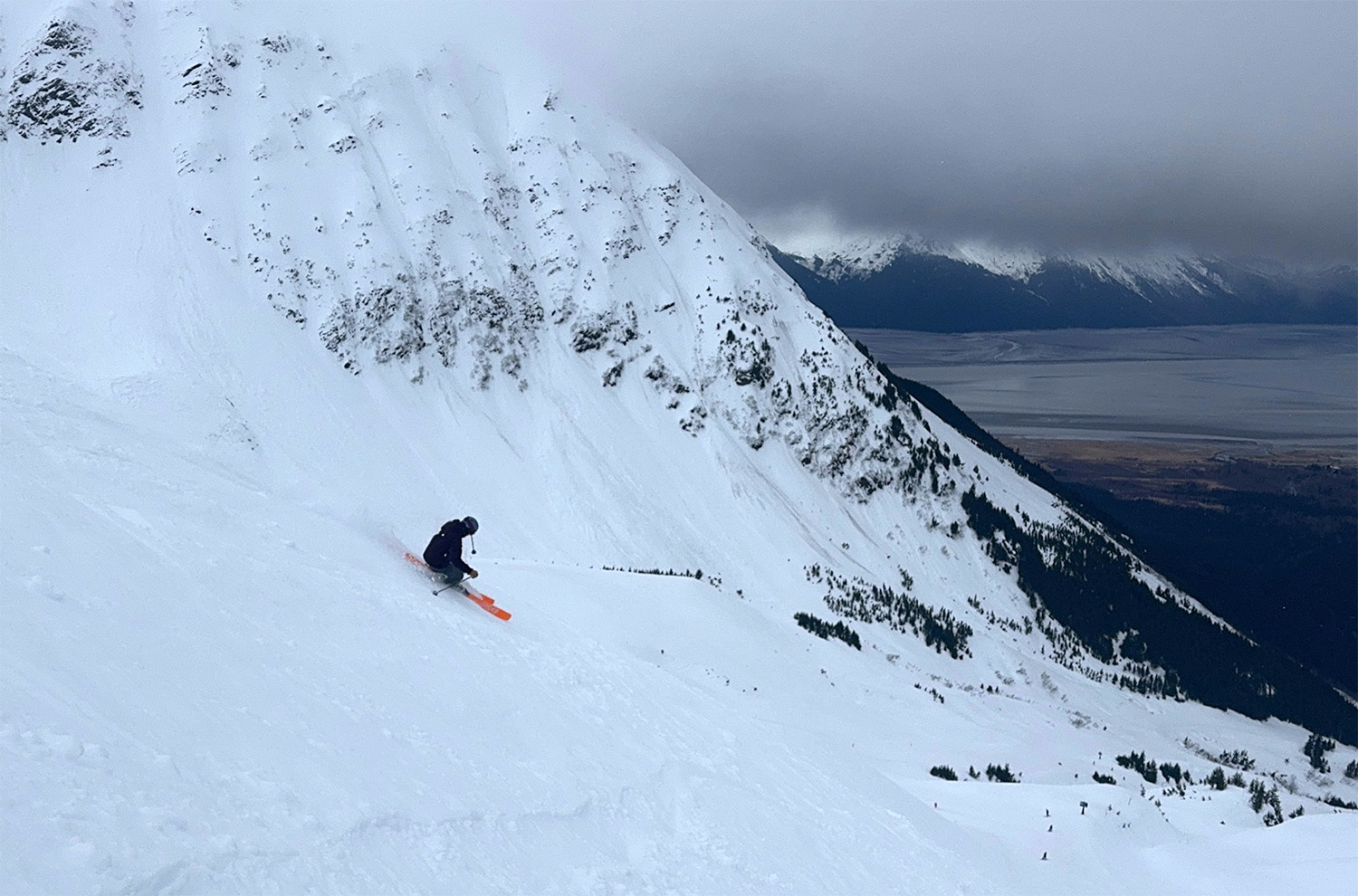
In powder and soft snow, the Cortex offers the same excellent support and predictability that I found in other conditions, with no no downside in my experience. In heavy maritime snow, the Cortex 140’s power, damping, and overall composure feel excellent and at least as good as any boot I’ve ever used.
All that said, between its hefty weight, how it fits my feet, and my ongoing entry and exit struggles (keep reading), I didn’t end up heli-guiding in the Cortex 140 as much as I initially expected. From a performance standpoint, there are no real complaints; I just never quite got them comfortable enough for my feet to want to repeatedly spend long (and often very cold) days of guiding in them.
As with almost every stock liner I’ve ever used, the instep area of the Cortex was just too tight for me with the stock liner / tongue. My lower-volume ZipFit tongue (with cork pulled out of tongue area) solved this issue in a way that was not possible with the stock liner, even after multiple heating / molding attempts. But even with my ZipFits, I eventually returned to my go-to guide boot, the much higher-volume Fischer RC4 Free Pro MV BOA; that boot is not as strong or well-damped, but I typically reach for it on guiding days almost purely due to comfort and warmth.
The Dual-BOA System
The Cortex 140’s dual BOA dials make up its most visually striking feature, and I have mixed feelings about them.
On the positive side, with my high instep, I sometimes find myself getting lazy with lower buckles in traditional boots and leaving them unbuckled, which can sap performance. With the lower BOA dial, I’m always consistently engaged in the shell to some degree, and I think that likely adds some performance. The infinite adjustability is nice, and the ski-boot version of BOA allows for incremental tightening and loosening, making it easy to dial things back slightly on a chairlift without fully releasing the system.
On the negative side, there’s no true “set and forget” position, the way there is with buckles. It takes some trial and error each day to find the right balance of tightness. I also can’t honestly say that the upper BOA system provides more performance than traditional upper-cuff buckles. With one foot in a (different) buckle boot and the other in the Cortex, I’m not convinced that I can attribute any differences to the upper BOA system.
That said, overall, the Cortex 140 skis great. When skiing with a Head Raptor 140 on one foot and the Cortex 140 on the other, there is not a noticeable difference in raw power or progression, which is saying something, given that the Raptor 140 is one of my all-time favorite alpine boots.
For me, the double BOA layout is more of a different interface than a clear performance upgrade, but the only way to say for sure would be to test the same model of boot, just with different upper closures (a more accurate A/B test we haven’t yet been able to perform).
Temperature Stability
It seems like a lot of the boots I’ve skied recently are less temperature sensitive than alpine boots were 5-10 years ago, but that may just be my subjective experience. Either way, the Cortex 140 does stiffen up a little when temperatures are really cold, but I’ve skied this boot in temps ranging from around 45°F (7°C) to -10°F (-23°C), and I don’t feel like there is a massive difference in how its flex pattern feels across that range.
Despite the skiing character not changing a ton in colder temps, donning and doffing these boots definitely gets tougher in the cold…
Entry and Exit
Entry and exit are the biggest drawbacks of the Cortex 140 for me. This is the hardest boot I’ve ever used when it’s time to get it on and off.
Putting on the Cortex 140 via a “World Cup” entry, where you put the liner on your foot and then step into the shell, is essentially impossible for me without lots of silicone spray and a boot horn. Even then, it’s painful enough that I’ve stopped trying. Traditional entry (with liner already in the shell) is also difficult, often requiring me to pull the liner’s tongue fully out of the shell and wrestle it back into place.
Getting the boots off, especially when they’re cold, is a real issue for me. It’s borderline impossible without warming them up, and I genuinely felt like I might injure myself trying to remove them in a frigid parking lot. This was true with both the Cortex’s stock liner and my ZipFits, and it’s the single biggest negative of the Cortex 140 in my experience. Other leg / foot shapes may negate this problem, but for me (and my high instep), it’s a real detriment.
Comparisons
Of the many boots I’ve used, the Cortex 140 is most comparable to the Head Raptor 140 RS in terms of overall on-snow performance. The Raptor offers slightly better snow feel underfoot, while the Cortex provides better damping and a more muted ride, but their flex patterns are very much in the same ballpark.
Compared to the Lange Shadow 140 Pro, the Cortex is heavier, more damp, and feels like a more traditional “race-boot” construction, while the Shadow is lighter and more energetic with greater rebound. The Cortex also feels more powerful and more damp than the Fischer RC4 Free Pro BOA.
What’s probably most important to emphasize is that the Cortex 140 is nothing like other “130” or “140” flex K2 boots we’ve tested. Whereas many of those boots (e.g., Recon 130 and 140) flexed softer and weighed a lot less than most of their direct competitors, the Cortex 140 is a legitimate 140-flex boot that skis closer to a race-inspired boot than any K2 boot I’ve used.
Bottom Line
The Cortex 140 is a huge step forward for K2’s alpine boot line. Whether because of (or in spite of) its dual BOA system, this is a powerful, damp, race-adjacent alpine boot that stands apart from K2’s past offerings in all of those aspects. It’s demanding, heavy, and not particularly user-friendly. But on snow, it’s exceptional.
For strong skiers looking for a hard-charging, low-volume alpine boot and who are open to the BOA interface, the Cortex 140 is absolutely worth serious consideration.
Related Articles & Reviews:
2025-2026 Blister Digital Winter Buyer’s Guide
350+ skis, 70+ boots, and 280+ pages of honest, accurate product reviews and comparisons. Check it all out here.
If you’ve already purchased the guide, Digital Access Pass, or BLISTER+ membership and are seeing this message, please log in and then refresh this page.
K2 Reveals New Dual-BOA Low-Volume Cortex Ski Boots
Dual-BOA boots are here, but there’s more to K2’s new Cortex boots than just their additional dial — the Cortex is the lowest-volume and stiffest boot they’ve produced. Here are the details.

Great review, Paul! You mentioned pulling cork out of the tongue area of your Zipfit Gara liners to allow for your high instep. Do you mean you just massaged cork away from that INSTEP AREA near the bottom extremity of the tongue? I’m assuming you still have a good amount of cork higher up the tongue to protect your shin.
Also, why do you prefer alpine soles to gripwalk?
Lastly, I thought my Atomic Redster CS and TX took the prize for most difficult entry/exit, but they are actually pretty manageable with heated boot bag and/or boothorn and/or world cup style entry. Sounds like the K2s are are quite difficult. Oof.
Thanks Brice!
Yes, I massage as much material out of the tongue area as possible. I have had techs tell me that it’s possible to scoop it out of there with skinny spoon but I’d chat with Zipfit about that.
Lots of reasons for the soles but here are a few: 1) I can use bindings that aren’t Gripwalk compatible, 2) I find that the old style is actually better when kicking around on icy slopes. I slip way more with the ramped toe angle of Gripwalk whether on an icy ridge when heli guiding or in the parking lot/base area 3) Gripwalk doesn’t really walk much better IMO so I don’t see much benefit. I’d just rather have rubberized 5355 in almost every situation.
I haven’t actually skied the Redster series so can’t compare. I will say that the cortex is tougher than any boot I have used in recent memory and I’ve been in a lot of them. As I said in the review, other foot/leg shapes may have a totally different experience but that was mine. They ski so well that it’s almost worth it though.
Reinforcing Paul’s point about bindings that aren’t GripWalk compatible, bindings for racing skis like Head Freeflex ST, etc don’t support GripWalk. I have a bunch of such skis (FIS SL, “cheater” GS, FIS GS, FIS SG) so ISO soles are non-negotiable in my primary inbounds boots.
Thanks Patrick! 100% agree.
Spray and heat are critical to World Cup into the Cortex. I’ve skied a remedy and a cortex with the same zip and I can tell you the remedy is a good bit easier. Especially on the way out.
I tried the cortex on last year. That upper boa tangle combined with a tight in/out was a deal breaker for me
Agree Brice, excellent review. Would add GW soles also a pain when boot packing.. get much better toe purchase with alpine soles.. with GW soles you tend to roll back off your toe as you climb.
I am just loving the Gripwalk criticism in these comments! It’s nice to know I’m not alone in this sentiment. And I totally agree about GW vs alpine when bootpacking, especially when kicking steps in icy or hard snow.
Paul. What a great review. i especially appreciate the comparison with Lange, Raptor and Fischer boots. i have a high instep also and thought I was going to injure myself putting them on in the store! I have hurt my back before putting boots on in the parking lot so any boot that is a problem on and off is dead in the water no matter how good it skis. So easy to put softer plastic over the instep like Lange Shadow, other K2 boots etc to facilitate entry and exit which is a very important part of the process. The resort and heli/powder comparison is appreciated and the comparison of buckles on one foot and boa on the other was exceptional. Boa should provide a performance upgrade for dealing with the entry/exit issues and just cables in general. If it doesn’t then what is the use. Lower instep people seem to deal with BOA much easier and that is who probably benefits. We need to know what type of foot the tester has. Keep it up.
I own the Cortex 125 W. It has the power plate in the front cuff. I’m also running both the shell (upper cuff) and liner spoilers, which to my knowledge makes the boot identical to the quote men’s 130.
I have a very skinny lower leg and calf. I really like that with upper cuff boa I don’t have to loosen to then tighten, if that makes sense. I don’t know if this boot would ski noticeably better or worse with buckles. But I do think there is some on snow feel that lines up with K2 saying upper cuff boa ‘acts like a booster strap’.
I’ve also been ok getting the boot on and off in the parking lot so far, stock liner no laces. But pushing the liner back into the shell after drying it out can be tough. I tend to put just the shell only on my dryer for a minute or two to warm it up, which really helps.
As always, a great review, Paul. Any comments on the weight itself, leaving aside what it adds to damping?
Having never tried on a Cortex (no 29.5) I’d still bet you a good cup of coffee that it isn’t harder to remove when cold than a CS 130.
As Bob noted above, why doesn’t every boot have a co-molded silicone flap at the instep? No way anybody could pass the performance blindfold test on that while skiing.
I agree with the instep comment. I don’t know enough about boot design to know if that could be done without altering the flex/skiing characteristics.
Regarding the actual weight of the boot, I think it’s a boon for inbounds skiing without much downside. I will say that, aside from overall comfort, the other reason I didn’t guide in them much was the weight. It’s not a big deal but for a long day of climbing in and out of the ship, it makes a difference. maybe I’m just getting old. It’s a factor bootpacking inbounds too but they ski so well that I’d make that sacrifice for inbounds.
OMG, a picture of Paul carving on a groomer? What’s next, cats and dogs living together?
Seriously it’s great to see K2 killing it in the boot market. Both of my kids are in K2 boots this season and they’re working out extremely well.
The cuff power plate is a nice option. My kids aren’t using that (yet) but it’s nice to know that you can get a little bit more out of the boot that way, and it’s a lot more user-friendly than adding cuff rivets.
Thanks again Patrick.
I love groomers!
I should have written more about the power plate. I just left it in, as I suspect most skiers will, and I suspect it has added to the performance. That’s a good point about using it for a kids boot and adding the plate when needed.
Here is an interesting bit from the K2 ski boot product mgr comparing the Cortex and Redster Club Sport
“In development of Cortex we loved the Redster CS, it was a favorite of all testers but there was a big if. It was a favourite IF the snow was good or it was firm. But once you took them off into variable “shitty” snow we have here in the PNW most testers wanted nothing to do with them. They are just too precise for that type of skiing, and that type of skiing is what we do most of the time here in North America.
So that was what lead us down the design route of not wanting to copy the Redster skiing profile but instead to take elements we liked and adapt it to be more suitable for the type of skiing we do the most but also the type of skiing our athletes are doing and the skiing of our consumers.
So which is higher performance? Well on good snow 100% its the Redster/Remedy and if that is the type of skiing you do the most or prioritize the most I would always say go for those boots. But if you instead are looking to ski in all conditions and want a boot which will work in a wider range of conditions and also have a few features, such as tech inserts and a full width boot board (both things which we were asked for constantly) then the Cortex will certainly be the better boot for you. So which is higher performance? well it depends how and where you ski.”
The Redster club sport product manager responded
“No toe tech insert – true, we don’t have that but those who want it can have it added. But the next points are where different opinions come into the mix. Your testers didn’t like the CS in rough, choppy conditions (which is totally fine) but then I look to Atomic’s lengthy roster of freeski athletes in both freestyle and freeride who absolutely love the CS, the STR, and Remedy when snow gets choppy and manky. I mean, it’s kinda hard to win on the Freeride World Tour or win Natural Selection in boots that can’t handle a wide range of snow conditions. Same goes for forward lean angles and I’m also going to push back on the point that a “freeski geometry” needs to be more upright. If I give Craig Murray, Chris Benchetler, Sage Cattabriga Alosa, Tim McNutt, Nico Porteous, Justine Dufour Lapointe, Tonje Kvivik, Arianna Tricomi (or even non-Atomic athletes like Marcus Goguen who skis a Rossi Hero ZA or Kye Peterson who skis a DRS or Mathilde Gremaud who dominates FIS slopestyle in a Fischer WC boot) a boot with less forward lean than Remedy, they just hate how it skis. It’s also why Armada’s athletes wanted the AR One boot is delivered at 17°, rather than it’s 15° or 13° options – 17° is just what the Armada athletes preferred. I don’t deny that for some freeskiers, a more upright boot could work better for them. But, from what I have experienced, way more freeski athletes prefer a boot with more forward lean, because they can maintain their balance more easily when skiing fast on steep terrain (their exact reasoning in a nutshell). There are simply too many athletes preferring this to say it doesn’t work for freeskiing or that the Remedy doesn’t work amazingly well in soft snow conditions. So let’s just leave the marketing at the door and look at the fact
The thing I question is why would you want a less precise boot off trail? Seems wrong to me. I ski a CS and love the precision off trail. I did adjust the CS to most upright setting (16°) and softened the boot a little, it’s just $$. Less precision would hurt performance in my opinion. My skis do exactly what I want then to, wouldn’t like anything less. Your thoughts Paul?
Gotta say that I agree 100% with that Atomic rep. There are plenty of elite free-skiers raging around in 92 mm race boots that make the Redster CS look mild.
This is great stuff Scott. I think I know who wrote those two passages and I have a ton of respect for both of them. The huge caveat here is that I have never skied a true race boot and I’ve also never skied the Redster series or the Remedy. I’m hoping to *remedy* the latter situation soon but haven’t heard yet if that will be possible. I’m basing a lot of what I’m saying on lots of chat with Jonathan about the Redster, Remedy and Head Raptor and then the extensive time I have on Raptors 140’s (with extra t-nuts installed for max power). All of that said, I stand by the fact that the Cortex skis extremely well and is very comparable to the Raptor 140 in power and damping.
I’m not sure what to make of the idea of being “too precise”. With skis I can appreciate wanting off-piste skis to be less reactive and engaged but I’ve never wished that any boot felt less precise. I think I’d always want the maximum amount of control and shell contact/precision personally. Maybe I’d find my limit in a true race boot but I’ve gone to significant lengths over the years with the stiffest, most powerful consumer boots on the market and and even with insoles, Zipfits and shell work, I’ve never wished for less precision even in our often wet, heavy, maritime snow. To the contrary, the more messed up the snow feels, the more I want my boots to react to what I’m trying to do and the less I want the boot to move at all independent of my foot/leg. I really like being super connected and precise when it comes to boots. I also wonder if most precision really comes from optimized fit, especially shell fit, more than the boot design itself but I’ll defer to the boot experts on that. I’m really just here to report my experience with the products and I try not to speculate too much on which aspects of the design cause which characteristics. In summation, for charging hard through manky conditions, I think I want the most powerful and precise boot that I can get but I will always prioritize excellent fit over other incremental performance gains. I am still really loving then Shadow 140 Pro as personal daily boot but the Cortex feels really good and I think I probably ski a little faster and carve a little better in the Cortex 140 in most situations up here.
I also find the forward lean comments really interesting. I pretty much max out spoilers on all of my boots including the Cortex. Interestingly, I had been tweaking my guide boots, the Fischer BOA MV’s with thicker and thicker spoilers until they felt great heli skiing every day. I was surprised when I eventually skied them at Alyeska that I actually had more forward lean than I wanted for inbounds skiing but when I reduced the spoilers I liked them less for heli skiing. I guess that is consistent with the Atomic person above suggesting that for “steep and deep” more lean works better for a lot of skiers. I wish all alpine boots came with a variety of spoilers/lean options in addition to the 5355 soles.
Couldn’t agree more with your perspective, Paul. In terms of forward lean, I am a Clyde (6’4″ 240lbs) and can just get to much weight on tips and sink them, so in ungroomed snow a little less forward lean works better for me, or move mount back a little. I think the K2 rep was trying to position his boot to not compete directly with the Club Sport/Remedy but got a little “foot loose” with his Mktg speak. Both boots seem like high performance choices for all around or free ride skiing. My CS is an all day comfortable race boot which fits my narrow foot exceptionally well. I agree fit is the most important too
Great review Paul! Will you be releasing a review regarding the Fischer RC4 Free Pro MV BOA? I’m very curious about that boot as a do everything alpine boot for the French Alps as we have so much access to incredible freeride terrain with just a short skin.
I was a die hard Technica Mach1 fan for the past 10 years, simply because of the fit. My feet look like Donald Ducks feet, very narrow heel, wide forefoot, low instep. Three reasons I was even considering the Cortex 140: 1) Techinca changed the Mach1 and its not the same boot anymore, its much more voluminous. 2) the 130 flex for me was borderline, I sometimes overpowered it. And 3), the pin inserts in an alpine boot was something I have been waiting for a long time! Long story short, I love this boot. I usually have a 27.5, but both the Mach 1 and the Cortex 140 fit me in a 26,5, which is a huge plus. I assume this is because the boot is relatively long, so there is just about enough length for the tows. I use the stock liner, which is fantastic, but I recommend taking those inserts out for the shoelaces if you don’t use them. Turned out the pressed on my ankle. Very narrow heel pocket as the reviewer said, which is good for me. I needed quite a bit of punching for the ankles (I have ankles that stock out a lot), but because of the thick plastic, this boots is made for bootfitters. There is a lot of room in the forefoot, above the toes. I don’t mind this, as it keeps the toes warmer, and I don’t think it has any performance drawbacks, but some might disagree. As for skiing. I had 140 boots, the old Lange Free LV 140, and that boot was a lot stiffer in my opinion, too stiff. Its stiffer than the Mach 1 130, but not by much, in my case just the right amount. The most important part, the boot skis phenomenal, definitely the best boot I ever had. The dampening everybody is talking about is absolutely real, its fantastic. I say its a nice progressive flex, as the reviewer says there less rebound than in other boots though (I typically like rebound, but it also comes with some tradeoffs). Overall, super solid boot from K2 here, and best boot I ever skied, very happy I tried,
I wanted to add in regards to the Flex. I also own the K2 mindbender 140. I am generally not impressed how anything with a walk mechanism skis, even the stiffest, best constructed hybrid boots are worlds apparat from a a proper alpine boot. The mindbender 140 skis ok for a hybrid boot, I don’t love it but its probably one of the better hybrid boots. However, there is a huge difference between the mindbender flex and the cortex flex. In the mindbender, there was no way I could have taken a lower flex than 140. the 140 of the mindbender feels weaker than the 130 of the Mach 1. The cortex I say is true 140, not the stiffest 140, but the two are worlds apparat. I could probably ski the Cortex in 130 if must, but they don’t come with the pin inserts, so I never considered that. But my bootfitter said there is you can cut the shell (I read there is even a line that K2 gives you to cut, but my bootfitter wanted to cut somewhere else), and that reduces the flex to about 130. Didn’t need to, but for those who like the pin inserts but 140 is too stiff.
I really hate that all the new boots force me to hunt for 5355 plates to replace the solution. Four skiers worth of solutions.