
Intro
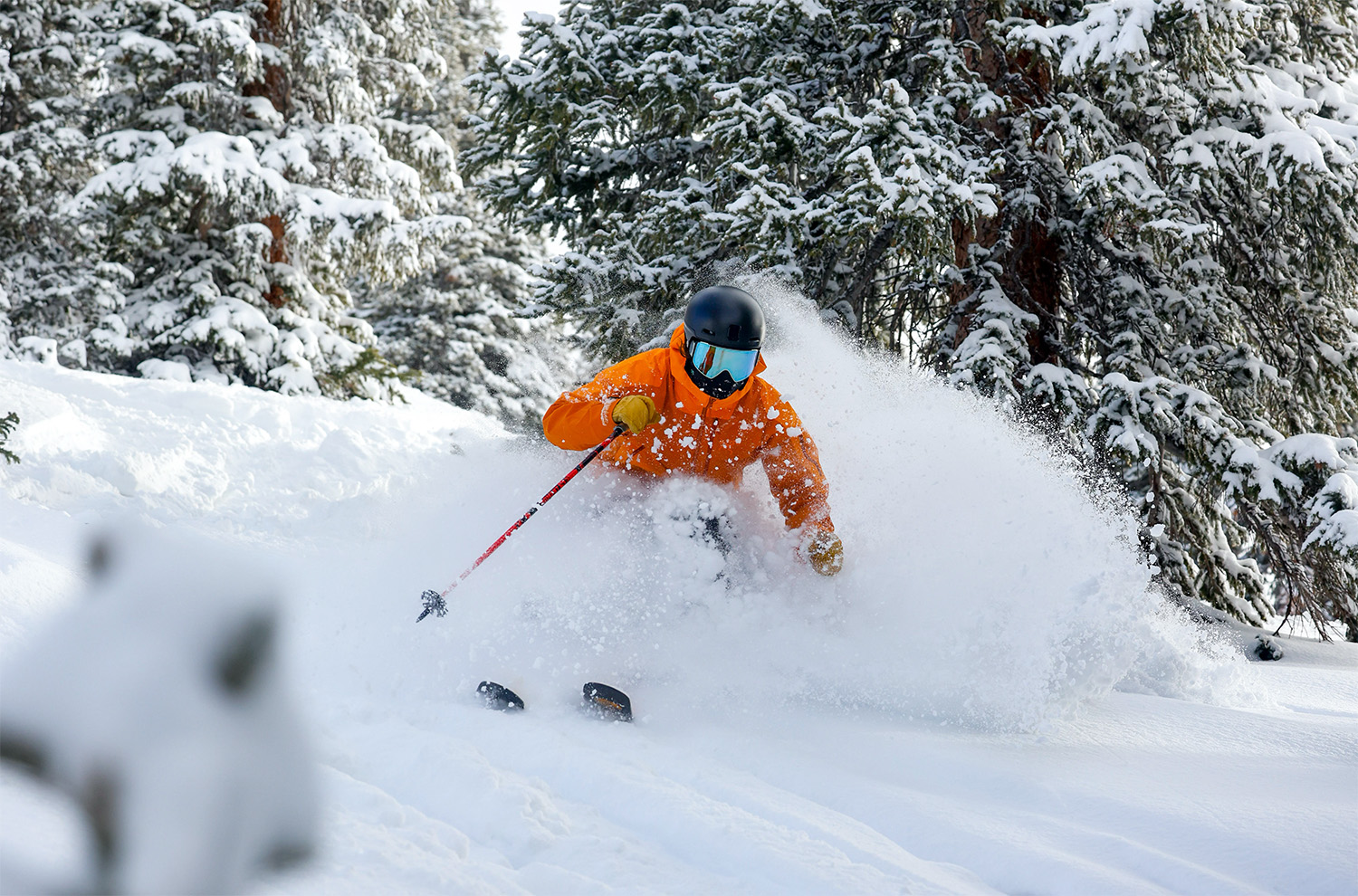
Each season, we test a lot of ski / snowboard outerwear. So, we’ve once again put together a roundup of several of the jackets, pants, and bibs our reviewers been using over the past season or two.
By “Outerwear,” we mean that all of the garments here are meant to serve as the protective outer layer for a day in the mountains, but they all accomplish that in different ways. Some are super burly and ideal for resort skiers / boarders who are hard on their gear, while others are lighter, more breathable, and better options if you’re hiking / skinning to earn your turns.
Most are uninsulated shells, meaning they’re not designed to offer much inherent warmth on their own, and are instead intended to be worn over your preferred baselayers and midlayers to fit a given day’s weather conditions.
[See our Layering 101 article for our more general advice on layering, combining different midlayers with different shells, the uninsulated vs. insulated shell question, and more.]
We’ve published similar roundups in the past, and you should check them out for even more options. Here, we’ll be covering the pieces we’ve been testing since publishing those roundups, but many of the products in those articles are still current and relevant today.
We’re kicking things off with more than a dozen jackets, pants, and bibs. In Part Two, we’ll add even more. And, while most of these products are available in both men’s and women’s fits, you can also check out our Women’s Outerwear roundup to get the perspectives of our female reviewers.
So, if you’re in the market for some new outerwear this year or in the future, take a look and see which of these pieces might work best for you.
A Note on Today’s PFAS-Free Outerwear
Over the past few years, the whole apparel industry has needed to phase out PFAS chemicals, at least intentionally added ones. PFAS stands for “per- and polyfluoroalkyl substances.” These have historically been used in a huge range of industries and products, including some waterproof / breathable membranes like original Gore-Tex, as well as the Durable Water Repellent finishes (aka, “DWR”) applied to the face fabrics of most outdoor apparel. PFAS are often referred to as “forever chemicals” because they don’t break down easily, and they’ve been linked to adverse health effects, hence the legislation-mandated shift away from them.
If you’d like to learn more about this big shift for the industry and what you can expect in terms of performance differences, we have several videos and podcasts on the topic:
- Ep.351 of our GEAR:30 podcast: The New Rules of Apparel w/ Rab, Ortovox, Patagonia, & Flylow
- Ep.312 of our GEAR:30 podcast: Flylow’s Dan Abrams on Burrito Grease & PFAS
- Ep.264 of our GEAR:30 podcast: Outdoor Research on Ditching PFAS
- Video: Patagonia on the New PowSlayer Kit & PFAS-Free Gore-Tex Pro ePE
Some Final Misc. Notes:
- The pieces are ordered alphabetically by brand. Part One covers A through O; we’ll discuss the P through Z brands in Part Two.
- Our measured weights and other specs are for the listed sizes we tested for each piece
- We include the height and weight of the reviewer(s) who reviewed each product to add context to our comments on fit
- We’ll note if any are on sale as of the time of publishing this article.

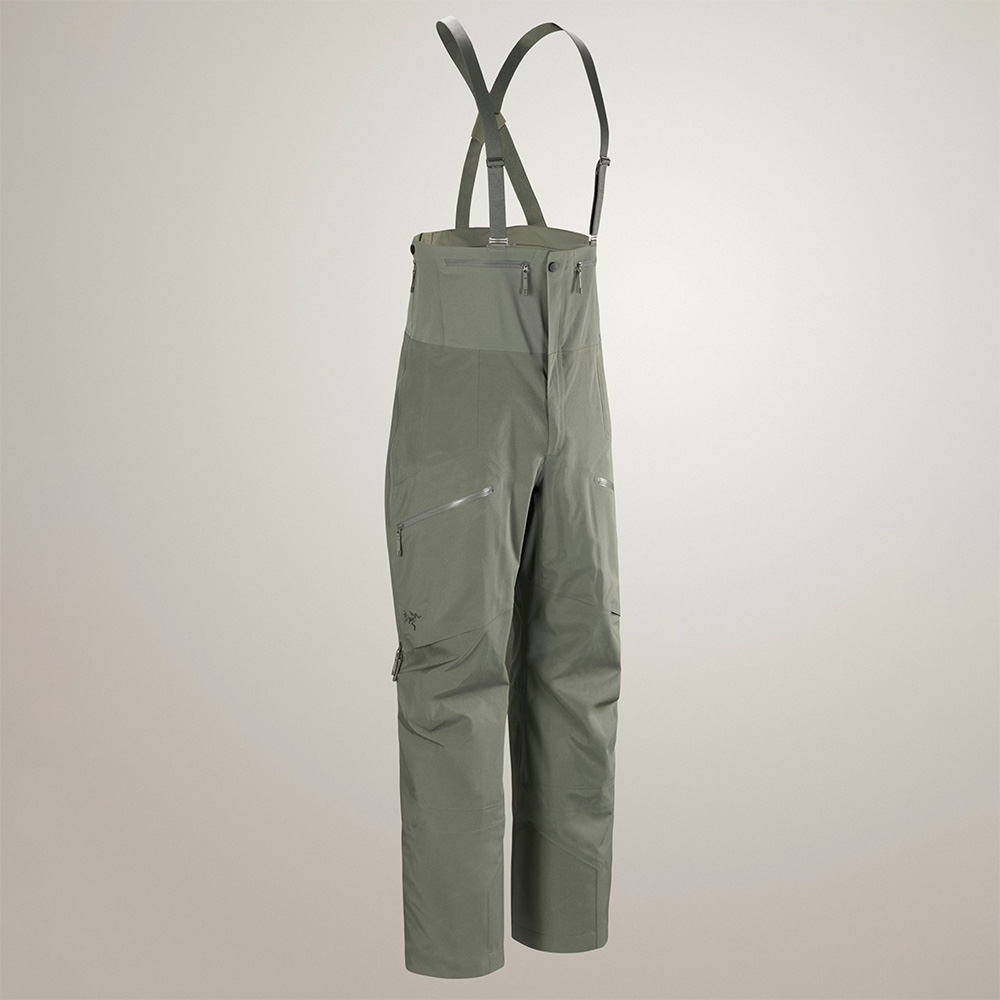
Arc’teryx Rush Jacket & Bib
MSRP: $800 (top) | $750 (bottom)
Primary Fabric: 3-layer Gore-Tex Pro ePE laminate (131 gsm, 80D face fabric)
Available Sizes: XS – XXL
Reviewer: Luke Koppa (5’8”, 155 lbs / 173 cm, 70 kg)
Size Tested: M (top) | M (bottom)
Measured Weight: 484 g (top) | 557 g (bottom)
The Arc’teryx Rush kit has long served as the brand’s lightest freeride shell, historically using top-tier Gore-Tex Pro fabrics, but in a more minimalist implementation than their resort-focused options (such as the next piece). That’s still the case with the current Rush Jacket and Bib, but they now feature the new PFAS-free Gore-Tex Pro ePE membrane.
[“ePE” refers to expanded polyethylene, which is PFAS-free; Gore-Tex’s older membranes were made of expanded polytetrafluoroethylene, or “ePTFE.”]
Let’s just address that part right away, since it is relevant for a number of pieces in this roundup.
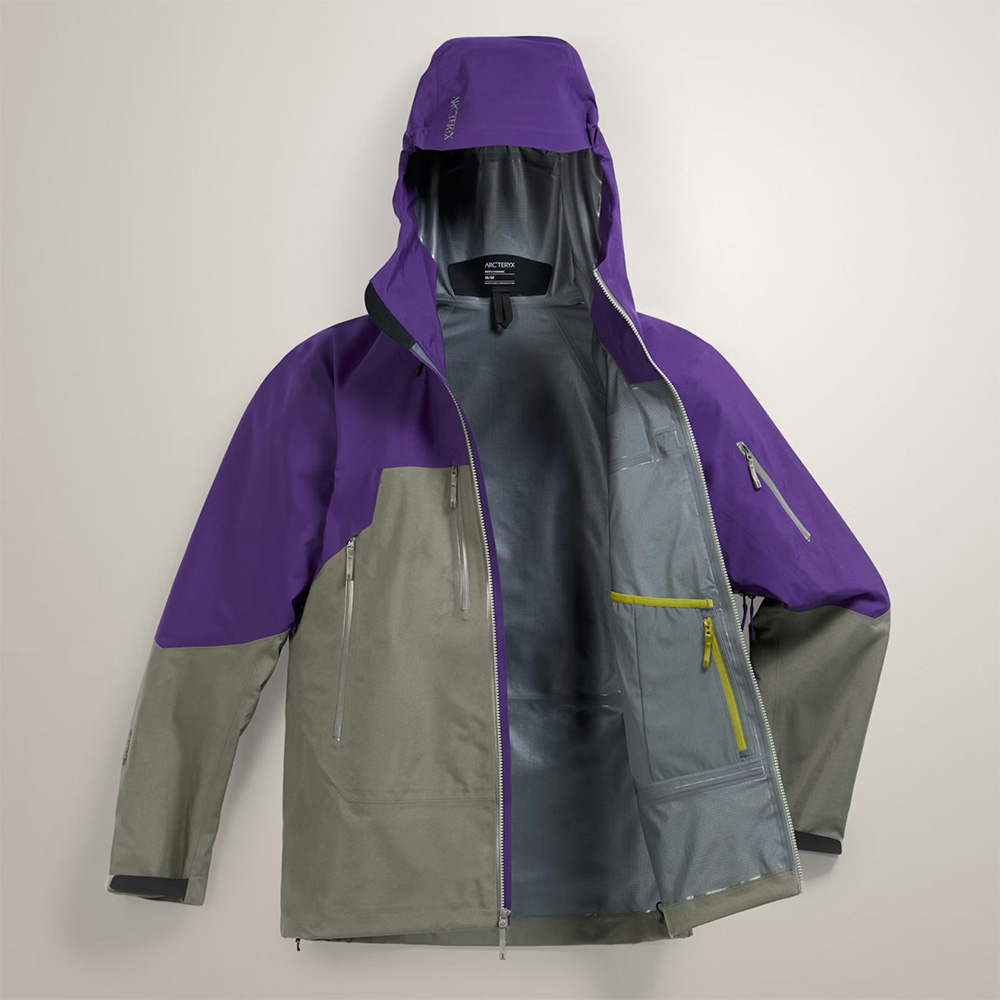
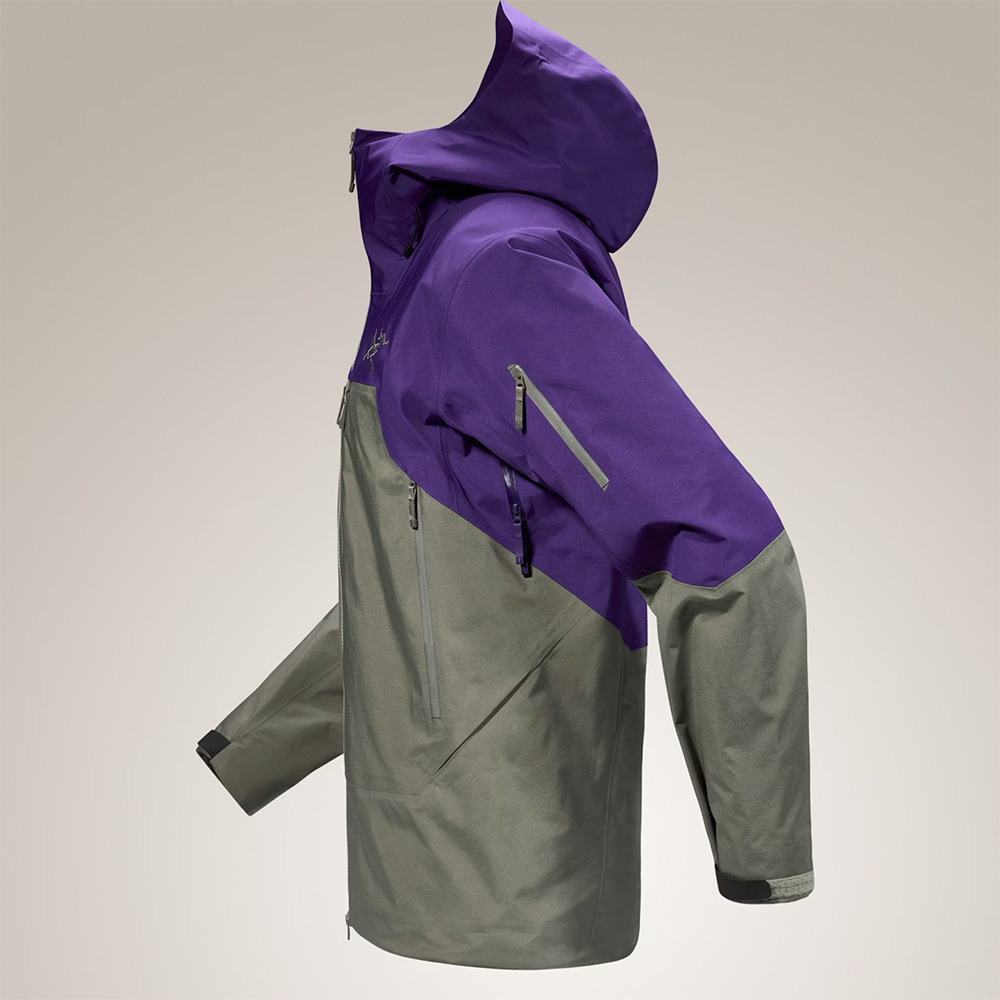
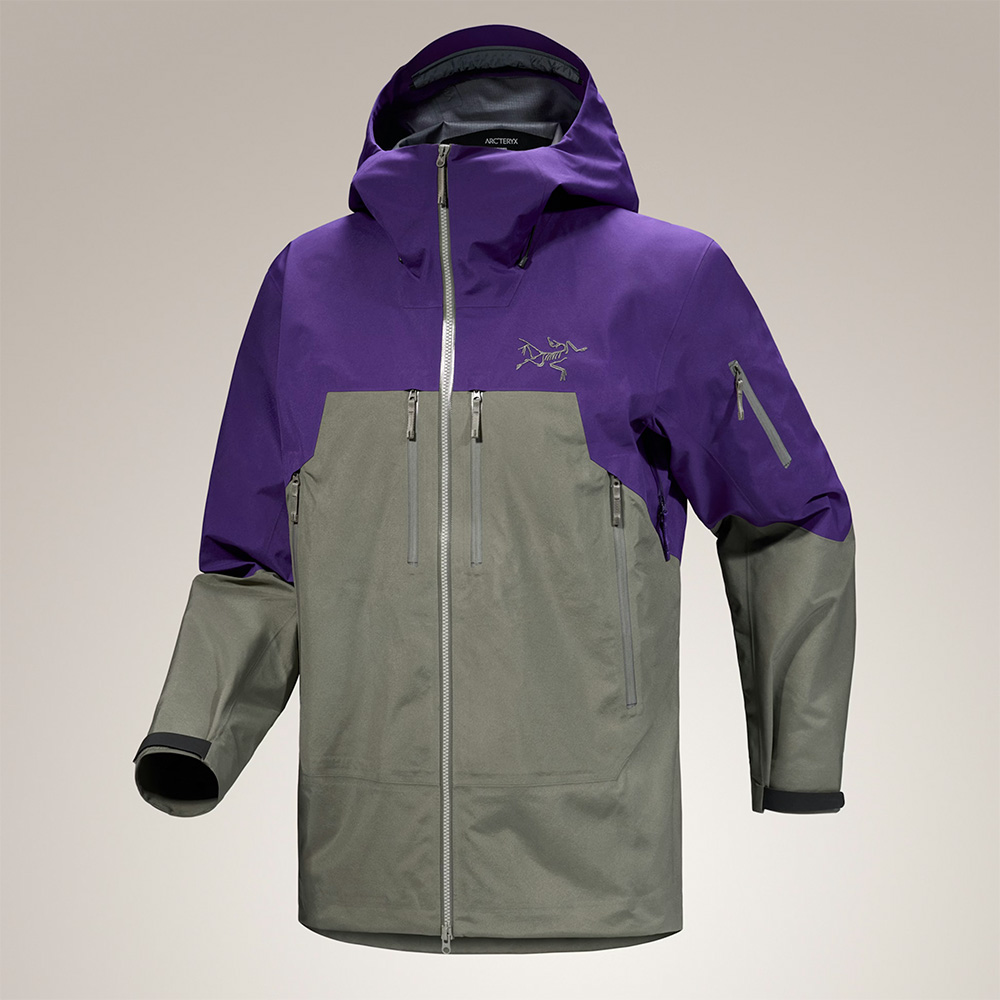
After our first year testing several pieces that use the new Gore-Tex Pro ePE membrane, our initial take is that the membrane itself maintains very similar overall performance to the last generation of Gore-Tex Pro. It’s still one of the best membranes we’ve tested in terms of weather resistance, including use in torrential rain, and it’s roughly in the same ballpark as most “20K/20K” rated membranes in terms of breathability.
We’ll need multiple seasons to confidently claim anything regarding long-term durability, but we haven’t yet had any issues on that front with the ePE Gore-Tex or Gore-Tex Pro.
What is notable is the PFAS-free “Durable Water Repellent” finish (aka, “DWR”) applied to the face fabric. Now, this isn’t specific to these new Gore-Tex fabrics; it’s actually relevant to every piece here. In short, PFAS-free DWR coatings are not as ‘D’ as the PFAS-laden DWR coatings of the past. You can expect these PFAS-free face fabrics to start absorbing water after less time, especially if they get exposed to oils from food, engines, or your own body.
However, and importantly, we haven’t yet had a new ePE Gore-Tex laminate let water all the way through the membrane and backer. I.e., the face fabric can get saturated and feel clingy, but the interior of the fabric remains dry.
Talking to folks from a huge range of apparel and fabric brands, the general consensus is that PFAS-free DWR finishes and PFAS-free membranes will benefit from more regular washing (and often drying), largely due to PFAS-free coatings and membranes not doing as good a job of repelling various oils. Follow the care label instructions of whichever outerwear you have, but overall, this does help in our experience.
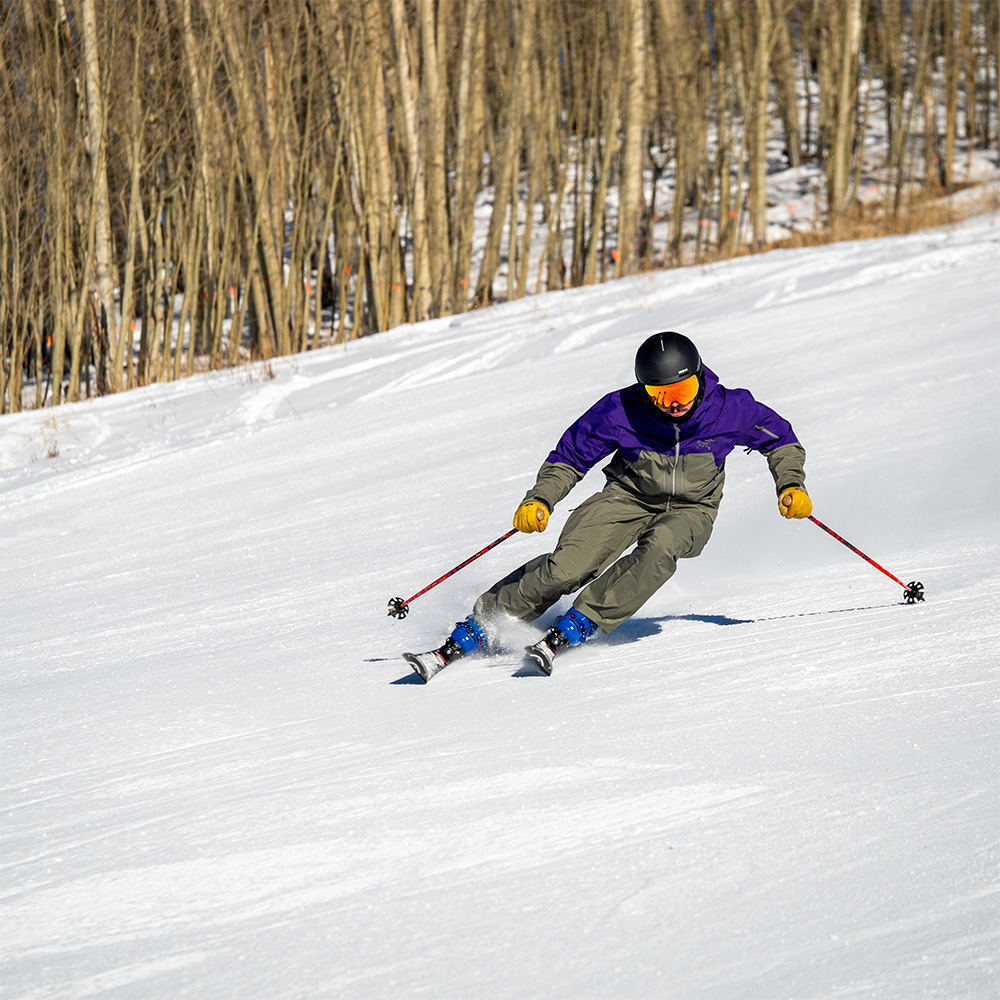
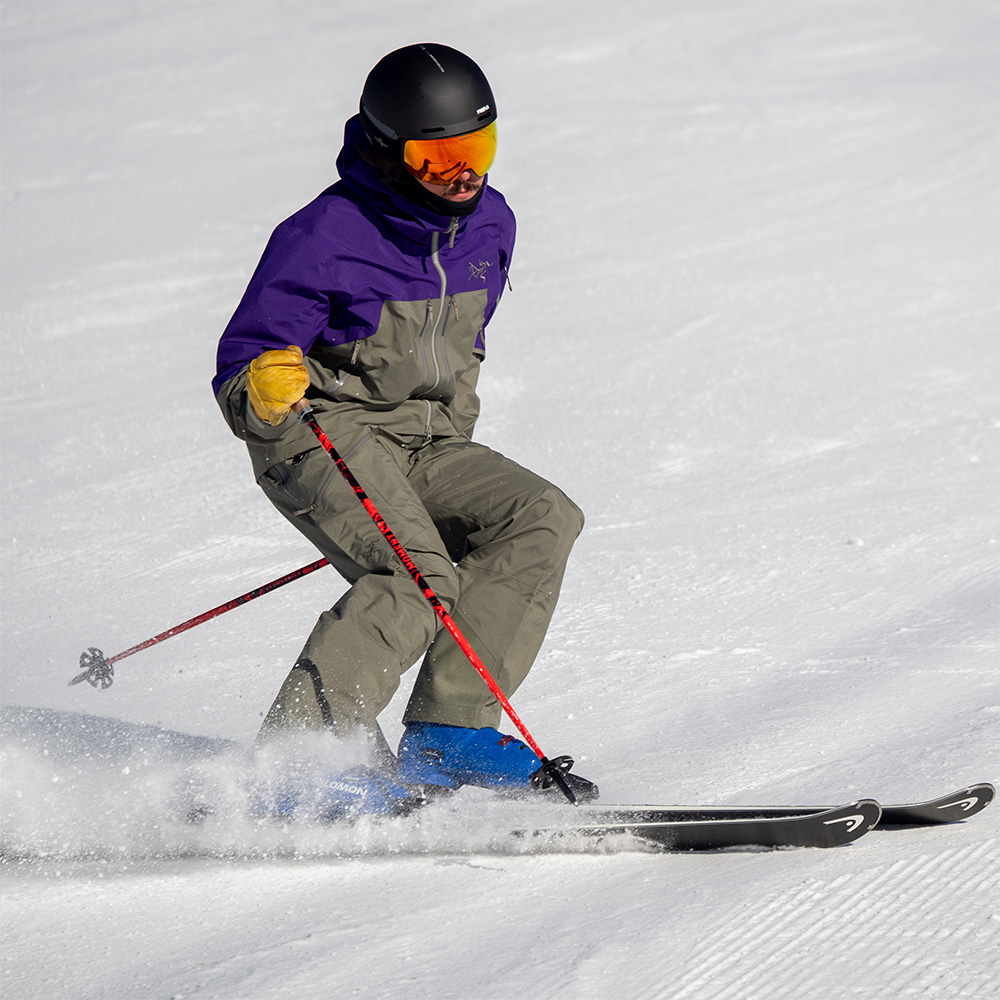
As for the Arc’teryx Rush kit in particular, this is a high-end combo best suited to those who prioritize maximum weather resistance and packability.
It’s not what I’d pick for 100 days of lift-accessed skiing for multiple seasons in a row, but it’s not so fragile that I worry a lot about wearing it while skiing through brush and the like. It’s not the most supple or breathable option we’ve tried (more of a traditional ‘hardshell’ feel), but its breathability is very respectable relative to its level of water resistance. And I personally appreciate that the Rush Bib does not feature waterproof fabric in the bib section; instead, it uses a far more breathable stretch-woven fabric.
In terms of fit, I’d put the Rush right around the middle of the spectrum. It’s not particularly baggy or notably long, but I don’t notice the fabric clinging to me (in part thanks to Arc’teryx’s excellent patterning and articulation).
Despite its low weight, the Rush still comes with lots of useful features. I appreciate the dual external chest pockets on the jacket, though I personally prefer having two bigger chest pockets vs. the Rush jacket’s two smaller chest pockets and two larger handwarmer pockets (though the latter are accessible with a pack on).
The Rush Jacket also has a small bicep pocket for a pass, and two internal drop-in pockets with a small zippered compartment. There’s no powder skirt, which I’m personally fine with, but there are moderately long pit zips, functional but slim Velcro cuffs, and an excellent, helmet-compatible hood.
Down below, the Rush Bib gets you dual zippered pockets at the top of the bib, which I reserve for lighter items since the stretch-woven fabric can sag a bit. Its dual thigh pockets work well, thanks to bellows adding some extra volume when needed, and lengthy zips on the outer legs offer plenty of ventilation when needed (and double as a drop-seat).
While I typically prefer pants over bibs, if I’m gonna wear bibs, I much prefer those with a center-front zipper that extends from the fly all the way up the bib. I find this to be a much nicer system when getting in / out. Fortunately for me, the Rush Bib checks this box.
Bottom Line: The Rush kit provides top-tier weather protection, respectable breathability, and a pretty generous feature set, given its low weight. All of this makes it stand out as a protective backcountry shell system, or a lightweight 50/50 setup for both lift-accessed and human-powered riding, especially in wet climates.

Arc’teryx Sabre SV Jacket
MSRP: $900
Primary Fabric: 3-layer Gore-Tex Pro ePE laminate (205 gsm, 200D face fabric)
Available Sizes: XS – XXL
Reviewer: Luke Koppa (5’8”, 155 lbs / 173 cm, 70 kg)
Size Tested: M
Measured Weight: 729 g
The Sabre SV is Arc’teryx’s most rugged freeride shell. Like the Arc’teryx Rush, the Sabre SV uses a top-shelf, 3-layer Gore-Tex Pro ePE laminate, but the Sabre SV utilizes a much more substantial 200-denier face fabric. This adds a fair bit of weight, but also makes the Sabre SV a safer bet in terms of long-term durability.
In terms of weather protection and breathability, we’ve found pretty much all Gore-Tex Pro ePE shells to be very similar. So, differences in face fabrics, fits, and feature sets are what we’d focus on if deciding between shells that use the same membrane.
Like most Gore-Tex Pro shells, the Sabre SV has a stiff and crinkly feel to it, but Arc’teryx’s patterning does a good job of maintaining plenty of range of motion. The Sabre SV’s fit is a tad roomier overall and about an inch longer than the Rush Jacket.
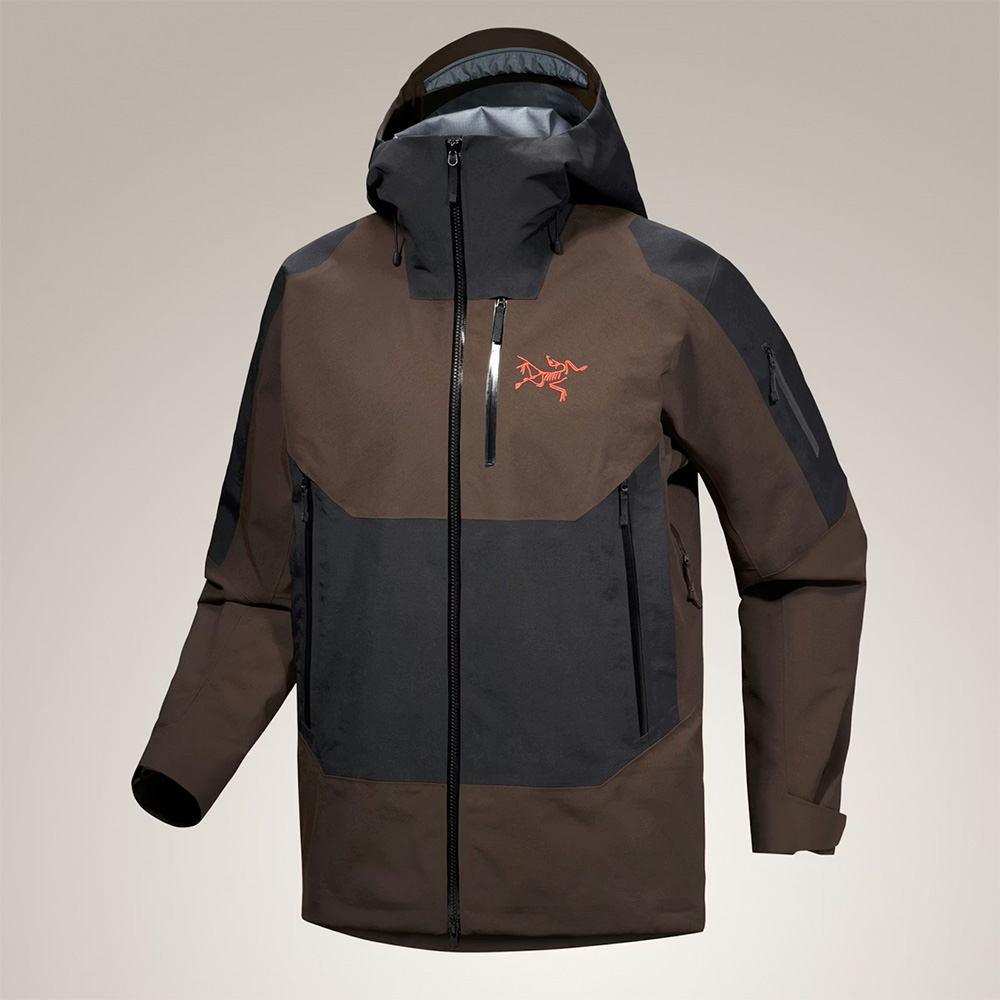
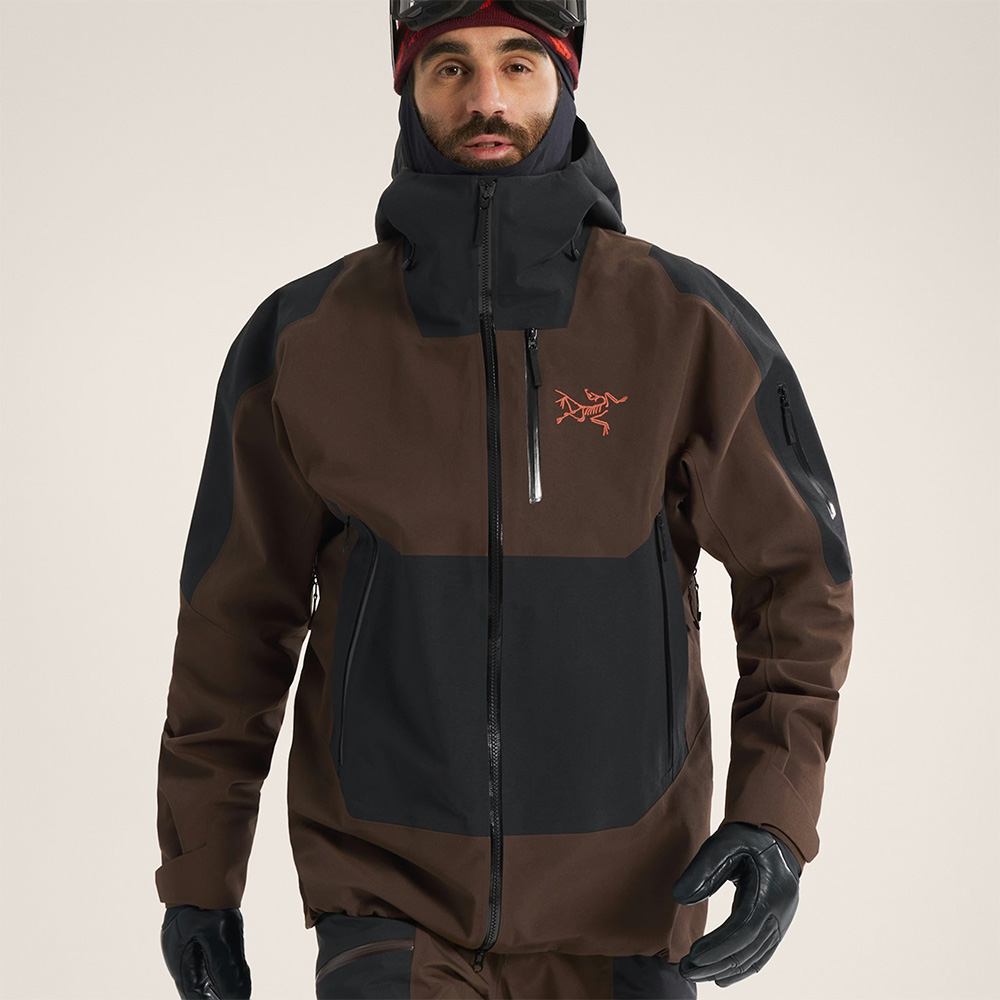
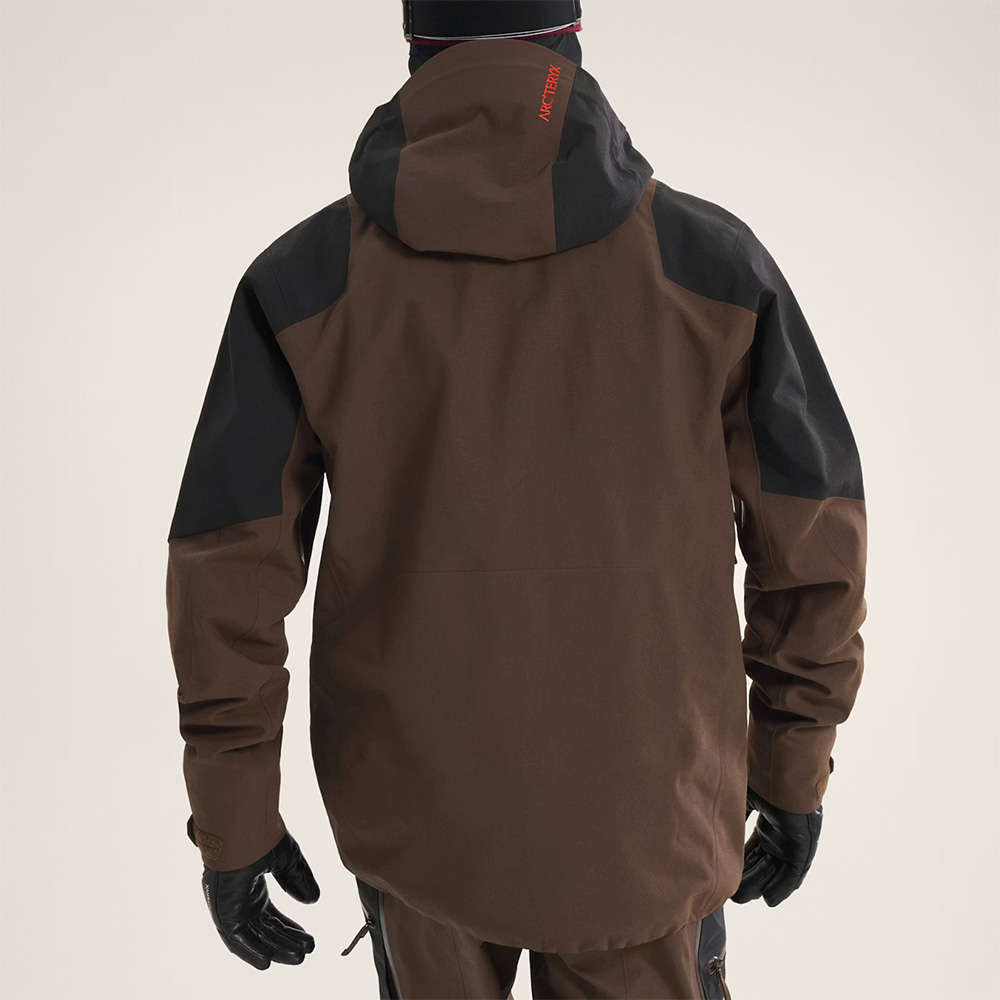
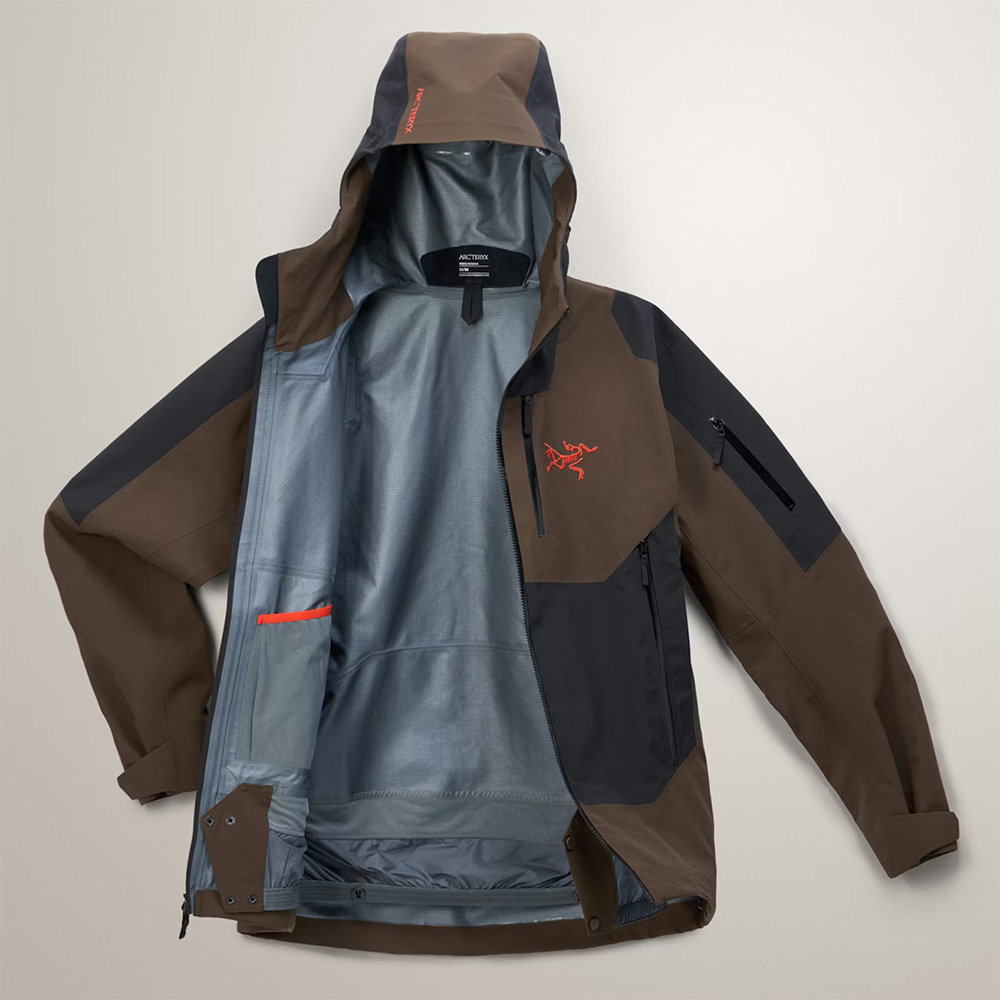
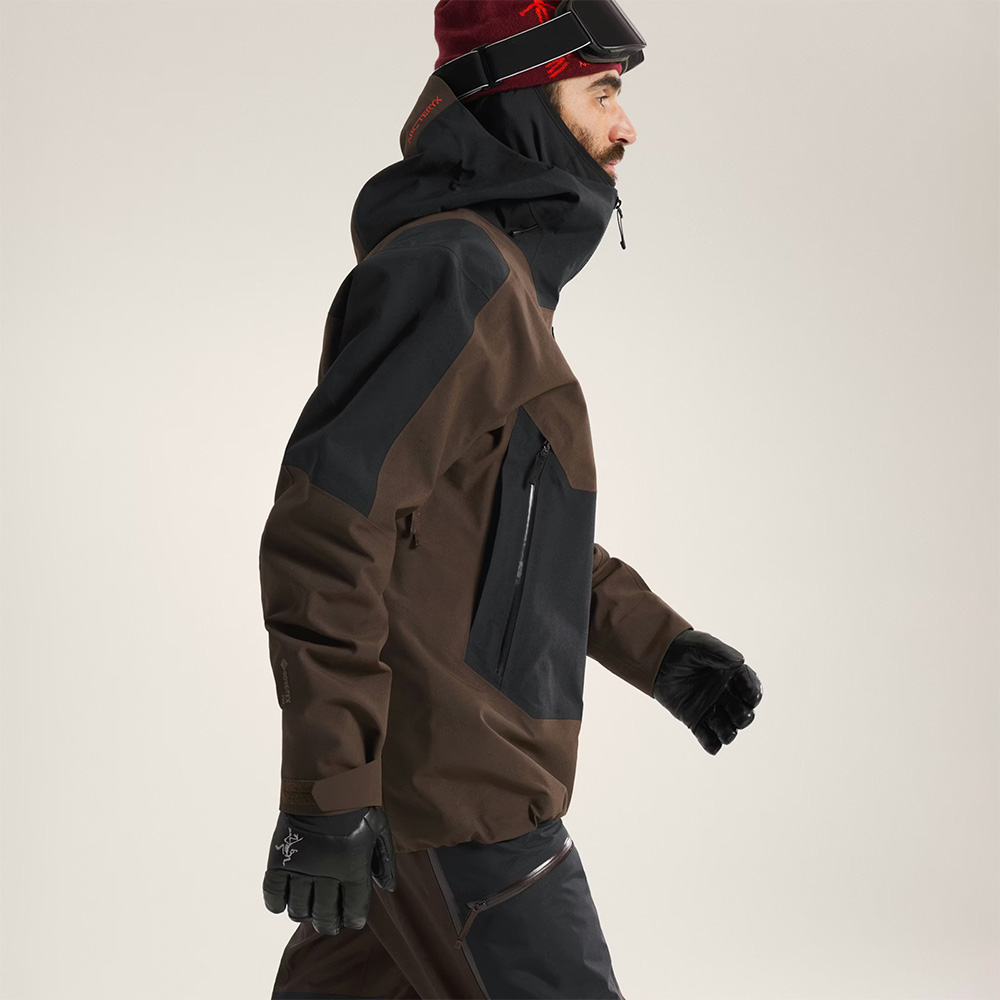
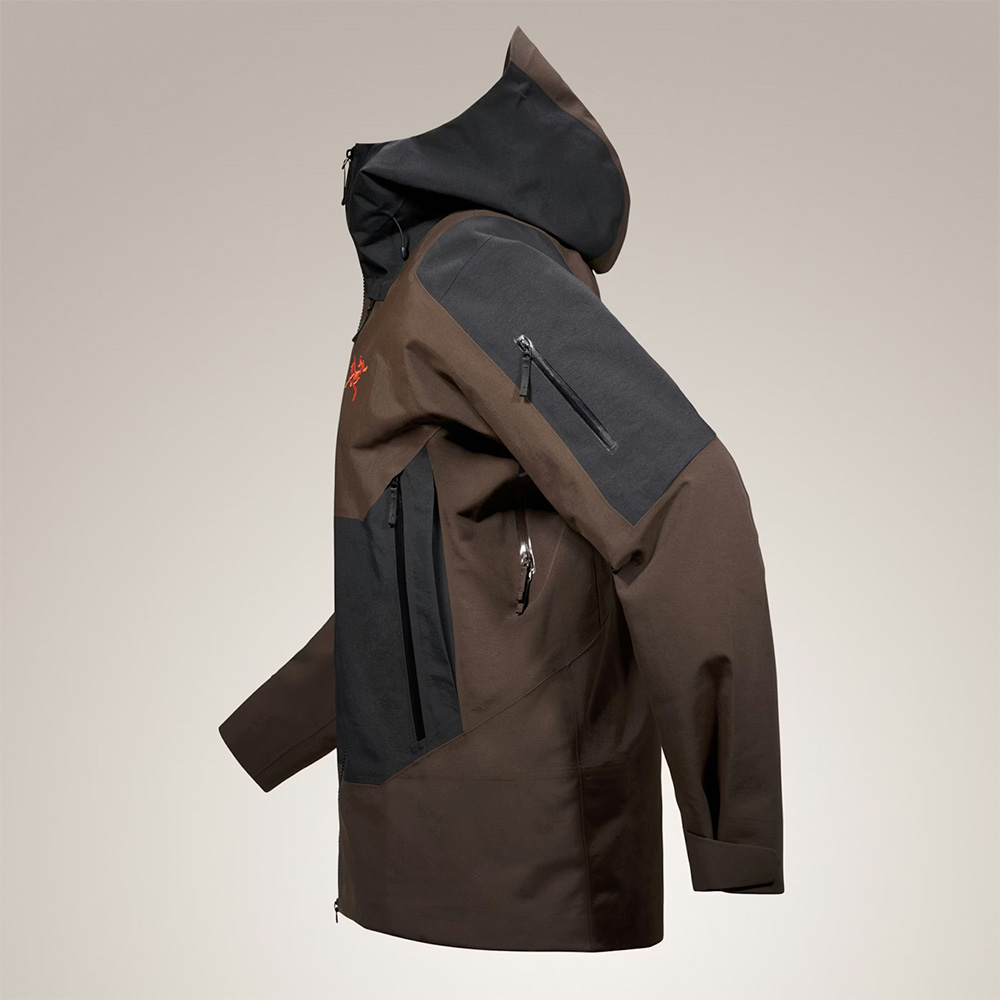
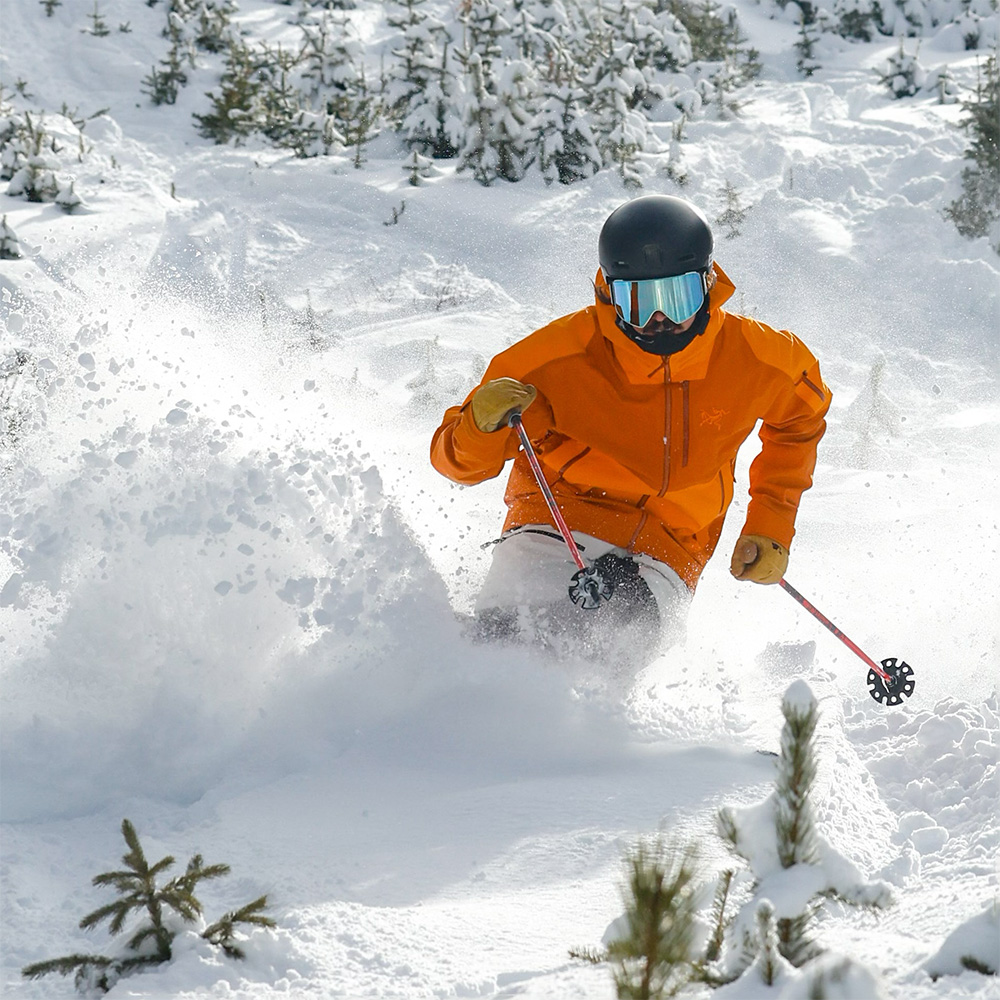
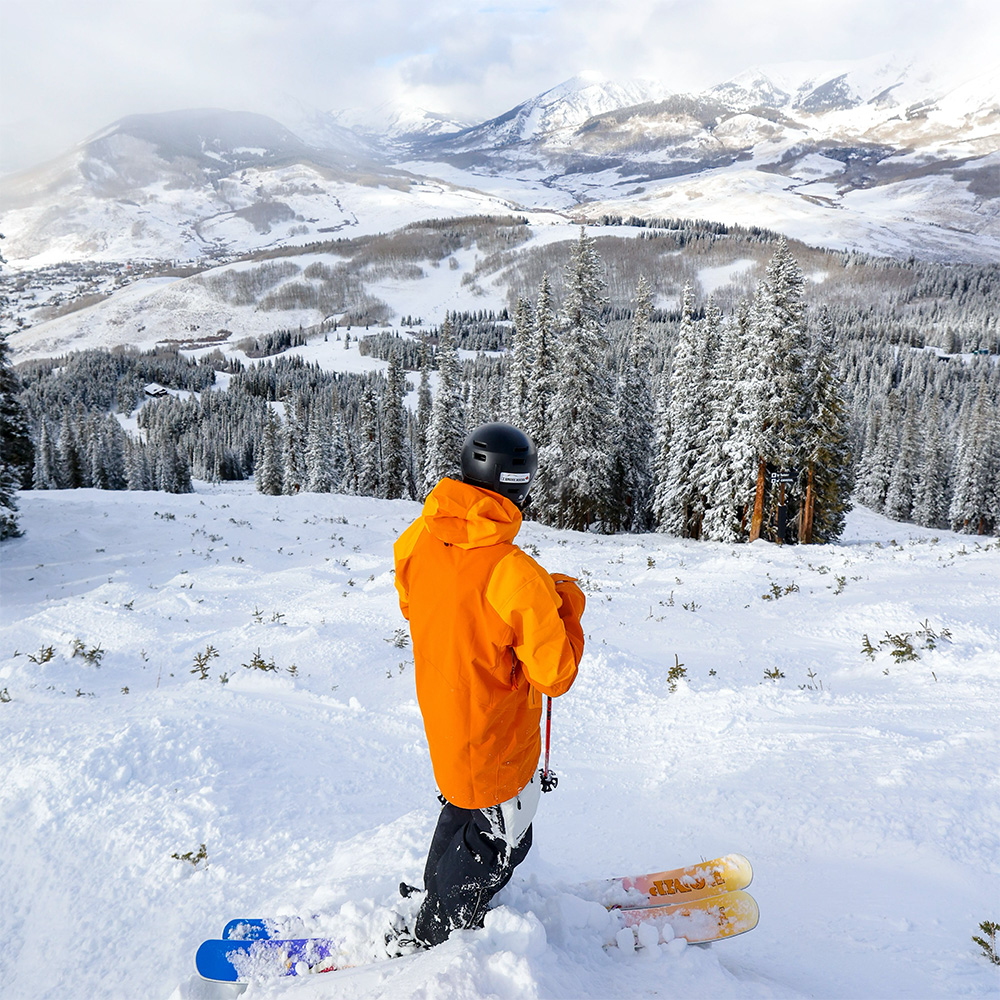
The Sabre SV’s pocket layout is pretty standard, including one external chest pocket big enough for most phones; dual handwarmer pockets that work with most packs; a bicep pass pocket; and internal drop-in pockets. It also features big Velcro cuffs, a fixed powder skirt, pit zips, and Arc’teryx’s excellent helmet-compatible hood.
Likely thanks to its stiffer fabric, I find that the Sabre SV’s collar stands up on its own a bit better than the Rush Jacket’s, which is what I personally prefer (I like a collar that naturally stands up in front of my chin and doesn’t tuck underneath, digging into my throat).
Worth noting: Arc’teryx also offers several non-SV variants of the Sabre, including the Sabre Jacket, Sabre Insulated Jacket, Sabre Relaxed Anorak, Sabre Pant, Sabre Relaxed Pant, and Sabre Bib Pant. These use the non-Pro version of Gore-Tex’s ePE membrane, and typically pair it with lighter face fabrics (typically 80-denier, apart from the 200-denier Sabre Relaxed Pant).
Bottom Line: The Sabre SV Jacket is for those who prioritize maximum weather protection and want to invest in a shell that should hold up better in the long run than lighter alternatives.
Beringia St. Elias Jacket & Bib
MSRP: $700 (top) | $700 (bottom)
Primary Fabric: 3-layer Pertex Shield laminate (100% recycled face & backer)
Available Sizes: S – XL
Reviewer: Luke Koppa (5’8”, 155 lbs / 173 cm, 70 kg)
Size Tested: M (top) | M (bottom)
Measured Weight: 708 g (top) | 901 g (bottom)
Beringia’s St. Elias kit is a soft and supple shell combo that’s one of the better options in this roundup when it comes to breathability and backcountry-friendly mobility.
As of the 25/26 season, the St. Elias kit now uses a 3-layer laminate that was created in collaboration with Pertex. In our experience, this new laminate doesn’t breathe quite as well as the prior-gen version, but it’s still a bit more comfortable during high-output activities compared to the majority of the other shells here. We haven’t yet had any snow / water get all the way through the St. Elias’s membrane, though we haven’t yet been able to wear it in consistent rain.
Like the prior version, the latest St. Elias still stands out for feeling softer and more supple than most other 3-layer shells. Paired with its slightly more relaxed and longer fit than average, this makes for plenty of usable range of motion.
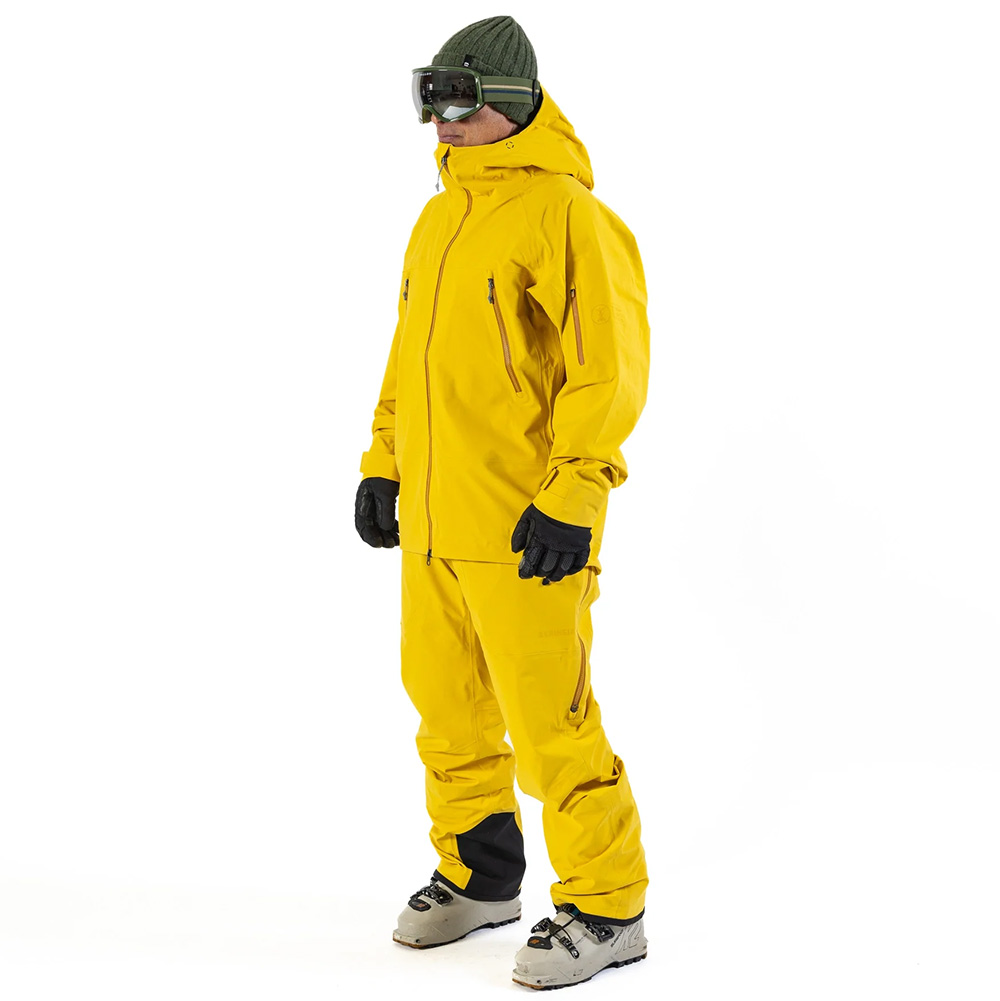
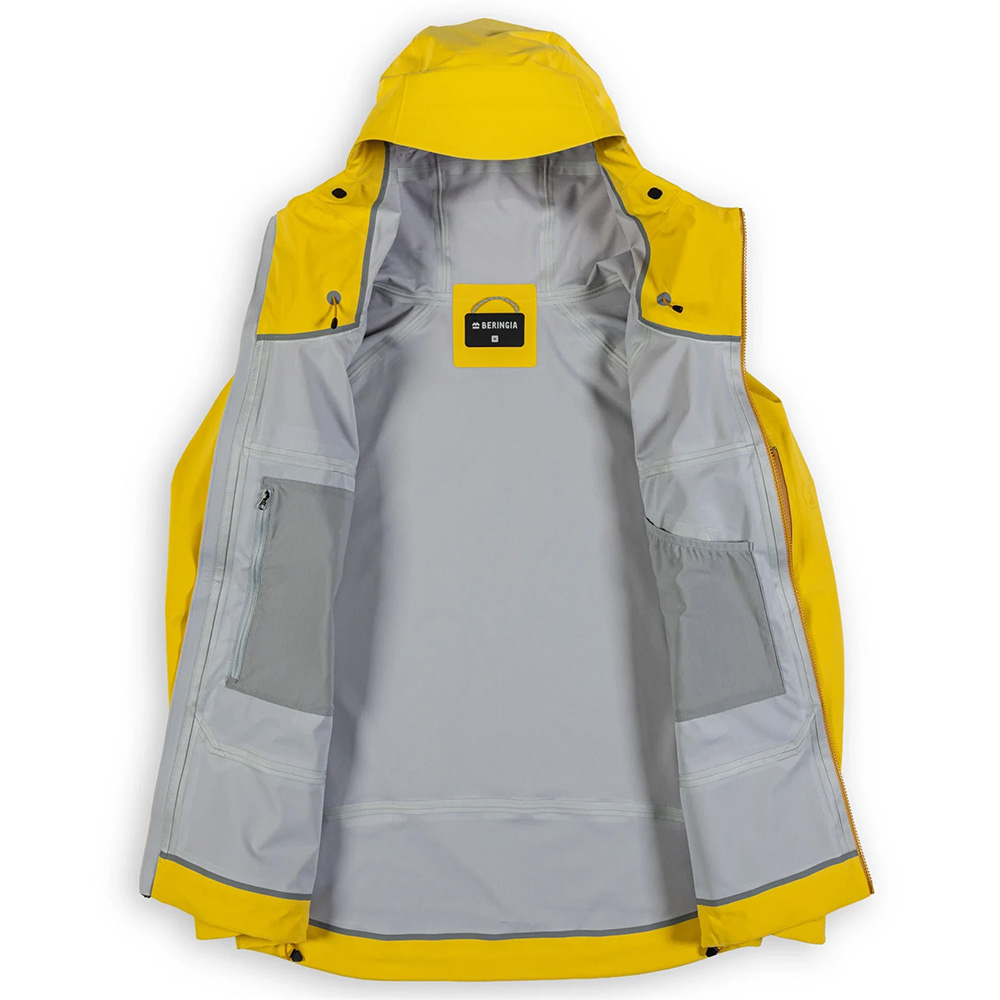
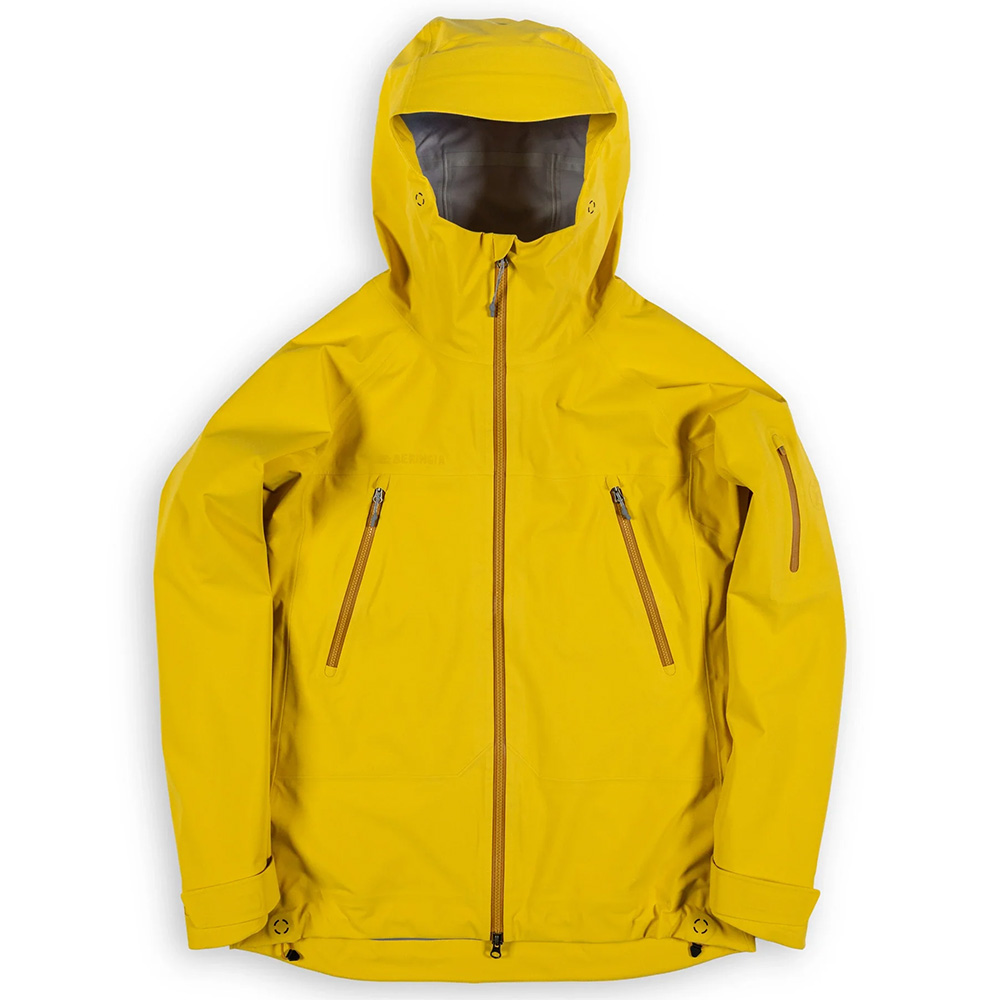
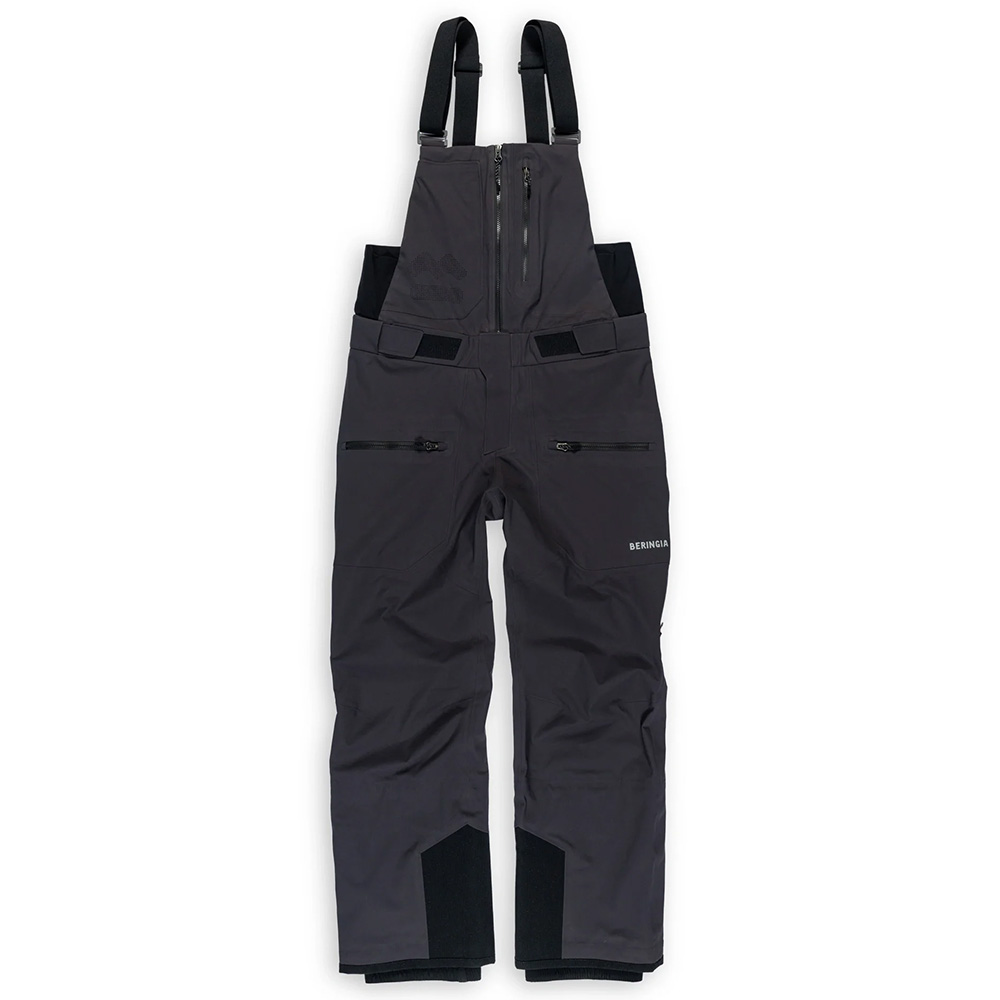
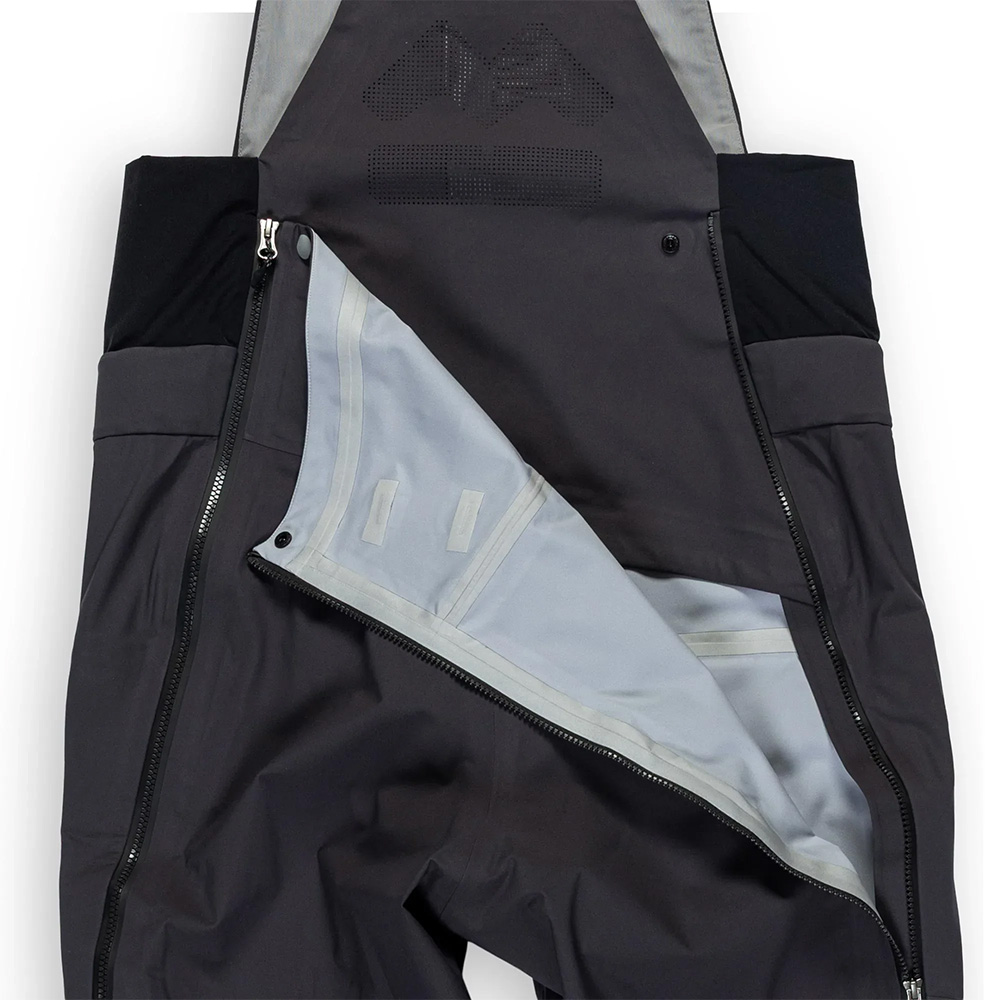
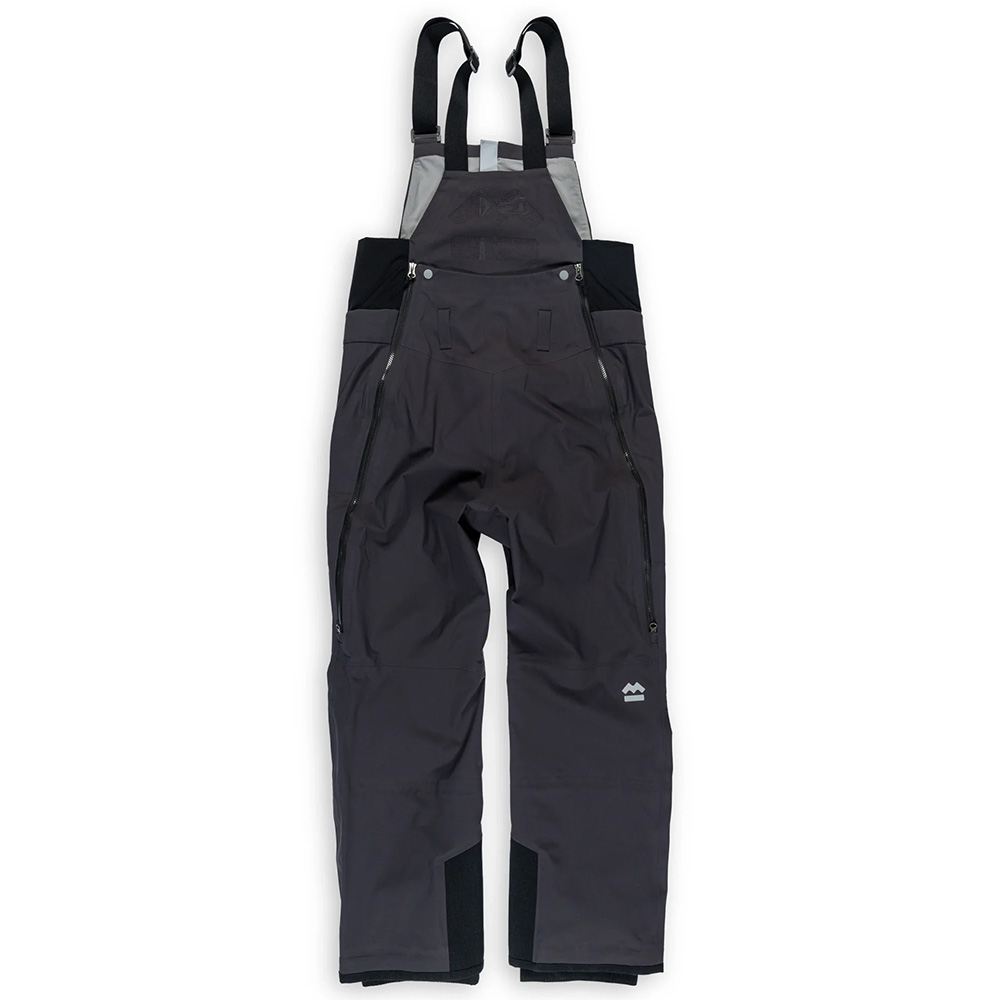
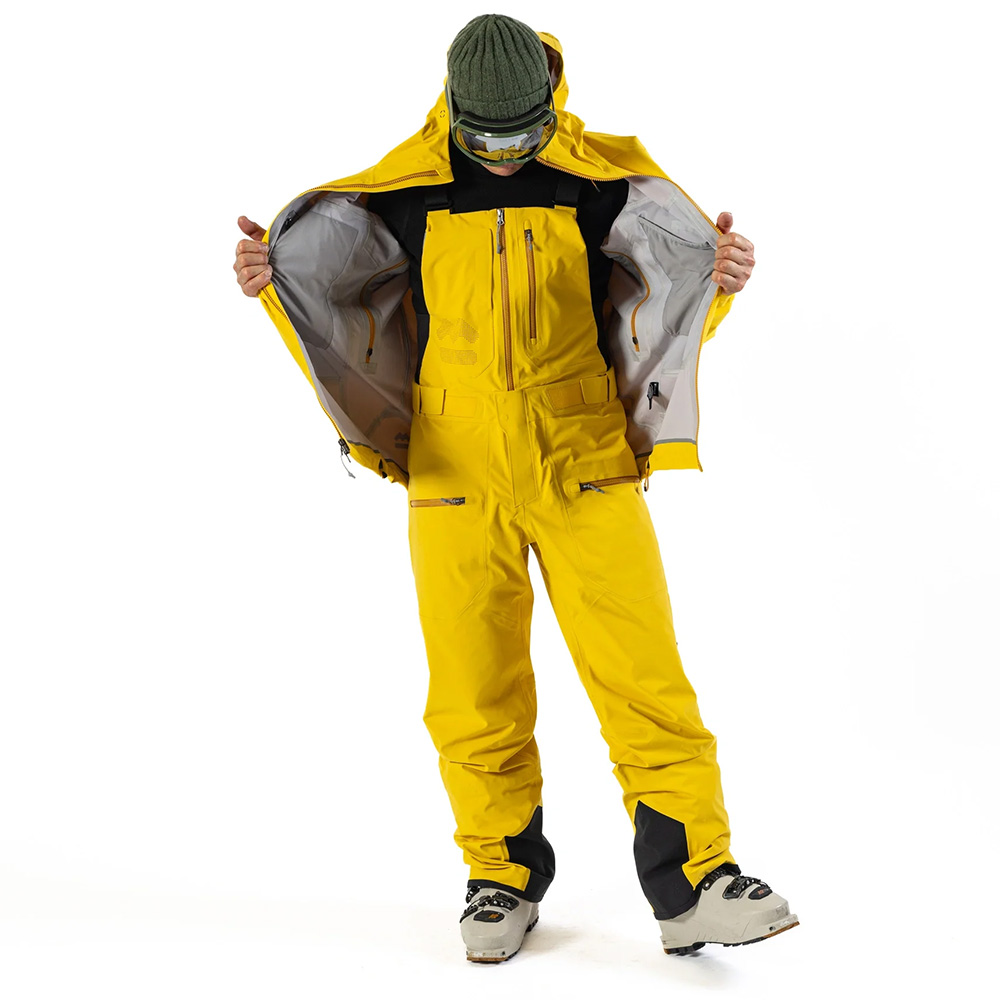
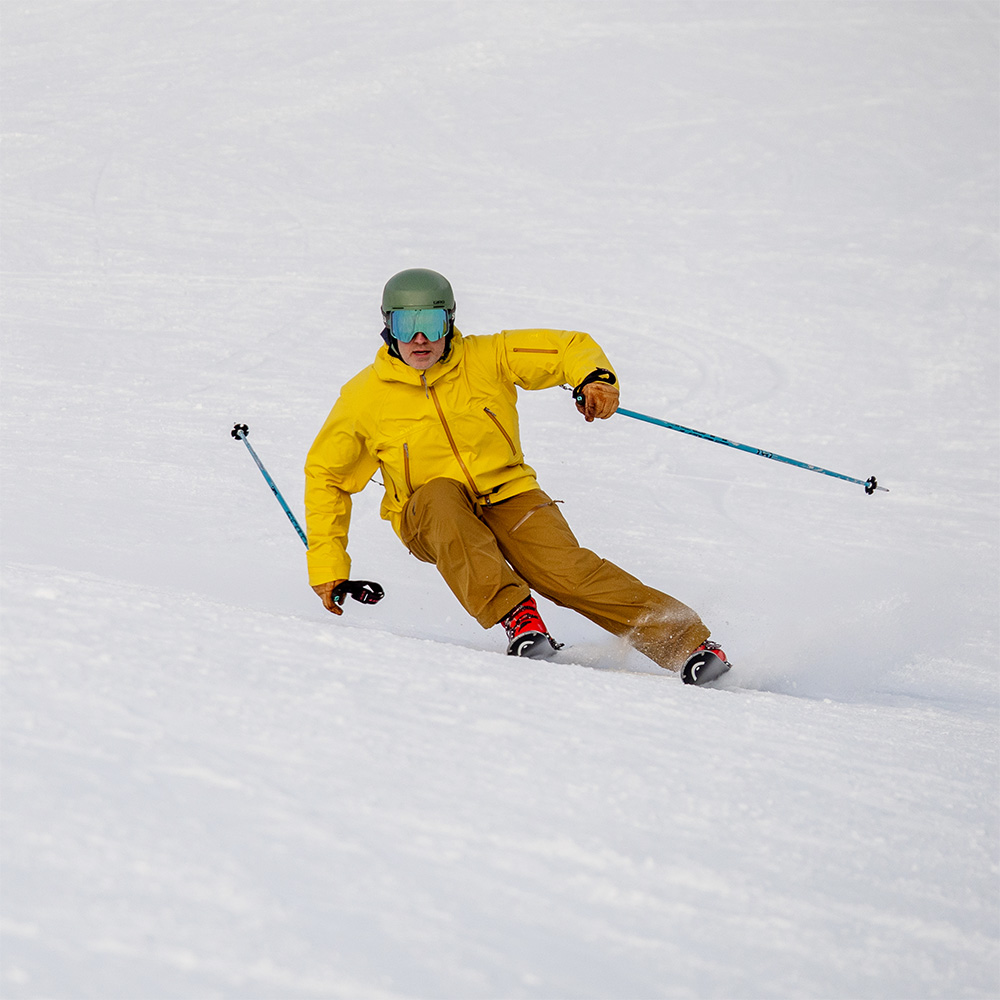
Jacket storage includes two pretty small but pack-compatible hand pockets; a bicep pass pocket; an internal drop-in pocket; and an internal zippered pocket. It doesn’t feature a powder skirt, but it does have pit zips, big Velcro cuffs, and a hood that generally works well with or without a helmet. The collar also tends to stay out and above my chin.
The St. Elias Bib features a zippered pocket and a Velcro one on either side of its full-zip upper bib. Dual thigh pockets offer more storage, and while they’re not bellowed, the mesh sleeves do a good job of keeping a phone or similarly sized object from bouncing around. The bib’s side vents extend all the way from the knee to the upper back, and they also form a drop-seat.
Bottom Line: The St. Elias is a very comfortable shell system that breathes a bit better than most waterproof shells, isn’t so light that we worry about frequent resort use, and has still kept us dry throughout many Colorado storm days.
Black Diamond Recon Stretch Shell Jacket & Pant
MSRP: $499 (top) | $449 (bottom)
Primary Fabric: 3-layer BD.dry stretch laminate (20K/20K rated)
Available Sizes: S – XL
Reviewer: Luke Koppa (5’8”, 155 lbs / 173 cm, 70 kg)
Size Tested: M (top) | M (bottom)
Measured Weight: 800 g (top) | 625 g (bottom)
Black Diamond says their Recon Stretch Shell system is meant for “day-in-day-out skiers who shred on both sides of the rope” (i.e., lift-accessed and touring).
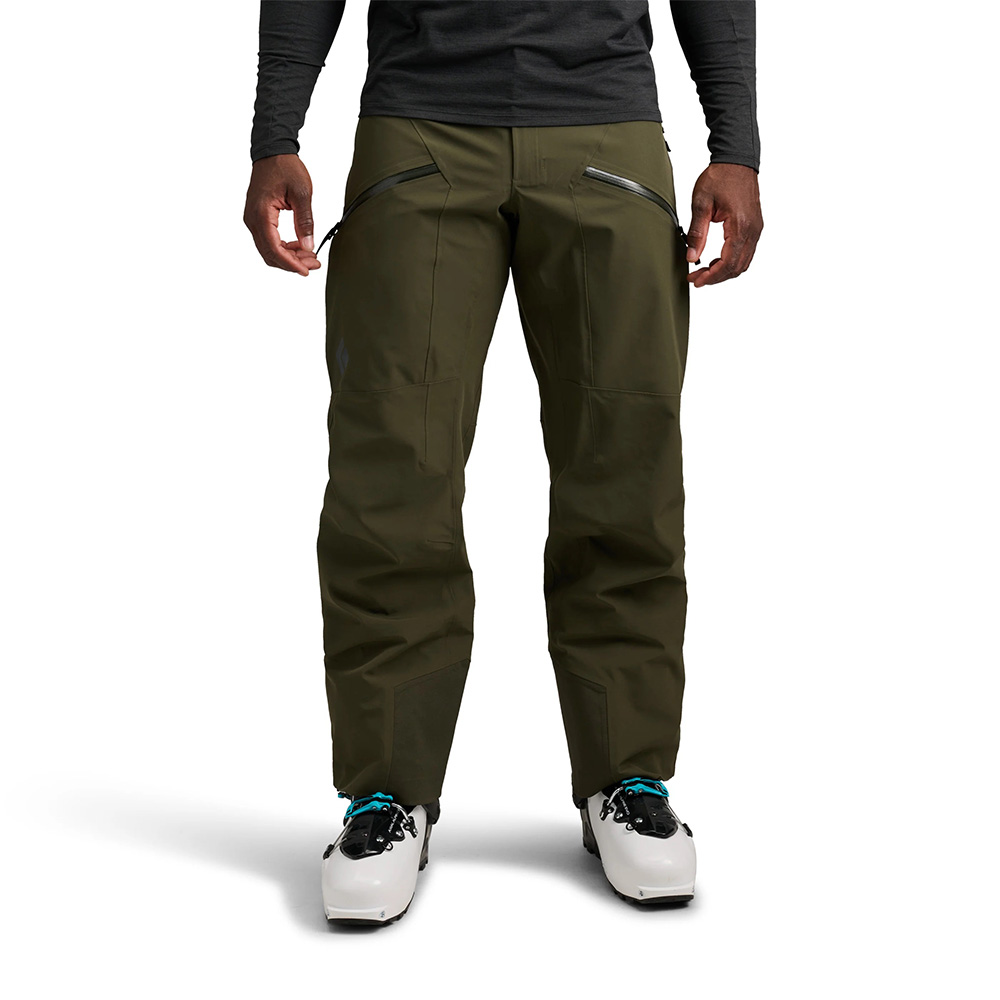
Similar to the Beringia St. Elias, the Recon Stretch’s 3-layer fabric is notably supple and stretchy. However, the Recon Stretch’s face fabric feels a fair bit heavier, so I’d be slightly more confident in its ability to withstand frequent scrapes and pokes from trees, bushes, etc.
The Recon Stretch hasn’t let any water / snow through during our winter testing so far. That said, in general, I tend to prefer stiffer, more crinkly shells in super wet weather; I’ve typically found that laminates with stiffer constructions tend to maintain their DWR effectiveness for slightly longer. And, once the face fabric does wet out, stiffer fabrics aren’t quite as inclined to cling to you, making them feel ‘drier,’ regardless of whether any water actually gets through to the interior.
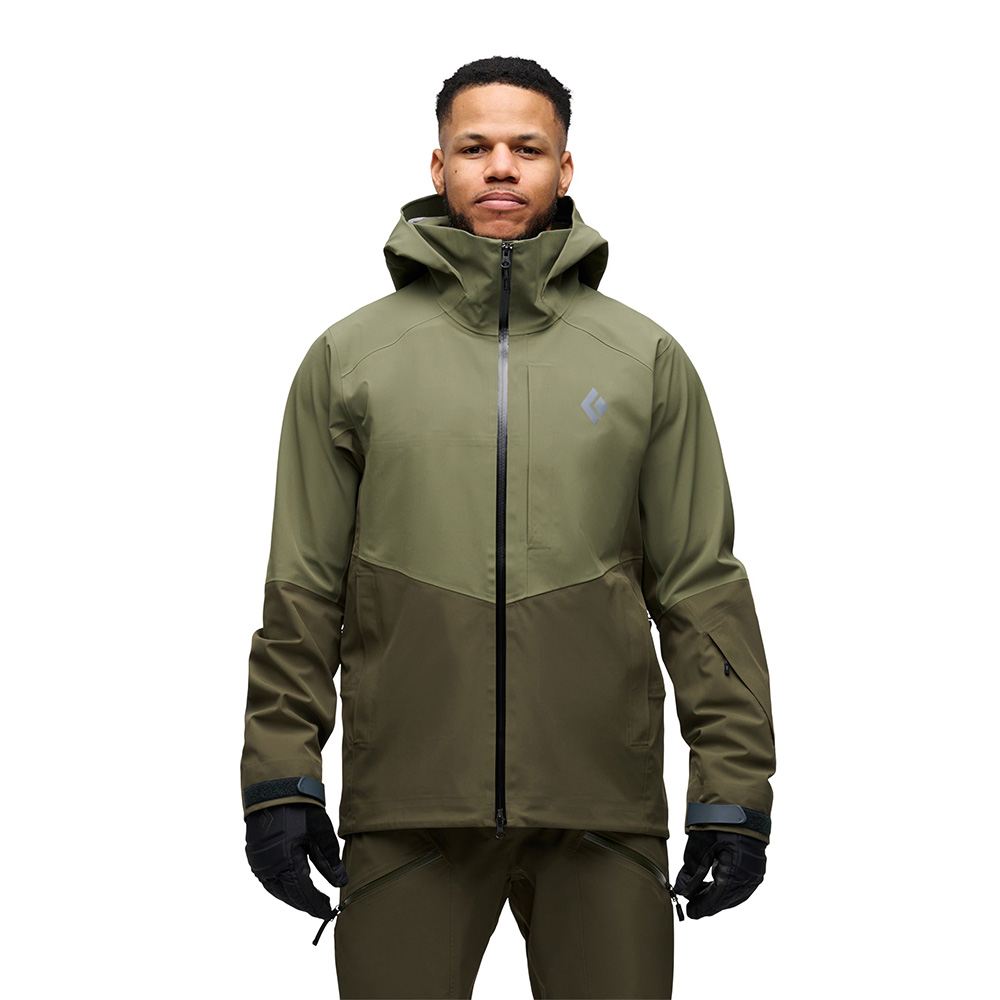
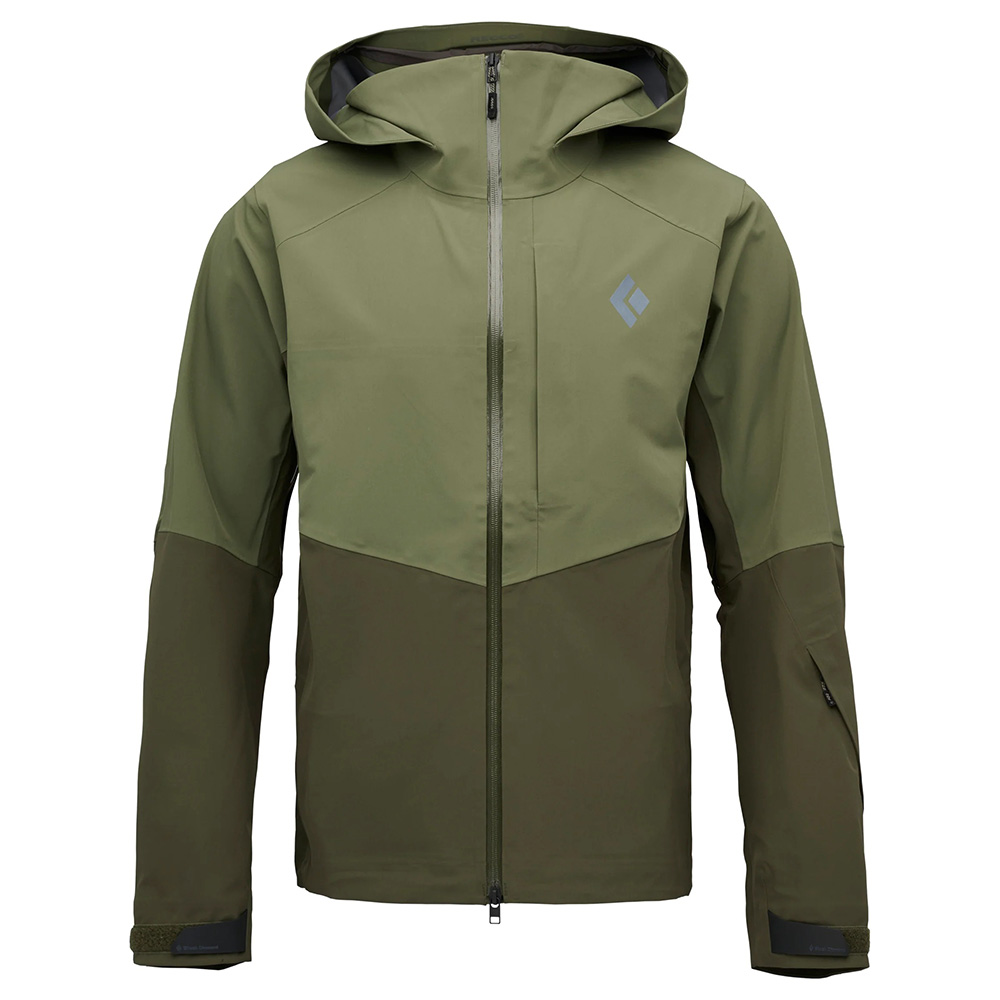
In terms of breathability, the Recon Stretch feels true to its stated 20K/20K rating — i.e., not exceptionally good for a pretty high-end shell, but very much in line with many of the other options here.
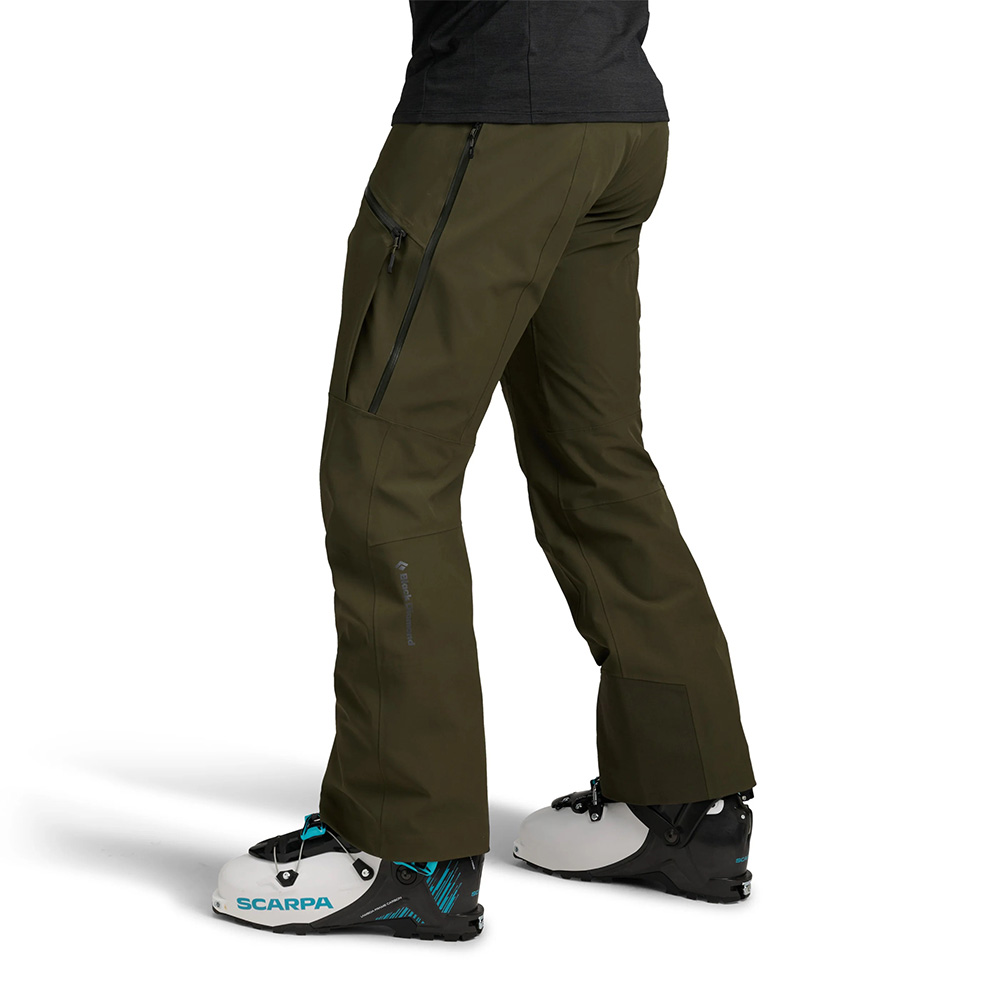
The Recon Stretch’s fit falls on the slimmer end of the spectrum, particularly the pants. It’s not as form-fitting through the seat and thighs as the Mammut Haldigrat HS Bib, Kuhl Defiant Bib, or (especially) the Outdoor Research Trailbreaker, but it’s slimmer overall than the Beringia St. Elias. The Recon Stretch Jacket feels like more of an average / regular fit. Both pieces still offer impressive range of motion, thanks to the fabric’s stretch and useful articulation patterned throughout.
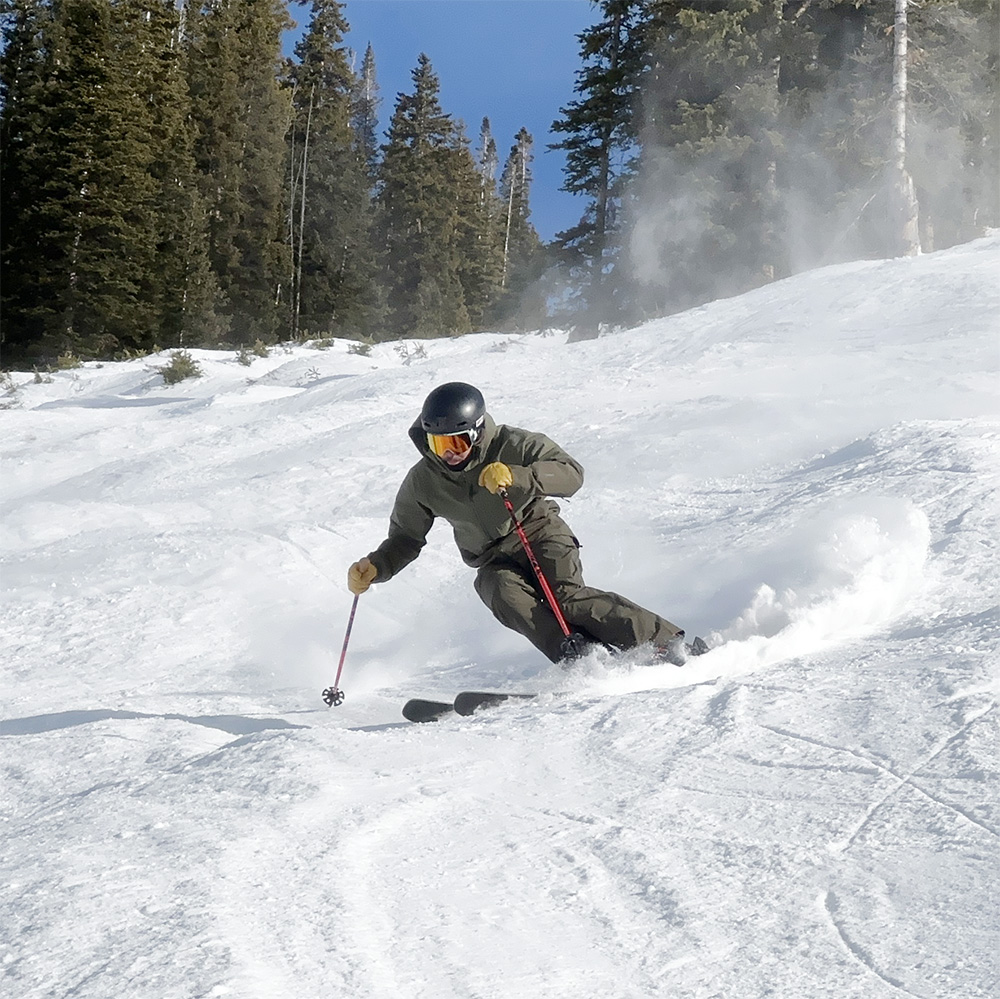
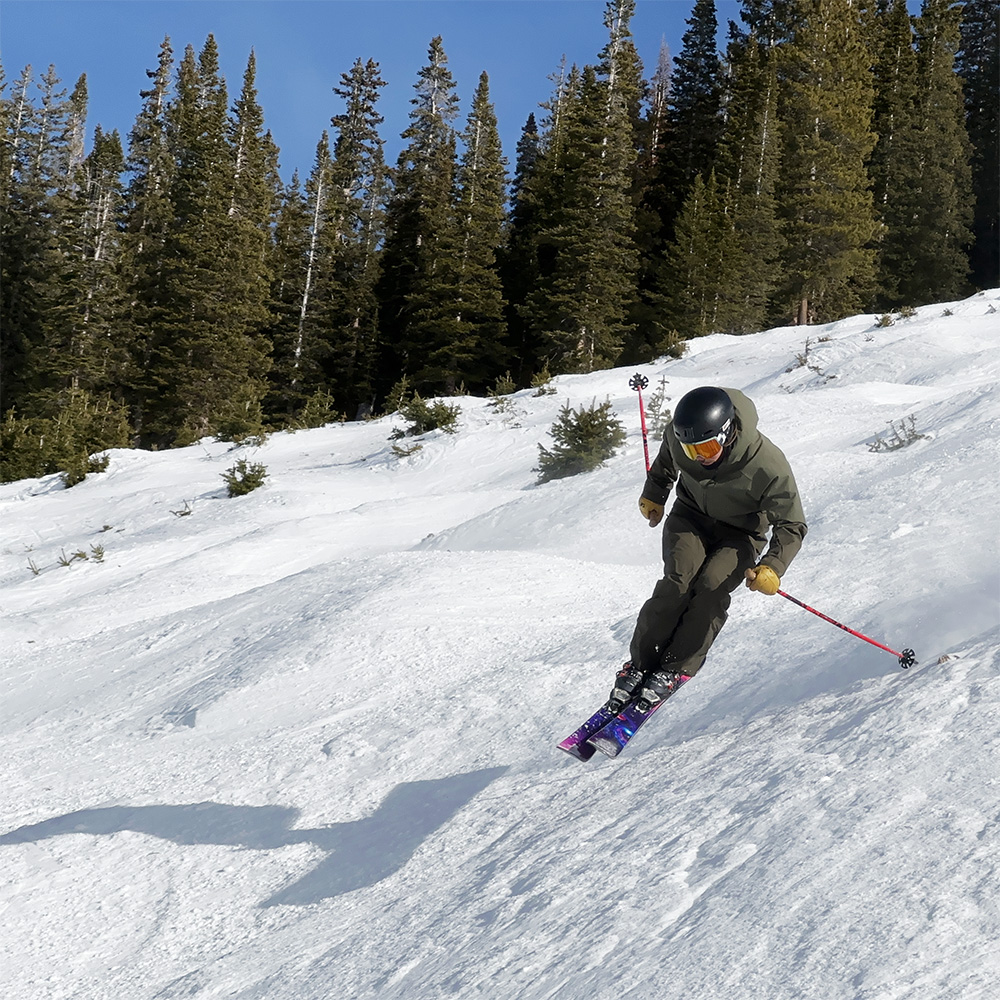
Pocket layout is pretty standard on the Recon Stretch Jacket: small external chest pocket, dual handwarmers (not pack-compatible), a forearm pass pocket, and dual internal drop-in pockets for skins, goggles, etc.
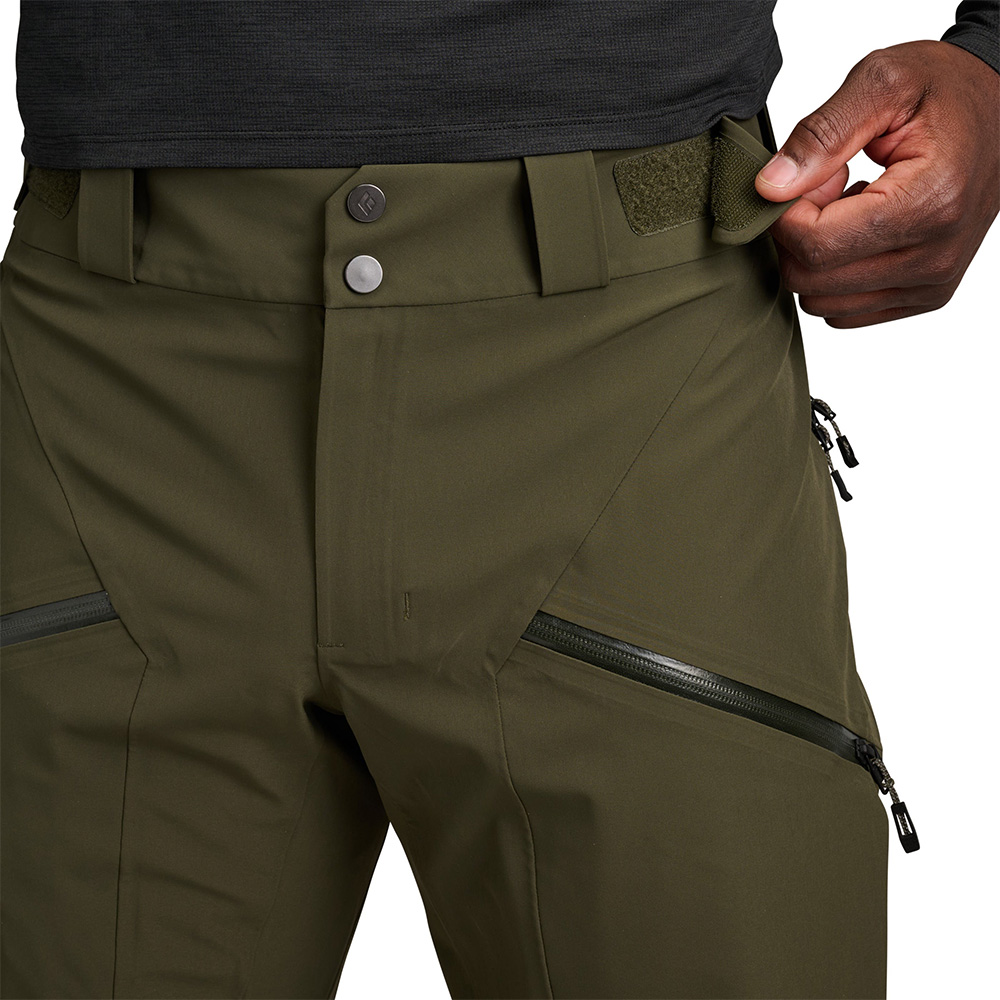
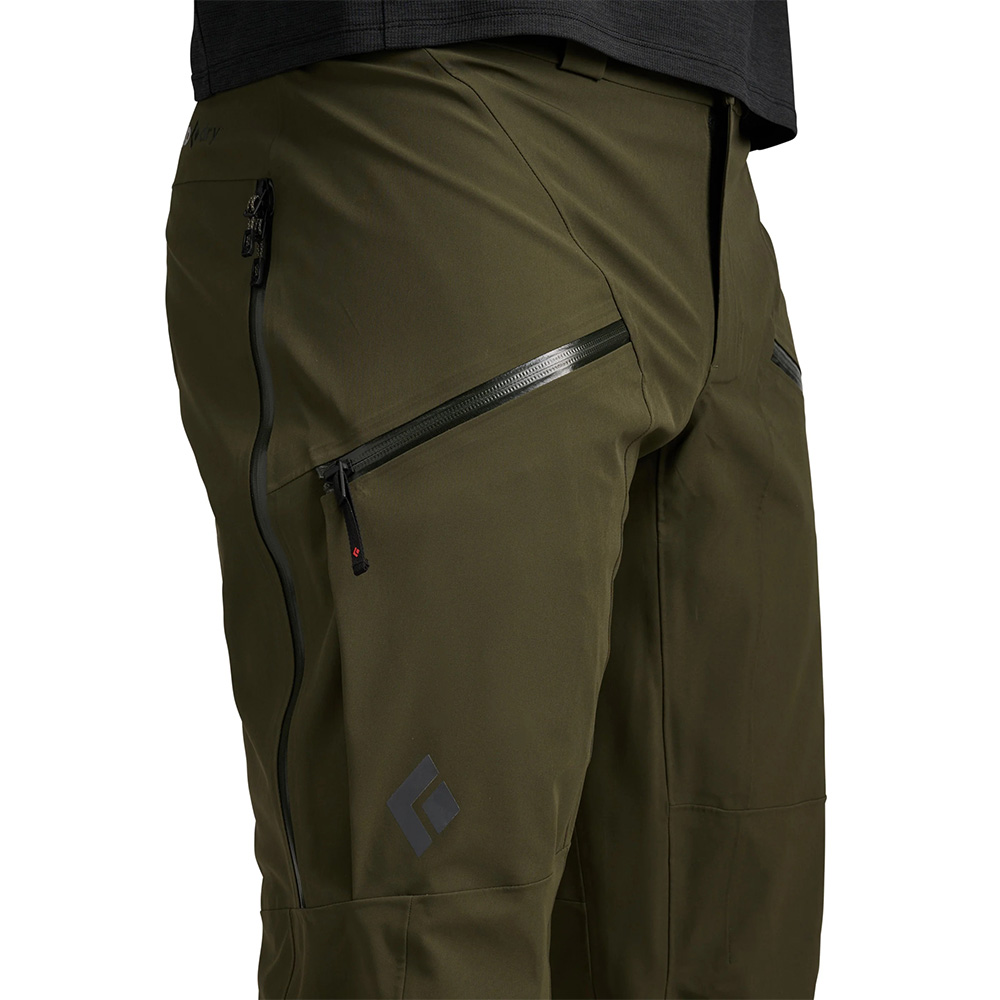
The Recon Stretch Pant comes with dual thigh pockets, both of which are bellowed to keep the contents from stretching the fabric tightly across your leg. I really like these pockets overall — their internal electronic sleeves are some of the best I’ve used, and both include a tether to potentially attach a transceiver. That said, since the zippers are slanted down toward the outside of the leg, I do have to be a bit more careful to keep contents from falling out, particularly when seated on a chairlift.
The Recon Stretch Jacket also comes with pit zips, a removable powder skirt, and Velcro cuffs that I wish were a tad wider to more easily get over my bulkier gloves. Its hood is patterned more like a removable hood; I personally don’t love the look, but it does make it easier to pull the hood over a helmet with the collar fully zipped. That collar generally stays up and in front of my chin, though I wouldn’t mind it being a centimeter or two taller.
The Recon Stretch Pant also features outer vents that extend down most of the thigh, though they’re notably shorter than the vents on most of the bibs in this roundup.
Bottom Line: The Recon Stretch kit lives up to its name, offering a very stretchy and comfortable fabric patterned in a slightly slimmer and shorter cut than many pieces here. Despite this, it’s still a pretty rugged kit that feels at home in the resort, and it’s a viable backcountry option if low weight and packability aren’t priorities.

Flylow Lab Gore-Tex 3L Jacket & Baker Gore-Tex 3L Bib
MSRP: $650 (top) | $620 (bottom)
Primary Fabric: 3-layer Gore-Tex ePE laminate
Available Sizes: S – XXL
Reviewer: Luke Koppa (5’8”, 155 lbs / 173 cm, 70 kg)
Size Tested: M (top) | M (bottom)
Measured Weight: 659 g (top) | 950 g (bottom)
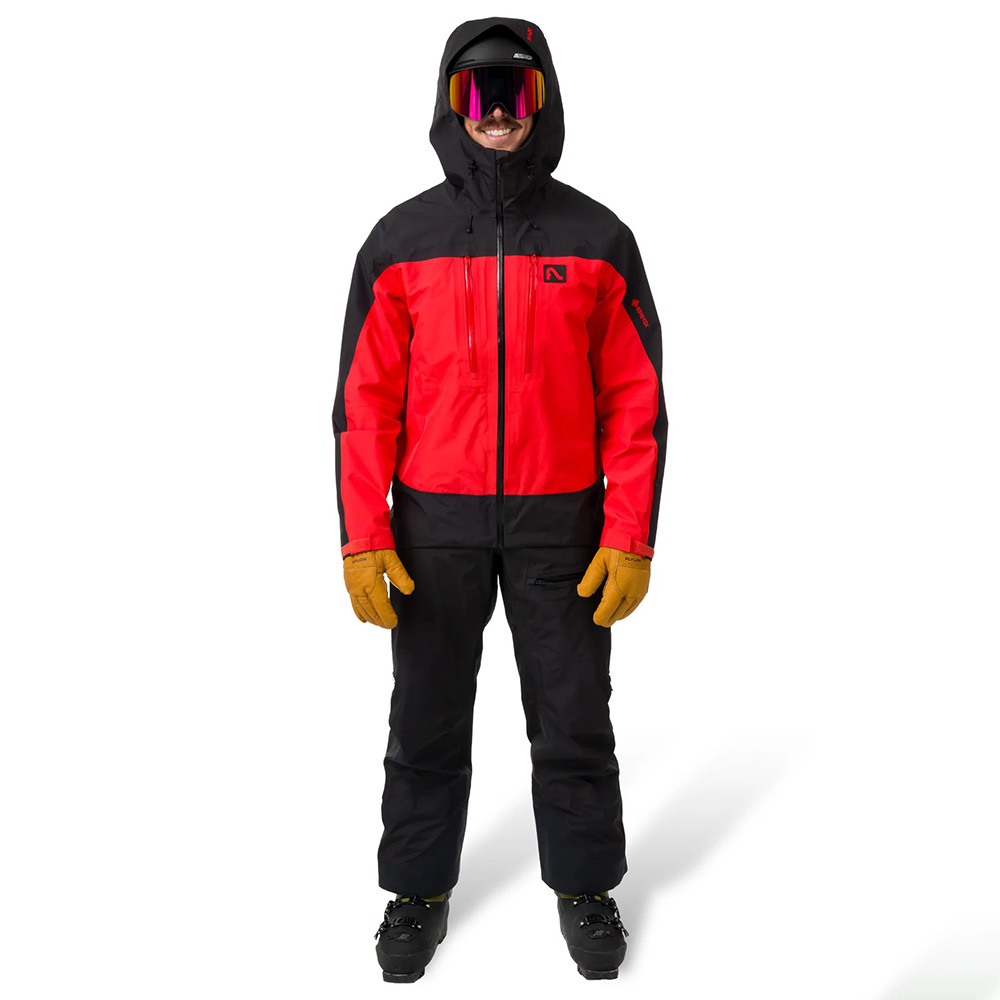
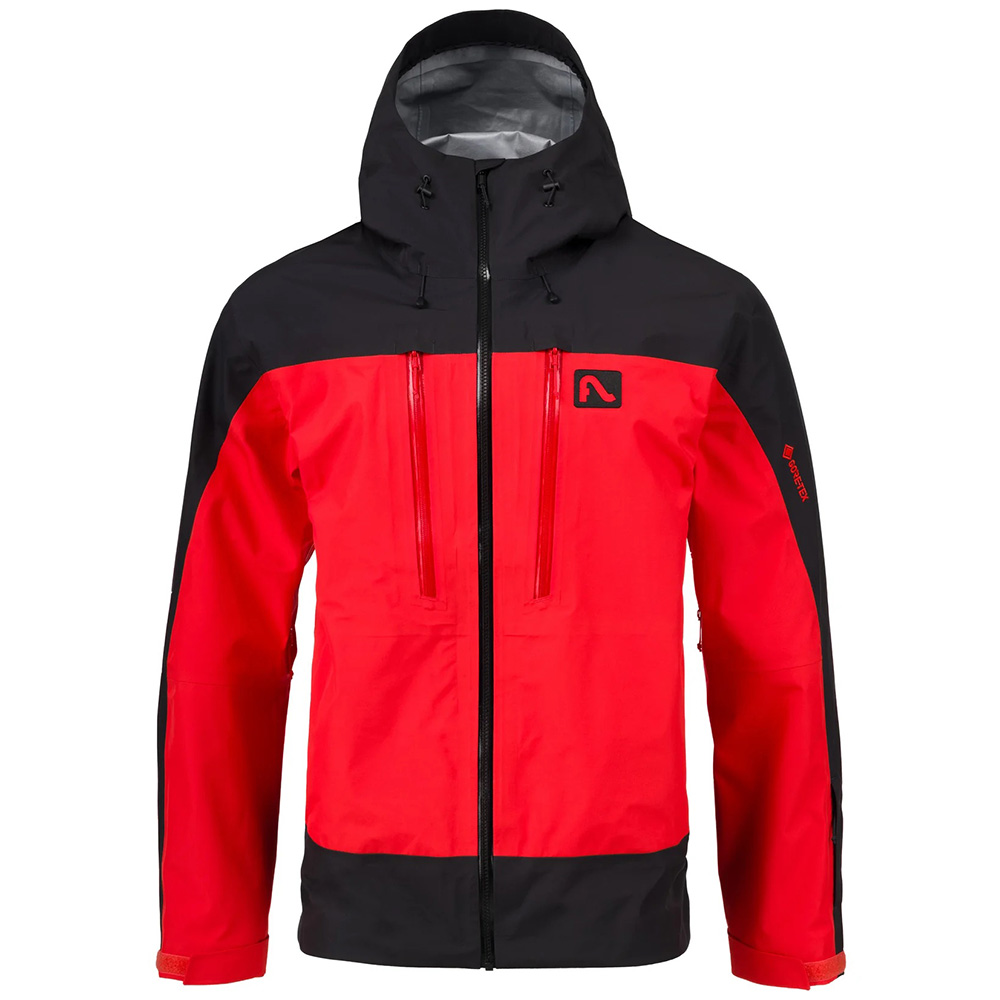
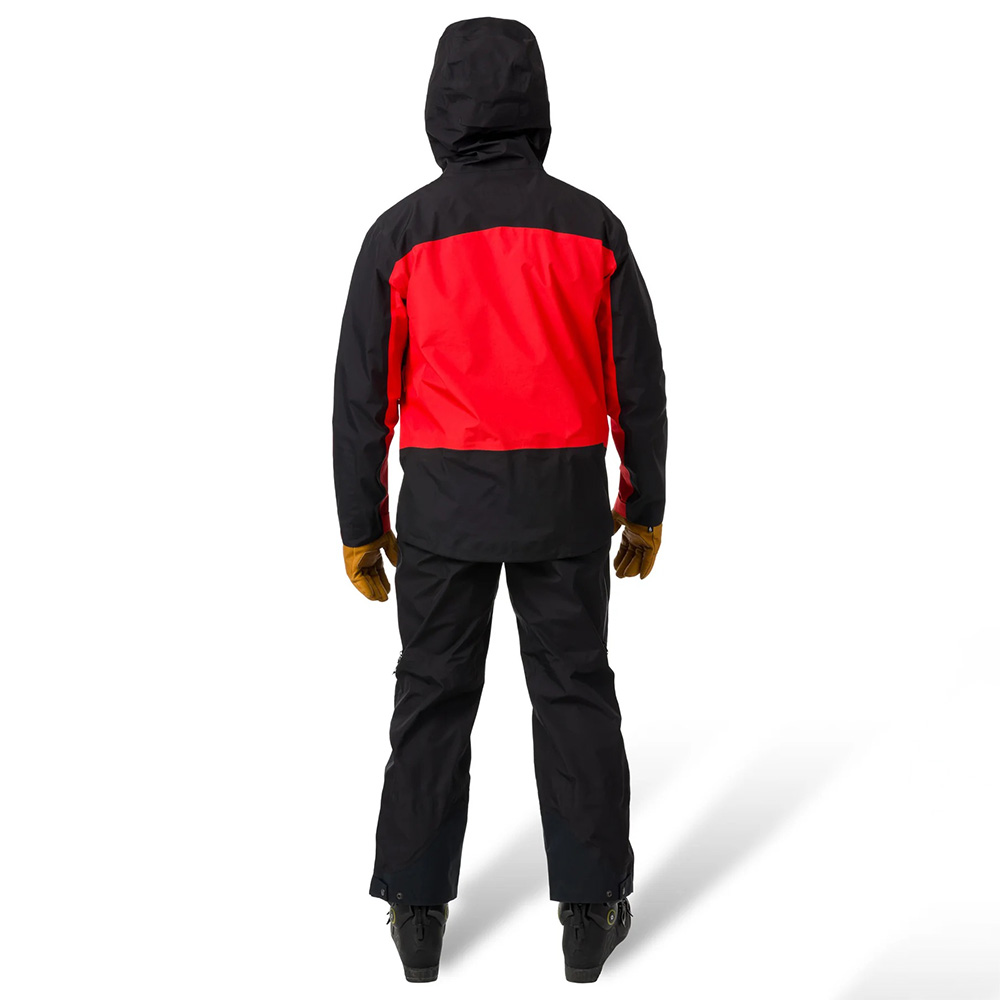
Flylow’s Lab Coat has historically been the brand’s most protective shell jacket, and their Baker Bib has earned a cult following largely due to its excellent durability. While these pieces have typically utilized one of Flylow’s in-house fabrics, this year, Flylow is offering them with a 3-layer Gore-Tex ePE laminate.
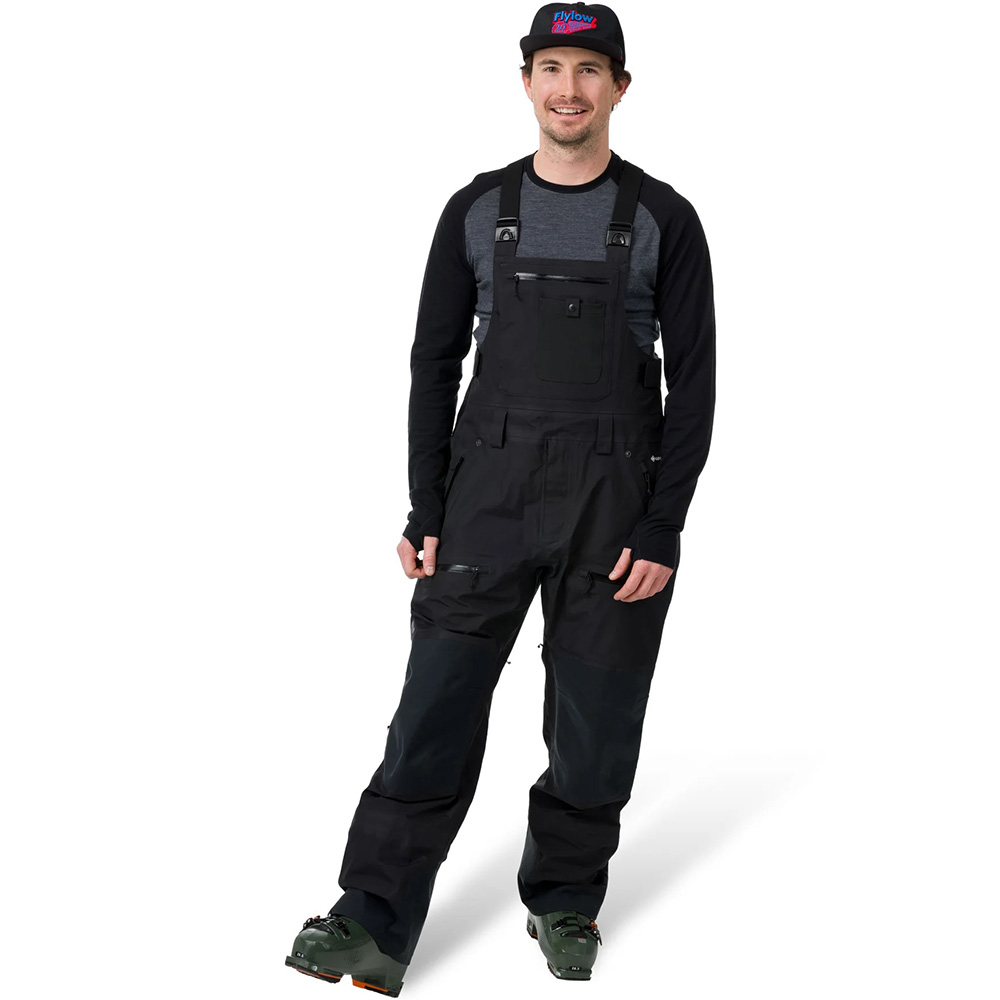
The fit and features haven’t changed much from prior generations. These pieces fall on the more relaxed end of the spectrum, particularly the bibs, with plenty of room for movement.
This Gore-Tex ePE fabric feels pretty similar to those used on prior versions of the Lab Coat and Baker Bib — slightly on the more rugged / heavy end of the spectrum, but not wildly out of the ordinary. That said, if maximum durability is what you’re after, I might push you toward the non-Gore-Tex Baker Bib and equivalent pant, the Chemical Pant, since they use heavier face fabrics.
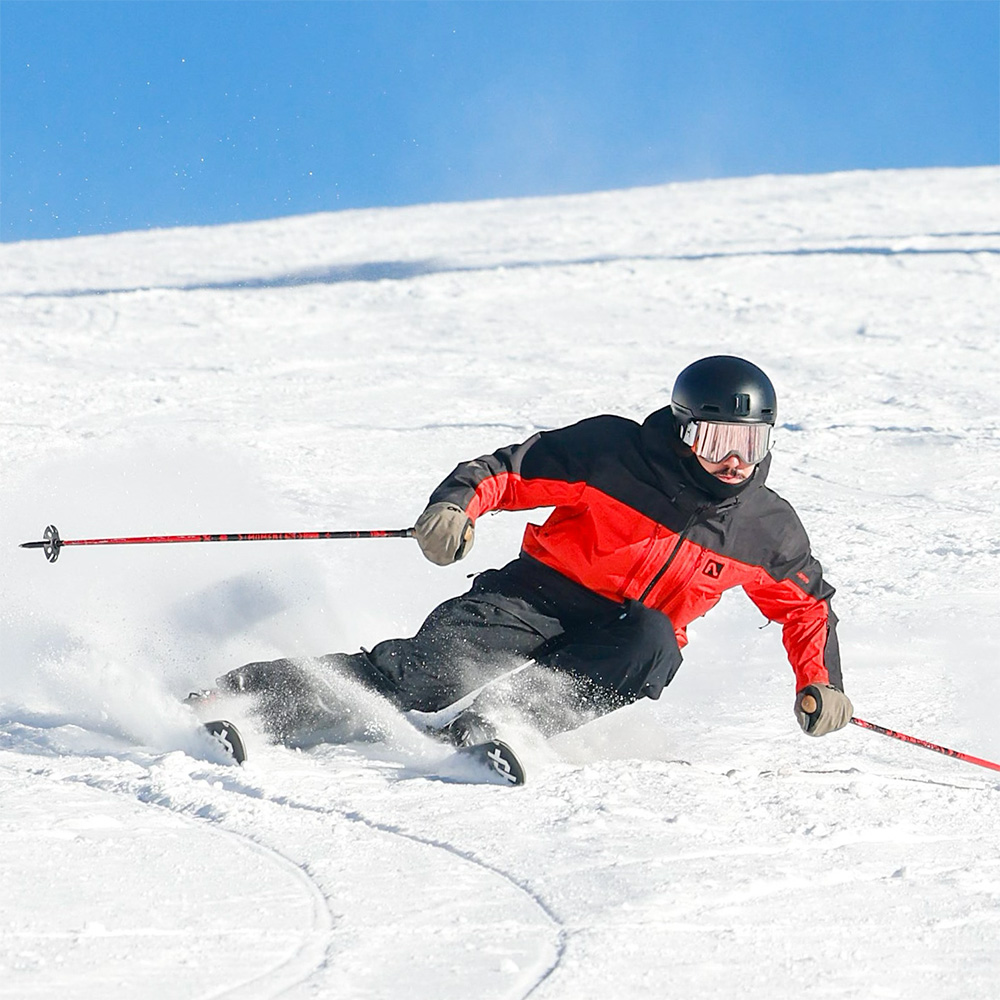
For reference, we’ve never had issues with Flylow’s in-house 20K/20K rated fabrics letting snow through to the interior during countless Colorado storm days. However, there were rare cases where this could happen if skiing for hours in sleet / rain. So far, Flylow’s new Gore-Tex shells have lived up to Gore-Tex’s ‘keep you dry’ guarantee, even in extended rain.
Now, if you haven’t had issues with the weather resistance of most other “20K/20K” shells, I’d encourage you to take a close look at the rest of Flylow’s lineup, particularly if you’re on a tighter budget. For example, their non-Gore-Tex Quantum Pro Jacket ($440) and Baker Bib ($440) offer very similar performance to their new Gore-Tex offerings, especially if you’re rarely dealing with super wet snow / rain. But the Gore-Tex options are a nice option for those who want higher-end protection.
As for features, the Lab Coat has two big, external chest pockets that fit most of my skins, as well as dual hand pockets that are accessible with most packs. There’s also a pass pocket by the wrist, and an internal drop-in pouch. Generously sized pit zips offer ample ventilation, the Velcro cuffs easily fit over all my gloves, and the hood offers respectable mobility when over a helmet. The collar also does a good job of staying off my neck / throat.
The Baker Gore-Tex Bib features a nearly identical pocket layout to the non-Gore-Tex version, including two zippered pockets up top, dual slanted hand pockets, a back pocket, and dual thigh pockets (the non-Gore-Tex Baker only has one thigh pocket).
The Baker Bib has huge vents on both sides, with one running all the way up to make it easier to get in / out. It doesn’t feature my preferred center-front zipper, but since its straps feature buckles that clip on and off the upper bib, it’s notably easier to get in and out of vs. bibs without a center-front zipper that have fixed straps (e.g., Mammut Haldigrat). I also appreciate that Flylow uses a far more breathable softshell fabric on the back of the upper bib, rather than fully waterproof fabric.
While this kit’s pockets don’t feature pleats or expandable bellows, I generally don’t mind, likely due to the more relaxed fit generally preventing stuff inside the pockets from tightly pressing up against me.
It’s also worth shouting out Flylow’s signature 1000-denier Cordura reinforcements, utilized not only around the Baker Bib’s boot cuffs, but also the knees. Snow does tend to stick to this coarser fabric more than the sleeker face fabric used elsewhere, but it’s a nice touch for durability in high-wear areas.
Bottom Line: If you’ve liked Flylow’s more relaxed fits, generous feature sets, and long-term durability — but you’ve been wishing for a slight increase in water resistance in the wettest climates, Flylow’s latest Lab Gore-Tex Jacket and Baker Gore-Tex Bib are for you. Flylow also offers the very similar Compound Gore-Tex Pant for those who don’t love bibs. Alternatively, if you prioritize value and beefier fabrics over maximum water resistance, consider their less expensive Quantum Pro Jacket, regular Baker Bib, and/or Chemical Pant.
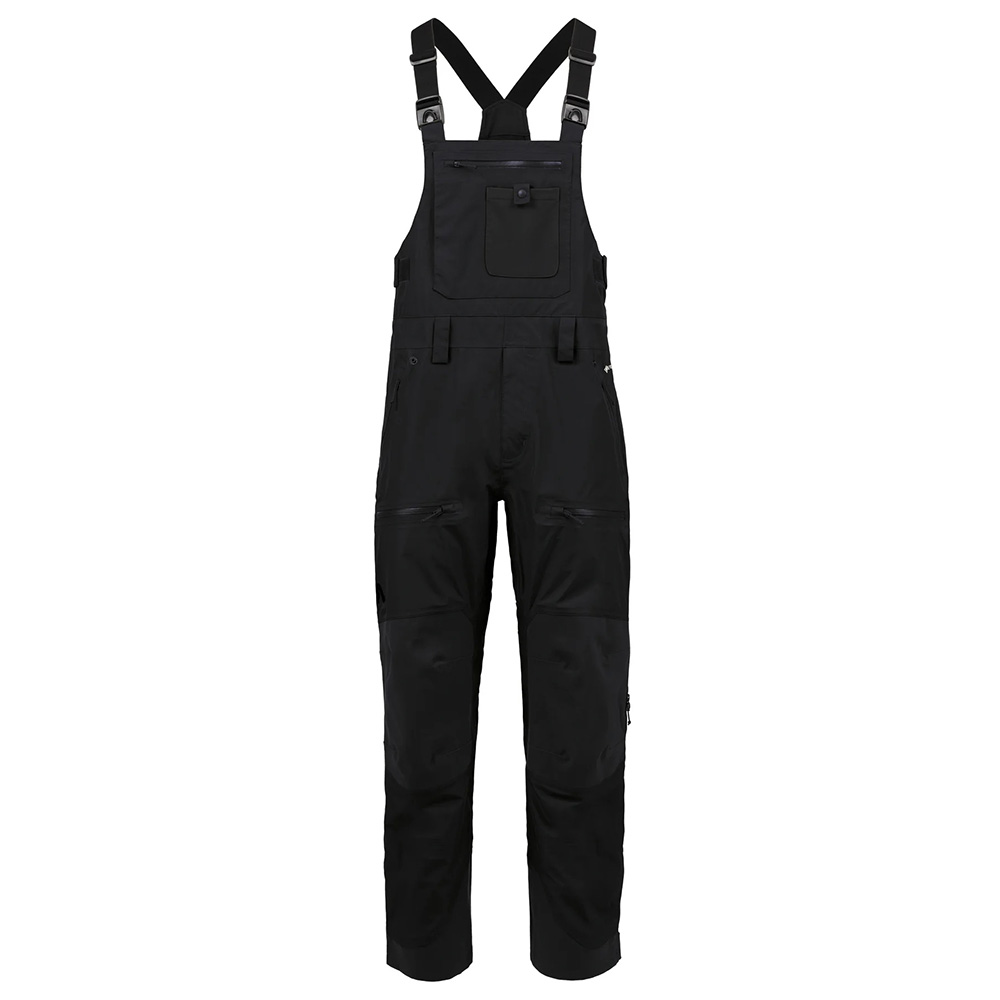
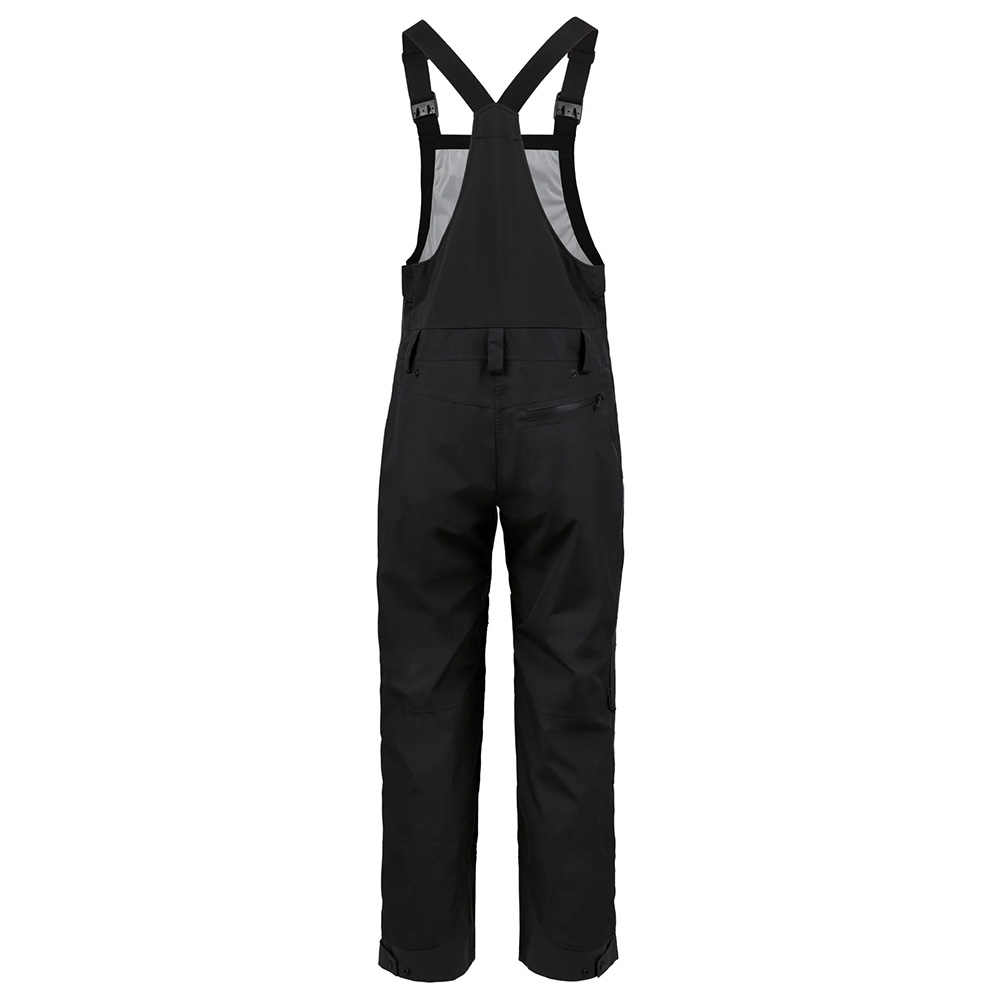
Jones Shralpinist Gore-Tex ePE Recycled 3L Jacket & Bib
MSRP: $799 (top) | $749 (bib) / on sale for $639 & $599, respectively
Primary Fabric: 3-layer Gore-Tex ePE C-Knit laminate (70D face fabric)
Available Sizes: S – XL
Reviewer: Andrew Forward (5’10” 175 lb / 178 cm, 79 kg)
Size Tested: Medium (top) | Medium (bottom)
The Shralpinist kit has been the flagship line in the Jones lineup for several years, aimed at riders who split their time between the backcountry and the resort. Over that time, both the jacket and bib have seen thoughtful refinements — most notably to fit, articulation, and pocket layout.
This kit’s 3-layer Gore-Tex ePE laminate prioritizes reliable waterproofing while remaining breathable enough (for my preferences) for touring and high-output days. While there are fabrics on the market that breathe better, Gore-Tex remains a time-tested choice for maximum weather protection.
Living near the coastline of the northernmost rainforest in North America (Girdwood, AK), where rain at sea level and snow at 1,000 feet is the norm, I’ve come to rely heavily on various Gore-Tex shells to stay dry and comfortable.
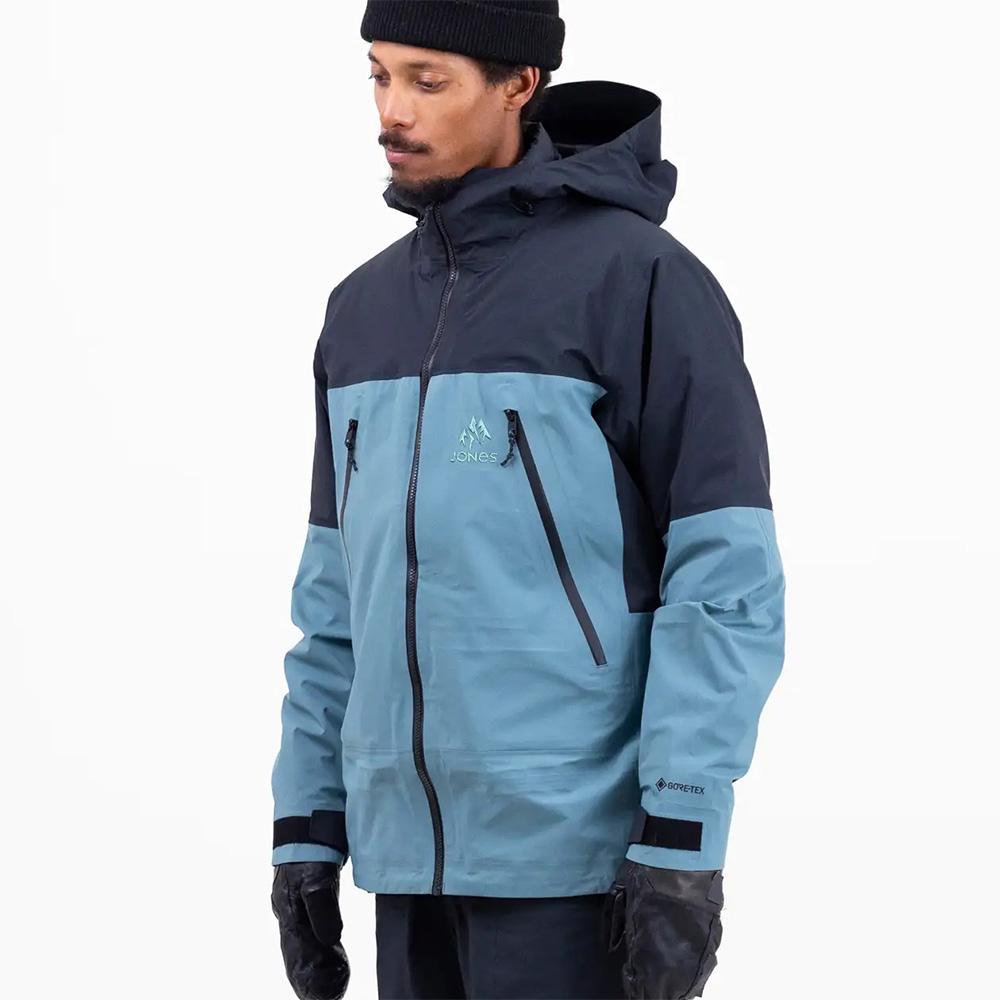
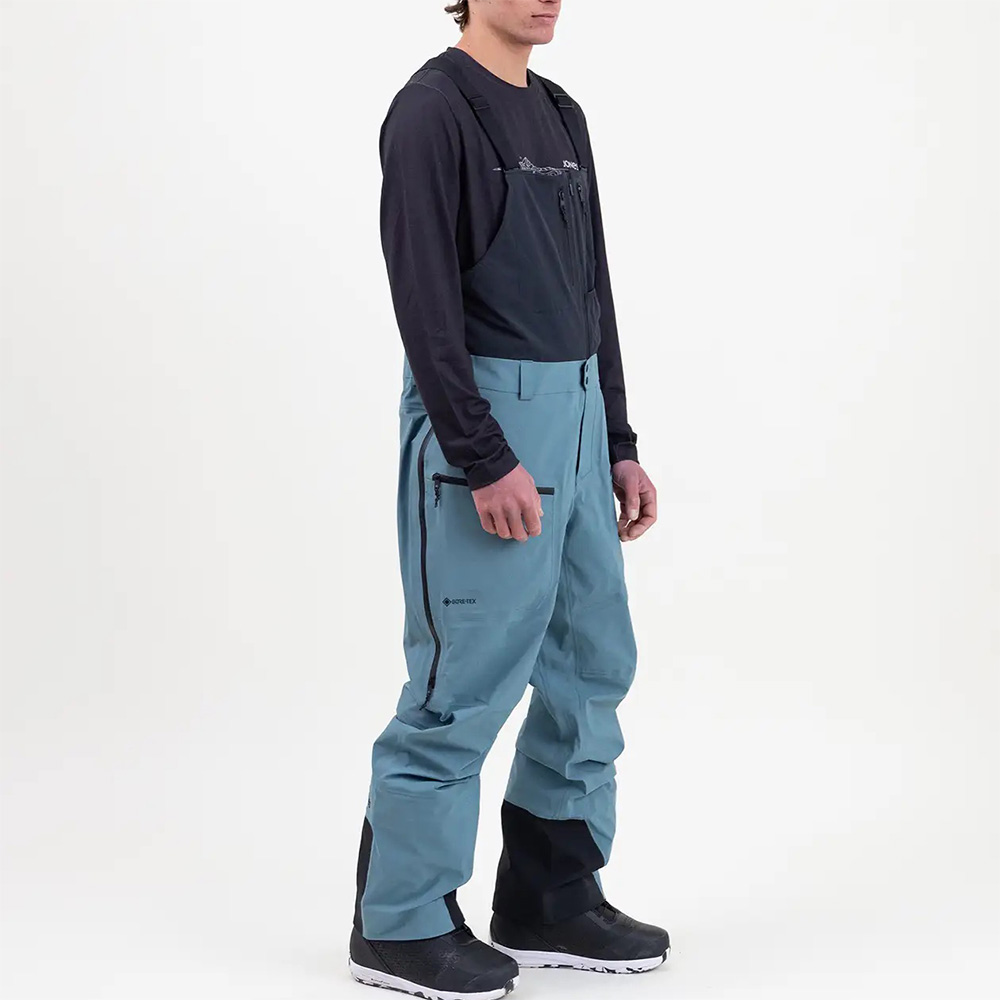
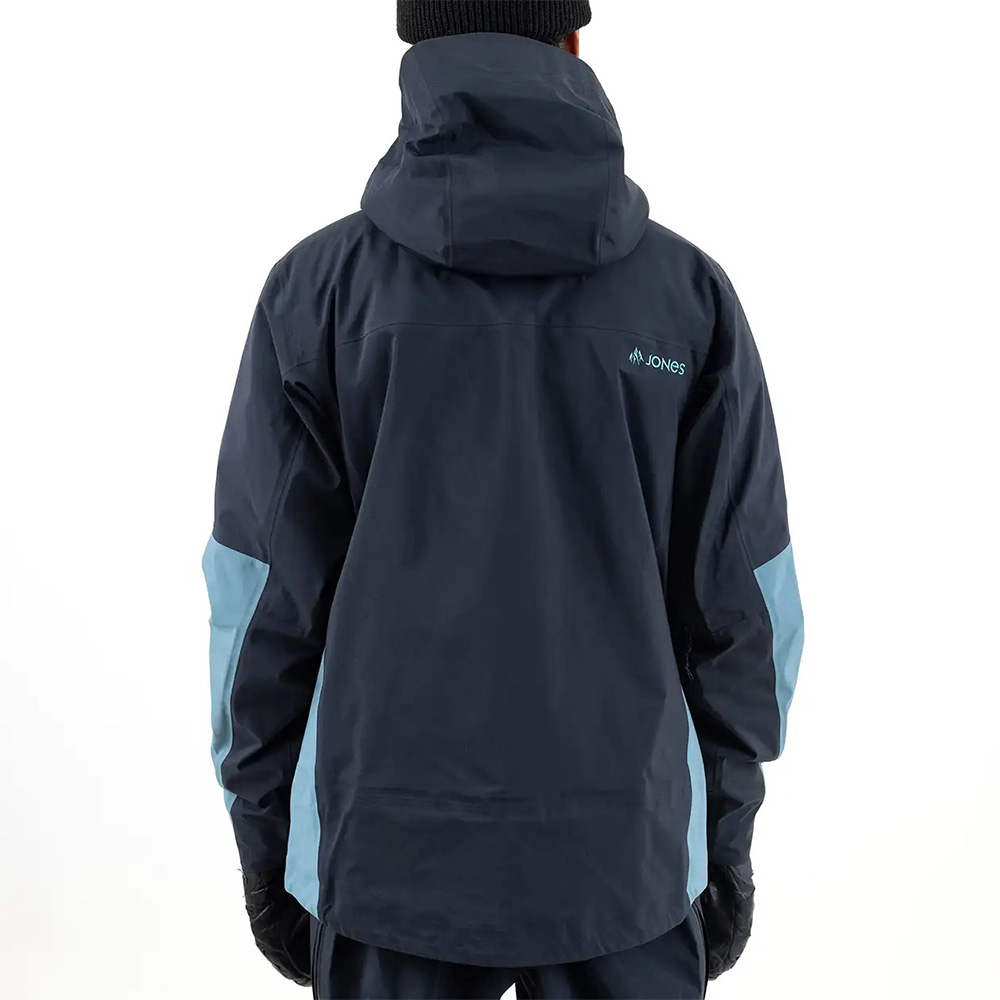
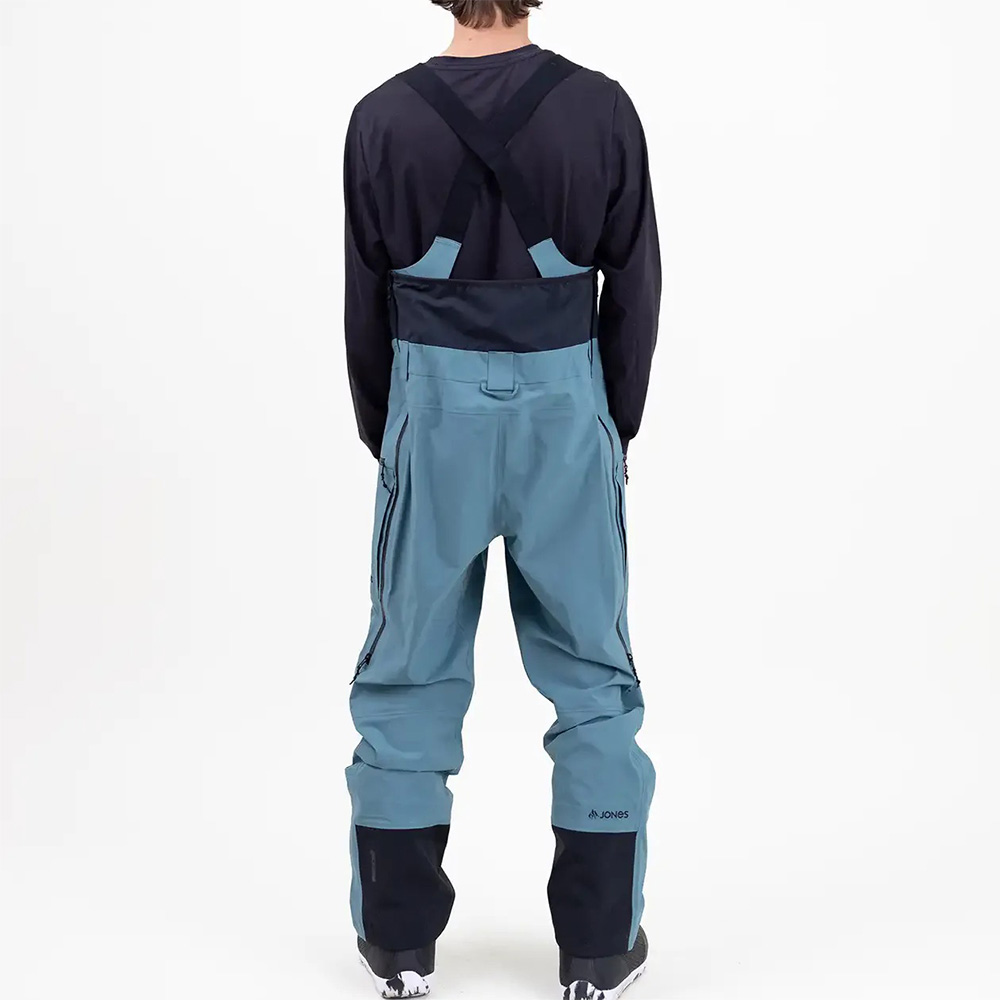
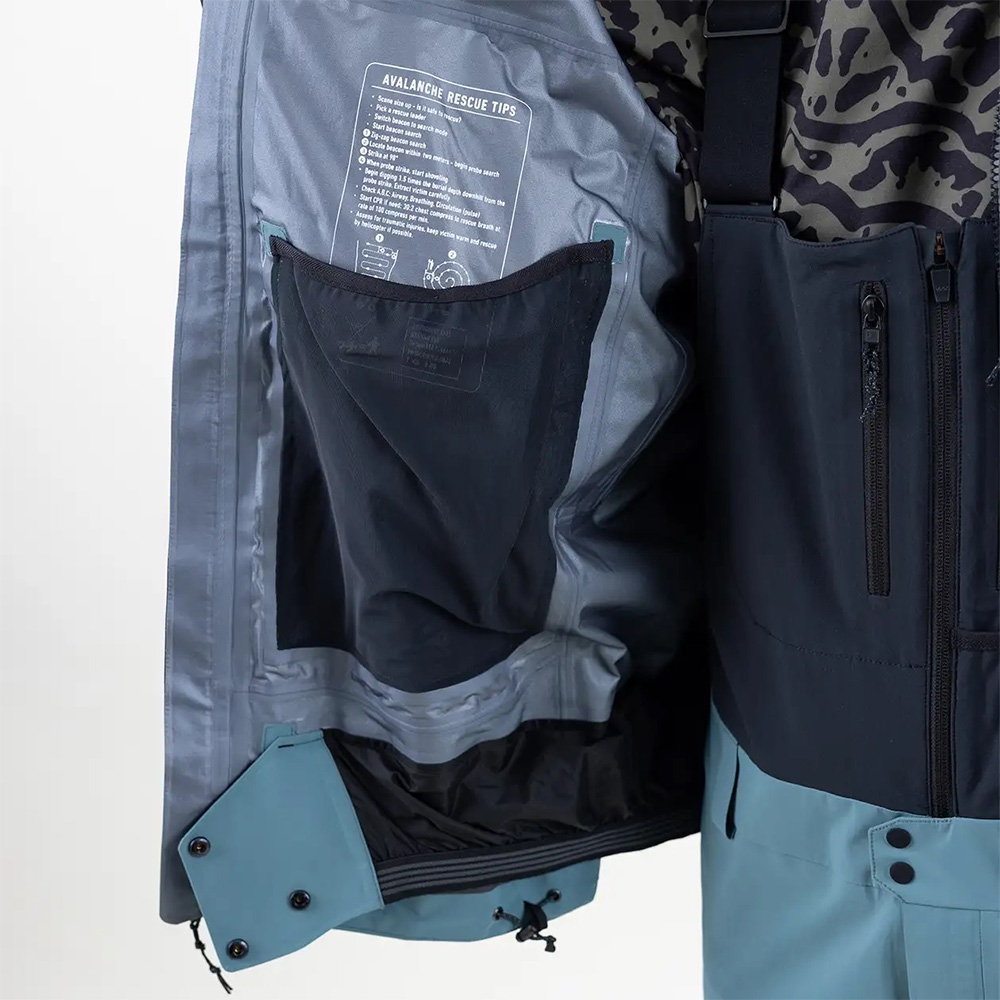
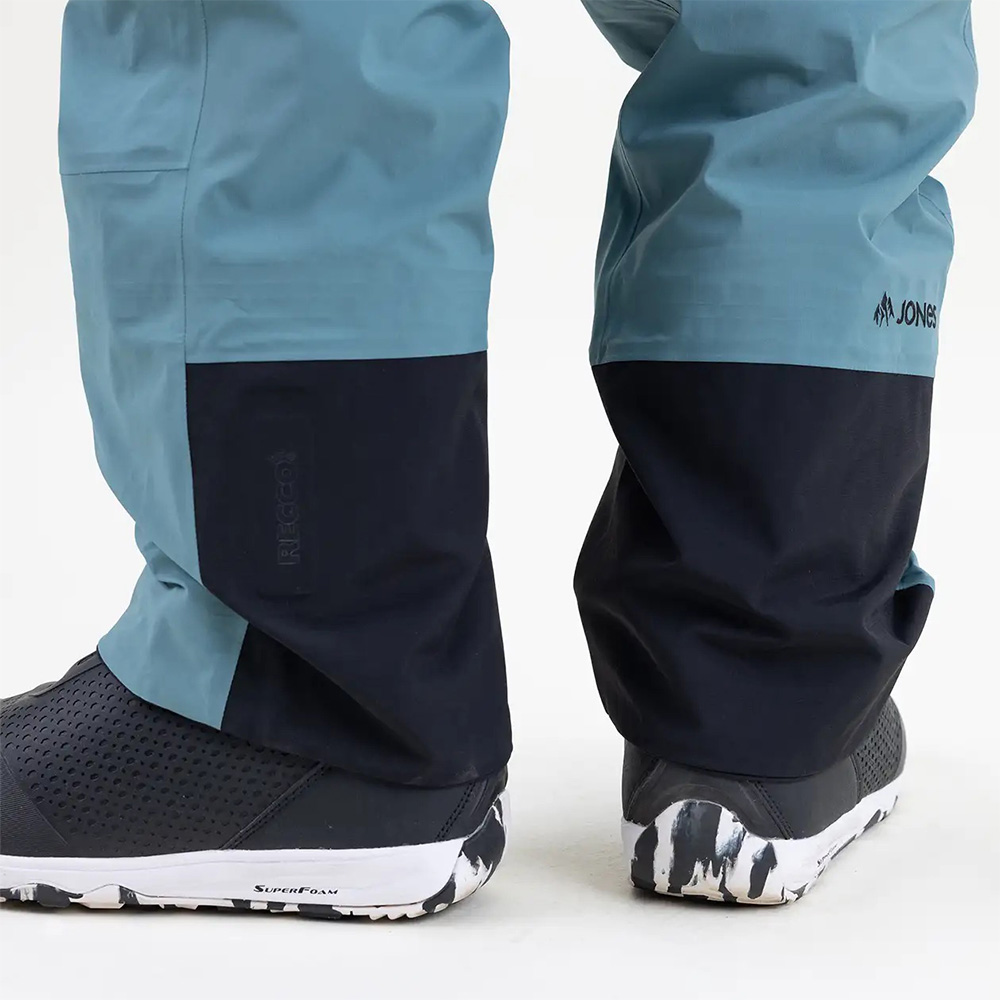
This version of the Shralpinist uses a fairly lightweight 70-denier face fabric and Gore’s C-Knit backer, which makes it notably more soft and supple than standard Gore-Tex and Gore-Tex Pro. It’s also easily packable, though that comes at the cost of being less burly than heavier materials like those used on the Arc’teryx Sabre SV, Norrona Lofoten Gore-Tex Pro kit, and Flylow’s Lab / Baker combo.
Jones describes the fit of the Shralpinist Gore-Tex jacket and bib as “regular,” and that feels accurate, maybe trending slightly toward “relaxed.” There’s enough room to layer thin to moderately thick down jackets underneath, while the articulated cut allows for unrestricted movement when touring or riding. I was able to fit a bulky Patagonia DAS Parka under the shell during a -20°F (-29°C) cold snap, though that was pushing the upper limit of what could comfortably fit.
The bib easily accommodated thick, insulated puffy pants (Black Diamond Belay Pants) with no issues. Compared to prior-gen Patagonia PowSlayer or Arc’teryx Sabre bibs — which I’ve found restrictive while touring, particularly along the glutes and quads — the Shralpinist bib strikes a better balance between mobility and comfort. That said, it’s still slightly less voluminous than a more resort-oriented option like the Jones MTN Surf bib.
Pocket layout on the Shralpinist Gore-Tex jacket is straightforward and functional: two large external hand pockets, a zippered chest pocket with a mesh phone sleeve, and a left forearm pass pocket. Internally, there are two large mesh drop pockets that work well for skins, gloves, or other items you want to keep warm. Other standard features include a powder skirt, notably long ~20 in / 51 cm pit zips, and Velcro-adjustable cuffs.
My one minor gripe is the non-removable powder skirt, which just barely hangs out awkwardly when not snapped together — often leading me to use it even when I otherwise wouldn’t. Pocket placement remains comfortable even when fully loaded and doesn’t interfere with pack straps. I also appreciate the longer sleeve length and extended back cut, which provide solid coverage when bending, touring, or riding.
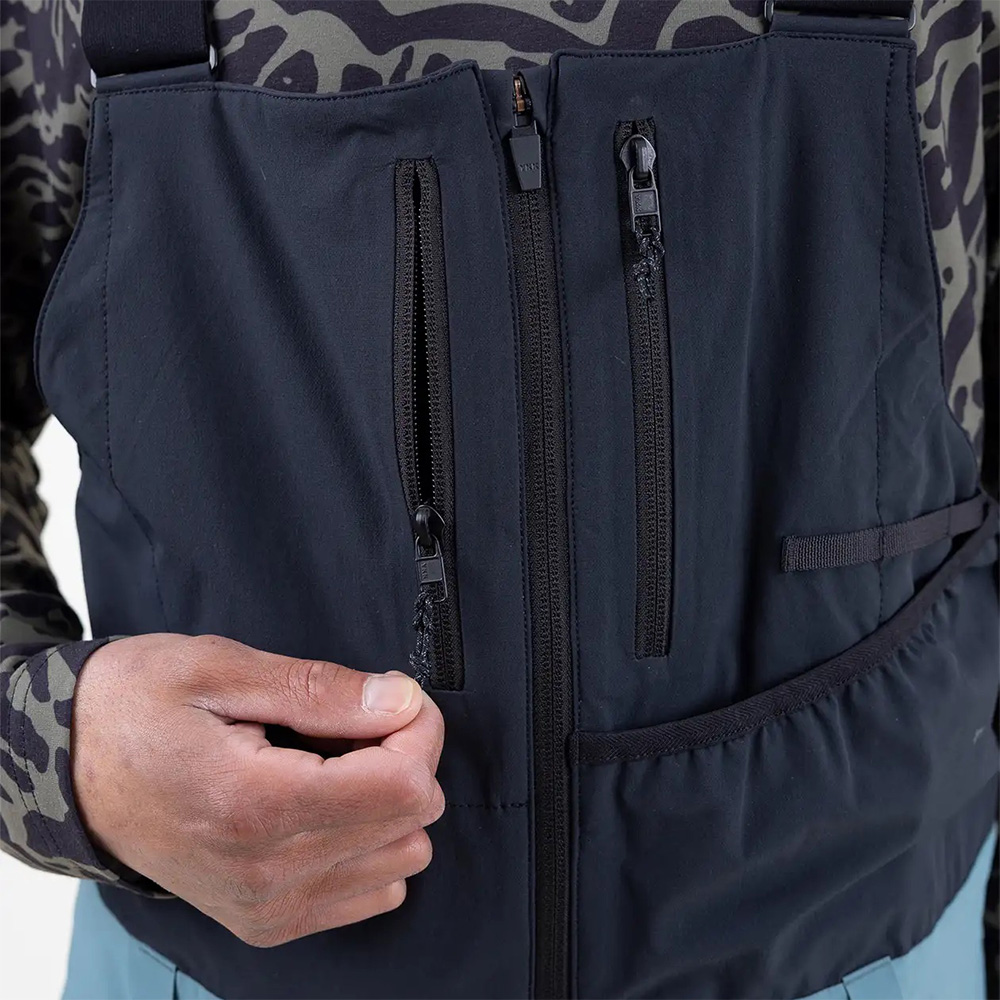
The Shralpinist Gore-Tex bibs feature two zippered thigh pockets with electronics sleeves (and are actually comfortable touring with a phone inside), a chest drop pocket with daisy loops, and two zippered chest pockets. While I typically carry my beacon in its own dedicated harness, the chest drop pocket with daisy loops is well-positioned to securely carry a beacon without interfering with backpack straps.
Above the waist, the bib uses a stretchy, non-waterproof, highly breathable fabric that conforms well to the torso regardless of my baselayers or insulation. Zippered leg vents start at the knee and extend up to the top of the bib, allowing for a functional drop-seat design. Reinforced inner boot cuffs have done a solid job resisting damage from touring and walking, as well as protecting against ankle-strap wear. That said, I have noticed some visible wear in the primary Gore-Tex fabric just above the cuff after roughly 30 days of use, likely from repeated strap-to-boot contact. Jones obviously makes their apparel with snowboarding in mind, but if you happen to be a skier considering this kit, this is even more noteworthy — it’s not built to withstand frequent ski-edge contact.
Bottom Line: The Jones Shralpinist 3L Gore-Tex jacket and bib are best suited for snowboarders looking for an extremely weather-resistant, relatively lightweight, and notably supple-feeling backcountry kit that’s still durable enough for regular resort laps. The fit comes across as more technical than many snowboard-focused shells, with just enough relaxed style to avoid full ski-mo vibes, making it a versatile option for riders who split time between touring and lift-served terrain. If you’re on a tighter budget, it’s also worth checking out the Jones Shralpinist Stretch Jacket ($499) and Bib ($474), which forgo Gore-Tex in favor of a less expensive proprietary 3-layer laminate that Jones says is rated at 30K/30K.
Kuhl Defiant Shell & Bib/Pant
MSRP: $675 (top) | $600 (bottom)
Primary Fabric: 3-layer KUHLFLEX laminate (20K/20K rated | knit backer)
Available Sizes: S – XXL (short & reg inseam options)
Reviewer: Luke Koppa (5’8”, 155 lbs / 173 cm, 70 kg)
Size Tested: M (top) | M (bottom)
Measured Weight: 922 g (top) | 871 g (bottom)
Kuhl has been making outdoor-focused apparel for decades, but they just recently entered the snowsports category. The Defiant Shell and Bib are their flagship offerings, and Kuhl did an impressive job of making them stand out from the existing outerwear market.
They’re built around Kuh’s proprietary “KUHLFLEX” 3-layer laminate, which they rate at 20K/20K for water resistance / breathability. Similar to the Beringia St. Elias, Black Diamond Recon Stretch, and Gore-Tex fabrics that use Gore’s C-Knit backer (e.g., Jones Shralpinist Gore-Tex kit), this KUHLFLEX fabric is notably softer and more supple than traditional hardshell fabrics. However, the Defiant’s laminate is pretty heavy and rugged-feeling; it’s one of the burlier-feeling shells here.
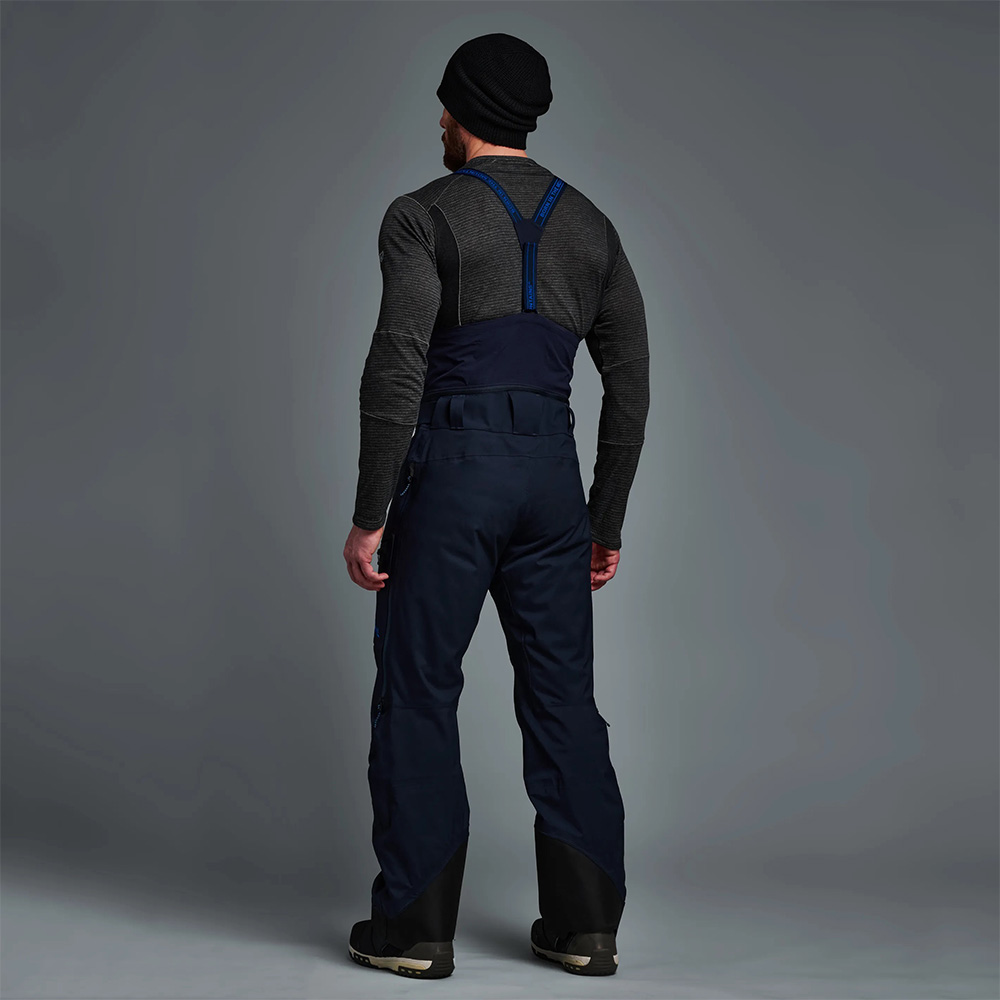
Similar to the Black Diamond Recon Stretch, I haven’t had any water from Colorado pow days get through the fabric of the Defiant kit, but I’d probably opt for a stiffer (and likely Gore-Tex) shell if I were going to spend a lot of time in the rain. The Defiant also feels similar to the Recon Stretch in terms of breathability (i.e., average for a “20K/20K” laminate).
The fit of the Defiant kit falls on the slimmer end of the spectrum, particularly the bib. I personally prefer more volume throughout, though Kuhl’s articulation at the knees is well executed to avoid restriction. The Defiant Shell jacket feels a bit roomier than the bib; it’s fairly similar to the Recon Stretch Jacket, except the Defiant Shell is at least an inch longer.
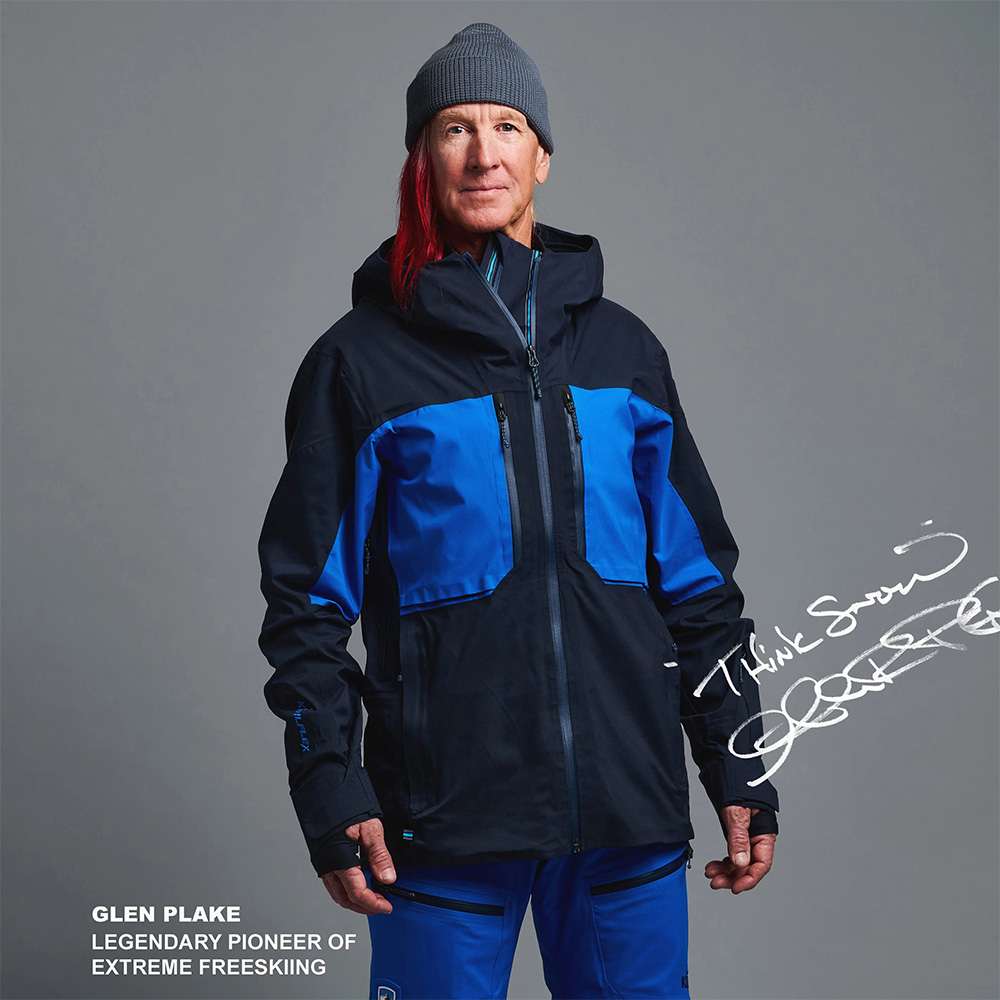
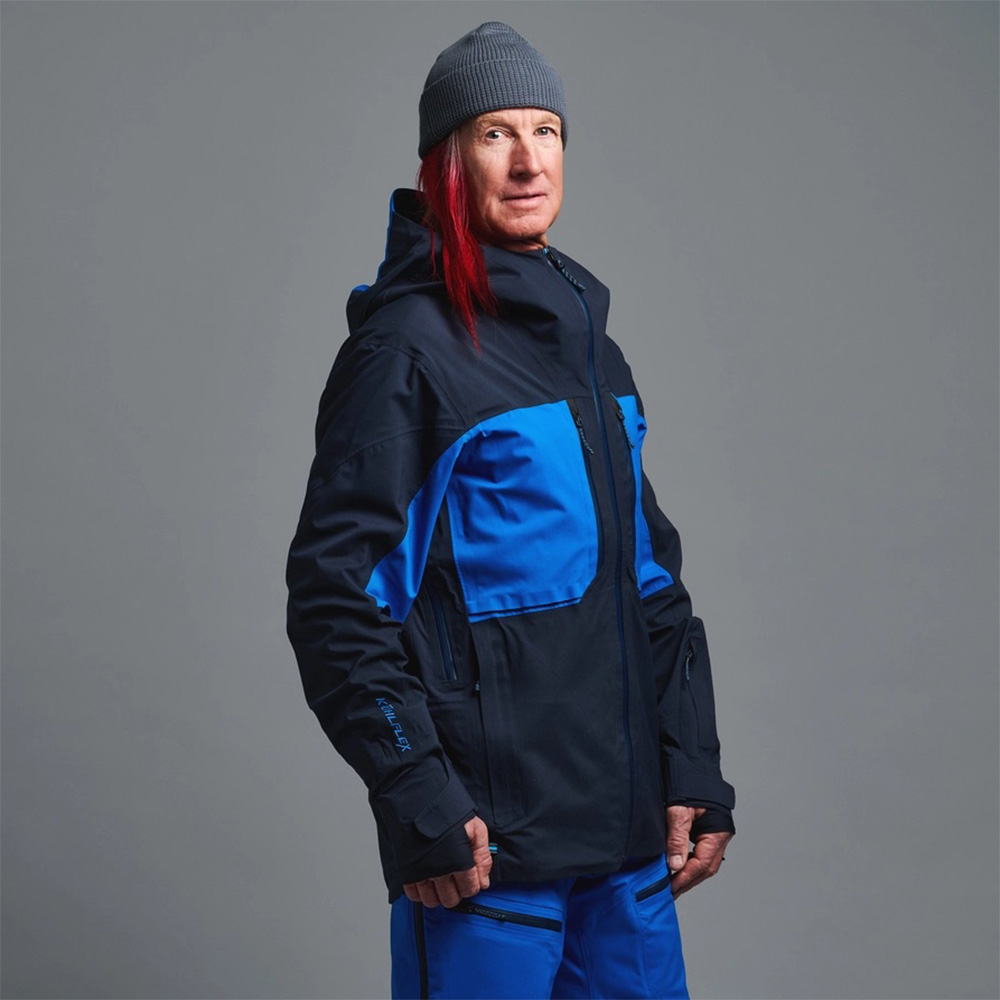
The Defiant kit comes with a ton of features, many of which I haven’t seen on other shells. The jacket’s center-front zipper can be extended to reveal a perforated backer fabric, adding a bit of ventilation up front without fully opening yourself to the elements. It also features generously sized pit zips, huge Velcro cuffs that work well with all my gloves, and soft internal wrist gaiters that don’t annoy me when I’m not using them.
I love the collar of this jacket — it’s tall, stiff enough to avoid folding into my neck, and has a very comfy lining. The hood works well with or without a helmet, though its brim does tend to catch a bit more air than average.
The Defiant Shell has two small external chest pockets, dual handwarmer pockets (not pack-compatible), a forearm pass pocket, and an internal zip pocket. While I don’t view this very-heavy kit as a particularly great touring option to begin with, I still wish some of its pockets were large enough to hold skins for fat skis.
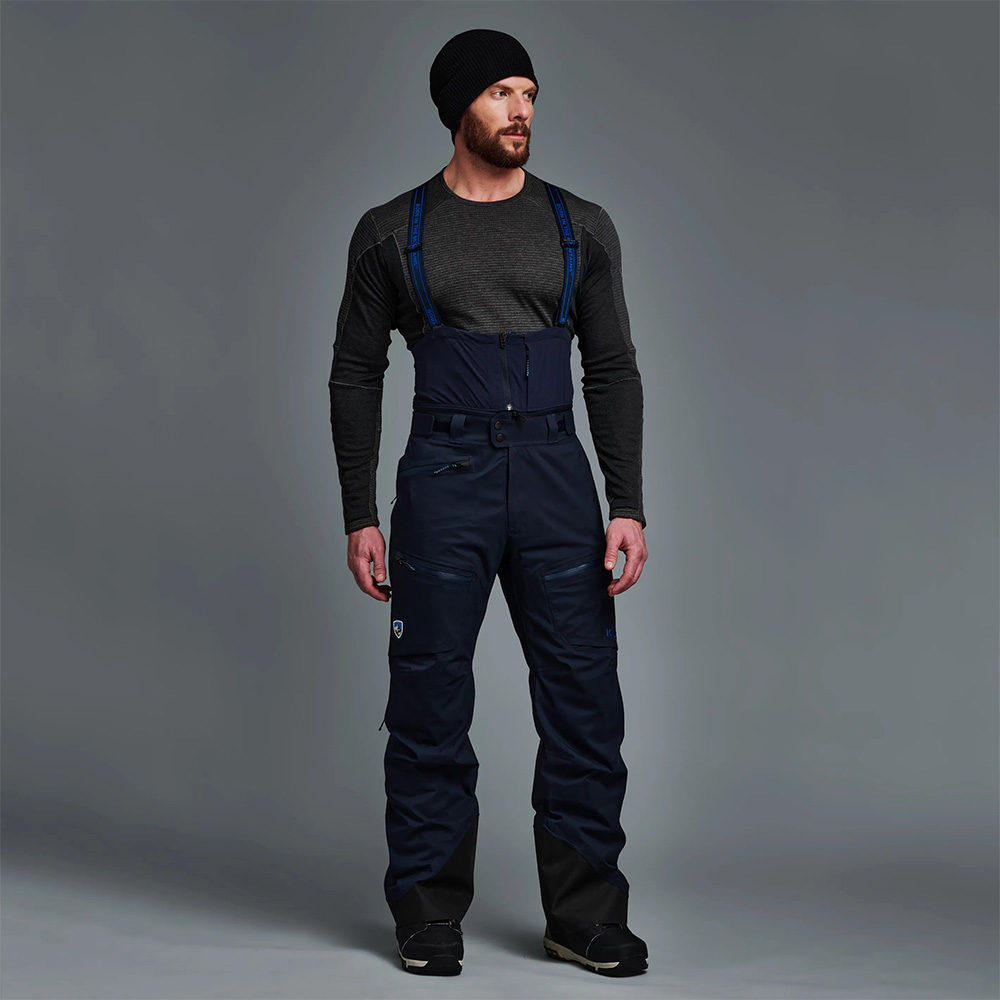
The Defiant Bib/Pant, as its name suggests, can function as both. The upper bib is made of a non-waterproof, highly breathable softshell, but you can fully unzip it to run the piece as a regular-height pant. As a bib, I appreciate that Kuhl kept a front zip on the upper fabric, making getting in / out easy. I also like waistband patterns like this one, which curve up across the back; I find this generally makes for a more uniformly snug fit than fully flat waistbands.
The bib has a slim hand pocket on one side, dual thigh pockets that are also pretty small, and dual side vents that run from the waist to the knee (though they don’t form a full drop seat). While there’s a bit of a dart / pleat on the thigh pockets, I still tend to avoid putting heavy items in them because of the slim fit through the thighs. I also don’t put heavy stuff in the single zip pocket on the upper bib, since the fabric tends to sag easily (though I still appreciate having it as an option).
Another interesting feature is the Defiant Bib/Pant’s reinforced cuffs. Most brands use some form of a heavy-duty woven fabric there to protect the area from your boots, bindings, ski edges, etc. The Defiant uses a non-woven, vinyl-like Hypalon material, which I’m more accustomed to seeing on things like waterproof dry bags. This Hypalon reinforcement is notably stiffer than most woven cuff materials, but so far, I have yet to put a slice through it after my first ~10 days. While that’s not enough time to attest to long-term durability, I have cut holes into dozens of other pants within that timeframe (I knock my boots / skis together a lot).
Bottom Line: Kuhl’s Defiant Shell and Bib/Pant stand out for being both notably supple and notably burly. Their slimmer-than-average fit may be polarizing, but if you dig it, this kit provides very respectable water resistance and breathability, as well as several uncommon features.
Mammut Haldigrat HS Jacket & Bib Pants
MSRP: $625 (top) | $529 (bottom) / on sale for $437 & $370, respectively
Primary Fabric: 3-layer Drytech Pro laminate (30K/30K rated)
Available Jacket Sizes: S – XXL
Available Bib Sizes: US 28 – 40 (short & tall inseam options)
Reviewer: Luke Koppa (5’8”, 155 lbs / 173 cm, 70 kg)
Size Tested: M (top) | US 32 Normal (bottom)
Measured Weight: 701 g (top) | 630 g (bottom)
Mammut makes a huge range of snowsports outerwear, from ultra-burly Gore-Tex kits to slim and airy softshells, and plenty of options in between.
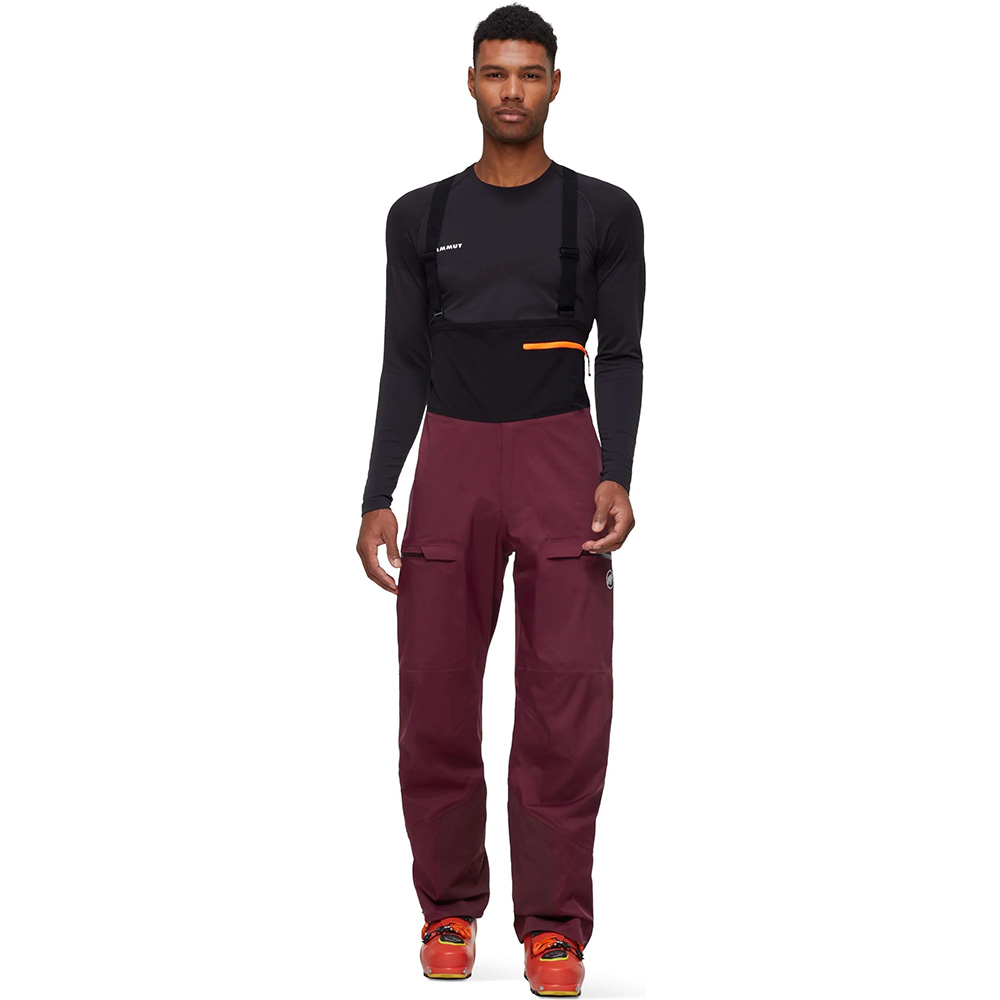
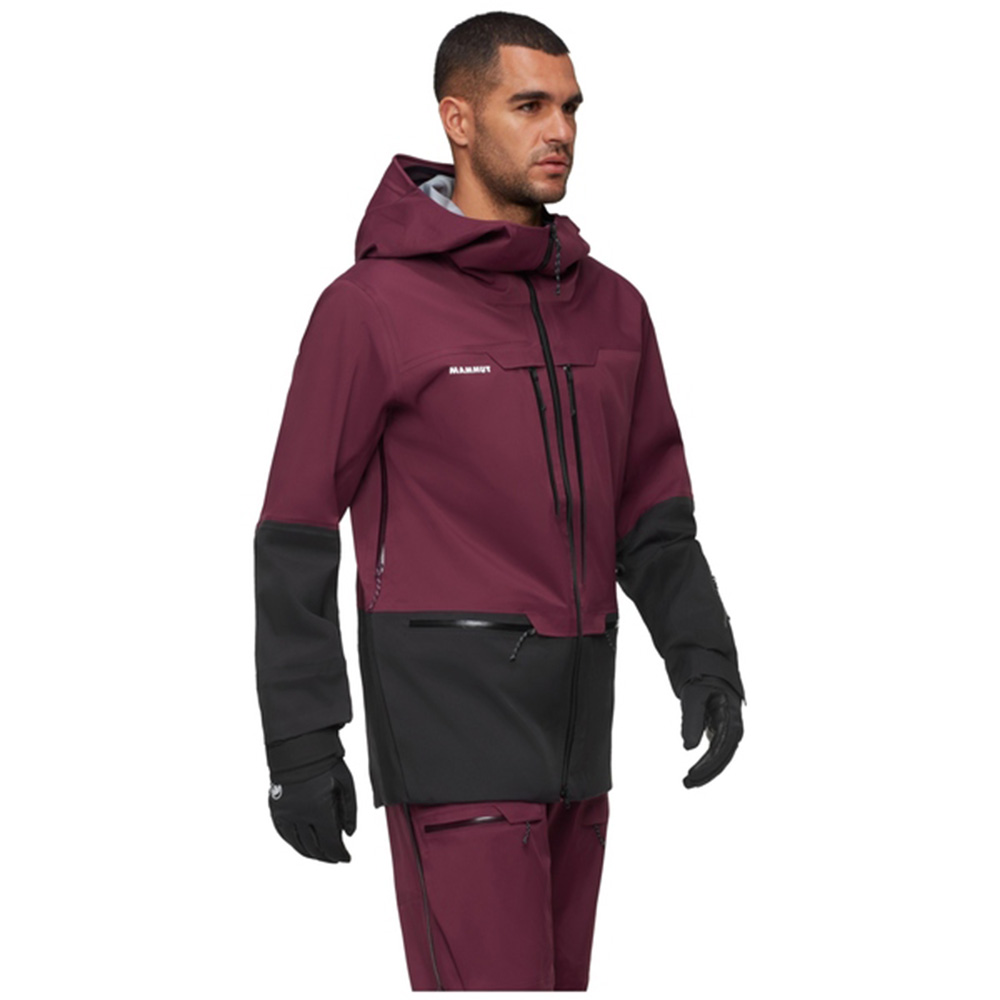
Mammut’s Haldigrat HS Jacket and Bib fall somewhere around the middle. They aren’t quite as pricey as some of the brand’s Gore-Tex offerings, but the Haldigrat HS’s proprietary 3-layer “Drytech Pro” laminate still reportedly tests out at 30K/30K for water resistance / breathability, putting it in line with most Gore-Tex fabrics (at least on paper).
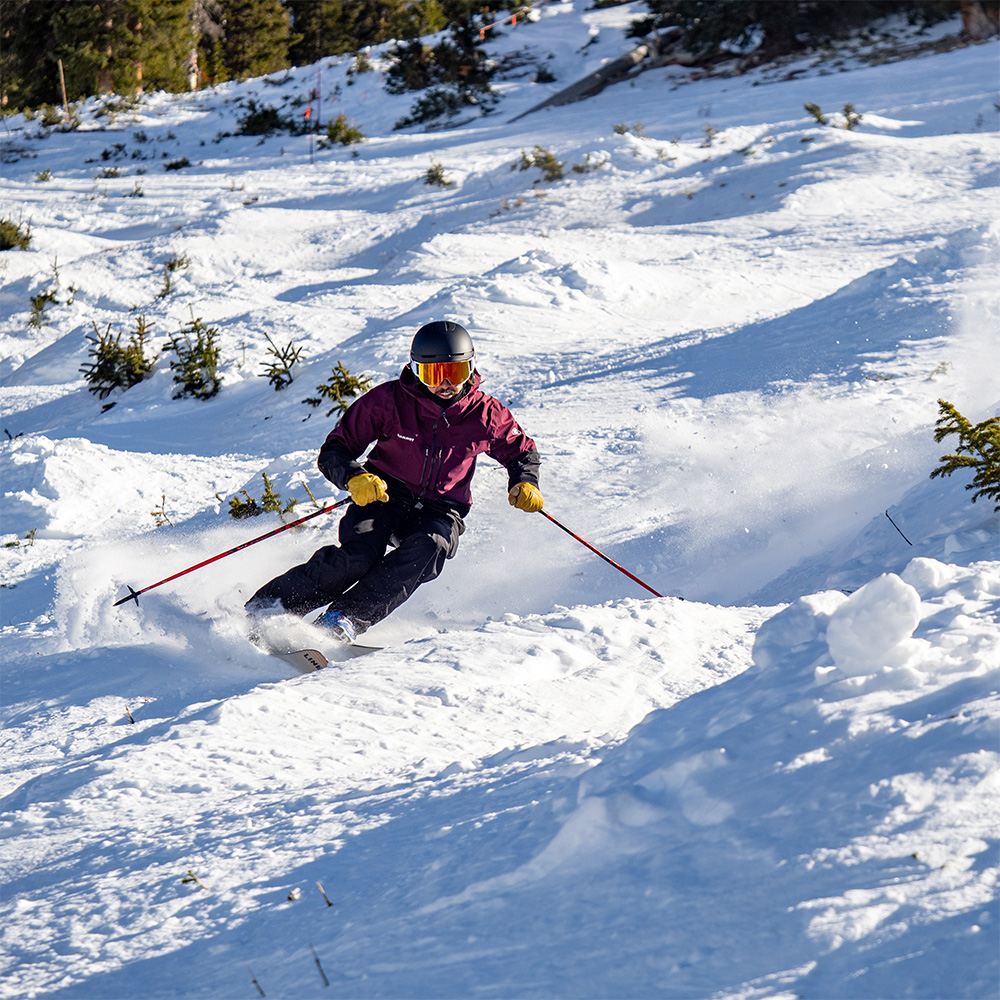
In use, I haven’t had any moisture get through this fabric from the outside, even during a rare wet Colorado pow day this season. The Haldigrat HS kit feels like it breathes a tad better than most of the shells here, but I don’t think it’s quite as good on that front as the Beringia St. Elias. Similar to the St. Elias, though, the Haldigrat HS’s fabric is notably supple and drapes more naturally than traditional hardshells, such as non-C-Knit Gore-Tex.
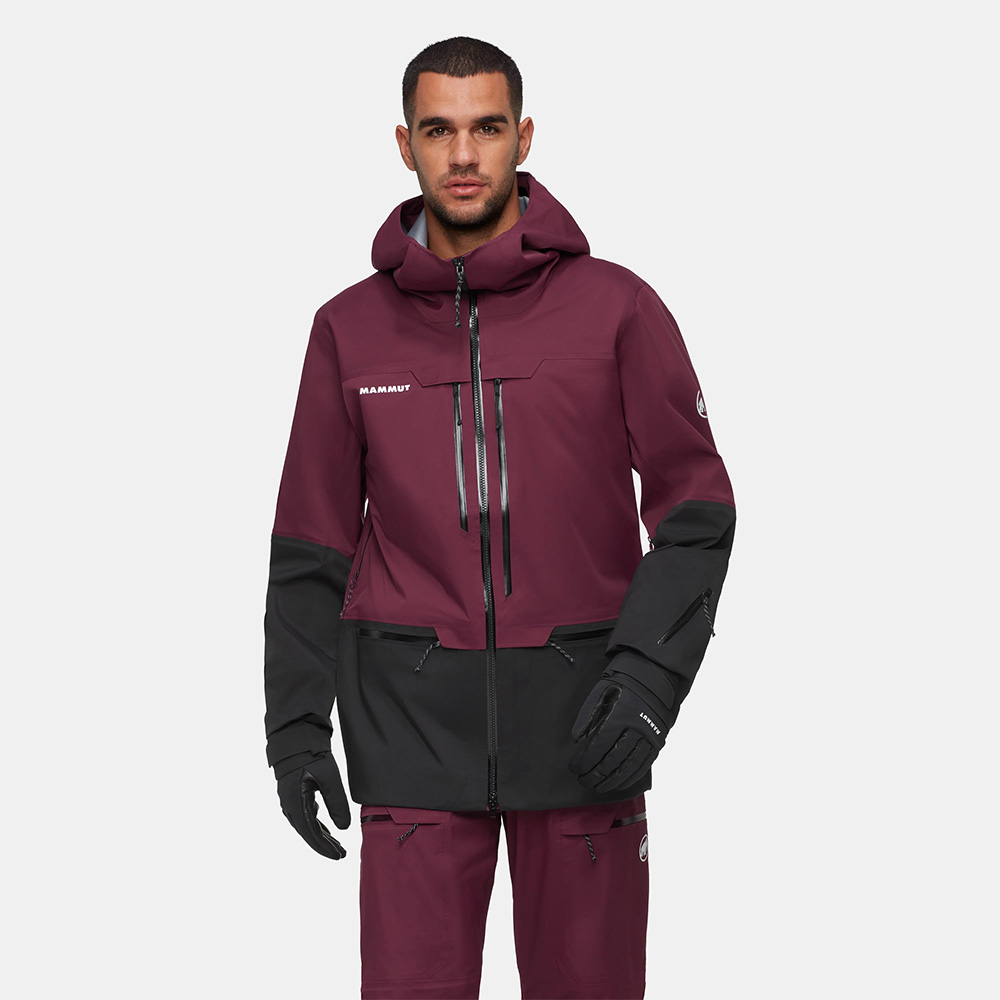
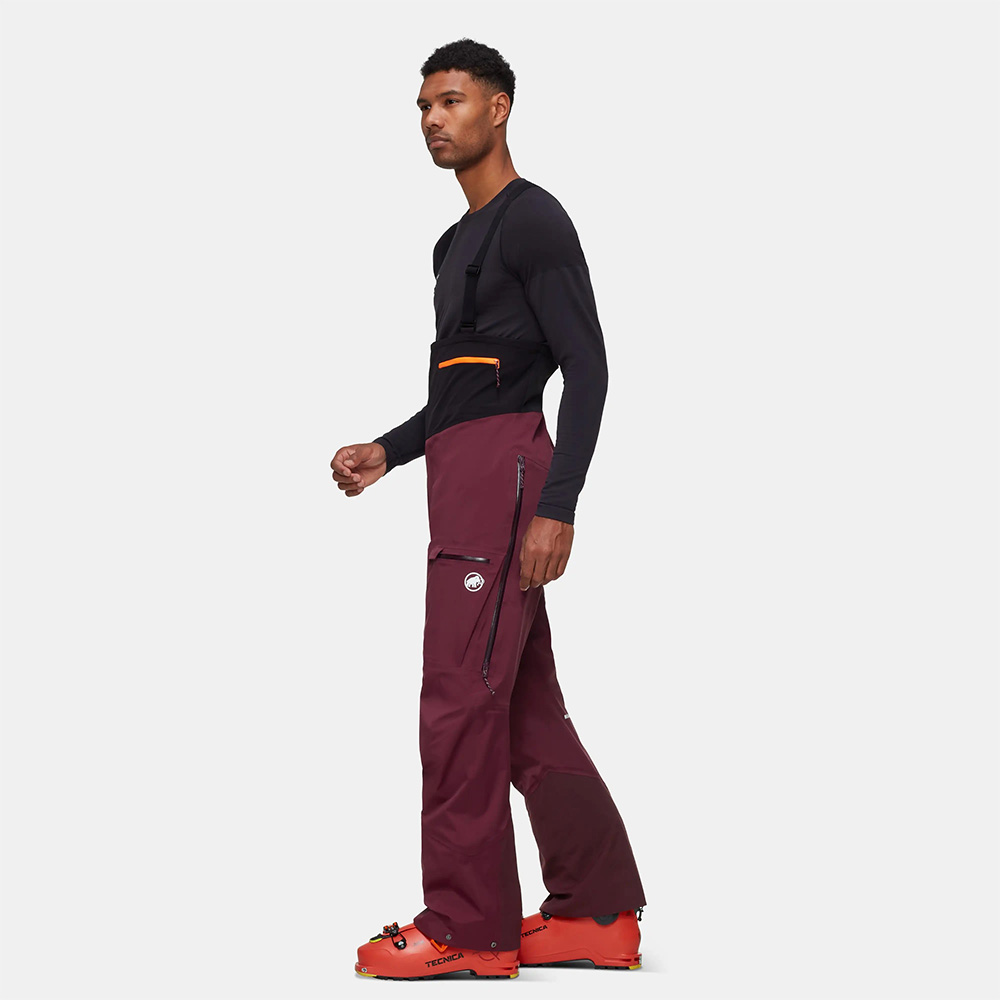
In terms of fabric weight and expected durability, the Haldigrat HS’s fabric is in line with the St. Elias and notably lighter than the Black Diamond Recon Stretch, Kuhl Defiant, and Obermeyer Steibis. I.e., this wouldn’t be my top pick if you’re hard on your gear, though the reinforced pant cuffs on the Haldigrat HS have been excellent so far.
The fit of the Haldigrat HS kit is fairly slim and long. I don’t feel restricted by the fit of the jacket, but I dislike how tight the bib feels through the butt and thighs. The fabric has some stretch to it, so it doesn’t prevent me from moving how I want. But personally, I don’t want to feel / notice my resort outerwear stretching taught when I’m, say, leaning over to buckle my boots.
The Haldigrat HS Jacket has a fairly tall collar, though the supple fabric means that the collar doesn’t always stay above and in front of my chin (despite being tall enough). Fortunately, I haven’t really noticed the collar bothering me when it folds down below my chin, and I can always tuck my chin inside when needed. This jacket’s Velcro cuffs work well with all my gloves, and its generously sized pit zips aid in ventilation.
The Haldigrat HS Bib is sleek and minimal. Its upper bib is a non-waterproof softshell for better breathability, and there’s a zippered pocket there with an attachment loop for potential use with a transceiver. Its dual thigh pockets do feature some pleats for extra volume, but I don’t find them particularly effective — contents still end up closely pressed up against my leg.
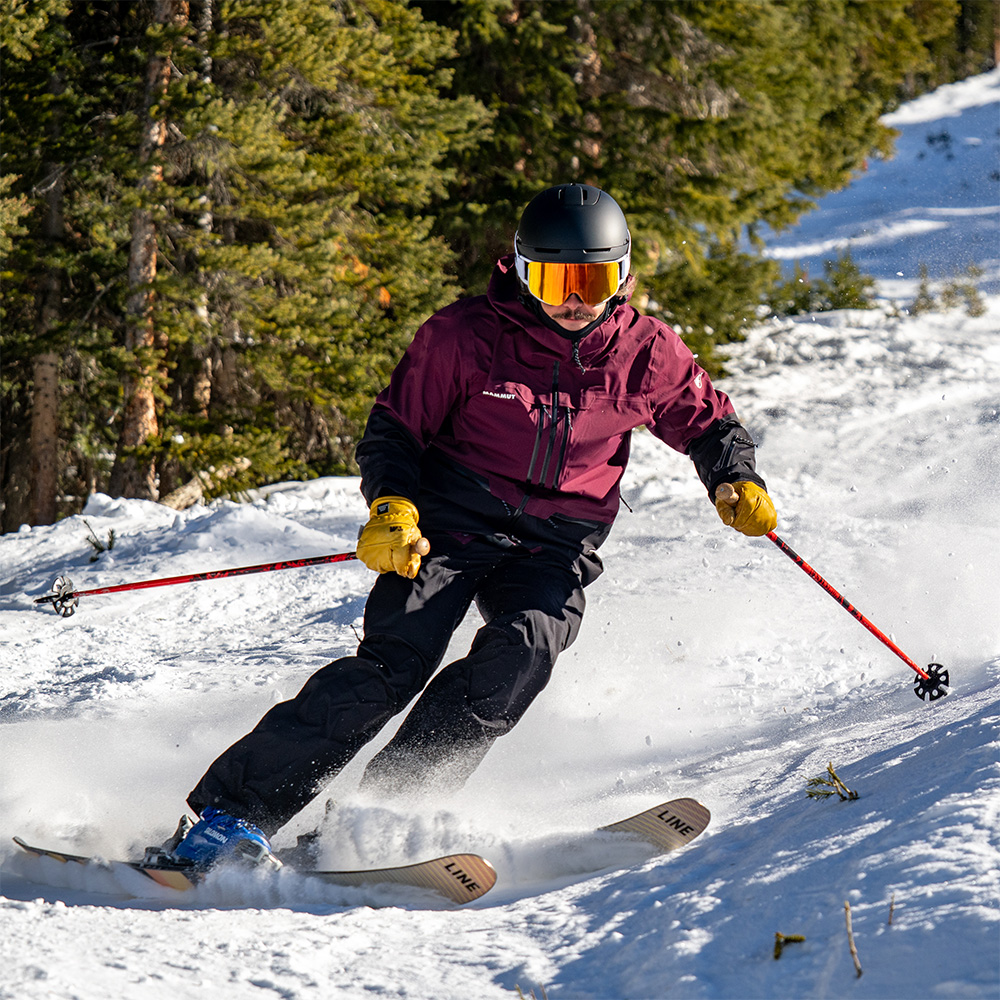
The Haldigrat HS Bib’s simplistic upper construction boosts breathability and limits the number of potential pressure points under other layers. However, it also makes it the most annoying bib in this roundup for me to put on / take off. There’s no center-front zip, and the suspender straps are sewn / fixed to the bib. The right vent zipper does extend all the way up, allowing you to fold the backpanel away a bit, but I still regularly find it annoying to put this bib on and try to get all the straps lying as they should.
Bottom Line: The Haldigrat HS Jacket and Bib provide impressive water resistance, breathability, and comfort — especially given that they’re priced below some alternatives that match them in those regards. This is a fairly light kit that wouldn’t be our top pick for maximum durability, and the slim fit of the bib, in particular, may be polarizing. But if it works for your preferences, this kit offers a lot of performance for stormy backcountry touring and lift-accessed laps alike, particularly if you don’t spend a ton of time busting through brush and trees.
Nivis Protego Shell
MSRP: $400
Primary Fabric: 3-layer stretch laminate (20K/20K rated)
Available Sizes: S – L
Reviewer: Luke Koppa (5’8”, 155 lbs / 173 cm, 70 kg)
Size Tested: M
Measured Weight: 714 g
Nivis immediately stands out within the snowsports outerwear market because of where their apparel is cut and sewn — the United States. For a whole host of reasons, that’s very uncommon these days, but Nivis has worked with factories on both coasts of the U.S. to make it happen.
The Nivis Protego Shell jacket is built with a proprietary 3-layer laminate rated at 20K/20K for water resistance / breathability. This is a pretty supple and slightly stretchy material, feeling most comparable to the one used on the Beringia St. Elias in terms of weight and hand-feel, though the Protego feels a tad stiffer. In terms of weather resistance and breathability, the Protego’s fabric has performed very similarly to the Black Diamond Recon Stretch, Kuhl Defiant, and Mammut Haldigrat.
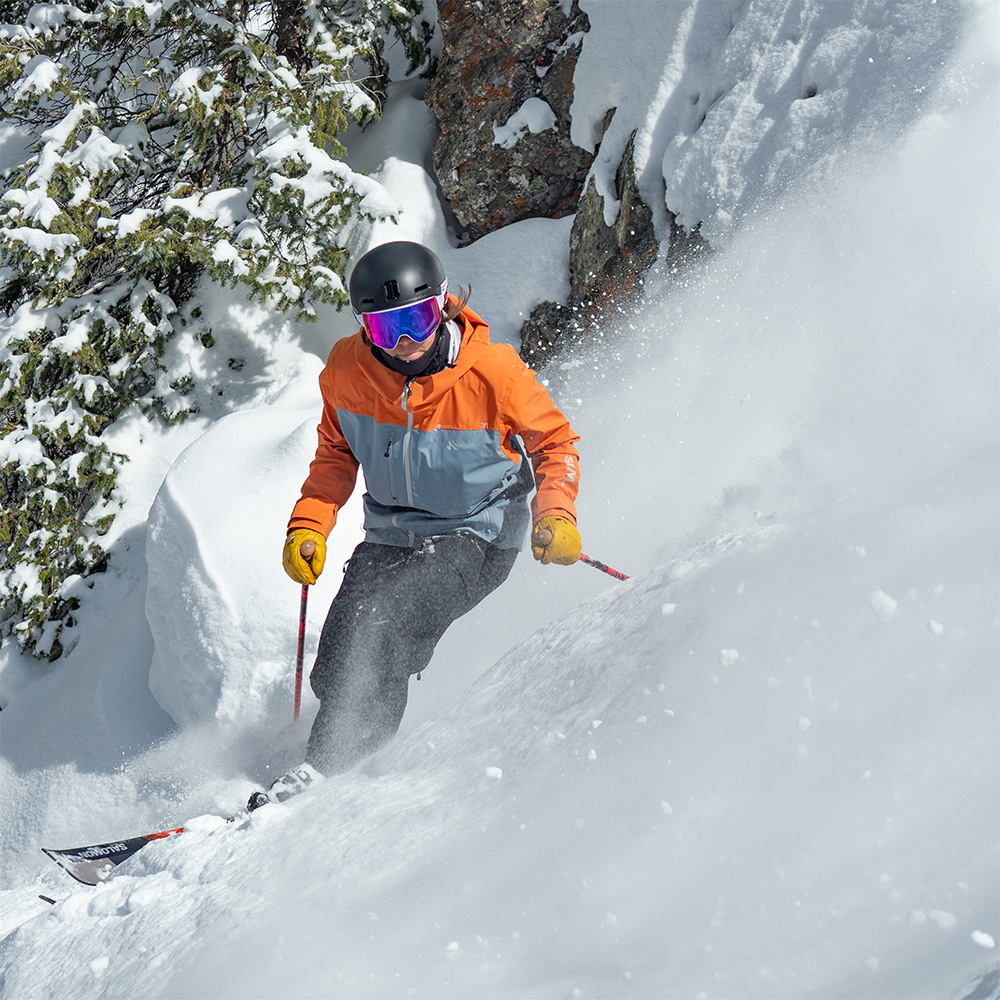
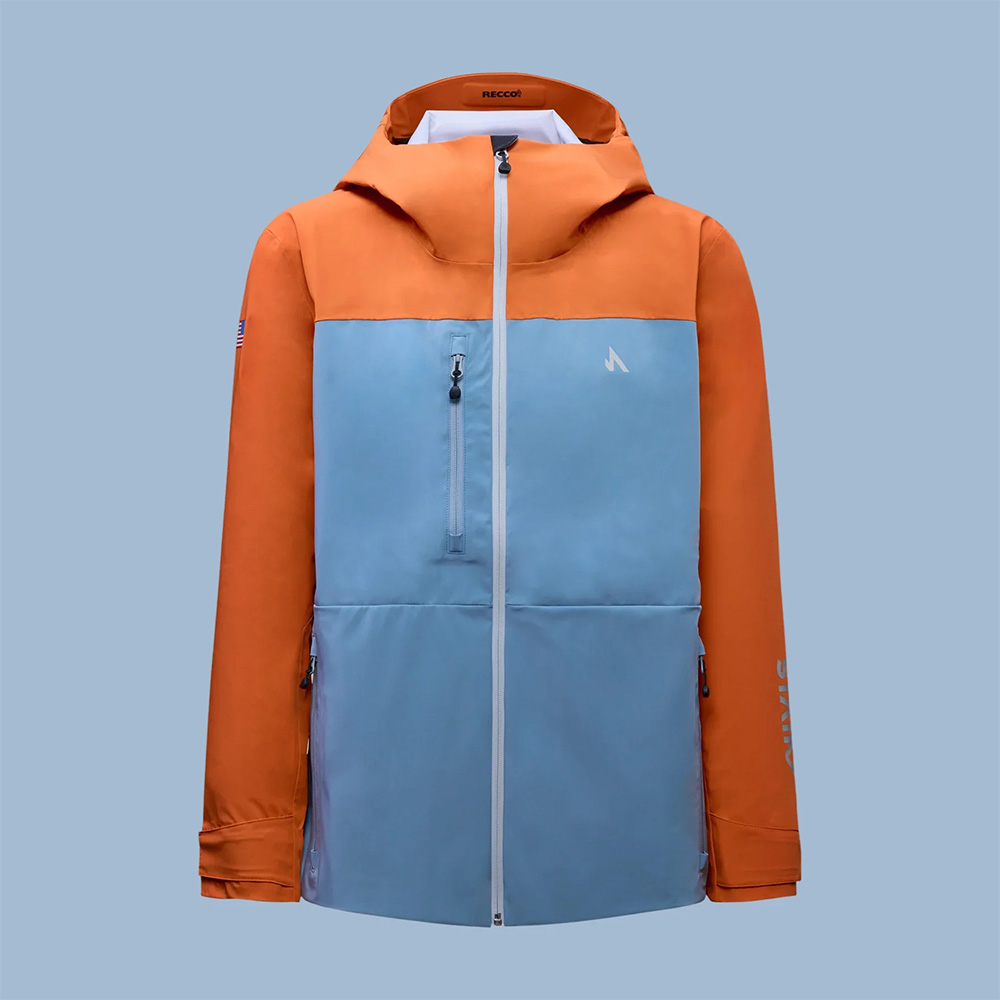
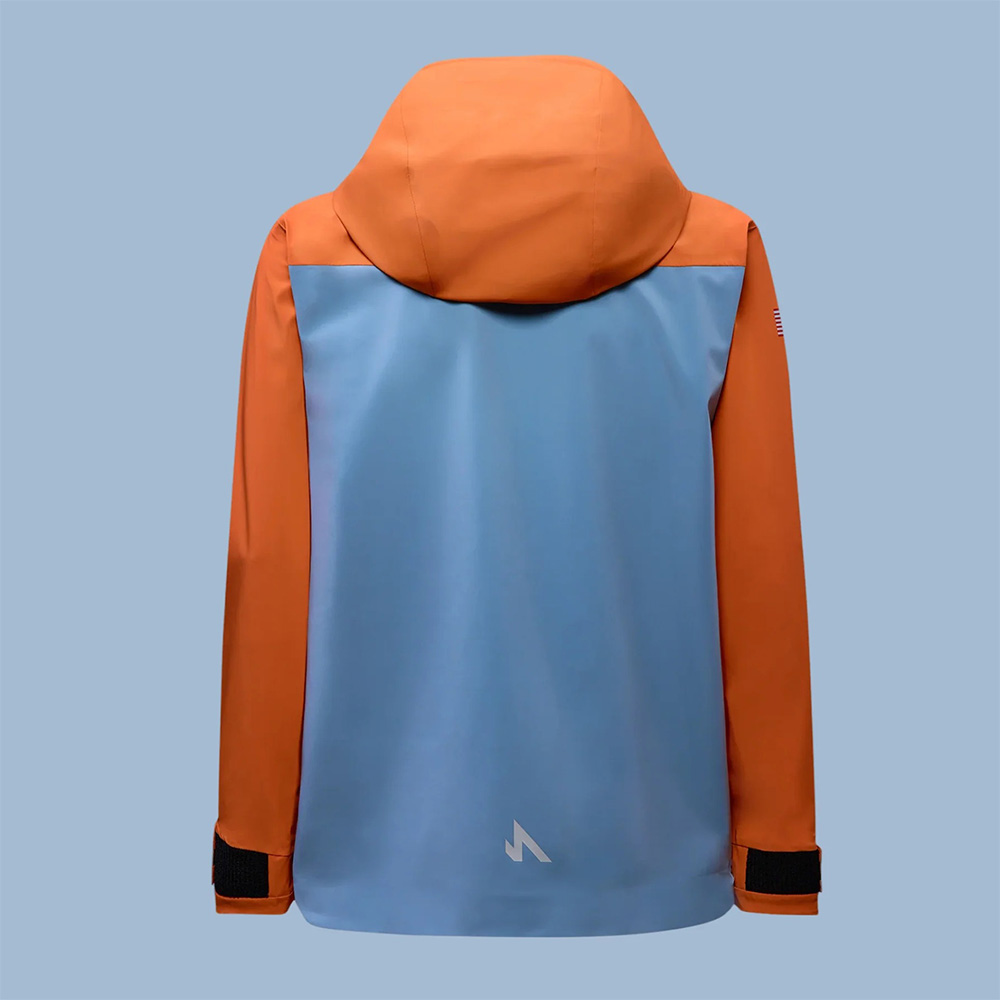
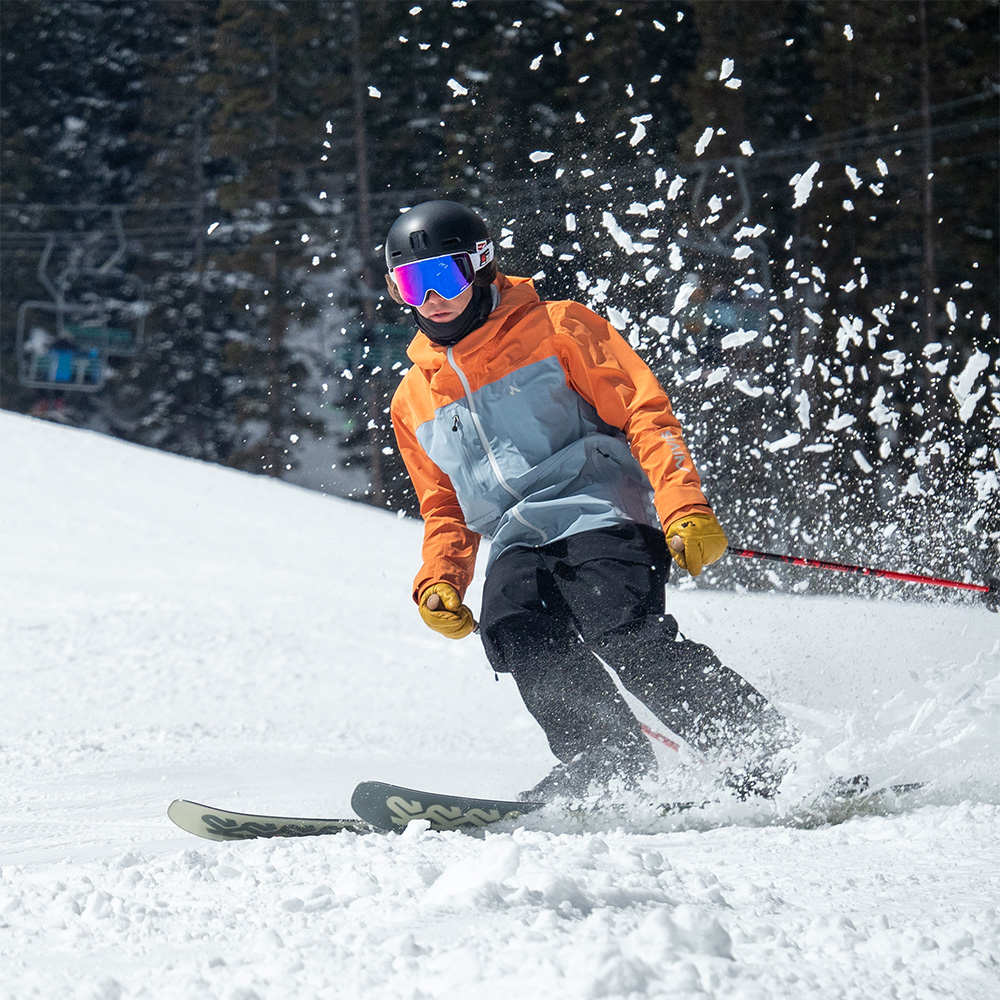
[Note: Nivis states that the fabric of the Protego Shell uses a PFAS-free DWR, but Nivis does not state that the membrane itself is free of PFAS.]
The Protego Shell has what I’d call a pretty ‘regular’ fit. It’s probably a touch more voluminous through the torso than average, and a tad on the shorter side in terms of length, but I think it’s generally a nice, middle-of-the-road cut.
The Protego Shell looks pretty minimalistic but includes lots of storage: one small external chest pocket, dual external handwarmer pockets (typically covered by pack hip belts), an Aerogel-insulated interior zippered phone pocket, and two interior mesh drop-in pockets. Its pit zips are on the shorter side but still effective, and I appreciate the big, easy-to-grab Velcro adjustments on the sleeve cuffs (though I wouldn’t mind the sleeve opening being a tad wider to fit over my bulkiest gloves).
The Protego Shell’s collar is shorter than many of today’s ‘freeride’ jackets, and it will occasionally fold into my neck, but the Protego’s fairly supple fabric makes this less annoying to me vs. more crinkly collars that do the same thing. The Protego’s hood works well over most of my helmets, though it feels a tad more restrictive when up vs. the hoods on the Norrona, Arc’teryx, and Flylow pieces in this roundup.
In terms of overall build quality, the Protego is impressive, given where it’s made and how much Nivis is charging for it. Some of the finer details, such as seam taping and zipper garages, strike me as a tad less refined than what I usually see from most $400+ shells made in Asia, but none of those things have resulted in actual performance issues (and I think the majority of the population would never notice them).
Bottom Line: The Nivis Protego Shell is a very well-rounded jacket for those seeking a fairly middle-of-the-road fit, lots of pockets, and a supple but substantial fabric that matches the weather protection and breathability of some pieces that cost notably more. The fact that it’s assembled in the United States makes that even more impressive. It’s also worth mentioning the Nivis Protego Pro Shell, which is notably more expensive ($690), but it uses a PFAS-free membrane that Nivis says is rated at 25K/30K for water resistance / breathability, and it has a more generous feature set.
Norrona Lofoten Gore-Tex Pro Jacket & Pants
MSRP: $899 (top) | $799 (bottom)
Primary Fabric: 3-layer Gore-Tex Pro ePE laminate (70Dx160D face fabric)
Available Sizes: S – XXL
Reviewer: Luke Koppa (5’8”, 155 lbs / 173 cm, 70 kg)
Size Tested: M (top) | M (bottom)
Measured Weight: 692 g (top) | 833 g (bottom)
The Lofoten collection is one of Norrona’s longest-standing series, designed for “big-mountain freeride” skiing and snowboarding. The Lofoten pieces are typically more durable and heavier than those in Norrona’s touring-focused Lyngen line, but a bit lighter and slimmer-fitting than those in the brand’s more freestyle-inspired Tamok series.
The Lofoten Gore-Tex Pro Jacket and Pants have been a mainstay in the Lofoten series for decades, but they’ve undergone plenty of updates. The most recent revision is defined by the switch to the new ePE version of the Gore-Tex Pro laminate; the fit and features mostly stay the same vs. the prior generation.
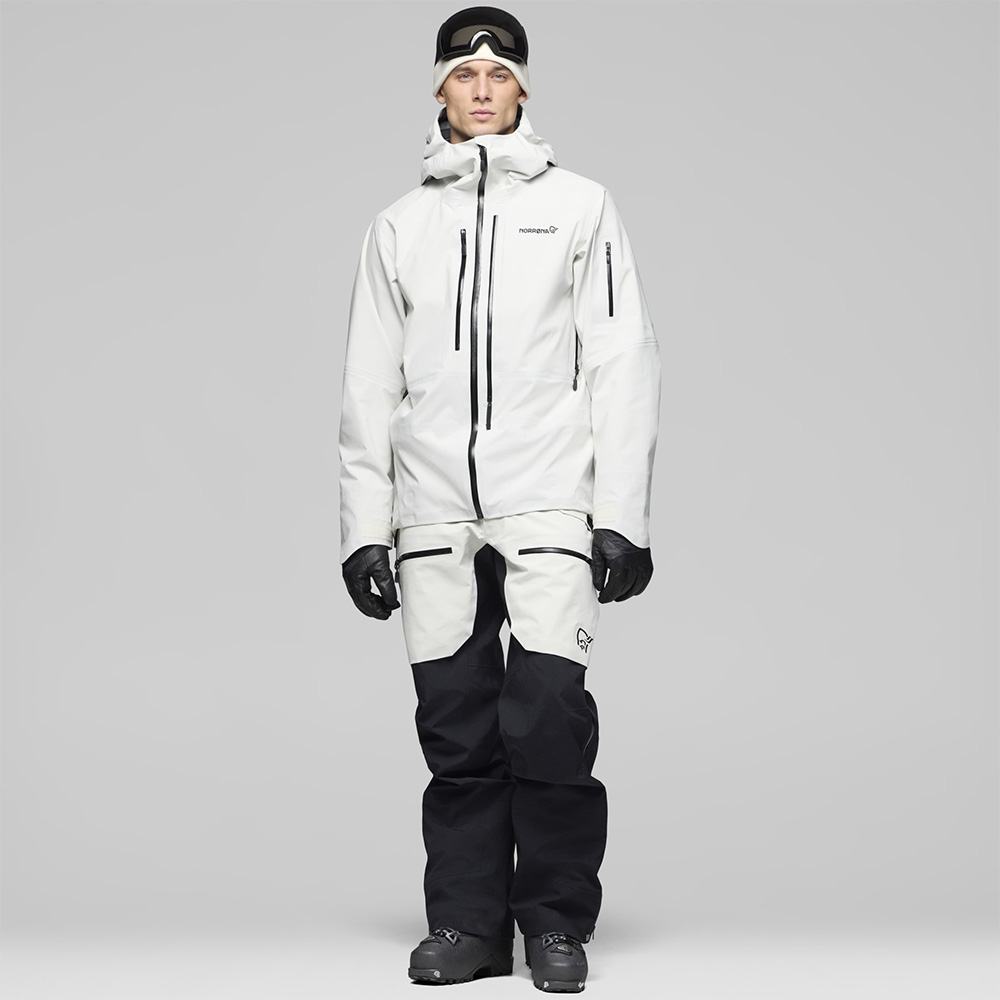
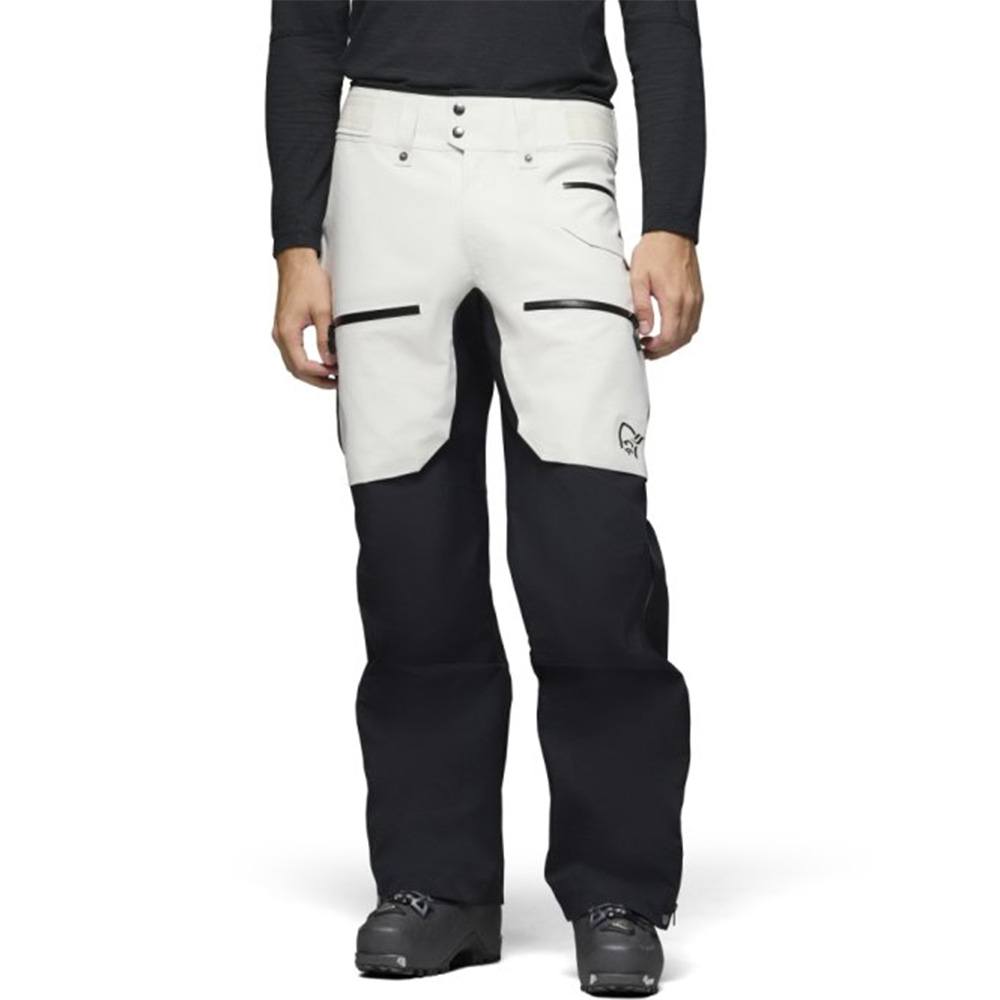
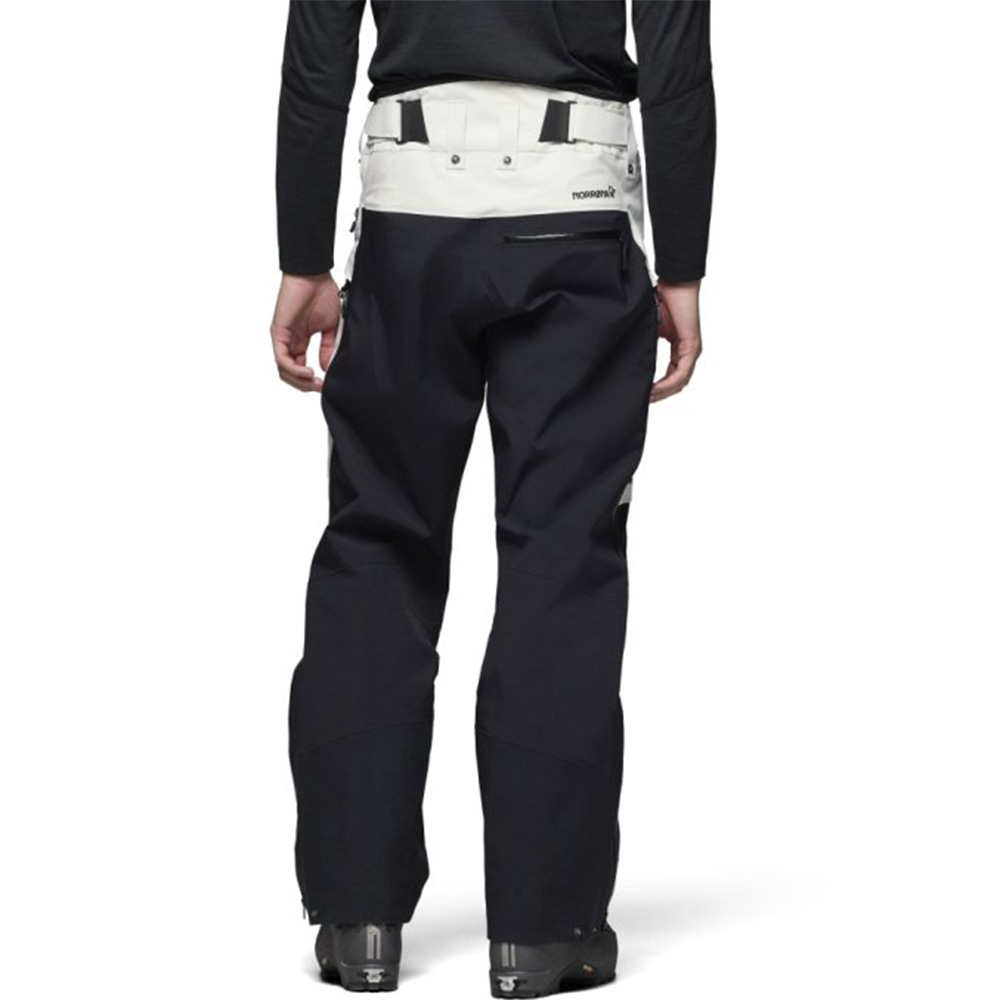
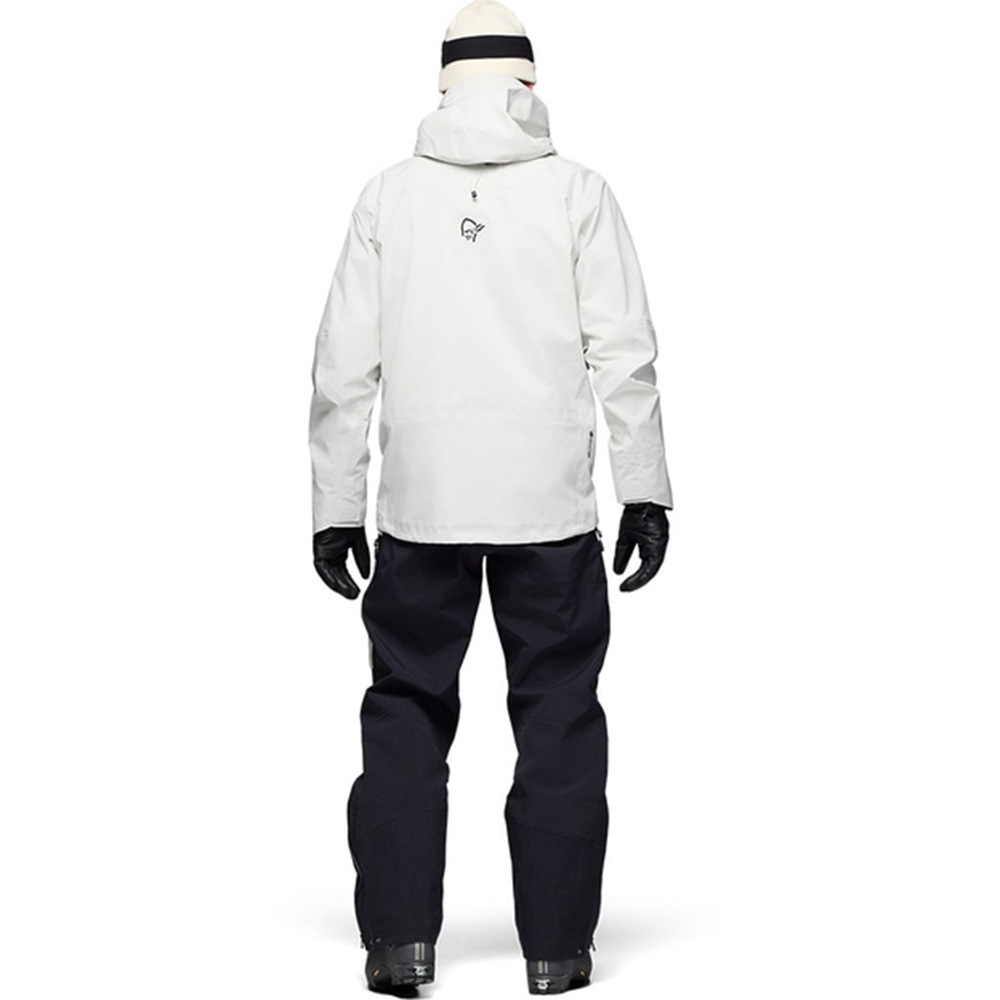
The 70Dx160D face fabric used on the Lofoten Gore-Tex Pro kit falls between the fabrics of the other two Gore-Tex Pro shells in Part One of our roundup, the Arc’teryx Rush and Sabre SV shells (though it leans a bit closer to the Sabre SV in terms of weight and hand feel).
I.e., the Lofoten Gore-Tex Pro kit is a pretty rugged-feeling hardshell; based on our experiences with prior versions of this kit, I’d expect it to hold up well to hundreds of days of use.
The overall fit of the Lofoten Gore-Tex Pro kit falls on the slimmer and longer side of the spectrum. As someone who generally prefers a slightly more relaxed cut, I actually have no issue with the fit of the Lofoten pants — they don’t cling to me, and there’s tons of articulation built in around the knees. Up top, I wouldn’t mind the jacket being just a tad wider around the waist and collar; that may be a more significant issue for those with broader-than-average hips and/or necks.
I’m a huge fan of the hoods on most Norrona shells — at least when I have them over my head. However, like prior Lofoten and Lyngen shells I’ve used, the circumference of the hood opening on the Lofoten Gore-Tex Pro Jacket feels notably smaller than most other shells here. The upside is excellent coverage. However, another side effect is that this is one shell where I always avoid having a hooded midlayer underneath — they can make me feel a bit claustrophobic around my neck, especially with the shell’s hood down. I also wish the collar extended a bit higher; at least on me, it falls right around my chin, so I have to frequently tuck my chin to keep it from folding in toward my throat.
The Lofoten Gore-Tex Pro Jacket is on the more minimal side in terms of storage. There are two external chest pockets (one’s hidden behind a storm flap), an internal zippered chest pocket, a bicep pass pocket, and an internal drop-in pouch.
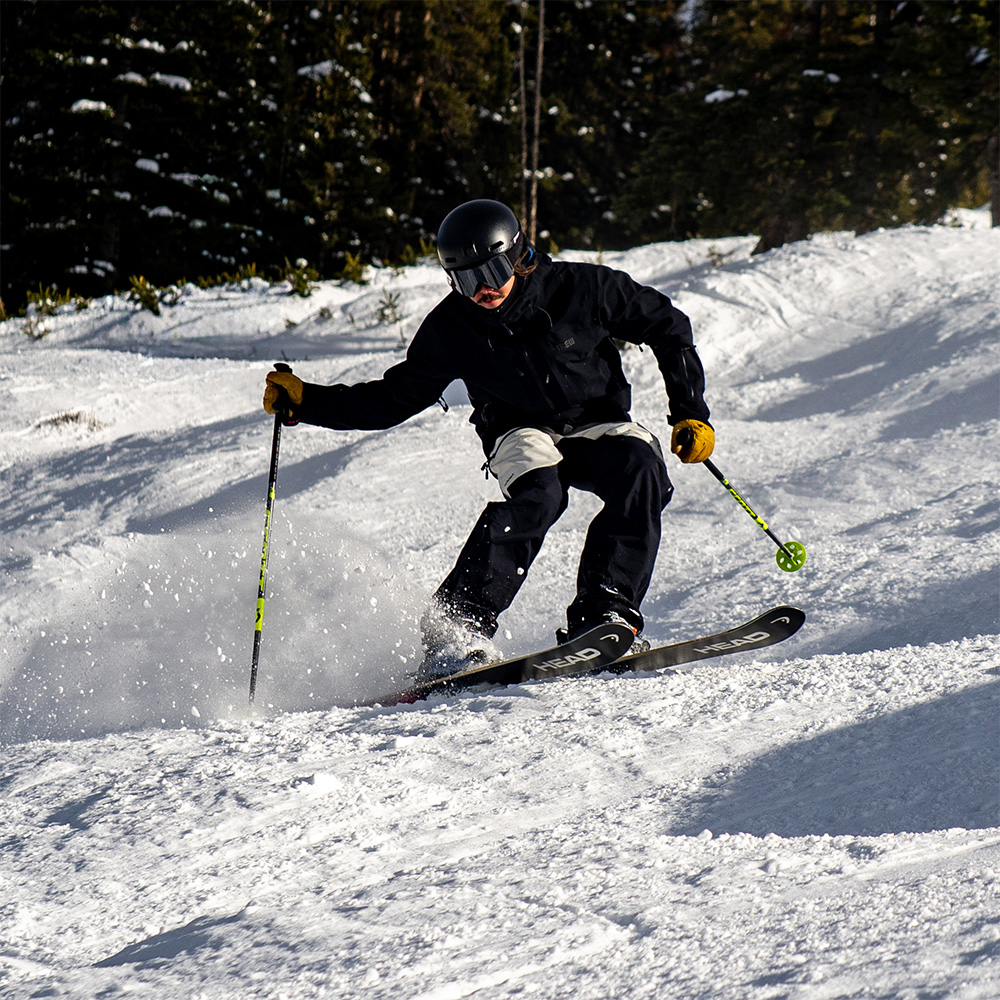
The Lofoten Gore-Tex Pro Pants feature five pockets — two thigh, one back, and two near the waist. I love the thigh pockets — at least for me, the placement feels perfect, and the bellows keep the contents from pressing against my legs. I almost never use a back pocket on snow pants, and I rarely use this pant’s little “tool pocket” that’s just below the waistband (mostly cause it’s hard to access when seated or bent over). But I do usually put my wallet in the little pocket that sits between the tool pocket and the one on the thigh.
While Gore-Tex Pro isn’t the most breathable membrane out there, the Lofoten Gore-Tex Pro kit does include generous ventilation — big pit zips up top (which I find notably easy to open / close), and ¾-length side vents on the pant. The jacket also features Norrona’s signature chest vent; while it doesn’t open up very wide, I appreciate the option, and it doubles as a way to access the chest pocket of your midlayer without fully unzipping your shell jacket.
There are a few other features worth highlighting. First, Norrona still makes my favorite waistband system of any snowsports pant. Nearly all the pants here feature some sort of built-in waist adjustment, typically in the form of Velcro tabs, and all of them are helpful to some degree if you need to take in a bit of volume in the waist. But most don’t really stand out, which is why I haven’t spent many words discussing them.
Norrona’s functions similarly, but it does a better-than-average job of evenly distributing tension, and the waistband itself extends up the back a bit, which I find reduces the chance of sagging. You can also buy an aftermarket upper bib attachment for this pant, which zips in at the waist (similar to the Kuhl Defiant Bib/Pant).
Norrona’s Vectran-reinforced scuff guards on the pant cuffs are also among the best I’ve used. As I mentioned earlier, I end up knocking my skis and boots together all the time. As a result, the lateral sides of my ski boots usually look like they’ve been attacked by a belt sander, and I’ve put hand-sized holes in some pant cuffs within a matter of days. However, Norrona’s cuffs have typically lasted over 100 days before I have slices large enough for a ski brake to grab. So far, the only cuff that’s proved even more durable for me is the “TechSteel by FOV” fabric used on Trew’s pant cuffs (which is also reinforced with Vectran fibers; we’ll discuss Trew kits in Part Two).
Lastly, I love Norrona’s sleeve cuffs. Part of me just likes the look of the asymmetric, extended shape on the back of the hand. I also appreciate that these cuffs can expand super wide to easily get over all my gloves, but their Velcro closure manages to snug them down in a non-bulky fashion, given how big they are when fully open.
Bottom Line: Norrona’s Lofoten Gore-Tex Pro Jacket and Pant continue to be reference points for us when it comes to very high-end outerwear that’s focused on maximum weather protection and long-term durability. The fit, particularly that of the jacket, may not be ideal for those with wide shoulders and hips. But this kit is reliably protective in the wettest weather, still fairly touring-friendly due to generous ventilation, and provides tons of very useful and nicely refined features that fit its lofty price tag. For an even more rugged and feature-laden variant, see the pricier Lofoten Gore-Tex Pro Plus kit. Norrona also offers the lighter and less expensive Lofoten Gore-Tex kit (i.e., non-Pro), including insulated versions.
Obermeyer Steibis Jacket & Bib
MSRP: $569 (top) | $469 (bottom) / on sale for $426 (top) & $351 (bottom)
Primary Fabric: 3-layer HydroBlock laminate (30K/30K rated)
Available Sizes: XS – 2XL
Reviewer: Luke Koppa (5’8”, 155 lbs / 173 cm, 70 kg)
Size Tested: M (top) | M (bottom)
Measured Weight: 757 g (top) | 702 g (bottom)
Obermeyer’s Steibis Jacket and Bib are the brand’s highest-end uninsulated shells. They’re made with Obermeyer’s proprietary HydroBlock 3-layer laminate, which they say is rated at 30K/30K for water resistance / breathability (i.e., higher than average, even for flagship laminates).
This fabric is on the more supple side for a waterproof ‘hardshell,’ but it’s pretty thick / burly. We haven’t been able to test it in straight-up rain, but if Obermeyer’s listed specs are accurate, it should theoretically keep out water as well as Gore-Tex. I haven’t noticed a significant difference in breathability between the Steibis and most of the other shells here; it might be a tad better than average, but the hefty weight of this kit will limit its touring capabilities for some folks. I do expect it to hold up well in the long run, though.
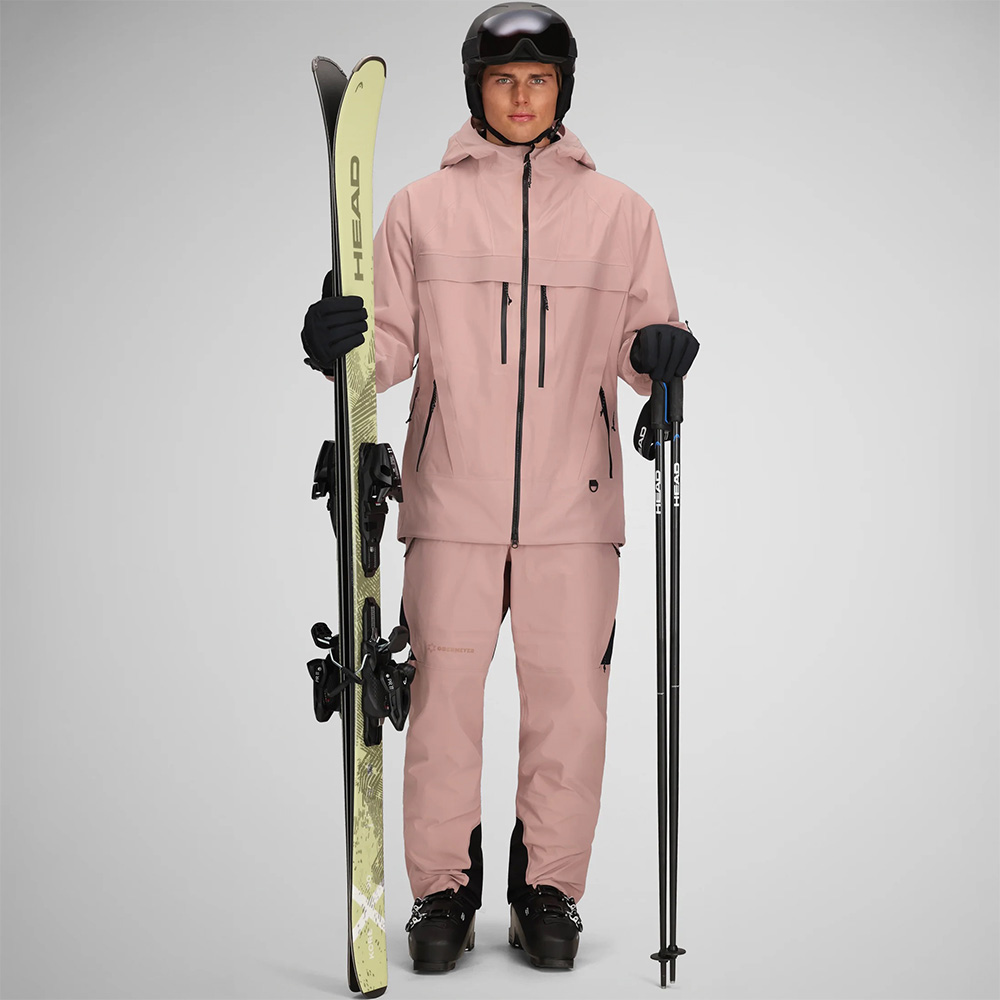
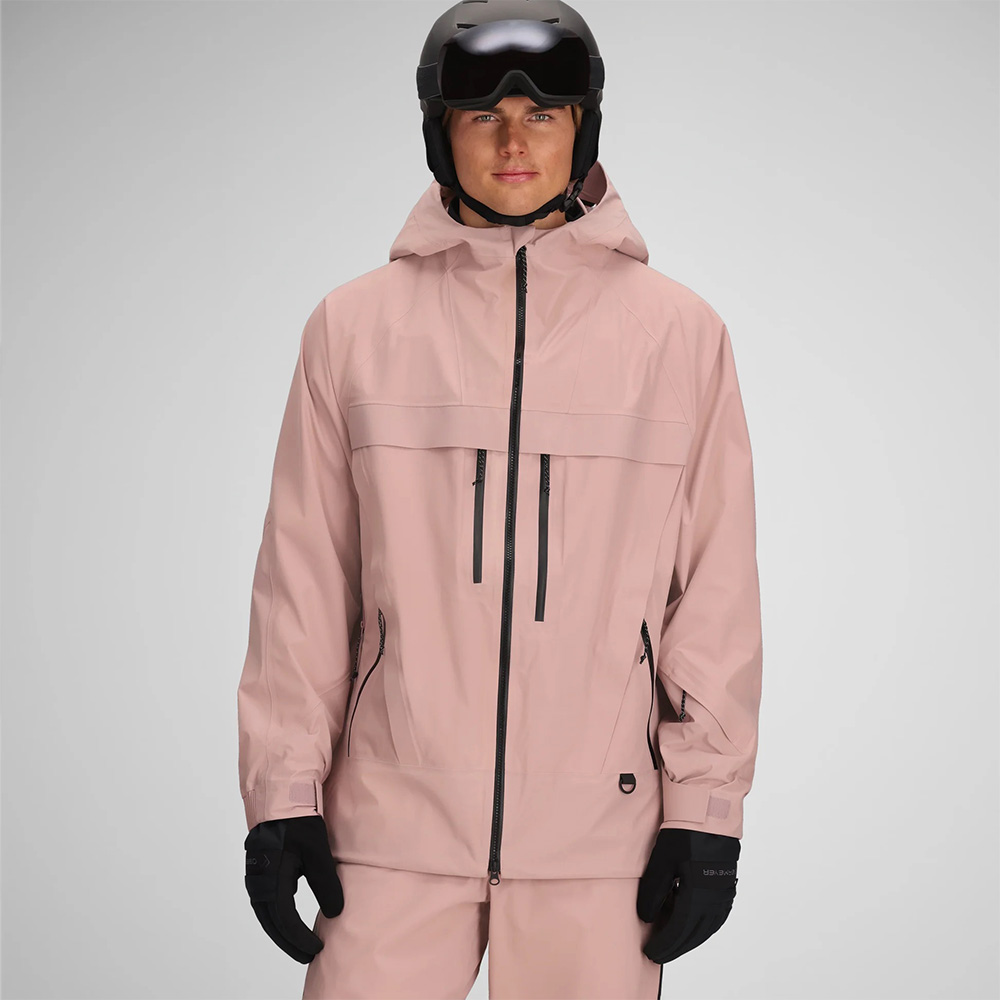
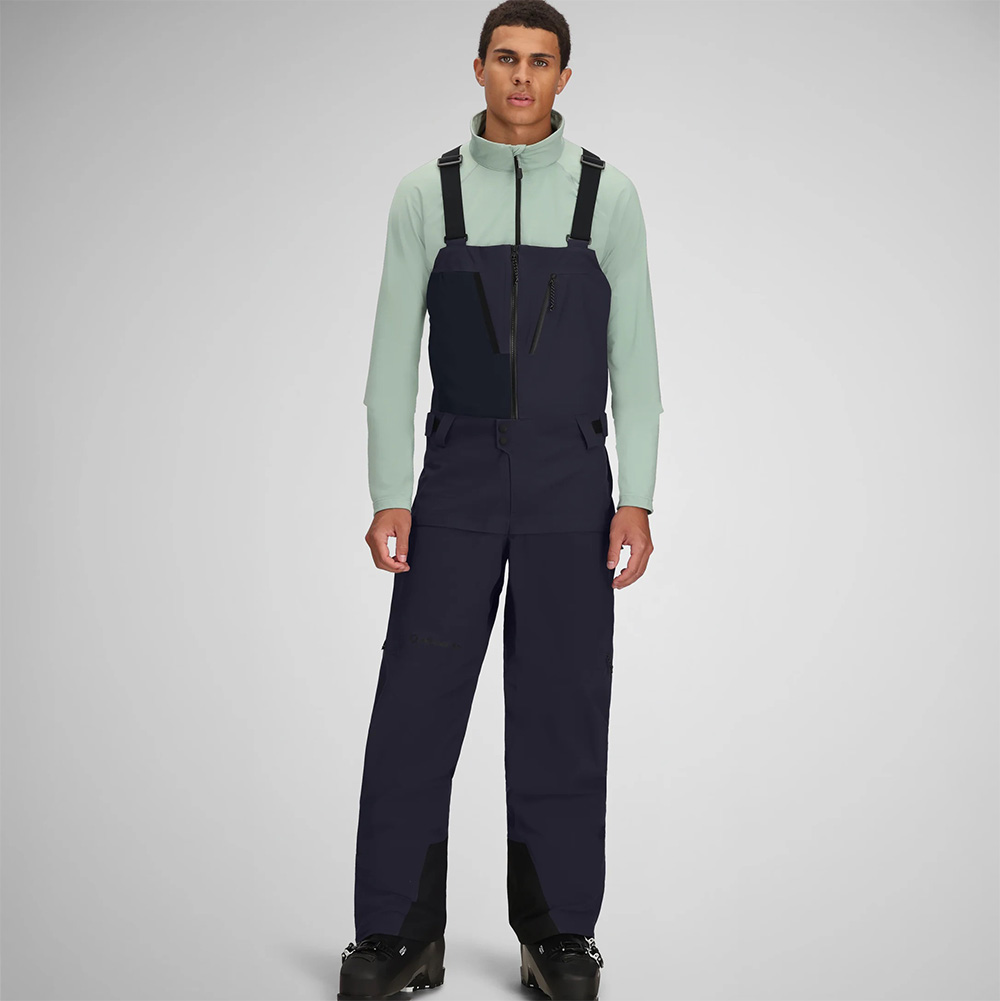
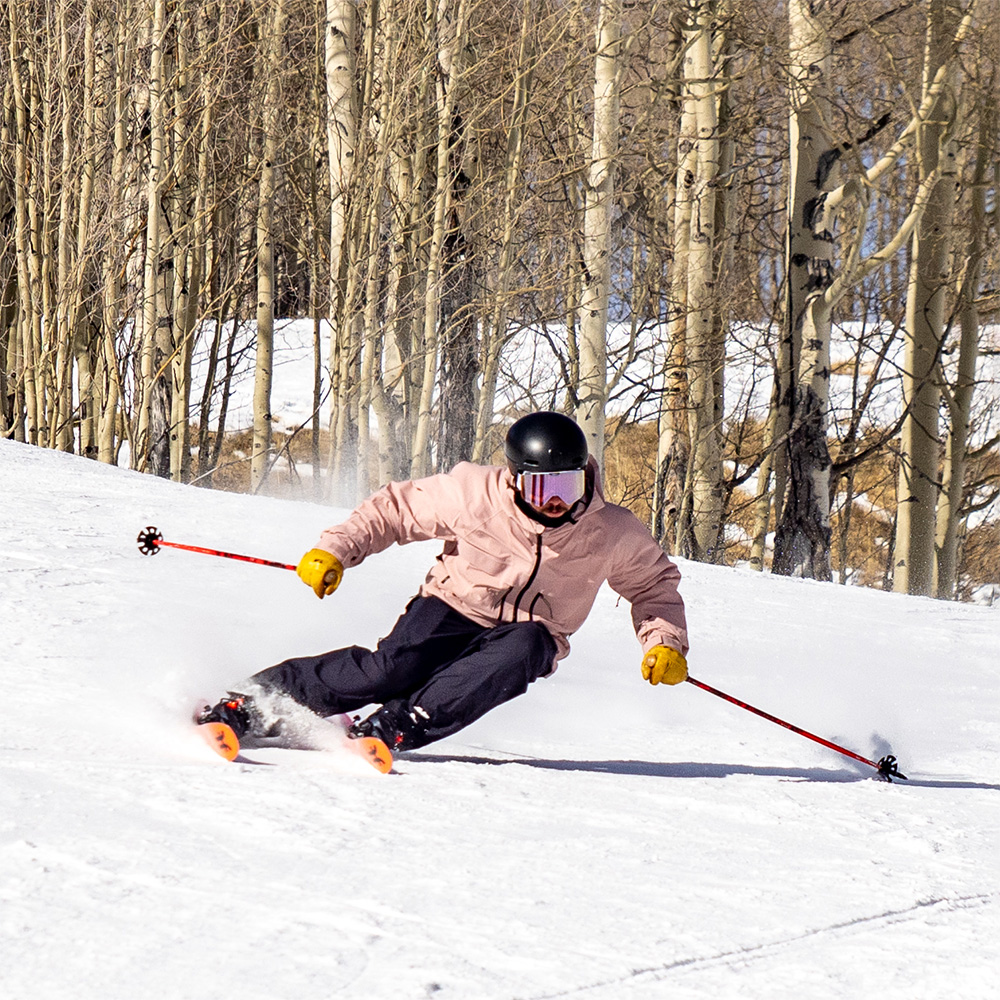
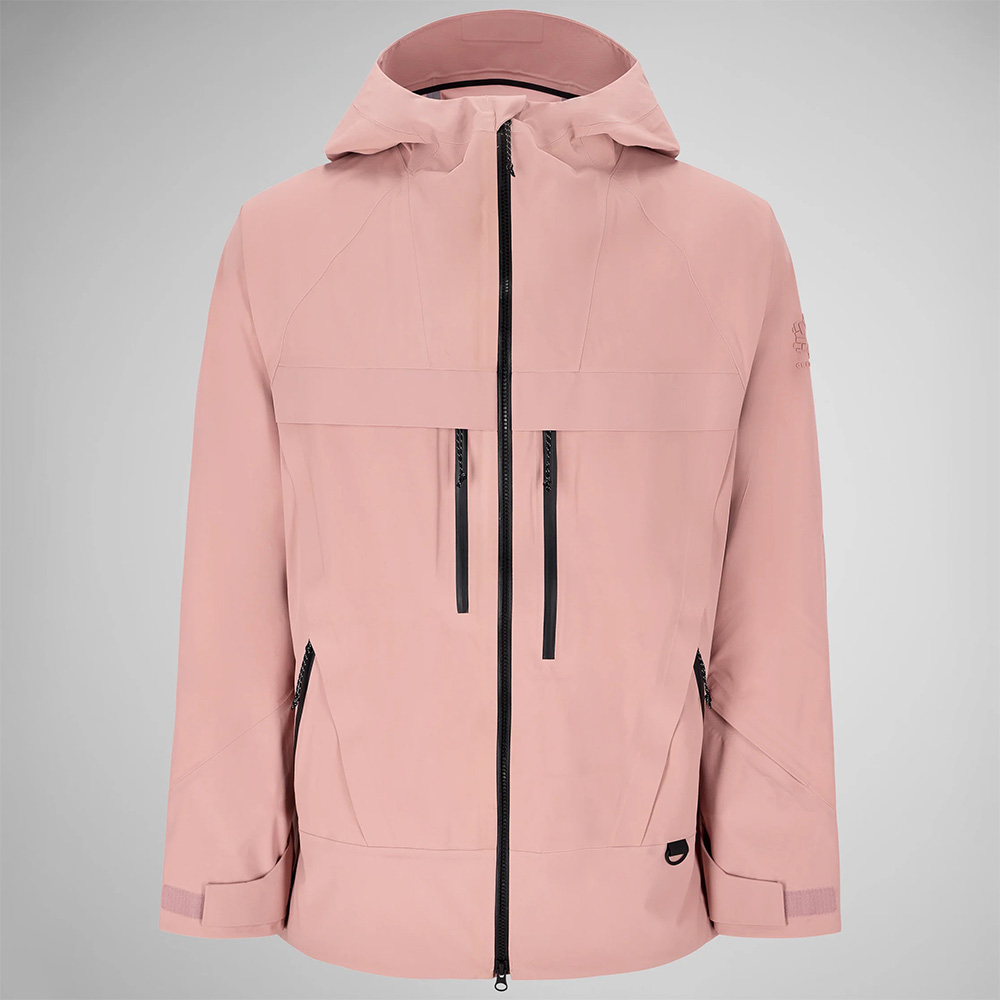
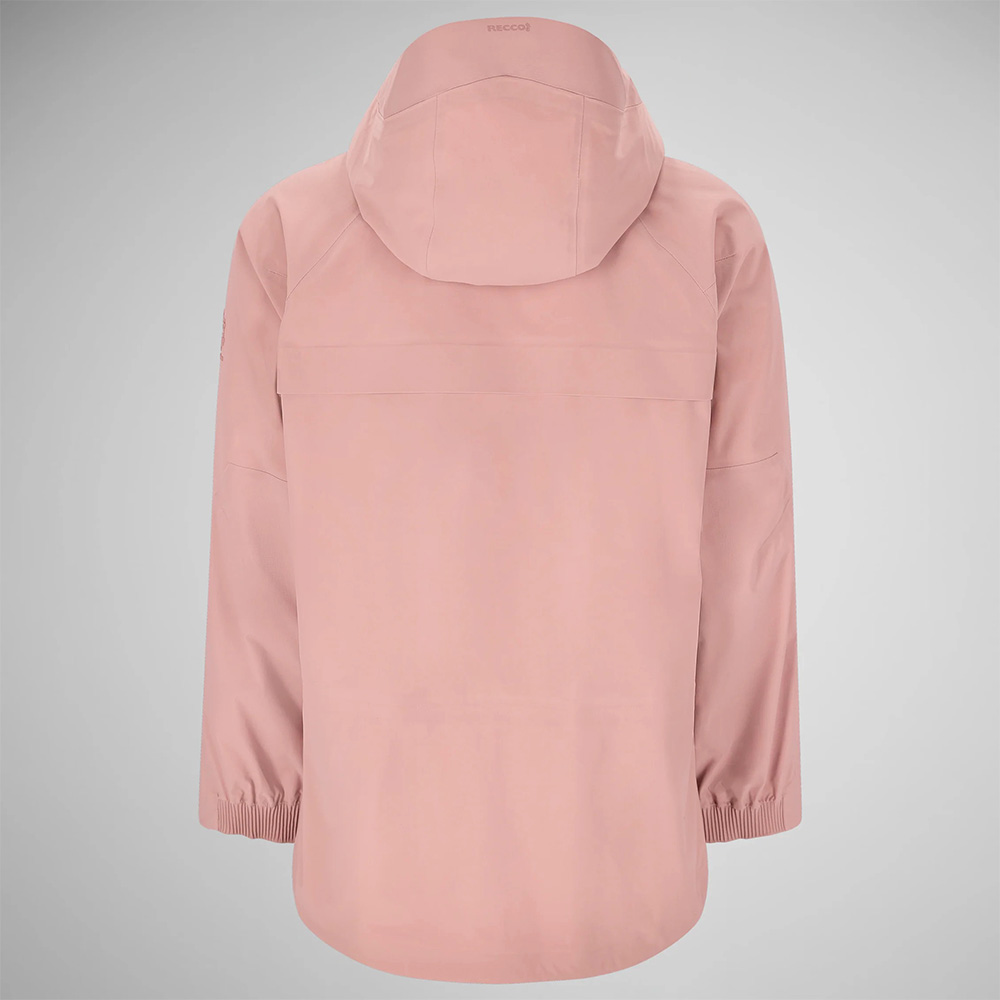
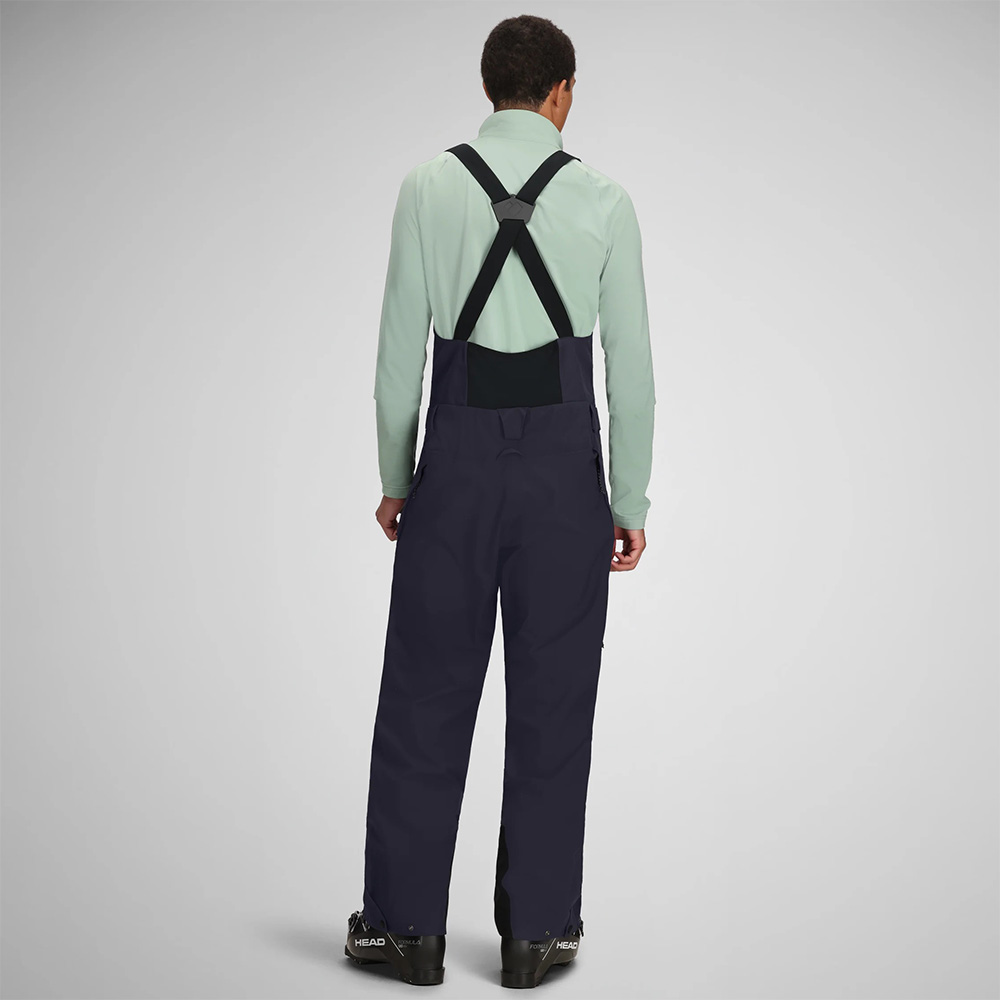
The fit of the Steibis kit feels most comparable to the Flylow Lab Coat / Baker Bib combo. The Steibis Bib isn’t quite as roomy / relaxed as most of Flylow’s pants, but the Steibis isn’t as slim as the Black Diamond Recon Stretch, Mammut Haldigrat, and Kuhl Defiant. I personally prefer a taller and more structured collar than the Steibis Jacket’s, but for those who don’t like a collar that stands in front of their chin, I think the Steibis’s is a good one (I rarely notice it digging into my neck).
The Steibis combo is generous in terms of storage. Up top, you’ve got dual exterior chest pockets, dual hand pockets (not very accessible with a backpack), a forearm pass pocket, an interior zippered chest pocket, and an interior drop-in pouch.
The Bib has a zippered bib pocket, elastic bib sleeve pocket, and dual thigh pockets. I avoid putting a phone or similarly heavy object in the thigh pockets because they extend very close to the crotch, and that’s where my phone inevitably ends up bouncing around if I store it in those pockets.
Thankfully for me, the Steibis Bib has a center-front zipper for easy on and off. It doesn’t have a full drop seat, but its leg vents run from the knee to the waist. The Steibis Jacket also features pretty average-sized pit zips, as well as a removable powder skirt. The Jacket also has some static ventilation built into the back seam line, in the form of openings covered by a storm flap; I haven’t noticed a big difference in terms of breathability, but I also haven’t yet had any snow get inside via this vent. I also appreciate that the Steibis Jacket uses a 2-way zipper for the primary closure; I always like having the option of unzipping from the bottom for extra ventilation, easier access to my waist, etc.
The Steibis Jacket’s sleeve cuffs feature a big Velcro tab for adjustment, but the lateral side features a fairly tight elastic. It can expand to slide over gloves, but I wish they would add a small ‘grab tab’ to make it easier to pull the cuff over gloves when the hand you’re pulling with also has a glove / mitten on it.
Bottom Line: Obermeyer’s Steibis kit has so far provided weather protection rivaling the best shells we’ve tested, and it does so via a pretty heavy-duty fabric that’s still notably supple. It’s packed with features and comes in a fairly middle-of-the-road fit that should work for many people. When you factor all of that together, it’s also a pretty impressive value.
Outdoor Research Trailbreaker Tour Pants
MSRP: $249
Primary Fabric: 90D stretch double weave softshell
Lower Leg Fabric: 3-layer Ventia laminate (75D x 150D face fabric)
Available Sizes: S – XXL
Reviewer: Luke Koppa (5’8”, 155 lbs / 173 cm, 70 kg)
Size Tested: M
Measured Weight: 672 g
These days, pieces like the Trailbreaker Tour Pants feel like they’re part of an endangered species, but I’m glad they still exist.
Rather than being a fully waterproof shell or a fully non-waterproof softshell, this is a hybrid. Most of the pant is made of a slightly water-resistant and highly air-permeable softshell fabric, but Outdoor Research uses their 3-layer Ventia waterproof / breathable laminate at the knees and most of the lower leg (i.e., the darker fabric in the photos).
The goal is to get water / snow protection where you need it most, while still being able to take advantage of the dramatic breathability improvements offered by non-waterproof softshell materials. And it works pretty well in practice.
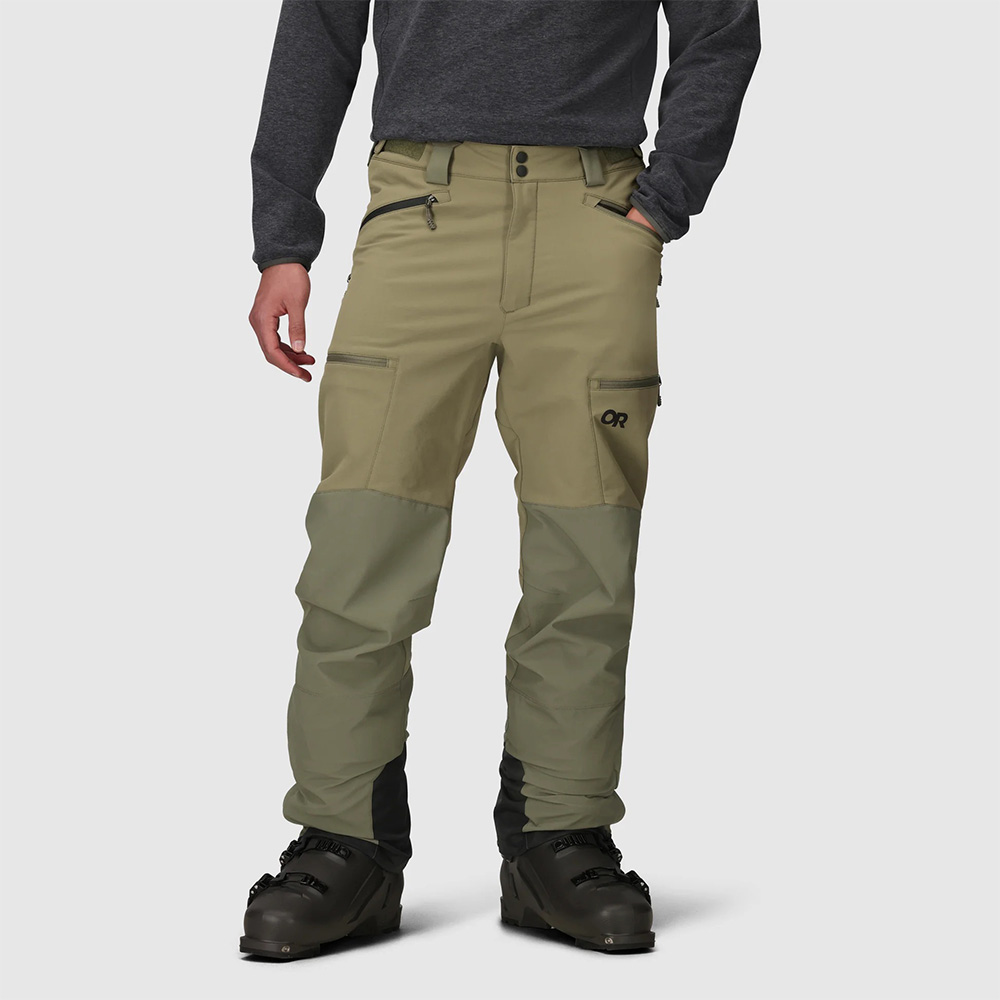
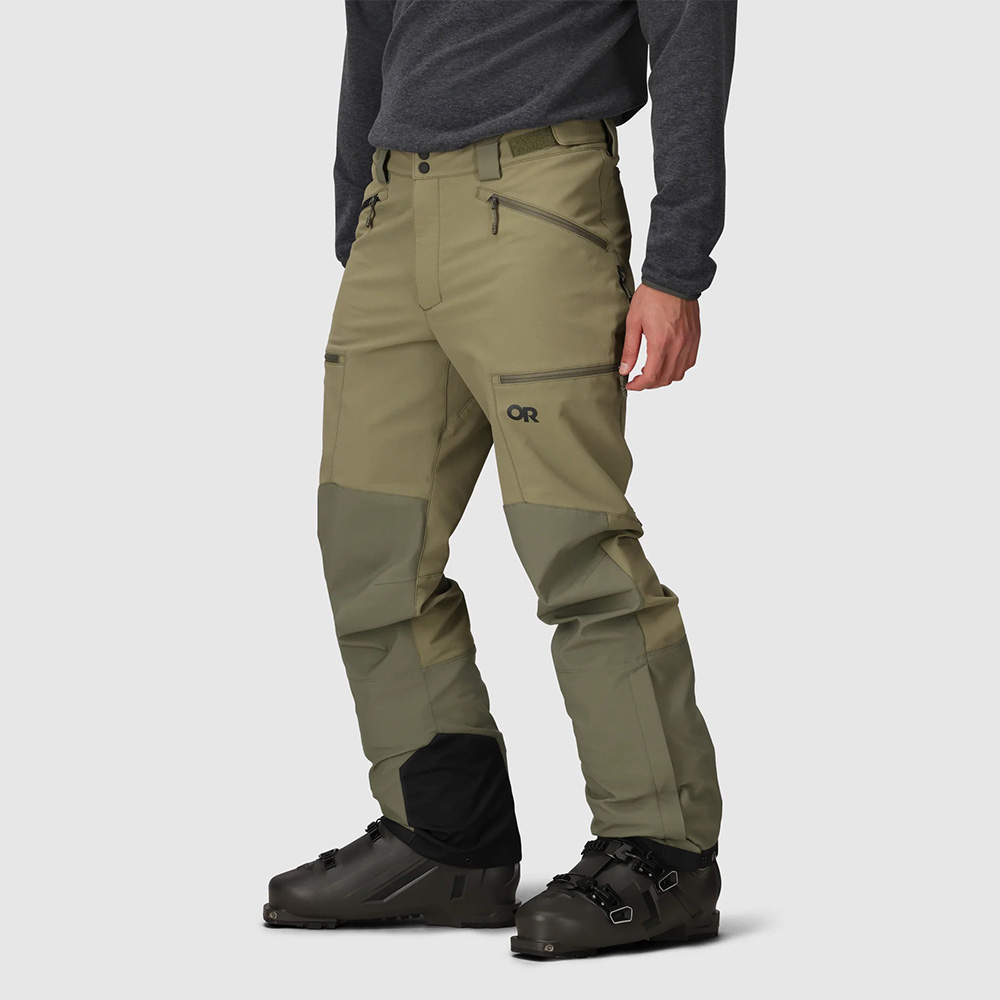
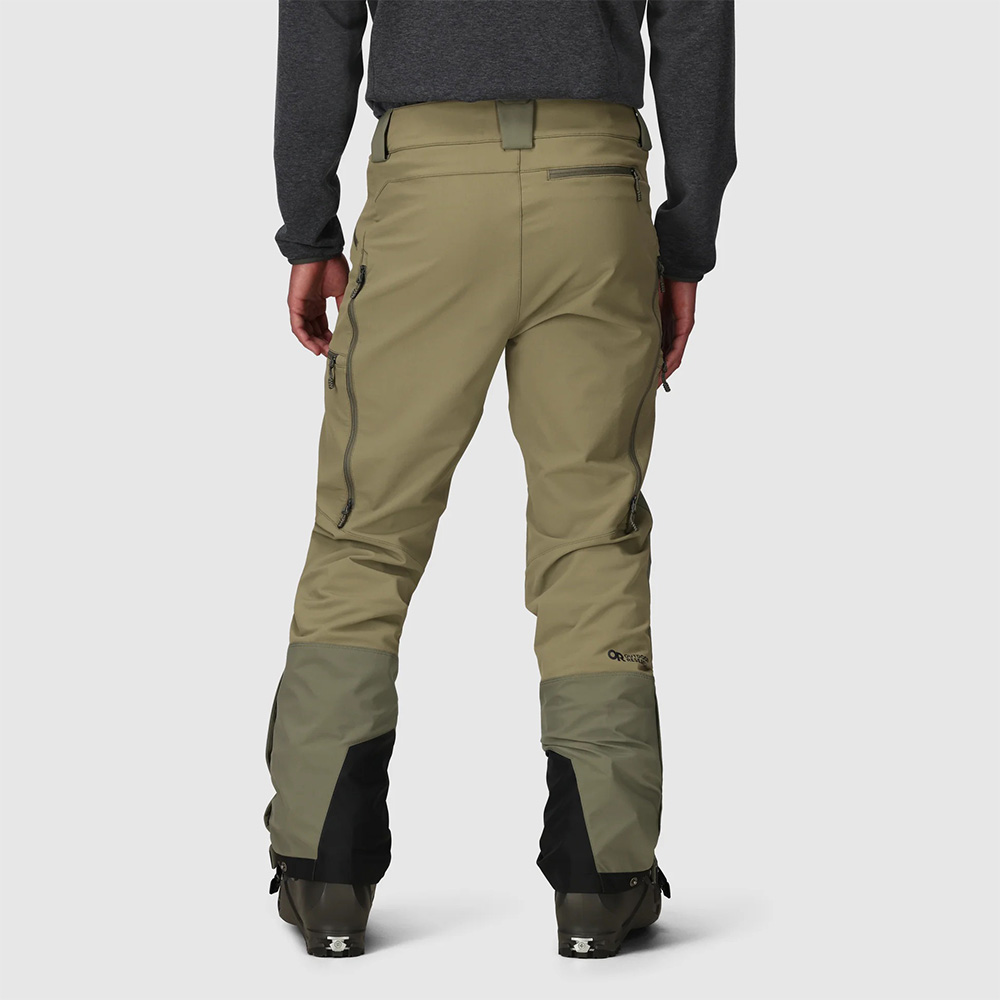
The Trailbreaker Tour breathes far, far better than all of the waterproof shells here. It’s a dramatically more significant difference than the differences in breathability between any of the fully waterproof shells.
But, compared to a full softshell, the Trailbreaker doesn’t wet out as quickly if I’m kneeling in the snow, or I’m skinning through heavy, wet pow.
As its name suggests, this piece is designed for human-powered touring, and that’s definitely where I think it excels. In terms of durability and abrasion resistance, I’m not very concerned about frequently using it in the resort. Rather, I usually at least want waterproof fabric covering my butt if I’m riding lifts, and the Trailbreaker Tour’s softshell fabric doesn’t fully block frigid winds.
This piece is cut quite slim, as is more common in the touring-specific class. It’s articulated nicely, particularly around the knees, and the softshell fabric is very stretchy. But I still don’t want my snow pants (regardless of category) to cling to my butt or thighs, and the Trailbreaker Tour does slightly do this. In contrast to similarly slim waterproof shells, though, the Trailbreaker Tour doesn’t quickly cause those areas to feel sweaty / clammy, due to how well the softshell fabric breathes. And, while its cuffs are slim, I can still get them over all my various ski boots, while still mostly staying out of the way when wearing crampons.
The Trailbreaker Tour actually has a lot of features for a backcountry-focused piece. There are two hand pockets, two thigh pockets, and another on the back. Stuff inside these pockets tends to sit pretty snug against my legs, but the significant stretch of the softshell fabric helps reduce this slight annoyance. And, despite its excellent inherent breathability, the Trailbreaker Tour still includes sizable outer leg vents.
Bottom Line: The Trailbreaker Tour Pant is a great option for backcountry skiers and splitboarders who prioritize breathability over full weatherproofing, especially if you’ve tried fully non-waterproof softshell pants and found yourself wishing for more weather resistance around the lower legs. If you want a slightly less slim-fitting alternative, take a look at the Raide TourTech Bib, which we’ll discuss in Part Two of this roundup.