
Intro
Each season, we test a lot of ski / snowboard outerwear. So, we’ve once again put together a roundup of several of the women’s jackets, pants, and bibs we’ve been using over the past season or two.
By “Outerwear,” we mean that all of the garments here are meant to serve as the protective outer layer for a day in the mountains, but they all accomplish that in different ways. Some are super burly and ideal for resort skiers / boarders who are hard on their gear, while others are lighter, more breathable, and better options if you’re hiking / skinning to earn your turns.
[See our Layering 101 article for our more general advice on layering, combining different midlayers with different shells, the uninsulated vs. insulated shell question, and more.]
We’ve published similar roundups in the past, and you should check them out for even more options. Here, we’ll be covering the pieces we’ve been testing since publishing those roundups, but many of the products in those articles are still current and relevant today.
We’re kicking things off with ten insulated jackets, pants, and bibs. In Part Two, we’ll cover more than a dozen uninsulated shells, so be sure to check back next week. We’ll also be doing the same thing on the men’s side, with Part One of our Men’s Outerwear roundup dropping within a few days.
So, if you’re in the market for some new outerwear this year or in the future, take a look and see which of these pieces might work best for you.
A Few Misc. Notes:
- The pieces are ordered alphabetically
- Our measured weights and/or inseams are for the listed sizes we tested for each piece
- We include the height and weight of the reviewer(s) who reviewed each product to add context to our comments on fit
- We’ll note if any are on sale as of the time of publishing this article.

Flylow Avery Jacket
MSRP: $450
Fabric: Lux 2-layer laminate (20K/20K rated)
Insulation: PrimaLoft Black ECO synthetic (100-g body / 80-g sleeves)
Size Tested: Large
Size range: XS – XL
Reviewer: 5’9”, 170 lbs / 175 cm, 77 kg
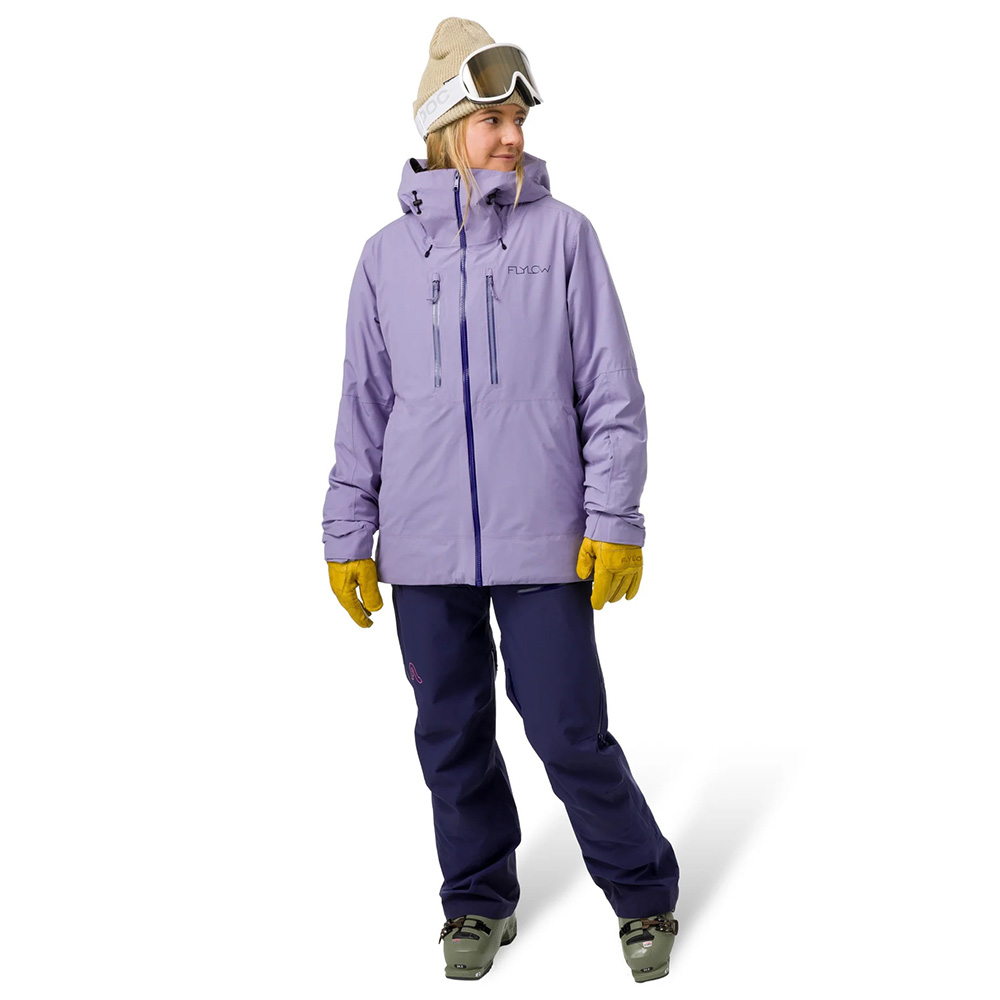
Kara Williard: Of all the Flylow pieces I’ve spent time in over the past decade, the Avery Jacket is far and away the warmest, and that seems to be exactly what Flylow was going for in the design.
The Avery Jacket combines a high-end waterproof / breathable outer fabric with a generously insulated interior to make one of the burliest and warmest storm-skiing layers I’ve tested. It features recycled PrimaLoft Black ECO insulation throughout, with 100-g layers used in the torso and 80-g through the sleeves.
The Avery Jacket isn’t the most versatile jacket, given just how warm it is; I’ve definitely found myself overheating in it on days when temperatures get near or above freezing. Still, I use it more often than I first expected. I’ve found the Avery to be a bit more breathable than my alternative layering system for cold days, an uninsulated shell and down midlayer, in part thanks to the Avery Jacket’s 12” / 30 cm underarm vents.
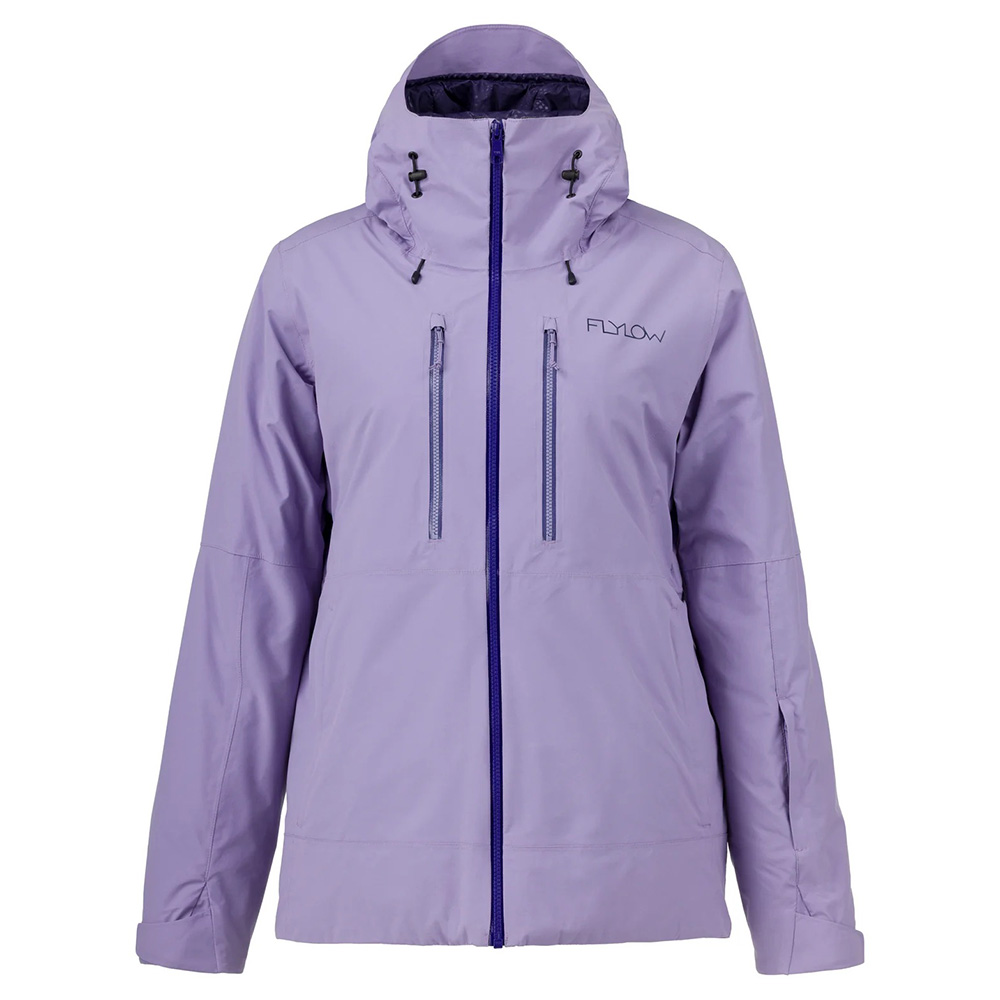
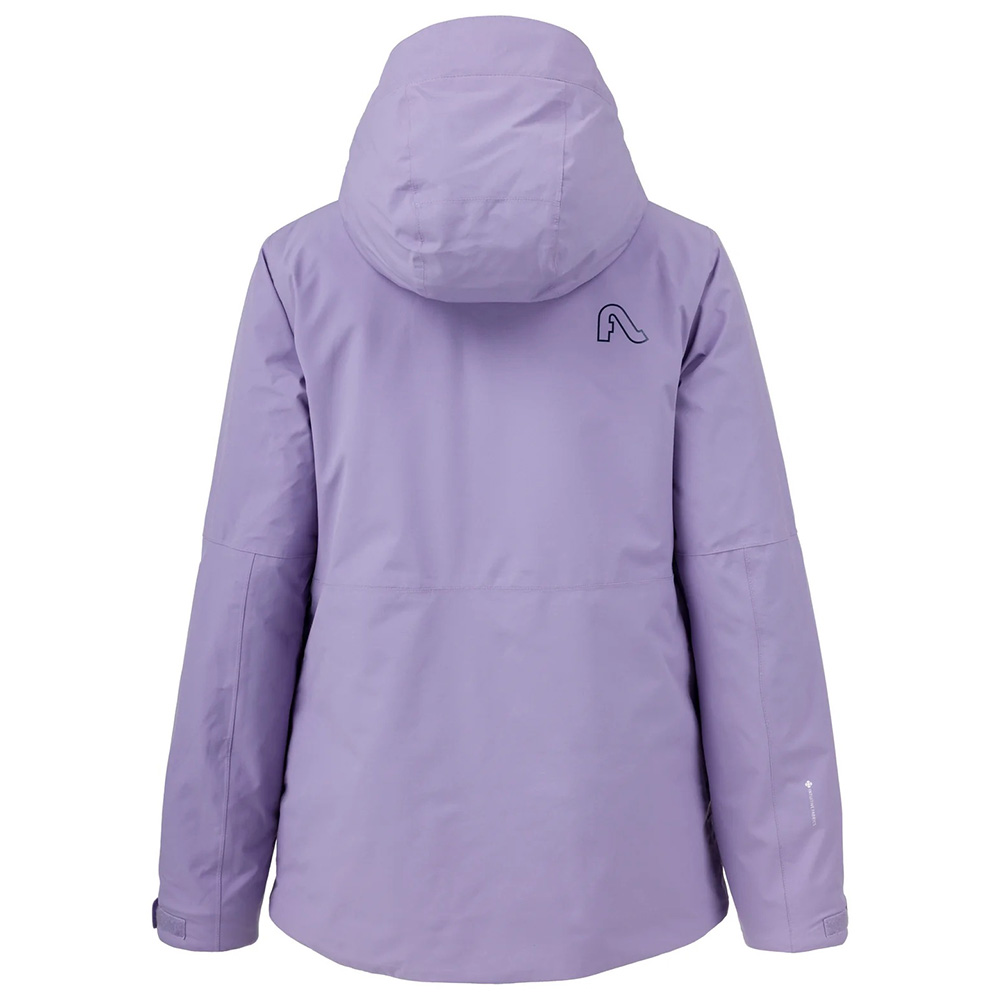
It’s easier for me to cool down in an insulated (but ventilated) shell such as this, because when I do open the vents, the cool air is getting through the insulation and straight to my body (in contrast to only opening up the vents of an uninsulated shell with a non-vented midlayer underneath).
On truly cold days, I’ve found the warmth of the Avery Jacket to be just about unmatched. I’ve never had an insulated jacket this warm that I’ll still happily ski in when it’s warmer than roughly 20°F / -7°C. And, when temps are frigid and the winds are fierce, the Avery Jacket is impressively cozy and protective.
Feature-wise, the Avery Jacket has just about everything I am looking for in a daily resort shell – plenty of pockets, a removable powder skirt, and a helmet-compatible hood.
As I usually do with most Flylow pieces, I tested the Avery Jacket in a size Large, and it was a pretty roomy, generous fit, especially since I don’t often find myself wearing more than a baselayer underneath. That said, the extra space is also nice if I want to layer even more underneath. I can see this being nice not only for freezing ski days, but also for other adventures such as winter time on a boat, or walking around town on a frigid day. E.g., the Avery Jacket was a contender for my extended time in Japan this winter, given how cold it can be around here, but I couldn’t quite justify packing it, since it’s quite bulky.
If you run cold, regularly ski / ride in nasty temperatures, and/or want a super protective and warm jacket for harsh storms, the Avery Jacket should definitely be on your radar.
Flylow Sarah Anorak & Sphynx Bib
MSRP: $280 (anorak) $330 (bibs)
Fabric: Finish 2-layer laminate (15K/10K rated)
Insulation: Greenloft recycled synthetic (80-g jacket / 40-g bib)
Size Tested: M (jacket) 6 (bibs)
Measured Weight: 638 g (jacket) 655 g (bibs)
Inseam: 30 in / 76 cm
Size range: XS – XL (Anorak) | 2-14 (Bib) w/ short & tall options
Reviewer: 5’8”, 135 lbs / 173 cm, 61 kg
Kristin Sinnott: The Sarah Anorak and Sphynx Bibs are both part of Flylow’s “Boundary Line,” which they describe as “high-performance gear built for riding lifts.” This line includes many of Flylow’s least expensive outerwear options, and while the fabrics generally aren’t as water resistant or breathable as Flylow’s higher-end shells, I’ve typically found them great for most inbounds days in Colorado, where I rarely deal with super wet / rainy conditions.
I tested the Women’s Sphynx Bibs in a size 6. They technically fit, but the waist feels snug and the overall cut is a bit short for me — the size 8 would have been the better call. In the Sarah Anorak, I wore a Medium; the sleeves and length feel right for me, and the fit is very comparable to the Sarah Jacket.
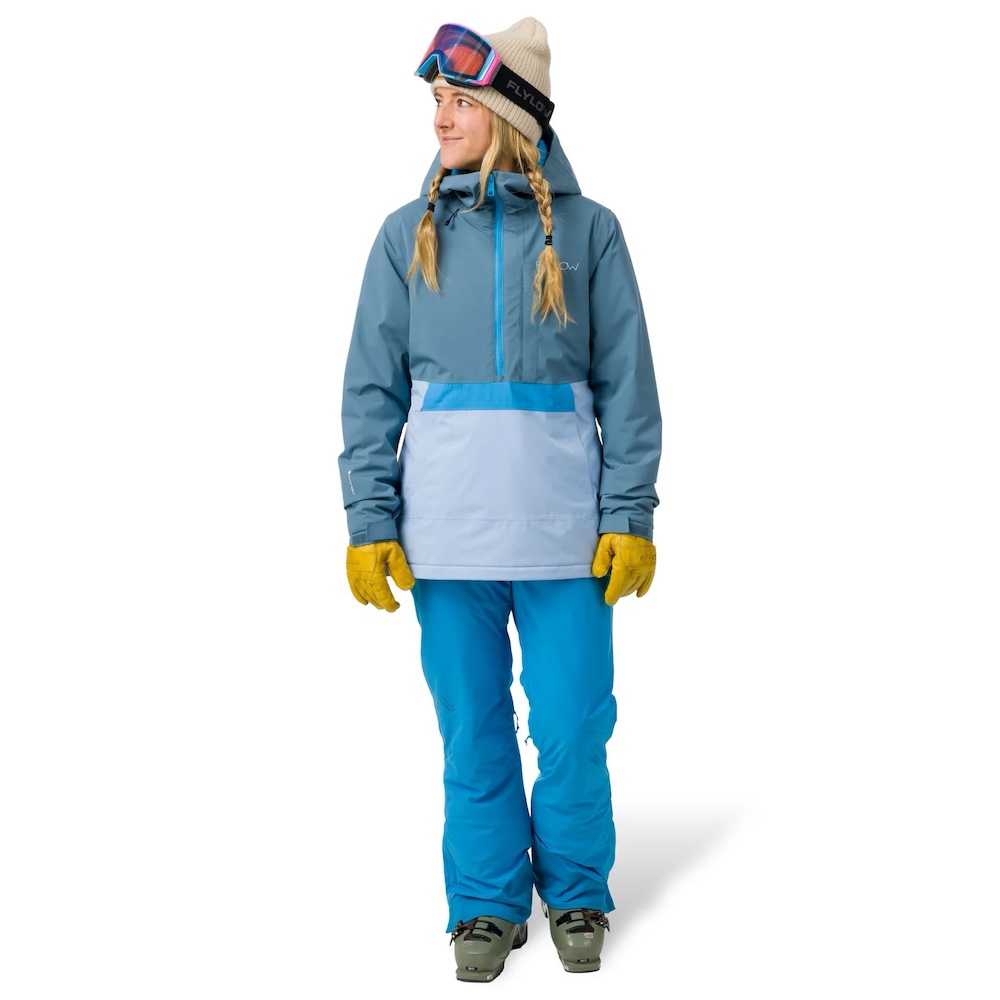
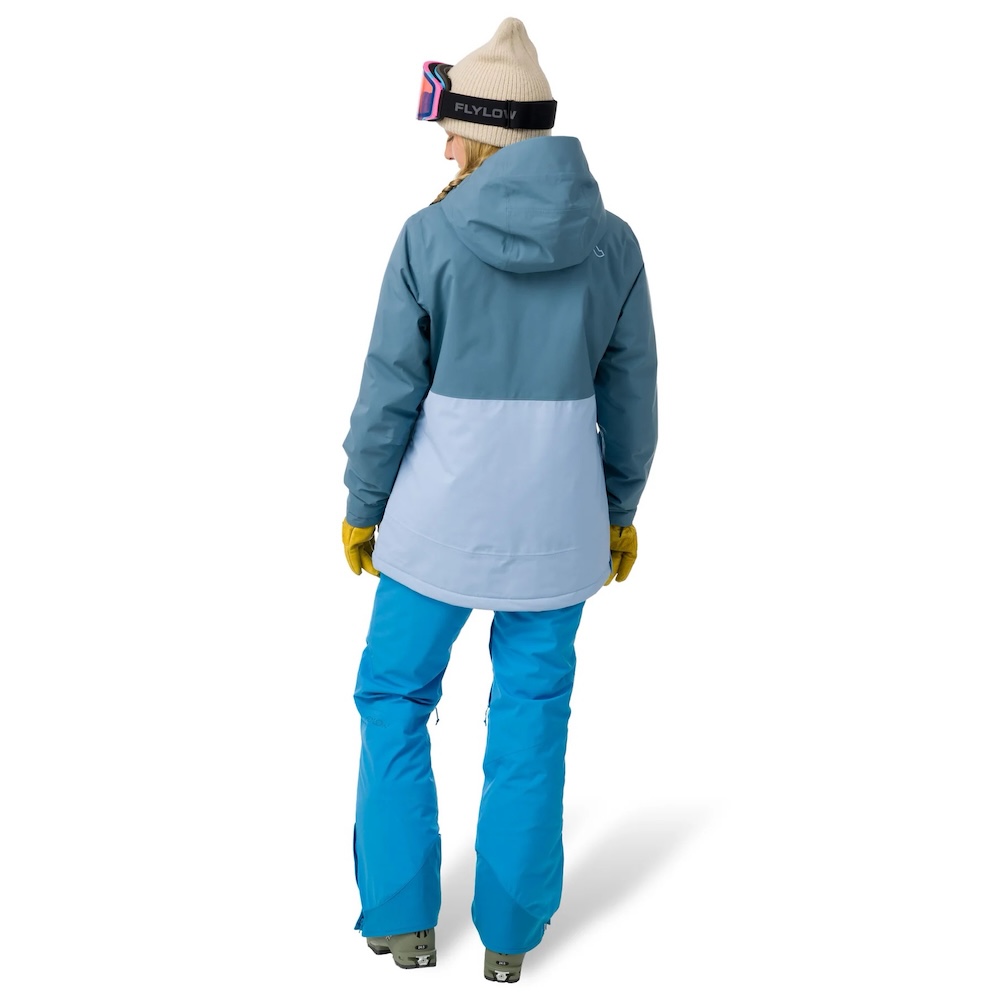
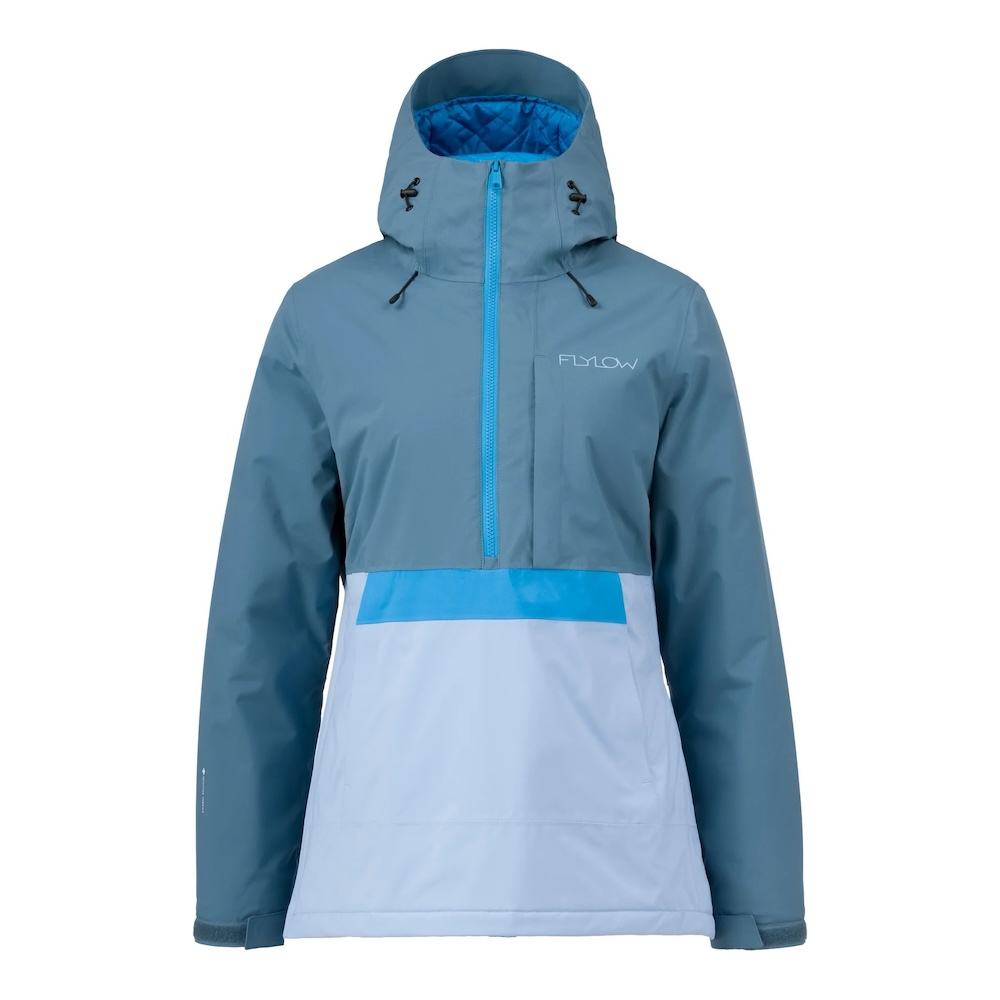
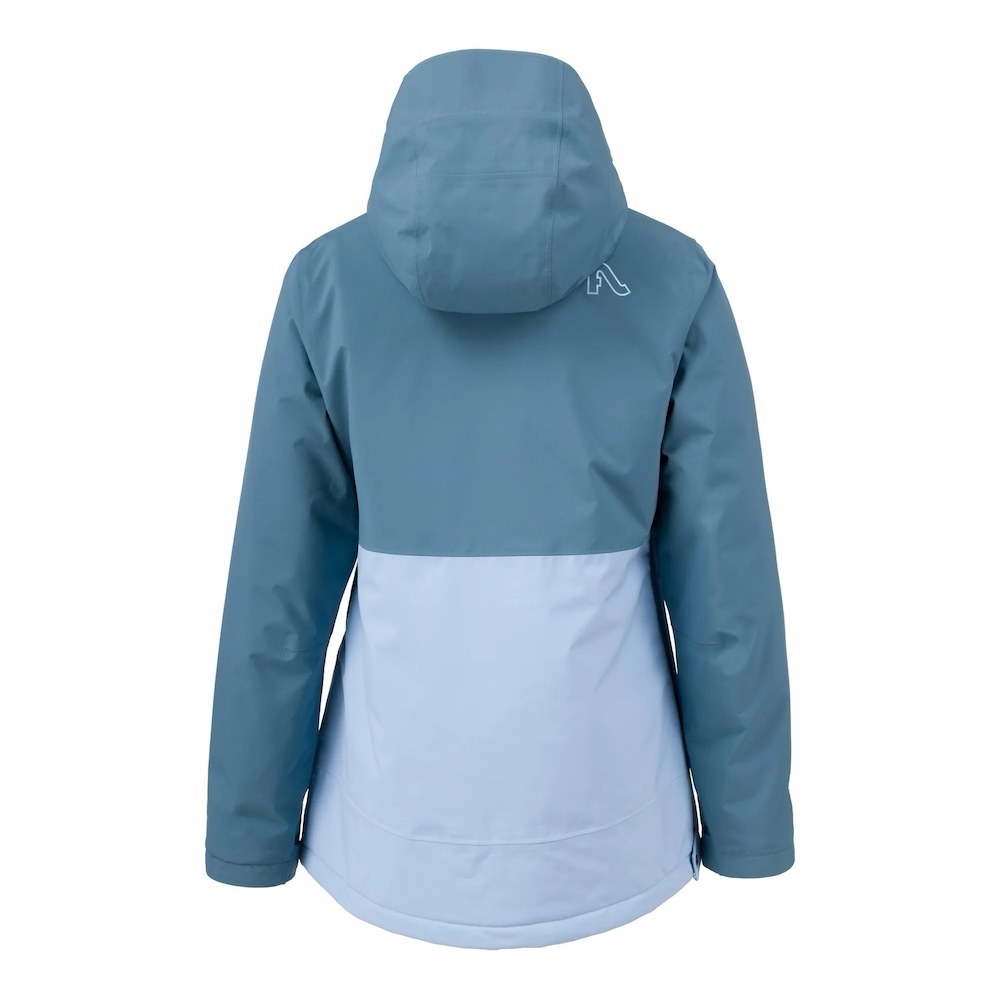
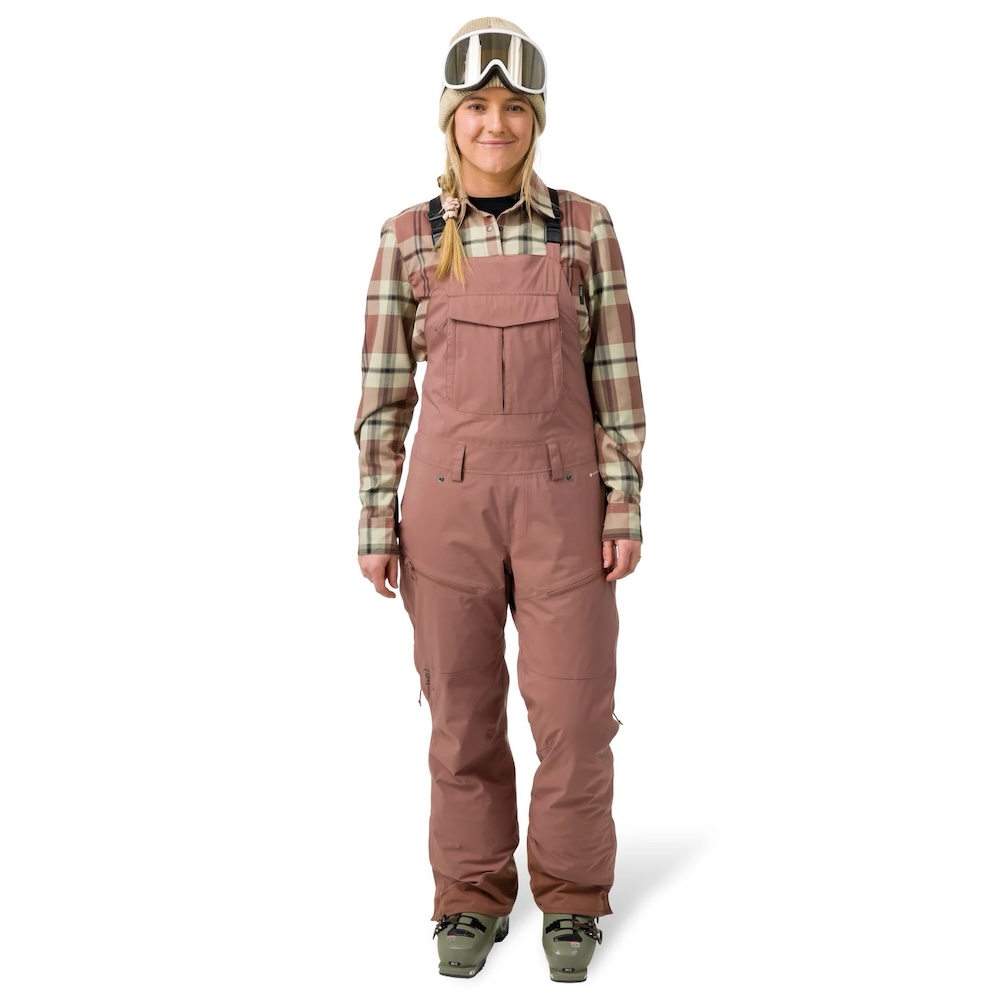
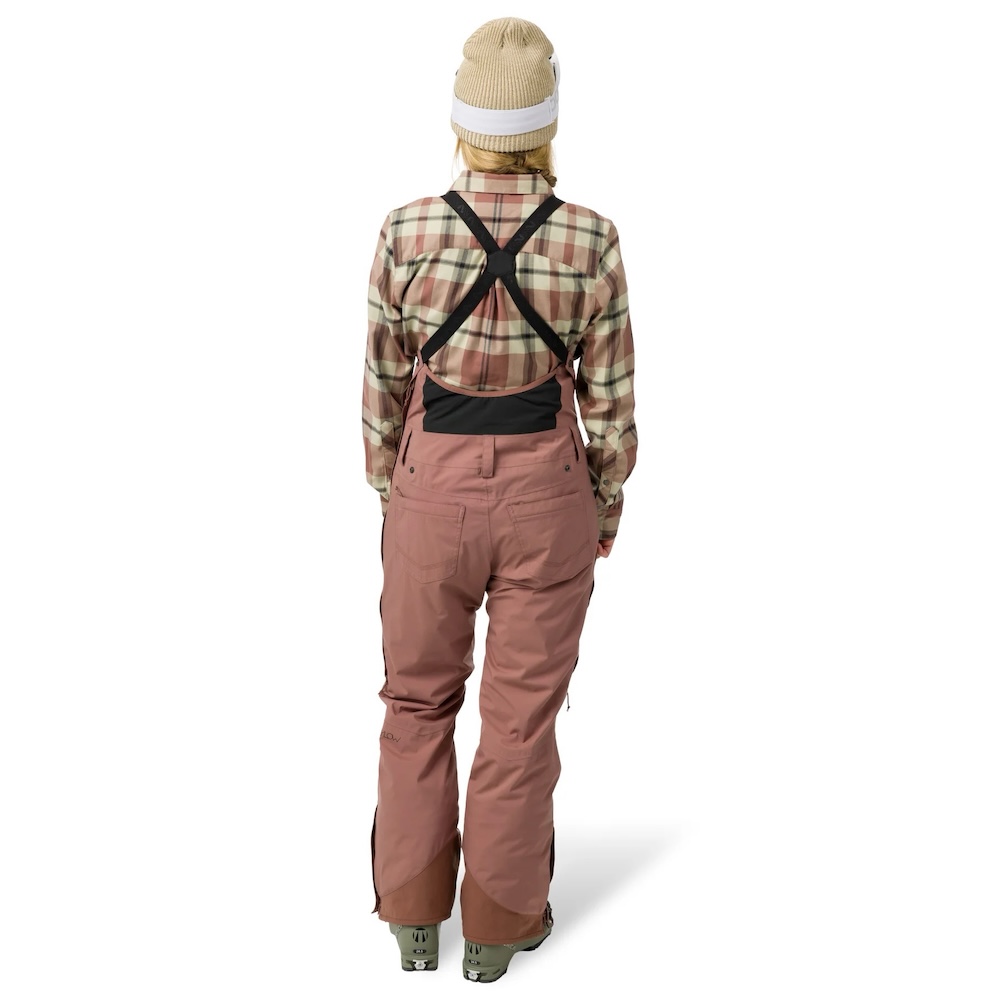
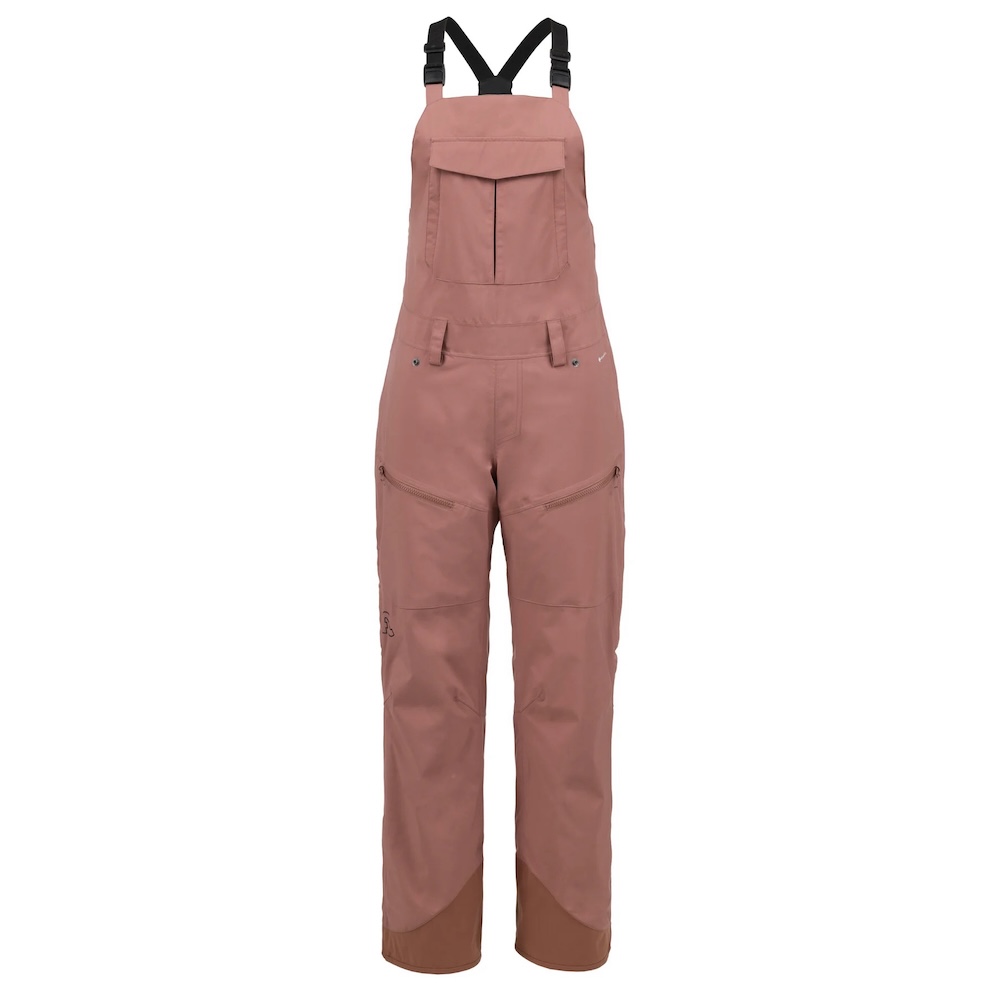
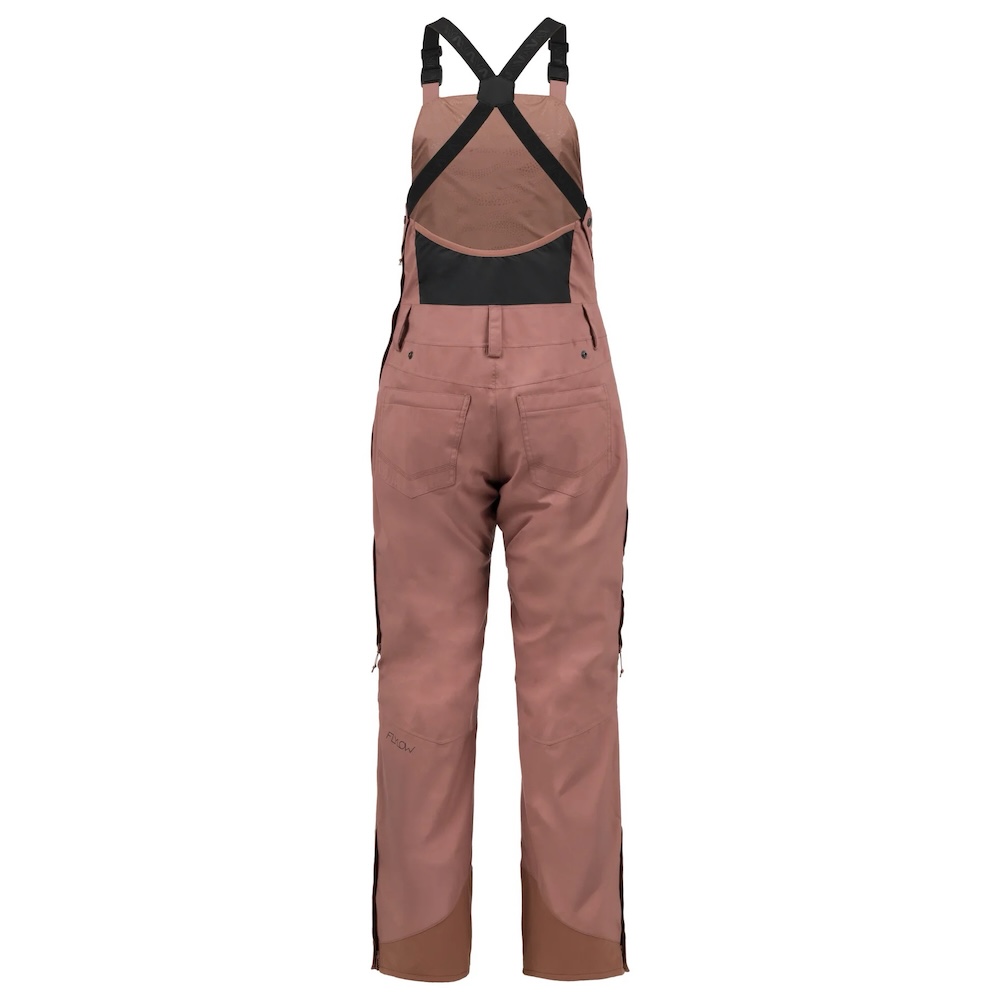
The Sphynx Bibs use a 40-g version of Flylow’s recycled “Greenloft” synthetic insulation; the Sphynx feels a bit less warm compared to Flylow’s slightly pricier Foxy Insulated Bibs, which also use 40-g insulation, but it’s PrimaLoft Black ECO. The Sarah Anorak’s 80-g Greenloft insulation is roughly twice as thick as what’s in the Sphynx Bibs, and I definitely noticed the additional warmth.
In very cold conditions (1°F / -17°C | -13°F / -26°C w/ wind chill), this kit kept me warmer than I expected, especially with thoughtful layering; when it was that cold, I wore thin baselayers and a wool midlayer jacket underneath.
The lightly insulated Sphynx Bibs provide just enough warmth for long mid-winter lift rides without making me quickly overheat on short hikes. The Sarah Anorak is even warmer and offers decent wind protection, though its shorter hem, lack of a powder skirt, snug collar, and some air leakage through the zipper make it feel a bit less storm-proof vs. longer, more structured freeride shells.
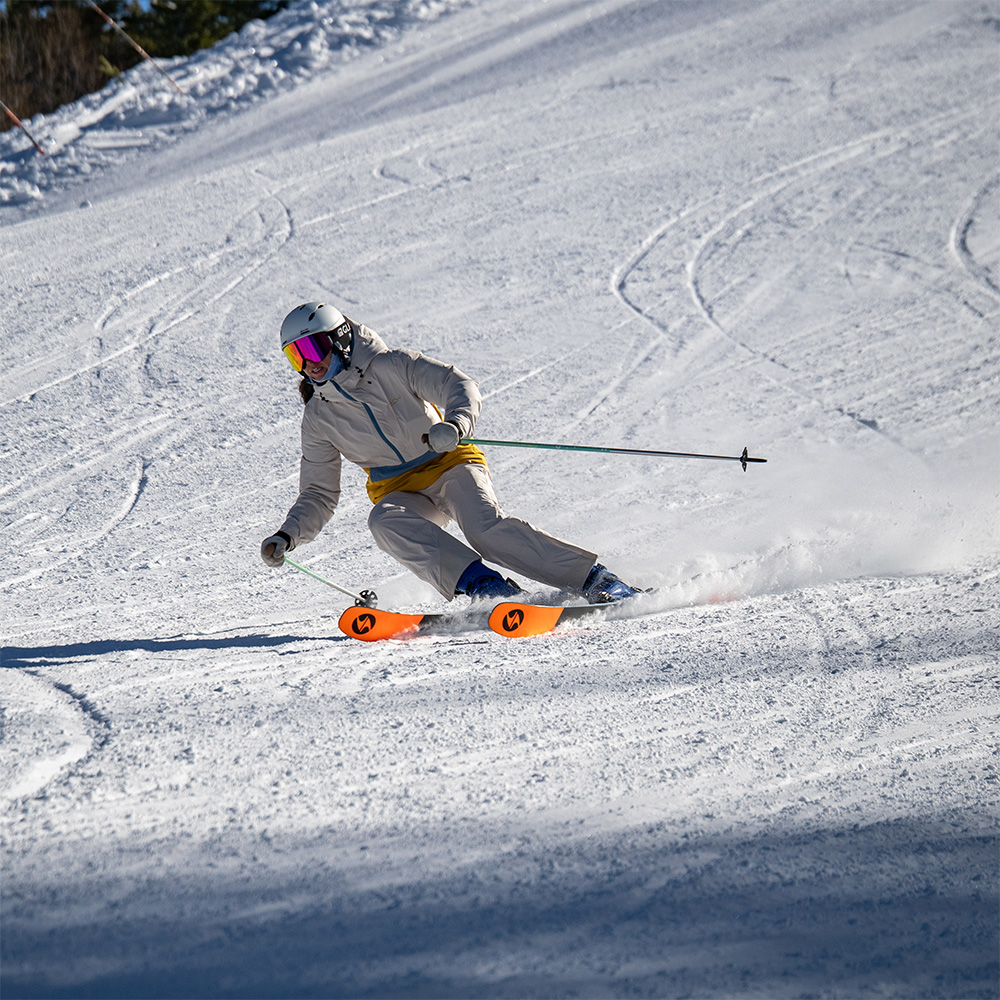
Overall, the Sphynx Bib is a bit warmer than the Strafe Eden Pant and not as warm as the Patagonia Insulated Storm Shift Pant. Similarly, the Sarah Anorak is a bit warmer than the Strafe Cloud 9 Jacket but not as toasty as the Patagonia Insulated Storm Shift Jacket.
The face fabric of the Sarah Anorak and Sphynx Bib’s 2-layer “Finish” laminate is nice and supple; despite this, I haven’t had any durability issues with either piece after roughly a season and a half of regular use.
The Sarah Anorak’s hood is big and fits over a helmet, but it doesn’t extend as far over a helmet brim as some of my favorite hoods, like those on the Peak Performance Vertical Gore-Tex Pro Jacket and Patagonia PowSlayer. As a result, the Sarah Anorak’s hood tends to catch a bit of air, occasionally causing the collar to sit snug on my neck. When fully zipped, the collar feels a bit tight and doesn’t have much structure, so on storm days, it presses against my chin instead of standing up on its own.
The long side zipper on the right side makes the Sarah Anorak easy to get on and off despite its lack of a full-length front zip, and because it’s a two-way zipper, it doubles as a vent when partially opened.
There’s also a dedicated underarm vent on the left side, so you get plenty of ventilation options. All the zippers are also glove-friendly.
The Sarah Anorak’s front kangaroo pocket is spacious and easy to access from either side. I found this pocket great for my hands or bulky items like bars or soft water bottles, but I avoided placing anything of value in here purely because I didn’t trust myself to always zip both sides shut. There’s also a small external chest pocket on the left where I keep my phone. One complaint I have about this and the full-zip Sarah Jacket is the lack of a pass pocket on the sleeve; personally, I prefer a dedicated pocket for my pass, lip balm, etc.
The sleeves of the Sarah Anorak have Velcro cuffs and wrist gaskets with thumbholes. I don’t use the thumbholes, but the gaskets don’t annoy me, and they seem to keep air from flowing up my sleeve.
The Sphynx Bibs have an excellent pocket layout for my preferences: two zippered back pockets, three chest pockets, and two upper thigh pockets on the front. The main chest pocket expands outward and is secured with Velcro; behind it are two more small zippered pockets, one accessible from each side. These zippered pockets are a good place to stash your pass if you’re wearing this kit.
The Sphynx Bibs’ elastic suspenders are easily adjustable, they don’t creep down my shoulders, and are easy to clip for easier entry / exit. The bibs have leg zips for ventilation, with the left side being extra long for easier entry / exit and bathroom breaks. The zippered pant cuffs give you a little extra room at the hem, but I found them to be wide enough to fit over my ski boots without needing to expand them.
The Sphynx Bibs also have a mesh back panel for better breathability (all the Flylow bibs I tested have this design), belt loops, and Flylow’s Snap2 system to attach them to certain Flylow jackets (though the Sarah Anorak isn’t one of them).
Overall, the Sarah Anorak and Sphynx Bib are a great value if you’re in the market for an insulated shell, prefer a slightly roomy fit, and want reliable comfort in moderate to cold winter conditions.
Flylow Sarah Jacket & Foxy Insulated Bib
MSRP: $300 (jacket) $440 (bib)
Jacket Fabric: Finish 2-layer laminate (15K/10K rated)
Jacket Insulation: Greenloft recycled synthetic (80-g)
Bib Fabric: Tactic 2-layer laminate (20K/20K rated)
Bib Insulation: PrimaLoft Black ECO recycled synthetic (40-g)
Size Tested: M (jacket) 8 (bibs)
Measured Weight: 786 g (jacket) 688 g (bibs)
Inseam: 32 in / 81 cm
Size range: XS – XL (jacket) | 2-14 (bib) w/ short & tall options
Reviewer: 5’8”, 135 lbs / 173 cm, 61 kg
Kristin Sinnott: For reference, the Sarah Jacket and Foxy Insulated Bibs are from two different lines within Flylow’s expansive collection. The Sarah Jacket sits in their more budget-friendly and resort-oriented Boundary Line, alongside the likes of the Sarah Anorak, Sphynx Bib, and Drift Bib. The insulated and uninsulated versions of the Foxy Bib are part of Flylow’s “Deep Line,” which Flylow describes as “alpine gear with a backcountry habit.”
Given this, there are significant differences in materials between the Sarah Jacket and Foxy Insulated Bibs, which I’ll outline, but I’ve very much enjoyed running them as a combo at the resort.
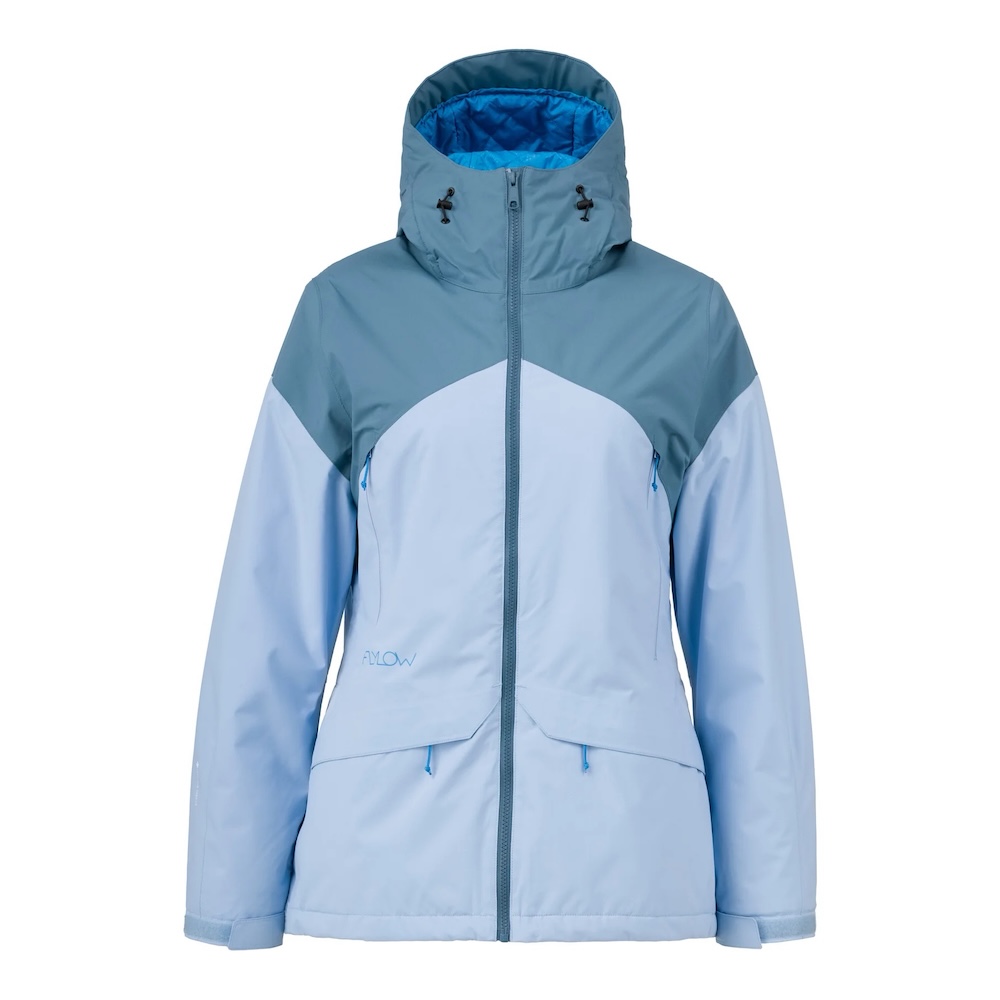
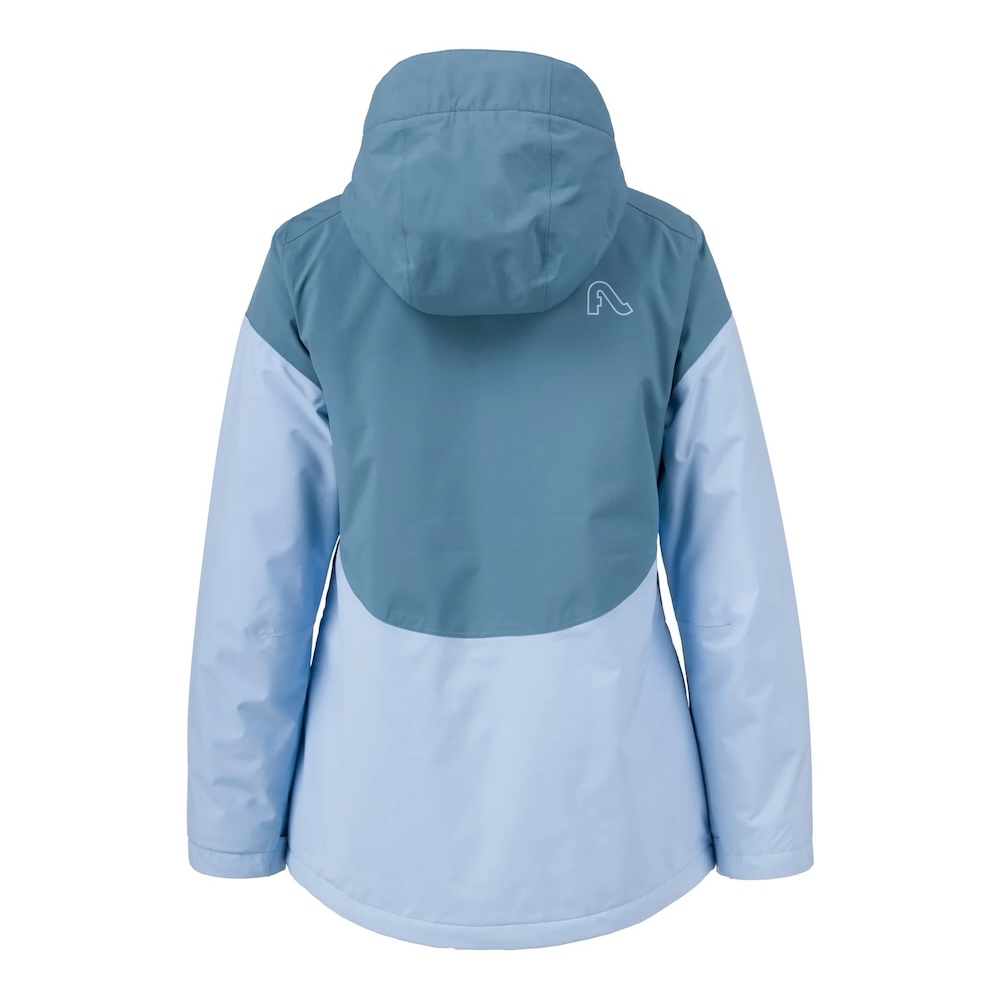
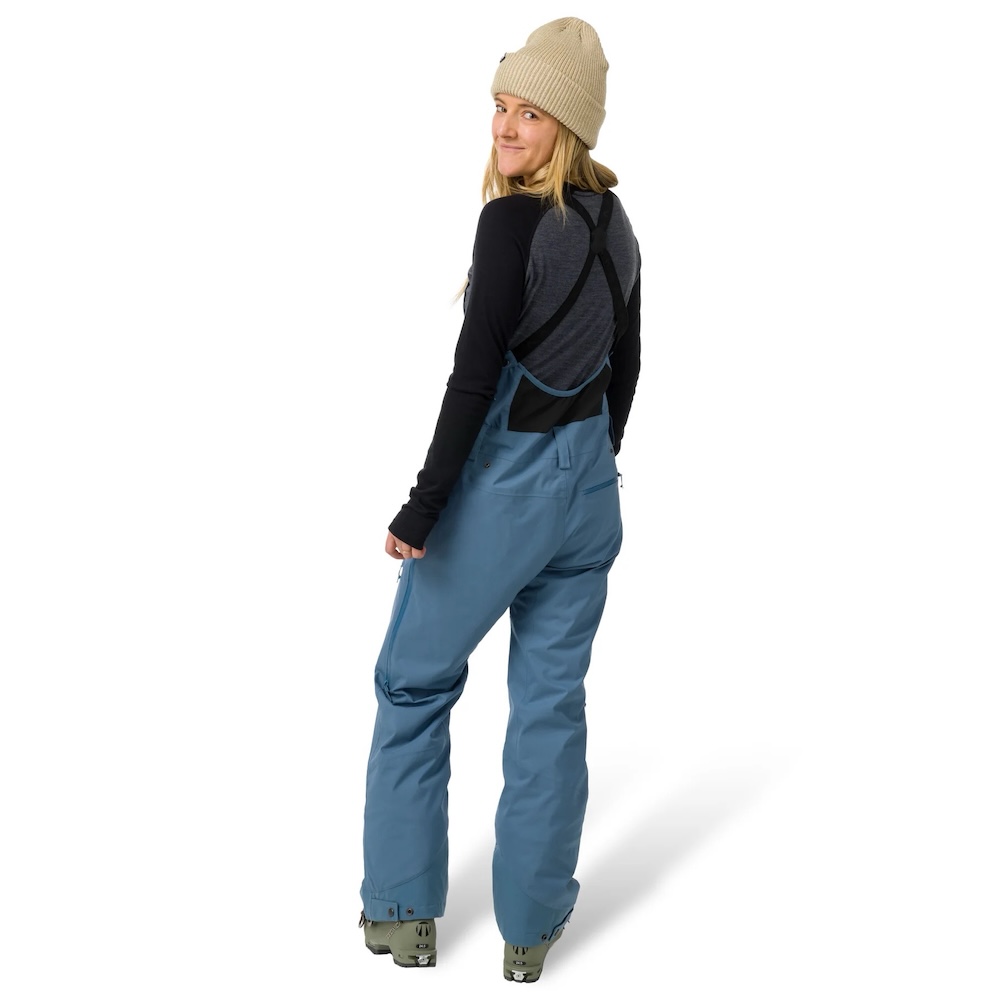
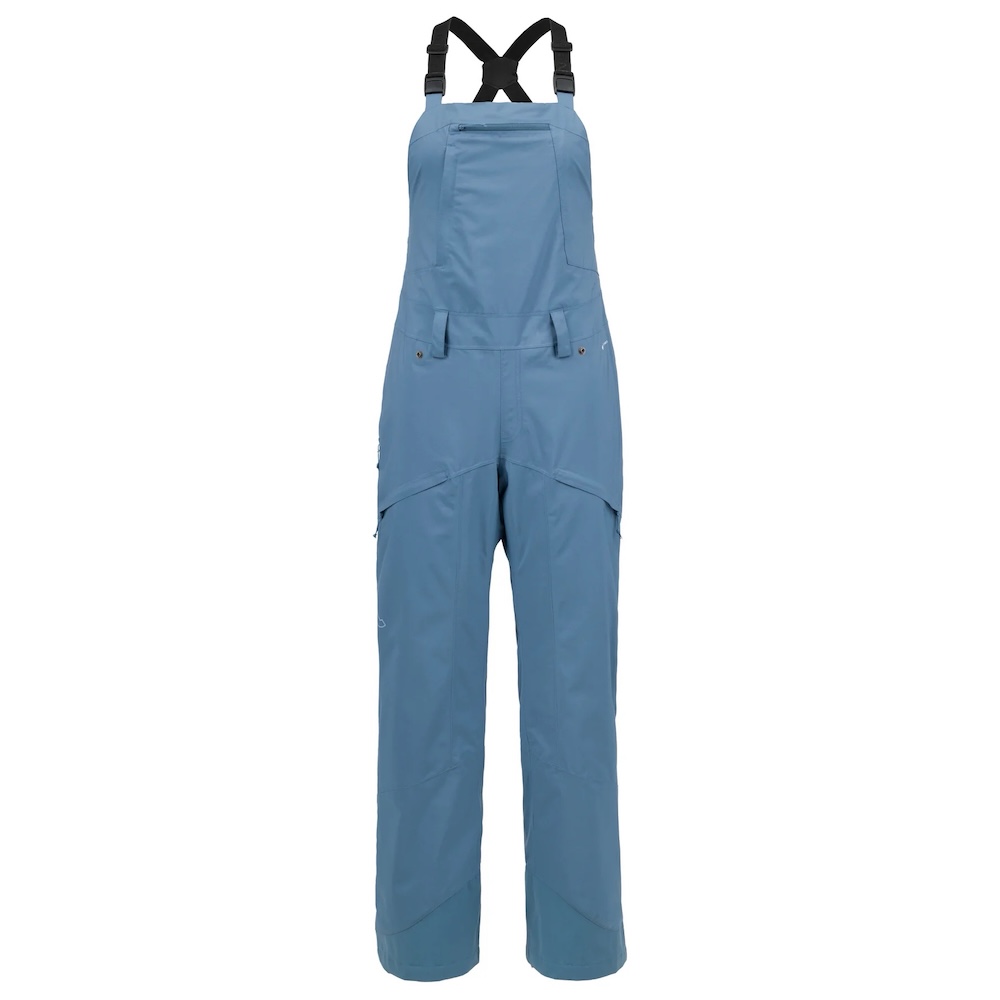
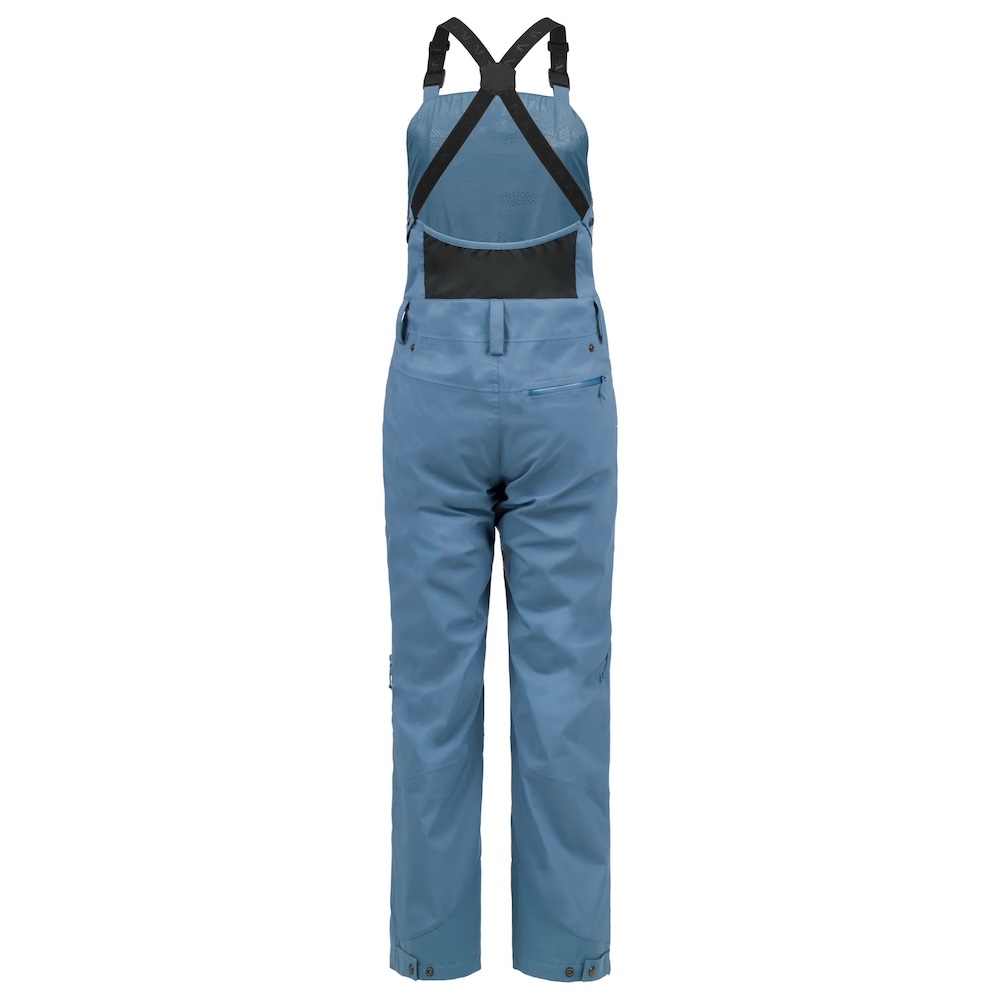
The Sarah Jacket is basically the reason I started gravitating toward insulated outerwear. Earlier versions of the Sarah Jacket kept me warm without making me feel like a walking marshmallow, and this new version is no different. It uses the same, supple Finish 2-layer laminate and 80-g Greenloft recycled synthetic insulation as the Sarah Anorak, but the full-zip Jacket version has a slightly different feature set.
The Sarah Jacket provides several pocket options; both sets of hand pockets (upper and lower) are big and actually comfortable for my hands, and there’s a roomy mesh drop-in pocket on the inside left that’s great for goggles, mittens, snacks, etc.
The one thing I still have trouble adjusting to is the lack of an external chest pocket. That’s where I usually keep my phone on lift rides, and putting it in a hand pocket instead makes me a little uneasy. The Sarah Jacket does have an internal zippered chest pocket on the right side, but I typically wear this piece when it’s really cold out. Unzipping it to grab my phone — whether to take notes or snap a photo — lets out all the warm air I’ve worked so hard to build up.
Like the Anorak, the Sarah Jacket also has wrist gaskets with thumbholes. I don’t really use the thumbholes, and I used to be pretty against wrist gaskets in general, but they honestly don’t bother me much anymore. In comparison to the gaskets on many Strafe jackets, Flylow sews them a bit farther up the arm, so they don’t bunch up as much when I wear my gloves under my jacket sleeves.
The Sarah Jacket’s underarm vents help when I inevitably overdress — very helpful on those days that start out freezing and end somewhere around 40°F / 4°C. On cold days, the Sarah Jacket’s Snap2 system and powder skirt do a great job of keeping heat in and snow out. As with the Anorak, the Sarah Jacket’s hood tends to catch some air and its collar doesn’t have much structure to it, so it tends to push on my neck a bit.
As for fit, the size Medium Sarah Jacket is a good fit for me. Its sleeves are plenty long, and the jacket fits nicely over my hips. If you have broader hips, you can cinch the bottom of the jacket so it falls on your waist instead of your hips, or you might want to size up since there isn’t a two-way zipper to open up the bottom of the jacket.
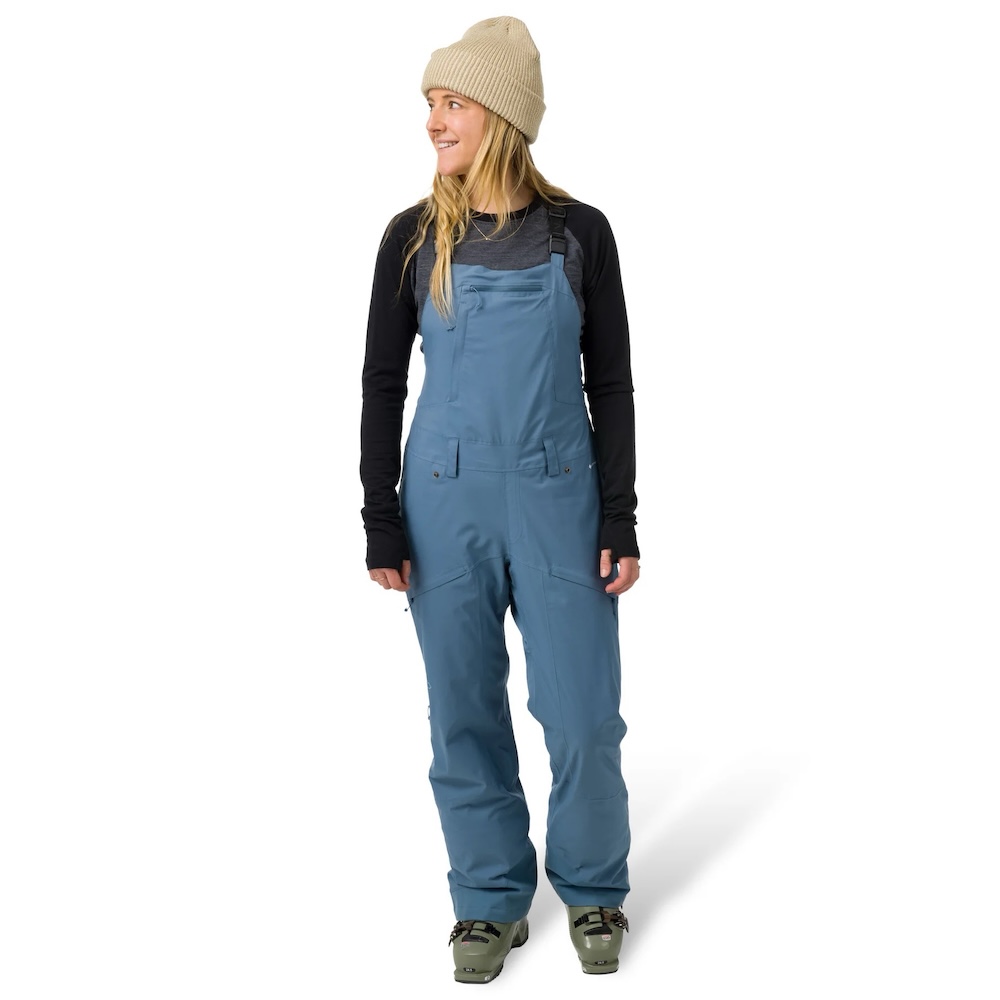
As for the Foxy Insulated Bib, I first tested a version a few years back, and it’s stayed in the lineup for good reason. Flylow describes it as: “the same durable, breathable fabric and crowd-pleasing fit you’ve come to expect from the Foxy Bib, with an added layer of insulation.” And honestly, that’s pretty spot on.
The insulation is the same weight (40-g) as the Sphynx Bib, but the Foxy Insulated Bib feels warmer to me, potentially thanks to its use of PrimaLoft Black ECO. The long two-way zipper on the left side of the Foxy is nearly identical to that of Flylow’s uninsulated Drift Bib — it works as a vent, the entry point for getting the bibs on / off, and a quick bathroom-break solution. The elastic suspenders stay put and have easy buckles that are simple to manage, even with cold fingers.
I opted for a size 8 in the Foxy Insulated Bib, following my realization that the size 6 Sphynx Bib was a tad small for me. Compared to the Flylow Drift Bib in the same size, the Foxy Insulated is a bit roomier through the rear and upper back, and it does ‘bubble out’ slightly. There are belt loops if you want to fine-tune the fit, but the size 8 generally fits me well without needing to cinch anything down. As for length, the size 8 Foxy Insulated Bib is plenty long enough for me without bunching at the base of my boots.
The Foxy Insulated Bibs’ pocket layout is good but not perfect for my particular preferences. There’s a zippered pocket on the chest that isn’t quite large enough for my phone, but there is a larger one behind it that can hold my phone; that’s the one I end up using most. None of the pockets have feature expandable bellows, so whatever you’re carrying sits right against your body. The thigh pockets are deep and can fit a phone, but I don’t personally store mine there because it’s not the most comfortable place to hold a rectangular object. Lastly, there’s also a zippered pocket on the back right.
On snowy and/or cold days, the combination of the Foxy Insulated Bib and Sarah Jacket is one of my go-to kits. With just a baselayer, they keep me plenty warm on most days, and if temps really drop, I can add a midlayer and still feel comfortable. They’re not what I’d pick for warm spring days, but the vents help a good bit for the occasional mid-winter bootpack. As with the Anorak, the Sarah Jacket’s 15K/10K rated fabric isn’t what I’d choose for super wet weather, but I haven’t had any issues with the Foxy’s higher-end 20K/20K fabric. And, for their respective specs and feature sets, I think both are compelling values.
Patagonia Insulated Storm Shift Jacket & Pants
MSRP: $549 (jacket) $449 (pants)
Fabric: Gore-Tex ePE 2-layer laminate (150-denier face fabric)
Insulation: Thermogreen recycled synthetic (60-g jacket sleeves & pant / 100-g jacket torso)
Size Tested: Small
Measured Weight: 830 g (jacket) 743 g (pants)
Inseam: 31.5 in / 80 cm
Size range: XS – XXL
Reviewer: 5’8”, 135 lbs / 173 cm, 61 kg
Kristin Sinnott: Patagonia says their Insulated Storm Drifter Jacket and Pants are the warmest shells in their snowsports collection (they also offer an uninsulated version that still features a bit of warmth via a fleece lining).
The first thing I noticed about the Insulated Storm Shift kit was the fabric. Its 2-layer Gore-Tex ePE laminate feels notably more robust and structured than the softer, more supple fabrics on the other insulated pieces in this roundup. I haven’t yet had durability issues with any of the kits in this roundup, but I do think the Storm Shift will prove the most durable in the long run. The downside is that this kit doesn’t compress as well when packing it up for a trip.
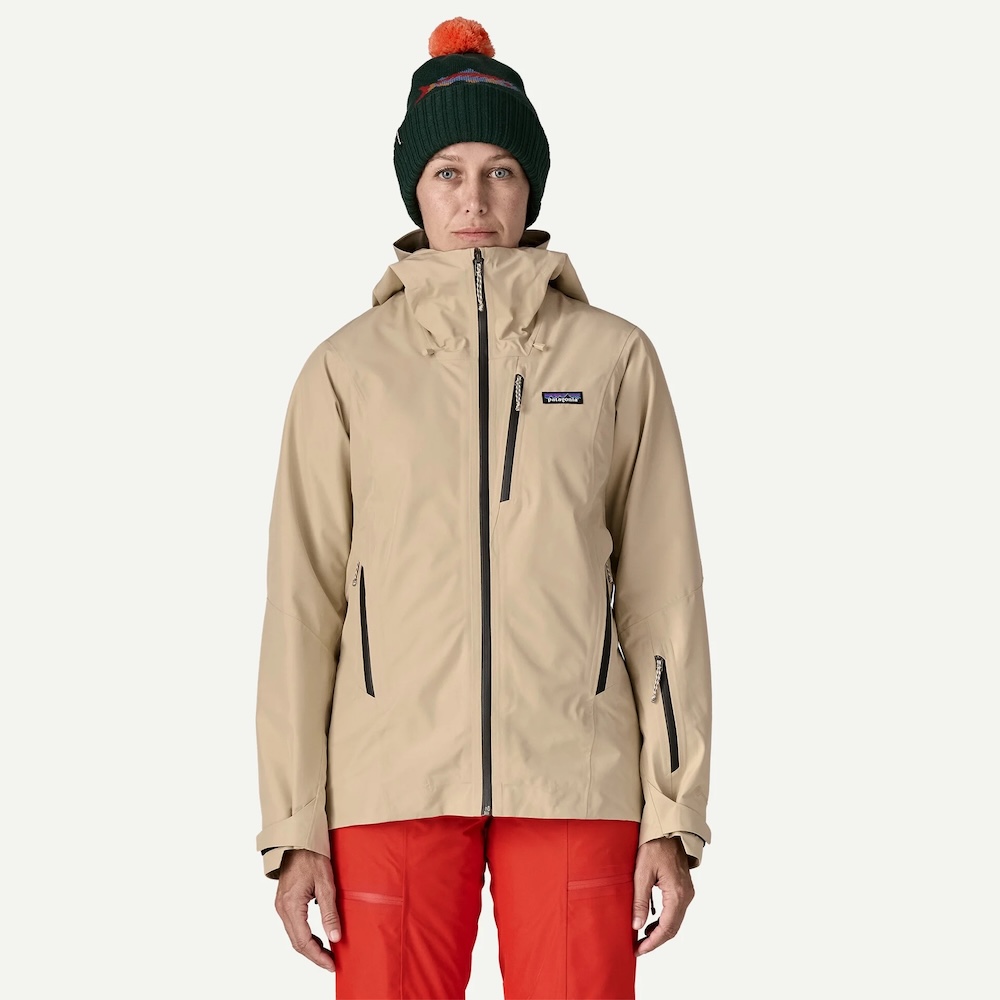
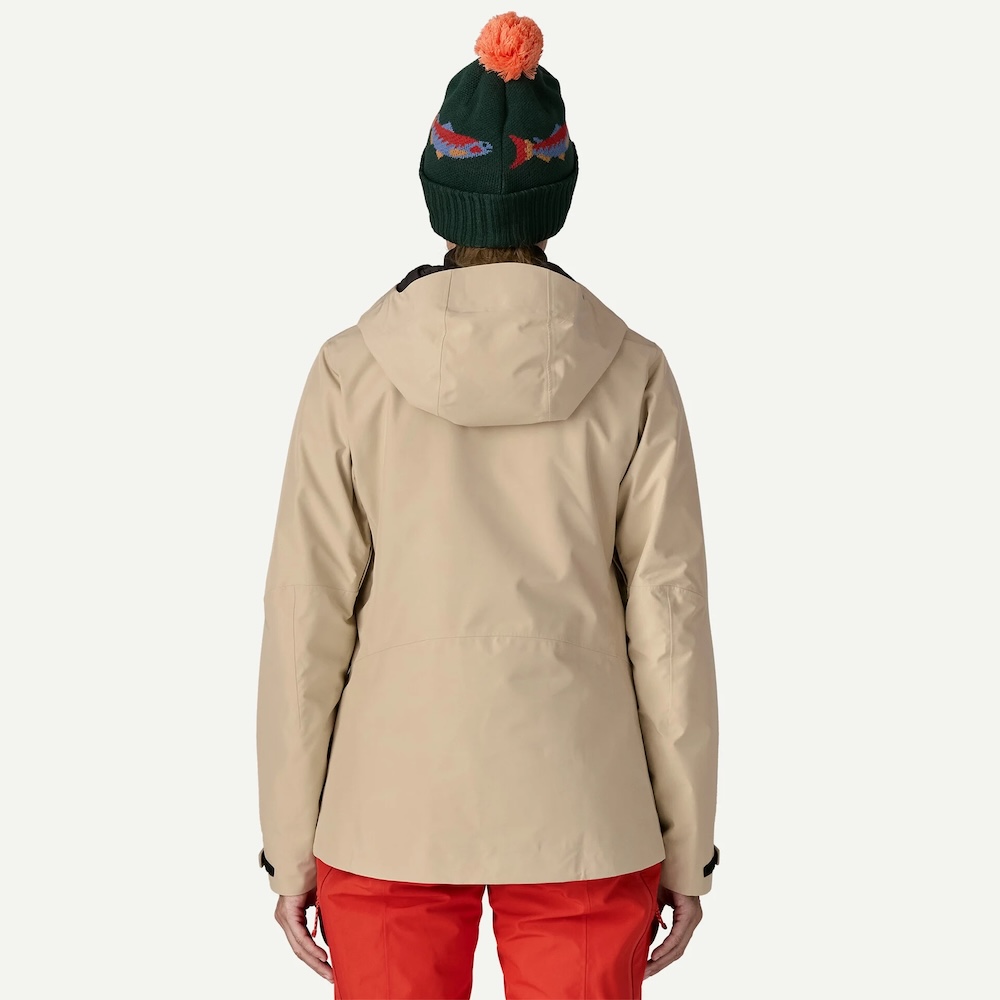
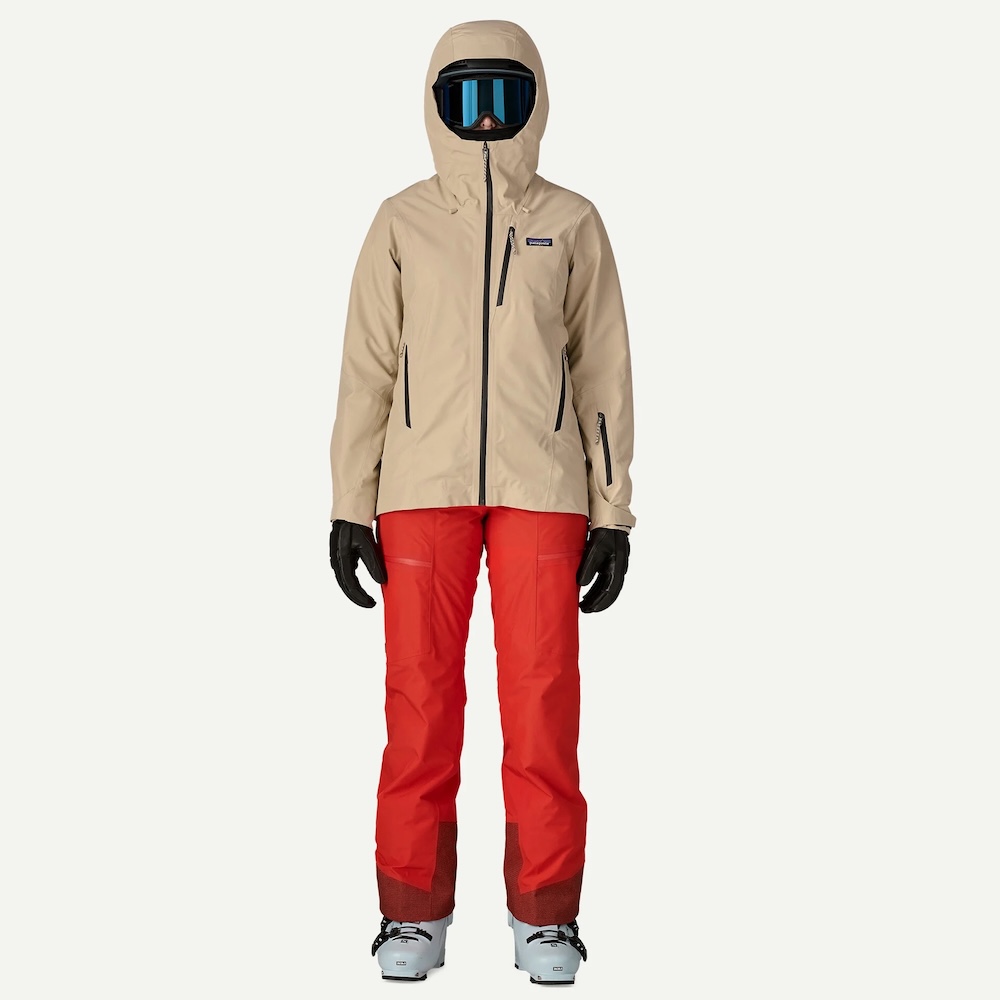
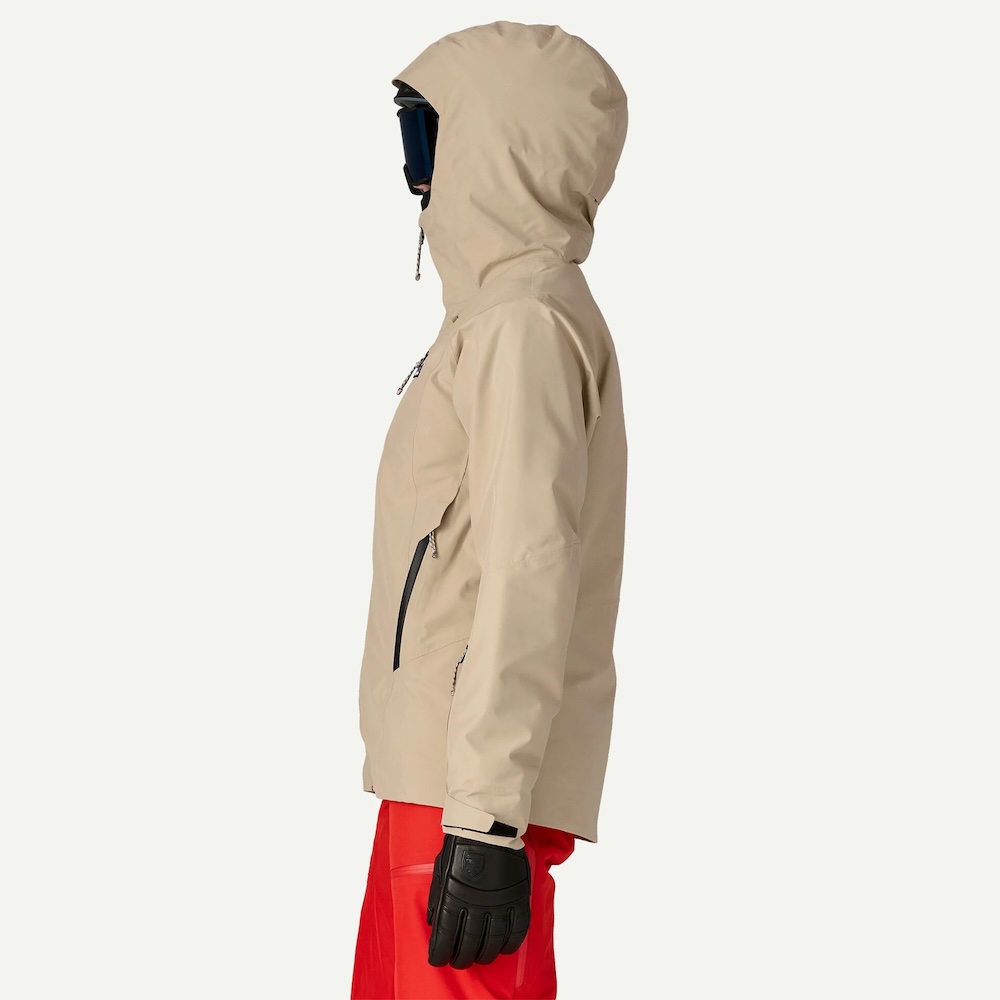
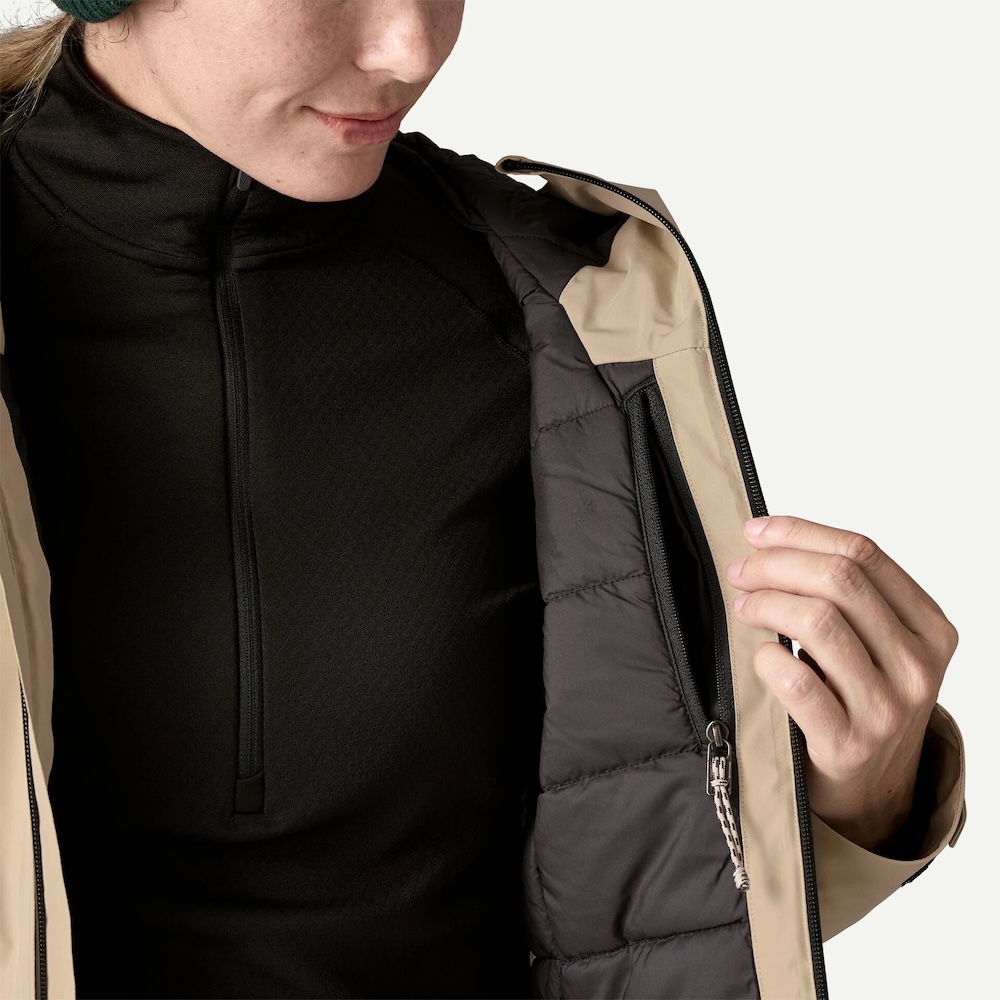
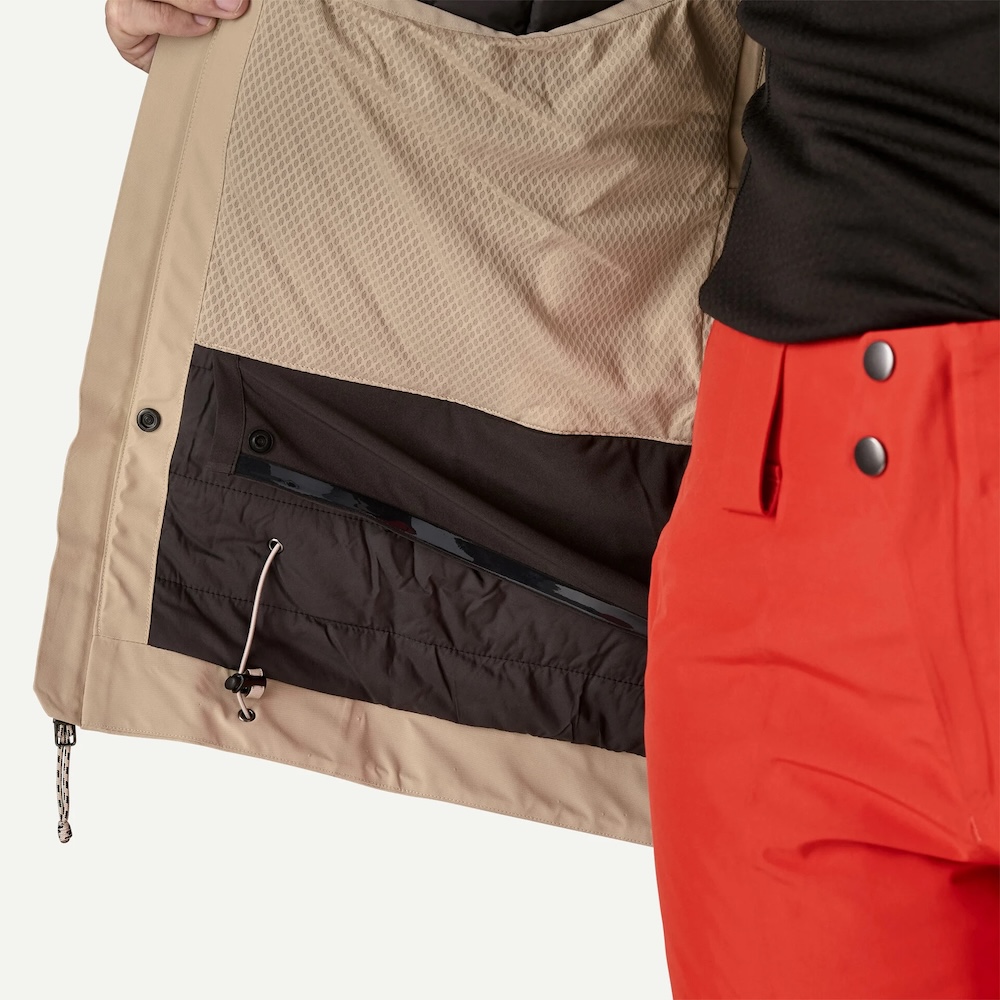
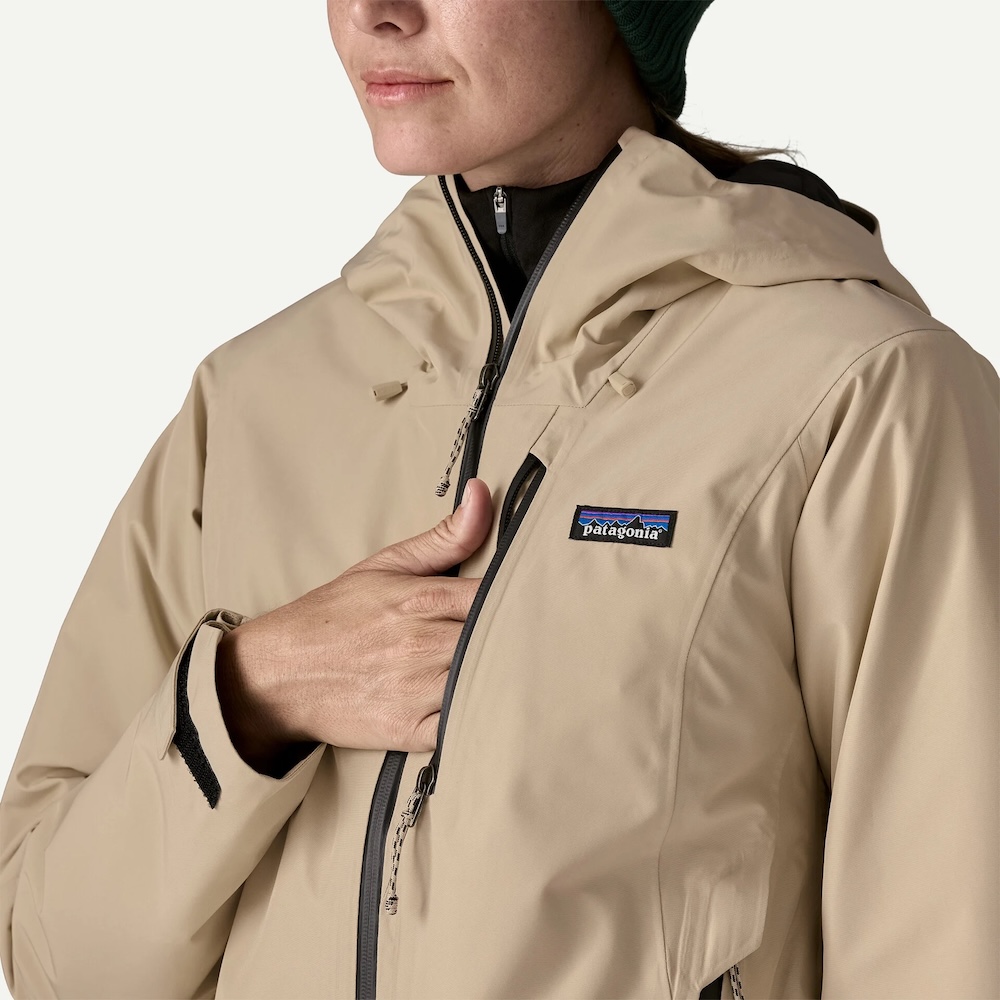
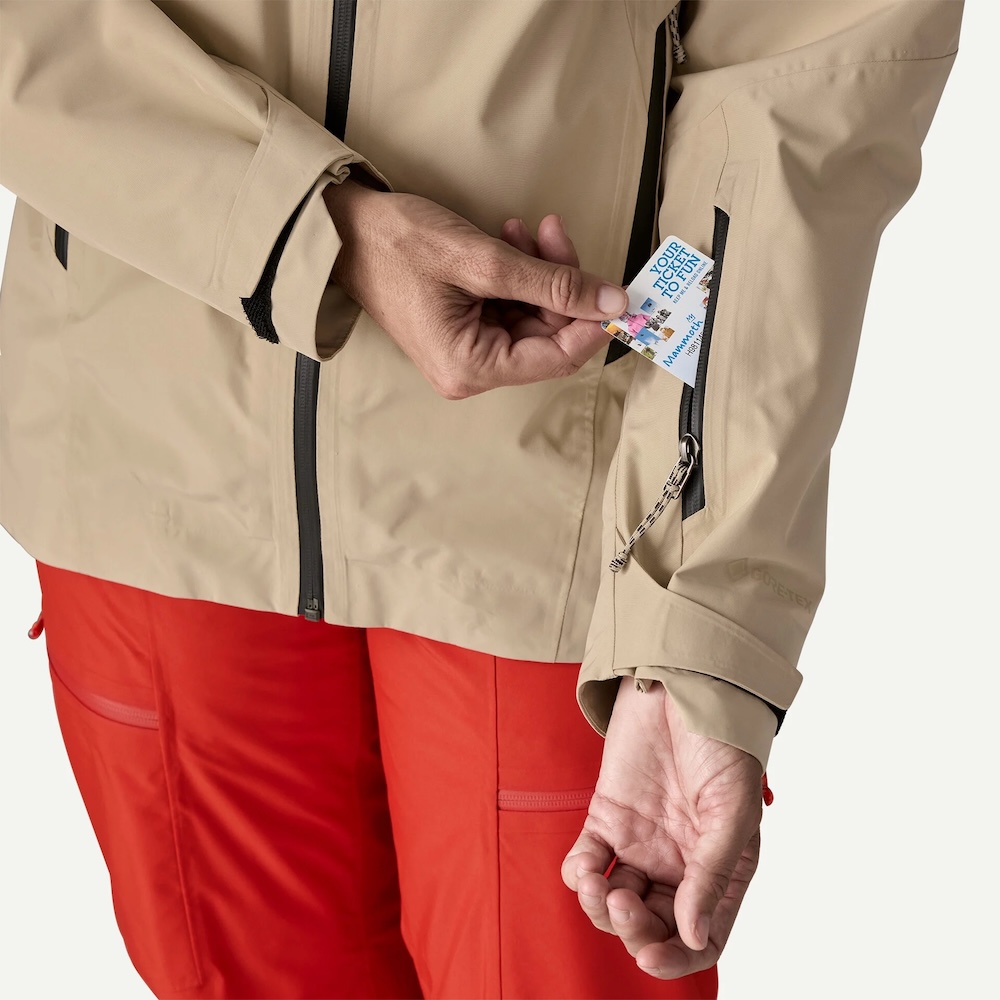
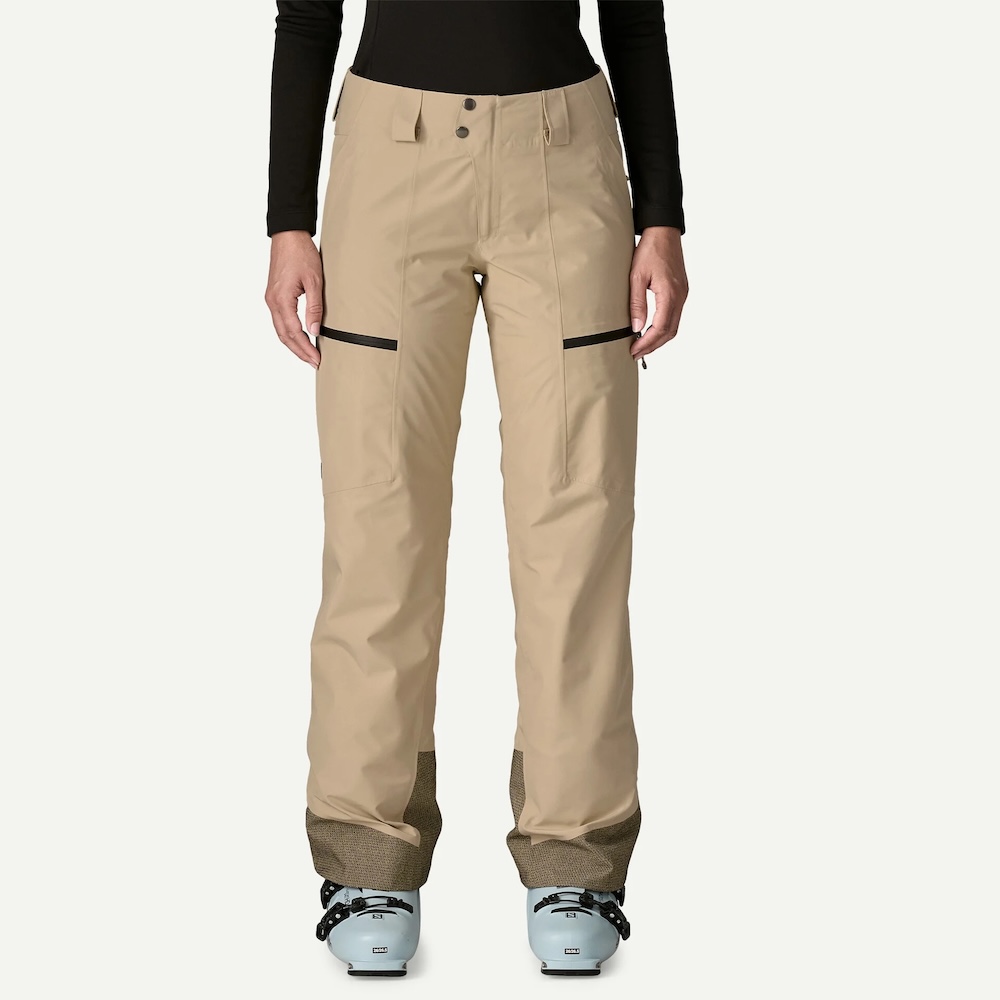
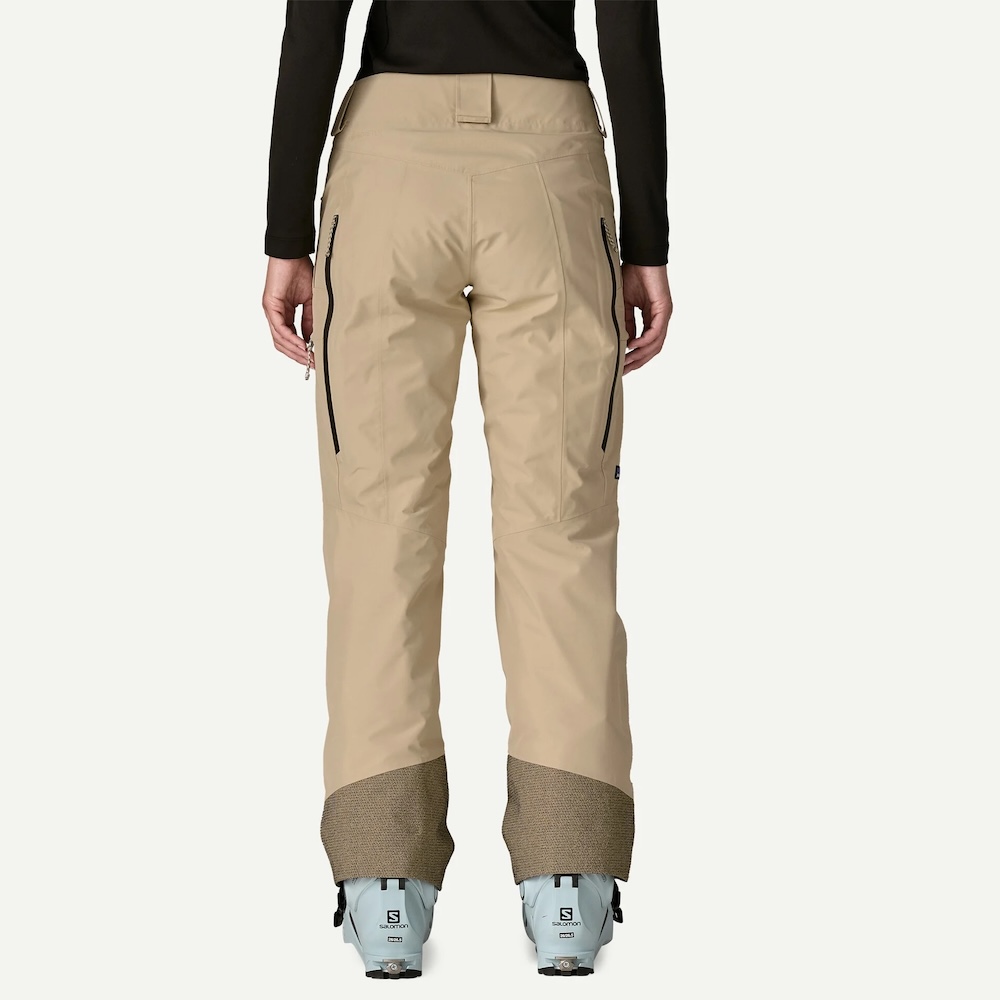
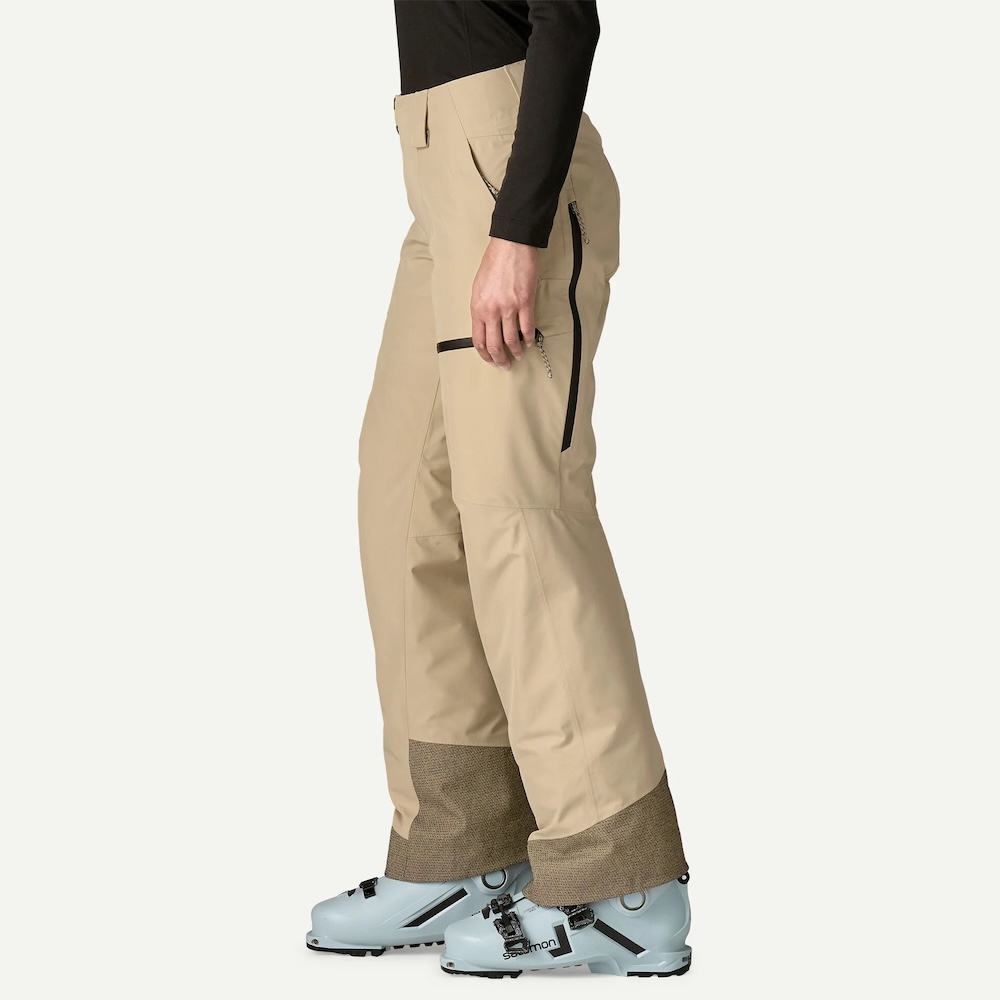
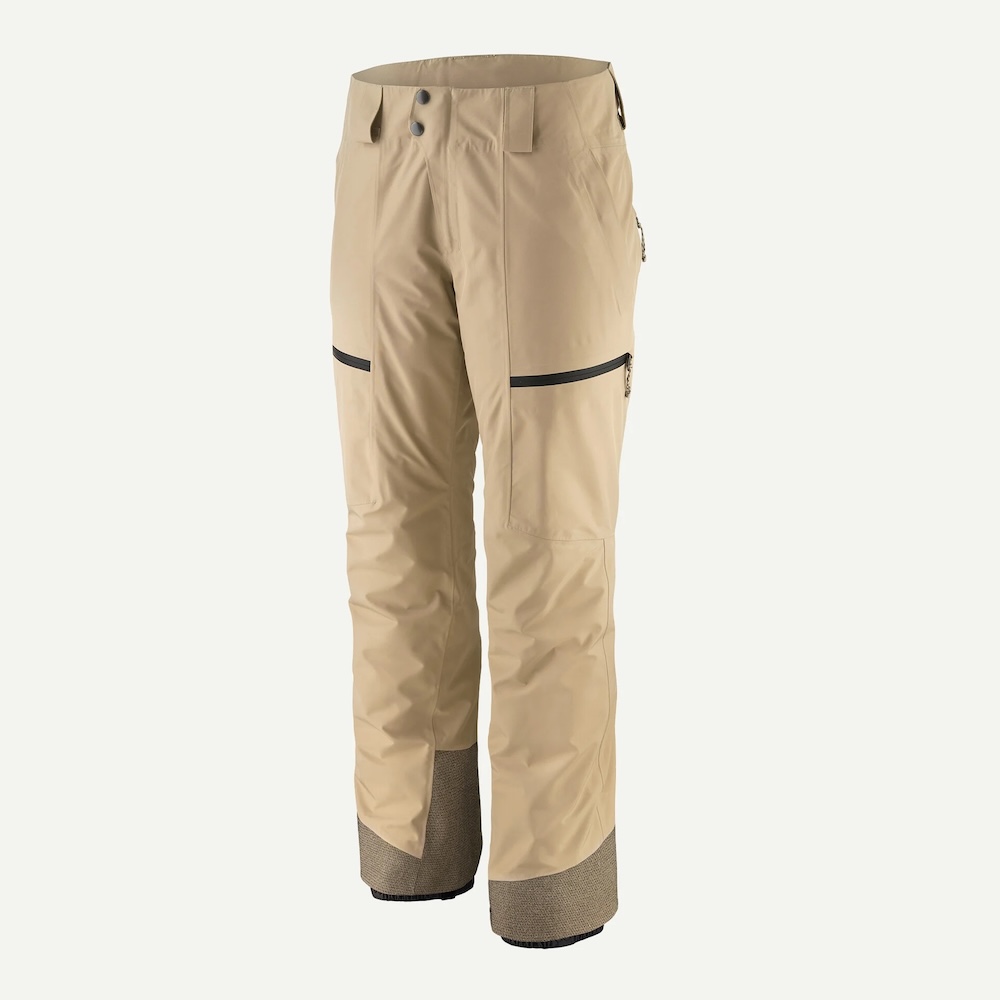
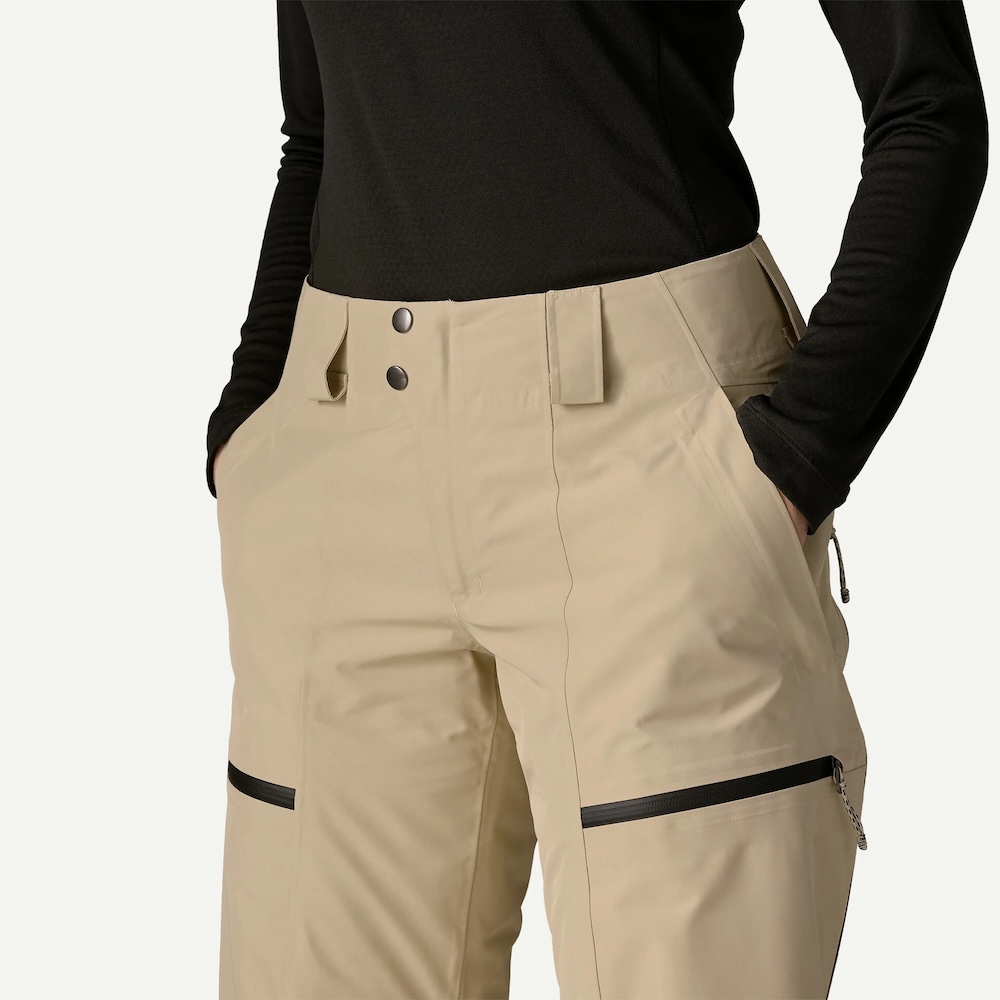
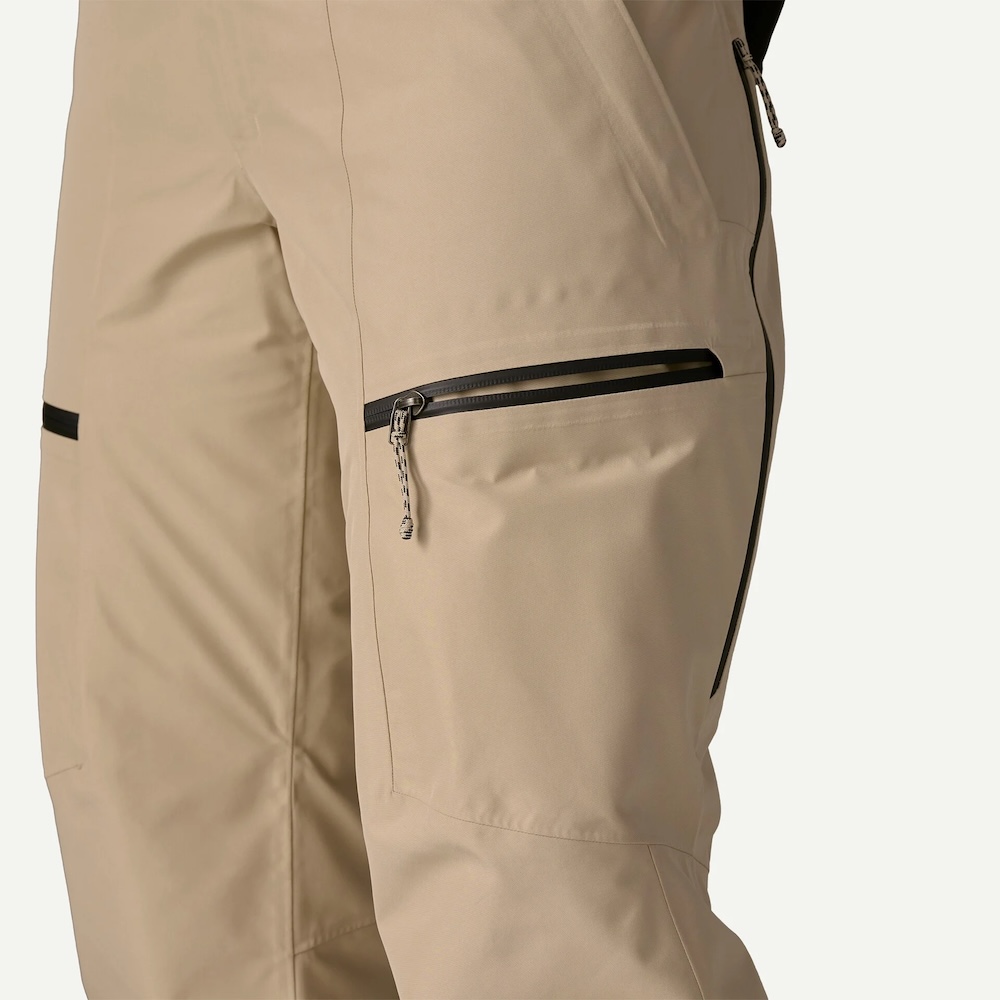
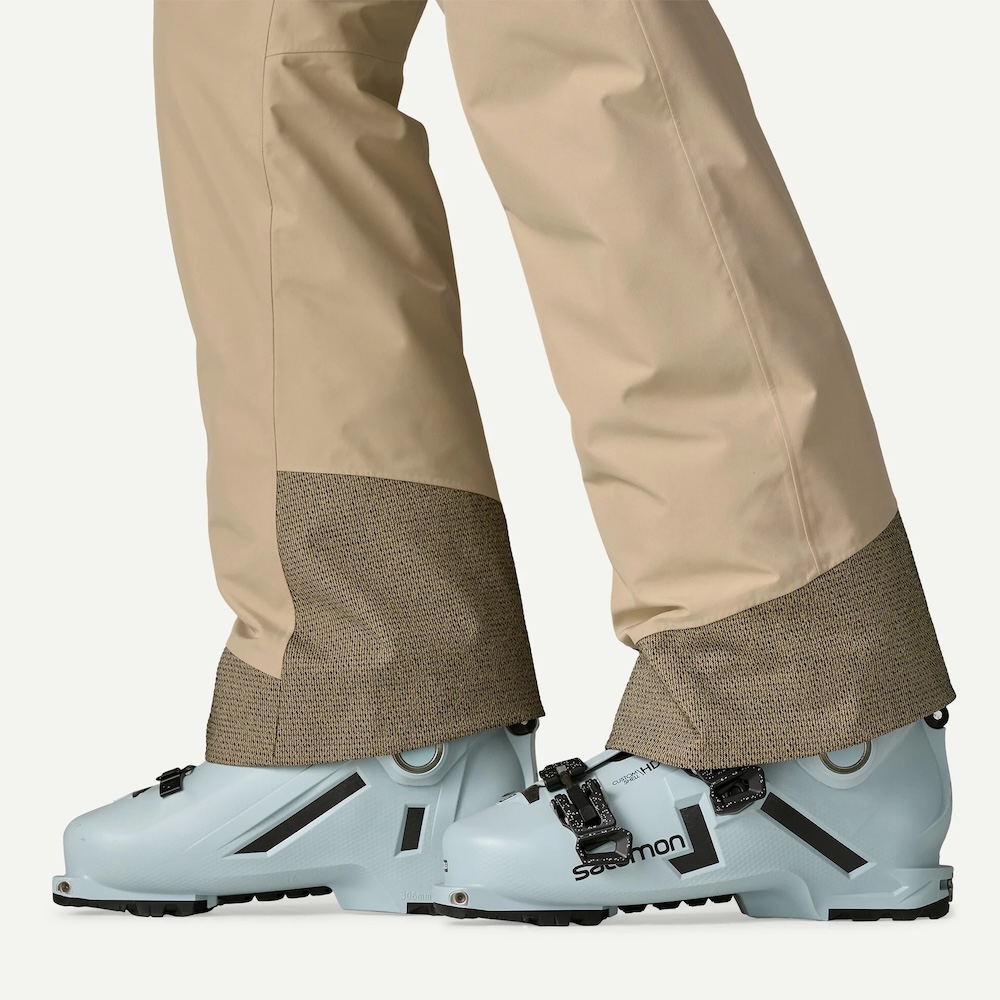
The second standout feature is the baffled interior liner. Unlike many insulated ski jackets that use a slick hanging lining, the Storm Shift’s interior feels soft and warm to the touch. In between that soft interior and burly outer fabric, Patagonia uses a 60-g version of their Thermogreen recycled insulation in the pants; the jacket features the same insulation through the sleeves but opts for a heavier 100-g version through the torso. Based on numbers alone, the Insulated Storm Shift Jacket should be the warmest jacket in this roundup, and my on-mountain testing confirmed this.
I tested the Insulated Storm Shift Jacket and Pant in a size Small. While a Small was my ideal size in the Patagonia PowSlayer kit, the Storm Shift runs noticeably smaller; a size Medium would have been the better choice for me. The sleeves on the size Small Storm Shift Jacket are actually wider than those on the size Medium Flylow Sarah Anorak, but the Storm Shift’s armpits feel snug, which I really noticed with midlayers. Despite this, the size Small Storm Shift Jacket’s cuffs extend farther onto the tops of my hands than other jackets, which does help with coverage, and the cuff Velcro tabs are easy to grab with gloves on.
As for storage, the Storm Shift Jacket has a pass pocket on the lower left sleeve, and the main chest pocket is just big enough to hold my phone. Its dual hand pockets are pretty large and positioned so that they’re still accessible under most backpacks, and there’s an internal mesh drop-in pocket for goggles, gloves, etc.
The Storm Shift’s hood is big and substantial — more protective and less prone to catching wind than the hoods on the Flylow and Strafe jackets here. Overall, the Storm Shift feels more protective and rugged than those lighter, softer options.
The Storm Shift jacket has pretty long pit zips for venting, and a powder skirt that’s on the narrow side with a single small snap. You can also snap the skirt out of the way when you’re not using it, which I appreciated. With the size Small, the hem felt a little short, and when I was riding the lift, I occasionally felt cold air creeping in. A size Medium would likely solve that.
Similar to the jacket, I also should have gone with a size Medium for the Storm Shift Pant. The size Small’s waist fits me fine when fully opened (there are internal velcro tabs to tighten the fit), but I wish the pants were slightly longer. When I’m on the lift, I sometimes feel air coming in at the lower back because of that shorter rise (and the shorter jacket).
Like the jacket, the Insulated Storm Shift pants have a soft, warm-feeling interior liner and light but very comfortable 60-g Thermogreen insulation, which feels a bit warmer overall than the Flylow Sphynx Bib. The Insulated Storm Shift Pant has external thigh vents lined with mesh; the vents aren’t especially long and don’t open up super wide, but they still help on warmer days and/or if I start working up a sweat. The Flylow bibs have large vents.
The Storm Shift Pant features dual, slanted pockets for your hands, as well as dual pockets above the knee. They don’t have bellows / pleats, so bulkier items sit directly against the leg, but there is an internal mesh sleeve that helps secure small items.
Overall, the Patagonia Insulated Storm Shift Jacket and Pants feel more substantial, protective, and a bit warmer than the softer, more supple insulated kits in this roundup. The tradeoff is less compressibility and a slightly bulkier overall feel, but these pieces make for solid long-term investments if you prioritize durability and warmth. Just know that the Storm Shift pieces run smaller than some of Patagonia’s other snow outerwear, such as the uninsulated PowSlayer kit.

Strafe Cloud 9 Jacket & Eden Pants
MSRP: $399 (Jacket) $399 (Pants)
Fabric: Flytec Defend Pro 2-layer laminate (10K/10K rated | 75-denier face fabric & 20-denier lining)
Insulation: PrimaLoft Silver | 60-g jacket body / 40-g jacket sleeves / 25-g pants
Size Tested: Medium
Measured Weight: 754 g (jacket) 518 g (pants)
Size Range: XS – XXL
Reviewer: 5’8”, 135 lbs / 173 cm, 61 kg
Kristin Sinnott: I tested the Strafe’s insulated Cloud 9 Jacket and Eden Pants, both in a size Medium, through some of the coldest days last season.
When I first tried on the Eden Pants, I thought I would run into issues keeping the back of the waistband up. It felt low, in part because the crotch felt slightly short, but once I started skiing, that initial concern disappeared. The Velcro tabs on the outside of the waistband make it easy to fine-tune the fit, and I appreciated that the adjustments didn’t add bulk under my jacket. There are also traditional belt loops if you prefer to run a belt. The pants are the right length for me, and the cuffs are wide enough to fit over all my ski boots, despite their lack of a zipper to expand them.
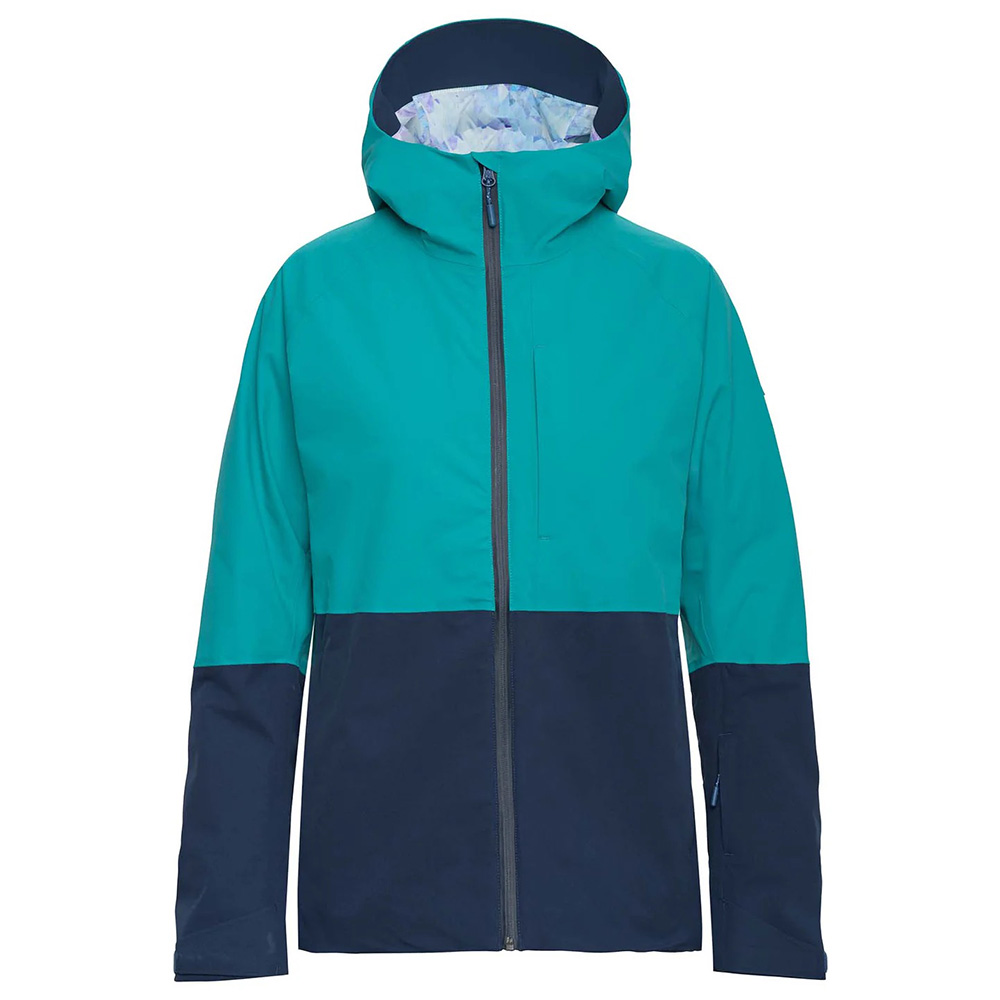
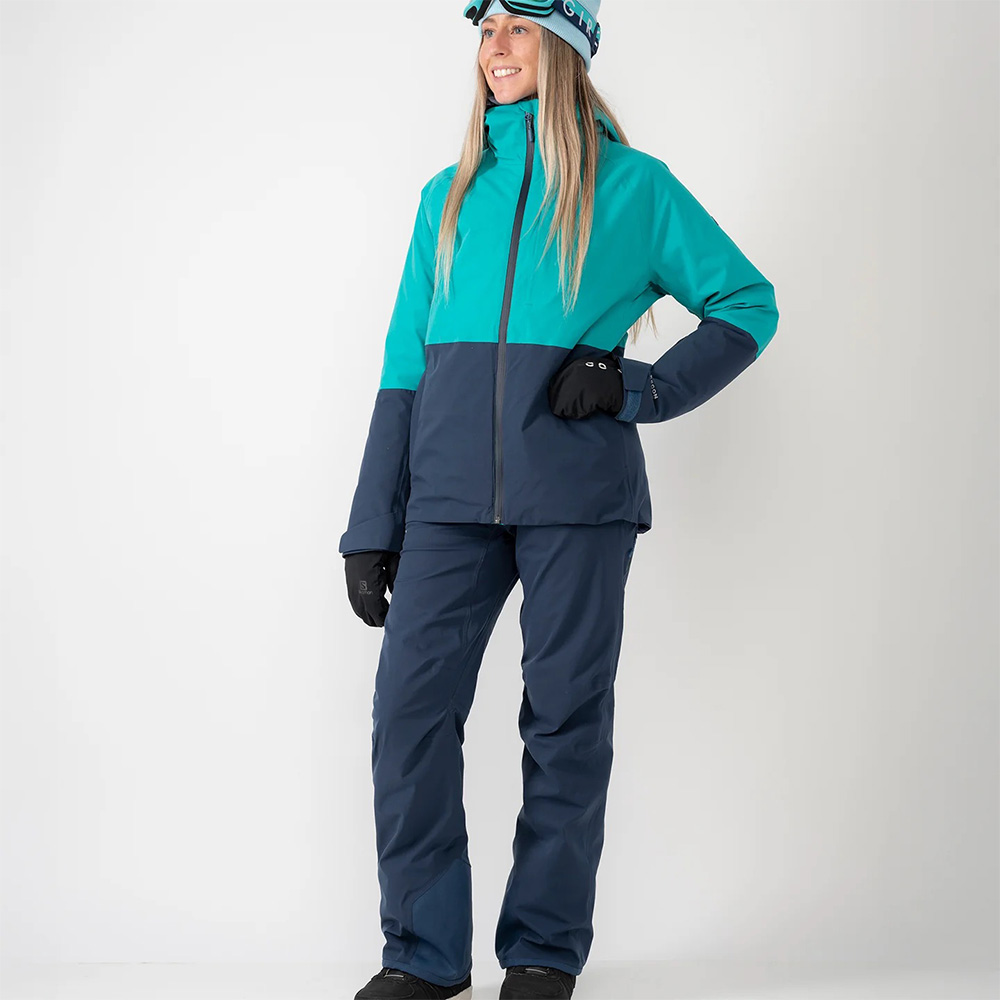
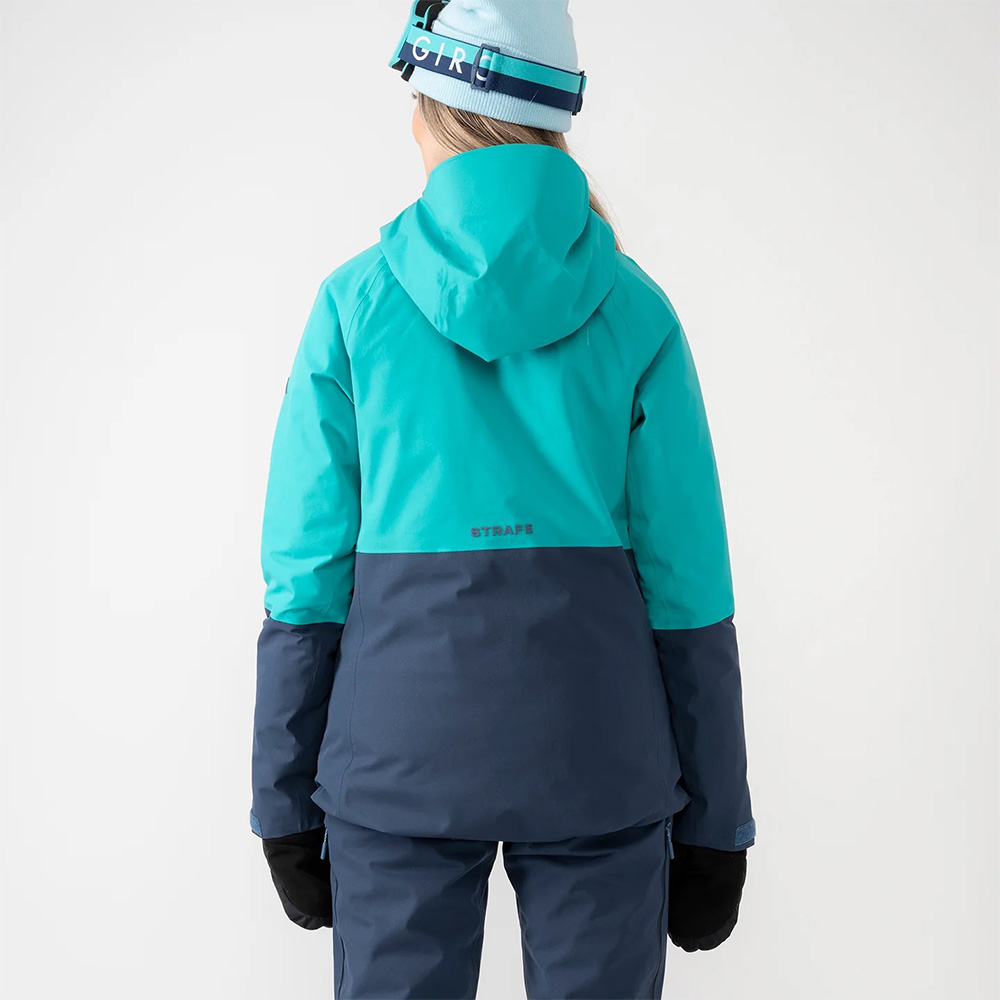
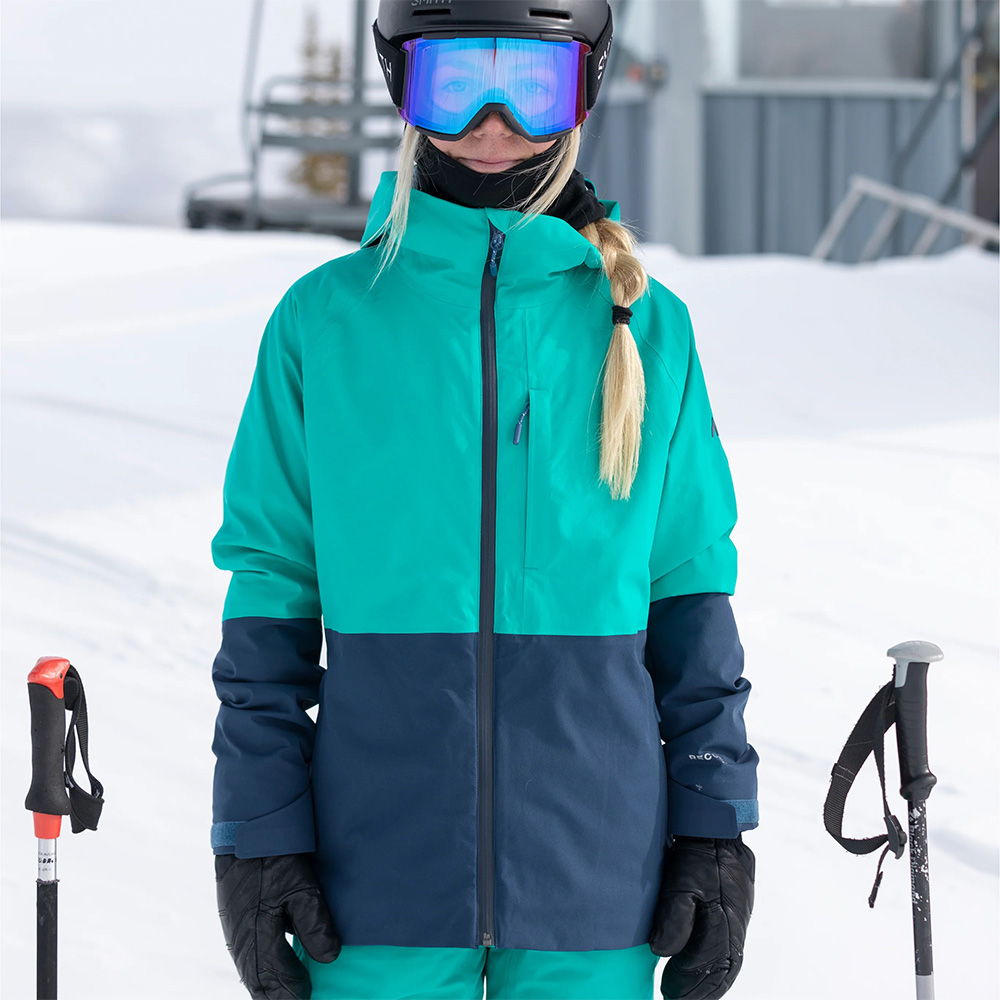
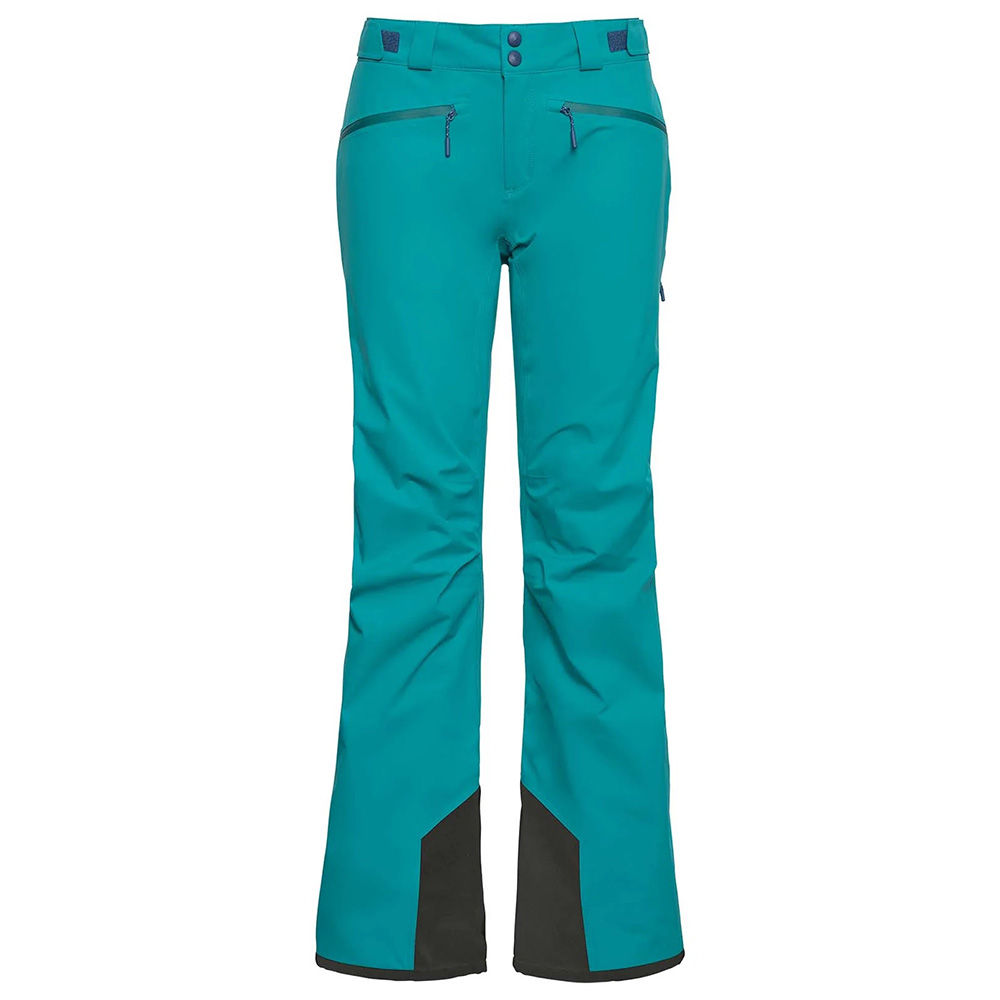
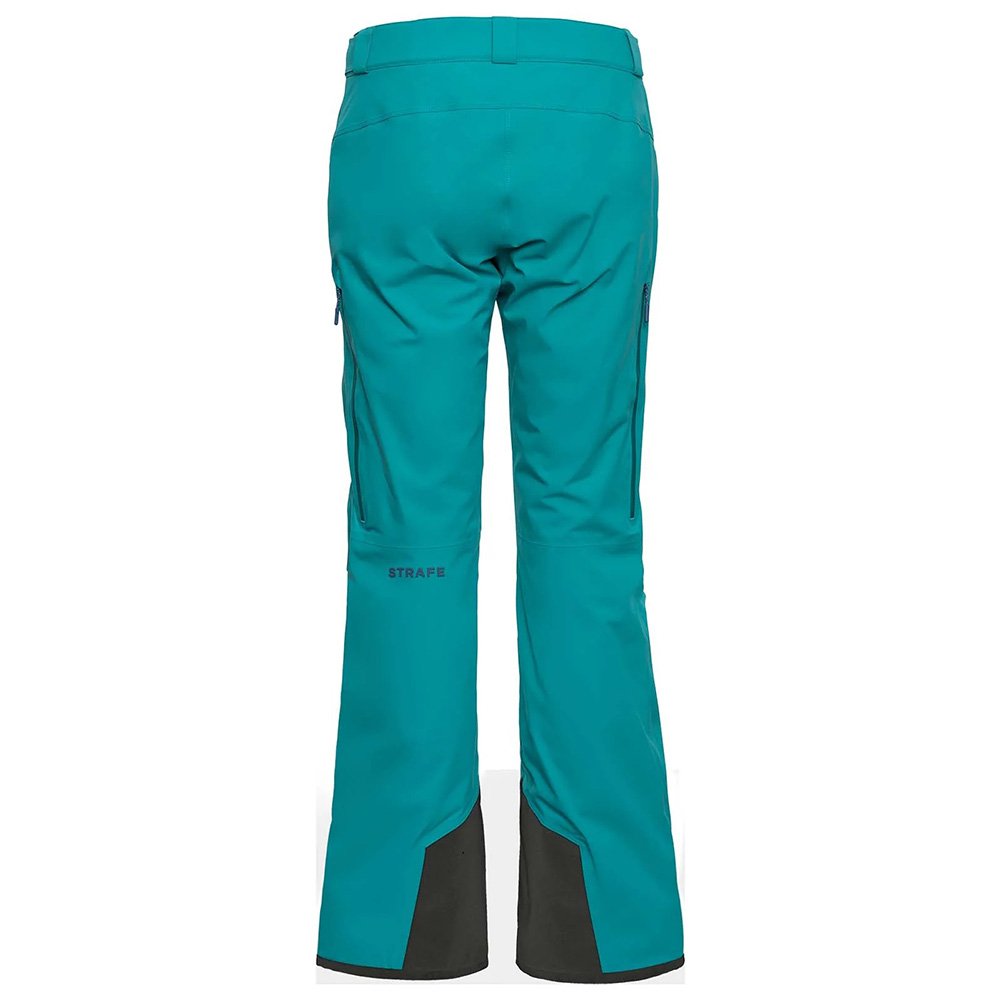
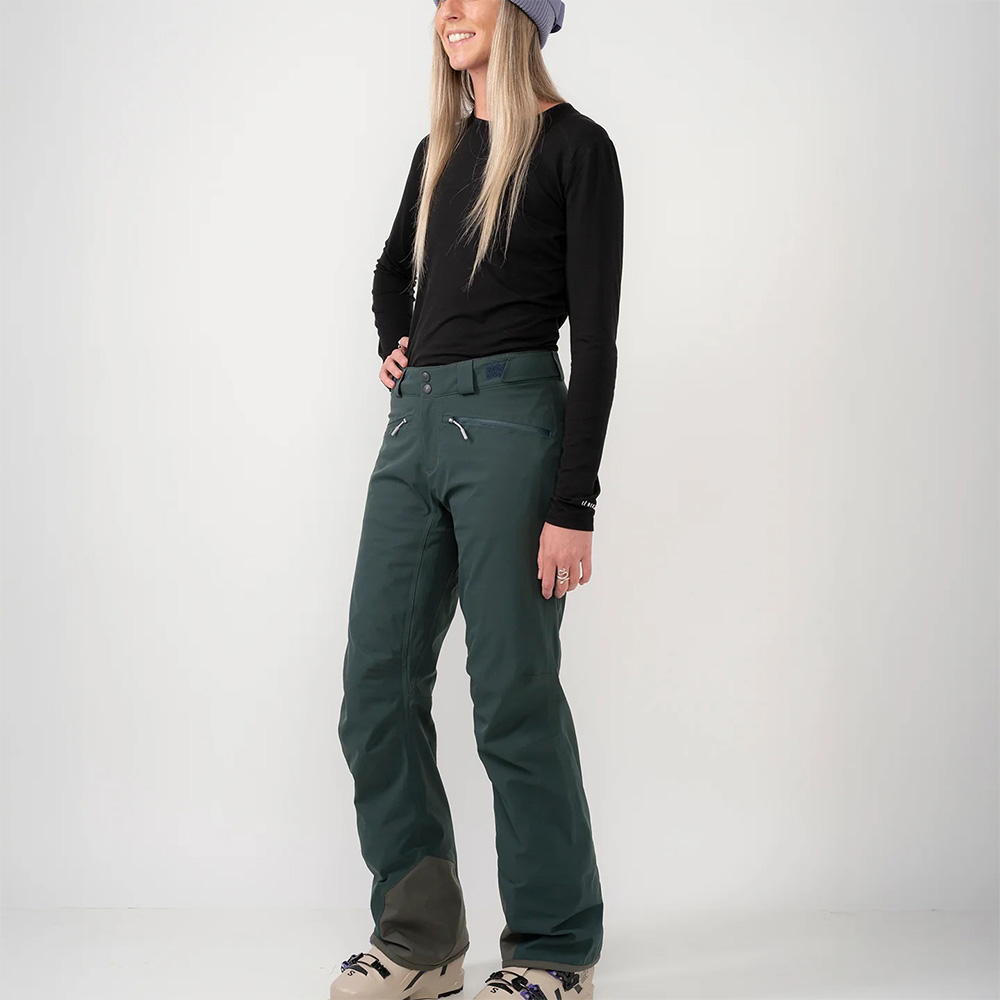
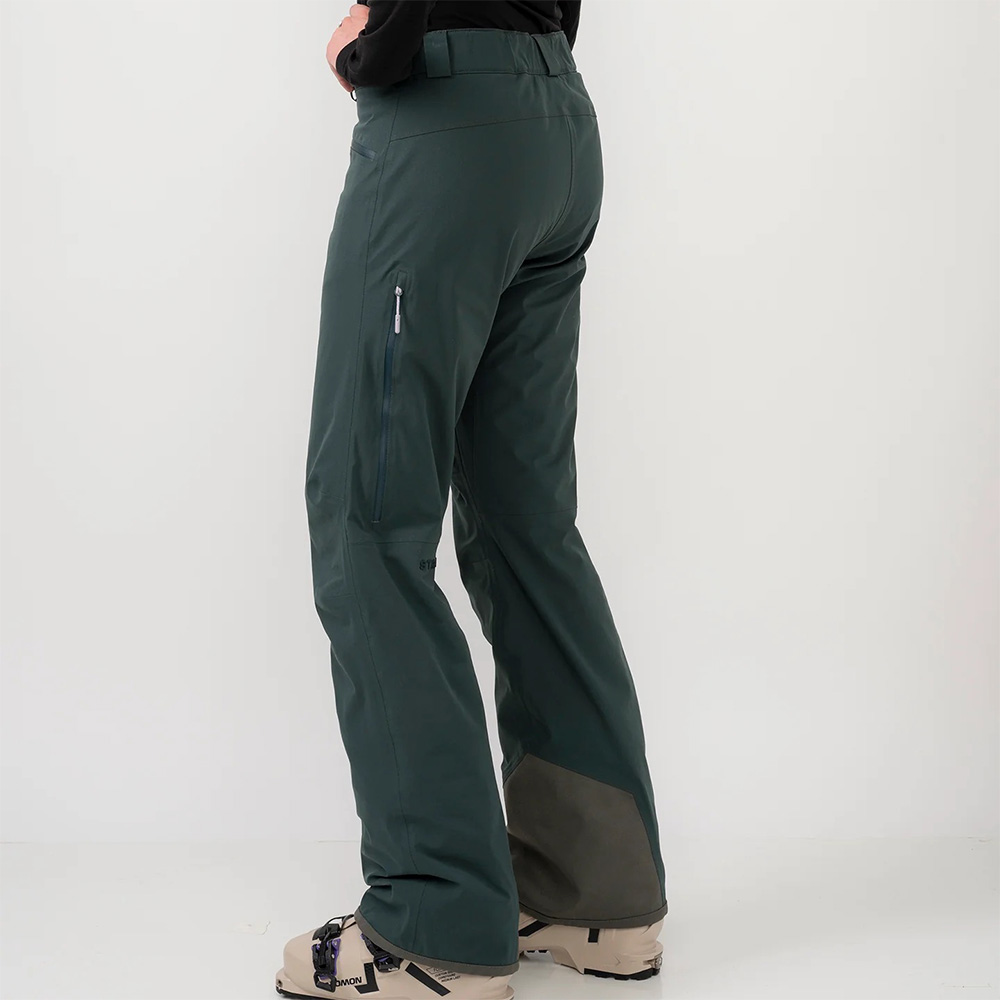
The Eden Pants come with small pockets at the top of each leg, which are just big enough for a pass, chapstick, or a small snack (I avoid putting my phone in them since they’re not very voluminous). The outer-leg vents provide decent airflow when things warm up, and the closure system at the front of the waist (double snap, Velcro, and zipper fly) is very secure.
Of the insulated options here, the Eden Pants are the least warm, featuring a thin layer of 25-g PrimaLoft Silver recycled insulation. There’s enough insulation to take the edge off cold lift rides, but not so much that they feel bulky or overly hot throughout most of a winter in Colorado. The Cloud 9 Jacket features slightly more insulation: 60-g through the body and 40-g in the sleeves.
In 1°F / -17 °C weather ( -13°F / -25°C w/ wind chill) and wearing the same under layers as I did in the Flylow Sphynx Bib / Sarah Anorak, I stayed mostly comfortable in the Cloud 9 Jacket and Eden Pants, but the tops of my legs and my core got a little chilly. But this also makes the Cloud 9 Jacket / Eden Pant combo a noteworthy option for those who often find themselves split between most insulated shells and fully uninsulated options.
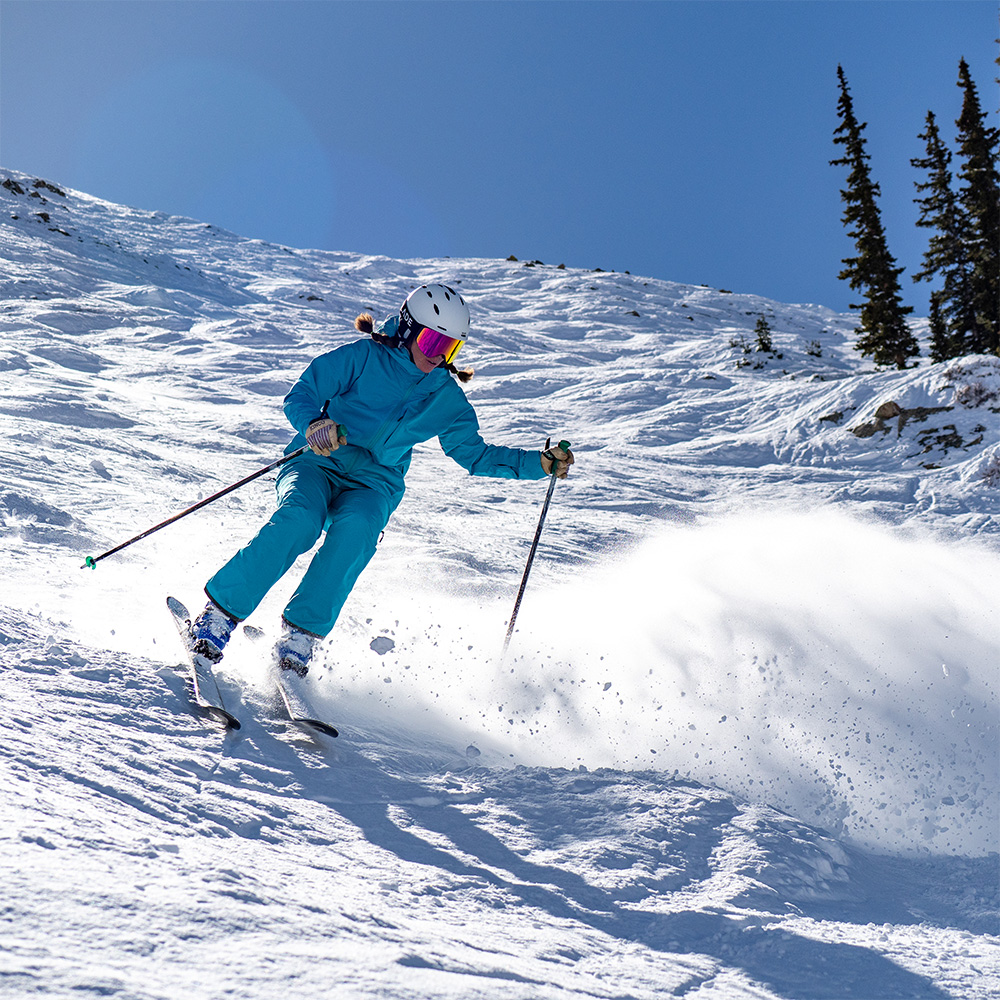
The Cloud 9 Jacket feels roomier than the Flylow Sarah Jacket & Anorak, and I’ve found it easy to wear a midlayer underneath on frigid days without feeling bulky or restricted. I think the Cloud 9’s fit strikes a nice balance between mobility and coverage, and I especially appreciated how comfortable the collar and hood felt. I could zip the jacket fully without any tightness around my neck, and the hood easily fits over a helmet while still sitting well when worn over a bare head or beanie.
Storage across this kit is pretty minimal but thoughtfully designed. There’s a notably small pass pocket on the lower left sleeve, an external chest pocket that easily fits my phone, and two handwarmer pockets that I can usually still access while wearing a pack. Inside, there’s a powder skirt, short pit zips, and a fun print on the hanging lining fabric that gives the jacket a bit of personality.
Overall, the Strafe Cloud 9 Jacket / Eden Pant combo provides a moderate amount of warmth and reliable weather protection on colder / less wet days. The jacket’s slightly roomier fit makes adding additional layers easy if temps are brutally cold, while the Eden Pant’s thinner insulation makes them pretty versatile on less frigid days.
While the Cloud 9 / Eden kit doesn’t offer top-tier water resistance in really wet snow / rain, it’s a very respectable value for those who prefer to forgo a midlayer on most winter days. The fact that Flylow offers most of their pants / bibs in short and tall inseams is a nice bonus, too.
TaraShakti Billie Onesie
MSRP: $1,149
Fabric: water-resistant nylon taffeta (polyester / spandex lining)
Insulation: Thermore Freedom synthetic
Size Tested: Large
Inseam: 31.5” (Large)
Size range: XS – XL
Reviewer: 5’9”, 170 lbs / 175 cm, 77 kg
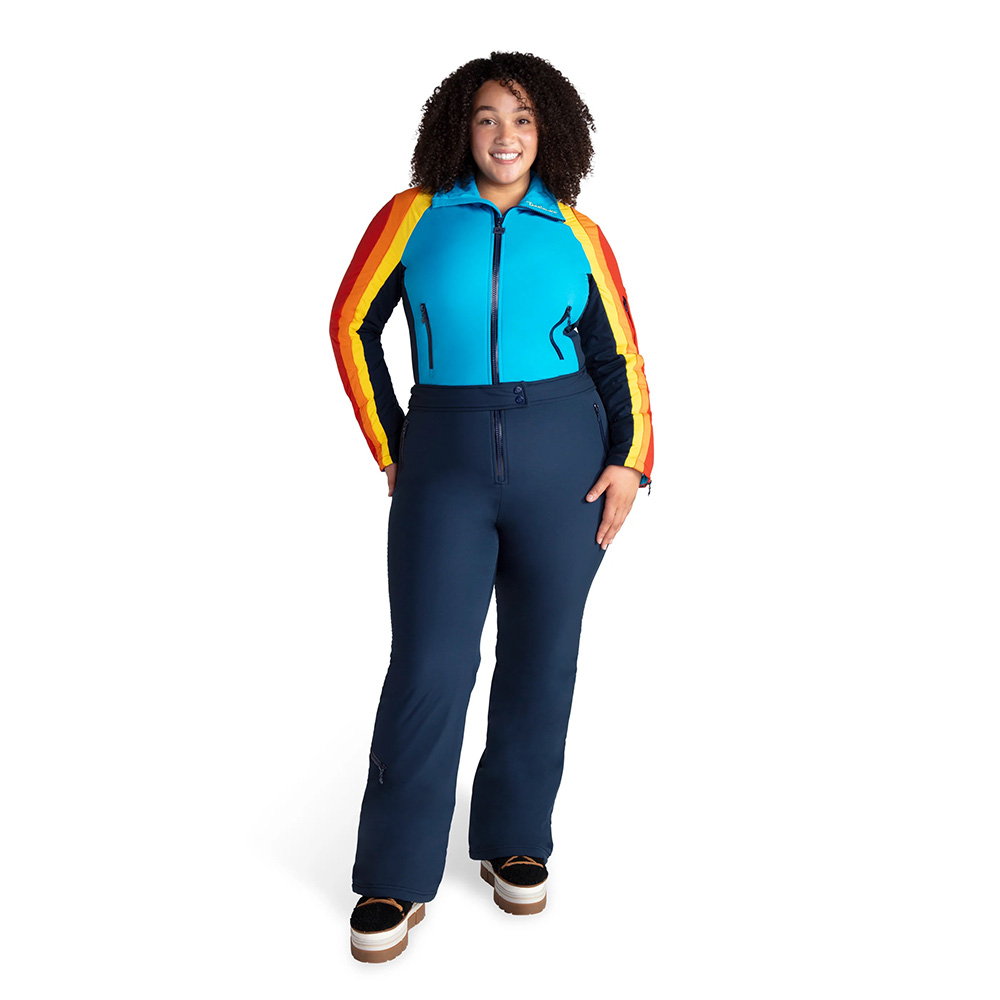
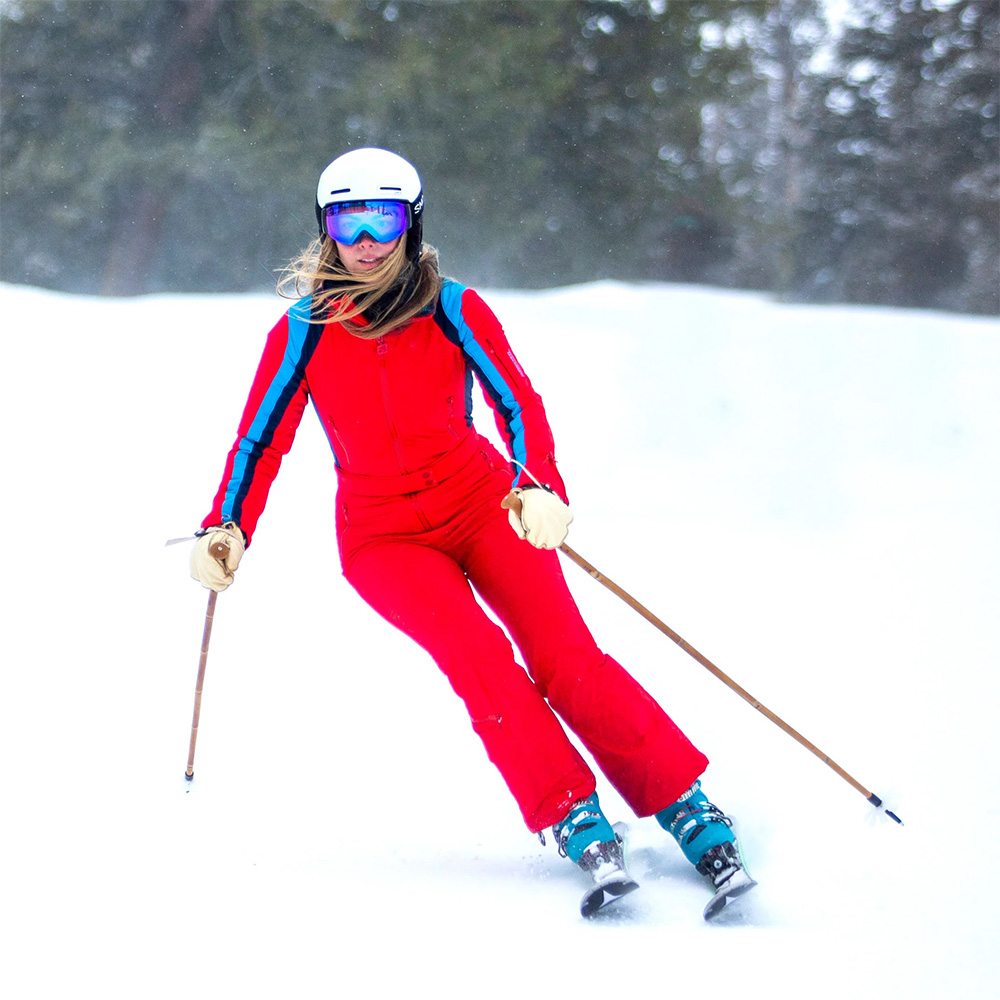
Kara Williard: The Tarashakti Onesie stands apart from just about every other piece of apparel in this roundup, and I am pretty sure that’s the point. It’s long been a dream of mine to have a fashionable one-piece to wear on the hill, but I also want one that is functional and fits well. Over the years, the vintage pieces I have found at thrift stores just don’t cut it in terms of fit and functionality, and I tend to find true vintage pieces offer poor breathability. Tarashakti has made this dream of a one-piece ski outfit possible by redesigning what some might call a retro-inspired onesie or “ski suit” to fit the modern skier.
TaraShakti is a women-owned brand that began in 2019, inspired by vintage ski suits and the drive to raise money for a friend with brain cancer, while also sparking joy, inspiration, and community as its mission.
It was obvious that the vintage ski suits the group of friends enjoyed also needed an upgrade in technical features. Tara, the owner, began prototyping, and the brand was born.
During her time in Nepal, she connected with Sherpas who helped design and build the suits. As stated on the TaraShakti website, “That wisdom became a guiding light. Without the belief and support of the Sherpa community, TaraShakti would still be just a dream. Three years later, our suits — and our signature furry fanny packs — are lovingly handmade in Kathmandu. And with every suit purchased, we contribute $25 to the Northwest Sherpa Association to honor our origins and give back to the community that helped us begin.”
I began testing the TaraShakti Billie Onesie last spring and spent quite a few early-season days in it this season. For me, the biggest consideration when it comes to one-piece outerwear is fit, especially length, since I am 5’9” (175 cm), and usually find one-piece designs to be a bit short on me, particularly through the inseam (this is true of the uninsulated Strafe Sickbird Suit that we’ll cover in Part Two).
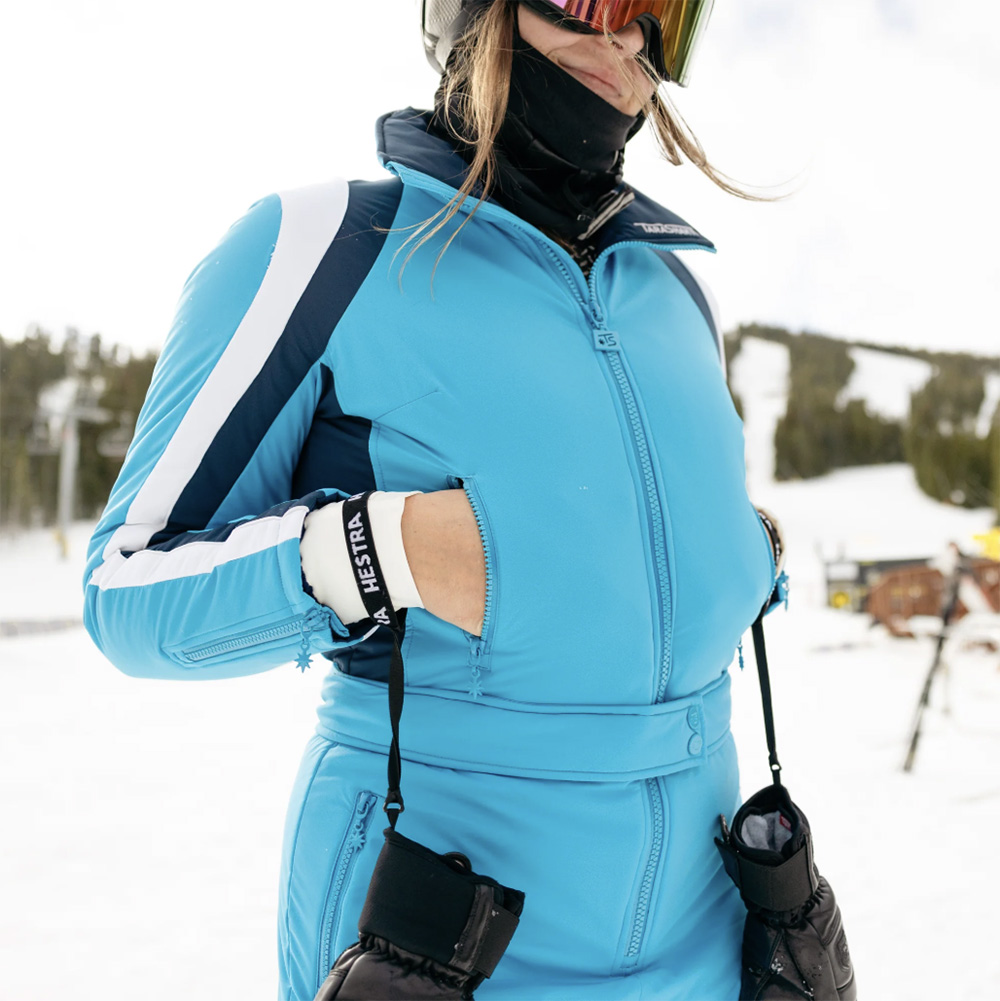
This is not the case with the Billie Onesie; the length in the size Large is great for my taller frame. Overall, I have been very pleased with the fit. The outer and lining fabrics are very stretchy and flexible, while the fit is tailored enough to be flattering without feeling restrictive to me. While this ski suit offers a look that is the opposite of baggy ski outerwear, the Tarashakti Onesie’s stretch makes it extremely comfortable for skiing and everyday wear.
For those who want a spacious ski outfit, this wouldn’t be the way to go — it’s definitely more form-fitting than relaxed. The pant cuffs are just stretchy and spacious enough to get over a ski boot, and the sleeve cuffs are just wide enough to pull over a mid-weight glove. But all the features maintain the vintage ski-suit look that is true to the design’s intent, while also being fully functional and well thought out.
This onesie is lightly insulated but impressively breathable, even on warmer spring days — likely due to the fact that it doesn’t feature a fully waterproof outer fabric. In the case of a tailored, fashion-forward onesie like this, it’s nice not to have to wear anything but a baselayer underneath and still have a warm, cozy kit. The outer material is water-resistant, not fully waterproof, and that’s important to note if you’re looking for a storm-proof kit. But for all the days in between storms, it’s fun to step away from more traditional ski outerwear and into something that looks unique while still being functional.
On colder days (around 20ºF / -7°C), I still found the material wind-resistant and insulative enough to stay warm with just a baselayer underneath. On warmer, spring days (my personal favorite days for rocking this ski suit), the Tarashakti Onesie is quite breathable and comfortable.
The TaraShakti Onesie comes in a variety of vibrant, fun colors that definitely offer a “retro” look. The jacket can also be unzipped from the lower part of the suit and worn on its own, making for a cute crop jacket. The way the pants separate from the jacket also makes bathroom stops easy, but the zipper is hidden, so it offers a true one-piece look. The long zipper down the front can be opened to let in more air, and the retro-inspired wide collar is another a nice touch.
Storage and pocket options on the Onesie are a bit limited, but it does have two zippered hand pockets and two zippered hip pockets as the main storage (the pockets themselves aren’t super roomy, but there is enough space for a phone, snacks, lip balm, etc.). There is also a zippered pass pocket on the upper left arm.
The TaraShakti Onesie definitely won’t be for everyone, but for those who appreciate vintage ski fashion and want something a little more modern in terms of features and fit, TaraShakti has created a cozy, breathable, and fun alternative to more traditional snow outerwear.