
2025-2026 Weston Gnarnia
Test Location: Alyeska Resort, AK
Test Duration: 14 days
Available Sizes: 147, 151, 154, 158, 162, 162W, 166W
Blister’s Measured Weight (162 cm): 2.98 kg / 6.57 lb
Stated Nose-Waist-Tail Widths (162 cm): 31.0-26.2-30.1 cm
Stated Sidecut Radii (162 cm): 10 m / 8.1 m / 7.8 m / 9.1 m
Rocker Profile: rocker-camber-rocker
Stated Flex Rating: 8/10
Core Construction: poplar/paulownia/bamboo + carbon stringers + fiberglass laminate
Base: sintered DuraSurf 4001
Reviewer: 5’11”, 175 lbs / 180 cm, 79 kg
Stance: +25 / 0, 22.5”
Boots Used: Nitro Select, Thirty Two TM-2 XLT, K2 Evasion
Bindings Used: Now O-Drive, Jones Apollo Pro, Jones Mercury FASE, Union Ultra FC

Intro
Weston dropped two new shapes for the 2025-2026 season — the Gnarnia and the Dream Machine. The Dream Machine is a directional twin inspired by the outgoing Range and Rise, while the new Gnarnia is a new unisex Freeride deck taking over from the outgoing Ridgeline and Riva.
As someone who has possibly logged more days on the Weston Japow than any other shape (along with countless days on an older Weston Range), I was intrigued by Weston’s take on a stiffer, versatile Freeride board — which brings us to the Gnarnia.
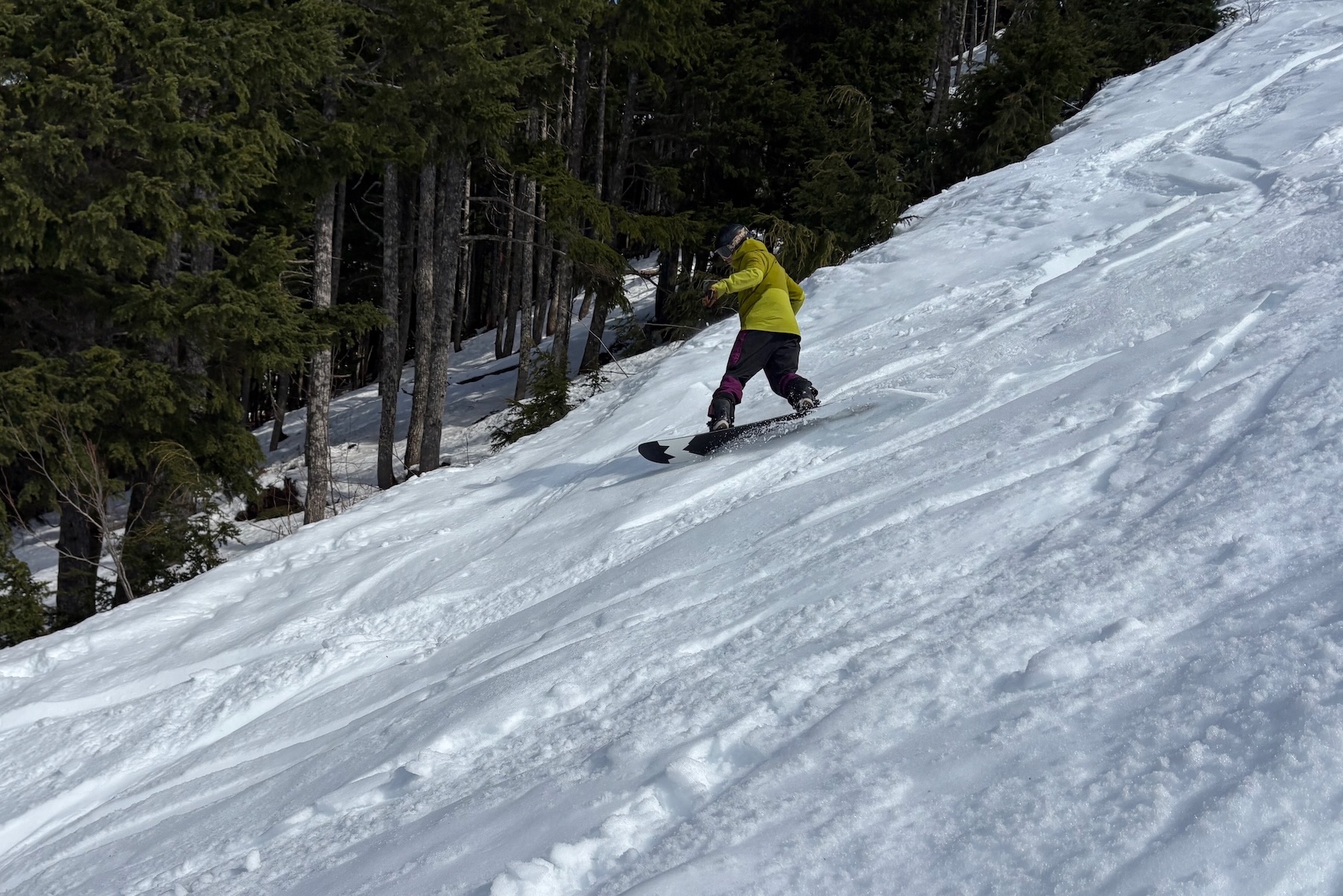
I was able to log a good number of days on the Gnarnia across powder, spring-like slush, and firmer off-piste conditions, and it offers a standout combination of playfulness and composure. Let’s dig into the details:
What Weston Says about the Gnarnia
“Send it deeper, float it steeper – this is your big Freeride weapon.
Born in deep pow and raised on rowdy steeps, the Gnarnia is Weston’s most versatile directional Freeride board — built to dominate the entire mountain, from couloirs to corduroy. A moderate taper (~9mm) and setback stance gives you effortless float on storm days, without compromising precision on firm or variable terrain.
If you’re looking for one board to do it all – Freeride lines, side hits, pow days, and spring missions – welcome to Gnarnia.”
Construction
The new Gnarnia features Weston’s high-end “Conqueror Core.” Poplar and bamboo stringers have been chosen for stiffness and durability, while paulownia helps to reduce weight.
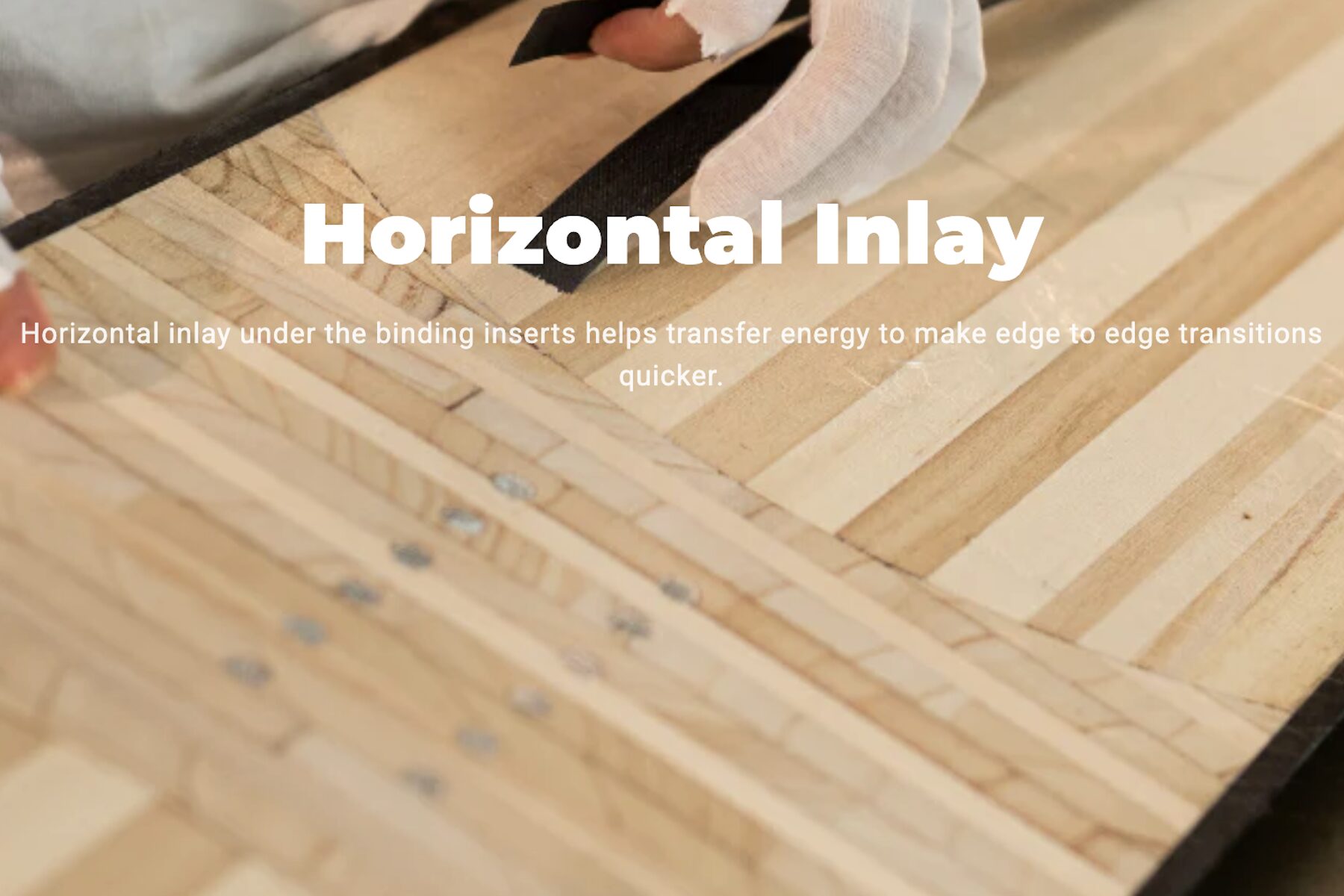
Weston also implements horizontal wood inlays under the binding inserts to aid in easier transitions from edge to edge. The wood core is fortified with vertical carbon stringers from the back binding forward to the nose, and a V-shaped insert radiating from the back insert aft to the tail to help with edging, pop, and stiffness.
The core of the Gnarnia is wrapped in triaxial fiberglass with UHMW sidewalls and fully wrapped carbon steel edges for further durability. The castor-bean-based topsheet has a rough texture but has so far been durable. I’ve only logged 14 days with the Gnarnia, but I haven’t experienced any topsheet chipping or other damage, and it does a good job keeping snow and ice from building up, too.
To cap off the build, Weston uses a sintered DuraSurf 4001 base, which feels fast and durable. Across a range of conditions — powder, spring melt-freeze cycles, icy groomers, and some truly heinous off-piste coral reef — the base has held up extremely well. Wax retention has also been excellent despite abrasive snow conditions.
Similar to Jones, Weston deserves credit for incorporating sustainable materials across their lineup. The Gnarnia uses flax fiber, castor bio-based topsheets, recycled edges, and low-impact inks and epoxies — all without compromising performance or longevity, at least in our experience. This construction is also impressively light; among comparable freeride boards we’ve tested, the 162 cm Gnarnia is one of the lightest. But, as we’ll get into, that doesn’t seem to have come at the expense of performance.
For reference, here are our measured weights for the Gnarnia and some other comparable models:
- Weston Gnarnia (162 cm) 2.98 kg / 6.57 lb
- Jones Storm Chaser (152 cm) 3.05 kg / 6.7 lb
- Arbor Iguchi Pro Camber (162 cm) 3.074 kg / 6.77 lbs
- Nitro Squash (159 cm) 3.09 kg / 6.81 lb
- Jones Howler (160W) 3.205 kg / 7.06 lb
- Arbor Carter Camber (158 cm) 3.211kg / 7.07 lb
- K2 Alchemist (160 cm) 3.24 kg / 7.14 lb
- Jones Storm Wolf (162 cm) 3.30 kg / 7.27 lbs
- Head E.B.I. LYT (161 cm) 3.527 kg / 7.77 lbs
Weston also backs the Gnarnia with a 4-year warranty, adding some peace of mind over the typical 2–3 year industry standard.
Shape
Weston designed the Gnarnia to be a versatile, directional Freeride board to handle all conditions — on or off piste, from groomers to powder — while accommodating a wide variety of riding styles. In a world of so many niche and condition-specific shapes, it’s always interesting to test out a board that claims to handle it all. There are always some sort of compromises with this sort of board, but it’s exciting to see how brands have approached balancing tradeoffs in these “quiver of one” boards.
The Gnarnia has a directional shape with 9 mm of taper and a fairly standard 20 mm setback. Its relatively long nose floats fairly well in powder but performs best on shallower to moderate days when the bottom can be felt — more on that in the Powder section below.
Despite its length, the nose still does a decent job of feeling damp and eliminating chatter in firmer conditions. The shape also lends itself well to fine-tuning via stance options; I’ve found it intuitive when the stance is set back for better powder performance, or more centered for a more Freestyle-oriented feel.
The Gnarnia’s tail also feels balanced and trustworthy, offering plenty of support for landings and snappy enough for all-mountain Freestyle riding. Although on the stiffer side in the grand scheme, the Gnarnia feels right at home popping off of natural features or sending it in the park. Compared to some more powder- or carving-oriented shapes, such as the Head E.B.I. LYT or Nitro Squash, the Gnarnia feels far more balanced in the air when spinning or throwing more complicated tricks.
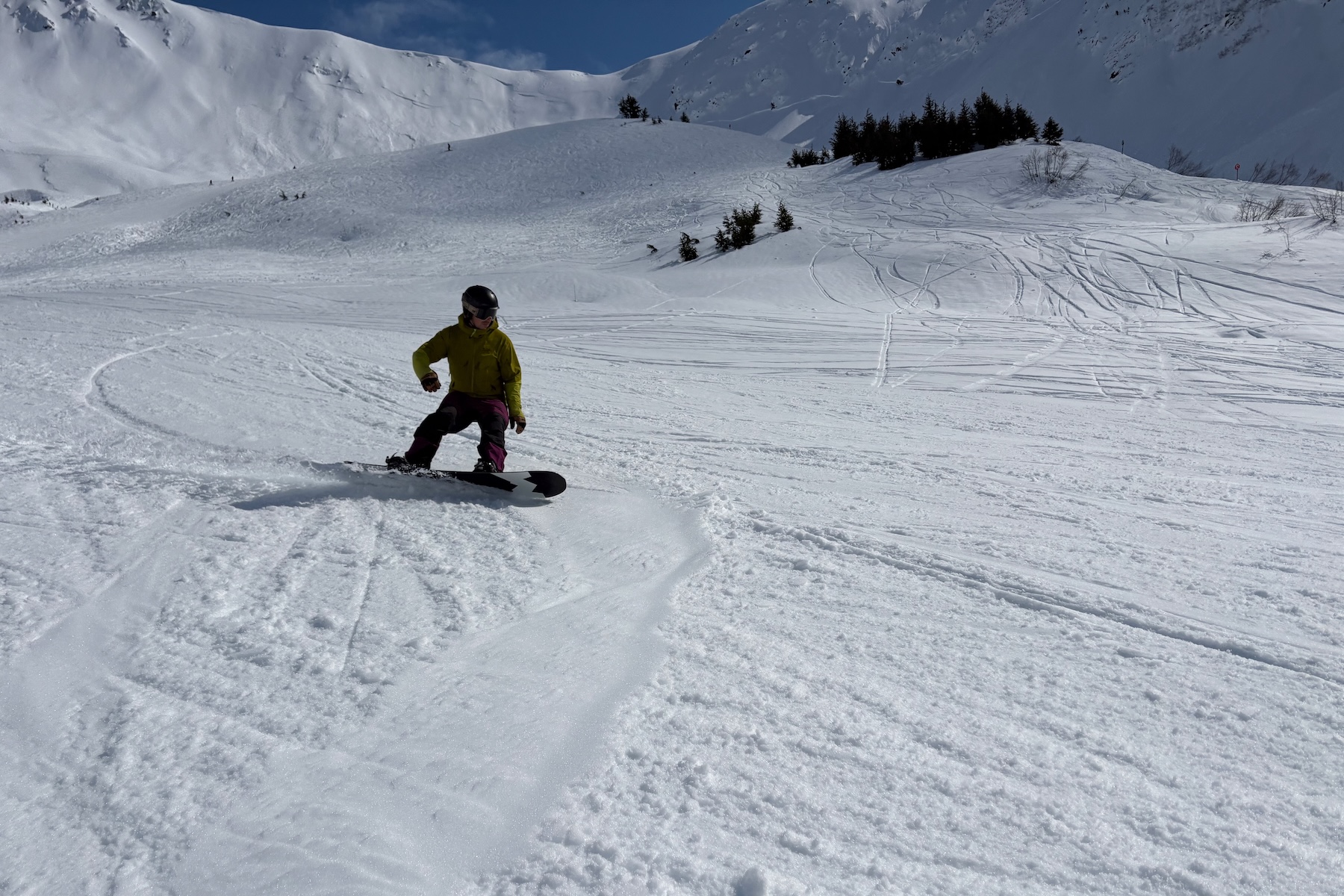
The Gnarnia’s multi-radius sidecut (10 m / 8.1 m / 7.8 m / 9.1 m @ 162 cm) has an impressively balanced feel that performs well across various conditions and terrain. The board feels easy to get on edge yet maneuverable in powder, while also staying grounded on chalky, carvable snow. Although it does not seem to have the strongest edge hold on ice, it doesn’t want to wash out completely and is predictable when it does hook back up.
While I did not have any issues with toe or heel drag with my US men’s size 9 boot, the Gnarnia does come in two wide sizes — 162W and 166W — for riders who worry about bigger boots catching.
Rocker / Camber Profile
The Gnarnia features generous rocker through the nose paired with directional camber that extends well aft of the rear binding before transitioning to a short, more dramatically turned-up tail. The Gnarnia’s roughly 55 mm of splay at the end of the nose helps keep the nose afloat while keeping unwanted chatter in check (for comparison, the Head E.B.I. LYT’s nose, which felt almost overly rockered, measured in at about 65 mm of splay).
The Gnarnia’s directional camber is well executed, feeling lively while also bringing grip in firmer conditions. The tail feels quite supportive for landings and has a good bit of energy due to the camber extending well toward the tail. The tail still eventually kicks up to have about 40 mm of splay, making riding and landing switch no issue.
The Gnarnia’s camber profile feels well-suited to the Gnarnia’s intentions — it’s poppy, supportive, and versatile. Flex and camber-wise, I see a lot of parallels with one of my favorite, older directional twins, the Weston Range, but with a more directional and powder-friendly twist.
Flex Pattern
Weston rates the Gnarnia as the stiffest in their lineup, at an 8/10. Relative to other boards I’ve tested and how other brands rate their flex patterns, I’d say the Gnarnia’s tip-to-tail flex feels closer to a 7/10 overall, though Weston’s higher rating makes sense given how firm it feels underfoot. Between the bindings and into the tail, the board is notably stiff and supportive — perhaps just as much as the K2 Alchemist (rated 9/10 by K2). However, the progressively softer flex in the Gnarnia’s tip and tail makes the overall ride feel more balanced and approachable than the Alchemist.
As stiff as it feels along its length, the Gnarnia is impressive in how it balances playfulness and strong edge hold. The stiff spine between the bindings is supportive at higher speeds and for landings, yet the slightly softer tail remains energetic and poppy. The softer, forgiving nose makes the (overall pretty stiff) Gnarnia feel maneuverable, even without tons of speed or a super steep slope, while avoiding chattering at speed.
For a stiffer board, the torsional flex of the Gnarnia is user-friendly and intuitive. Some board that are very stiff longitudinally and torsionally can feel a bit cumbersome to roll from edge to edge, but the Gnarnia handles those transitions quickly and smoothly. Still, when paired with a stiffer binding like the Jones Apollo Pro, the board feels responsive edge-to-edge while still being able to lock into harder carves.

FULL REVIEW
Powder
For a “do-it-all” board, the Gnarnia performs admirably on most powder days. For me, the Gnarnia was exceptionally fun on a few 8-10’’ powder days last spring, feeling fast, well balanced, and easy to ride. For deeper days, a more directional shape with a longer nose, such as the Jones Howler, Head E.B.I. LYT, or Nitro Squash is more enjoyable, before opting for a big gun (e.g., Jones Storm Wolf, United Shapes Deep Reach, or Amplid Snowmellier) for the bottomless days.
There were a handful of deep >20’’ days at Alyeska where I adjusted my stance back on the Gnarnia to help with flotation, particularly on landings. The Gnarnia stayed buoyant at speed and on steeper terrain, but like most all-mountain Freeride boards, it took more effort to keep afloat on lower-angle slopes, at slower speeds, and in deeper snow. Once the nose found the surface, though, it was easy to stay on top and maneuver confidently. For the deeper days, the more directional shape of the Jones Howler does seem to float slightly better, while the Gnarnia feels more comparable to the Jones Mountain Twin Pro.
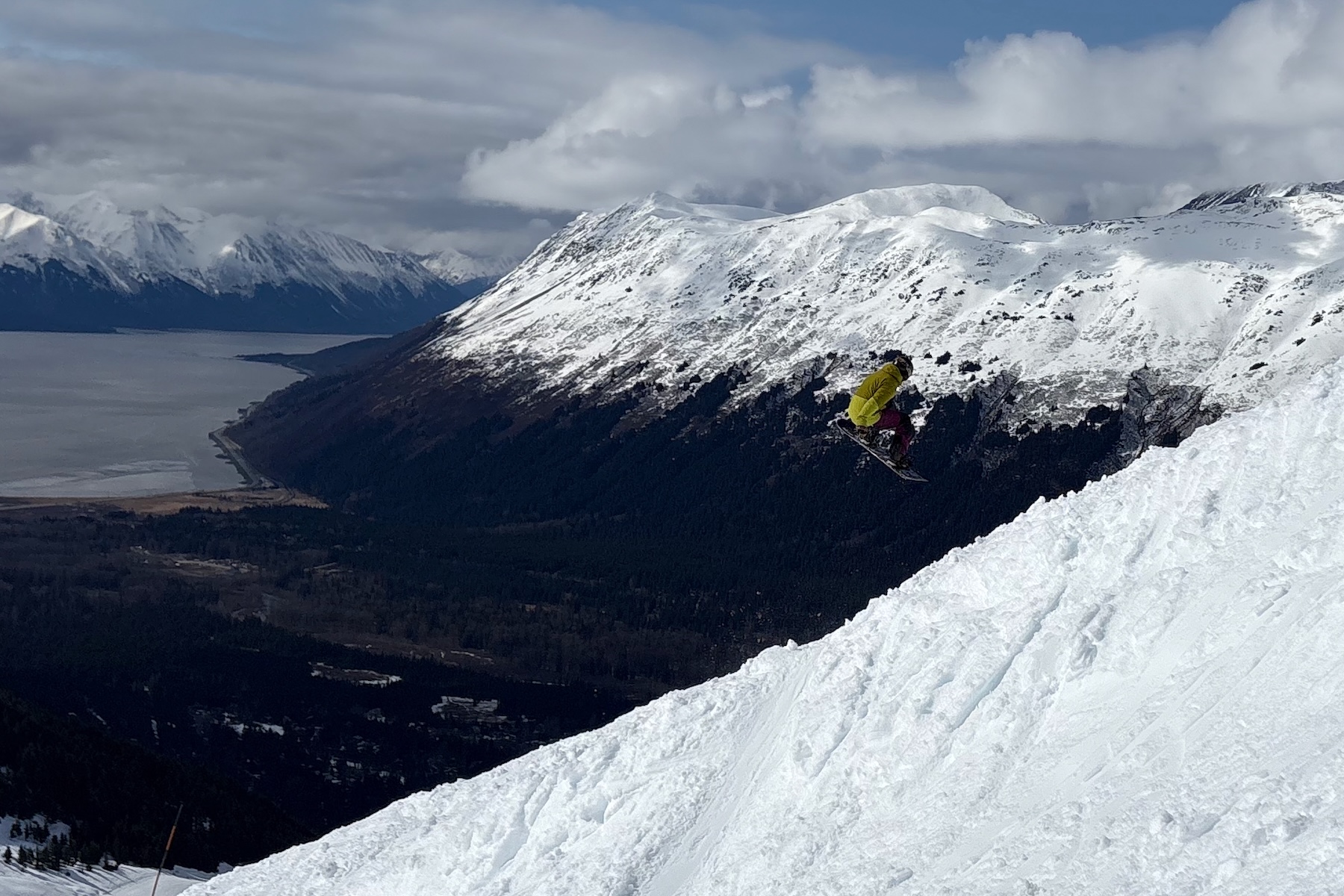
Similar to the Jones Howler, the Gnarnia feels maneuverable and lively when lining up drops and jumps. On landing, the Gnarnia’s fairly stiff flex promotes confidence and does a great job of remaining stable and safe in the runout. The Gnarnia felt especially ideal later in the day, after the fresh stuff had gotten a bit tracked up, and side hits were packed in and well established.
Soft Chop
The Gnarnia is a phenomenal board in soft chop, largely thanks to its shape and flex. While it is a stiffer all-mountain board, the Gnarnia seems to absorb and dissipate chop, whereas the stiffer-feeling K2 Alchemist blasts through it. This gives the Gnarnia a more agile, responsive feel, especially when linking turns through variable snow or threading natural features.
Again, there are plenty of parallels between the Gnarnia and Jones Howler in their flex and stability in choppy snow, and their ability to conform to underlying layers when needed for smooth transitions and charging into jumps.
The Gnarnia effectively merges two (often contradictory) personalities in soft chop. On one hand, it feels highly versatile in soft chop, offering a maneuverable, jibby ride that’s exceptionally fun on side hits and natural features. On the other, the Gnarnia is still backed by a stiff, confidence-inspiring spine for steeper lines and higher speeds. While it’s much more lively and playful than the K2 Alchemist, the Gnarnia manages to not fall too far behind in its stability in softer conditions.
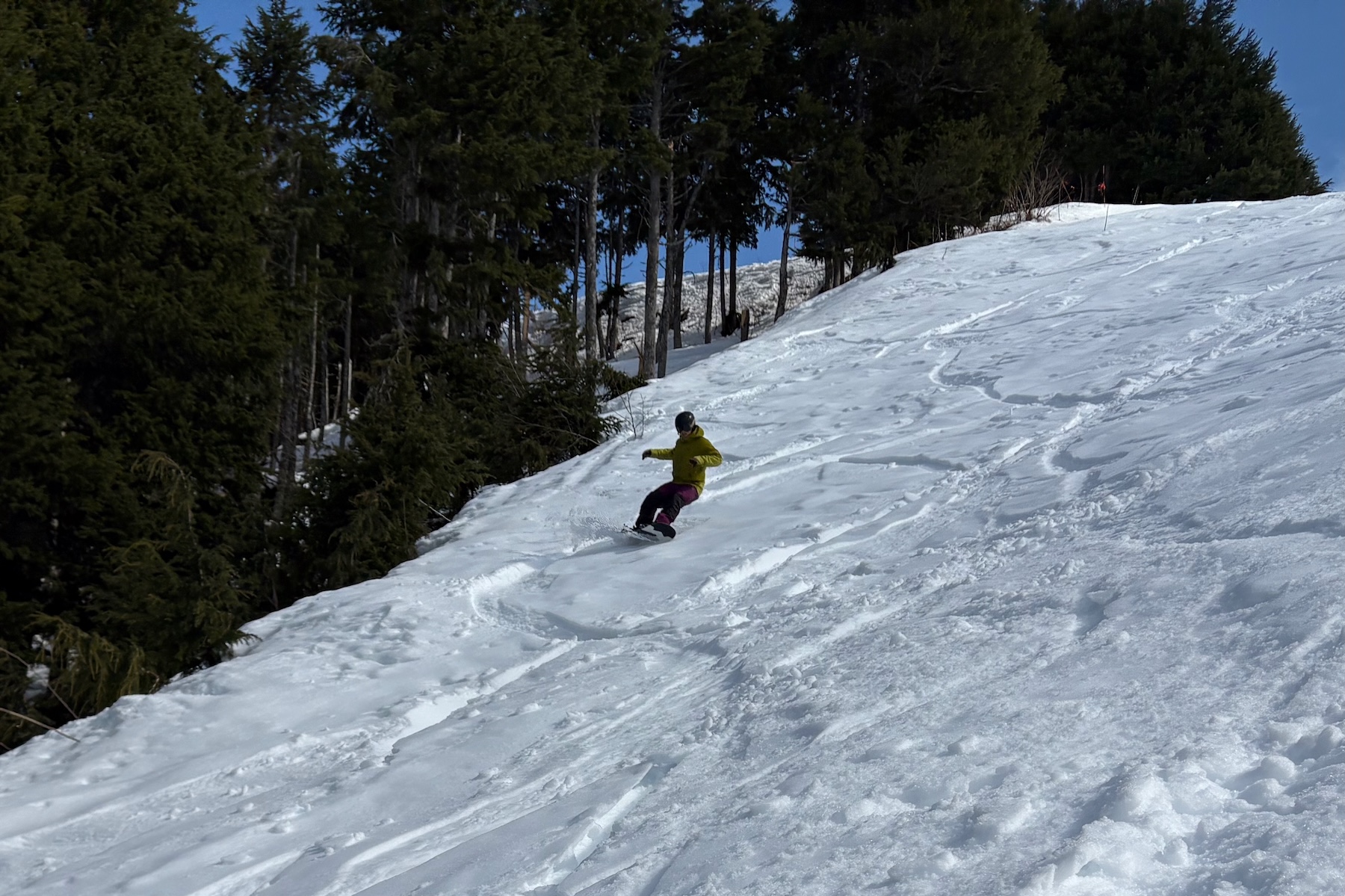
Let’s also acknowledge that I’m saying all of that about a rather lightweight, sub-3 kg / 6.6 lb board. Weston deserves a tip of the hat for achieving such a low weight while retaining a stiff and fairly damp ride that excels in soft chop and tracked pow.
Crud and Variable Snow
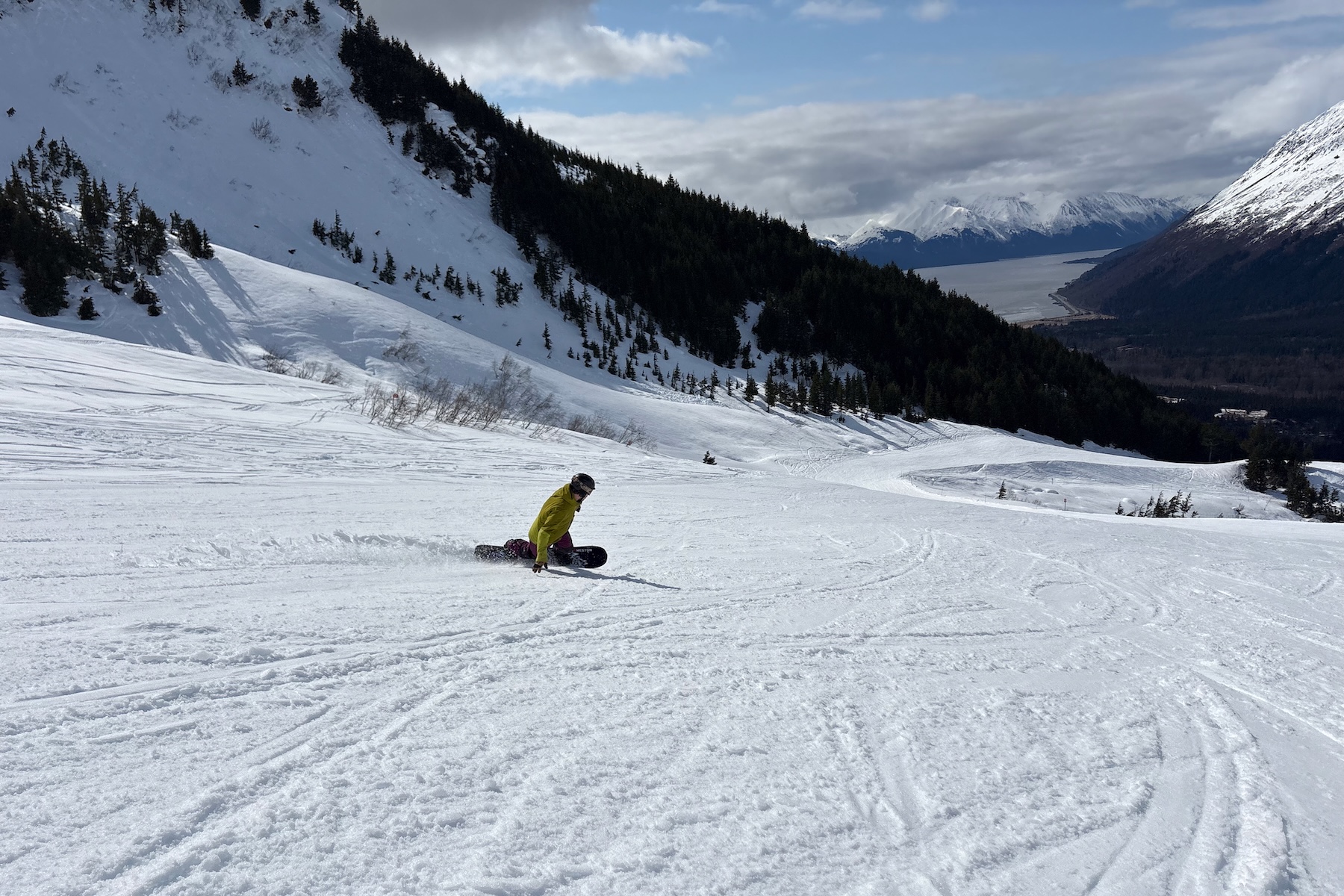
Building from its soft chop performance, the Gnarnia also does well in variable and less desirable snow conditions. Its relatively damp nose and versatile shape edges smoothly and conforms well to firm, bumpy snow. Spring brought a variety of snow textures, but the Gnarnia never felt unwieldy or uncontrolled across the range of conditions. Its softer nose and torsional flex seem to aid maneuverability in tight spots and at slower speeds, which can be a sticking point with stiffer boards like the K2 Alchemist and the old Ride Commissioner. The lightweight build of the Gnarnia also helps to keep it feeling nimble in low-speed situations.
As speeds pick up, the bump compliance of the Gnarnia is impressive in chundery, variable snow. This board’s tail and stiffer spine are supportive and confidence-inspiring, akin to Jones Howler, but the Gnarnia is perhaps slightly more damp, despite being a bit lighter.
Groomers (and the Park)
The Gnarnia feels equally at home casually cruising groomers or going full throttle and laying down some deep, laid-over carves. Its edge hold is great on fresh corduroy and chalky groomers, and the lively flex reciprocates whatever energy you put into the board — fully commit, and it’ll reward you with deep trenches, or ease up and let it slarve and slash. Edging was smooth and predictable, and I never found myself close to randomly hooking an edge.
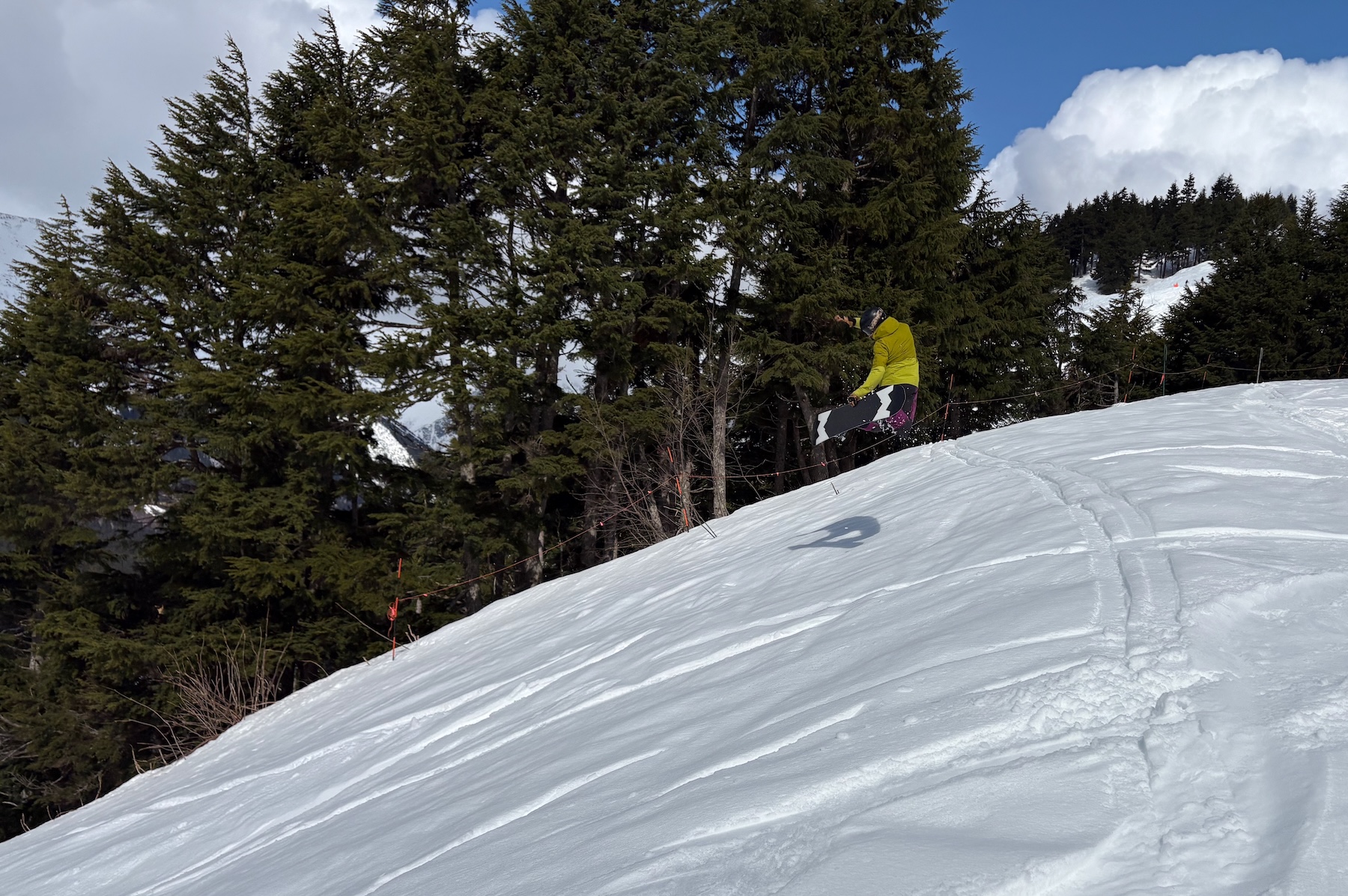
That ease of edge control also lends itself to a fun time in the park, which is surprising for a board this stiff. Although the rigid middle section of the board isn’t ideal for that use case, the softer nose makes buttering easy, and the tail provides impressive pop for park laps or just explosive ollies off of rollovers. While I’d certainly opt for a designated park board if that was my priority, the Gnarnia was still a blast when sending some sculpted features.
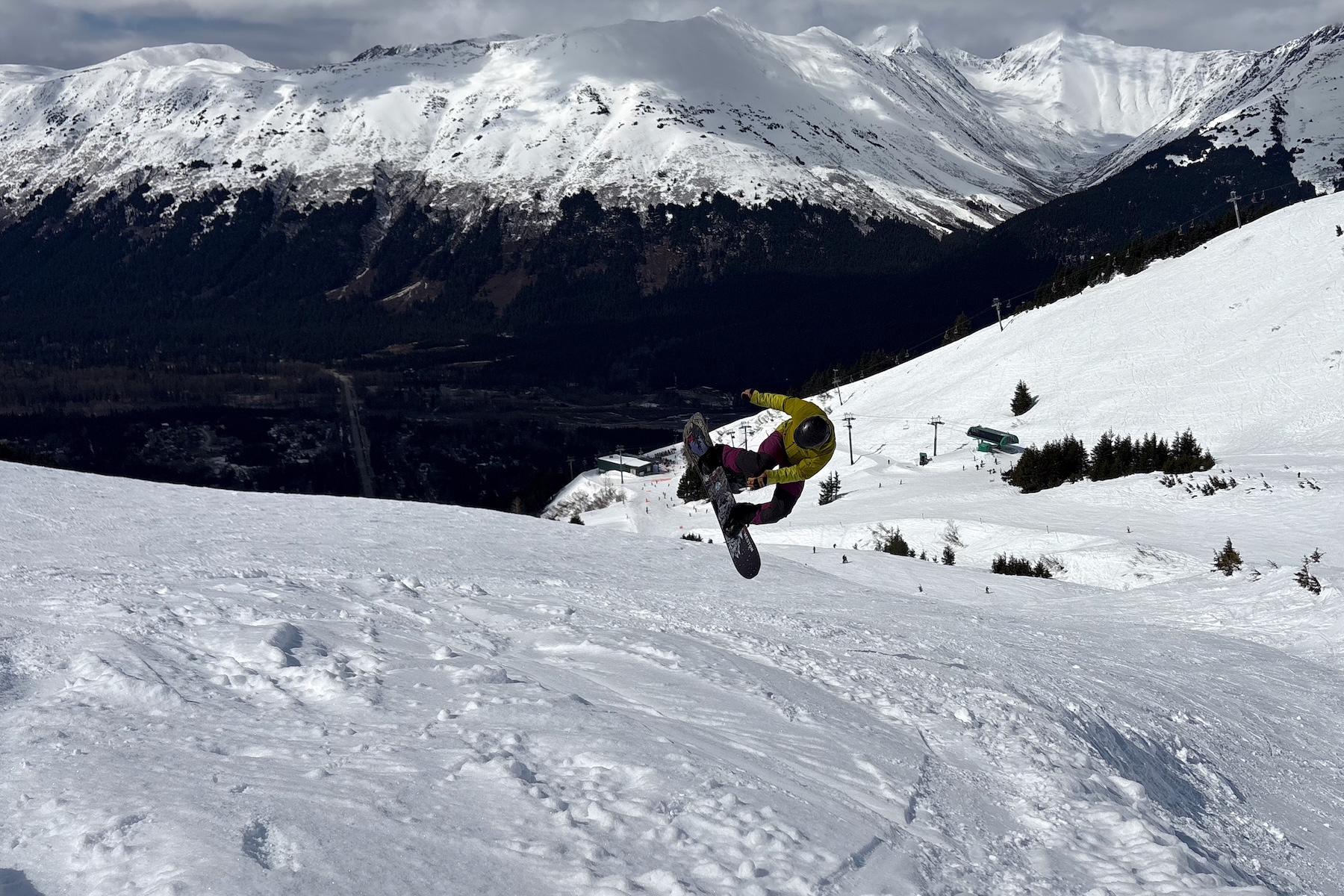
There are more apt shapes overall for riders looking for maximum carving performance, but the Gnarnia seems to check the groomer box on its “slay everything” goal. Shapes like the Head E.B.I. LYT and Nitro Squash outperform the Gnarnia for pure carving and powder performance, but the Gnarnia brings some extra backbone balanced with Freestyle playfulness.
Who’s It For?
The Weston Gnarnia is best suited for intermediate to expert riders seeking a stiff yet responsive all-mountain Freeride board that doesn’t feel overly demanding or unwieldy in the air.
The Gnarnia can handle moderately deep powder and edges well across most on and off-piste conditions, while feeling centered and well balanced for hitting both natural and man-made features.
Compared to similar contenders in the all-mountain Freeride bracket, the Gnarnia stands out for how it balances stiffness and stability between the bindings with a jibby, Freestyle-inspired response at the ends of the board. Some shapes handle deep days more effectively, but the Gnarnia is a very well-rounded daily driver, whether you prioritize airtime, powder, steep terrain, or simply cruising through smaller features and carving on the way back to the lift. It’s impressively adaptable.
Bottom Line
The Weston Gnarnia feels proficient just about anywhere on the hill. It confidently handles everything from moderately deep powder to variable crud and fresh corduroy, while encouraging a playful Freestyle approach along the way. It’s best suited to intermediate to expert riders who can draw the maximum response from its stiffer flex, but the Gnarnia feels surprisingly intuitive and doesn’t demand nearly as much precision or muscle as some similarly stiff, Freeride-focused boards.
There are more powder-specific shapes out there that float and maneuver better in deep snow, even within the directional all-mountain category. However, the Gnarnia’s snap, balance, and versatile shape make it stand out for riders who want to bring Freestyle energy to technical features and powder landings.

Thank you for this thorough review. You answered some questions for me. I currently own the stormwolf 162 and a Weston Backwoods 160w. I’ve been so impressed with the backwoods and would ride it everywhere except the side cut wants to turn a little tighter then I would like sometimes. I also retired my other boards and would like a board that still has a tail but can still ride some pow. I’m 185-190lbs no gear. 11.5 boots (most boards are really not wide enough) and 6ft tall. Weston told me I could fit either the 166w or 162w just fine but I’ve never been on a board over 164. I know its not much but would you think I might complain about maneuverability (thinking a jump turn on steep stuff getting in) I would like a board with more edge than I currently ride and I have had boards with similair effective edge to the 166w Gnarnia. How would you compare the edge grip compared to the stormwolf? Weston did say the 162w would feel similair to the 160w backwoods. Such a hard decision when you cant even see the boards in person.. hahaha. Thank you for any additional input you could give.
Hey Andrew, Thanks for the feedback! I would be tempted to opt for the 166W due to boot size (slightly wider nose, tail and waist width). One of the noteworthy parts of the Gnarnia is how light it is, making it pretty easy to throw around on a jump turn, etc. It’s a stiffer board, but still pretty dang easy and intuitive to ride. When in doubt, I generally opt for the longer, stiffer option, but that’s just my personal preference.
On firmer conditions, the Gnarnia’s edge hold is substantially better than the Stormwolf, especially riding off-piste and less than ideal conditions. This month in AK we are relatively cold and in between storms, and I have been using the Gnarnia as a daily driver for groomers and rough, firm off-piste riding. Obviously, for deeper days, the Storm Wolf will be a better powder shape.
I hope that helps! I know the struggle of riding boards, boots, and bindings sight unseen and hoping for the best!