

Test Locations: Washington
Test Duration: 6 months
Reviewer: 6’, 160 lb / 183 cm, 72.6 kg
Size Tested: M/L
Blister’s Measured Weight per pad (M/L): 170 g
Pad Material: D3O Diablo CE Level 2
MSRP: $140
Test Locations: Washington
Test Duration: 6 months
Reviewer: 6’, 160 lb / 183 cm, 72.6 kg
Size Tested: M/L
Blister’s Measured Weight per pad (M/L): 140 g
Pad Material: D3O Diablo CE Level 1
MSRP: $110
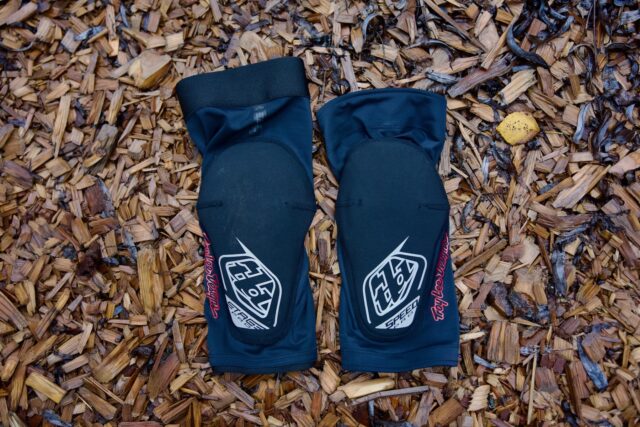
Intro
Knee pads are one of the more challenging bits of bike kit to get right. Protection needs to be balanced with breathability, and they need to stay in place in a crash, all while being comfortable enough to wear all day. Troy Lee Designs (or TLD) has been in the bike protection game longer than most, and they recently revamped their Stage and Speed pads with new Pro versions, which come with some big claims about the protection, comfort, and breathability.
I’ve spent the past six months riding both the Stage Pro and Speed Pro on a near-daily basis, and I’m finding them both to strike a nice blend of comfort, protection, and breathability — but I also have a clear favorite between the two.

Features and Construction
Stage Pro
We’ll start with the Stage Pro, which is TLD’s flagship gravity-focused knee pad. The sleeve of the pad is made of a mid-thick, elasticated material (TLD specifies it as 260 gsm Lycra), with a section along the back of the knee composed of a different material featuring small channels for breathability, which TLD aptly refers to as Air Channels. Printed silicone bits around the back of the calf and between the upper band and pad help to minimize unwanted stretch and movement, which TLD has dubbed the Pad Anchor system.
The top of the pad features a rather wide elastic band on the upper thigh. A honeycomb-like silicone pattern provides friction against the skin.
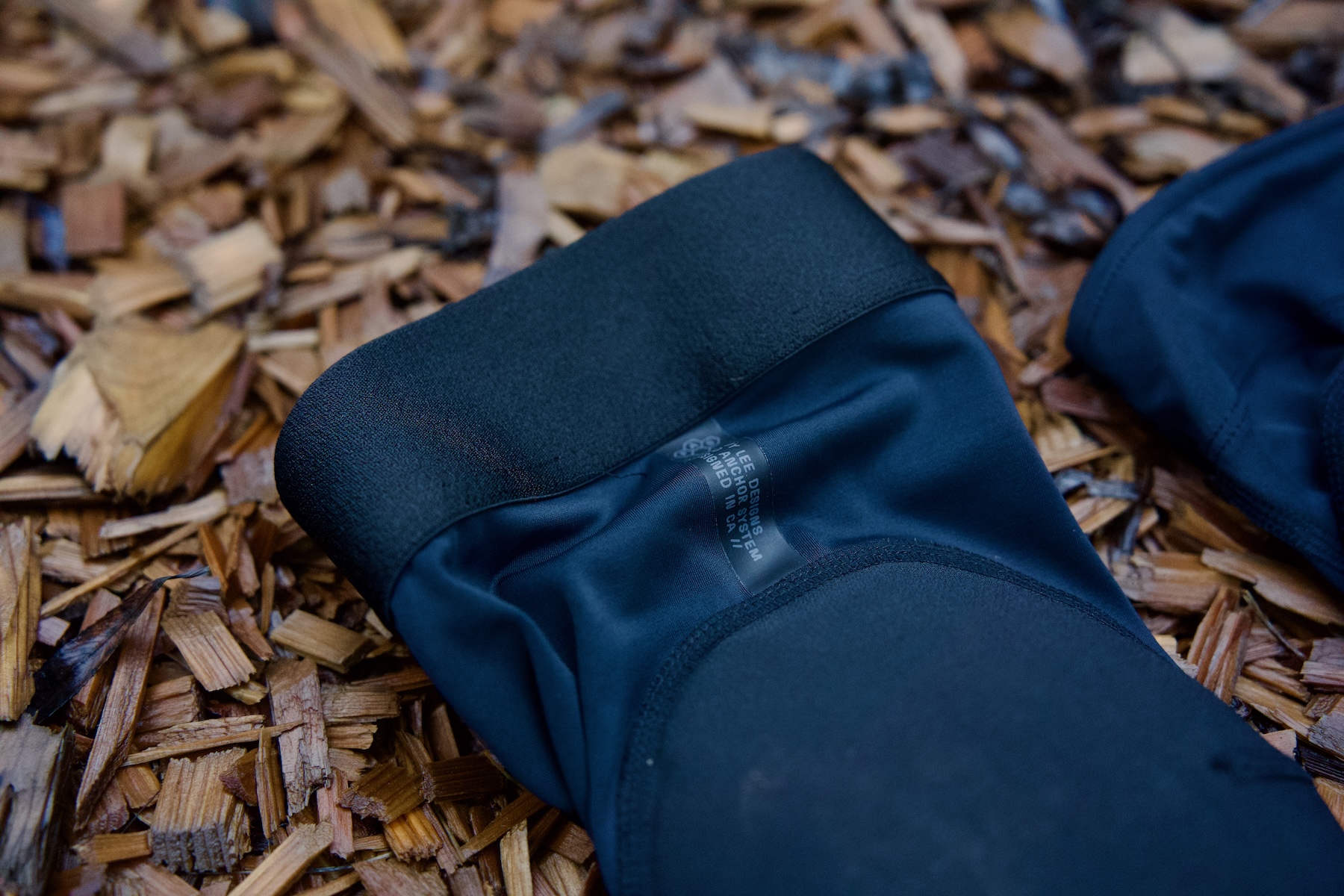
Having owned the prior Stage knee pads, I’m far more impressed with the new Stage Pro’s construction. While the material on the front of the pad feels roughly equivalent between the two, the material along the back of the knee feels far more substantial, unlike the old model’s mesh, which was prone to tearing and delamination from the silicone accents. As suspicious as I typically am of the printed silicone sections when it comes to longevity, the ones on the Stage Pro have stayed stuck. The cuff is also far wider and more grippy than the old design, and the fact that it extends farther up the thigh helps to keep the pads from sliding around.
TLD’s biggest claims about the Stage Pro are centered around the new D3O Diablo insert, which extends a good way down the shin. The new insert feels surprisingly soft and flexible, but as we’ll get into, it still seems to do its job when called upon.
Speed Pro
The Speed Pro is, at first glance, hard to distinguish from the Stage Pro: same styling, same wide band at the top, same Pad Anchor silicone overlays, same 260 gsm Lycra fabric for the sleeve, same Air Channels at the back — but there are considerable differences in protection.
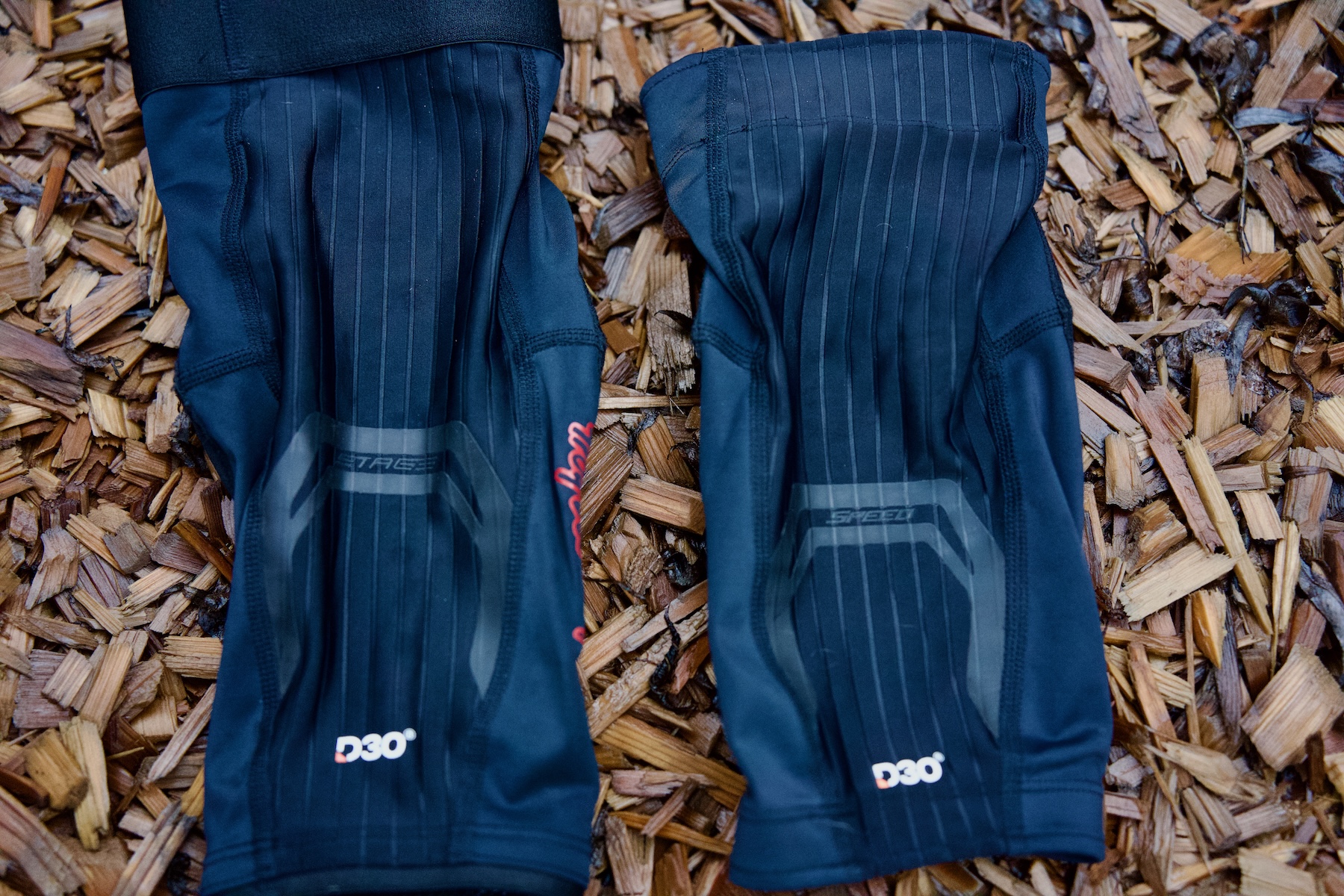
TLD calls the Speed Pro a knee sleeve, while the Stage Pro is called a knee guard, implying a lesser emphasis on impact protection with the Speed Pro. While it still uses a D3O Diablo insert, it’s a thinner Level 1 version, though coverage is about the same as the Stage Pro. There’s still a relatively thick thigh band, but it sits a good bit lower on the thigh than the Stage Pro’s does. Less material covering the leg means less warmth when working hard, but it also means less security and protection in trade.
Fit
I’ll talk about both pads together here, as their fit is very similar. I got along well with the fit of the new Stage Pro and Speed Pro pads, but also found them to be quite different from TLD’s outgoing Stage pads (in a good way).
Coverage with both pads is solid, with both the Stage Pro and Speed Pro’s D3O Diablo inserts extending a decent way down the shin. Both have about the same coverage, the difference being the thickness (and higher impact rating) of the Stage Pro’s Level 2-rated pad.
Both pads have nice, wide thigh grippers — far wider than that of the old Stage pad — but I especially appreciate the Stage Pro’s taller extension up the thigh and more substantial band material. This seemed to help the pad disappear in pedaling and also held it more securely while riding.
Sizing is an area that deserves some attention from fans of the prior Stage pads. Both the Stage Pro and Speed Pro fit more snugly than the outgoing Stage did, which I found to run notably large. I admittedly have rather skinny knees and calves, but the fact that I had to run an XS/S pad in the old Stage felt a bit off. I was a bit nervous about going with the recommended M/L size for the new Stage Pro and Speed Pro, but fortunately, it proved to be bang-on.
On-Trail Performance
Stage Pro
The taller cuff, extra-flexible and airy D3O Diablo Level 2 insert, and wide thigh gripper have helped to solidify the Stage Pro among my favorite knee pads.
I was quite impressed by how well the Stage Pro disappeared in use for a Level 2-certified pad. The D3O Diablo insert design allows plenty of airflow, while the thick thigh band distributes pressure evenly and stays in place nicely. The Stage Pro feels far less bulky than a wide range of Level 1 pads, while having the added advantage of the better Level 2 protection rating. While some thicker pads with comparable extended coverage to the Stage Pro have led to unwanted pressure from the pad pressing against my shin over the course of a long day, the flexible Diablo Level 2 material remained pliant enough to not have this issue.

Where the Stage Pro falls a bit short alongside some of my other favorites (like the Chromag Rift) is in its protection around the sides of the knee. While the coverage along the shin is better than the shorter Chromags, I wouldn’t mind seeing a bit more padding around the sides of the knee for true gravity riding. That said, the Stage Pro is so airy while pedaling, I found myself reaching for them more than my Chromags simply because they breathe so much better.
I had a few spills while wearing the Stage Pro, and while none were especially violent, I escaped unscathed each time. The inner material of the Stage Pro is a bit slippery to the touch, and I had just a couple of instances where the pad rotated slightly while pedaling in pants over a longer ride, but I never had issues with the pads shifting enough to expose my knee to impacts. The Chromag Rift remains my gold-standard for staying in place, but the Stage Pro’s lightweight feel and higher protection rating have had me reaching for it more often than not.

Speed Pro
I admittedly spent a bit less time in the Speed Pro pads, but that’s mostly because I found the Stage Pro to feel nearly as lightweight and comfortable while being more secure and having a higher safety rating.
While the D3O Diablo Level 1 insert of the Speed Pro is perceivably thinner than the Stage Pro’s Level 2 one, that difference is a lot less noticeable than I expected when riding. Both pads feel exceptionally breathable, and I was often hard-pressed to tell the difference in airflow, largely because the D3O Diablo inserts are heavily ventilated on both models. I found that the Speed Pro disappeared, perhaps slightly more than the Stage Pro, in really humid and sticky conditions at the end of summer, but I think most of that was down to the fact that their shorter shin extension meant less fabric on my skin.

What I did notice, though, was the lesser security of the Speed Pro. The upper band doesn’t extend as far up the thigh as the Stage Pro’s does, and the elastic thigh band also feels less substantial and secure than that of the burlier Stage Pro. The result is that the Speed Pro tends to move around a whole lot more (at least on my bony knees) as compared to the Stage Pro. I expected to prefer the Speed Pro when wearing pants for its slightly slimmer fit, but it tended to slide around a bit more than I’d like as the pad’s face material rubbed against the inside of the pant leg.
I had fewer crashes in the Speed Pro pads as I tended to wear them on more XC and Trail-focused rides, often choosing them in especially warm conditions, but their tendency to shift around on my knees would make me a bit more nervous to ride them on more serious trails.
Bottom Line
TLD’s new Stage Pro and Speed Pro are both more durable, more breathable, and more secure than the outgoing Stage. They are, at least in my experience, TLD’s finest work yet when it comes to knee protection. The Speed Pro is a comfortable, lightweight option, but at least for my priorities, the combination of protection, security, and breathability of the Stage Pro is tough to beat for a wide breadth of riding disciplines.