

Wheel Sizes: 29’’ front / 27.5’’ rear
Suspension Travel:
- Frame: 150 mm (160 mm w/ 65 mm stroke shock)
- Fork: 160 mm
Geometry Highlights:
- Sizes offered: XS, S, M, L, XL, XXL
- Headtube angle (High): 64.5°
- Reach (size Large): 480 mm
- Chainstay length (size Large, High): 448 mm
Drive System Highlights:
- Motor: Bosch Performance Line CX Gen 5
- Torque: 100 Nm
- Power: 750 W
- Battery: Bosch PowerTube 600 (600 Wh)
- Display: Bosch System Controller
- Remote: Bosch Mini Remote
Frame Material: Carbon fiber
Price: Complete bikes starting at $7,299 USD (details in Builds section below)
Wheel Sizes: 29’’ front / 27.5’’ rear
Suspension Travel:
- Frame: 150 mm (160 mm w/ 65 mm stroke shock)
- Fork: 160 mm
Geometry Highlights:
- Sizes offered: XS, S, M, L, XL, XXL
- Headtube angle: 64.5°
- Reach (size Large): 480 mm
- Chainstay length (size Large): 448 mm
Drive System Highlights:
- Motor: Bosch Performance Line SX
- Torque: 60 Nm
- Power: 600 W
- Battery: Bosch PowerTube 400 (400 Wh)
- Display: Bosch System Controller
- Remote: Bosch Mini Remote
Frame Material: Carbon fiber
Price: Complete bikes starting at $7,299 USD (details in Builds section below)
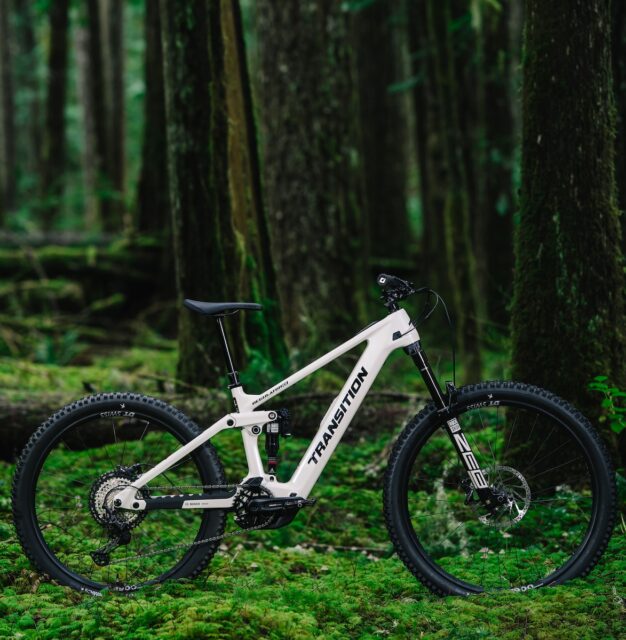
Intro
Transition has been on a bit of a journey when it comes to eMTB drive systems. First in the family was the Repeater, which was released in 2022 and used Shimano’s full power EP8 motor along with 29’’ wheels. Next came the Relay in 2023, which used the Fazua Ride 60 motor and was a fairly early entrant into the Lightweight eMTB segment, with a choice between mixed wheel or 29’’ configurations. The 2024 Repeater PT succeeded the prior Repeater as one of the first bikes to feature SRAM’s Powertrain, integrating a SRAM/Brose-developed motor with a hardwired SRAM Eagle Transmission shifting arrangement. Three different bikes, three different drive units — though in the earlier days of eMTB development, that sort of switching wasn’t particularly unusual.
Folks following the eMTB arms race may have noted the emergence of Bosch as a frontrunner in both the Full Power and Lightweight eMTB segments with their CX and SX motors. While other companies have continued to push the envelope, Bosch motors have become a dominant spec choice across both categories in the past couple of years, and in 2025, Transition jumped fully into Bosch systems with the Regulator CX and SX.
Of course, there’s a whole lot more to the story than just the change to new drive units. Let’s dig into the details of Transition’s latest Full Power and Lightweight eMTBs, the Regulator CX and Regulator SX.

The Frames
The Regulator CX and SX both have quite a bit in common when it comes to frame details — in fact, one could be forgiven for mistaking one for the other. Both are carbon fiber-only affairs with mixed wheels, matching 150 mm of rear travel to a 160 mm fork. While both bikes use a 205 x 60 mm stroke shock from stock, they can accept a 65 mm stroke one for an extra 10 mm of rear travel.
That common suspension configuration carries over to the Regulator CX and SX’s leverage curves as well, which are identical and share a 27% progression rate across the travel. Both start at a leverage ratio of roughly 2.95 and end at just under 2.2 — Transition’s chart below shows the full curve for both bikes:

In terms of other details, the commonalities continue. Both bikes use guided internal routing (no headset routing here), a threaded bottom bracket, a native 180 mm post mount for the rear brake with a maximum 223 mm rotor size, and a tapered 44/56 mm zero-stack headset.
Drive Systems
Here’s where things start to diverge — after all, the Regulator CX is a Full Power eMTB with a bigger motor and battery, while the Regulator SX trades power and battery size for a lighter weight. Both use familiar Bosch motors and batteries, but let’s run through the details quickly:
Regulator CX
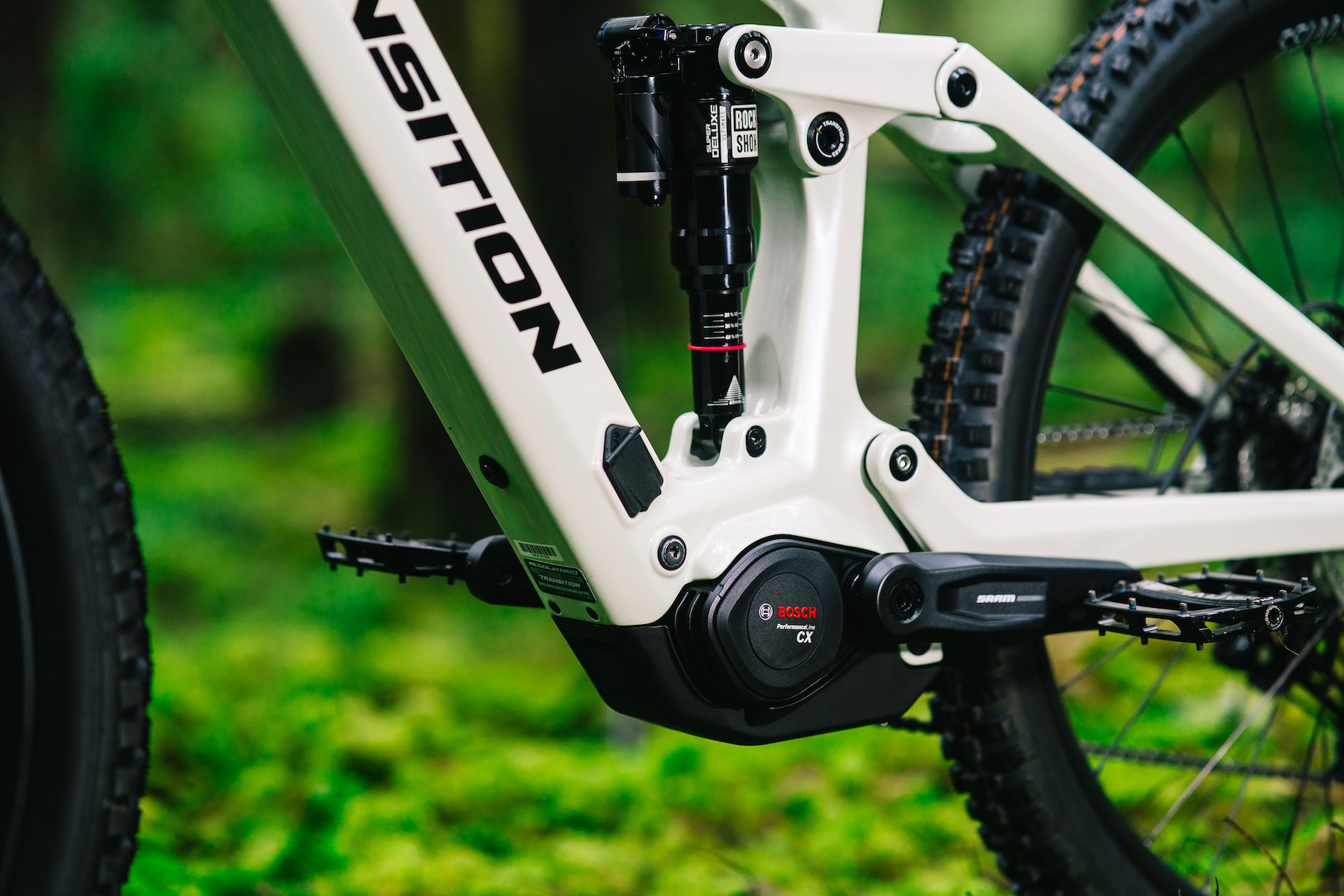
The Regulator CX is built around Bosch’s fifth-generation CX motor, which saw a big software update in 2025 that unlocked 100 Nm of torque and 750 W of power. A 600 Wh PowerTube battery fills the Regulator CX’s downtube, though it can also accept a 250 Wh PowerMore range extender for up to 850 Wh of juice. The simple Bosch System Controller is nested in the top tube for basic battery life and mode information, and the Bluetooth Mini Remote is mounted on the bars.
Regulator SX
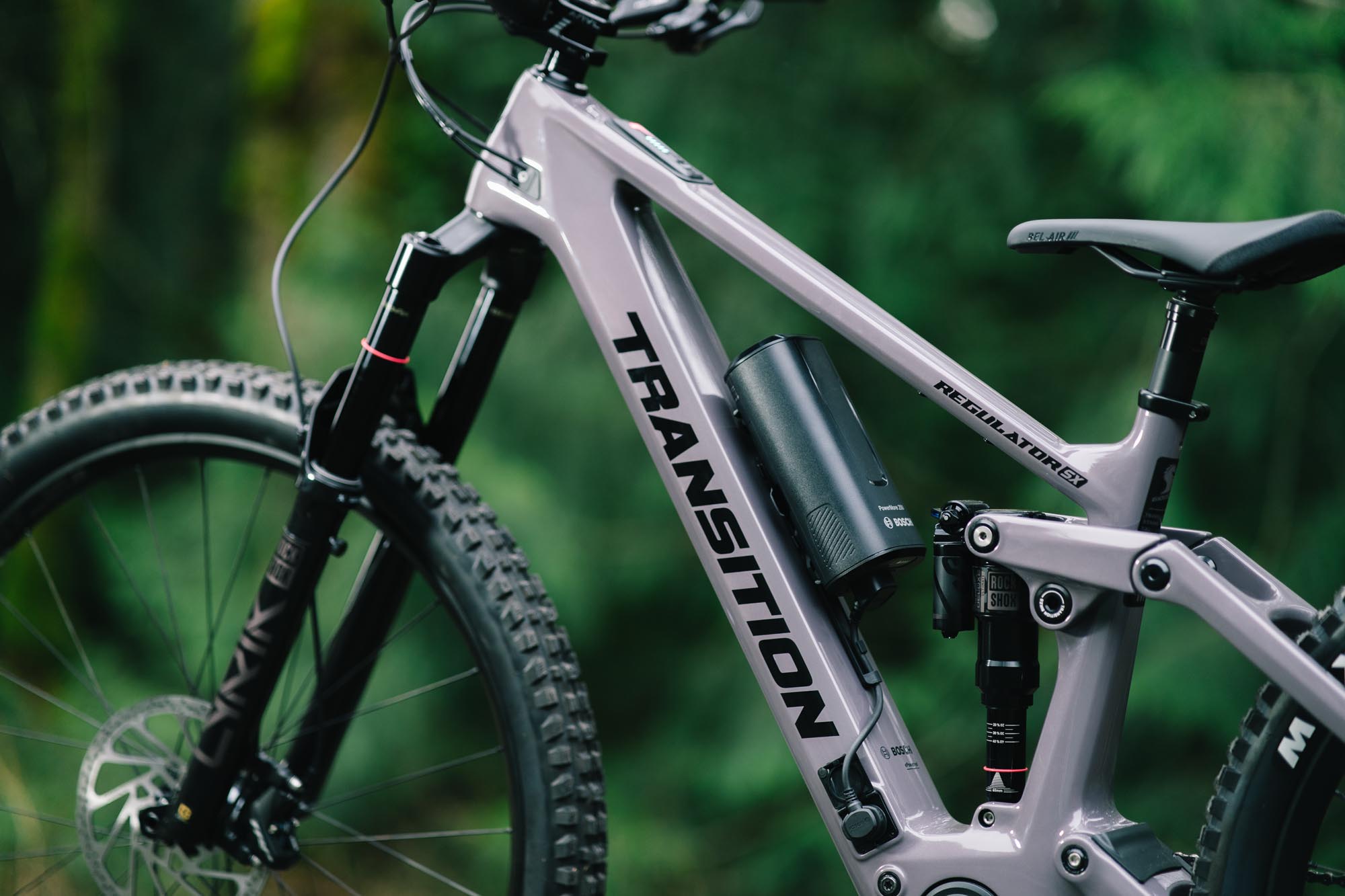
The Regulator SX is, as the name implies, built around the lighter Bosch SX motor. The same update that bumped up the CX’s power delivery has increased the SX’s output too, but to a more modest 60 Nm of torque and 600 W of power. A smaller 400 Wh battery means the Regulator SX frame has a slightly smaller diameter downtube, while also dropping some weight over its beefier CX sibling. Controls-wise, the same System Controller and Bluetooth Mini Remote from Bosch are used, and the Regulator SX can also still accept Bosch’s PowerMore range extender for an extra 250 Wh of battery capacity.
Fit & Geometry
Regulator CX
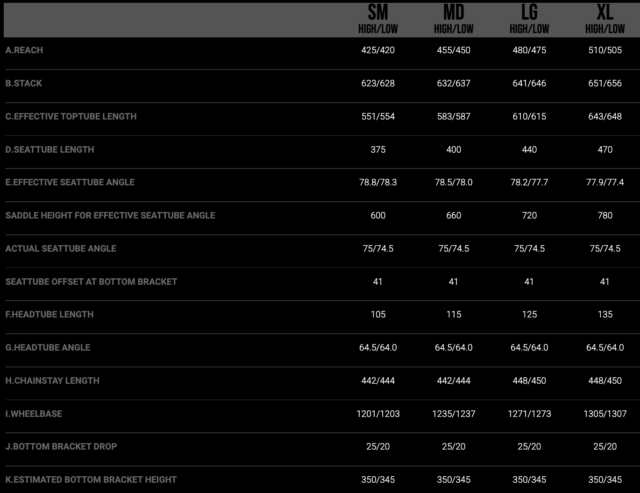
The Regulator CX and SX share similar geometry figures across their four sizes, but the CX gets an added feature in the inclusion of a geometry flip chip. That flip chip allows switching between High and Low geometry settings.
A size Large Regulator CX in the High setting sports a 480 mm reach, 641 mm stack, 610 mm effective top tube, 64.5° head tube angle, fairly steep 78.2° effective seat tube angle, and a slightly tall 350 mm estimated bottom bracket height. Both the Large and XL share 448 mm chainstays (again in the High setting), while the Small and Medium sizes get a shorter 442 mm chainstay configuration.
Switching into Low mode, the Large Regulator CX sees its reach tighten up slightly to 475 mm, while the stack increases slightly to 646 mm, and the effective top tube grows to 615 mm. That longer effective top tube is largely driven by the slacker 77.7° seat tube angle; the head tube angle also slackens to 64°. The chainstay length grows by 2 mm with the move from High to Low (to 450 mm on a Large), while the estimated bottom bracket height falls to 345 mm.
While the flip chip makes some meaningful differences in the geometry, either of the Regulator CX’s geometry settings looks like a modern interpretation of a bike at the intersection of the Trail and Enduro categories.
Full geometry is as follows for all sizes:
Regulator SX
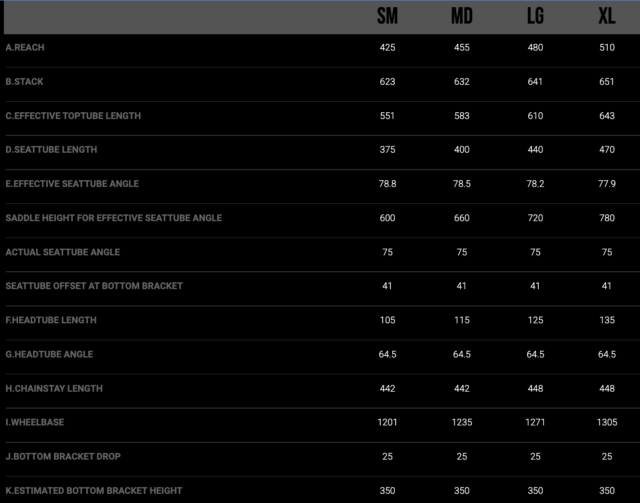
The Regulator SX’s geometry mirrors that of the Regulator CX’s High position, but it forgoes the flip chip. That means a 480 mm reach, 641 mm stack, 610 mm effective top tube, 64.5° head tube angle, 78.2° effective seat tube angle, and 350 mm estimated bottom bracket height for the size large. The same chainstay length break is there too, with 442 mm chainstays on the Small and Medium and 448 mm ones on the Large and XL. Again, this looks like a sensible and modern set of geometry figures that should encourage a tall, confident riding position, though the bottom bracket is perhaps slightly on the high side.
The Regulator SX’s full geometry chart is below:
The Builds
Regulator CX
The Regulator CX only comes in two builds, both of which use Shimano mechanical drivetrains paired with RockShox suspension. The base Deore build gets Shimano Deore shifting and four-piston Deore M6120 brakes, along with a RockShox Super Deluxe Base shock and 160 mm Domain Gold RC fork. The WTB ST i30 rims on Novatech hubs are wrapped in Maxxis tires, specifically a Minion DHR II 3C rear tire in DoubleDown casing and EXO+ Assegai 3C up front. Transition claims that the Deore build weighs 49.1 lbs / 22.25 kg for a size Medium.
Another $2,200 USD buys the XT build, which upgrades to XT shifting, TRP Evo Pro brakes, and an Ultimate-tier RockShox Super Deluxe shock and ZEB fork. The XT build rolls on DT Swiss H 1900 Spline 30 wheels and Schwalbe Albert Trail Evo tires (Ultra Soft front, Soft rear). The fancier build drops weight, bringing a Medium to a 47.0 lb / 21.31 lb claimed weight.
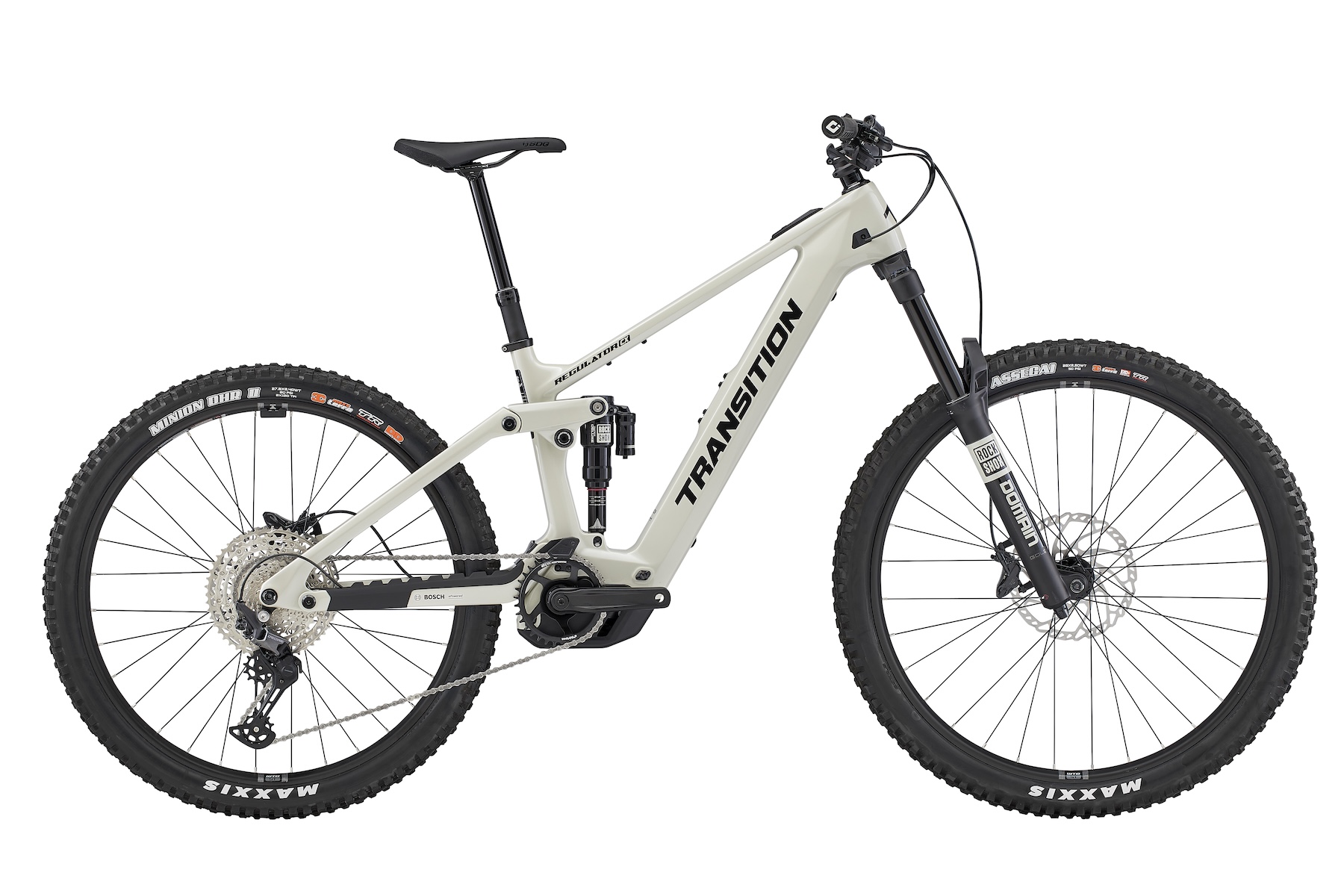
- Drivetrain: Shimano Deore
- Brakes: Shimano Deore M6120 (203 mm rotors)
- Fork: RockShox Domain Gold RC (160 mm)
- Shock: RockShox Super Deluxe Base
- Wheels: WTB ST i30 rims, Novatech hubs
- Dropper post: SDG Tellis (S: 150 mm, M: 170 mm, L: 200 mm, XL/XXL: 230 mm)
- Drivetrain: Shimano XT
- Brakes: TRP Evo Pro (203 mm rotors)
- Fork: RockShox ZEB Ultimate (160 mm)
- Shock: RockShox Super Deluxe Ultimate
- Wheels: Wheels: DT Swiss H 1900 Spline 30
- Dropper post: OneUp V3 (S: 150 mm, M: 190 mm, L: 210 mm, XL/XXL: 240 mm)
Regulator SX
The Regulator SX builds are still all-Shimano on the drivetrain front, but there are some changes to suspension that reflect the slightly lighter-duty intentions of the Regulator SX. Like the Regulator CX, the Deore build comes with Shimano Deore shifting and four-piston M6120 brakes with 203 mm rotors front and rear. Suspension duties are still handled by RockShox, with a Super Deluxe Select rear shock mated to a Lyrik Base fork. The Regulator SX Deore has the same WTB ST i30 rims on Novatech hubs, but the tire spec is lighter — though I’d argue that the dual-compound EXO casing Assegai front and DHR II rear tires are a step too far in prioritizing weight savings on an eMTB. Transition doesn’t publish a weight for the Deore build, but the Deore model we’re testing is rather light at 43.2 lbs / 19.6 kg (without pedals) for a size Large.
As with the Regulator CX, the Regulator SX’s XT build gets upgrades across the board, from carbon bars to an Ultimate-level RockShox Lyrik and Super Deluxe suspension combo. TRP Evo Pro brakes are also again used on the Regulator SX, and while the wheels are still DT Swiss, they are a lighter-duty combination of XM 481 rims on DT Swiss 350 DEG hubs. The tires get a modest upgrade to an EXO+ casing Assegai and DHR 2 combo with 3C rubber, but I’d still wish for a heavier-duty rear tire at the very least. Those upgrades drop the weight to a claimed 41.16 lbs / 18.67 kg, making the Regulator SX XT quite light even by Lightweight eMTB standards.
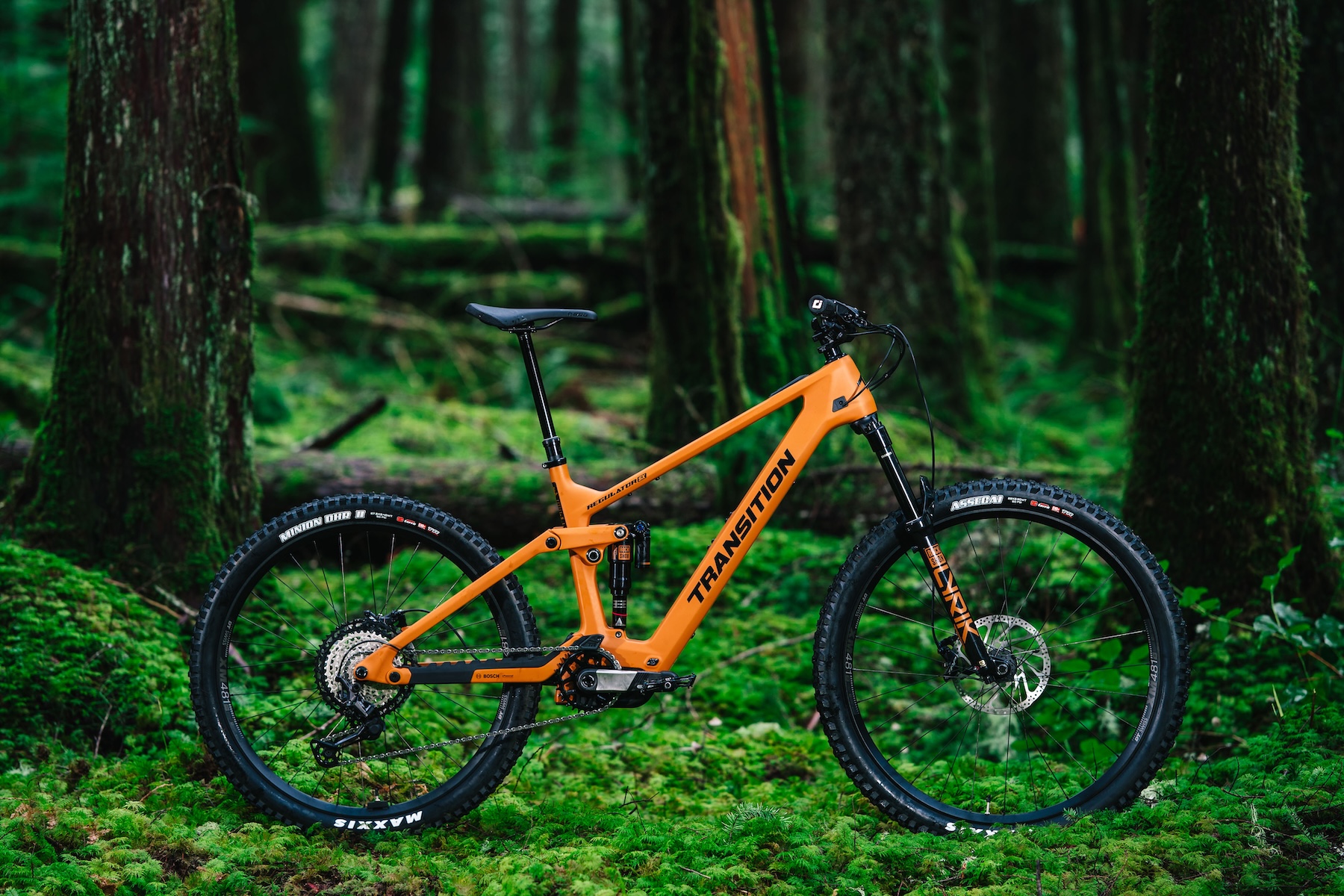
Full build details for the Regulator SX are as follows:
- Drivetrain: Shimano Deore
- Brakes: Shimano Deore M6120 (203 mm rotors)
- Fork: RockShox Lyrik Base (160 mm)
- Shock: RockShox Super Deluxe Select
- Wheels: WTB ST i30 rims, Novatech hubs
- Dropper post: SDG Tellis (S: 150 mm, M: 170 mm, L: 200 mm, XL/XXL: 230 mm)
- Drivetrain: Shimano XT
- Brakes: TRP Evo Pro (203 mm rotors)
- Fork: RockShox Lyrik Ultimate (160 mm)
- Shock: RockShox Super Deluxe Ultimate
- Wheels: DT Swiss XM 481 rims, DT Swiss 350 DEG hubs
- Dropper post: OneUp V3 (S: 150 mm, M: 190 mm, L: 210 mm, XL/XXL: 240 mm)
Some Questions / Things We’re Curious About
(1) The move to a Bosch drive unit is a big deviation from the prior Repeater EP8 and Repeater PT, but how differently does the Regulator CX feel from fit, geometry, and suspension standpoints? And how does the lighter Regulator SX feel as compared to its predecessor, the Relay?
(2) The Regulator CX and SX are quite similar in terms of suspension travel and geometry, but how much do the differences in drive units, batteries, builds, and their resulting weights influence on-trail performance?
Bottom Line (For Now)
The Regulator CX and SX are an intriguing pair of bikes, with plenty of similarities on paper despite their different drive units, batteries, and builds. Transition emphasizes a focus on fun and playfulness with both Regulator siblings, and they are fairly lightweight for their respective categories, though the XT build of the Regulator SX really stands out for how close it gets to the 40 lb threshold. We’ve been spending time on the Regulator SX and have some initial thoughts to share in our Flash Review below, and we’ll be ready to weigh in with a full review in the not-too-distant future.
Flash Review: Our Initial On-Trail Impressions
BLISTER+ members and those who purchase our Digital Access Pass can check out the Flash Review below to read our initial on-trail impressions. Get our Digital Access Pass to view all our Flash Reviews and Deep Dives, or become a BLISTER+ member today to get access to that and a LOT more, including the best worldwide Outdoor Injury Insurance, exclusive deals and discounts on skis, personalized gear recommendations from us, and much more.
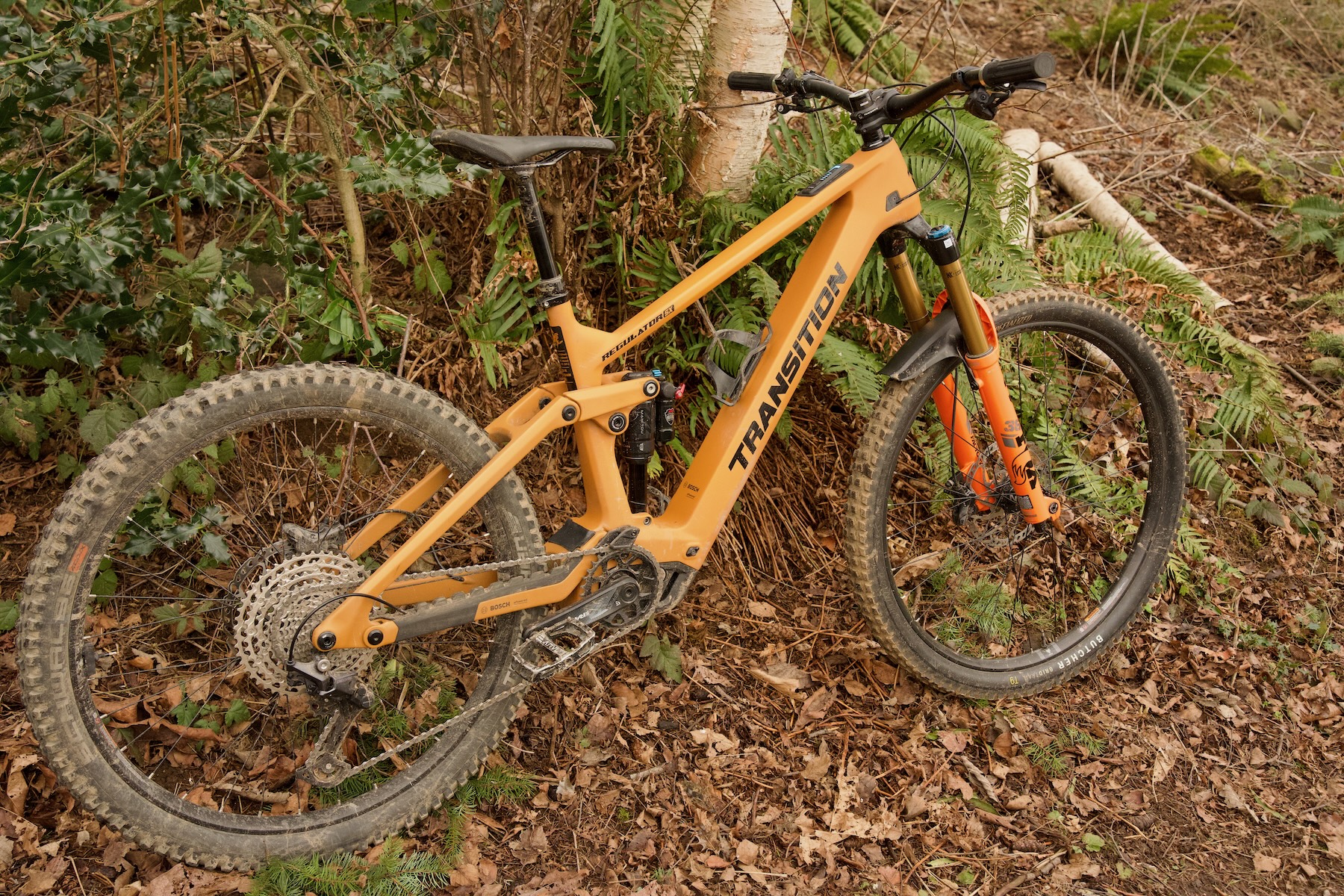
Flash Review: Transition Regulator SX
Transition’s Regulator SX is showing promise in how it combines motorized and non-motorized traits into a coherent package. Check out our Flash Review for our initial impressions.
Blister’s Flash Reviews and Deep Dives are accessible to those who purchase one of our paid subscriptions
To get our comprehensive Deep Dives and our initial, unfiltered reports on new gear, become a member and receive many other services, deals, and discounts.
If you’re already an active member, please log in.
(If you’re already logged in and a member in good standing and seeing this message in error, please refresh this page in your browser.)