
Intro
Over the past several weeks, we’ve published a bunch of our reviewers’ selections for 5-ski, 4-ski, 3-ski, and 2-ski quivers. Now we’re finally down to the hardest question of all — what single ski would you pick for all the skiing you do?
As we state in all our quiver selection articles, there is no single perfect quiver for everyone. It all depends very much on where you ski and how you ski. So, our selections below should not be viewed as our answer to the question, “What are the best skis out there?”
Instead, these are our reviewers’ personal picks, along with their rationale for why they would choose them.
As always, we’re interested to hear what you’d pick for your own quiver, so let us know in the Comments section at the bottom.
More Ski-Quiver Guidance
For more general suggestions — as opposed to what we personally would pick — check out our Winter Buyer’s Guide. And for more detailed info on the specific skis we discuss in these quiver articles, be sure to click around to read our reviews of the individual products.
If you’d like to get our recommendations for assembling your own ski quiver, then become a BLISTER+ Member, submit your question via the Member Clubhouse page, and we’ll get you sorted out.
Six Questions
For each of our reviewers, we asked them to answer the following questions:
I. What’s your 1-ski quiver for where you ski most (backcountry and resort), and why?
II. If you didn’t do any backcountry touring, what would your 1-ski quiver be for inbounds-only skiing?
III. If you didn’t ride any lifts, what would your 1-ski quiver be for backcountry-only skiing?
IV. What’s your 1-ski quiver for the next 3 years, regardless of location?
V. What skis were most difficult to leave off your list?
VI. What ski do you imagine has the greatest likelihood of making your list, if and when you get to ski it, or get to ski it more?

Luke Koppa
(5’8”, 155 lbs / 173 cm, 70 kg)
I. What’s your 1-ski quiver for where you ski most (backcountry and resort), and why?
Ski #1: Armada Declivity X 102, 180 cm + CAST Freetour
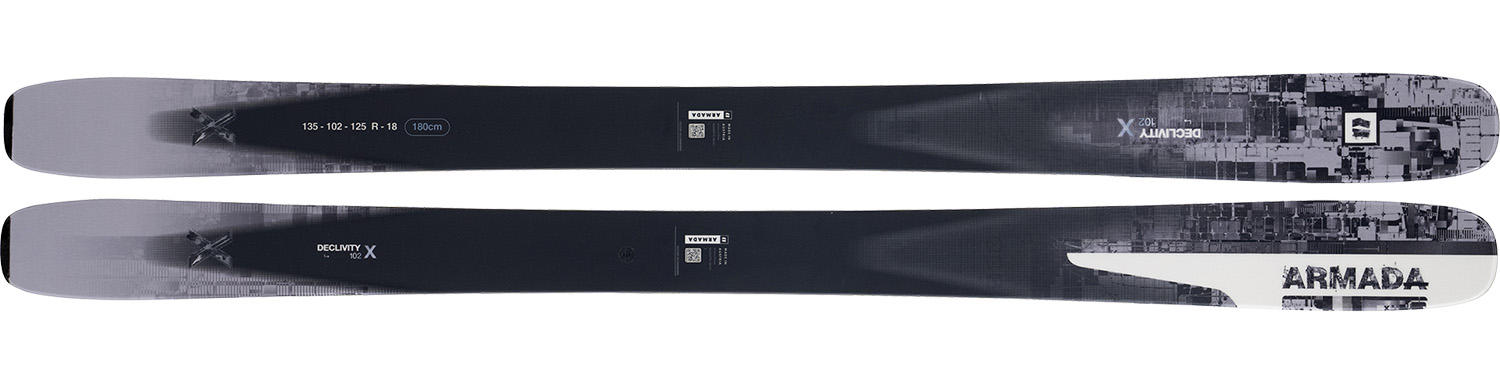
I suppose this shouldn’t come as much of a surprise, given that this ski has maintained its spot across all my wider quivers, always serving as my daily driver.
For all the specific reasons I’ve outlined before, the Declivity X 102 just works quite well for me on roughly ~75% of my days at Crested Butte. I’d want a much narrower, tighter-radius ski during the first part of the season, when I’m mostly skiing lower-angle, man-made groomers. And I’d really, really want something wider, heavier, and more rockered when it happens to snow more than ~5”. But I view a 1-ski-quiver decision as a process of finding ‘the least bad option’ for the conditions and terrain I ski most throughout a season, and the Declivity X 102 fits the bill for me.
Same as in my 2-ski quiver, I’d mount it with CAST’s Freetour system so that I can still skin with this ski for post-work uphill laps at the resort, and a good bit of spring touring in the backcountry. The Declivity X 102 is a great ski for those scenarios / conditions, and it doesn’t hurt that it’s not particularly heavy for its class.
II. If you didn’t do any backcountry touring, what would your 1-ski quiver be for inbounds-only skiing?
Ski #1: Armada Declivity X 102, 180 cm + alpine bindings
I spend significantly more time riding lifts than skinning in the backcountry, so my answer to the first question above was already pretty biased toward resort skiing. So, for this one, I’d just swap the tour-able CAST Freetour for a regular alpine binding.
III. If you didn’t ride any lifts, what would your 1-ski quiver be for backcountry-only skiing?
Ski #1: Salomon QST Echo, 181 cm + ATK Freeraider
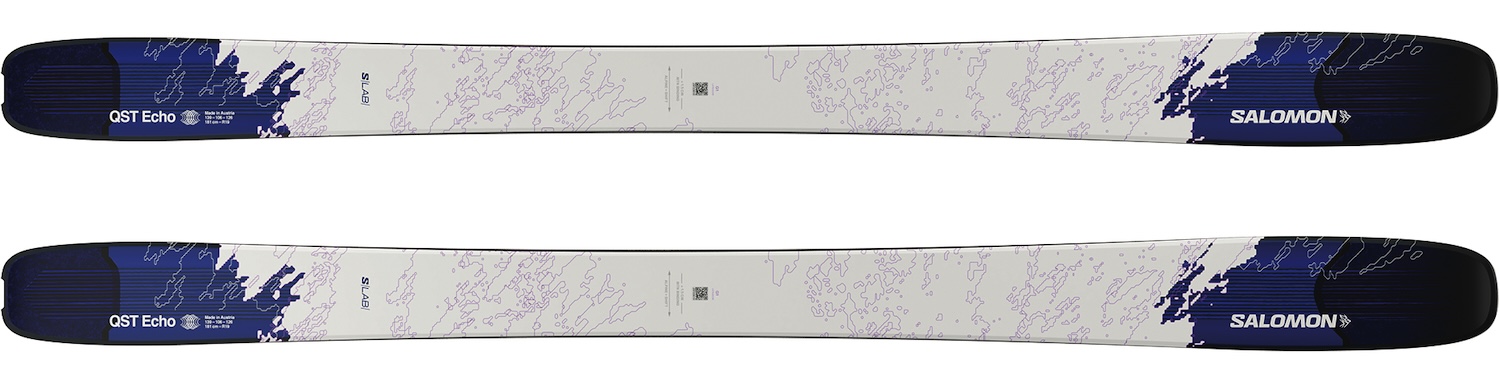
This decision felt pretty easy for me.
At a little over 1800 grams per ski, the 181 cm QST Echo comes in at a weight that I personally like for a do-everything touring ski. It’s not the lightest in its class, but I’ll happily deal with 100-200 more grams per ski in exchange for how well the QST Echo skis, relative to much lighter alternatives I’ve tried.
This ski floats and turns really well for its width in deep snow, but I still find it very predictable and enjoyable in pretty much any other condition, aside from true ice. It’s intuitive to maneuver in tricky crusts, but it’s still a lot of fun to carve, even at moderate speeds. I can ski it with a pretty directional style, but it’s not picky in that regard — it remains intuitive from a variety of stances (a big plus in the backcountry, where I seem to end up shifting my balance point more than I might on runs I’ve skied thousands of times at the resort).
With this as my 1-ski touring quiver, I probably wouldn’t be trying to tick off many super steep, high-exposure spring lines on this ski if conditions were brutal, and I’d probably grab my powsurf board on days when the new snow is measured in feet, not inches.
But for everything in between, I get along really well with the QST Echo.
IV. What’s your 1-ski quiver for the next 3 years, regardless of location?
Ski #1: Armada Declivity X 102, 180 cm + CAST Freetour
No change from my answer to question #1. When selecting a ski for my 1-ski quiver at Crested Butte, I had to factor in the potential for everything from icy groomers to the occasional 18”+ powder day. I.e., it’s a great generalist for my preferences.
I’d be very bummed if I ended up spending months with it in a place that exhibits the extremes at either end of the snow-conditions spectrum, but that’s an inherent reality for this question.
V. What skis were most difficult to leave off your list?
The closest contenders for my non-touring-specific 1-ski quiver include the Salomon QST 94, Stockli Stormrider 95, K2 Mindbender 89Ti, Faction Dancer 2, K2 Mindbender 99Ti, Black Crows Serpo, K2 Omen Team, RMU Apostle 96, Line Optic 96, Icelantic Nomad 100, and Rossignol Sender Soul 102.
I also considered taking a different approach and going with something that was a bit more optimized for when conditions are good. The idea of spending a deep resort pow day on the Declivity X 102 bums me out; it’s definitely not a ski that lets me ski pow and (especially) chop how I want to. So, I considered some skis that I love in soft conditions but that are still fairly versatile; the top contenders were the Dynastar M-Free 112, K2 Reckoner 110, Icelantic Nomad 106 or 112, and the RMU Apostle 106 and 114.
However, if I’m still going to be spending 100+ days on snow as I have since I moved to Crested Butte, I can’t ignore the statistics. The vast majority of my days are not going to involve deep snow, and I prefer the Declivity X 102 over those skis in most situations outside of powder and soft chop.
For my touring-only pick, I also considered the Line Vision 104 (a tad less damp than I prefer); Moment Wildcat Tour 108 (not all that engaging in low-angle terrain); Weston Summit Carbon 105 (a bit soft and turn-y in steeps); and the ZAG Slap 104 Lite (not floaty enough on deep days).
VI. What ski do you imagine has the greatest likelihood of making your list, if and when you get to ski it, or get to ski it more?
Frankly, I don’t know of any skis that seem like they’d replace the Declivity X 102. My enjoyment of that ski is the result of a ton of very minor things that it does well (for my preferences). But I’m looking forward to trying all the new 26/27 skis that will start getting announced soon; maybe one of them will be my next favorite all-rounder.
On the touring side, I also don’t know of many current skis that strike me as strong contenders to replace the Salomon QST Echo. Heritage Lab’s 187 cm BC110 is probably the most interesting to me on paper. But, for a do-everything touring ski, I have historically preferred skis with a bit of camber and tighter sidecut radii to keep things interesting when steeps and fresh snow aren’t on the menu.

Kristin Sinnott
(5’8”, 130 lbs / 173 cm, 59 kg)
I. What’s your 1-ski quiver for where you ski most (backcountry and resort), and why?
I went back and forth on this choice several times and came very close to picking a narrower ski this year — after all, many of my current favorite all-mountain skis are in the ~84–93 mm width range. But my goal this season is to ski every day, and with any luck, some of those days will involve fresh snow (at least for the first few runs). With that in mind, I wanted a ski that I enjoyed in average conditions, but that wouldn’t severely hamper my experience when the forecast does deliver new snow.
My longtime favorite, the Wagner Summit 106, was my top choice last year. However, as I mentioned in previous quivers, I haven’t been on it in quite a while, so I didn’t feel confident including it in my 1-ski quiver this year.
When choosing this do-everything ski, I wanted something that would perform well on both soft and firm groomers, be maneuverable in bumps, offer some float for the occasional deep day, and remain composed in chop. I don’t think there’s a single ski I’ve tested that perfectly fits all of those criteria, but the ski that comes closest is the Head Kore 104 Ti W:
Ski #1: Head Kore 104 Ti W, 177 cm + CAST Freetour
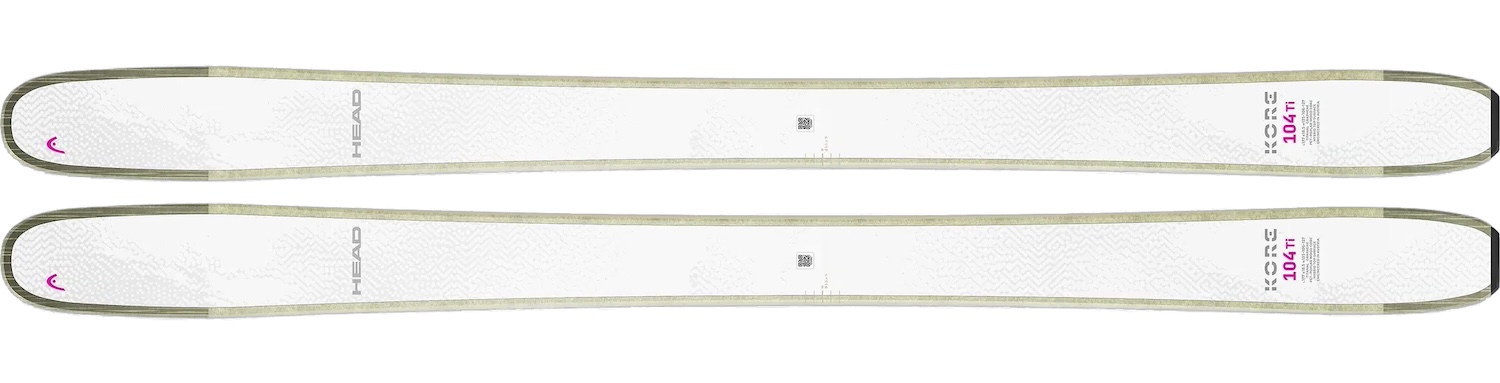
The Kore 104 Ti W is fairly nimble for a 104-mm-wide ski and provides adequate float for occasional powder days. I’ve skied it quite a bit over the past month and have been especially impressed with its performance on groomers, both firm and soft. It’s far from a dedicated carving ski, but I’ve been surprised by how much I’ve enjoyed it, given my usual bias toward narrower all-mountain skis.
II. If you didn’t do any backcountry touring, what would your 1-ski quiver be for inbounds-only skiing?
Ski #1: Head Kore 104 Ti W, 177 cm + alpine binding
Nothing would change, except I’d swap the CAST system for a dedicated alpine binding. When answering the first question, I mainly focused on the terrain I like to ski at Crested Butte Mountain Resort, so removing backcountry touring from the equation doesn’t affect my choice.
III. If you didn’t ride any lifts, what would your 1-ski quiver be for backcountry-only skiing?
Ski #1: Head Kore 104 Ti W, 177 cm + tech binding
For a dedicated backcountry ski, I think I could still be happy on the Head Kore 104 Ti W. I almost chose the Elan Ripstick 100 W because it’s a fair bit lighter, but the Kore 104 Ti W is a bit more predictable and maneuverable in weird conditions, and I prefer it in fresh snow.
IV. What’s your 1-ski quiver for the next 3 years, regardless of location?
Ski #1: Head Kore 104 Ti W, 177 cm, + CAST binding
Looking ahead over the next three years, the Head Kore 104 Ti W would still be my choice. Its versatility across a wide range of snow conditions and terrain makes it a dependable option no matter where I’m skiing.
V. What skis were most difficult to leave off your list?
The Wagner Summit 106 was by far the hardest ski to leave off. I even drafted a version of my 1-ski quiver that included it, but ultimately, I feel I need to spend more time on it again before confidently putting it back in my quiver.
VI. What ski do you imagine has the greatest likelihood of making your list, if and when you get to ski it, or get to ski it more?
The Kore 104 Ti W wasn’t a runaway winner for my 1-ski quiver, which leaves the door open for several other options. I’m especially interested in spending more time on the following skis:
- Head Kore 104 Ti W in a 170 cm length
- Salomon QST 100
- DPS Wailer 100
- Moment Sierra 96 or Sierra 104
- Moment Bella 101
- Atomic Bent 100
- Wagner Summit 106
- Fischer Ranger 102
- Zag Slap 104
Mark Danielson
(6’2”, 210 lbs / 188 cm, 95 kg)
I. What’s your 1-ski quiver for where you ski most (backcountry and resort), and why?
Probably no touring for me this season in Colorado — just inbounds resort skiing at Crested Butte, Telluride, and Breckenridge — so here’s my pick for that:
Ski #1: Rossignol Sender Free 110, 191 cm + Tyrolia Attack 17 GW
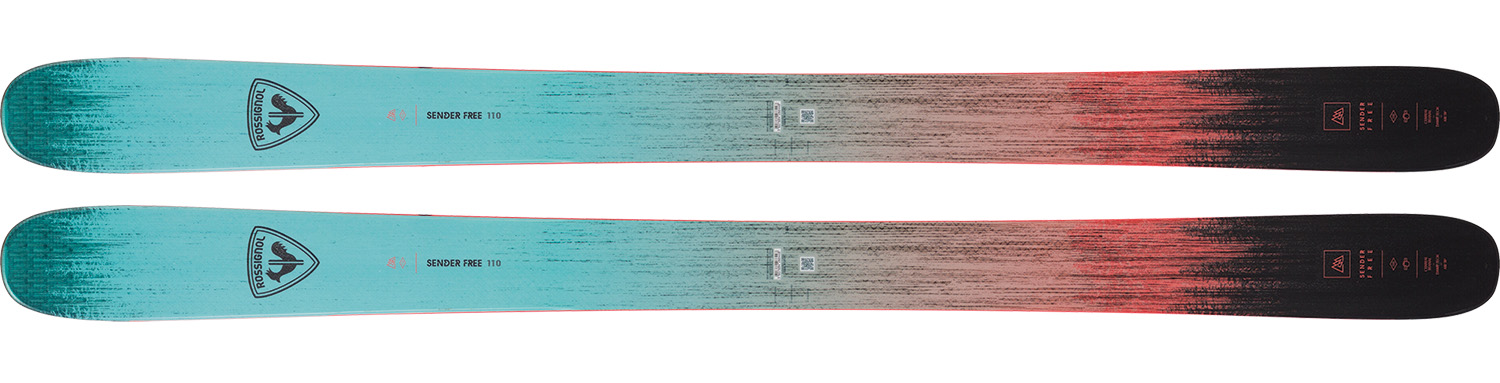
The Sender Free 110 was a pretty easy choice, because it’s my favorite all-round ski for CB.
This ski works exceptionally well for me in all but the tightest or firmest scenarios at CB. With it mounted about half a cm forward of the recommended line, I can either ski it loosely — pivoting and slashing turns — or with a more serious, precise, and somewhat directional style.
This ski isn’t amazing in firmer conditions, but for a freestyle-oriented 110mm-wide ski, its edge hold is pretty impressive. At the opposite extreme, this ski isn’t wide enough to float my big body in deep powder, and that’s a compromise I must accept.
II. If you didn’t do any backcountry touring, what would your 1-ski quiver be for inbounds-only skiing?
Same setup — I won’t be ski touring this season in Colorado.
III. If you didn’t ride any lifts, what would your 1-ski quiver be for backcountry-only skiing?
For reference, ski-touring hasn’t made up a significant portion of my time on snow, but it’s fun to speculate, so here are my two ideas:
Option 1 (all human-powered)
If the rules here forbid snowmobiles and car shuttles, then I’d choose a lighter setup.
Ski #1: Völkl Katana V-Werks, 191 cm + CAST Freetour 2.0 Pivot 15
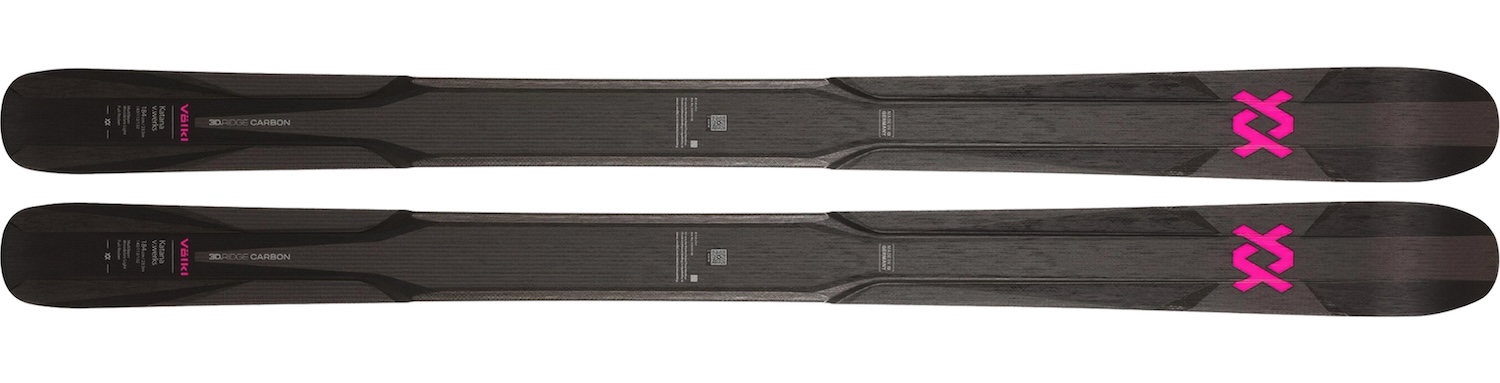
This ski’s minimal taper and long effective edge enable a precise skiing style at higher edge angles, while its full-length reverse camber gives me the option to tap into its looser, more forgiving side at lower edge angles. As a bigger guy, I’d be mindful about avoiding rocks, because the V-Werks carbon construction includes some notably thin areas, but I think this ski would hold up for a full season for me.
Some other fun skis I considered but ultimately rejected as wider than what I want for firmer conditions: Atomic Bent Chetler 120, Dynafit Tigard 114, Volkl Blaze 114.
Option 2 (machine-access allowed)
If snowmobiles and/or car shuttles are allowed, then I’d purely focus on downhill performance and go with the sort of super-heavy setup that I am drawn to for resort laps:
Ski #1: Dynastar M-Pro 108 Ti, 192 cm + Look Pivot 18 + Daymakers
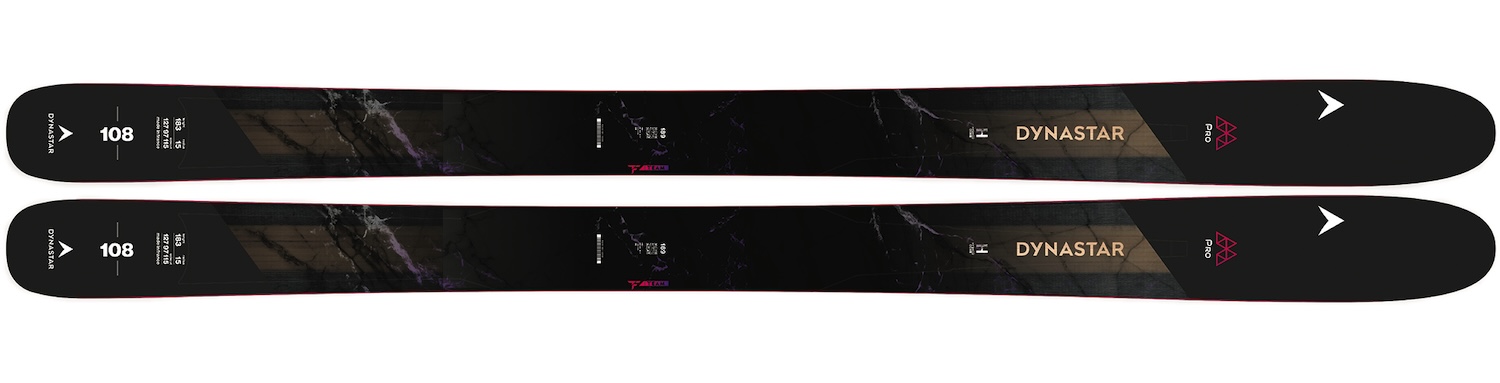
Our pair of the 192 cm M-Pro 108 Ti weighs ~2475 grams. Its excellent suspension at high speed can make less-than-ideal snow ski a lot more like nice, smooth windbuff. Plus, it provides good support for confident landings. I won’t be doing any flips or spins, so this very directional design works for me.
IV. What’s your 1-ski quiver for the next 3 years, regardless of location?
Same as my pick for the first question:
Ski #1: Rossignol Sender Free 110, 191 cm + Tyrolia Attack 17 GW
I could (begrudgingly) be satisfied with this one ski at most destinations, aside from a season dominated by frequent deep powder. In the unlikely event that I found myself skiing three straight powder-filled seasons in Japan or Alaska, I’d still have plenty of fun on the Sender Free 110, but eventually I would look for a way to cheat at this game…like maybe add a snowboard, or lose 30 lbs of bodyweight to help these ski float me better.
V. What skis were most difficult to leave off your list?
Dynastar M-Free 112, 190 cm: The M-Free 112 shares some strong similarities with my beloved Sender Free 110. The M-Free 112 skids / slides more smoothly (which suits me better in steeps) and has a more-predictably-catching tip when carving crud at speed (which thoroughly eliminates “over-the-bars” worries and inspires more confidence). However, I prefer how the Sender Free 110 feels when landing onto firm hardpack (it also generally holds an edge better).
Moment Countach 110, 188 cm: As I’ve written before, for the dynamic conditions of spring and summer, I prefer the impressive versatility of the Countach 110. If I ended up at Mammoth for another one of their big summers of skiing until August, then I’d miss the Countach 110. But I prefer the more damp and stable Sender Free 110 in most mid-winter conditions.
VI. What ski do you imagine has the greatest likelihood of making your list, if and when you get to ski it, or get to ski it more?
At Blister, since we weigh all the skis we test, we often see factory variances in weight. The majority of skis we weigh come in quite close to the average for a given model, but there’s always a chance of a pair that’s an outlier.
With that in mind, the ski with the greatest likelihood of replacing my 191 cm Sender Free 110 would be a somewhat anomalous, heavier-than-average 190 cm Dynastar M-Free 112. Since these 2 models share many strong similarities, I can imagine a scenario where an M-Free 112 that’s heavier than average would earn my pick over an “average weight” pair of Sender Free 110. But then again, a very slightly heavier pair of the Sender Free 110 could win me right back.