

Intro
Well, it’s once again that time of year. Many of us in the Northern Hemisphere are already skiing, while the rest of us are champing at the bit. And one of the most entertaining ways to fill time before your first day on snow and between early-season storms is to fantasize about your dream ski quiver.
Assembling a ski quiver (whether hypothetical or real) is certainly fun, and it’s also a great way to procrastinate and make the hours at work just fly right by.
But it can also get a bit tricky — and make the more obsessive among us start going mad. We get a lot of questions about whether ski X is too similar to ski Y to have both, and even more questions about how, in general, to think about putting together an effective quiver.
So the first things to figure out are:
(1) Whether for you, personally, it’s worth owning more than a single pair of skis. And then,
(2) How to put together a group of skis that will help you get the most out of every day on the mountain.
As we state in all our quiver selection articles, there is no single perfect quiver for everyone. It all depends very much on where you ski and how you ski. So, our selections below should not be viewed as our answer to the question, “What are the best skis out there?”
Instead, these are our reviewers’ personal picks, along with their rationale for why they would choose them.
As always, we’re interested to hear what you’d pick for your own quiver, so let us know in the Comments section at the bottom.
More Ski-Quiver Guidance
For more general suggestions — as opposed to what we personally would pick — check out our Winter Buyer’s Guide. And for more detailed info on the specific skis we discuss in these quiver articles, be sure to click around to read our reviews of the individual products.
If you’d like to get our recommendations for assembling your own ski quiver, then become a BLISTER+ Member, submit your question via the Member Clubhouse page, and we’ll get you sorted out.
How Many Skis?
This year, we’re once again starting with our picks for hypothetical 5-ski quivers, which is obviously pretty sizeable, but each reviewer will outline what roles each ski will serve in their quiver. And even if you’re opting for a 1- or 2-ski quiver, seeing how we think about assembling a larger quiver may still be beneficial in terms of you sorting out the compromises you’re willing to live with.
Over the course of the coming weeks, we’ll be narrowing it down to our 4-, 3-, 2- and 1-ski quivers.
Five Questions
For each of our reviewers, we asked them to answer the following questions:
I. Which currently available skis would you pick for your own 5-ski quiver, and why?
II. What skis were the most difficult to leave off your list?
III. What skis do you imagine have the greatest likelihood of making your list, if and
when you get to ski them, or get to ski them more?
IV. If you had to choose a single brand from which to build your 5-ski quiver, which company would you pick?
V. Since we get this question a lot, what would your ideal quiver look like if we dropped the 5-ski limit?
Three Additional Notes
(1) For our quivers, we’re including skis that we’ve actually spent time on, but we will allow some minor exceptions and/or speculation regarding skis that we think might fit into our quivers once we get to ski them / ski them more.
(2) Some of our reviewers will also expand on which bindings they’d put on which skis if there are some particular reasons they made those choices.
(3) We will be updating this post with more options from some of our other reviewers in the near future, but we’d also love to hear your answers to some or all of our four questions, too, so please do so in the Comments section.

Luke Koppa
(5’8”, 155 lbs / 173 cm, 70 kg)
I. Which currently available skis would you pick for your own 5-ski quiver, and why?
Ski #1: Armada Declivity X 102, 180 cm + alpine binding
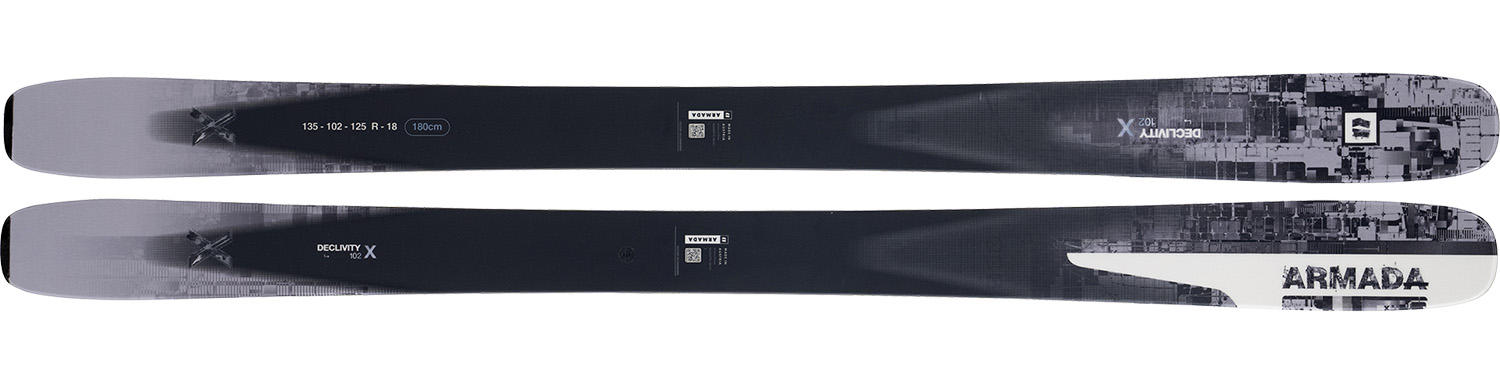
This is my daily driver slot for skiing at Crested Butte Mountain Resort. And, as will be a theme in my picks, it’s a carryover from last year.
That’s not to say I haven’t skied a ton of do-everything skis that I love since last year’s quiver articles. I definitely have. However, I haven’t found any that (1) do all the little things I prioritize as well as the Declivity X 102 and (2) I’ve spent enough time on to be totally confident in.
For reference, I want my all-mountain ski to be fun to carve on piste, even when the snow is pretty firm. I also want it to be quite quick, loose, and energetic in moguls, suiting a dynamic, light-on-my-feet style. And I want it to work with a variety of skiing stances, from quite forward to pretty centered. And I want it to do all of this without feeling overly harsh / chattery (for my preferences) in variable snow.
I.e., my preferred daily skis tend to lean slightly toward the more agile, maneuverable, and playful sides of the spectrum, rather than being notably damp and stable, but I don’t necessarily want a super freestyle-focused nor a firmly directional platform.
I’m definitely not saying that the Declivity X 102 is the best all-mountain ski on the market. However, it fulfills enough of my (highly particular) preferences to just barely set it apart from a ton of other skis I love in most scenarios, so it’s once again my top pick for most of my resort days. And I’m sure you’ll be seeing it a lot more as we get to the smaller quiver articles.
As for alpine bindings, I still don’t have a strong preference, despite testing the majority of them back-to-back on the same ski on the same runs. There are minor aspects I like and dislike about nearly every alpine binding on the market. But, realistically, I’d probably just choose the binding I can get at the best price, provided that it works for my preferred release values and boot sole type.
Ski #2: Black Crows Mirus Cor, 178 cm + alpine binding
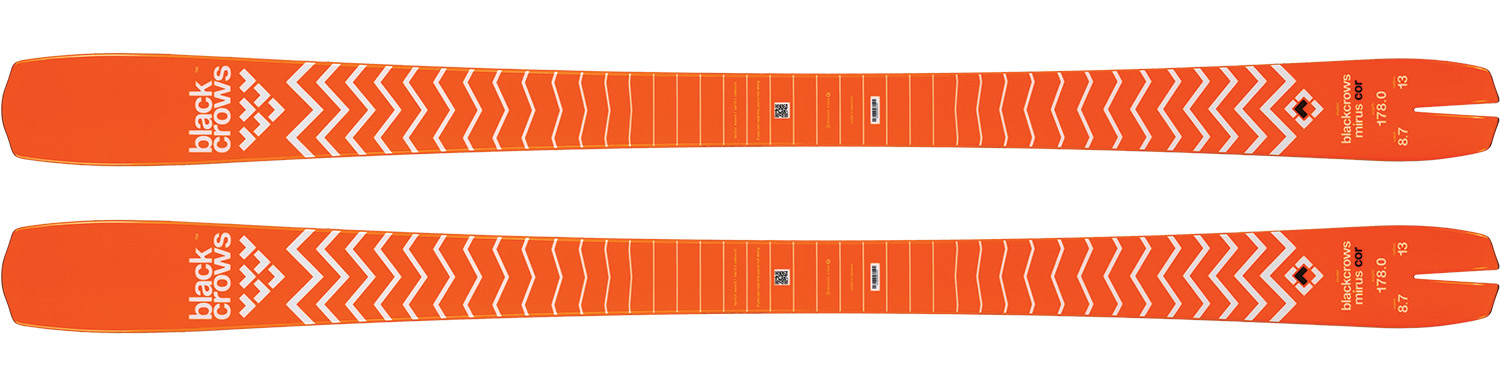
This is the ski that I’d spend the most time on for the first few weeks of the season, when we’re primarily skiing man-made groomers on low- to moderate-angle slopes. It’s also what I’d break out when I want to get the most out of any groomer (and the sidehits that border them).
I was really, really close to swapping this for a similarly tight-radius but more traditional carver like the Volkl Peregrine 72, Head Supershape e-Magnum, or Rossignol Forza 70°. I really love all of those skis. And, compared to the Mirus Cor, all of them feel more powerful and arguably encourage better technique on piste.
However, none of them open up as many non-traditional skiing opportunities as the Mirus Cor. This ski needs very little speed to be enjoyable, enabling snappy, Slalom-like carves on early-season slopes (even when it’s icy).
But, unlike many skis that can accomplish those things, the Mirus Cor also lets me ski switch without paying attention to patches of deeper snow. And it feels nice in the air. And, despite its 87 mm waist, it can be a fun all-mountain ski, especially when I’m taking laps with friends who are less interested in pushing the limits of steepness and speed.
Ski #3: Dynastar M-Free 112, 190 cm + alpine binding
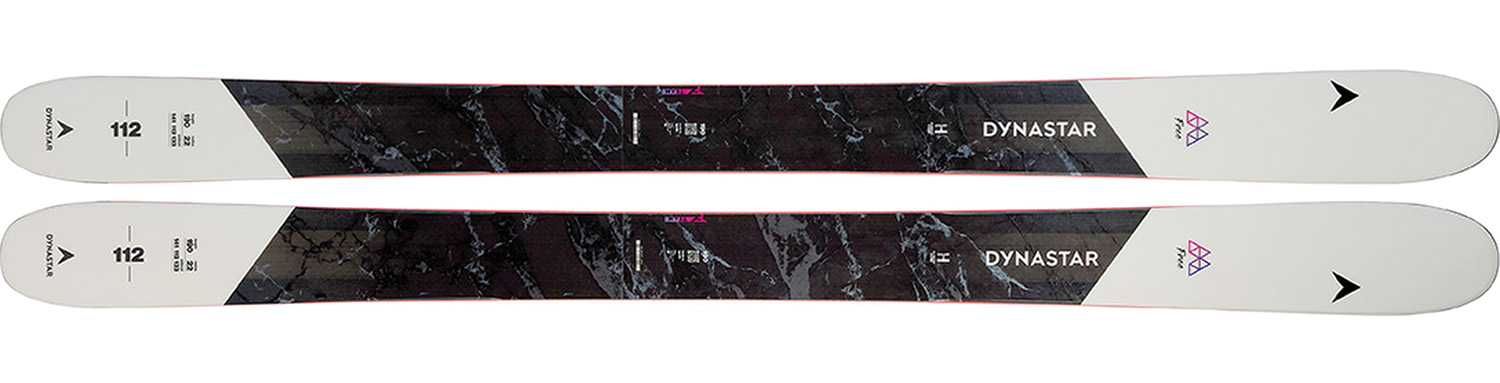
This is the slot I’m the least confident about. If you ask me in a week, I’d likely give a very different answer.
In the past, I’ve typically picked a 105-110mm-wide ski that’s more playful, forgiving, and maneuverable than my daily driver; the idea being that I basically have two all-mountain skis, but the second one caters to a more playful skiing style than the first one.
However, these days, something like the Declivity X 102 meets those criteria for me on most days at the resort. And if I know the speeds will be slower and the slope angles lower, I’ve got the Mirus Cor. So, as of the particular time I’m writing this, I’m going to instead go with something much more damp and stable than my daily driver, but that still encourages a playful skiing style.
The 190 cm M-Free 112 was, I think, the standout ski for me last season. It’s extremely capable at speed, but still very maneuverable, balanced, and relatively forgiving. And, despite having a ton of overlap with my #4 ski, I think I could still justify it in a 5-ski quiver. The M-Free 112 is far better at dealing with high speeds and choppy snow than the Declivity X 102, but it’s manageable at slow speeds in most terrain. It excels with at least a few inches of fresh, but it doesn’t feel like major overkill if it hasn’t snowed in a while.
So, for the days when I know some more serious lines are on the menu, or there’s more than a couple new inches of snow, this is the ski I’ll be bringing.
Ski #4: Rossignol Sender Free 118, 186 cm + alpine binding
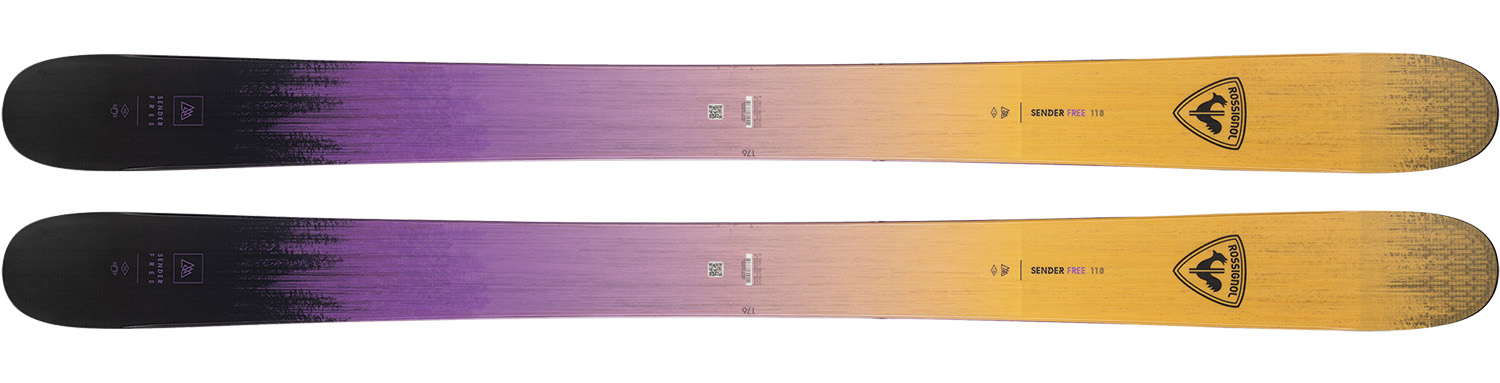
Still my favorite resort pow ski, for all the reasons I’ve laid out in our reviews and prior quiver articles. Skiing resort chop on this ski is one of my favorite things to do on this planet.
Given how I decided to settle on my #3 ski, I’d be conflicted about which ski to take on a lot of 6”–10” pow days. On paper, having both doesn’t make a whole lot of sense. But that’s more of a factor of how much I enjoy skiing both skis in soft chop. I made this bed, and I’ll happily sleep in it.
Ski #5: Majesty Superwolf, 178 cm + ATK Raider 12
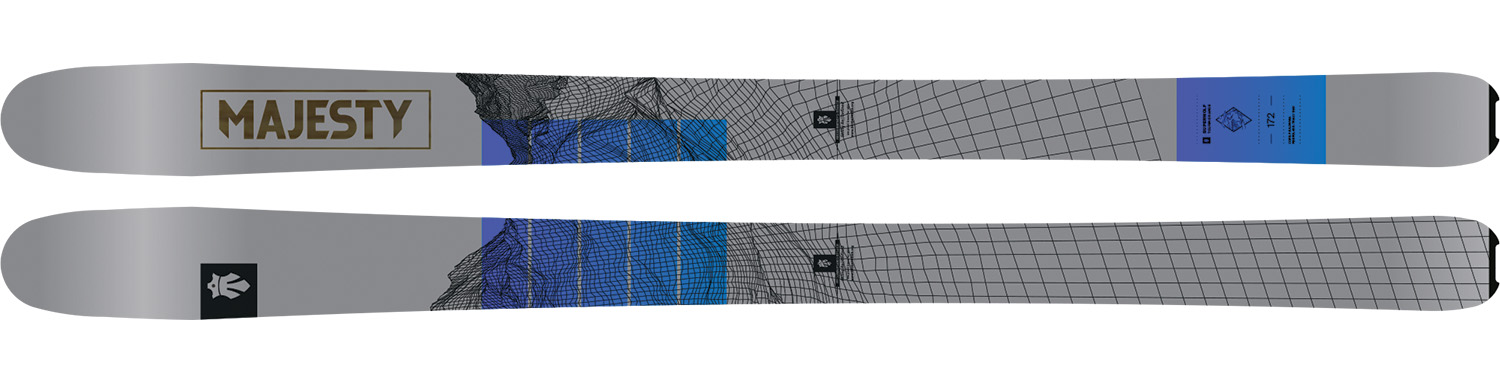
For reference, most of my time in the backcountry takes place during the early and late parts of the season. At the beginning, I’m usually bootpacking with my powsurf board, so this is primarily my spring touring ski, and the ski I’d use for frequent pre- and post-work skins at the resort.
The Majesty Superwolf retains its spot for yet another year, though there are several contenders in my mind that I just need to spend more time on. For now, the Superwolf continues to be my go-to for all sorts of spring skiing, from icy couloirs to variable slush and crusts. It handles that spectrum of conditions really well for its size, and it skis really well for its weight.
II. What skis were the most difficult to leave off your list?
Dozens and dozens.
For Ski #1: Salomon QST 100, K2 Mindbender 99Ti, Salomon QST 94, Faction Studio 2, Volkl Revolt 101, Stockli Stormrider 95
For Ski #2: Volkl Peregrine 72, Rossignol Forza 70°, Line Blade, Head Supershape e-Magnum, Fischer The Curv GT 85, Romp Sidehit 89
For Ski #3: not many for how I positioned it this year, but if I reverted back to a more versatile, playful all-mountain ski, the contenders would include: Icelantic Nomad 106, RMU Apostle 106, Volkl Revolt 101, Salomon Depart 1.0, Whitedot Altum 104
For Ski #4: Moment Wildcat 118, Volkl Revolt 114, Head Kore 118 Ti, Icelantic Nomad 112, Line Optic 114, RMU Apostle 114
For Ski #5: Salomon MTN 96 Carbon, Line Vision 96

III. What skis do you imagine have the greatest likelihood of making your list, if and when you get to ski them, or get to ski them more?
We just got Romp’s new Sidehit 89 and Zorro 100; by the time this is published, I should have gotten my first laps on at least one of them. Maybe they could contend for my #2 and #1 slots, respectively?
I’m also super excited to hopefully spend some time on Heritage Lab’s skis this season. I know our reviewer, Paul Forward, has been very impressed by a handful of their skis, and I’m eager to try them for myself, especially their “AM” collection.
Then there are already plenty of new 26/27 skis being teased that sound interesting, but we’ll have more to say about those later this winter.
IV. If you had to choose a single brand from which to build your 5-ski quiver, which company would you pick?
Same as past years, no company makes five skis that perfectly match my very particular preferences. But here are a few that (I think) I could be pretty happy with:
Volkl: Revolt 101, Peregrine 72, Mantra 102, Revolt 114, Blaze 94
Salomon: QST 100, Addikt Pro 76, Depart 1.0, QST Blank, MTN Carbon 96
Line: Optic 96, Blade, Optic 104 (or Chronic 101?), Optic 114, Vision 96
V. Since we get this question a lot, what would your ideal quiver look like if we dropped the 5-ski limit?
Without limits, I’m guessing my quiver would expand to 10+ skis, all of which I’d likely wait to purchase from shops’ demo fleets or past-season sales. I’d probably add a freestyle-oriented all-mountain ski like the K2 Reckoner 102; a more traditional carver like the Volkl Peregrine 72 or 82; a lighter and more nimble resort pow ski like the RMU Apostle 114; a powder touring ski like the Heritage Lab UT122; and whatever others pop up that pique my interest.
Kristin Sinnott
(5’8”, 140 lbs / 173 cm, 63 kg)
I. Which currently available skis would you pick for your own 5-ski quiver, and why?
This quiver is based on my 25/26 plans: skiing at CBMR as much as possible, a late-winter trip to Palisades, and spring skiing at Snowbird. I’m once again keeping the option of backcountry / uphill skiing open — hoping that this is the year I get back to my old routine of weekly skinning sessions. But if that falls through again, I know I’ll at least have some post-season adventures with my husband and son. (I make them skin with me on my birthday and on Mother’s Day.) I wish I could say I spent more time in the backcountry, but it’s just not in the cards right now, and this 5-ski quiver reflects that. When I do go uphill, it will likely be in spring conditions or on-resort.
Over the past few years, I’ve generally gravitated toward skis around 90 mm and narrower for most conditions and terrain. I love making quick, deliberate turns on steep, technical terrain, and the skis listed here tend to let me do that with far less effort from my legs.
Ski #1: DPS Pisteworks 79, 174 cm + alpine binding
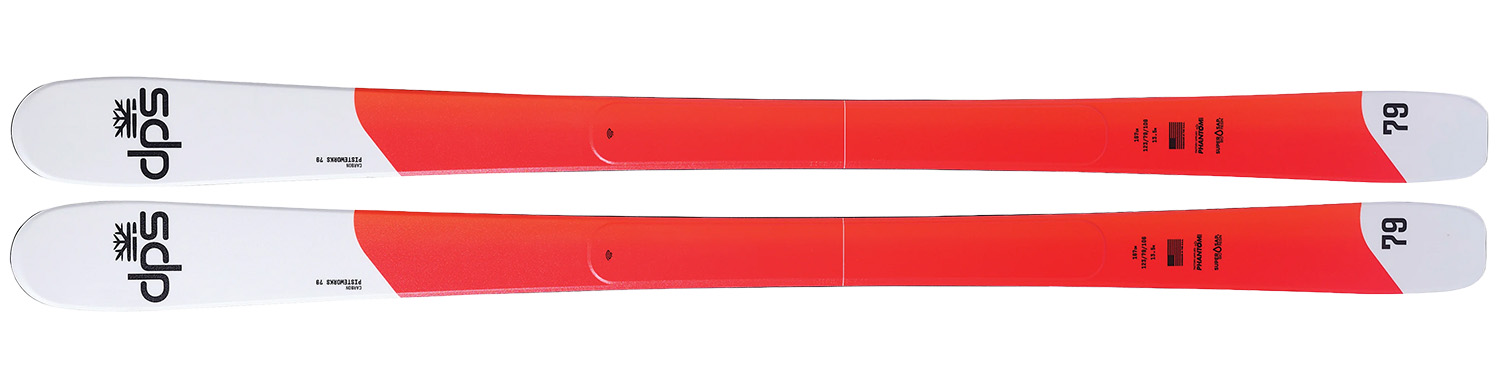
I spent a bit of time on these skis at last year’s Blister Summit, and they were extremely fun. During some of our morning ‘corduroy crew’ meet-ups at the Summit, I snagged a pair of these, and you couldn’t have wiped the smile off my face. The Pisteworks 79 is very responsive and holds an edge securely, without leaving me feeling like I was stuck / locked into each turn. I’ve tried other carving-specific skis, but these feel the most approachable while also inspiring confidence.
The Pisteworks 79 is perfect for me during the early season when there are smaller bumps, edgeable snow, and lots of groomer laps. And they would be a great tool for getting a kickstart on my season and working on better turns (and maybe boosting my Carv Ski:IQ). But I would also use the Pisteworks throughout the season when I found myself jonesing for some fast and fun groomer runs. I opted for the 174 cm length, but I think I’d also be happy with 167 cm.
Ski #2: Volkl Mantra 84 W, 170 cm + alpine binding
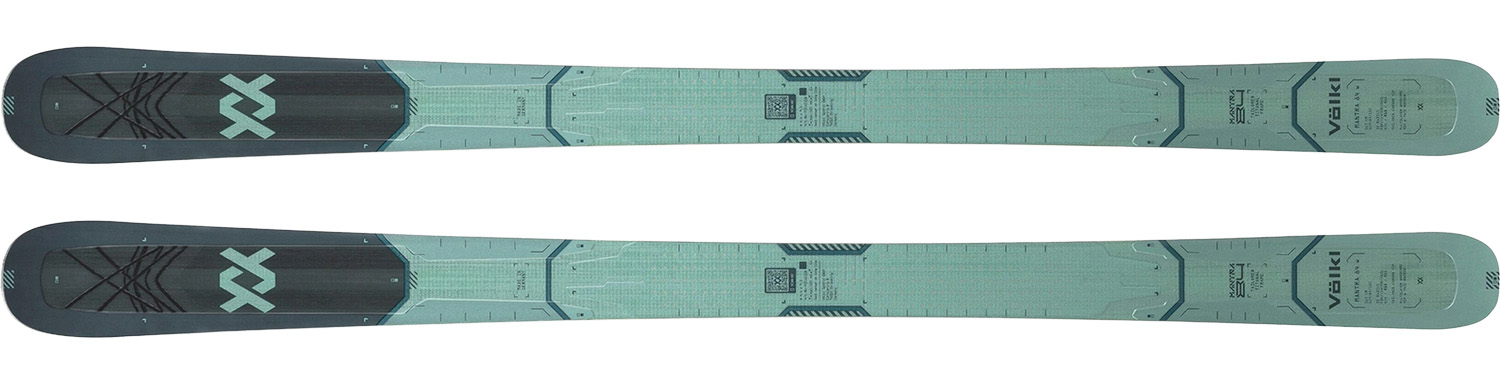
I’ve been spending more and more time on the Mantra 84 W — early this season and at the end of last — and it keeps impressing me. It carves confidently and helps me push toward higher edge angles (thanks, Carv drills), but it’s also enjoyable off-piste when I’m skiing strong. It feels like a very dependable, versatile companion for most of my CBMR days, with a bit more high-speed and off-piste capability than my Ski #1.
Ski #3: Moment Sierra 96*, 174 cm + alpine binding
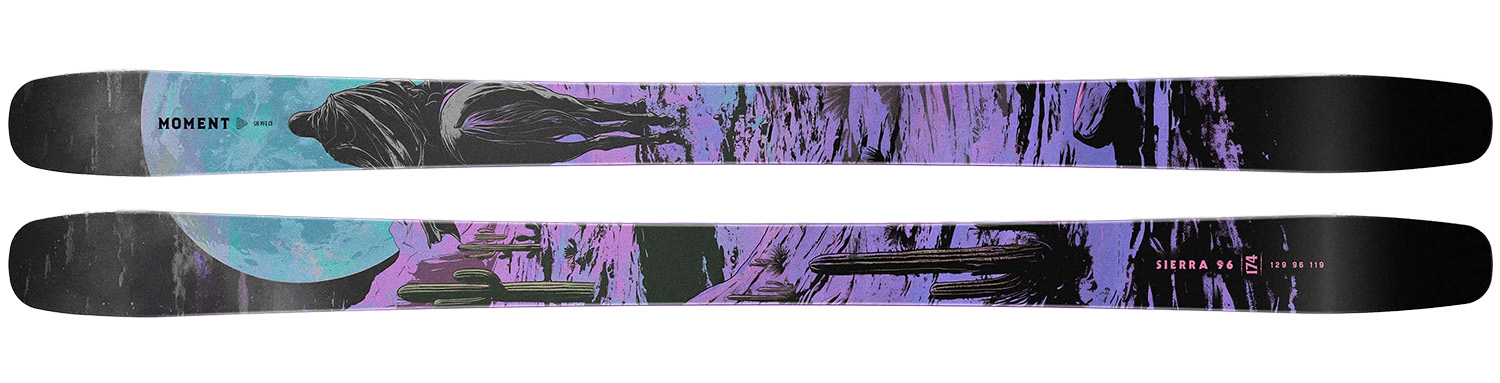
The Moment Sierra 96 has an asterisk beside it because I haven’t technically skied the updated version of this ski. This year, Moment tweaked the flex pattern and sidecut, and they added a wider version (Sierra 104). But, on paper, the new Sierra 96 looks similar enough to the prior-gen Sierra I’ve tested, so I’m going to bet that I’d enjoy the new ski as much if not more.
The Sierra is unlike anything else in my quiver — it’s much more rockered, has a more centered mount point, and is generally designed for a more freestyle-inspired style of skiing. I initially didn’t click with it, but once I moved the mount point back and transitioned to skiing with a more upright stance, I started to really look forward to hopping on it every season. In tight, steep chutes and moguls, it’s incredibly easy to maneuver, and its playful, poppy feel encourages me to get a little air — which is always a good thing.
Ski #4: RMU Valhalla 107, 172 cm + alpine binding
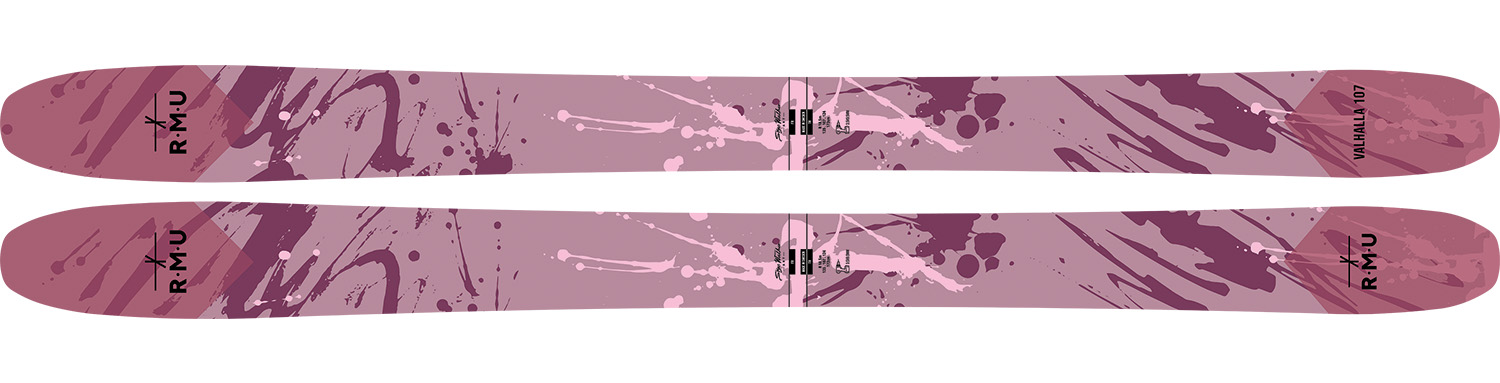
The Valhalla 107 is my favorite powder ski: surfy and pivoty when the snow is deep, but still composed enough when everything gets chopped up. It keeps powder days fun without punishing me once the untracked pow gets chewed up.
Ski #5: Ferreol Explo 86, 174 cm + touring binding
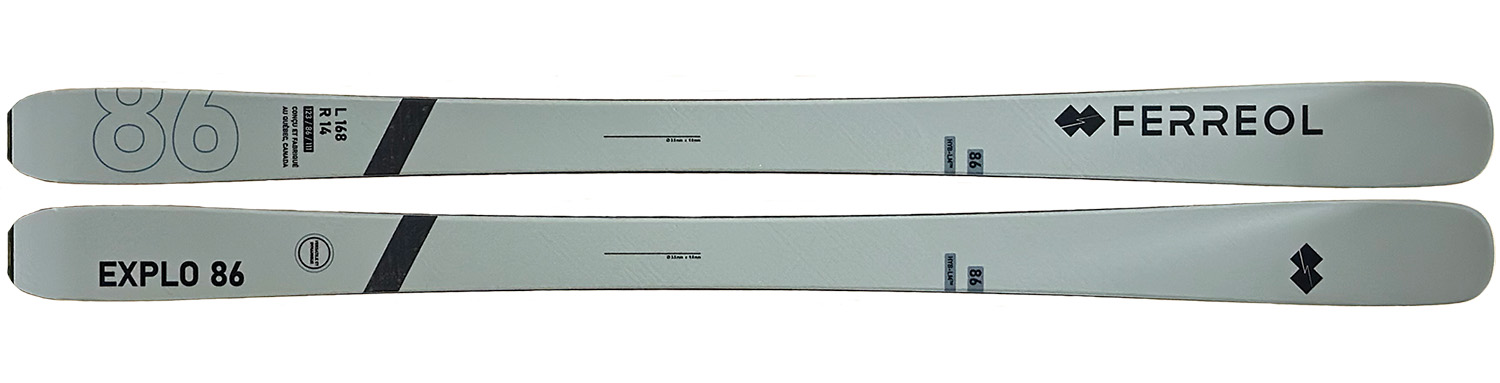
This would be my backcountry / uphill touring setup, and I’ll admit this was not an easy choice. I’m genuinely curious about trying a ski-mo-style, ultralight setup — mostly because I’ve never used one and partially because Crested Butte local and future Olympian, Cam Smith’s recent World Cup performance was incredibly motivating. But since I don’t own anything like that (yet), I’m going with the Explo 86.
At ~1400 g per ski, it’s light enough that I won’t dread the uphill, especially paired with light touring bindings (exact binding TBD). And since I don’t have any major backcountry trips planned — aside from a Wasatch tour at the Blister Summit, where I’ll demo something anyway — the Explo 86 fits the bill. It’s an excellent all-mountain ski, surprisingly damp for its weight, and confidence-inspiring on firmer snow.
II. What skis were the most difficult to leave off your list?
I typically include a slightly wider directional all-mountain ski in my quiver, but as I noted above, it’s the slightly narrower models that have been standing out more to me.
Still, leaving out the Wagner Summit 106 especially stings. It has been a staple for me for years — though it isn’t one of their custom builds, it feels like it was made for me. But I haven’t skied it recently, so I’m leaving it off for now. If I get back on it, there’s a very good chance it returns to the list.
And while I love the Ferreol Explo 86 as an everyday CBMR ski, mounting it with a touring binding means I won’t be using it for lift-served days, which is unfortunate. I could opt for a much heavier hybrid binding, but in a 5-ski quiver, I think it makes sense to have my uphill setup be more specialized.
The new Head Kore series was also difficult to leave off the list. I have been getting along well with all of them, especially the Kore 87 Ti. For my 5-ski quiver, I opted for the Volkl Mantra 84 instead, as it feels more planted and precise in its turns, especially on firm snow.
III. What skis do you imagine have the greatest likelihood of making your list, if and when you get to ski them, or get to ski them more?
I really enjoyed skiing the new Salomon QST skis at the Blister Summit last season, but didn’t get enough time on them to include them in this year’s quiver selections. I could see the QST 94 or QST 100 easily fitting into this quiver once I spend more time on them.
IV. If you had to choose a single brand from which to build your 5-ski quiver, which company would you pick?
This feels especially tough this year, since my current quiver pulls from five different brands. And, much to my surprise, my answer isn’t one of the five brands in my primary quiver.
For the sake of this exercise, if I had to pick one brand, I would go with Blizzard. I’d choose the Sheeva 11 (powder + charging), Black Pearl 84, Black Pearl 88, Canvas (total wildcard / uknown), and the Zero G 88 W for uphill/backcountry duties.
V. Since we get this question a lot, what would your ideal quiver look like if we dropped the 5-ski limit?
Tough question. I am going to answer this differently than one might expect, as I do have a lot of other skis in my garage that either get used regularly in the winter or that I have no desire to get rid of, since I always hope I can use them at least once each winter. These skis include several pairs of cross-country skis (both classic and skate skis), snowblades, and telemark skis.
Other than those, I’d also add the Blizzard Sheeva 11 (currently mounted with a Look Pivot binding) to my quiver for days when my legs are feeling strong and I want to try charging down the mountain.
David Golay
(6’, 160 lbs / 183 cm, 72.6 kg)
I. Which currently available skis would you pick for your own 5-ski quiver, and why?
Ski #1: 4FRNT Raven, 184 cm + ATK Freeraider 15 Evo
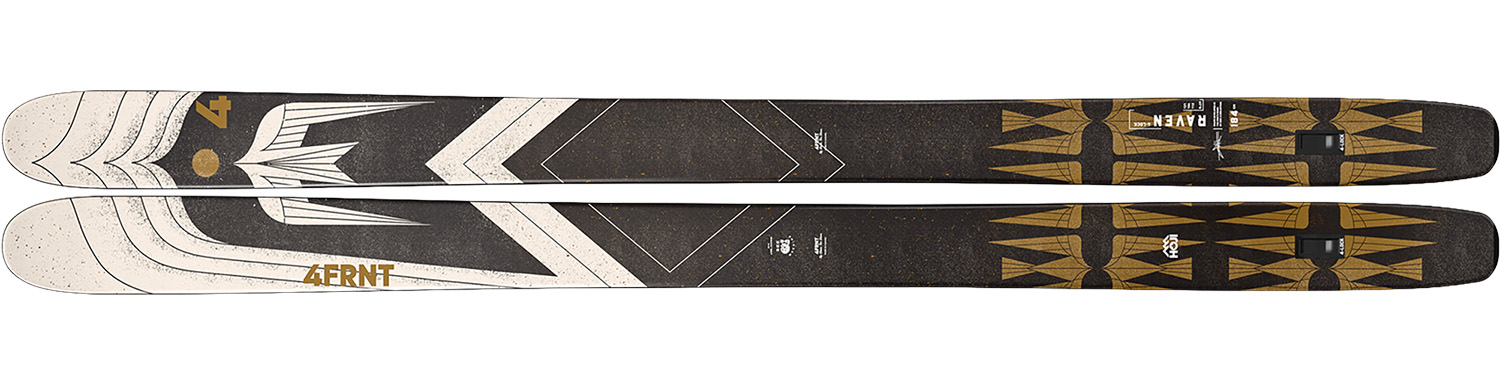
Maybe one of these years, I’ll find a daily driver touring ski that I like better than the Raven, but it hasn’t happened yet. The Raven still stands out for being very intuitive across an especially wide range of conditions, making it an easy ski to grab if I’m not sure exactly what I’m going to encounter on a given day out (or expect a wide range, from pow up high to refrozen garbage down lower, which happens a lot in Western Washington). I know it, I trust it, and can have a pretty good day on it, almost no matter what.
For bindings, various versions of the ATK Raider have been my go-to touring option for a while now, and the Freeraider 15 Evo is my favorite variant to date. I’d be hard-pressed to tell the difference between the 15 Evo and the Freeraider 14 it replaced from a skiing-performance perspective, but the Evo does away with the annoying push-button brake release on the prior version, which is a welcome, if modest, improvement.
Ski #2: Volkl Mantra 102, 184 cm + Look Pivot 15
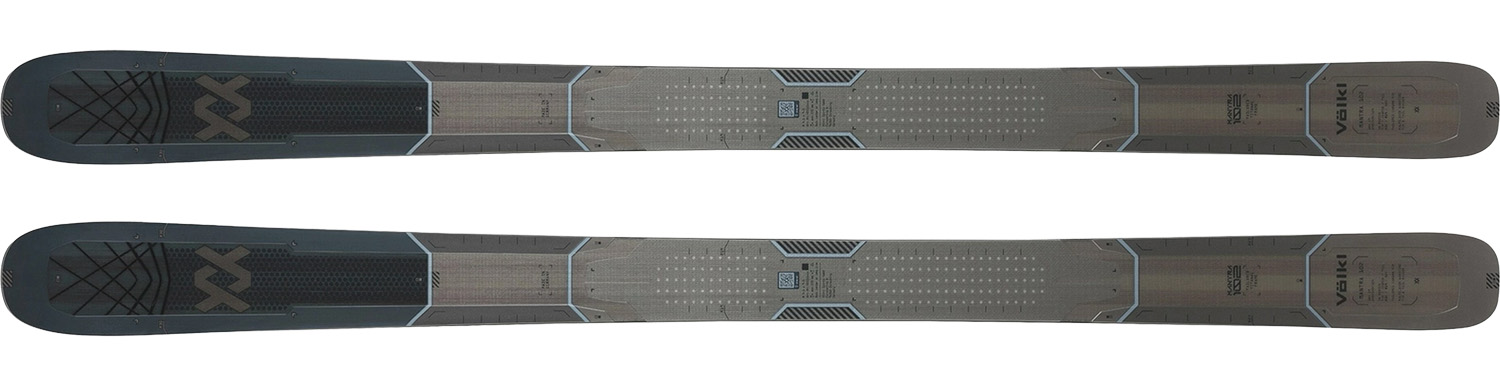
Sticking with another old favorite here. For reference, I live in a high-snow area (this year’s exceptionally slow start notwithstanding), and my home mountain doesn’t have the most inspiring assortment of groomers. If conditions inbounds aren’t at least kinda decent, I’m more likely to go touring or ride a bike, so a true, piste-focused frontside ski just isn’t a top priority for me.
The Mantra 102 is a pretty engaging carver for its width, while being a whole lot more versatile off-piste than most stuff that carves dramatically better. It’s also notably damp and stable at speed, which is a plus in heavy, cruddy conditions. That’s the right combo for my narrower resort ski.
Ski #3: Heritage Lab RC116, 190 cm + Look Pivot 15
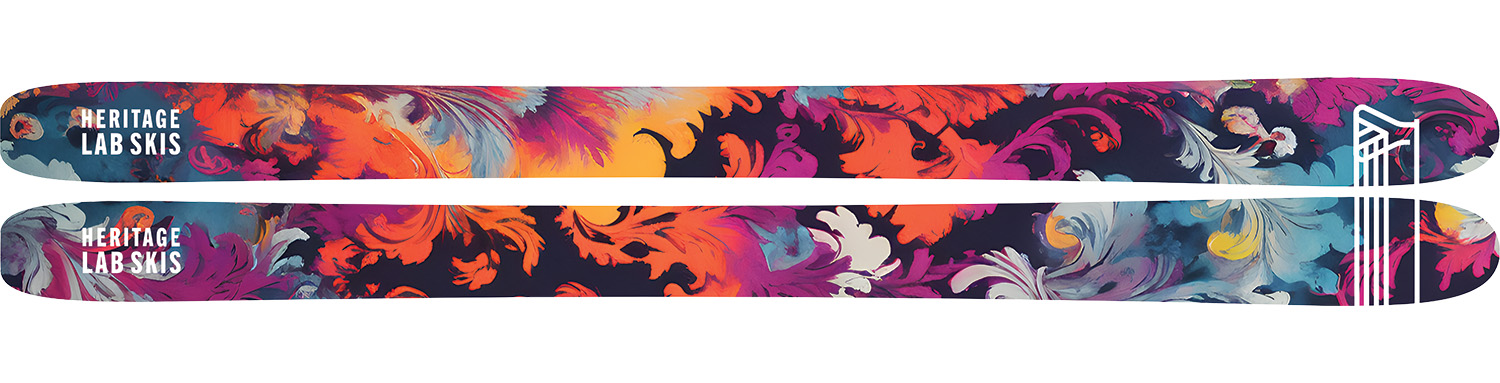
Here’s a snapshot of my reaction to a moment in Ep. #339 of GEAR:30, when Paul Forward described the RC116 as a ski for folks longing for a return of the Blizzard Bodacious:

I’d already bought a pair of RC116s when that episode dropped, and I share Paul’s sentiment. They’re not quite an exact 1:1 replacement for the Bodacious, but they come a whole lot closer than any other current ski I’m aware of — and, if anything, I prefer the RC116 overall.
The Bodacious stood out for being a very heavy, damp, stable ski with excellent suspension, while still being pretty quick to pivot and slash (for what it is, anyway — a ~2,500 g ski with a very traditional mount point). It’s far from being the best ski for untracked pow (despite its 118 mm waist width), but excels in deep, soft chop and heavy maritime snow — especially when skiing fast.
That’s all true of the RC116, too, but the RC116 also floats a bit better and feels a bit more lively and energetic than the Bodacious. Or maybe just less dead; “poppy” is about the last adjective I’d use to describe the Bodacious. The RC116 isn’t quite as unflappably smooth and damp feeling, but I’m pretty happy with that tradeoff — the Bodacious is a massive outlier in that regard, and the RC116 is a little more well-rounded.
More broadly, the RC116 is just an excellent take on a wide, directional charger — a class of skis that has really dwindled in recent years — and one that I’m a big fan of. I’m thrilled that someone is still making skis like it.
Ski #4: Armada Locator 112, 187 cm + ATK Freeraider 15 Evo
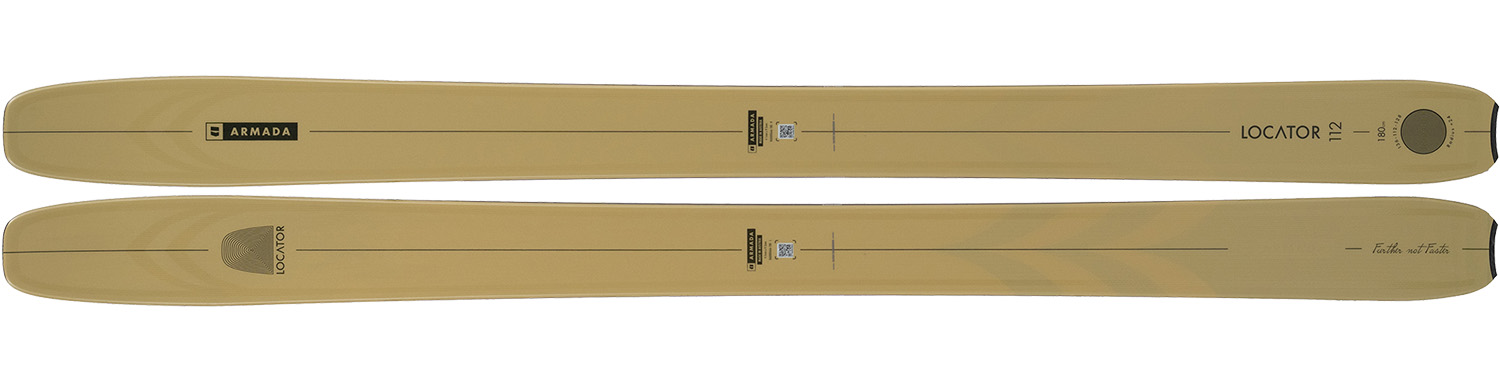
I’m going for a dedicated powder-touring ski here, but (as has been the case for several years running), it’s the slot where I’m least thrilled with my answer. A few of my favorite options for this slot have either been updated or discontinued (e.g., the K2 Dispatch 120), and I haven’t nailed down an ideal-feeling replacement.
I’m not mad about the Locator 112, though. It floats well for its width, it’s pretty stable for how light it is, and it’s not some 100% pow-specific tool that feels totally out of place in the odd bit of shallower / funkier snow. My ideal ski for this slot would be a little wider and floatier, and probably a little heavier with slightly better suspension (even though it’ll be a dedicated touring ski), but the Locator 112 is the best current option I’ve been on for what I’m after.
Ski #5: Moment Wildcat 118, 190 cm + CAST Freetour
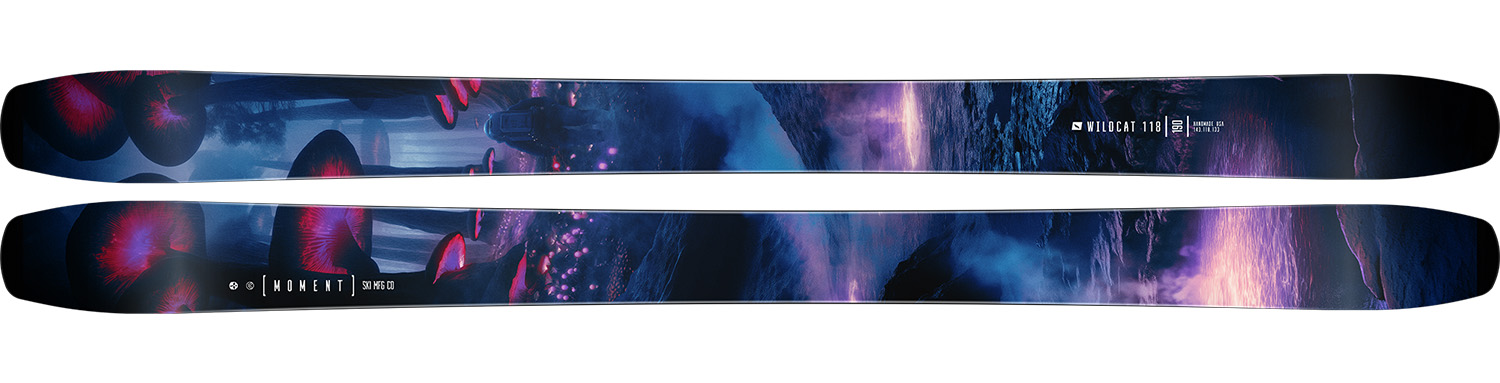
In years past, I’ve put a third, truly pow-specific touring ski here (e.g., DPS Lotus 138). But, for a variety of reasons, I’m going in a different direction this year and slotting in a more playful counterpart to the RC116 here. The Wildcat 118 admittedly overlaps quite a bit in the conditions it excels in, but I’m anticipating doing a higher ratio of riding chairs to touring than I have in recent years, and I like the idea of having a less full-throttle option for soft chop days when I want to take things a little easier / slash around and goof off more.
(I know, the 190 cm Wildcat is still a big, heavy ski. It’s all relative.)
And while I’m not going to do any big touring days on this one, I’ll throw CAST Freetour bindings on for the occasional short sidecountry mission.
II. What skis were the most difficult to leave off your list?
I debated putting the 4FRNT Renegade in place of the Locator 112. Both are skis that I like, but don’t quite love, for that slot; they’ve got distinctly different pros and cons, and neither feels like 100% what I’m after.
I also waffled a lot on the Wildcat 118. In this case, my hangup had more to do with quiver construction — it’s still a ski I love, it just overlaps with the RC116 a lot. I thought about putting a narrower all-mountain ski there (probably the Volkl Mantra 88), but I just don’t think I’d break it out that much, given where I live. If I had a current super-fat pow touring ski that I loved, it’d likely get the nod over the Wildcat 118 for diversity’s sake, but I don’t have a dialed option there, either.

III. What skis do you imagine have the greatest likelihood of making your list, if and when you get to ski them, or get to ski them more?
There are a bunch of skis that I could see taking the place of the Locator 112. The Heritage Lab BC120 is probably the one I’m most intrigued by, but I’m also interested in the ON3P Billy Goat 118 Tour or a custom lightweight version of the Folsom Rapture or Praxis Protest (which has been tweaked since I was last on it).
I’m also quite curious about the Heritage Lab UT122, though it’s probably a little more fully pow-specific than I want in that slot. But if it really clicks, I could see myself shuffling my quiver around to include three touring skis (dropping the Wildcat 118) to include it.
IV. If you had to choose a single brand from which to build your 5-ski quiver, which company would you pick?
I admittedly haven’t been on all of these, but I’m going to take a flyer on Heritage Lab: BC100, BC120, and UT122 for touring skis, and FL105 and RC116 for when I’m riding chairs.
I’d also be pretty happy with a 4FRNT quiver of the Raven, Renegade, MSP 99, MSP 107 , and… I guess maybe a Devastator? This one works well at four skis for me, and the fifth is a bonus.
V. Since we get this question a lot, what would your ideal quiver look like if we dropped the 5-ski limit?
Do we get to drop the requirement for the skis to be current models, too? My real-world quiver is *mumbles* skis deep right now, with a lot of older chargers and powder touring skis that aren’t around anymore.
The skis I spent the most days on last year are, in no particular order: 4FRNT Raven (184 cm), K2 Dispatch 120 (186 cm), DPS Lotus 138 (192 cm), Blizzard Cochise (first-generation, 185 cm), and Heritage Lab RC116 (190 cm). And then there are a bunch more that I don’t break out as often, but keep around for the right day, or maybe just nostalgia.

Mark Danielson
(6’2”, 210 lbs / 188 cm, 95 kg)
I. Which currently available skis would you pick for your own 5-ski quiver, and why?
For the 25/26 season, I’ll ski mostly in Crested Butte’s tight, technical terrain, but I want a quiver versatile enough for mid-winter trips to the more open spaces of Telluride and Breckenridge, and for several weeks of spring skiing at Breckenridge.
Ski #1: Rossignol Sender Free 110, 191 cm + Marker Jester 18 Pro
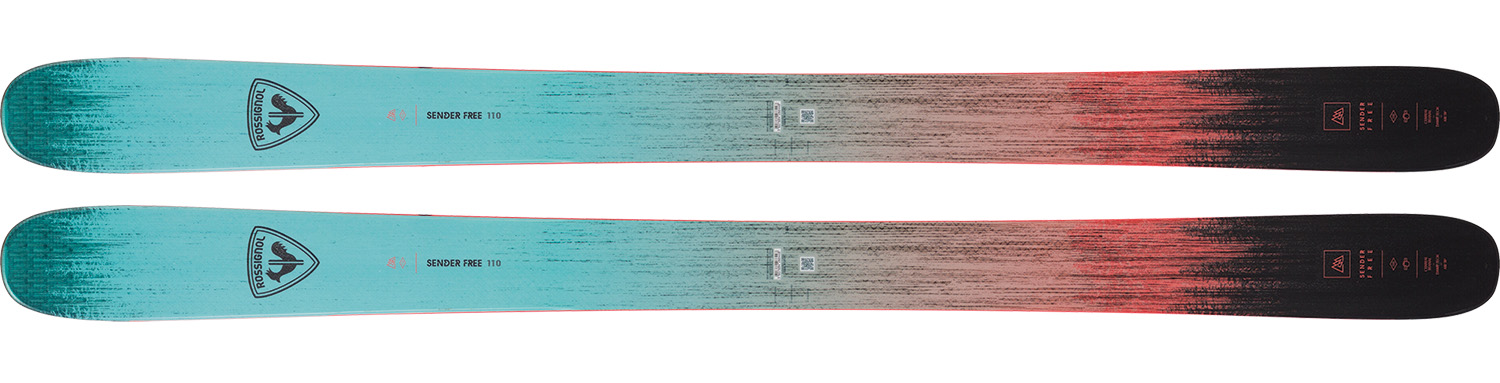
The Sender Free 110 is still my favorite ski in Blister HQ for overall skiing at Crested Butte. It’s at its best on the shallow soft-snow days, but also delivers high performance in a wide range of conditions and terrain. On deep powder days, it doesn’t offer the flotation I’d want for my 6’2”, 210-lb build, but it remains fun and reliable even when the snow is firmer.
I prefer the 191 cm Sender Free 110 mounted about half a cm forward of the recommended line to bump up its maneuverability and playfulness. Set up that way, it would be my go-to option at CB for most days.
As a big guy, I have reached the “speed limit” of this ski in the wide open terrain at Whistler Blackcomb, but I’m confident this ski will satisfy me in the terrain at Telluride and Breckenridge this year.
Ski #2: Nordica Enforcer 104, 185 cm + Marker Jester 18 Pro
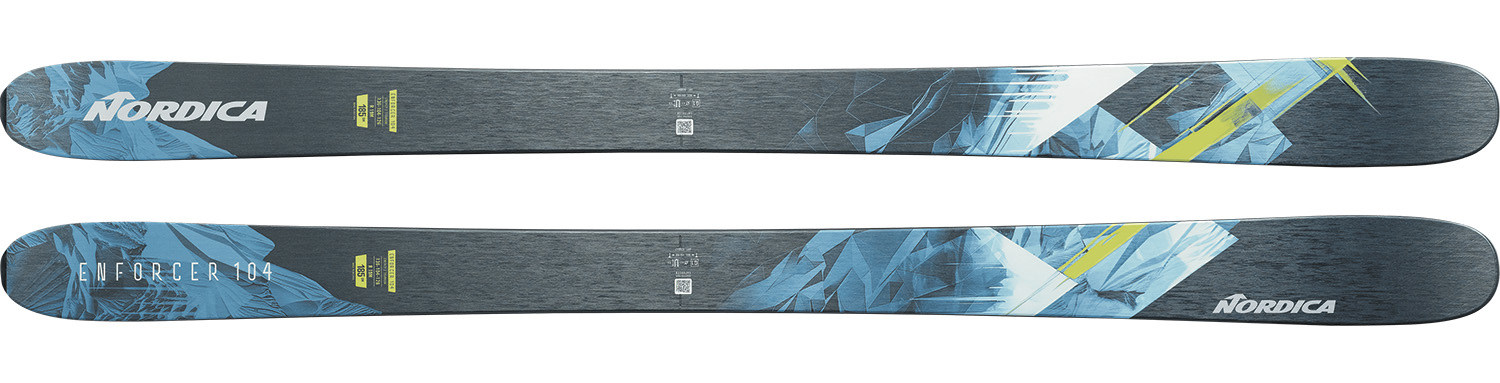
This ski primarily serves as a more forgiving and maneuverable option for firmer conditions. At Crested Butte, if the 191 cm Sender Free 110 starts to feel like “more ski” than I want in tight terrain or on firmer snow, the Enforcer 104 will bail me out. In the 185 cm length, its lower weight, shorter length, and narrower waist make it a bit quicker and easier to manage — but I still like that this ski has plenty of weight and metal relative to the all-mountain category.
On firm, groomer days at CB, this ski would be the strongest on-piste performer of my quiver, although its relatively short turn radius and length aren’t ideal for sustained Super-G speeds. Last year, I had a ton of fun spending a lot of time carving much narrower skis on-piste, but I don’t mind giving that up for a year — I’ve always been more of an off-piste skier anyway.
Ski #3: K2 Reckoner 124, 189 cm + Tyrolia Attack 14 MN Demo
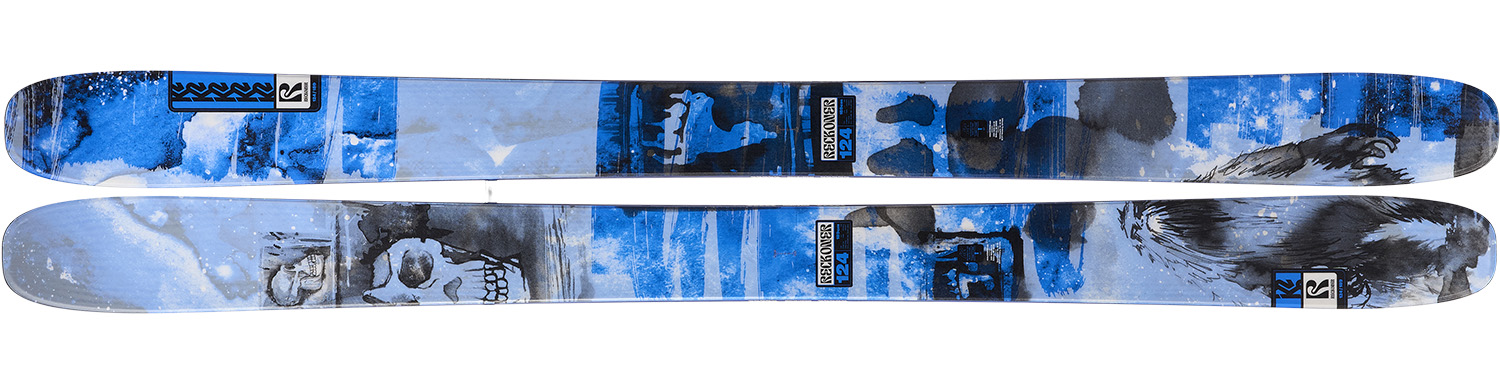
I need a wide ski for the deepest days, and I prefer heavy skis for stability and suspension at speed. The 189 cm Reckoner 124 can float my big body, and our pair in Blister HQ weighs a hefty ~2435 g per ski, which helps it stay composed through chop and compressible crud on resort pow days.
Apart from the deepest days, it’s quite possible that I might also enjoy this very wide ski on shallow pow days (or any soft day) at Telluride, especially in its highest hike-to terrain — it all depends on whether there’s a firm, nasty underlayer that day.
I still haven’t determined my single favorite mount position on this ski, so I’d opt for a demo binding here to allow some flexibility, moving it forward when I want a bit more agility for Crested Butte’s tight, steep terrain, and moving it back when I want some more flotation and/or stability.
Ski #4: Rossignol Sender Free 118, 186 cm + Tyrolia Attack 17 GW
This is my pick for when the 189 cm Reckoner 124 starts to feel like too much ski in our tight, steep terrain at CB. At 186 cm, the Sender Free 118 is already on the shorter end of what I’d typically choose. And its substantial tip and tail rocker — paired with my favorite mount position at -4.5 cm from true center — makes it easy to pivot and maneuver in confined spaces. Despite all that agility, this heavy ski remains composed in high-speed runouts.
Even on some firmer days, I can make this short (for me) 118-mm-wide ski work in tight terrain. The low-stack, non-demo Attack bindings also seem to offer enough lateral rigidity to help maintain edge grip when needed.
At 2495 g per ski, this is the heaviest currently available model I’ve tested. It also holds an edge better than expected for a ski of this width. However, it’s a bit too short to fully satisfy me in more open terrain, especially on deeper days, so I likely won’t use it in Telluride or Breckenridge (unless I decide to lap tight trees for the day).
Ski #5: Völkl Revolt 114, 191 cm + Marker Jester 18 Pro
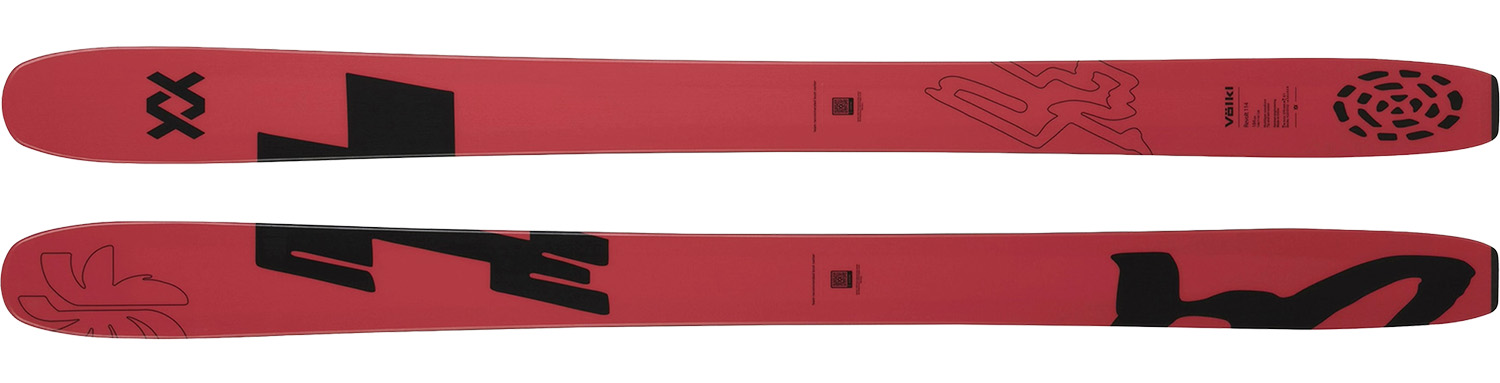
My four picks above cover CB quite well, so my fifth pick is to ensure that I also cover more open terrain in Telluride and Breckenridge. For that, I’m missing a flatter-tail ski that is longer than my 185 cm Enforcer 104. Enter the 191 cm Völkl Revolt 114.
This ski’s low-slung but rockered tail is more supportive for landings than my other picks, and it will be nice to have a third long ski that is more directional for high speeds in the open spaces at Telluride and Breckenridge.
The 191 cm Revolt 114 wouldn’t be my pick for most days, but its uncommon combination of design traits makes this ski a great final pick to provide variety in a big quiver. That said, I’m not trying to demean its performance at all — for example, it’s smoother and more stable at speed in most conditions than the 190 cm Dynastar M-Free 112 (another ski I considered), and the Revolt 114 carves better, too.
II. What skis were the most difficult to leave off your list?
Moment Countach 110: For extended spring / summer skiing, I really enjoy the versatility and fun of the Countach 110, even at slow speeds. But this year, my season won’t extend beyond about May 10 at Breckenridge, and I prefer my Sender Free 110 pick for wintery snow.
Other great skis I considered: Dynastar M-Free 112, Moment Wildcat 118, Nordica Enforcer 99, RMU Professor 121, Volkl Mantra 108, K2 Reckoner 110, Praxis Protest, FullSend Max K 106.
III. What skis do you imagine have the greatest likelihood of making your list, if and when you get to ski them, or get to ski them more?
Prior Overlord 188 cm (Quad Glass heavy build)
I still want to try a very, very heavy custom build of the 192 cm Folsom Rapture, and then I’d want to A/B/C it vs. the 191 cm lengths of the ON3P Jeffrey 124 & Jeffrey 118.
Also, I want to try the 191 cm length of the Nordica Enforcer 104, and the 191cm length of the K2 Reckoner KF.
IV. If you had to choose a single brand from which to build your 5-ski quiver, which company would you pick?
Prior: A Star, Overlord, CBC, Husume, Patroller (all built with the heaviest Quad Glass construction)
Runner-Up:
K2: Reckoner 124, Reckoner KF, Reckoner 110, Mindbender 108Ti, Mindbender 99Ti
V. Since we get this question a lot, what would your ideal quiver look like if we dropped the 5-ski limit?
For an unlimited number of free 25/26 skis that I’ve already skied on snow, I’d be willing to go very, very big. Realistically, that’s already how I’ve operated for the past several years. I love variety, and I already have experience dealing with all the overhead of owning a big quiver (so much drilling, mounting, repairing, tuning, bending brakes, customizing the car to carry 27 pairs, loading up the storage unit, moving skis down from the attic, summer maintenence, etc.).
So, for this question, I’d keep my five picks from above, and then I’d add 15 more to make it 20 total:
Moment Countach 110, 188 cm: Mainly just for fun variety in variable, changing conditions.
Dynastar M-Free 112, 190 cm: To enjoy its looser / less precise ride vs. the Rossignol Sender Free 110, and the M-Free 112’s improved support from the front of the ski.
Dynastar M-Free 108, 192 cm: For variety with the Sender Free 110 and M-Free 112.
Moment Wildcat 118, 190 cm: For whenever I feel frustrated that the Sender Free 118 is too short for a big guy.
Nordica Enforcer 99, 185 cm: For when it’s too firm for my Enforcer 104 to satisfy me.
Blizzard Anomaly 102, 188 cm: For carving large-radius, high-speed turns on-piste.
Black Crows Octo, 179 cm: For fun carving tight turns on-piste, and trying to improve my CARV score.
RMU Professor 121, 188 cm: A lighter-weight pow ski for when I want a day off from heavy skis, and want to appreciate the subtleties of ski shaping.
Praxis Protest, 192 cm: Mainly just for a fun variety of shapes and skiing styles.
FullSend Max K 106, 185 cm: For when frequent rock strikes make me timid on other skis. This ski’s rare solid feeling encourages me to just go ahead and hit all the smaller rocks with confidence, while still being quite maneuverable.
Atomic Bent Chetler 120, 192 cm: For when I want to get playful on a lightweight fat ski.
Völkl Mantra 108, 191 cm: For powerful off-piste carving, and a good workout.
Dynastar M-Pro 108 Ti, 192 cm: For going fast and straight, and an even better workout.
Völkl Blaze 114, 184 cm: Lighter than I prefer, but it’s fun every time I test it, so why not?
Atomic Maverick 115 CTI, 185 cm: Again, too light, but fun every time. Sure, I’ll take it.
That’s enough.
Kara Williard
(5’9”, 170 lbs / 175 cm, 77 kg)
I. Which currently available skis would you pick for your own 5-ski quiver, and why?
The past couple of seasons have involved a lot more travel on my end, with this upcoming season being no exception. I’ll be spending the early season at CBMR, almost two months guiding in Japan, doing quite a bit of touring and resort days in yet-to-be-determined locales, and always wanting to make the most of conditions at CBMR anytime I return home.
Traveling with a ski bag means making compromises and keeping skis in my quiver that can cover a lot of bases. Quite a few of my picks from last year return this year, with a couple of exceptions.
Ski #1: Blizzard Black Pearl 94, 176 cm + alpine binding
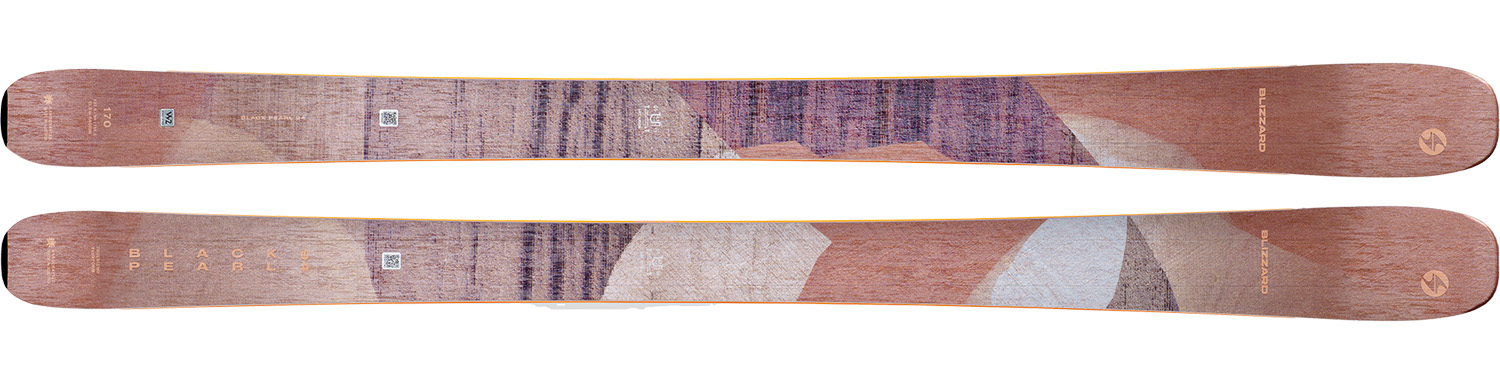
The Blizzard Black Pearl 94 is highly precise and stable; a ski that I enjoy when conditions are quite firm in the resort. While I could go a bit narrower here, I find the Black Pearl 94 to be great for carving, and also not too demanding in much of the tighter terrain and moguls at CBMR. Its suspension is what really stands out to me, and this is the ski I’d gravitate toward anytime I know it hasn’t snowed in a while.
Ski #2: Volkl Mantra 102 W, 177 cm + alpine binding
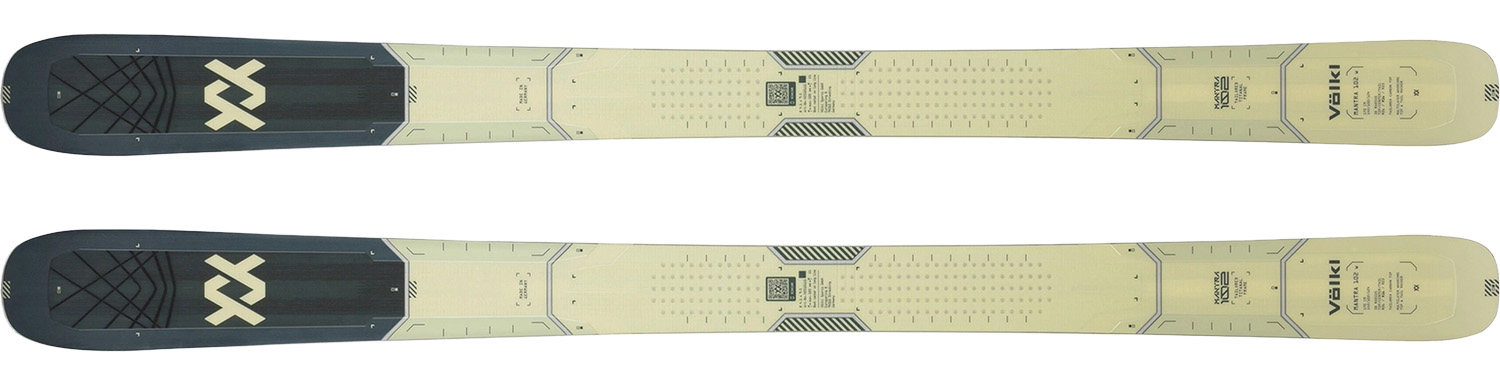
This one also returns from last year’s quiver, but with a new name (formerly called the Secret 102). In some ways, it’s slightly redundant with the Black Pearl 94, as both are precise and stable, but the Mantra 102 W is a better choice for busting through crud and chop, or any other variable resort conditions. The 177 cm Mantra 102 is one of the best skis I’ve used for those scenarios, but it’s still impressively maneuverable.
I’d happily ski it in a variety of conditions, but with the Black Pearl 94 also in my quiver, I’d likely break out the Mantra 102 when it’s snowed a bit in the past few days and I’ll be dealing with more variable and cut-up conditions. If I were traveling to a new resort, I would also opt for the Mantra 102 over the Black Pearl 94, since the former is slightly more versatile across a wider range of conditions and remains an excellent choice even if it hasn’t snowed in a while.
Ski #3: Armada ARV 112, 185 cm + Marker Duke PT
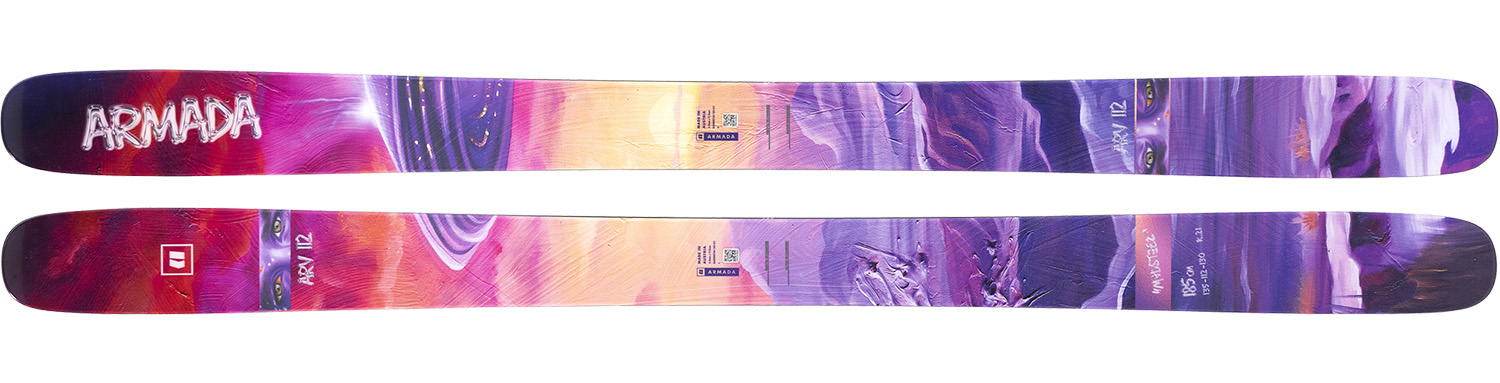
This is one of two skis I will likely bring to Japan this winter, but it also serves as a resort powder ski at CBMR and beyond. The Armada ARV 112 has a few desirable traits for me: it’s highly maneuverable and playful, but it offers impressive suspension and doesn’t get knocked around a ton in variable conditions.
For me, bringing two skis to Japan provides peace of mind. In particular, the ARV 112 is slightly more damp and slightly more forgiving in chop, crud, and variable conditions than the following ski, which makes it easy to justify.
Ski #4: Salomon QST X, 178 cm + Salomon Shift2 13 MN
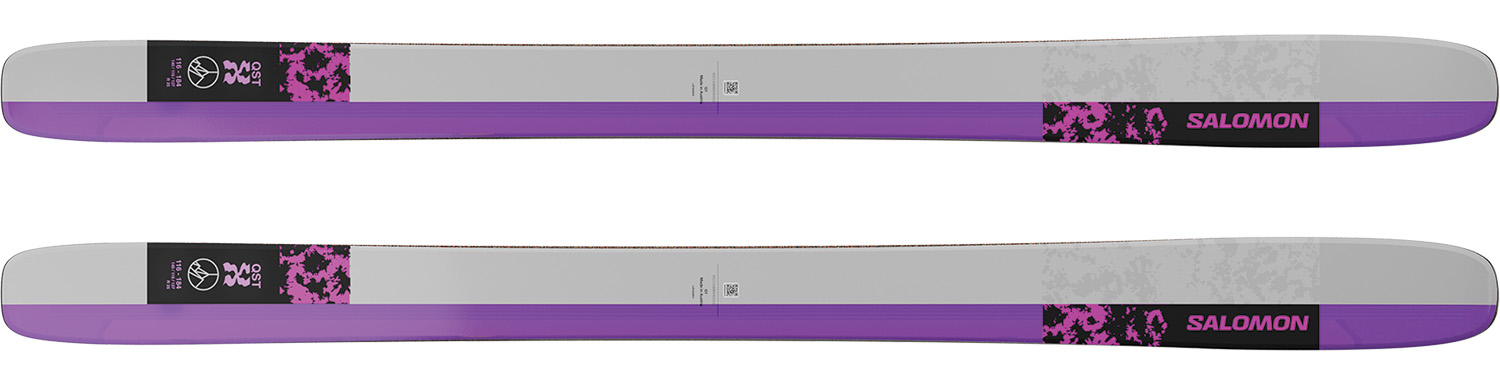
This was my ski for Japan last year, and Japan offers the conditions it was made for. Light, untracked, and deep powder is where the QST X excels. It provides excellent flotation, is super loose and maneuverable, and is an all-round playful ski, which much of Japan’s terrain caters to. It’s light enough for long days on the skin track, and when I know it’s going to be a deep day, the QST X helps me make the most of the conditions without being overly demanding on my legs.
Ski #5: Salomon MTN 96 Carbon, 182 cm + lightweight touring binding
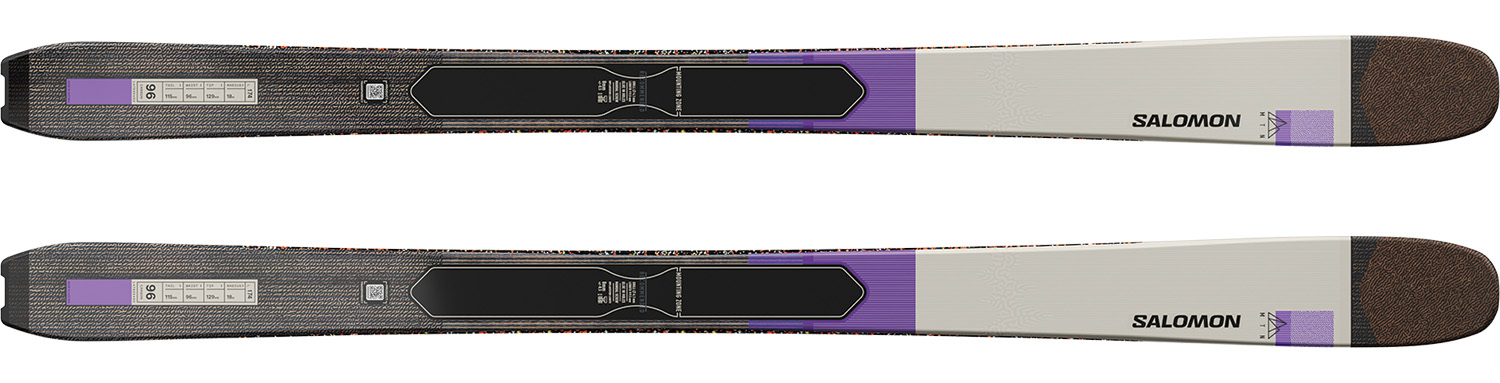
I (think) this is the first time my 5-ski quiver has had three skis with a 50/50 or touring binding, and that’s because I did a lot more touring last winter. This one is my dedicated touring ski, and it’s one that I could use on anything from backcountry laps on a thin snowpack around Crested Butte to visiting new locations. Namely, I wanted this to be a lightweight ski that still offered decent suspension, edgehold, and would be quite predictable in a lot of different scenarios, since it can be a mixed bag out there in the backcountry.
II. What skis were the most difficult to leave off your list?
Truly, way too many.
For my daily-driver resort skis, there were many strong contenders: Nordica Santa Ana 92 and Santa Ana 102, K2 Mindbender 99Ti W (I will always love this ski), Dynastar M-Pro 98, and the Icelantic Maiden 102.
For the 50/50 powder ski, I also considered the Icelantic Maiden 108, K2 Mindbender 116C W, and Blizzard Sheeva 11.
As for skis on the wider end of the spectrum, I am obsessed with the Black Crows Anima Birdie, particularly as a chop-busting resort pow ski, but it’s a bit too heavy and too wide to be versatile enough for the conditions I think I’ll be skiing this winter. I also considered a longtime favorite, the Coalition Snow Rafiki, but again, it’s a pretty heavy and wide ski, so it’s just a little too niche to make the cut.
That’s just the short list.
III. What skis do you imagine have the greatest likelihood of making your list, if and when you get to ski them, or get to ski them more?
There are a few in the 50/50 and backcountry touring category that I’d like to get more time on. In particular, the Blizzard Zero G 88 and 96, and the Majesty Superpatrol. I am looking for a replacement for my long-loved Nordica Santa Ana Unlimited 93, so a lightweight ski that’s maneuverable yet still fairly precise is what I am after.
There are a few narrower on-piste skis I’d be interested in trying in longer lengths, including the Blizzard Black Pearl 84 and 88, and the Volkl Mantra 84 W. The Blizzard Canvas series also looks intriguing.
I’d also be interested to see how the new Salomon QST Blank compares to the Salomon QST X, now that I have spent a lot of time on the QST X.
IV. If you had to choose a single brand from which to build your 5-ski quiver, which company would you pick?
Although I didn’t spend much time with the new Salomon QST lineup at Blister Summit 2025, I really enjoyed the time I did get. So, from Salomon: QST 92, QST 100, QST Blank, QST X, and QST MTN 96 Carbon.
Blizzard could also work: Black Pearl 94, Sheeva 10, Sheeva 11, Canvas (a mystery, though), and Zero G 96.
V. Since we get this question a lot, what would your ideal quiver look like if we dropped the 5-ski limit?
Reviewing for Blister over the years has made the quest for a perfect quiver feel like it could stretch to 10+ skis. In the case of this 5-ski quiver, I could definitely justify adding a narrower carving ski to the mix, as well as a dedicated resort powder ski for charging open lines and dense chop, such as the Black Crows Anima Bridie, bringing the ideal quiver to seven or more skis.
At the same time, when traveling and on the move, and from a practical sense, it’s nice to know I have 1-2 skis that cover all the bases, so I can just show up anywhere without overthinking which ski is the perfect fit for the day. Given the versatility I find in several of the skis in my 5-ski quiver, I could easily pare it down and still be quite happy (which we’ll be doing over the coming weeks).
Paul Forward
(6”, 195 lbs / 183 cm, 88.5 kg)
I. Which currently available skis would you pick for your own 5-ski quiver, and why?
Not much has changed in my ski plans this year, in that I’ll still be doing all of my lift-served skiing at Alyeska (okay, maybe a quick trip tip to see the crew in CB!), ski touring in southcentral Alaska, and guiding heli-skiing Feb-April.
I did ski a lot of new skis last season but, like some others here, my lists aren’t changing very much. Maybe the ski industry is experiencing some asymptotic convergence where things really aren’t changing that much each season. Or, I just have very particular preferences. I’m always excited to try a bunch of new stuff but, for now, it’s pretty similar to last year.
Ski #1: Folsom Rotor, 190 cm + Marker Jester Pro
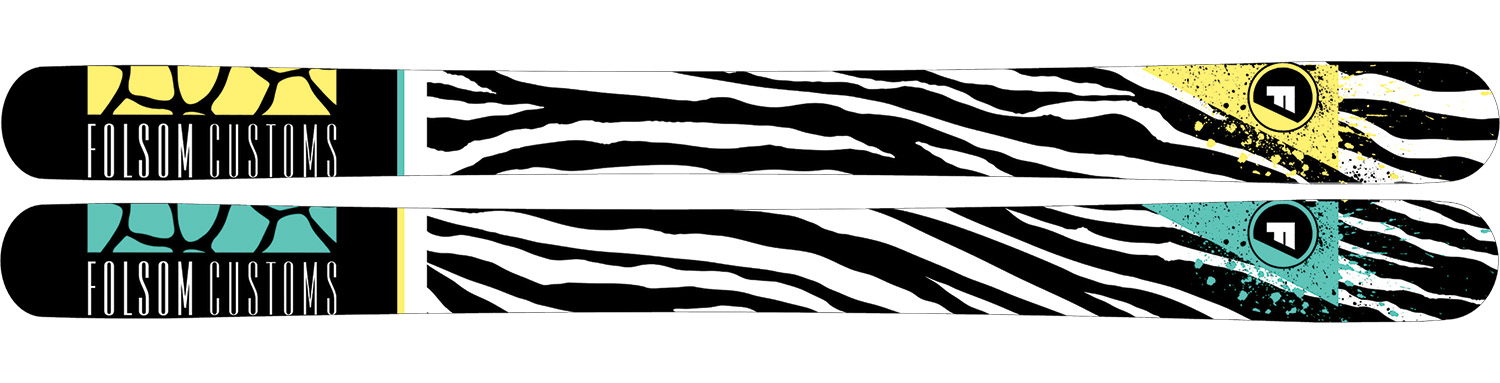
This will be my 14th season guiding a full season at Chugach Powder Guides and I have spent most of my guide days over the past two years on the Rotor. Last year, I did have a good number of days when Folsom’s narrower, 122mm-wide Rapture was a better call but, in general, I really like the 132mm-wide Rotor for their combination of stability, balance, and maneuverability in Alaskan heli-skiing scenarios.
To me, the most important trait of a good Alaska heli ski is the ability to hold a carve when needed, but also be able to break free with minimal effort into drifted / slarved turns. The versions of the Rotor I’ve skied so far still take a little more effort to break free in crusty snow than I’d prefer, but Folsom claims that there are a few small tweaks that will get them there. Hopefully, this is the year I get on my true holy grail of heli skis. But, for now, these are about as good as I’ve used.
Ski #2: Folsom Rapture, 192 cm + Marker Jester Pro
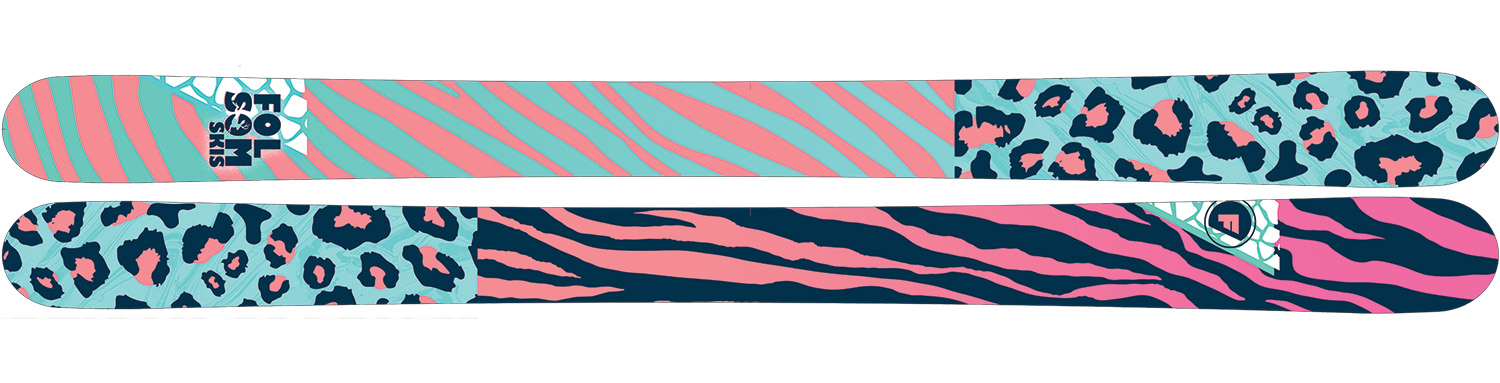
Last year, my #2 ski was the Heritage Lab HB122. I still love that ski, but I haven’t skied the new V2 yet (I have very high hopes), and the version I have has been discontinued. Maybe the snow was different last year or maybe my skiing was different, but the softer tips of the V1 HB122 bothered me more last season than the one before that. Consequently, I found myself wishing more and more for the Rapture; it isn’t quite as playful and silly fun, but it is more stable in a carved turn and still releases nicely when I need it to.
I’ve typically chosen 115-120mm skis to be my “resort pow” skis, but most of the ones I’ve loved are now gone (RIP DPS Koala 118/119 and others…). Fortunately, the Rapture remains a great resort pow ski while also providing me with a good option for heli skiing when I expect a shallower surface, or in late spring when corn may be on the menu.
Ski #3: Black Crows Mirus Cor, 184 cm + Marker Jester Pro
It still cracks me up a little to say this, but this Alaska heli-ski guide probably puts more days per year in on these silly skis than any other ski I own — and it’s been that way for a few years now.
Last year, I called these the ultimate “dad ski” (I bet they’re among the ultimate mom skis too), and I still think that. Now, my son is a year older, skiing much faster and more likely to drag me into the terrain park and jumps, and these are still the most fun skis I’ve ever used for that kind of thing.
If I get a day to just ski groomers on my own, I still pick the Mirus Cor more often than anything else because I can ski dynamically and achieve high edge angle with only moderate speeds. And, compared to any other frontside carvers I’ve used, the Mirus Cor is dramatically more fun in any off-piste conditions that I might be lured into. Just today, I went up for some groomers and had a blast in some chalky moguls. These skis are just pure fun and have opened up a new style of skiing for me that is much more about playing with turn shape and edge angle than how I’ve typically skied in the past.
Ski #4: Black Crows Justis, 189 cm + Marker Jester Pro
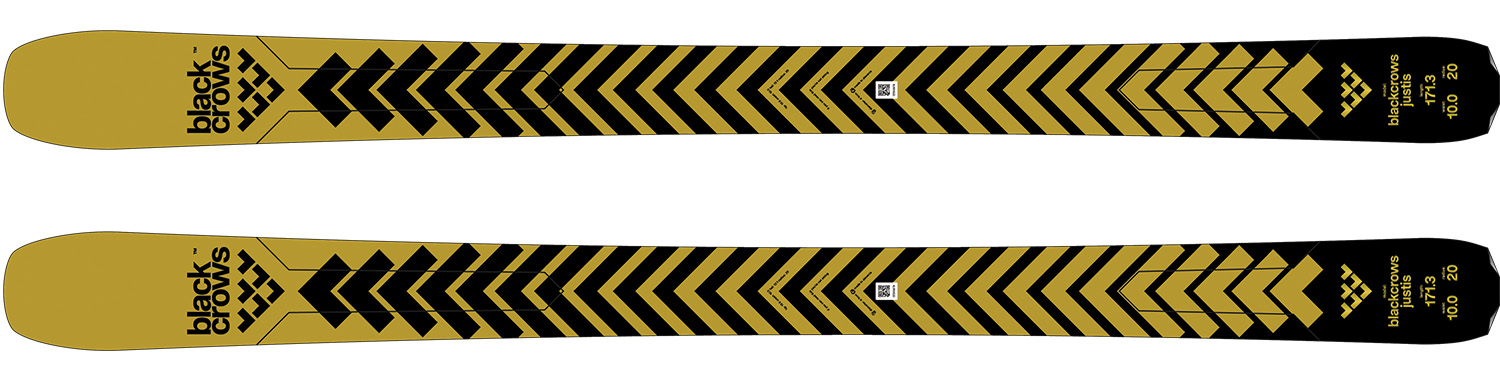
Again, this year I am pretty non-committal about this ski. But, like many modern skiers, I like having a 100-110 ski in the quiver for all of the days when I spend my time charging around off-piste but it’s not quite deep / soft enough to justify a fatter ski.
Alyeska seems to have a lot of days like that with excellent crud and chop skiing, mixed in with some icy exit bumps. In those kinds of conditions, the Justis holds up quite well, allows for a lot of different turns shapes, maintains composure in choppy and bumpy snow, and still feels balanced and predictable when I need to get them sideways in steep and technical terrain (or just feather the brakes a little).
When I find unexpectedly good snow, like the windbuff we often get, the Justis still provides just enough float to stay loose, although I sometimes wouldn’t mind something a hair fatter. Overall, I think the Justis is a good ski for a bigger, more aggressive skier who wants to ski hard and fast in a stiff boot but doesn’t love the more traditional mount points found on many of the stiff, titanal-constructed skis out there.
Ski #5: Armada Locator 112, 187 cm + ATK Raider 15
Deja vu again here from the last two seasons. I might have given the nod to the very good Black Diamond Helio 115, but that ski has been discontinued. I also loved the 193 cm Heritage Lab BC 120, but it might be a touch fatter and heavier than I want in a 1-ski touring quiver.
So, here we are again with a ski that, on paper, with its more traditional -10 cm mount point, seems an unlikely choice for me. But the Locator 112 just works well in just about anything I can throw at it. And I really can’t think of any ski-touring scenario up here where I’d be upset if these were on my feet for the descent. One random thing that I came to appreciate more last season, as I tried a bunch of new ski touring boots, is that this ski does prefer a boot with a little more forward lean, so I’d pair it accordingly.
II. What skis were the most difficult to leave off your list?
The Heritage Lab BC 120 worked exceptionally well for me. I expect it will pop up as the quiver narrows.
III. What skis do you imagine have the greatest likelihood of making your list, if and when you get to ski them, or get to ski them more?
I have a few different heli skis (hopefully) coming this season that I’m pretty excited about. I can’t say much more right now, but stay tuned if you’re into that kind of thing.
I don’t get to ski as many of the narrower skis these days, but I’m definitely still on the lookout for better 100-110 mm “daily driver” type of Alyeska ski. In my mind, I want it stable and damp and a good carver, but still easy to break free and maneuver in tight spots.
More specifically, I haven’t skied any new Moment’s in a long time; the Countach series is pretty interesting to me. I’m also intrigued about the updated Wildcat 118 after hearing Luke Jacobson describe the tweaks they made this year. On that note, I also really want to try the new longer lengths of the Meridian series. I’ve always had an affection for relatively stiff and heavy full-rocker skis.
IV. If you had to choose a single brand from which to build your 5-ski quiver, which company would you pick?
Folsom is the easy, cheater option because I could tweak the construction of each ski in the quiver to serve my needs (I’ve also come to really appreciate a few of their skis for my work guiding).
It gets pretty tough for me beyond that. I like Black Crows Mirus Cor, Justis, and Corvus, but I would be less content guiding a season on the current Nocta (though I might be okay on a 194 cm Anima). I’ve never skied the Draco but it’s definitely on the heavy side for it’s width for my preferences, and I’m not sure how I’d get on with a touring ski with a -5 cm mount point.
V. Since we get this question a lot, what would your ideal quiver look like if we dropped the 5-ski limit?
I could be really content with all of the non-touring skis above, but I would ideally have a 3-ski touring quiver that would include a very light 95-105 mm ski, a 110-115 mm model, and a 120+ mm lightweight pow touring ski. From currently available skis, that might look like a Blizzard Zero G 105, Armada Locator 112, and Heritage Lab BC 120. If I was going really crazy, I’d throw in a super light 85-90 mm ski with a rando race binding and then a super fat mega pow ski, also with a fairly light, simple binding.
Jonathan Ellsworth
(5’10”, 180 lbs / 178 cm, 81.5 kg)
I. Which currently available skis would you pick for your own 5-ski quiver, and why?
Ski #1: Volkl Peregrine 82, 177 cm + alpine binding
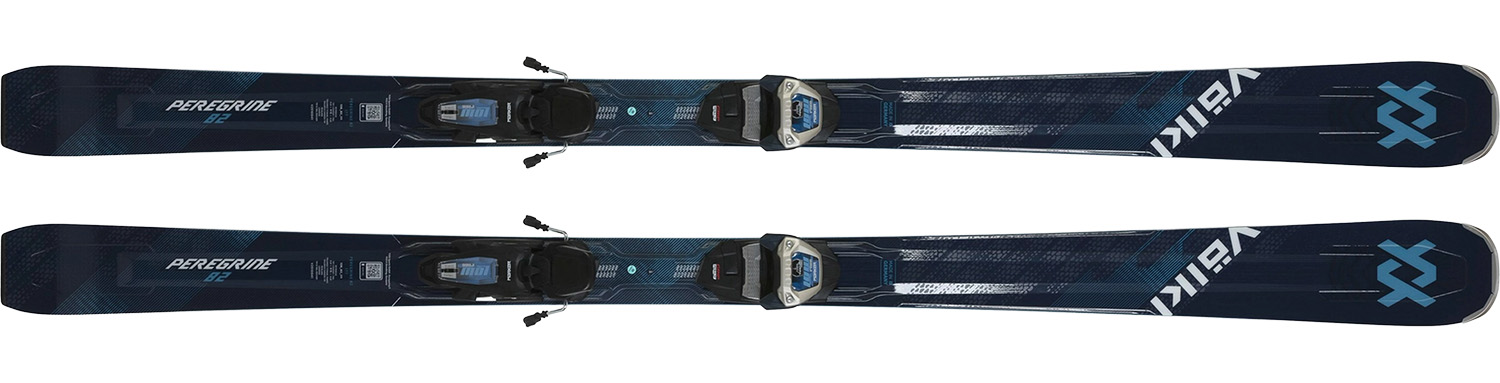
While there are a number of ~76-84mm wide dedicated carvers I get along with quite well, the Peregrine 82 has become my current favorite. And yes, while I would love it even more if it came with all pink or all black topsheets, this is a versatile carver. It can be pushed quite hard; it has good edge hold on very firm groomers; it has great edge hold on soft-ish groomers; it isn’t worrisome on super-soft groomers where your edges may tend to dig in more than you want them to. While I am not interested in this ski also serving as a great tool for bumps skiing, if I know we’re going to be sticking to groomers, I really like this ski.
It wouldn’t be my first choice if I primarily skied at a place where the groomers were quite short or quite flat (the Peregrine 82 really comes alive with a good bit of speed, and feels most comfortable to me making medium-to-large radius turns). But the steeper, wider, and / or longer the slopes, the more I love this ski.
Ski #2: Volkl Mantra 88, 184 cm + alpine binding
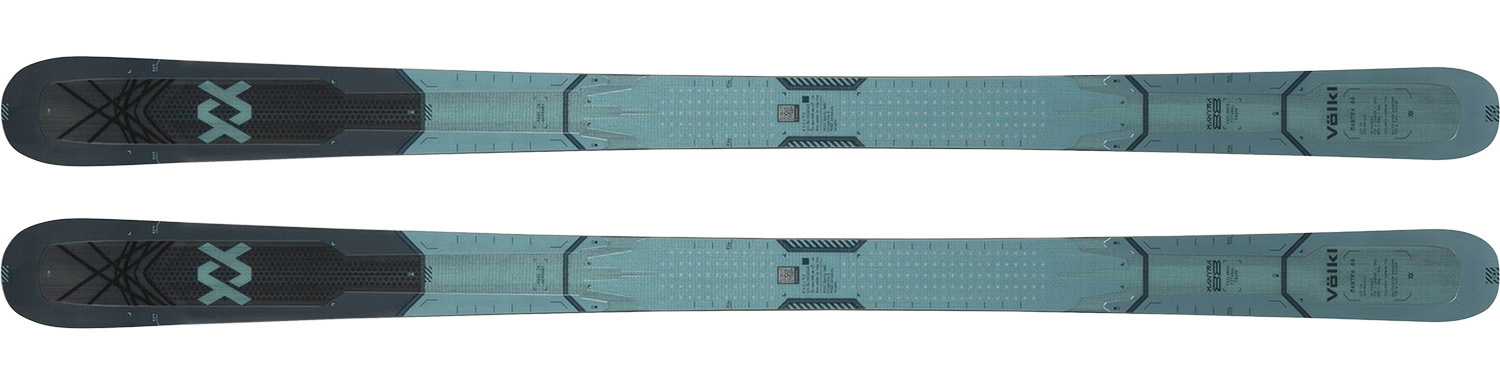
For years, the Folsom Spar 88 (182 cm) has held this spot, and honestly, it still very easily could here. I love its shape, and I love that you can customize the weight and rocker profile of that ski exactly as you wish. But for my quiver this year (maybe because the lack of early-season snow has me putting a premium on skis that carve exceptionally well), I’m going to pair the Peregrine 82 with Volkl’s Mantra 88. The Mantra 88 is a million times better than the Peregrine 82 off-piste, but the Mantra 88 is still an impressive carver, given how comfortable it feels all around the mountain. (Check out my Flash Review of the Mantra 88 from the end of last season.)
Ski #3: Nordica Enforcer 104, 185 cm + alpine binding
I’ve been a big fan of the Enforcer 104 for years, and I think it’s a great ski for many-days-of-the-year here in Crested Butte. That said, I wouldn’t tell the Enforcer 104 to get too comfortable in this spot. There are a number of skis in this category that I think might end up being serious contenders for this spot…
Ski #4: Moment Wildcat 118, 190 cm + alpine binding
For pow & soft chop days, I’m still extremely happy to be on this ski. If you don’t know why, please just do a search on this website: Moment Bibby or Moment Wildcat. Let’s move on.
Ski 5: Touring: 4FRNT Raven, 184 cm + touring binding
No super strong reason to switch things up here. I’ve loved the Raven for years, and I still love it. Most of my ski touring happens in the spring, so I’m less worried about going wide for really deep pow and more concerned with something that will be super fun on good spring corn, the occasional deeper day, and, importantly, the unexpected, awful, mistimed, refrozen coral reef. The Raven continues to be my benchmark ski for those attributes; it has some strong competition (keep reading), but I’m keeping it here for now.
II. What skis were the most difficult to leave off your list?
Like last year, these two skis:
Rossignol Sender Free 118, 186 cm. It’s so good. If I didn’t love the 190 cm Moment Wildcat so much, I’d be right there with Luke championing the Sender Free 118. I also hope to win a massive lottery this year, then will ask Rossignol how much I have to pay them to get them to change the name back to the Black Ops 118. Because the coolest skis should have the coolest names.
Salomon QST Echo 106, 181 cm: I love this ski, too. And the more time I spend on it, the more the distance between it and my beloved Raven diminishes. I still love the longer sidecut radius of the Raven, and I’m on record for why I like its reverse-camber design in the backcountry. But performance-wise, I feel like I can ski the Echo 106 very similarly to the Raven, and the Echo 106 is very predictable, isn’t twitchy (it doesn’t feel too light), and stable enough for me. It’s very, very good.
Unlike last year, here’s a new contender:
Salomon QST 94 — because it’s quite possibly the most fun moguls ski I’ve been on in years.
III. What skis do you imagine have the greatest likelihood of making your list, if and when you get to ski them, or get to ski them more?
As I mentioned on a recent GEAR:30 podcast, I’m pretty smitten at the moment with the Faction Dancer 79. I still want to see what I think of it on steeper, firmer groomers and what I think of it in moguls, but I think it’s got at least a shot of earning the #2 spot in my quiver.
IV. If you had to choose a single brand from which to build your 5-ski quiver, which company would you pick?
Volkl. I didn’t realize this till I sat down to answer this question, but this year, Volkl turns out to be a surprisingly easy call for me:
Ski 1: Peregrine 82, 177 cm
Ski 2: Mantra 88, 184 cm
Ski 3: Mantra 102, 184 cm
Ski 4: Revolt 114 (191 cm) or Blaze 114 (184 cm)
Ski 5: Katana V-Werks, 184 cm (touring ski)
The only question mark for the skis above is ski #4, whether I would go with the Revolt or the Blaze 114. Probably the Revolt. Will try to confirm this season. And I actually really like the idea of getting the V-Werks Katana back into my quiver as my touring ski. That ski didn’t get worse over the years, other skis just appeared on the scene that could do at least some of what the V-Werks Katana can do.
V. Since we get this question a lot, what would your ideal quiver look like if we dropped the 5-ski limit?
Given how many skis we have in HQ, this is a question I never think about. But… I guess my answer is 12. I’ll hold off on naming particular names of skis, since those will change from year to year. But these categories won’t change nearly as much for me.
Ski 1: ~72mm-wide, skinny frontside carver for true boiler plate
Ski 2: 78 – 84mm frontside carver, firm to super-soft conditions
Ski 3: 88 – 95mm all-mountain ski for firm, off-piste conditions
Ski 4: 92 – 102mm all-mountain ski for more variable off-piste conditions
Ski 5: 102 – 106mm all-mountain ski for softer, variable conditions
Ski 6: 105 – 108mm wide: different flavor of all-mountain ski, just because you asked
Ski 7: ~112mm wide: Softer, Variable Conditions Resort Ski
Ski 8: ~118mm wide: Resort Pow / Variable Conditions
Ski 9: 120-138mm wide: Dedicated Pow Ski for Heli or Cat Skiing
Ski 10: ~95mm wide: Lighter Touring Ski for longer walks
Ski 11: 102 – 108mm wide: Most-Conditions Touring Ski
Ski 12: ~115mm wide: Powder Touring Ski
Question for David here – noticed over the years you’re a big fan of the Raven and Renegade! Curious if you find the Raven similar to the Hoji or if you prefer the Raven for various reasons (weight, rocker, etc). Selfishly asking as we both find ourselves in the same kind of snow often and I’ve enjoyed the Hoji for our area so far.
I’d also be curious about David’s answer to this.
Skiing the Pacific Northwest and love my Renegades as pow ski, but looking for a daily driver touring ski and trying to decide between the Hoji and the Raven. Leaning Hoji, so good to hear you’re enjoying the Hoji.
i’m about about to leave for Japan, which has gotten about 5 to 6 feet of snow in the past few weeks. I’m a resort skier, and I love the Volkl line up. I am bringing my Mantra 102. I tested the Peregrine 82 at the Summit and loved it. I hear the Blaze and Revolt line is great as well.
I hope when I return in mid January there is actually real snow in the Tahoe area.
I always enjoy reading you folks thoughts on quivers, what to include for a certain application, options etc. Being a bit of a gear nerd, review reader etc.even though I have never skied any of your picks, and am also unfamiliar or at best vastly familiar with the majority of brands/skis referenced, I still really enjoy it. (Thanks to the Blister Winter Buying Guide I can read about almost all the gear.) I don’t tour, ski park, never really deep pow, travel to major ski resorts the major skis reviewed don’t apply to me , how or where I ski,but it makes for very entertaining reading.
Thank you Blister. If I ever get the chance Blister Summit sounds like a gas!!!
David, by your comments I’m guessing Baker??? I’m mostly at Crystal or Alpental.
You had me going there, thought with the skis of the century series that quivers might not happen this year, which would have been a huge disappointment, love all the comments every year whether insightful or inane!
My 5 ski quiver is:
1. Fischer the Curv 72, for the increasing number of days where the snow is sketchy off piste
2. Head Monster 98
3. Fischer Ranger 102 FR
4. Moment Meridian 107
5. Moment Wildcat
Single brand I would go Moment, pick up some of the blem Commander 92‘s and then would look at the various Deathwish and Countach‘s plus the Meridian 117 which I am really intrigued by, love the 107
Hardest to leave off: Völkl Katana V-Werks; Völkl Mantra M4 100; Fischer Ranger 94 FR; Swiss Massiv Freeride, and numerous others…
Look forward to Mr Zuber and Mr Chase‘s selections as always
Sorry for complaining, but it is almost Xmas and we had posts regarding espresso , caviar, news, wine and mtb, mtb, mtb – are there any ski reviews coming? ;-)
Turns out, we actually put a bunch of time on snow – and wait for terrain openings – before writing reviews. I know this is uncommon in the review world, and maybe it’s been dumping snow where you ski. It hasn’t been where we ski. We’ll publish when we’re ready. Until then, please enjoy this GEAR:30 podcast we released 8 days ago about our initial on-snow testing. ;-)
https://blisterreview.com/podcasts/reviewer-reports-early-season-testing-lukes-dumbest-moment-on-skis-ep-372
And to be fair the Hotshot and Mango flash reviews are indeed already up
Mine is exactly 5 skis, so I’ll go. They are (of course) old models.
Blizzard Firebird Sport Ti, 72mm, 178 cm. Front side ripper. This is the one I’m least sure about. Might want something (even) shorter radius, maybe shorter.
QST 98, 188. I like a loose, surfy all mountain ski.
Ogso Corbett 112, 186 cm. Marker Alpinist. Super light, super surfy powder touring ski. Would maybe choose other bindings.
K2 Wayback 98, 186 cm. Marker Alpinist. Super light, loose, surfy rockered tail, long side cut, mid weight. Pretty much the perfect allround touring ski.
Will handle any condition. On the light side thing, so go heavier if you want a bit more damping in bad snow.
Atomic Backland 85 UL, 178cm. ATK Haute Route. Ultralight narrow ski for long outings in firm snow. G
Luke, for your #3 slot would a 190cm Wildcat 108 get a look in? Chargey/playful/versatile, not as damp as the M-Free 112 but could fill the gap in the quiver nicely?
Right now, that slot is basically built purely for the M-Free 112, cause I haven’t skied anything exactly like it. A 190 cm Wildcat 108 could work, but it doesn’t offer the suspension I’m looking for.
Luke and/or any other reviewer
I don’t see much spelling out the 5 categories. Several are implied i.e.. #1 is the daily driver, #2 seems to be the groomer/on piste ski, #4 Resort/lift accessed pow ski, #5 dedicated touring ski; but I don’t see what the #3 ski is for.
Also, please correct me if I am off on the other categories.
Not having skied any of the reviewer’s choices, and only having reviews to know a particular skis characteristics, build, width [when not sated in the name i.e. Hoji, Raven, Katana V-Wreks etc. vs. M-Free 112, Peak 88, Bent 100] and/or what it is primarily designed to do, not knowing what the reviewer’s use intentions leaves me guessing. Are the five categories even stagnant or up to the reviewer to decide?
For me personally I have found staying with one brand allows me to switch skis easily .
Elan ripsticks 96 regular , 106 regular , 106 black edition and 116
My others are 111 playmaker and 86 cti wingman
Now let it snow !!!
Cheers
@ 5’8″ 155lbs (bavarian racing background) even though the optimal quiver for all mountain/tour/freeride starts @ 8-10 skis+… if I’m ever really in the need to slim down to this quite anorexic quiver of 5 I would def. go with the skis that cover as much of the most common disciplines of the sport as possible, are able to handle adverse conditions like a breeze and can even roam in their competition down/up from their width and or weight spectrums. (lets leave aside racing and park, because these disciplines are kind of outliers quiver wise imho).
also important is to recognize that the minimum boot quiver there can ever be is a quiver of 3 whereas non-italian boots are 1000% non accepted: ZGPT, 50/50 (XT3), plug boot (Langes as well)…(yes onnerdykid, its still called fucken plug boots if just for nomenclature reasons)
so for the skis I would def. take a big mountain touring ski around 100 in / around bodylength with lean pins (no need for heavy ass raiders fr 15’s since not a good performance to weight ratio in the high country imho…too much weight tradeoffs, ineffective and flimsy brake, ice buildup in/around the super flimsy spacer(ice buildup around/ontop of the spacer can be heavily decisive if you die in no fall scenarios cause of prerelease), costly, shitty looks, annoyingly loud and, by the way, NOT a lot safer (marginally at most) in release characteristics than some of very lean bindings that are almost half the weight…we call the fr15 “DIVA” because she’s got not really the “set it and forget it”- trustworthiness-> or lets better call it “PARANOIDA”:).
then a versatile more cambered 102-104 with a strong full feature pin set up or better as 50/50 hybrid binding (I call hybrid all the bindings with pins up front but an alpine heel),
a longer ski that is casted and chargier 107/108 fullrockered or flat,
a classic rocker camber rocker shorter 118 to ski everything more than boot-top pow regardless the terrain,
and also of course long and wide full pow-fatties as high speed blue bird guns.
1. SOLIS 173 current HAUTE ROUTE (skis for all wars in the biggest stuff your mama don’t wanna see you in, battle tested AF ….competition smashing e.g. the Bibby of the touring world!!!) with the best lean binding there is or should I say best real all-round touring binding, least compromises in any direction, just bring those if you ski-travel to the gods in INDIA or to fucken PLANET PLUTO where winter lasts 60 damn years!!!
2.MOMENT SIERRA 179 either with PLUM SERAC in leanest strongest set up or with the new ALPENFLOW 89 as most versatile DO IT ALL setup (if the 89 turns out to be truly what they claim @ alpenglow…looks quite promising though, not finicky, bomber and well engineered, no marketing BS!)
3. CORVUS 188 (last full-rockered version!) with CAST 2.0, still haven’t really found a better ski for big consequential lines in the alps where you use lifts to get into bigger stuff that still need (shorter) touring and is so serious that you wanna bring a.)a real ski and b.) pivots lastly c.) a plush and bomber pu shell. that skis doesn’t really have any weakness and feels like a extension of my legs, it just so damn intuitive and dialed….comically it never was in any blister best off liste which was the joke #1 since blister appeared.
4.BIBBY 184 PIVOT 2.0 (current 118mm version if its heavier and better, factory mount -6)
5.PON2OONS 189’s PIVOT 2.0 (last black and green version) smokes any powder fatty, even fancy shit like raptures just doesn’t get up to the demonic speeds and the control PON2OONS can offer. no other ski can in 3-D Snow environments because of its shape especially its tail, in my opinion the best tail ever existed…there is no faster shape, and speed is what you wanna have if you open up stuff that is on the the very edge of what avi-situation may allow…PON2OONS simply make you more mobile than any other ski in pow and they are just safer in dangerous places. moreover the don’t need any skill/power/, and are (or were) offered in lots of lengths I think even down to 159’s. I don’t know what to say Hoji, but the “always bring your renegade phrase” should more be like: you can do that but you will loose against any PON2OON rider of any age/weight/skill, …to see speed-demon Hjorleifson himself on PON2OONs would be funny AF…THANK YOU SHANE!!!
Question for Luke: Was the Revolt 101 a contender for that daily driver?
It was, but the more I ski that ski, the more I’m identifying little things that put it just a notch below my top picks. Mostly, its tail is a bit stiffer than I prefer in moguls, and it can get a little ‘hooky’ in dense, soft snow.
100% Jonathan, ‘Black Ops’ rules.. and get rid of that frikken topsheet too! Bring back cool
Question for Paul Forward re Justis mount point.. that ski has long tip & tail rocker, do you ski it on recommended?
Howdy, Yes, I mounted those at recommended and, despite my penchant for moving bindings around A LOT, I haven’t been tempted to move it on the Justis. I tend to jive pretty well with -7cm skis and I think that’s a big part of why I like these. I don’t know of too many stiff, damp skis in this width with kind of mount.
Alley ooping that over to my question for Luke about the Revolt 101.
Mark Danielson, what did skinny skis do to hurt you?
Skinny skis have become too short for my tastes.
Although I admit that I prefer wider skis (because why settle for only edge pressure when you can choose a ski that allows you to harness both edge pressure and base pressure in a variety of conditions?), I think the bigger point here is that brands seem to think that skinny skis should not be offered in lengths appropriate for bigger guys.
If you look in the Frontside Skis section of this year’s Blister Winter Buyer’s Guide, of the 42 models covered in that section, only 2 models offer a length longer than 188cm…and one of those 2 models is by a small-batch / custom builder (Parlor Skis). Most of those skinny models top out at ~178cm or ~184cm.
Luke – I’m super curious about including both the M-Free 112 and the Sender Free 118 in your selection?
I’ve now put a few days on my 190cm M-Free 112 directly “A-B’ing” vs my Black Ops 118. I haven’t found a single situation yet where the M-Free outperforms or would be preferable to the Black Ops. Maybe once conditions fill in a bit more the M-Free’s will provide some increased outright stability at speed given the longer length? But given how much more playful & manueverable the Black Ops are, and given their plusher, stable ride, I’m stuggling to see how the M-Free’s even rank? So far I’ve tested in pow, chop, crusty, slushy, refrozen mank, ice, and groomers and the Black Ops reigned supreme in all cases.
The reason I bought the M-Free’s is that I’m 6’2″ and feel undergunned on the Black Ops length-wise when I’m charging at speed. Based on all the hype, the M-Free’s seemed to somewhat fit the bill as a “longer, skinnier Black Ops”… I mean the M-Free 112’s are good skis, but it really goes to show how utterly ridiculous the BO118/SF118’s are. I’ll keep skiing the M-Free 112’s for a bit to see if I come around, but at this point I just don’t see any overlap given wider spectrum and better performance that the BO118/SF118’s provide across the board.
Ha, I won’t even pretend that my decision there is particularly rational — there’s a ton of overlap. I mostly just really like both skis. The main reason I thought I could kinda justify having both is that I find the M-Free 112 a bit more enjoyable to me in shallow / firm conditions. Despite its longer length, it doesn’t feel quite as fatiguing to ski and doesn’t put quite as much torque on my knees as the wider BO118.
My quiver is chaotic this year because the blister summit made me add skis to my list instead of narrowing the list down and then the sales hit… So I replaced one 100 underfoot ski with two by accident, Oopsy. Skier specs: 5’5, 130lbs, skiing primarily in the PNW.
1) 2017 165 Kastle fx85: early and late season ski. Confidence inspiring and decent for carving and moguls. This ski has seen hundreds of days and might need to be replaced soon, which will be a very sad day. Chris Davenport sure knows how to make a ski. The mirus cor, spar 88, and kore 87ti contend for this spot someday.
2) 2025 165 4frnt msp cc, mounted at -1: tested at the summit and liked it, then it went on sale so I impulse bought it. It had been a long time since I skied such a heavy ski but it didn’t feel punishing. This will be the ski I grab when the snow is heavy and/or I want to go fast.
3) 2025 167 Liberty radian 100: another impulse buy. I tested the 92 at the summit and loved it. I even got my highest carvIQ on it haha. Despite the similar waist width, it’s a totally different ski than the msp, and I’ll be grab it it when there is some softer snow that is not super heavy and when I want to ski more dynamically rather than feeling planted. This may also be the non-touring travel ski unless there is a huge dump (I’d take the next ski) or icy conditions (I’d take one of the previous two skis) in the forecast.
4) 2020 174 moment wildcat 116 tour mounted with shifted at -1: this is my 50/50 powder ski. I have toured on it on the deepest days and also grab it when we’re lucky enough to have truly deep days at the resort. This is the ski I take when I’m going to Alta and know there’s a dump incoming, or if I ever get to go to Japan. Truthfully, this ski comes out 0-3 days per year but I’m glad I have it when we get lucky.
5) 2021 165 Kastle tx103 with atk raiders: winter touring ski. I wish these were longer but I haven’t dealt with replacing them because I haven’t done much touring since getting those (mom problems). They do alright but the Navis freebird and or Sierra/deathwish tours are contenders to replace these.
6) 2022 165 nordica unleashed 88 at -1 (can’t remember which pin binding, but something light, maybe a plum?): volcano ski! This is arguably the most important ski to me. When covering 4-7k vertical on skis in the spring and summer it’s nice to have something light on the up but I want a reliable and fun ski on the down. This ski never disappoints. I had to move the binding back when replacing a pair of defective zeds but haven’t noticed a big difference while skiing.
So I replaced one 100 underfoot ski with two by accident, Oopsy – love this Stacy, and may even trying using that excuse, though luckily my wife has turned a blind eye to my ever changing (mostly increasing) quiver(s)…
Kara and Luke, I really want to know what you think of the updated K2 Wayback series. The updates to the 99ti between the 1st gen and current gen heavily influence the new Waybacks (the Wayback 89 in particular since it is most hard snow focused). Given how much you like the current 99ti, I think you’d get along well with the new Waybacks and I’m curious to hear your thoughts.
Will try to make that happen this season!
Always appreciate the quiver posts, one of these days I’ll finally have to get on a Mirus Cor.
Jonathan – have you spent much time on the Nevar? I was happy to the Echo on here since I’ve enjoyed skiing it a lot too. I haven’t put time on the Nevar yet but I would have guessed the Nevar and Echo would ski more similarly than either one does to the Raven. Need to make my way over to Crystal Mountain for a demo when the lifts finally start turning (and the roads reopen)
With all the praise for the Declivity 102, I’m surprised no reviews exist for the 92 Ti or 88 C.
We did review the prior-gen Declivity 92 Ti: https://blisterreview.com/gear-reviews/ski-reviews/2020-2021-armada-declivity-92-ti
Based on what Armada told us, the only significant difference between that version and the current one is that the newer ski features a slightly heavier, full-poplar wood core (instead of caruba). So, the new ski should be a bit more damp and stable and a tad less quick than the one we reviewed, but the shape and rocker profile have stayed the same.
My favourite article of the year, yay! Here goes, I’ll play along. My real-world quiver currently numbers somewhere over a dozen, but if I were to narrow it down to five, here are the picks.
All Mountain, Jibby: Line Optic 114, 186cm, Look Pivot 18 @ -2cm
All Mountain, Directional: Moment Countach 110, 188cm, Look Pivot 15 @ -8cm
All Mountain, Charger: Dynastar Legend Pro Rider 105, 192cm, Look Pivot 18 @ -14cm
Powder: Moment Chipotle Banana, 193cm, Look Pivot 18 @ -3cm
Park & Street: Atomic Blog, 185cm, Salomon S920 @ centre
Great to see you still have feelings for the Bodacious, Mr. Golay. I’m curious about the HL RC116, but I’ll be 80 years old before I run through my stash of OG Bodacious 196s. I’ve been skiing them less, though, as I’ve been spending more time in tight trees. The 196 Boda is still my favorite for high speed runs down soft-moguled open faces. They inspire confidence. And the urge to smash things. And to channel the spirit of Animal from the Muppets.
Open pow – Atomic Atlas 192.
Tight pow trees – Armada ARG
Open chop – Bodacious 196
Tight chop in the trees – Bibby Pro 190
Fun carver/hasn’t snowed in ages – 2012 Bonafide
I almost added a Pon2oon to my quiver, but my sophomoric FB profile pic probably scared the seller away. Looking at their profile, they seemed like they might be sort of uptight. I probably don’t need more indecision on pow days anyway. Some Surface New Life 194s are already complicating matters.
^I just skied the Bonafide and a fully-cambered, 64-underfoot 2006 K2 Moto GS ski back to back on ice. The Moto easily knocked the Bonafide off of this list.