

Hope EVO Brakes
Intended Use: Enduro / DH
Fluid: DOT
Pistons: 2 x 18 mm + 2 x 17 mm
MSRP: $314 / £240 / €301.50 (per brake, w/ kevlar hose)
Stated Weight: n/a
Blister’s Measured Weight: 308 g & 308 g (per brake, w/ full-length hoses)
Bolted to: Contra MC, Geometron G1, Kavenz VHP16
Reviewers:
- David Golay: 6’, 160 lbs / 183 cm, 72.6 kg
- Zack Henderson: 6’, 165 lb / 183 cm, 74.8 kg
Test Locations: Washington, British Columbia
Test Duration: 4.5 months
Intended Use: Trail / All-Mountain
Fluid: DOT
Pistons: 2 x 17 mm + 2 x 16 mm
MSRP: $294.40 / £225 / €282.60 (per brake, w/ kevlar hose)
Stated Weight: n/a
Blister’s Measured Weight: 297 g & 297 g (per brake, w/ full-length hoses)
Bolted to: We Are One Arrival
Reviewer: 6’, 160 lbs / 183 cm, 72.6 kg
Test Locations: Washington
Test Duration: 2 months
Intended Use: XC
Fluid: DOT
Pistons: 2 x 22 mm
MSRP: $268.20 / £205 / €257.50 (per brake, w/ kevlar hose)
Stated Weight: n/a
Intro
Hope made a huge step forward with their brakes when they launched the Tech 4 lineup a few years ago. The Tech 4 brakes are massively more powerful than the Tech 3 versions they replaced, and got a host of other refinements as well.
The Tech 4 brakes are now getting replaced by the new EVO lineup, and while Hope is describing the changes more as refinements of the Tech 4 recipe rather than a complete overhaul of the lineup, there’s a lot that’s new — and promising looking — about the new brakes. Let’s get into it.
Design & Features — EVO Lever
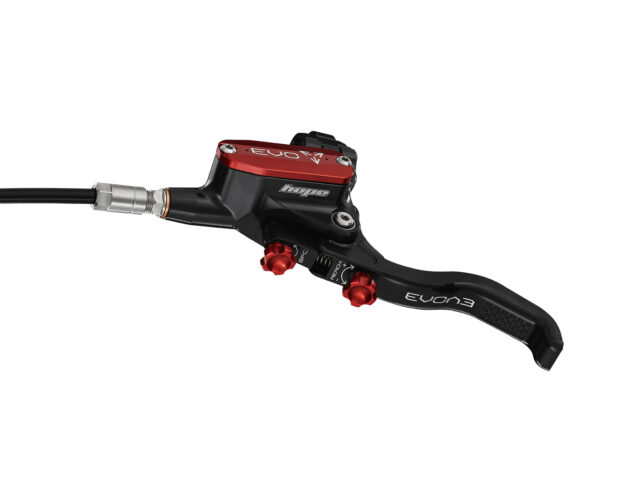
As with the Tech 4 series of brakes that the EVO line replaces, Hope uses a shared lever assembly that can be paired with three caliper options to suit different applications. Hope describes the EVO lever as an update to the Tech 4 one rather than a complete redesign, but while the two look very similar, a lot of the details have been tweaked.
The EVO lever is still machined from aluminum in Hope’s UK facility, and the overall form factor is pretty much the same as the Tech 4 one. It comes in left- and right-hand specific versions and uses a hinged lever clamp with a single bolt, with tool-free reach and contact point adjusters on the front of the lever assembly.
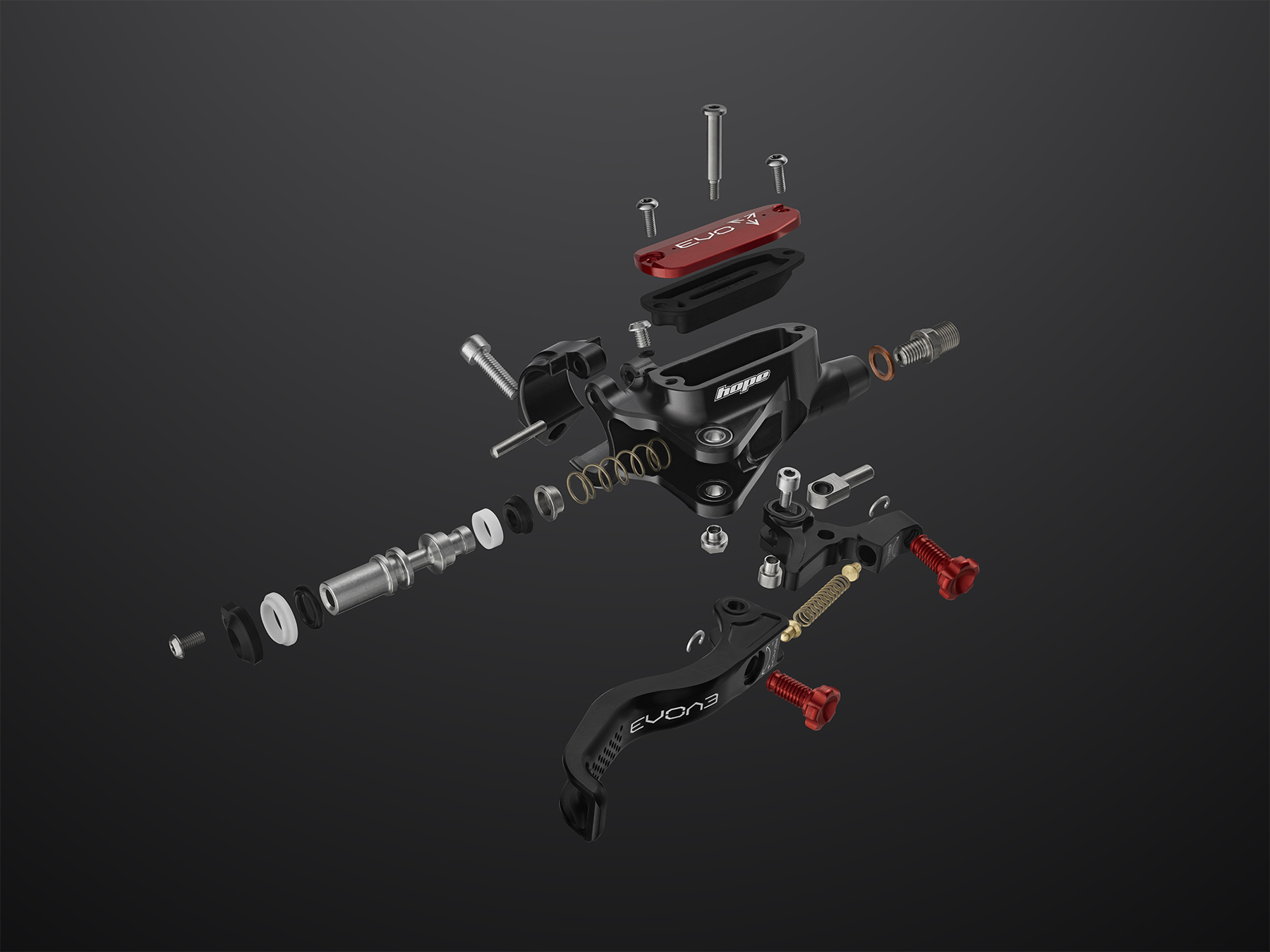
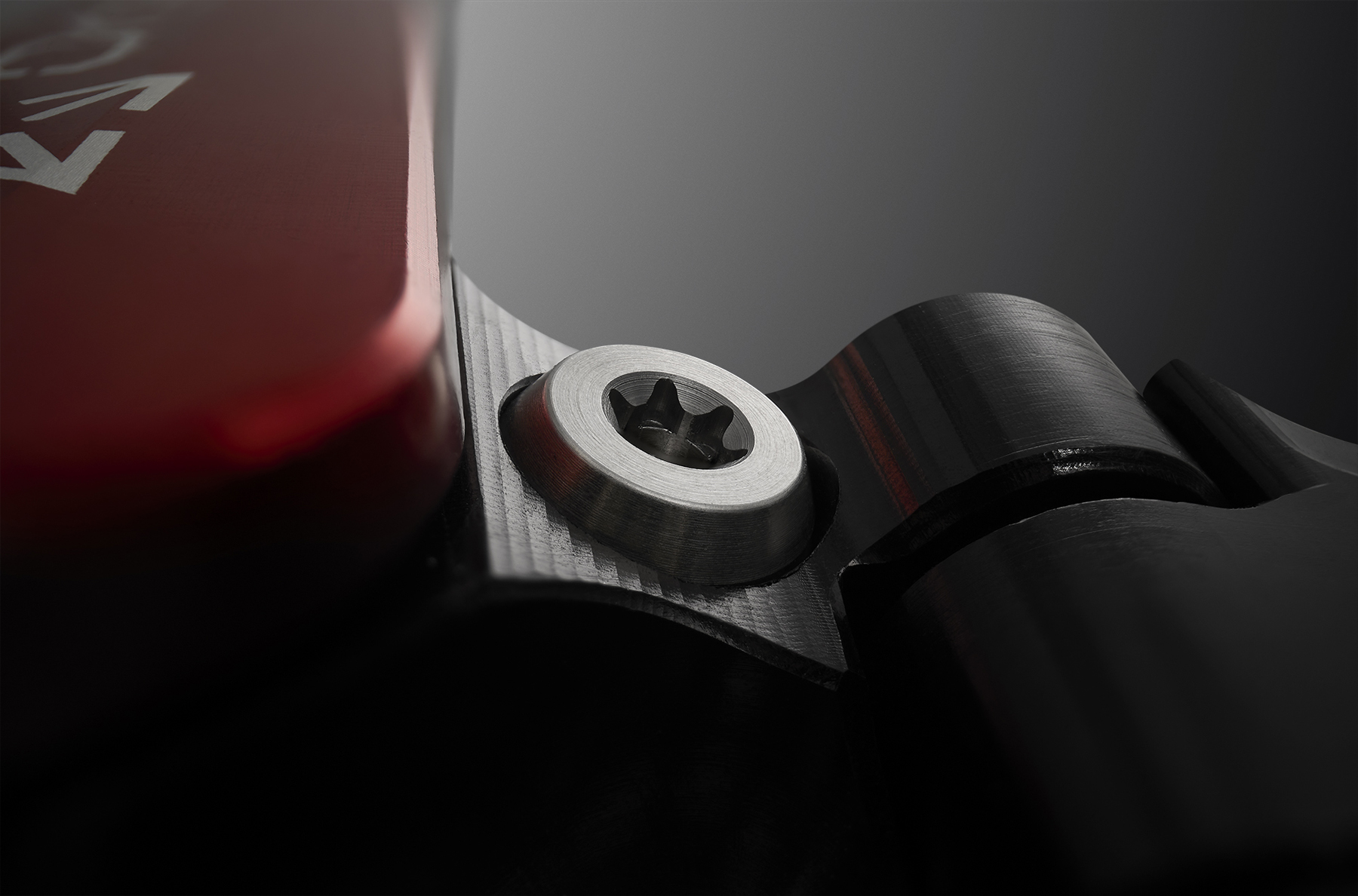
There are more changes internally. Hope has revised the cam profile in the lever to shorten the free stroke and make the bite point firmer compared to the Tech 4 lever, and has tweaked some of the other lever internals to reduce friction and make for a more consistent lever feel.
Hope has also changed the EVO lever blade — and in fact, offers three different versions of it. Compared to the Tech 4 lever blade, the new ones all get a larger hook at the end of the lever for a more secure grip, and redesigned dimples for better feel.
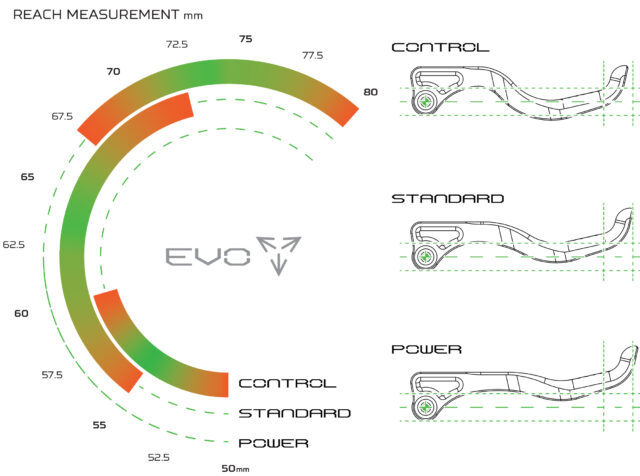
The three lever blade options are differentiated by their overall length and ideal reach range. The Standard lever blade is the middle option of the three, and is included with the brakes. The Power and Control lever blades are sold separately. The Power lever is slightly longer than the Standard one and offers a bit longer reach range; the Control option is the shortest of the three and is designed for folks who run their brakes close to the bar. The longer Power lever should add a touch more power than the Standard one, and the shorter Control lever would have a slightly shorter free stroke, though the overall length differences are pretty subtle.
Hope has a chart to help folks pick the best option for them based on their preferred reach setting (measured from the center of the bar to the hook on the lever blade), shown below:
EVO GR4 Caliper
The new GR4 caliper replaces the V4 as the biggest, most powerful option in Hope’s lineup. The two look similar and share Hope’s typical one-piece machined construction, but there are a few notable changes.
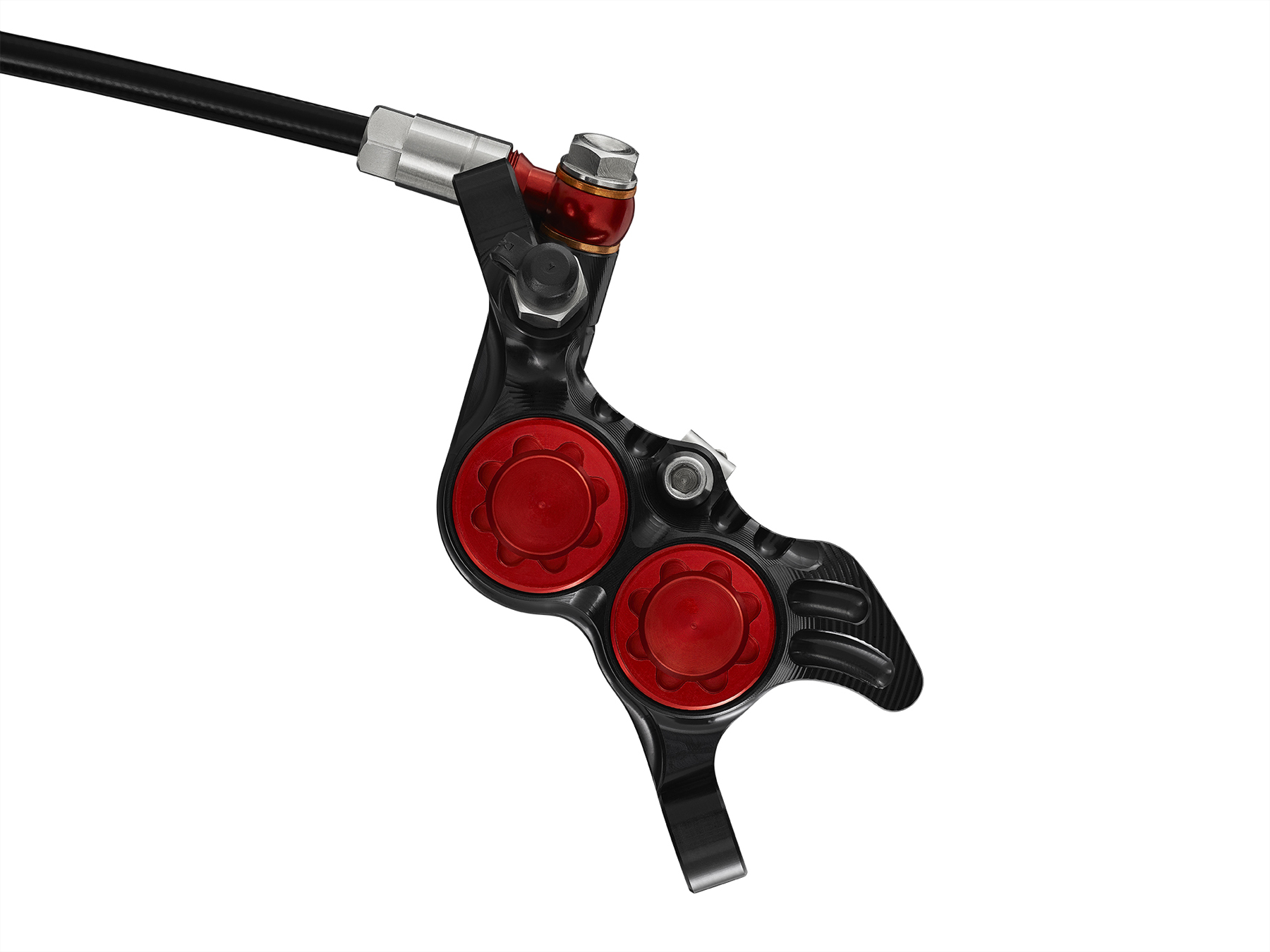
First off, the GR4 caliper gets slightly larger pistons than the V4 one, with two 18 mm pistons and two 17 mm ones (compared to two 18 mm and two 16 mm on the V4). That makes for about 6% more piston area and a corresponding power bump compared to the V4 caliper. The GR4 caliper uses the same V4 pad shape that has been in the Hope lineup for a long time now.
Hope has also dropped compatibility with their 3.3mm-thick vented rotors. Making the V4 caliper compatible with both the vented rotors and thinner conventional ones made the caliper wider and less stiff than it could be if it were designed for a narrower range of rotor thicknesses. Hope decided to optimize for the setup the vast majority of people run, so the vented rotors are out.
EVO TR4 Caliper
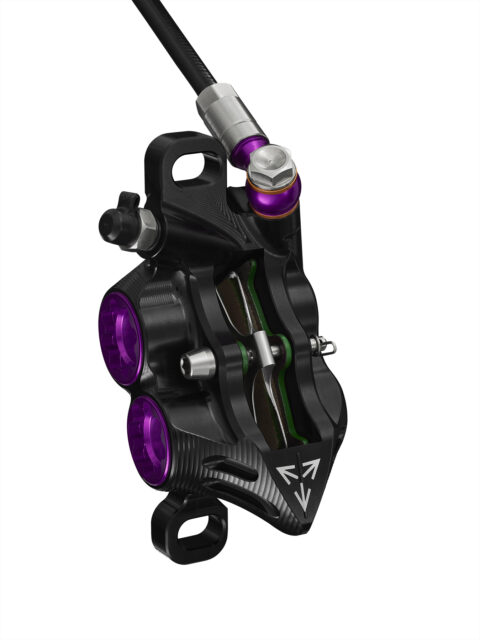
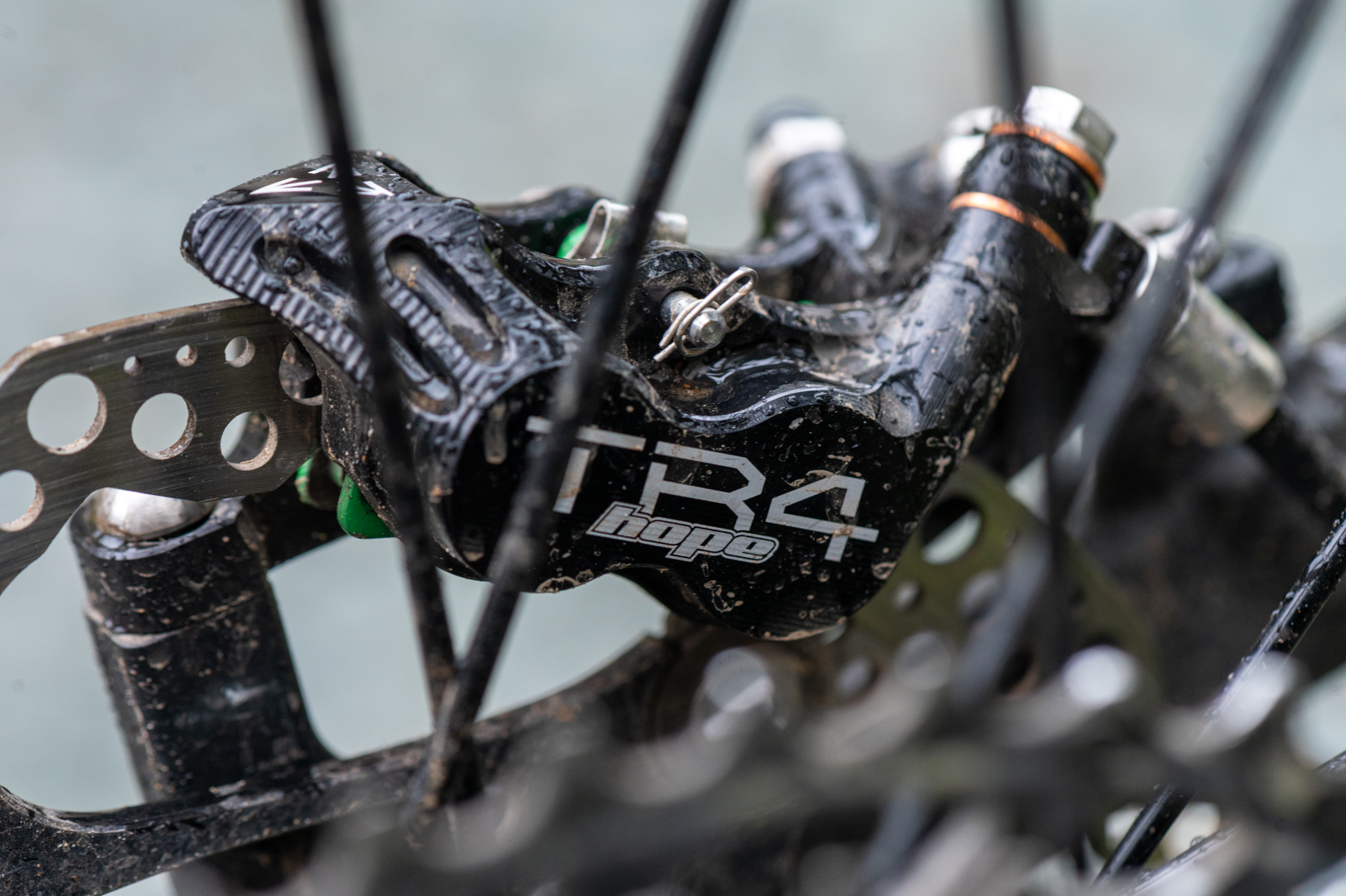
Moving down the line, we get to Hope’s new Trail / All-Mountain caliper, the TR4. It replaces the E4 in the lineup and, as with the GR4, gets a bump up in piston size (two 17 mm and two 16 mm pistons vs. four 16 mm ones). That’s good for a 6.5% bump in piston area; to make for more even pad wear and better heat management, Hope has also bumped up the pad size on the TR4 so that it now uses the same pad shape as the GR4 (which, again, is the same one that’s been used in the V4 for a long time now).
X2 Caliper
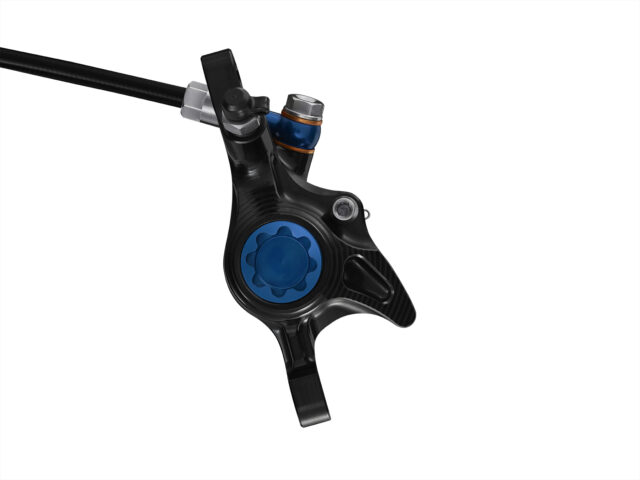
Finally, at the most XC-oriented end of the spectrum, is the X2 caliper. This one carries over unchanged from the Tech 4 series of brakes; it’s a two-piston design with 22 mm diameter pistons and its own, smaller pad shape.
Some Questions / Things We’re Curious About
(1) The new EVO lever looks like a nice update to the Tech 4 one, not least because it now has a dedicated bleed port. But how much of a difference do the internal updates make to the brake performance and lever feel?
(2) What about the new lever blade options? How different do they feel (both compared to each other and the outgoing Tech 4 lever), and who is going to be best suited by which version?
(3) The GR4 and TR4 both get bigger calipers with more piston area than the V4 and E4 calipers that they replace, respectively. How noticeable is the difference in power that results?
FULL REVIEW
The Hope Tech 4 V4 quickly became my personal go-to gravity brake when I first spent time on them about four years ago. They’re reliable, consistent, very powerful (far more so than the Tech 3 version they replaced), and feature a light free stroke paired with a solid enough bite point for my taste.
But the V4s aren’t perfect, either. Their lever blade is a bit chunkier-feeling than I’d ideally want, and while the hook on the end of the lever gets the job done, I’d gladly take a slightly deeper, more secure-feeling one. They can also be a little squeaky, particularly with worn pads in dry conditions, and aren’t the easiest to bleed. All told, I’m still quite happy running the Tech 4 V4, but there’s also room for improvement.

So, when Hope announced the new GR4 — which they describe more as an evolution of the Tech 4 V4, rather than a totally new brake — I was more than a little intrigued. Had Hope managed to keep the better parts of the Tech 4 V4 while ironing out a few of the rougher edges? Here’s what I’ve found:
On-Trail Performance
The short answer is yes — the GR4 indeed presents welcome updates to the Tech 4 V4 — with one caveat that I’ll get to in a minute. The GR4 has been every bit as consistent and reliable as the Tech 4 V4 for me so far (and I’ve got a couple of ~4-year-old pairs of V4s that are still going strong; I’ve obviously got less time on the GR4s, but so far, so good).
The two also feel largely similar in both their outright power and how they deliver it. The GR4 is, if anything, a touch more powerful than the Tech 4 V4, but there’s not a lot in it. The GR4 isn’t quite as powerful as the SRAM Maven Silver/Ultimate and is a noticeable step down from the Trickstuff Maxima — the most powerful brake I’ve ridden by some margin — but it comes out ahead of most of the other prominent four-piston brakes on the market, including the Hayes Dominion A4 / T4, Shimano XT M8220 / XTR M9220, Magura MT7 and Gustav, and the TRP Evo Pro. They’re not the absolute most powerful brakes you can get, but they’re up there (especially if you set aside the eye-wateringly expensive Trickstuff Maxima).
Like the Tech 4 V4, the GR4 stands out among the more powerful brakes on the market for combining that power with relatively linear power delivery. They don’t come on wildly strong at the initial bite (at least relative to their peak power — if you’re used to a much less powerful brake, they’ll probably still feel pretty sharp). From the initial bite, their power ramps up smoothly and consistently as you build lever pressure.
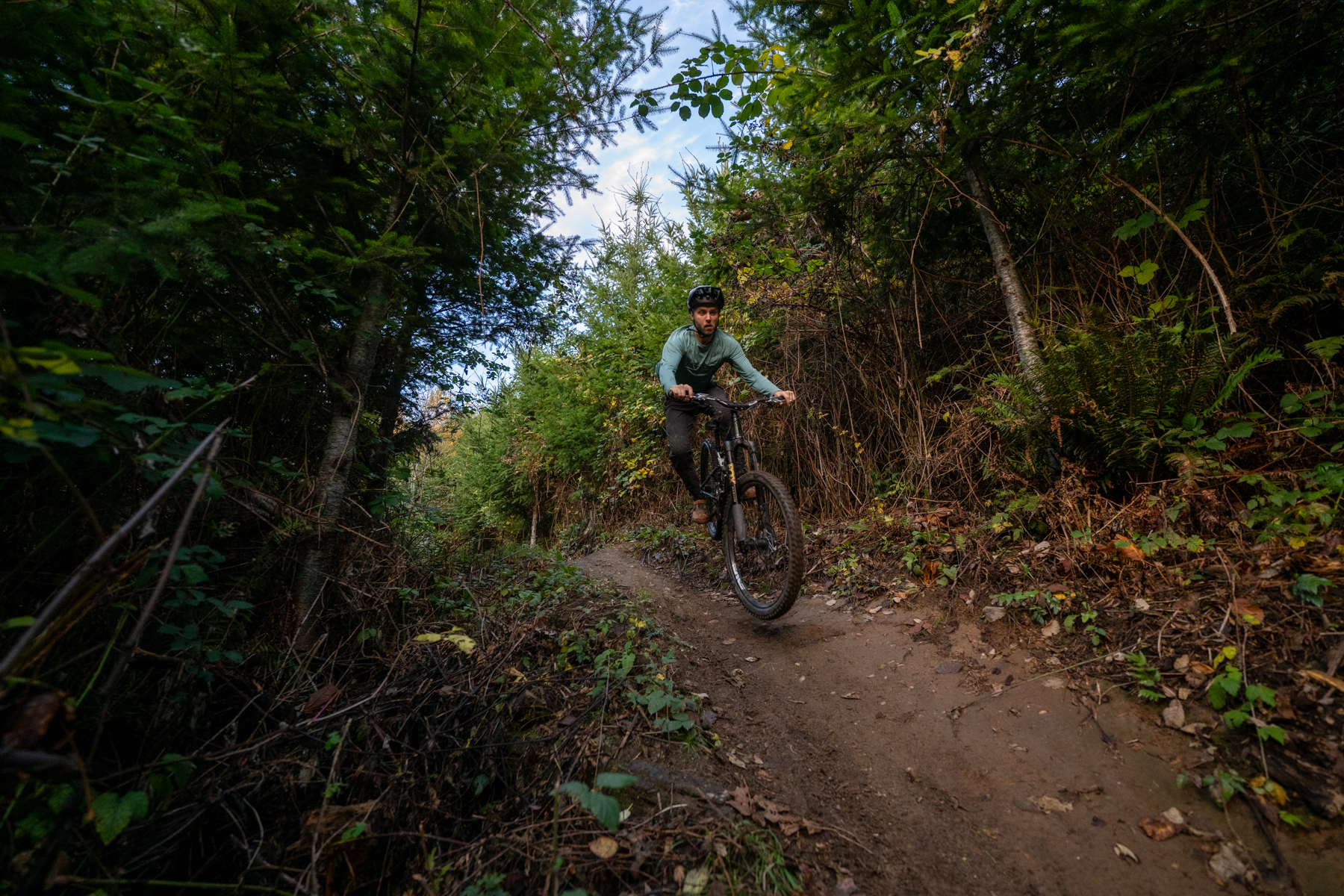
The initial bite of the GR4 feels a touch sharper than that of the Tech 4 V4, and is substantially more abrupt than that of the TRP Evo Pro — my gold standard for mellow, linear power delivery in a relatively stout brake, though the GR4 is also just substantially more powerful overall. The SRAM Maven comes on more abruptly, as do Shimano’s last couple of generations of XT and XTR brakes (the Mx120 versions more so than the newer Mx220 ones).
Zack: I haven’t spent as much time on the GR4 as David has, but coming off the somewhat touchy-feeling, aggressive bite of the SRAM Maven Silver, the GR4 has a much more mellow feel. I find the GR4 a lot easier to modulate in really slippery terrain as a result, but it’s still able to clamp down quite authoritatively. A lot of the very steep and tight trails that I ride require more consistent management rather than the quick, powerful stabs at the levers that the Maven seems to favor, and while the GR4 still delivers a lot of power, its more linear power delivery makes it easy to scrub moderate amounts of speed without over-braking.
David: The free stroke of the GR4 is also appreciably shorter than that of the Tech 4 V4, with the contact point adjuster set to minimize it for both. It’s not wildly short in the grand scheme of things, but it’s on the shorter side for such a powerful brake. Making a very powerful brake means giving it a lot of leverage, and lots of leverage generally means a lot of free stroke.
Hope has done a nice job of tweaking their cam profile to tighten up the free stroke while maintaining excellent peak power, but the (probably inevitable) compromise is that the free stroke on the GR4 is a bit firmer than that of the Tech 4 V4. It’s not super heavy — much less so than the SRAM Maven — but it’s at least a little firmer than all the other brakes we’ve mentioned so far.

The firmer free stroke is the caveat I mentioned earlier, and is, I think, the main thing that could potentially put some fans of the Tech 4 V4 off the GR4. Personally, I like the shorter free stroke of the GR4 and find the slightly firmer lever action to be a worthwhile tradeoff (and I say that as someone who likes a light free stroke in general), but if a super light free stroke is high on your wish list for a brake, the GR4 isn’t a particular standout there.
Zack: I almost bought the Tech 4 V4 for my personal bike back a couple of years ago, but I prefer a firmer bite point and didn’t quite get along with the lever blade shape (more on that below). As David noted, the GR4 is an improvement in both areas for my tastes, particularly the shorter free stroke and firmer bite point. The Tech 4 V4 had a rather light free stroke, not quite eclipsing the best-in-class Hayes Dominion A4/T4, but also not far off.
I agree with David that the GR4’s free stroke is appreciably firmer than the Tech 4 V4’s, but I’d still describe it as light to average — it’s far lighter than the SRAM Maven, and feels fairly comparable to the TRP Evo Pro, Magura Gustav Pro, and prior generation Shimano brakes (the Shimano’s have a very slightly firmer “hump” at the initial start of the lever travel, but most of the pull is similar).
Brake Pad Options
Zack: I also want to quickly touch on the brake pads that show up with the GR4, as they make a substantial difference in performance. The pads are the same shape as the Tech 4 V4 (and are used by several other brakes on the market, too, like the Trickstuff Maxima and Lewis LHP+ U4), and the GR4 shows up with the most aggressive green Racing pads installed, with the purple E-Bike and red Standard pads in the box. I tend to like pads with a sharper initial bite and good wet-weather performance (pretty much mandatory for PNW riding), and while the green Racing pads aren’t bad there, they take a bit of heat to start feeling as aggressive as I’d like, while also falling off in power output when things get really wet.

The green Racing pads are still quite good, though, and they were my choice of the stock options. The purple E-Bike pads are too far back in terms of power for my preferences, but offer better longevity and wet weather performance — I haven’t tried the reds.
I’ve found my happy place with our longstanding favorite Galfer Pro pads, which wear fairly quickly but have a leading combination of power, heat resistance, and sustained performance in cold and wet conditions.
David: I also like the stock green Racing pads quite well overall, but agree with Zack that the Galfer Pros offer better wet weather performance in particular. The Galfer Pros also deliver a little sharper initial bite and are easier to get up to temperature (or maybe just work better when they’re cold), but the stock Racing pads deliver a touch more peak power under ideal conditions.
The red Standard pads are a solid all-around option, are appreciably harder-wearing than either the green Racing pads or the Galfer Pros, and are more consistent in wet conditions than the Racing pads. They’re a step down in outright power, but display much less variation in their performance between being cold and wet and up to temperature, with most of the water burned off, and are easier to manage in wet conditions for it.
I’m less fond of the purple eMTB pads. They’re very hard-wearing and offer great heat / fade resistance, but can be noisy and don’t deliver great outright power. I’m personally happy to pony up for the higher-performing but less durable Galfer Pro pads, but the eMTB pads are a solid option if you want a very durable, fade-resistant pad.
Lever Blade Options
David: One of the more intriguing details of the new Evo lever assembly is the addition of three different lever blade options. Hope calls them the Control, Standard, and Power levers, but primarily encourages people to decide between them based on their preferred reach range. The Control lever is both the shortest of the three (in terms of its overall length, measured parallel to the handlebar) and produces the shortest (i.e., closest to the bar) reach range; the Power lever is the longest of the three by both measurements, and the Standard one falls in the middle.
All three use a similarly-shaped hook on the end, which is substantially more pronounced than the one on the Tech 4 lever blade. The Evo levers still feel fairly chunky, too, but they’re a little more rounded off and feel a bit smoother than the Tech 4 ones. It’s a nice update in my book.
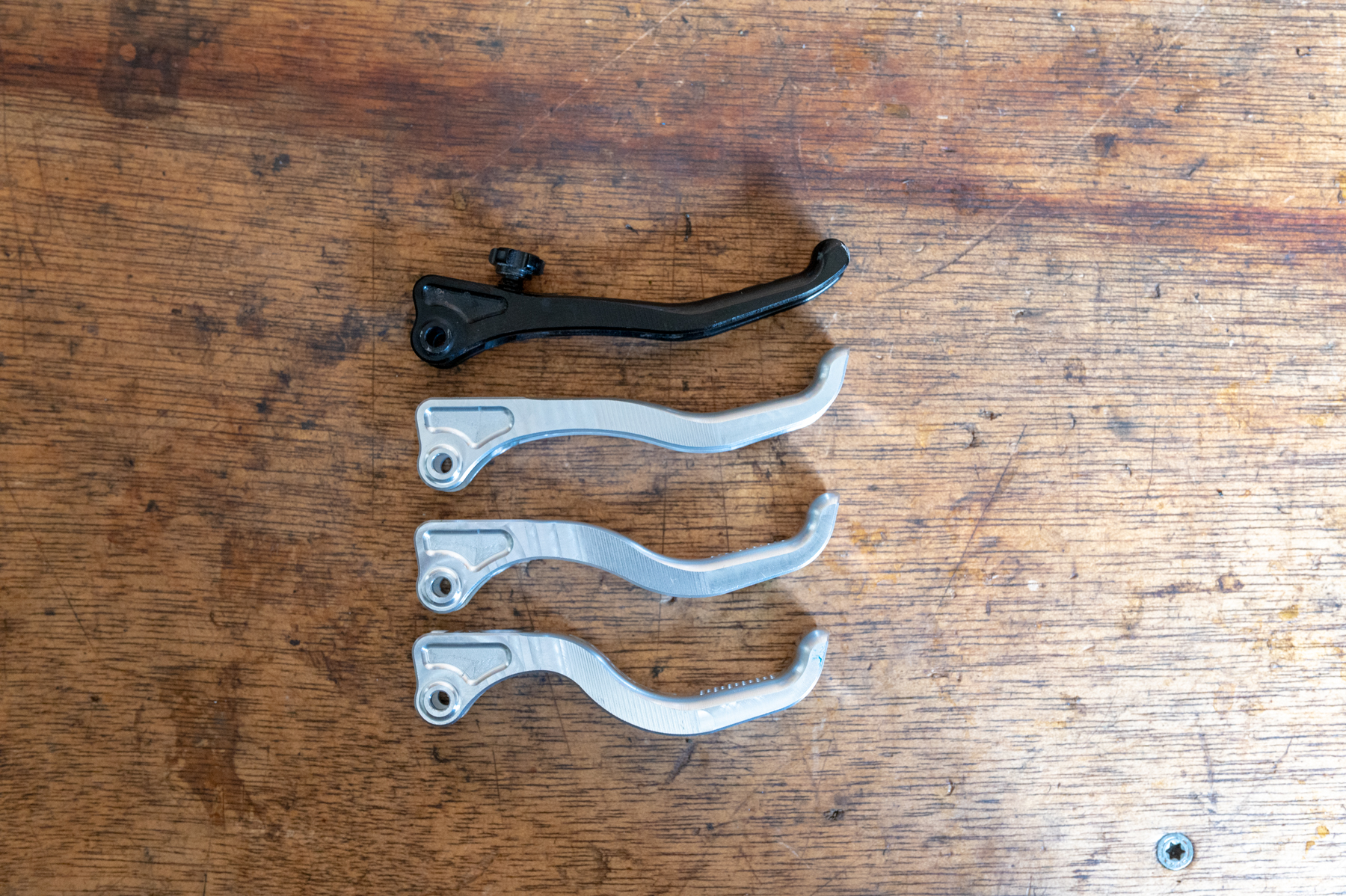
By Hope’s published chart, my preferred reach lands at the very top of the band for the Control lever and more squarely in the range for the Standard one, well short of the band for the longer Power lever. The Standard lever is indeed my preference, but I’m closer to being happy with the Power lever than the chart suggests, and didn’t really get along with the Control one.
A lot of that is just down to power. The reach range is the bigger point of differentiation between the three, and the power they produce is a more subtle change. The longer Power lever does bump the GR4’s peak power up a little, and the shorter Control one cuts into it a touch. The Standard lever is the best one for me ergonomically (just as the chart suggests), but running the Power lever for its added, well, power, and accepting a little longer reach than I’d like is still pretty workable. I can get a reach setting I’m happy with out of the Control lever, but clearly prefer the Standard one for its (admittedly modest) bump up in power, and the fact that the Standard lever feels a little tidier ergonomically at my preferred reach.
Zack: I haven’t tried the Control or Power levers, but am totally happy with the Standard lever for my size Large hands and preferred reach. I don’t run my levers with the reach as notably close to the bars as David does, and am running the Standard levers pretty close to the middle of the reach adjustment range and on the outer (sharper) end of the bite point adjustment.
It’s important to consider that the bite point and reach adjustments impact one another (i.e., moving just the bite point dial will move the reach and require some compensation via the reach dial). However, the Standard lever still has a sizable adjustment range — Hope is right to include them as the default option, and they’ll likely work for most people. Still, it’s also pretty damn cool that they’ve created additional fit options in the Control and Power levers.

I’ll also quickly plug Hope’s significant improvement (at least, in my book) to the hook shape of the new Evo lever blades. They still have a fairly flat face as compared to SRAM and Shimano’s lever blades, which I like, but the much more pronounced hook at the end feels both more secure and more comfortable over the Tech 4 lever blades.
David: You can, technically, put the new Evo lever blades on a Tech 4 lever assembly, but I wouldn’t recommend it for most folks. The Tech 4 cam, which the lever blade interfaces with, is angled more inward than the Evo one (and the cams aren’t interchangeable — they interface with the master cylinder piston very differently), which produces a much shorter reach for a given lever blade on a Tech 4 lever than you get with the same blade on an Evo one.
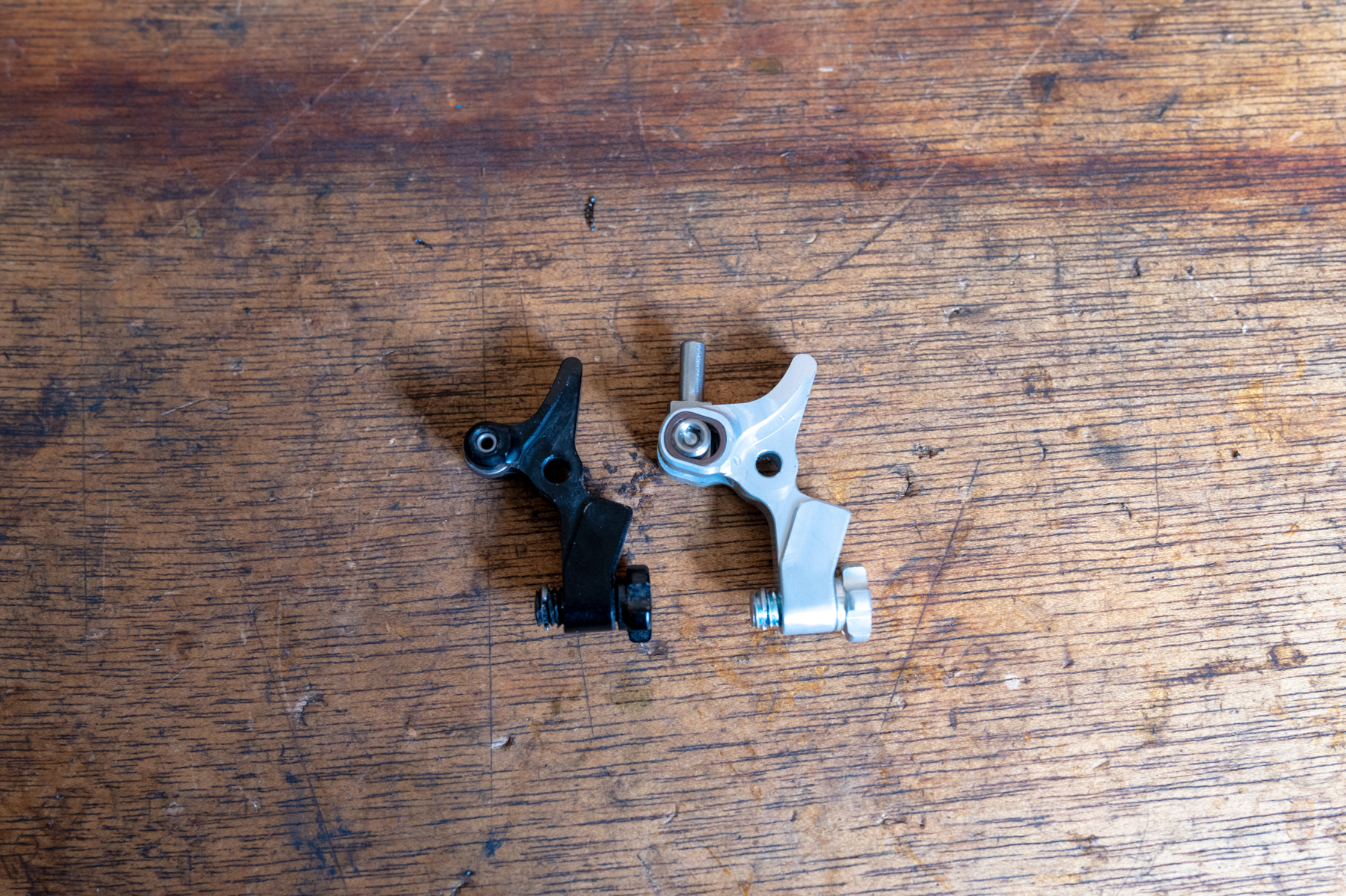
The upshot is that only the longest Power lever is really usable on the Tech 4 lever, and it still produces a pretty short reach, even at the outer end of its adjustment range. If you run your levers quite close to the bar and really want the bigger hook on the Evo lever blade, you can make it work, but I don’t think it’s worth it for most folks. The Tech 4 lever blade is also essentially the same length as the Power one, so there’s nothing to be gained from the Power lever on that front.
GR4 vs. TR4
David: I’ve spent less time on the TR4 than the GR4, but I have a solid handle on their performance as well. Unsurprisingly, given their shared lever assembly and similar caliper designs, the two have a lot in common. How they differ is also fairly predictable.
Mainly, the TR4 has a little less outright power than the GR4, and a correspondingly shorter free stroke and firmer bite point. That checks out — the TR4 has smaller caliper pistons, which produce less hydraulic leverage than the bigger ones in the GR4 caliper (i.e., less power and a firmer bite point); they also require less fluid movement to engage the brake, and therefore produce a shorter free stroke. None of those differences is massive, but the GR4 has appreciably more power, and the TR4’s engagement is a notch crisper.
Those changes also make for a slight change in the reach range that a given lever blade produces (at least in terms of how far out from the bar the bite point is; the starting lever position is, of course, not impacted by the caliper). Backing out the free stroke adjuster doesn’t change that, either. The reach adjuster effectively sets the position of the bite point; if you wind out the contact point adjuster to make the free stroke longer, it pushes the starting point of the lever farther out, and the location of the bite point remains unchanged. I prefer to run both brakes with the free stroke knob wound all the way in (i.e., to produce the shortest possible free stroke).
Personally, I still prefer the Standard lever blade on the TR4 (as I do on the GR4), but the shorter reach Control lever feels better ergonomically for me on the TR4 than the GR4, and the longer Power lever is more viable on the GR4. I just run the reach adjust knob a couple of clicks farther in on the TR4 to compensate for the difference in free stroke; I care far, far more about the placement of the bite point than the starting position of the lever.
Otherwise, everything I’ve said about the GR4 holds for the TR4 as well: they’ve been dead consistent for me, are much easier to bleed than the Tech 4 V4 in particular, and they’re quiet. The feel and ergonomics of both the TR4 and GR4 are much more similar than they are different. The TR4 brakes are also lighter than the GR4, but only very fractionally so — about 11 grams per brake.
Since weight isn’t much of a reason to pick the TR4 over the GR4, here’s how I’d think about deciding between the two:
- If big power is a priority, the GR4 is a no-brainer. They’re very, very similar overall, but the bigger GR4 has noticeably more power. As Hope points out in their brake selection guide, “if in doubt, always pick the most powerful option, what can do more can do less.” I’m in full agreement there.
- The biggest reasons for choosing the TR4 are if you’ve found super-powerful brakes to be harder to modulate than you’d like, or if you really care about a shorter free stroke / firmer bite point. The GR4 is a step up from the Tech 4 V4 re: its shorter free stroke and firmer bite point, but the TR4 fares better yet.
- Rotor sizing is also worth factoring in — the TR4 with one size larger rotors gets pretty close to the GR4 in terms of outright power. In that scenario, the TR4 is a little harder to overheat — the bigger rotors matter much more than the slightly less massive caliper on that front. Conversely, the GR4 + smaller rotors are easier to get up to temperature. If you’re worried about making your brakes too bitey / powerful but want big rotors for heat management reasons, the TR4 could make sense; if your local trails involve mostly short descents where you don’t have as much time to get the brakes up to temperature, that’s a point in favor of opting for the GR4 to get the power up, and running smaller rotors so they get up to temperature faster.
Installation & Servicing
David: The addition of a bleed port to the Evo lever assembly is a welcome touch and makes bleeding easier than it is with the Tech 4 lever, but really just from the standpoint of requiring fewer steps and being a bit less messy. I actually think the bigger deal is that the GR4 (and TR4) are much, much easier to get a solid bleed than the Tech 4 V4 in particular.

My best guess is that the deeper piston bores in the V4 caliper (which are needed to accommodate Hope’s monster 3.3 mm thick vented rotors) just leave a bigger recess to trap air bubbles if you’re using more normal, thinner rotors, and thus need to have the pistons pushed out farther to take up the extra space. That’s just a guess, though; whatever the case, I’ve had an easy time getting a good bleed on both the TR4 and GR4 brakes on the first try, something that can’t be said of the Tech 4 V4. All three brakes have held a bleed well once I got there, but it’s an easier task on the Evo brakes.
As a final note, the Evo lever uses the same bleed kit as the Tech 4 series brakes, just with a thread-on extender for the fitting on the bottom of the lever side funnel. Folks who already have the existing Tech 4 kit can get one of the thread-on adapters for a few bucks from a Hope dealer.
Zack: I think I’m more excited than David is about Hope including a bleed port at the lever. I owned the prior Tech 3 E4 brakes, and while it was easy to get a quality bleed with the old process of removing the reservoir cap to add fluid, it was an inevitably messy process that both wasted fluid due to spillage and made for more intensive cleanup of caustic DOT fluid. The funnel and bleed port system keeps quick lever bleeds, well, quick, and is a far tidier process.

Bottom Line
David: Despite a few quirks, the Hope Tech 4 V4 spent a long time as my gold standard gravity brake; the GR4 is an excellent update to it, and smooths out most of the rough edges of the Tech 4 V4. The GR4 is a touch more powerful, easier to bleed, quieter, and (at least for my preferences) a step up ergonomically. The only real downside to the GR4 over the Tech 4 V4 in my book is that its free stroke feels a bit firmer, but the GR4 gets a shorter free stroke and more direct lever feel for it, and I still find that tradeoff to be worth it on balance.
And if you’re worried about the GR4 being too powerful and too hard to modulate for your taste, the TR4 is there as a slightly less powerful version of a very similar recipe, with a little shorter free stroke and firmer bite point. I frankly think that more folks should go with the GR4 — as Hope themselves say, when in doubt, go with the bigger brake — but the TR4 is still excellent, too.
Zack: It’s been a while since I’ve owned a pair of Hope brakes, but the GR4 is a standout gravity brake for its combination of linear power delivery, ample power, and dependable performance. It’s the most refined Hope brake I’ve tried in terms of both performance and maintenance, and while the more linear power delivery might not please folks looking for the punchiest power profile, I think I’ve found my new gold standard brake.
David: Money no object, the Trickstuff Maxima is unequivocally the best-performing gravity brake I’ve ridden. But the GR4 is my number two choice, and is far, far more affordable (and easier to live with in some ways — check out our Maxima review for more on that). The GR4 is the brake I’d actually spend my own money on. It’s excellent.
Well now I definitely regret getting the vented rotors… :(
No reason you can’t get the Evo lever linked to your existing V4 calipers!
Nice to see Hope still killing it. I have no complaints about my T4V4’s (enduro bike) or T4E4’s (hardtail), but in a few years I’ll be totally comfortable moving on to the Evos. Thanks for an excellent and thorough review!