

Öhlins RXF38 m.3
Travel Options:
- Air: 160, 170, & 180 mm
- Coil: 130, 140, 150, 160, 170, & 180 mm
Wheel Size: 29’’
Available Offsets: 44 mm standard; optional 51 mm crown assembly also available
Stanchion Diameter: 38 mm
MSRP: $1,535
Intro
The current class of burly 38 mm-stanchioned single-crown forks first emerged about five years ago, and in the years since, the story of their development has been one of refinement and tweaks rather than wholesale overhauls. Fox gave their 38 a damper upgrade with the Grip X2 version a couple of years ago; RockShox has gone through a couple of damper revisions and one big spring update in the ZEB. Öhlins has now followed suit with an updated RXF38 m.3. Let’s check it out.
Design & Features
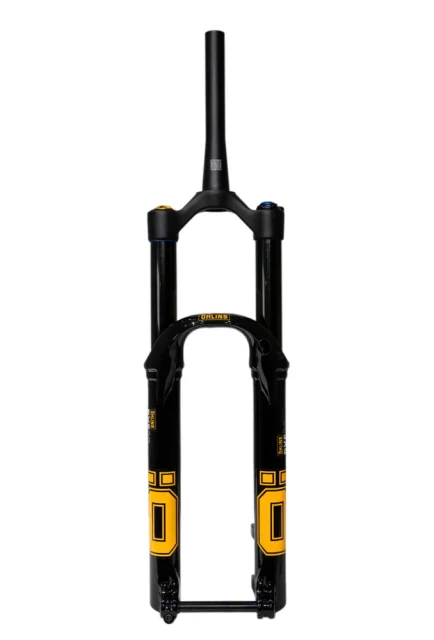
The high-level details of the RXF38 m.3 haven’t changed a ton from the prior m.2 generation version that we reviewed a while back. The RXF38 is Öhlins’ burliest single-crown fork option for long-travel bikes, meant to go head-to-head against options like the Fox 38 (and now the Podium), and the RockShox ZEB. It still has 38 mm stanchions (no points for guessing that one), is only available for 29’’ wheels, and gets a 200 mm brake mount.
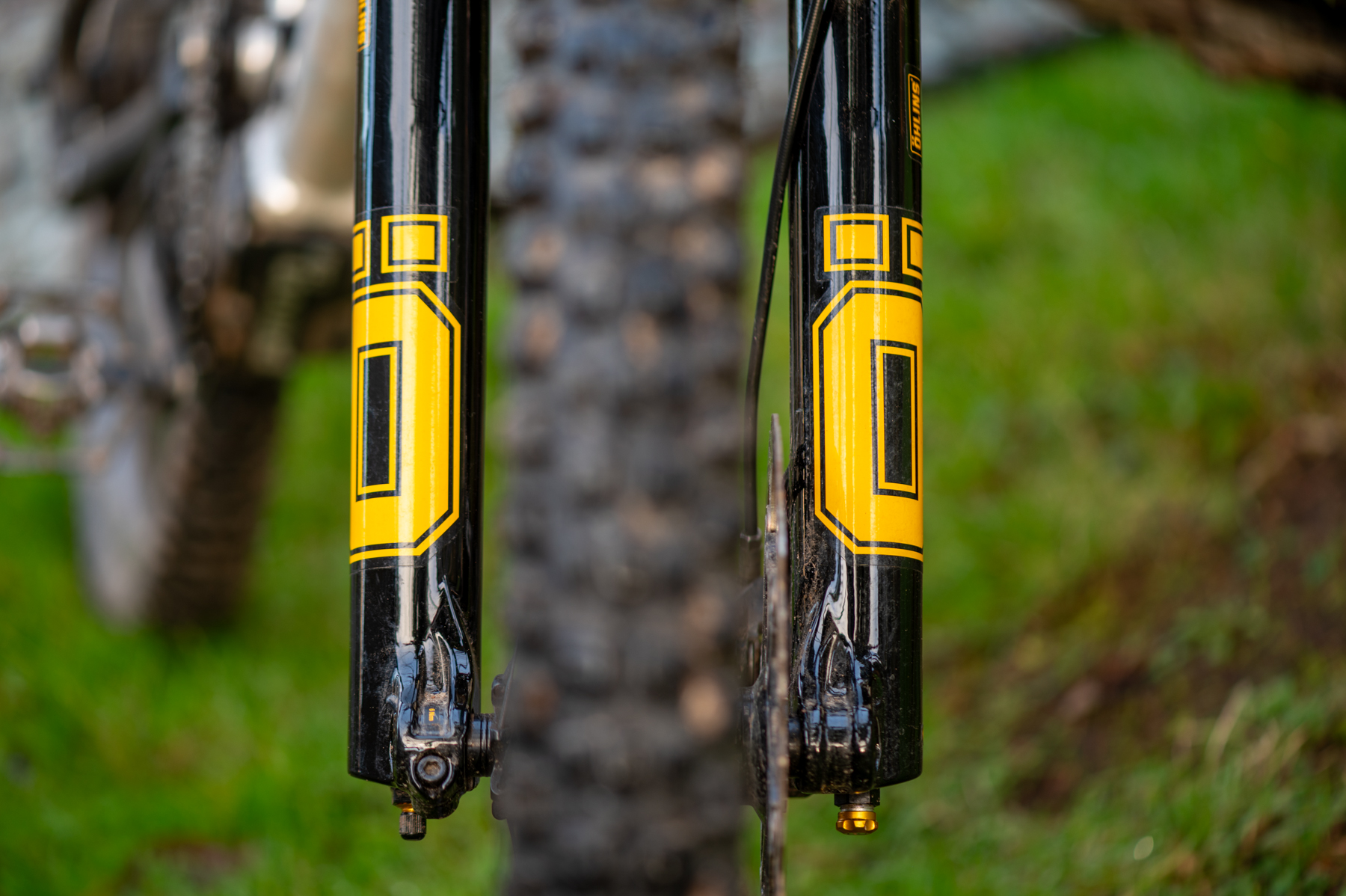
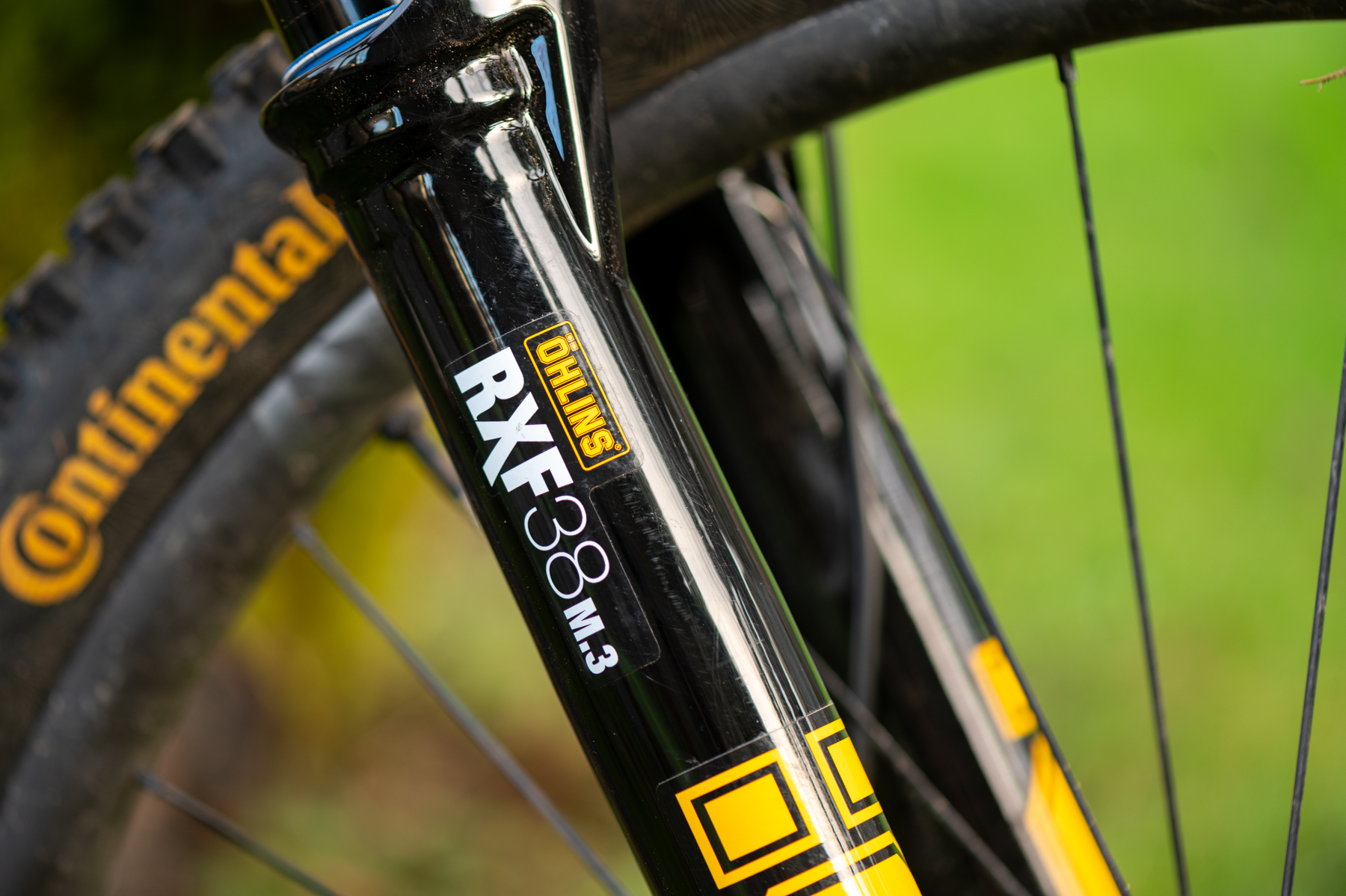
The main update on the chassis front is that Öhlins is using a new surface treatment on the stanchions, which they say has less friction than the prior version. The RXF38 m.3 also gets a gloss black finish on the lowers (the prior m.2 version was matte) and new decals. The bigger changes are internal, and those are the ones we expect to deliver the most significant performance impacts.
Spring Options
Öhlins originally launched the RXF38 m.2 with an air spring only, but later added a coil-sprung version to their lineup; both of those options carry over to the RXF38 m.3.
RXF38 m.3 Air
The overall design of the RXF38 m.3’s air spring carries over unchanged from the RXF38 m.2 (and the RXF36 m.3 — Full Review coming very soon). It uses a dual-positive chamber design with a self-equalizing negative chamber, and is housed in a standalone cartridge rather than using the stanchion as the outer tube of the spring. Most air-sprung forks take the latter approach in the name of simplicity and weight savings.
The main upshot there is that it’s possible to convert the RXF38 back and forth between air- and coil-sprung setups without the steel coil spring scuffing the inside of the stanchion and preventing the air spring from sealing properly — any scuffing that occurs doesn’t matter since the inside of the stanchion isn’t a sealing surface.
The spring cartridge houses two independently adjustable positive air chambers. The main air chamber functions like the positive air chamber in a conventional air-sprung fork with a single positive air chamber, as featured throughout Fox and RockShox’s lineups. The pressure in the main chamber controls sag and the overall spring rate in the first part of the travel; a standard self-equalizing negative chamber works as normal to balance forces early in the travel.
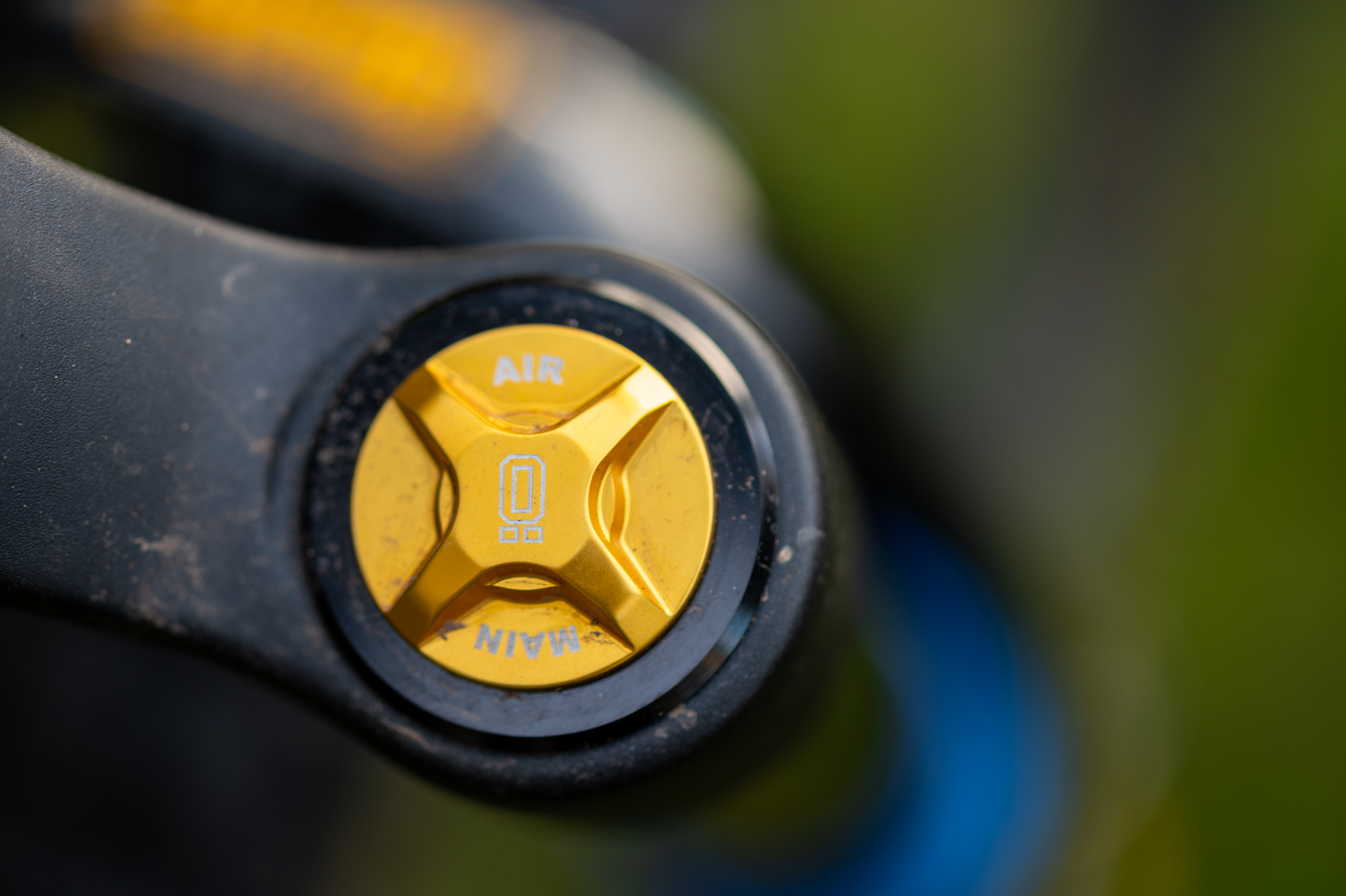
Things get more interesting with the secondary “ramp up” chamber, which is stacked underneath the main one, and is pressurized through its own valve at the bottom of the spring side fork leg. The ramp up chamber runs substantially higher pressure than the main one, only coming into play once the pressure in the main chamber equals that of the ramp up chamber. Once that happens, the piston separating the two moves as the fork compresses, effectively combining the two chambers into a single higher-volume one.
The idea is to make the fork ramp up more quickly than a conventional single-positive chamber design would through the middle part of the travel for increased support, without continuing to do so as aggressively deeper in the travel. By varying the relative pressures in the two chambers, you can change where in the travel that inflection point occurs, and thereby change the shape of the spring curve in ways that aren’t possible with a more conventional volume spacer arrangement.
That’s all the same as the RXF38 m.2. What’s new is that Öhlins has reconfigured the relative volumes of the various chambers by selectively adding and removing volume spacers in a targeted manner. The main spring assembly is unchanged, and you can set up an m.2-generation fork to m.3 spec, or vice versa, and both can be further adjusted with non-standard spacer configurations as well.
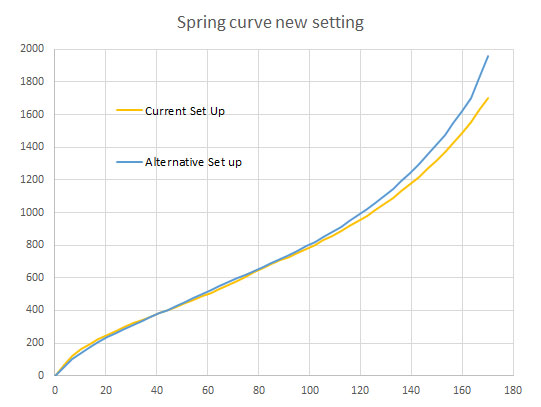
The RXF38 m.2 came with a single volume spacer installed in the negative chamber, and none in the ramp up one; the m.3 generation version does away with the negative chamber spacer and adds three to the ramp up chamber; the goal is to make the fork a bit more supple early in the travel, and more progressive as it nears bottom out. The spring curves for the m.2 (blue) and m.3 (yellow) setups are shown below:
The RXF38 m.3 Air is available with 160, 170, and 180 mm of travel stock, but Öhlins offers aftermarket air spring tubes to drop its travel as low as 90 mm if you’re so inclined. (The shorter-travel options are primarily meant for the RXF36 Trail bike fork and the RXFDJ dirt jump one, but they’re cross-compatible with the RXF38.)
Öhlins has also added a “spring booster” to the damper side leg — essentially a little widget to seal off the bottom of the stanchion so that the air trapped in the fork lowers provides a little extra progression and bottom-out resistance.
RXF38 m.3 Coil
The coil spring for the RXF38 m.2 was originally launched as an aftermarket upgrade (and we reviewed it a while back), but it’s now a stock offering in the RXF38 m.3. The RXF38 m.3 coil comes set at 170 mm of travel, only, but is internally adjustable by moving around spacers, without the need for any extra parts. The RXF38 m.3 Coil can be set as low as 130 mm travel, with standard 10 mm steps all the way up to 180 mm.
Öhlins offers seven different spring rates for the RXF38 coil. A 9.7 N/mm (55 lb/in, recommended for riders around 82 kg / 180 lb) comes stock; alternate springs are available for $58 each. Öhlins’ range of recommended rider weights for the RXF38 m.3 coil runs from 55 to 109 kg (121 to 240 lb). The RXF38 m.3 Coil also gets the new spring booster featured in the Air version; the spring booster can also be retrofitted to the RXF38 m.2.
Damper
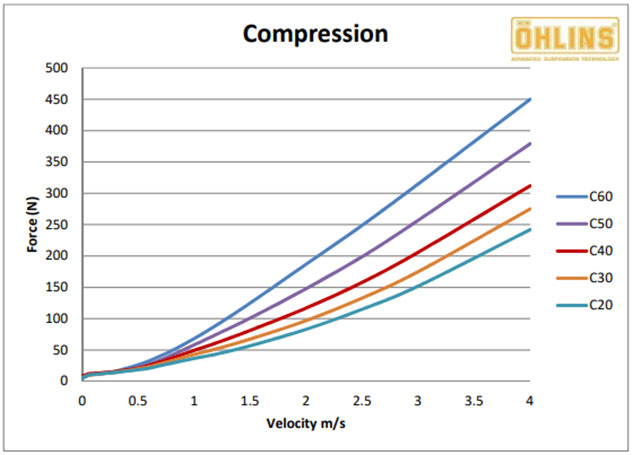
As with the air spring, Öhlins hasn’t changed the fundamental design of the damper in the RXF38 m.3, but they have changed the stock tune. The TTX18 damper used in the RXF38 m.3 still uses a twin-tube layout with adjustable rebound and high- and low-speed compression, with the final click on the high-speed compression adjuster serving as a climb switch. The RXF38 m.3 just gets a lighter compression tune than the version spec’d in the RXF38 m.2. The m.2-generation fork came stock with the C40 tune; the m.3 steps down to the C30. Either version can be re-tuned to any of Öhlins’ available options as part of a damper service.
Some Questions / Things We’re Curious About
(1) Several of our reviewers have been big fans of the RXF38 m.2 for years now. Has the new m.3 generation version managed to improve upon an already very good fork, and how different does it actually feel on trail?
(2) Does the new Spring Booster make it easier to achieve a balanced feel between the front and rear suspension on the RXF38 m.3 Coil? We found a lot to like about the performance of the RXF38 m.2 Coil, but found its lack of spring progression tough to balance on bikes with relatively progressive leverage curves in particular (read our review of the RXF38 m.2 Coil conversion kit for more on that).
Bottom Line (For Now)
Öhlins’ updates to the RXF38 m.3 don’t look dramatic on paper, but a few little tweaks can quickly add up — and the prior-generation RXF38 m.2 was already very, very good. We’ve spent a bunch of time on the RXF38 m.3 already, and you can check out our impressions so far in our Flash Review, linked below. Stay tuned for a Full Review to follow.
Flash Review: Our Initial On-Trail Impressions
BLISTER+ members and those who purchase our Digital Access Pass can check out the Flash Review below to read our initial on-trail impressions. Get our Digital Access Pass to view all our Flash Reviews and Deep Dives, or become a BLISTER+ member today to get access to that and a LOT more, including the best worldwide Outdoor Injury Insurance, exclusive deals and discounts on skis, personalized gear recommendations from us, and much more.

Flash Review: Öhlins RXF38 m.3
Öhlins made the RXF38 shinier with the latest m.3 iteration, but — much more importantly — it got some notable performance updates, too. Here’s what we’ve found so far.
Blister’s Flash Reviews and Deep Dives are accessible to those who purchase one of our paid subscriptions
To get our comprehensive Deep Dives and our initial, unfiltered reports on new gear, become a member and receive many other services, deals, and discounts.
If you’re already an active member, please log in.
(If you’re already logged in and a member in good standing and seeing this message in error, please refresh this page in your browser.)