Leave a rating and / or review in the Apple Podcast app or on the Spotify app.
This free, 30-second action on your part lets us know you value all the time & energy that goes into producing & publishing Bikes & Big Ideas, and it ensures that we can keep the show going.
How to Leave a Rating / Review on Apple Podcasts
- Open the Apple Podcast App
- Go to the icons at the bottom of the screen and choose “search”
- Search for “Bikes & Big Ideas”
- Click on the SHOW — *not* the specific episode
- Scroll down to “Ratings and Reviews”
- Click on “Tap to Rate” and leave us a 5-Star Rating!
- Below that, you can click Write a Review if you’d like to share a few words
How to Leave a Rating on Spotify
- Currently, you can only rate a podcast in the Spotify mobile app
- Navigate to the Bikes & Big Ideas show on Spotify (not to a specific episode)
- Tap the star icon underneath the podcast description and if you like the show, leave a 5-star rating
- On Spotify, you need to listen to at least one episode before you can rate a podcast.
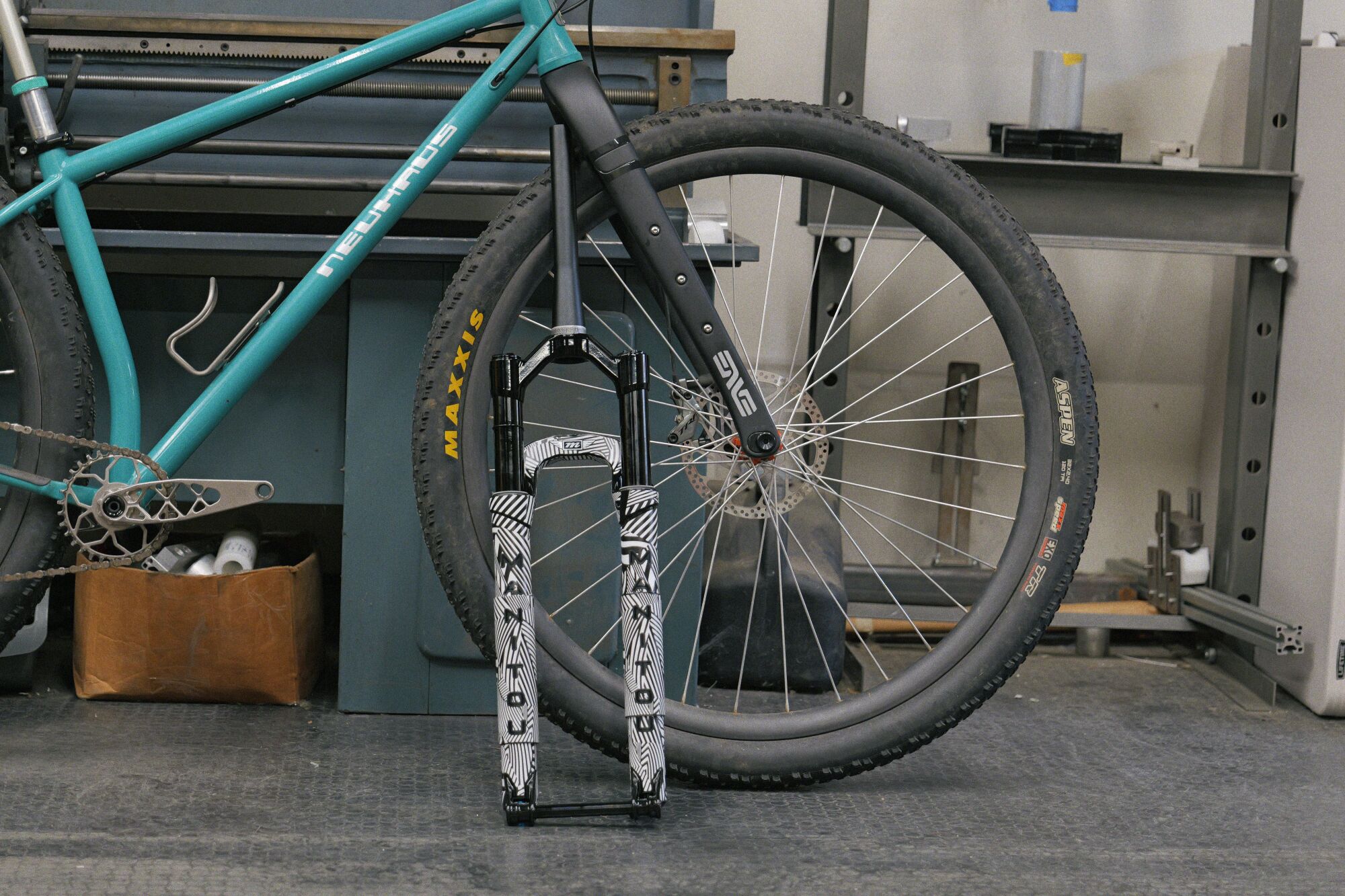






So they’re firmly on the fence, really? Waiting for the rest of the market to decide on the hub spacing for them before they get into developing forks, etc.
Don’t forget that 32″ was conceived by unicyclists. No cycling brand had the budget to do what the unicycle empire easily did, because they wanted to try it.
If cycling had these 5-figure R&D budgets, we might have landed on 31″ or 33″. We’ll never know, because we follow our wise and courageous but especially wealthy leaders in unicycling.
There is a solution to the ~60 mm extra stack height over 29″ for a given style front end. A lower stem and/or an inverted riser bar. The more backsweep, the easier that bar is going to be to tilt into the perfect position. I’ve been riding and racing inverted riser (trekking) bars on hardtails for decades. It works a lot better than you think.
It’s a heavy mofo, but I’m eyeing the Jones Loop H-Bar 2.5″ riser bar for at least one 32″ bike. Love my original generation titanium welded-by-Jeff H-bar on my singlespeed bike.