

Ski: 2025-2026 Line Optic 88, 184 cm
Available Lengths: 149, 156, 163, 170, 177, 184 cm
Blister’s Measured Tip-to-Tail Length (straight-tape pull): 183.4 cm
Blister’s Measured Weight per Ski: 1933 & 1977 grams
Stated Dimensions: 121-88-111 mm
Blister’s Measured Dimensions: 121-87.5-110.5 mm
Stated Sidecut Radius (184 cm): 17.9 meters
Measured Tip & Tail Splay (ski decambered): 56.5 mm / 37.5 mm
Measured Traditional Camber Underfoot: 3.5 mm
Core Materials: aspen + partial titanal layer + fiberglass laminate
Base: sintered 1.3 mm
Factory Recommended Mount Point: -7.4 cm from center; 84.3 cm from tail
Test Locations: Crested Butte & Monarch, CO
Days Skied: ~15
Boots Used: Lange Shadow 130 LV & Salomon S/Pro Alpha C BOA 130
Bindings Used: Salomon Warden 13 MNC
[Note: Our review was conducted on the 24/25 Optic 88, which returns unchanged for 25/26 and 26/27, apart from the graphics.]

Intro
Back in the 2022-2023 season, Line launched a very interesting — and, for the brand, very different — new ski collection. Dubbed the “Blade Optic” series at the time, these freeride skis featured metal-laminate constructions and somewhat directional designs, but still maintained several freestyle-friendly aspects that many people expect from Line.
Since then, Line chopped the “Blade” from the name but kept the constructions the same, and we’ve shared our in-depth thoughts on nearly all the skis, from the now-discontinued Optic 92 to the Optic 96, Optic 104, and Optic 114.
Now, it’s time to discuss the one Optic ski we hadn’t yet posted a Full Review of to this point. The Optic 88 replaced the original Blade Optic 92, and we were very curious to discover how the wider Optic skis’ unconventional designs would translate to a narrower platform. After spending time on it over the course of two seasons, we’re ready to weigh in.
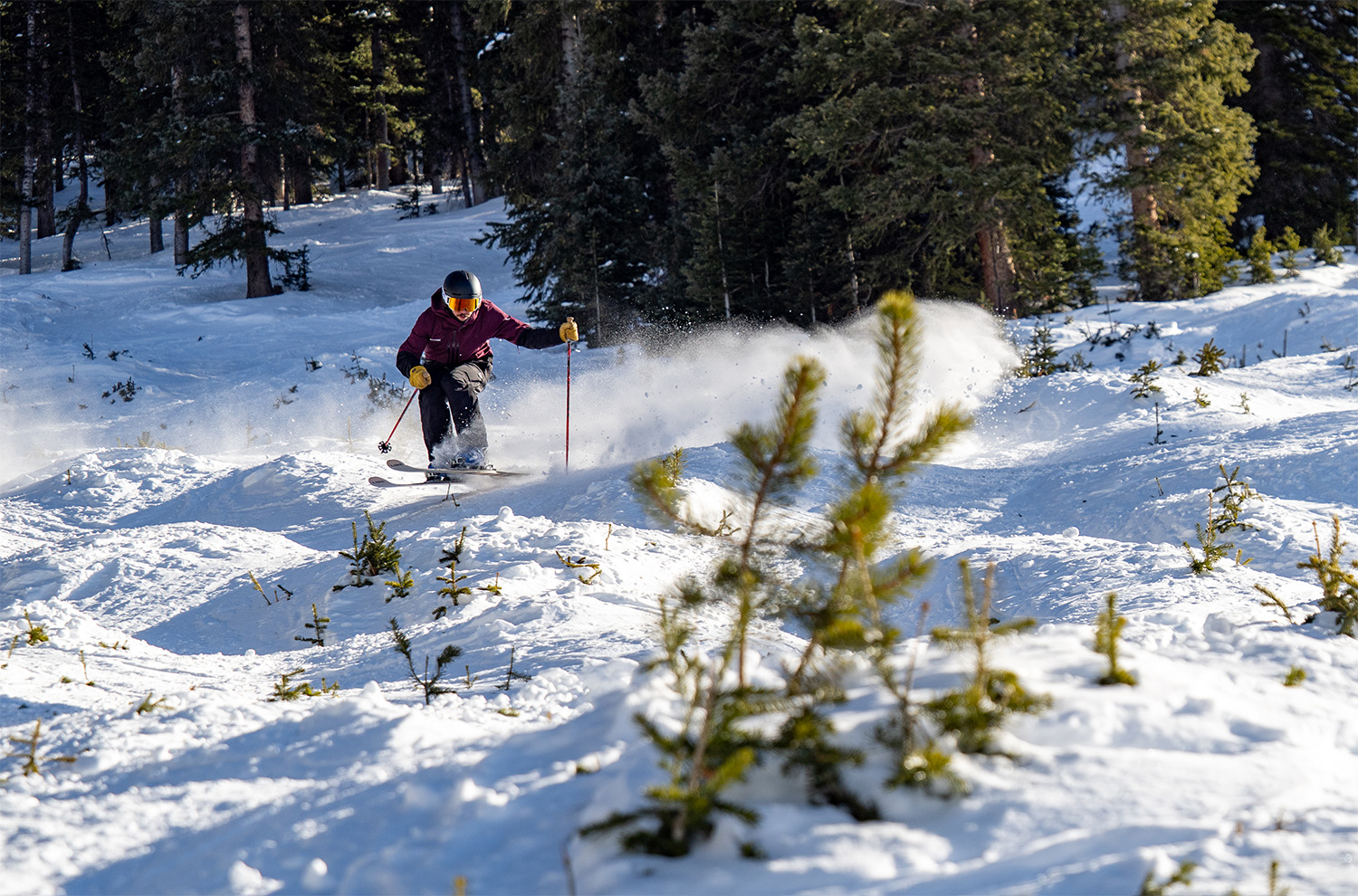
What Line says about the Optic 88:
“The narrowest option in the Optic Collection, the Line Optic 88 is designed to rally groomers, charge through crud, and leave other nerds in your wake. With a Gas Pedal Metal Overdrive™ layup that enhances edge grip and adds precision, the Optic 88 is right at home ripping pristine early morning corduroy and hardpack.”
— Line
Construction
The prior Blade Optic 92 was an outlier in the original collection, since it was the only ski that did not come with Line’s “Gas Pedal Metal Overdrive” construction. The current Optic 88 does.
In short, Gas Pedal Metal Overdrive consists of two layers of titanal that extend edge-to-edge underfoot, but taper to a point as you move toward the tips and tails, and feature cutouts throughout with the goal of getting some of the benefits of full sheets of metal, but without hampering energy or “releasability” of the tips and tails.
Metal aside, the Optic 88 features an aspen wood core, Line’s 2×2.5 mm “Fatty” edge, sintered 1.7 mm “Fatty” base, a fiberglass laminate, and Line’s “Bio Resin,” which reportedly cuts the carbon footprint of each ski by 20% (relative to conventional resins).
Shape & Rocker Profile
Compared to most ~88mm-wide skis, the Optic 88 looks pretty different.
For starters, it features a lot more tapering at its tips and tails than most skis of similar widths, effectively shortening the Optic 88’s effective edge.
It’s a similar story on the rocker front: the Optic 88 is mostly cambered, but it features a substantial amount of tip and tail rocker — there aren’t many skis narrower than 90 mm underfoot that have deeper rocker lines than the Optic 88.
Flex Pattern
Here’s how we’d characterize the flex pattern of the Optic 88:
Tips: 5.5-6.5
Shovels: 7-8.5
In Front of Toe Piece: 9-10
Underfoot: 10
Behind the Heel Piece: 10-8.5
Tails: 8-6
Overall, the Optic 88 is a bit stiffer than the Optic 96 and Optic 104. The Optic 88 still has pretty soft tips and tails, but as you move from the ends to the middle, it stiffens up notably quicker than the previous Blade Optic 92 and the Optic 96. The Optic 88 is pretty strong overall, though its flex pattern is pretty symmetrical.

Sidecut Radius
The Optic 88 utilizes Line’s “5Cut” multi-radius design, blending five different radii along the length of the ski’s effective edge. Line says the average of all those radii is 17.9 meters for the 184 cm length, which isn’t anything wildly out of the ordinary for its class, but maybe a touch on the longer side.
Mount Point
At about -7.5 cm back from true center, the Optic 88’s recommended mount point is a bit closer to center than many of the more traditional, directional skis in its class, but a good bit farther back than most freestyle-focused skis.
Weight (and Comparisons)
Our 184 cm Optic 88 weighs about 1950 grams per ski. For its size, that’s slightly on the heavier end of the spectrum, especially if you’re looking at other ~90mm-wide skis that are designed with playfulness and/or freestyle skiing in mind.
For reference, here are some of our measured weights (per ski in grams) for some notable skis. As always, keep in mind the length and width differences to try to keep things more apples-to-apples.
1686 & 1820 Liberty Scope 99, 186 cm
1731 & 1750 Liberty Radian 100, 179 cm
1735 & 1741 Elan Ripstick 96, 182 cm
1783 & 1801 Head Kore 88 Ti, 177 cm
1792 & 1806 ON3P Jeffrey 92, 181 cm
1804 & 1819 ON3P Woodsman 92, 181 cm
1808 & 1823 Shaggy’s Ahmeek 95, 180 cm
1824 & 1835 Black Crows Serpo, 180.1 cm
1825 & 1858 J Skis Joyride, 182 cm
1829 & 1845 Romp Sidehit 89, 178 cm
1830 & 1860 ZAG Slap 98, 180 cm
1831 & 1844 K2 Mindbender 96C, 178 cm
1848 & 1986 Volkl Mantra 88, 184 cm
1851 & 1868 Folsom Completo 100, 186 cm
1854 & 1863 Salomon Stance Pro 90, 182 cm
1862 & 1931 Salomon QST 94, 180 cm
1880 & 1887 Blizzard Rustler 9, 180 cm
1883 & 1906 Season Aero, 180 cm
1886 & 1925 Atomic Bent 100, 186 cm
1891 & 1909 Romp Zorro 100, 183 cm
1893 & 1897 Salomon QST 92, 184 cm (22/23–24/25)
1893 & 1925 Icelantic Nomad 100, 188 cm
1894 & 1919 RMU Apostle 96 Ti, 184 cm
1901 & 1902 Renoun Endurance 98, 184 cm
1901 & 1905 Scott SEA 98, 180 cm
1915 & 1937 K2 Mindbender 89Ti, 182 cm
1916 & 1963 DPS Carbon Wailer 100, 184 cm
1917 & 1961 DPS Carbon Wailer 90, 184 cm
1925 & 1934 Black Crows Camox, 186 cm
1933 & 1977 Line Optic 88, 184cm
1935 & 1962 Fischer Ranger 96, 180 cm
1938 & 2003 Nordica Unleashed 98, 186 cm
1939 & 1959 Renoun Endurance 88, 184 cm
1944 & 1952 Fischer Nightstick 97, 184 cm
1944 & 1995 Salomon QST 100, 180 cm
1945 & 1946 Ellis Sabr 100, 186 cm
1947 & 1962 Meier Wrangler, 185 cm
1951 & 2003 Dynastar M-Free 100, 185 cm
1956 & 1978 K2 Omen 90, 179 cm
1976 & 2000 Line Pandora 99, 184 cm
1980 & 1981 ZAG Mata Ti, 178 cm
1980 & 1995 ON3P Jeffrey 100, 186 cm
1982 & 2013 Heritage Lab AM90, 180 cm
1999 & 2060 Line Blade, 181 cm
2009 & 2015 J Skis Allplay, 186 cm
2045 & 2057 Rossignol Arcade 88, 178 cm
2047 & 2082 4FRNT MSP 91, 181 cm
2053 & 2059 J Skis Fastforward, 181 cm
2077 & 2096 Line Optic 96, 184 cm
2078 & 2138 Black Crows Justis, 183 cm
2100 & 2115 K2 Omen Team, 184 cm
2112 & 2149 J Skis Masterblaster, 181 cm
2230 & 2290 Line Optic 104, 185 cm
Now that we know what this ski looks like on paper, let’s dive into how it feels on snow:

For the 2024-2025 and 2025-2026 seasons, we’ve partnered with Carv to use their Carv 2 sensors and digital ski coach app to not only learn more about our own skiing technique, but also add more useful info to our ski reviews. Here, you’ll see us reference some of the data that the Carv 2 sensors record and analyze while we’re skiing. Check out our announcement and podcasts with Carv to learn more about how Carv works, why we’re excited to use it as a tool for our reviews, and more.
FULL REVIEW
Groomers / On Piste
Luke Koppa (5’8”, 155 lbs / 173 cm, 70 kg): Let’s start here, cause I figure most people looking at ~90mm-wide all-mountain skis care about how they carve.
In short, the Optic 88 is far from the best carver for its width, but it’s very respectable for what it is — an 88mm-wide ski with a shape and rocker profile that look much more reminiscent of wider freeride skis.
Compared to, say, the much less tapered and less rockered Volkl Mantra 88, the Optic 88 is not as quick to initiate carved turns, doesn’t offer as much edge hold, and doesn’t finish turns with as much power.
However, the Optic 88 does carve firm snow notably better than the Optic 96. On the wider Optics, I feel like there’s a clear distinction between the areas of those skis that offer lots of edge hold (mostly underfoot) and the areas that are a lot looser / easier to release (tips & tails). When I’m carving hard on the Optic 96 and Optic 104, I don’t feel like the ends of those skis are doing much, and the vast majority of my edge grip is coming from the area underneath my boots.
On the Optic 88, the transition areas between its looser tips and tails and more precise-feeling midsection feel smoother / less distinct. It also just generally feels more precise overall, relative to its wider siblings. Overall, it’s notably better at carving firm snow.
That said, it’s still far from your best option if you’ll mostly be staying on piste and like to carve aggressively even when the snow is super firm.
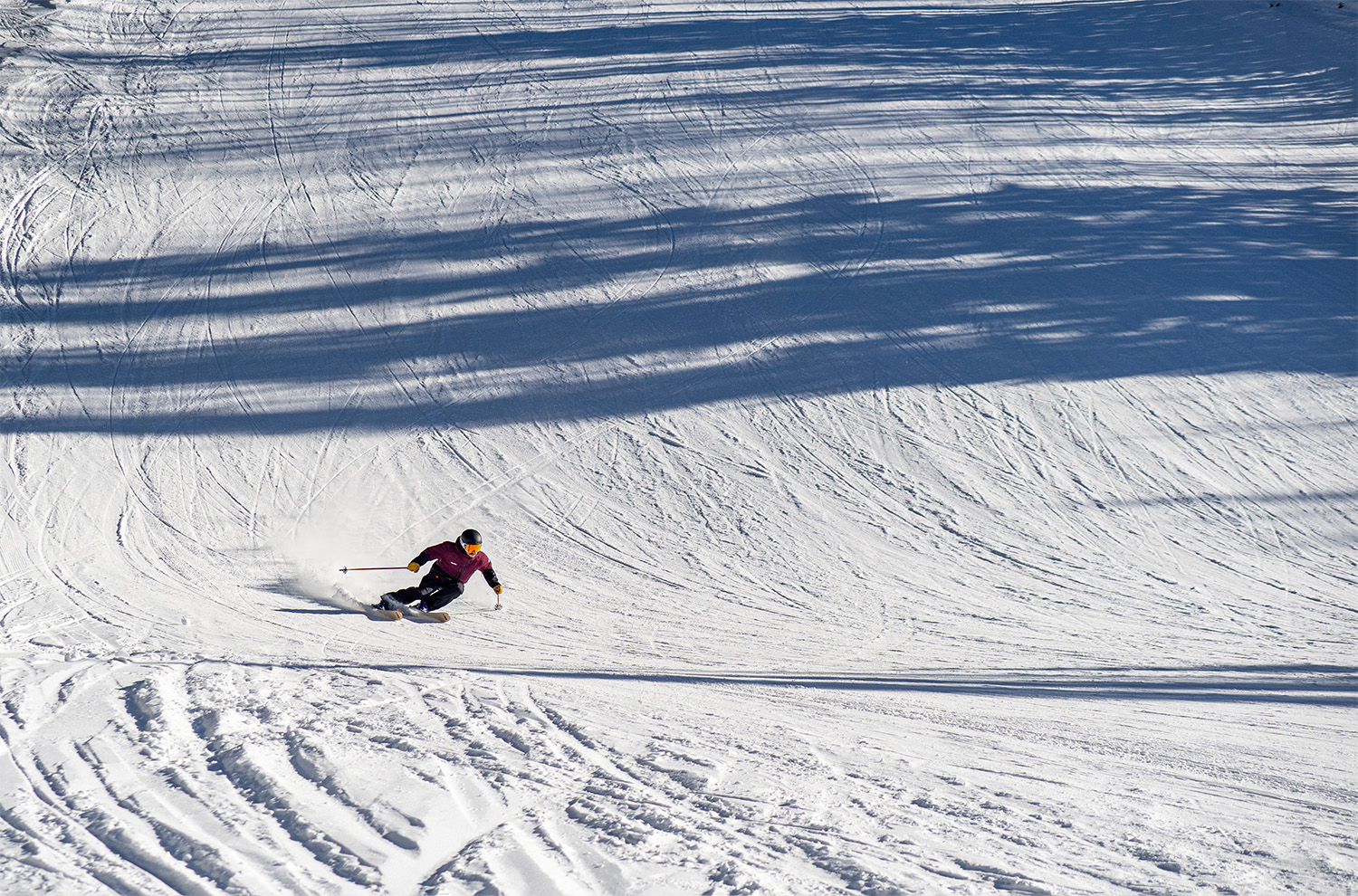
I can carve high-edge-angle turns on the Optic 88 on firm, lower-angle (<20°) groomers just fine, but there are plenty of other ~90mm-wide skis that are more confidence inspiring if I want to carve clean turns on steep, very firm slopes. I can still get the Optic 88 to hold aggressive carves in that scenario, but I have to pay closer attention to my technique and drive the ski harder than I have to on most of the more traditional ~90mm-wide all-mountain skis out there.
When I’m skiing well and carving the Optic 88 hard, my Carv data says that my turn sizes tend to average in the 16-20 m range. I.e., I’d say this ski prefers ‘medium’ to ‘medium-large’ turn shapes. You can bend it into tighter turns with more force / skier input, but if the snow is scraped off or bordering on icy, doing so requires significant input and commitment.
I don’t seem to hit as high G-forces on the Optic 88 vs. most other skis around the same width, but if the snow isn’t icy, I can still regularly hit about 2 G’s of force. And, while this ski doesn’t finish turns with tons of power or precision compared to a more directional, flat-tailed ski, it does still produce an appreciable amount of rebound / energy coming out of a hard carve.
Also worth noting: the Optic 88 is super easy to skid and slide around if you don’t feel like trying to carve at high edge angles when the snow isn’t grippy. In contrast to many skis that do offer better edge hold and power on piste, the Optic 88 is very easy to release from a carve and transition into a drifted turn.
In sum, the Optic 88 carves notably better than the wider Optics; it can be fun to carve hard on fairly forgiving piste conditions; but it’s not the best bet if carving very firm groomers is a high priority for you.
Moguls, Trees, & Tight Terrain
This is where the Optic 88’s freeride-inspired shape and rocker profile become a benefit.
Compared to the vast majority of <90mm-wide skis, the Optic 88 stands out as notably maneuverable.
Because of its shorter effective edge and deep rocker lines (for its class), the Optic 88 is very easy to release, pivot, and slash around. I don’t have to think very much about my body position or technique to get this ski going sideways.
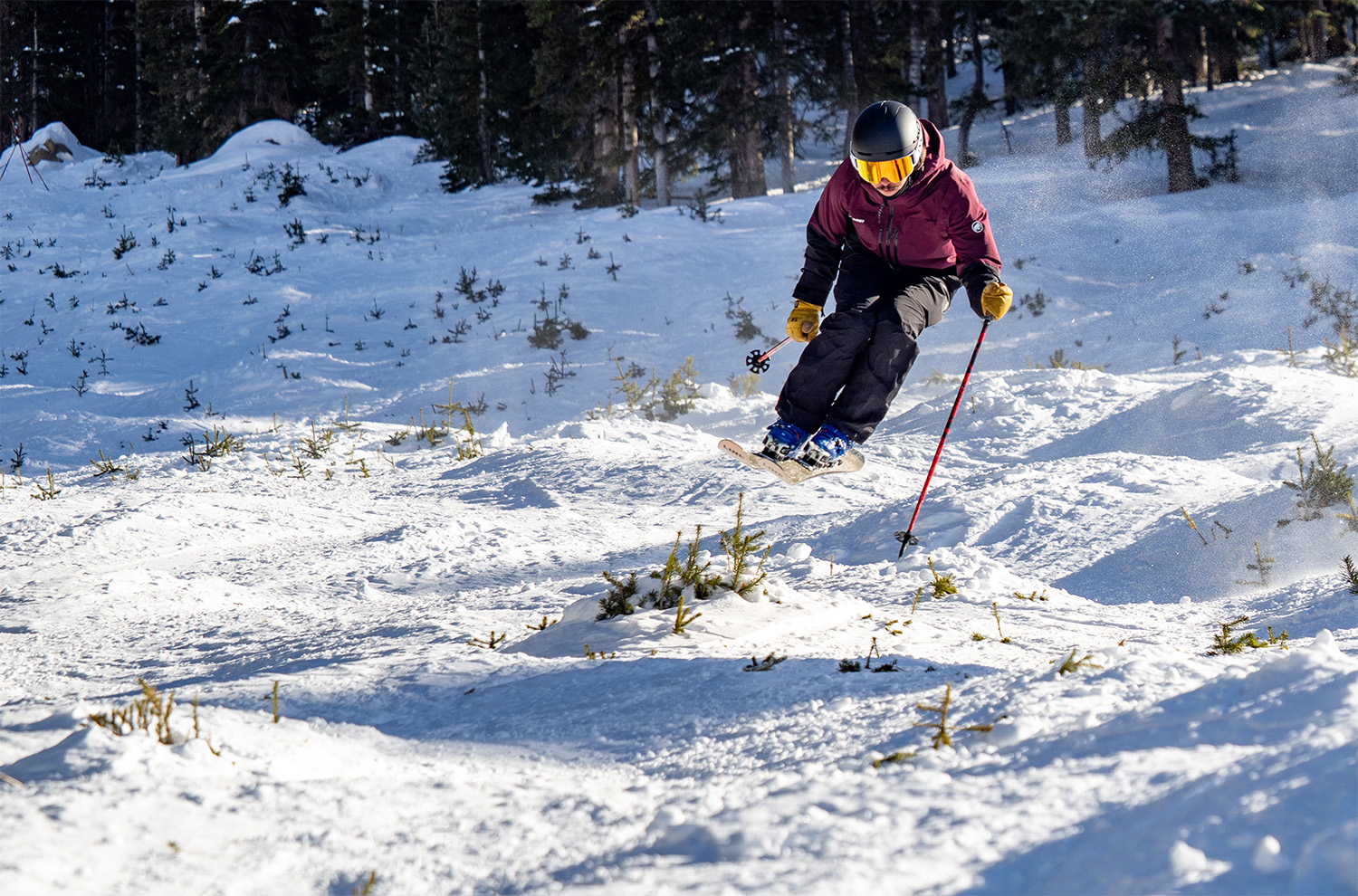
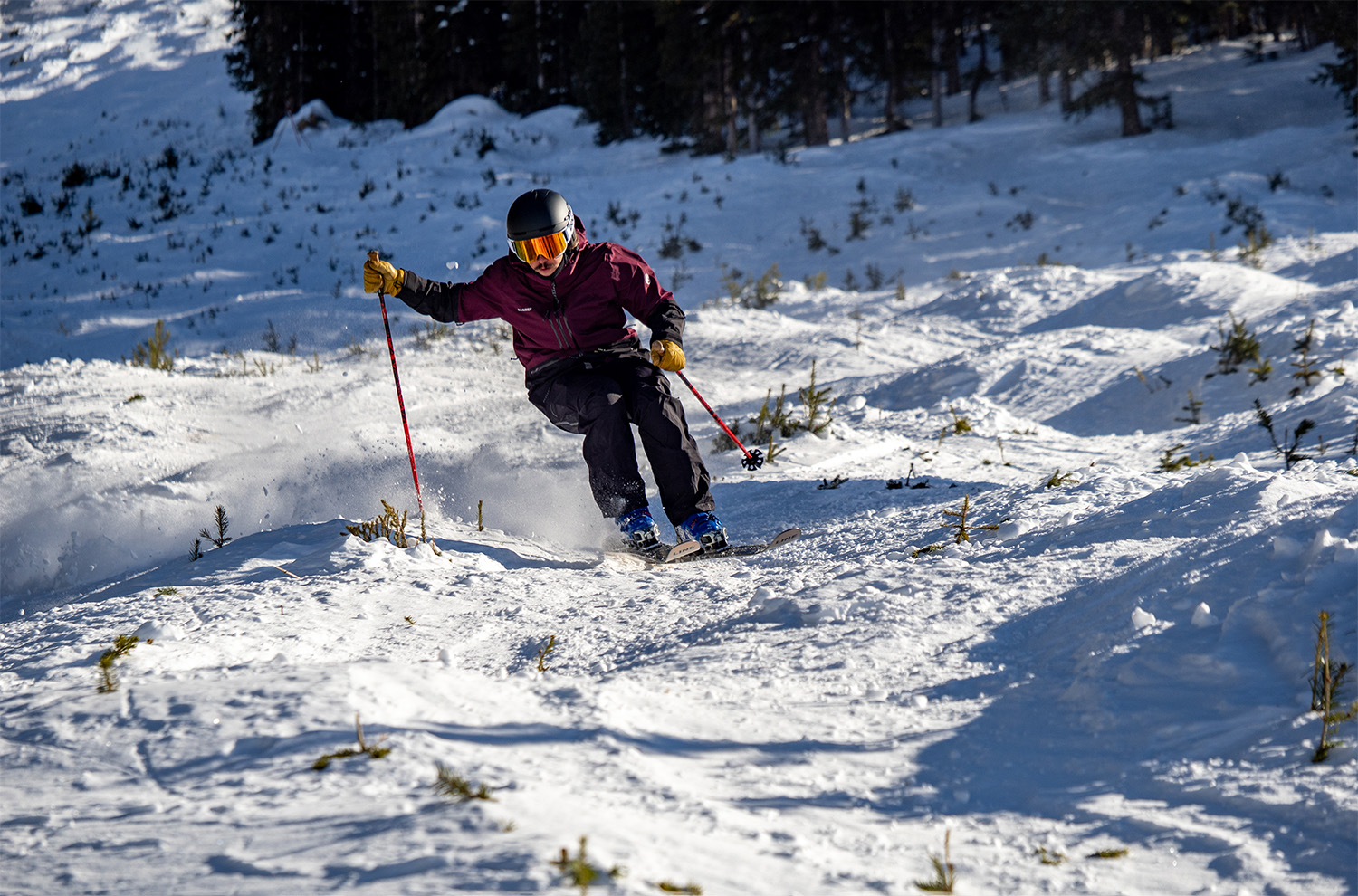
For its weight (~1950 g / ski @ 184 cm), the Optic 88 also feels pretty quick in terms of swing weight. It’s definitely not a ski I’d describe as ‘sluggish.’
In contrast to many of the more directional skis that are more precise and powerful on piste, the Optic 88 also lets you ski it with a pretty centered stance, not requiring super careful driving of its shovels to unweight its tails and get them to release.
That said, in comparison to the wider and softer Optic 96, the Optic 88 does feel less forgiving, and a tad more directional overall. On the softer Optic 96, I can still slash its tail around from a slightly backseat stance; the Optic 88 isn’t quite as forgiving in this regard, and I have to think a bit more about keeping my weight off the back of the ski if I want to pivot it around. But, again, within a class of skis that are mostly less rockered and/or stiffer than the Optic 88, it still very much stands out for its off-piste maneuverability.
Firm Chop & Crud
Despite being quite playful and maneuverable for its class, the Optic 88 still provides pretty nice suspension and stability in rougher conditions.
There are heavier, more directional skis that feel even smoother and more composed in these conditions (e.g., Blizzard Anomaly 88). The Optic 88 definitely isn’t the most stable ski in its class.
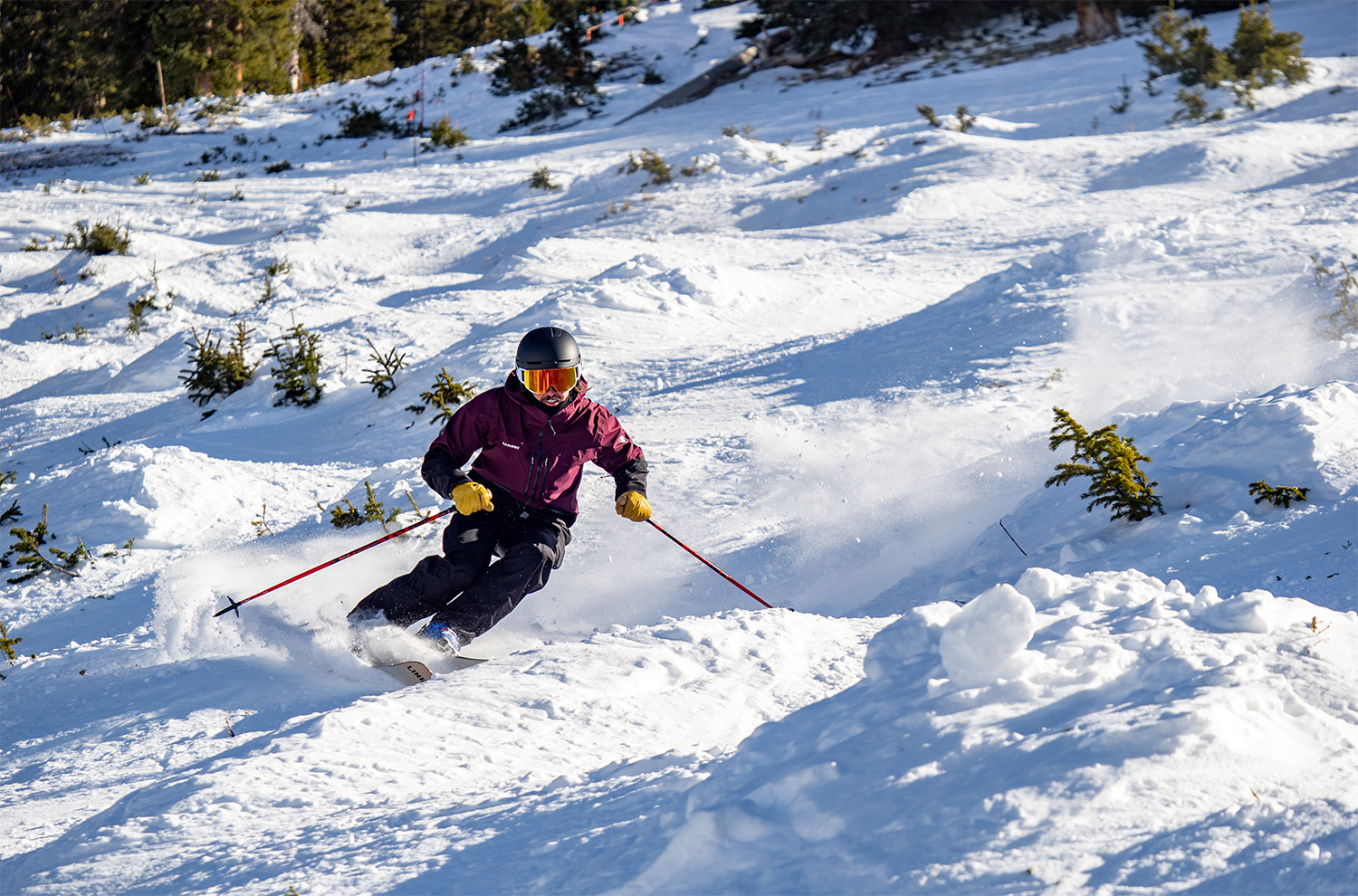
But I can’t think of many skis around this width that feel similarly maneuverable and similarly damp compared to the Optic 88. And, for those of us who don’t feel like skiing very fast when the snow is nasty, the Optic 88 is generally very easy to ski in a slower, more controlled fashion.
Powder & Soft Chop
The Optic 88’s deeper rocker lines and surfier, more tapered shape help in soft conditions. This ski doesn’t float to the top of deep snow very well, but it performs very admirably relative to its dimensions.
In snow deeper than ~6” / 15 cm, the Optic 88 has a stronger preference for being skied with a centered stance (to avoid making its shovels dive), but unlike many similarly sized skis, the Optic 88 still feels pretty loose / easy to turn when it’s underneath fresh snow.
Once fresh snow gets cut up, the Optic 88 can still be a lot of fun, especially if you’re not dealing with particularly deep chop. In shallower cut-up pow, the Optic 88 remains highly maneuverable and pretty playful, but it’s strong and damp enough that it doesn’t get deflected super easily by piles of pushed-around powder (again, within the context of ~90mm-wide skis).
Playfulness
The Optic 88 is a pretty playful ski overall. You can ski it with a centered stance in most conditions; it’s very easy to slash sideways; it doesn’t feel particularly unwieldy in the air; it produces a nice amount of energy when bent; and it skis switch pretty well.
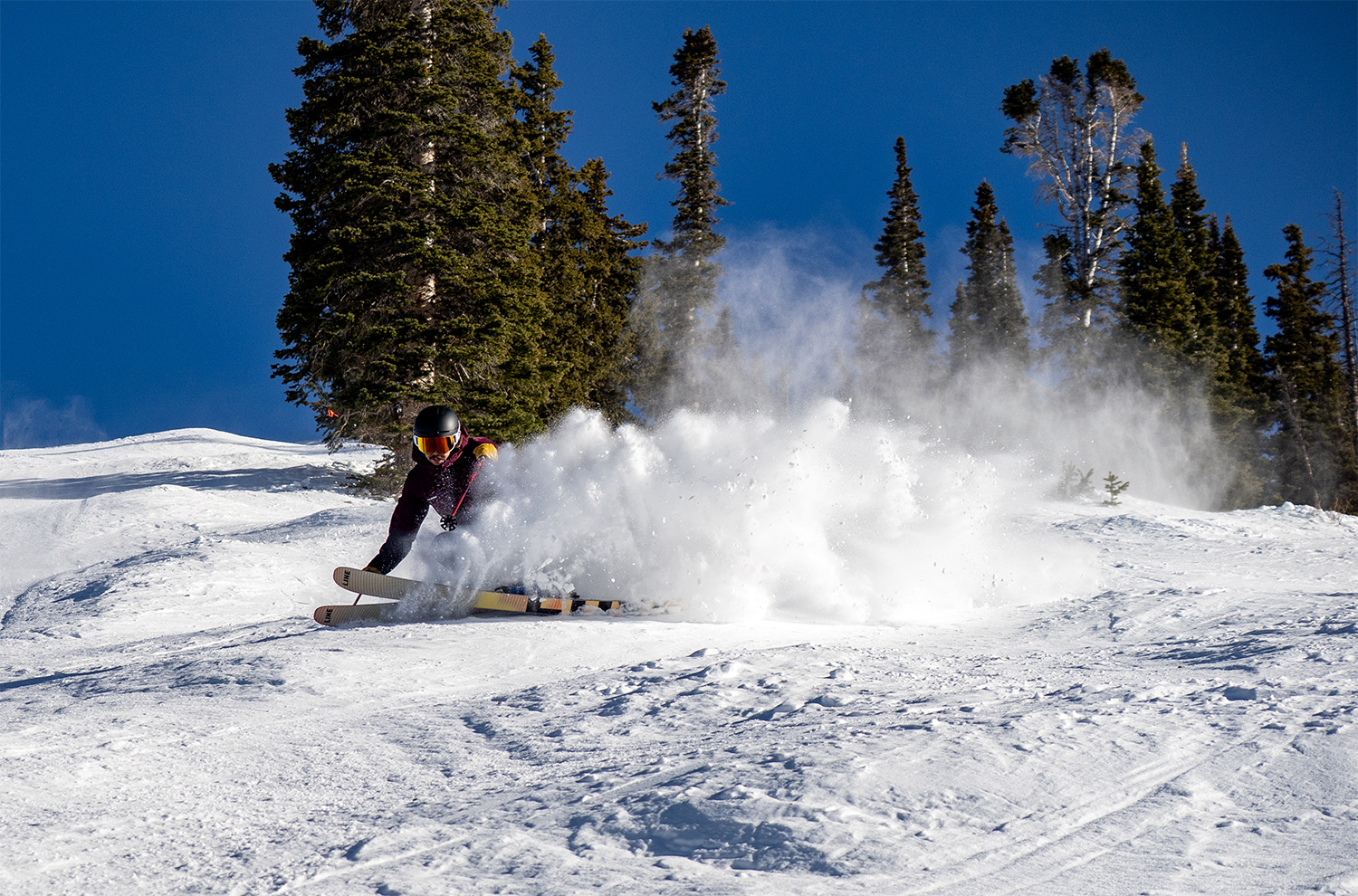
Now, this isn’t a dedicated freestyle ski. The Optic 88 isn’t as balanced, agile, or easy to bend as something like the Line Chronic 94. But the Optic 88 is much more playful than most of the skis in its class that are similarly damp and stable.
Who’s It For?
The Optic 88 makes the most sense for intermediate through expert skiers looking for a narrow-ish all-mountain ski that stands out for its off-piste maneuverability and playfulness, but that still offers pretty good suspension and stability.
The Optic 88 is fun to carve in many conditions, but if you spend most of your time on piste and want something that’s easy to carve even when the groomers are very firm and/or steep, you’ve got plenty of better options (see the Frontside section of our Winter Buyer’s Guide).
But, compared to most of those skis, the Optic 88 is notably surfier, more agile, and/or more forgiving, especially when dealing with big moguls and challenging snow conditions.
Bottom Line
With the Optic 88, Line managed to bring a lot of the playful personality of the wider Optics to a narrower platform that still offers a notable increase in firm-snow precision.
Like its wider siblings, the Optic 88 stands out for its off-piste maneuverability more than its on-piste capabilities. However, unlike most of the skis that are similarly agile and easy to slash around through bumps and trees, the Optic 88 still provides nice suspension and very respectable stability when you want to ramp up your speed.
Our Deep Dives, Winter Buyer’s Guide, & Flash Reviews
BLISTER+ members and those who purchase our Digital Access Pass can check out the Deep Dive comparisons linked below, where we compare a given ski, bike, etc. to a whole bunch of other comparable products in its class. Don’t have access? Get our Digital Access Pass to read all of our Deep Dive comparisons, as well as our Flash Reviews, where we provide our initial impressions as soon as we start testing gear.
Or, even better, become a BLISTER+ member to get that + the best worldwide Outdoor Injury Insurance, exclusive deals and discounts on skis, personalized gear recommendations from us, access to our annual Winter Buyer’s Guide, and much more.
On that note, you can also get our thoughts on this ski and 350+ others in our annual Blister Winter Buyer’s Guide. BLISTER+ members already have access, or you can purchase the guide on its own to get the the print copy + digital version at no extra cost, or the digital-only edition.
Deep Dive: Line Optic 88
We compare the Optic 88 to the Line Optic 96, J Skis Fastforward, Salomon QST 94, Line Blade, Blizzard Rustler 9, Black Crows Serpo, K2 Mindbender 89Ti, DPS Wailer 90, ON3P Woodsman 92, Head Kore 88 Ti, Salomon Stance Pro 90, Renown Endurance 88, & more.
Blister’s Flash Reviews and Deep Dives are accessible to those who purchase one of our paid subscriptions
To get our comprehensive Deep Dives and our initial, unfiltered reports on new gear, become a member and receive many other services, deals, and discounts.
If you’re already an active member, please log in.
(If you’re already logged in and a member in good standing and seeing this message in error, please refresh this page in your browser.)
2025-2026 Blister Digital Winter Buyer’s Guide
350+ skis, 70+ boots, and 280+ pages of honest, accurate product reviews and comparisons. Check it all out here.
If you’ve already purchased the guide, Digital Access Pass, or BLISTER+ membership and are seeing this message, please log in and then refresh this page.
Flash Review: 24/25 Line Optic 88
For 24/25, Line is rebranding their Blade Optic collection as simply “Optic,” and the Optic 88 is a brand-new model that effectively replaces the previous Blade Optic 92 as the narrowest option in the series. Here are some of our initial thoughts on the new ski.
Blister’s Flash Reviews and Deep Dives are accessible to those who purchase one of our paid subscriptions
To get our comprehensive Deep Dives and our initial, unfiltered reports on new gear, become a member and receive many other services, deals, and discounts.
If you’re already an active member, please log in.
(If you’re already logged in and a member in good standing and seeing this message in error, please refresh this page in your browser.)
Interesting and probably logical move vs the 92, at least the whole range now seems more joined up. Will be interesting to see how it fares vs outgoing Blizzard Brahma, Anomaly, Renoun Endurance etc. am still on a pair of 2017/18 Head Monster 88’’s so am always interested in what potentially comes next!
I can’t help but feel like the customer looking at the Optic and the customer looking at the Monster/Brahma/Mantra/etc, are two vastly, vastly different skiers. But hey, I’ve been proven wrong before.
Totally disappointed with this Version. Have the Blade Optic 96 which I like very much (a bit sluggish maybe why Ibought the new 88). its a completely different Ski. The 88 hast zero (!) edgehold and ist very nervous. reminds me of a park-noodle. It only looks much better…. The difference is so radical, that I maybe have a ski that should not pass quality management (hopefully there is one…). I’ll contact Line about this. I’m totally shocked about the 88…
Forgot to mention: much less camber than the 96.. (which explains the very bad edgehold o firm snow, even i there is a much smaller radius).
If you look at the camber pix at the bottoms of the respective Blister reviews the cambers are pretty similar between their samples of the 2 (and so are their reported camber numbers – 3 vs 3.5 mm).
Camber is possibly the single most variable aspect of ski production, though. It’s why cross-country skiers and dealers make pilgrimages to Europe every year to hand-pick individual skis with the “right” kick pocket camber and stiffness for their weights and styles. I’ve had pairs of the same ski that are noticeably different. Most manufacturers try fairly hard to match the flex and camber within each pair of skis, but between them there will be some variation.
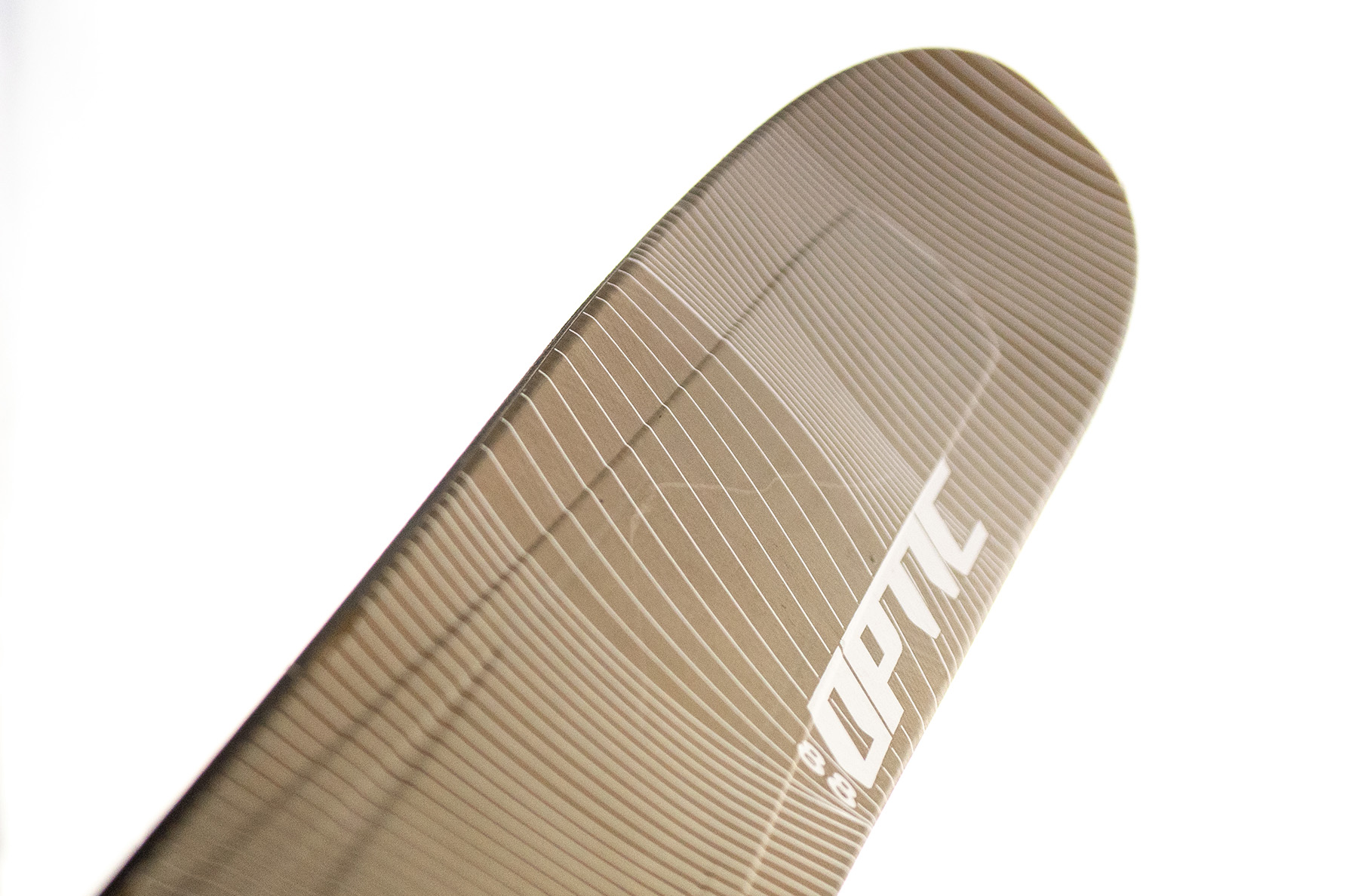
If this were my kind of ski (it isn’t) I would pay extra for the “old” 24-25 topsheet. The 80s called and wants those 25-26 graphics back.