

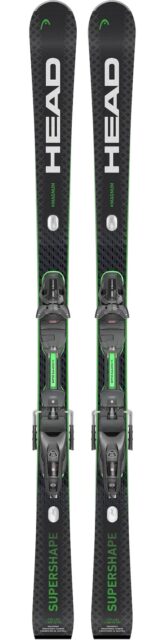
Ski: 2025-2026 HEAD Supershape e-Magnum, 170 cm
Available Lengths: 149, 156, 163, 170, 177 cm
Blister’s Measured Tip-to-Tail Length (straight-tape pull): 169.0 cm
Blister’s Measured Weight per Ski (170 cm): 2003 & 2011 grams (w/ binding plates)
Stated Dimensions: 126-72-110 mm
Blister’s Measured Dimensions: 125.5-71.5-109.5 mm
Stated Sidecut Radius (170 cm): 13.1 meters
Measured Tip & Tail Splay (ski decambered): 46.5 mm / 5 mm
Measured Traditional Camber Underfoot: 10.5 mm
Core Materials: wood + titanal (2 layers) + graphene + “Energy Management Circuits” + carbon & fiberglass laminate
Base Material: sintered RD Race Structured UHM C Base
Factory Recommended Mount Point: N/A (sold with binding plate)
[Note: Our review was conducted on the 24/25 Supershape e-Magnum, which returns unchanged for 25/26 and 26/27 except for new graphics.]
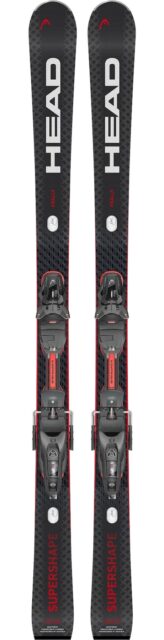
Ski: 2025-2026 HEAD Supershape e-Rally, 177 cm
Available Lengths: 156, 163, 170, 177, 184 cm
Blister’s Measured Tip-to-Tail Length (straight-tape pull): 175.7 cm
Blister’s Measured Weight per Ski (177 cm): 2199 & 2211 grams (w/ binding plates)
Stated Dimensions: 128-78-112 mm
Blister’s Measured Dimensions: 127.5-77.5-111.5 mm
Stated Sidecut Radius (177 cm): 15.3 meters
Measured Tip & Tail Splay (ski decambered): 51 mm / 11 mm
Measured Traditional Camber Underfoot: 11 mm
Core Materials: wood + titanal (2 layers) + graphene + “Energy Management Circuits” + carbon & fiberglass laminate
Base Material: sintered RD Race Structured UHM C Base
Factory Recommended Mount Point: N/A (sold with binding plate)
[Note: Our review was conducted on the 24/25 Supershape e-Rally, which returns unchanged for 25/26 and 26/27 except for new graphics.]
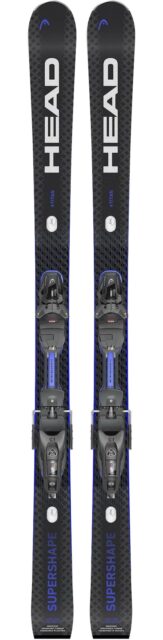
Ski: 2025-2026 HEAD Supershape e-Titan, 177 cm
Available Lengths: 156, 163, 170, 177, 184 cm
Blister’s Measured Tip-to-Tail Length (straight-tape pull): 175.4 cm
Blister’s Measured Weight per Ski (177 cm): 2121 & 2147 grams (w/ binding plates)
Stated Dimensions: 129-84-113 mm
Blister’s Measured Dimensions: 128.5-83.5-112.5 mm
Stated Sidecut Radius (177 cm): 17.2 meters
Measured Tip & Tail Splay (ski decambered): 62 mm / 12 mm
Measured Traditional Camber Underfoot: 9 mm
Core Materials: wood + titanal (2 layers) + graphene + “Energy Management Circuits” + carbon & fiberglass laminate
Base Material: sintered RD Race Structured UHM C Base
Factory Recommended Mount Point: N/A (sold with binding plate)
[Note: Our review was conducted on the 24/25 Supershape e-Titan, which returns unchanged for 25/26 and 26/27 except for new graphics.]
Intro
Head’s Supershape collection is one of the most recognizable in the skiing world. The Supershape name debuted just a few years after the turn of the century, and these skis have continued to be reference points in the carving / piste-oriented category ever since.
However, Head has made lots of changes to these skis over the years. Over the past two seasons, we’ve been spending a lot of time on three of the latest models, the Supershape e-Magnum, Supershape e-Rally, and Supershape e-Titan.
These skis share a fair bit in common, but there are also plenty of distinct differences between them. So, here, we’ll dive into their similarities, their individual standout traits, and where they slot into the current category of carving skis.
Construction
All of these Supershape skis feature very similar constructions, with lots of Head’s flagship tech (much of which they inherited from Head’s race skis).
They start with an (unspecified) wood core, which is sandwiched between two full-length, edge-to-edge layers of titanal metal. Head also utilizes Graphene “strategically” throughout the skis to add strength with minimal weight. This current generation (24/25–26/27) features Head’s “Crossforce Carbon Construction,” which consists of a biaxial carbon-fiber weave that actually replaces the top sheet under the bindings, for added torsional stiffness.
Lastly, they also integrate Head’s “Energy Management Circuit,” which reportedly consists of “ceramic piezo plates” in the front and rear of the ski; Head says these plates convert the kinetic energy of ski movement / flexing into electronic energy that is “used to absorb negative vibrations.”
Shapes & Rocker Profiles
These three Supershape skis all look pretty similar. Like many piste-oriented skis, they feature very long effective edges and are almost entirely cambered (i.e., they feature very minimal tip and tail rocker).
That said, Head did make subtle tweaks to these shapes in the 2024-2025 season (which carry over through 26/27), with the tips getting ever so slightly more rounded, with the goal of increasing predictability in variable snow conditions.

Flex Pattern
In short, all of these skis hand-flex quite stiff overall. No parts of them feel notably soft, and these three skis’ flex patterns feel far more similar than different. That said, the 170 cm e-Magnum does feel a bit softer than the others, while the 177 cm e-Titan is the stiffest by a small margin.
Here’s how we’d characterize the flex pattern of the 170 cm Supershape e-Magnum:
Tips: 8-8.5
Shovels: 9
In Front of Toe Piece: 9-9.5
Underfoot: 10
Behind the Heel Piece: 9
Tails: 9
Here’s how we’d characterize the flex pattern of the 177 cm Supershape e-Rally:
Tips: 8-8.5
Shovels: 9
In Front of Toe Piece: 9-10
Underfoot: 10
Behind the Heel Piece: 9.5-9
Tails: 9
And here’s how we’d characterize the flex pattern of the 177 cm Supershape e-Titan:
Tips: 8-8.5
Shovels: 9-9.5
In Front of Toe Piece: 9.5-10
Underfoot: 10
Behind the Heel Piece: 10-9
Tails: 9
Dimensions
The Supershape e-Magnum is the narrowest of this group, at 72 mm underfoot; the 84mm-wide e-Titan is the widest, while the e-Rally falls between, at 78 mm underfoot.
For reference, the two skis in the Supershape series that we are not covering here are the 68mm-wide Supershape e-Speed and the 66mm-wide Supershape e-Original.
Sidecut Radii
Similar to their dimensions, these skis also span a range of stated sidecut radii. The 170 cm e-Magnum’s is the tightest at 13.1 meters; the e-Rally’s is 15.3 meters; and the e-Titan’s is the longest at 17.2 meters. (The 177 cm e-Magnum’s is 14.3 meters.)
Weight (and Comparisons)
These three Supershape skis share very similar constructions and fall on the heavier side of the spectrum for their respective classes (though they’re not massive outliers in this regard).
One interesting thing to note: despite falling in between the others in most other on-paper aspects, the e-Rally is actually the heaviest of the three.
For reference, here are some of our measured weights (per ski in grams) for some notable skis. As always, keep in mind the length and width differences to try to keep things more apples-to-apples.
1627 & 1640 Head Kore 87, 177 cm (22/23–24/25)
1658 & 1665 DPS Pisteworks 94, 178 cm
1664 & 1671 Kore 87 Ti W, 170 cm
1675 & 1732 Folsom Spar 78, 177 cm
1687 & 1693 Faction Dancer 79, 178 cm
1701 & 1706 Rossignol Forza 70° Ti, 173 cm
1721 & 1734 Völkl Mantra 84 W, 170 cm
1724 & 1735 Parlor Warbird, 178 cm
1724 & 1749 Black Crows Octo, 179.3 cm
1728 & 1750 Renoun Atlas 80, 177 cm
1735 & 1754 K2 Mindbender 90C, 178 cm
1783 & 1801 Head Kore 88 Ti, 177 cm
1794 & 1795 RMU Zephyr 88, 176 cm
1796 & 1838 Black Crows Mirus Cor, 178 cm
1804 & 1819 ON3P Woodsman 92, 181 cm
1808 & 1834 Northland AM178, 178 cm
1820 & 1867 Kästle Paragon 93, 177 cm
1821 & 1827 Majesty HNX Ti, 178 cm
1823 & 1853 Atomic Maverick 88 Ti, 184 cm (21/22–24/25)
1829 & 1845 Romp Sidehit 89, 178 cm
1832 & 1841 K2 Disruption 78Ti, 177 cm
1833 & 1849 Shaggy’s Brockway 90, 180 cm
1837 & 1854 Fischer The Curv GT 85 Redefine, 175 cm
1848 & 1986 Volkl Mantra 88, 184 cm
1854 & 1863 Salomon Stance Pro 90, 182 cm
1868 & 1875 Völkl Mantra 84, 184 cm
1869 & 1886 Völkl Mantra 84, 177 cm
1874 & 1877 Head Kore 94 Ti, 177 cm
1900 & 1908 Atomic Maverick 95 Ti, 180 cm (21/22–24/25)
1906 & 1907 Dynastar M-Cross 88, 184 cm
1911 & 1917 K2 Disruption 82Ti, 177 cm
1915 & 1937 K2 Mindbender 89Ti, 182 cm
1940 & 1949 Kästle MX84, 176 cm
1941 & 1968 Volkl Peregrine 80, 177 cm
1960 & 2004 Kästle MX88, 181 cm
1982 & 2013 Heritage Lab AM90, 180 cm
1988 & 2067 Rossignol Arcade 94, 178 cm
1999 & 2060 Line Blade, 181 cm
2000 & 2016 Volkl Peregrine 82, 177 cm
2003 & 2011 Head Supershape e-Magnum, 170 cm (w/ binding plates)
2008 & 2015 Folsom Spar 88, 182 cm
2025 & 2028 Meier Quickdraw 88, 181 cm
2045 & 2057 Rossignol Arcade 88, 178 cm
2047 & 2056 Blizzard Anomaly 88, 182 cm
2047 & 2082 4FRNT MSP 91, 181 cm
2058 & 2079 Stöckli Montero AR, 180 cm
2063 & 2094 Moment Commander 92, 182 cm (23/24–24/25)
2072 & 2094 Wagner Summit 91, 182 cm
2096 & 2154 Nordica Steadfast 85 DC, 179 cm
2112 & 2116 Folsom Spar Turbo, 182 cm
2121 & 2147 Head Supershape e-Titan, 177 cm (w/ binding plates)
2148 & 2165 Atomic Redster X9S Retro ARC 735 RS, 175 cm (w/ binding plates)
2180 & 2193 Völkl Peregrine 72, 173 cm (w/ binding plates)
2199 & 2211 Head Supershape e-Rally, 177 cm (w/ binding plates)
2235 & 2236 Elan Wingman 86 CTi, 184 cm (w/ binding plates) (21/22–24/25)
2225 & 2248 K2 Disruption MTi, 175 cm (w/ binding plates)
2271 & 2273 Fischer The Curv GT 85, 175 cm (w/ binding plates)
2286 & 2299 Fischer RC One 82 GT, 180 cm (22/23–23/24)
2335 & 2342 Fischer RC4 Noize, 178 cm (w/ binding plates)
2432 & 2445 Fischer RC4 The Curv, 185 cm (w/ binding plates)
With all the design details out of the way, let’s get into how these skis actually perform on snow:

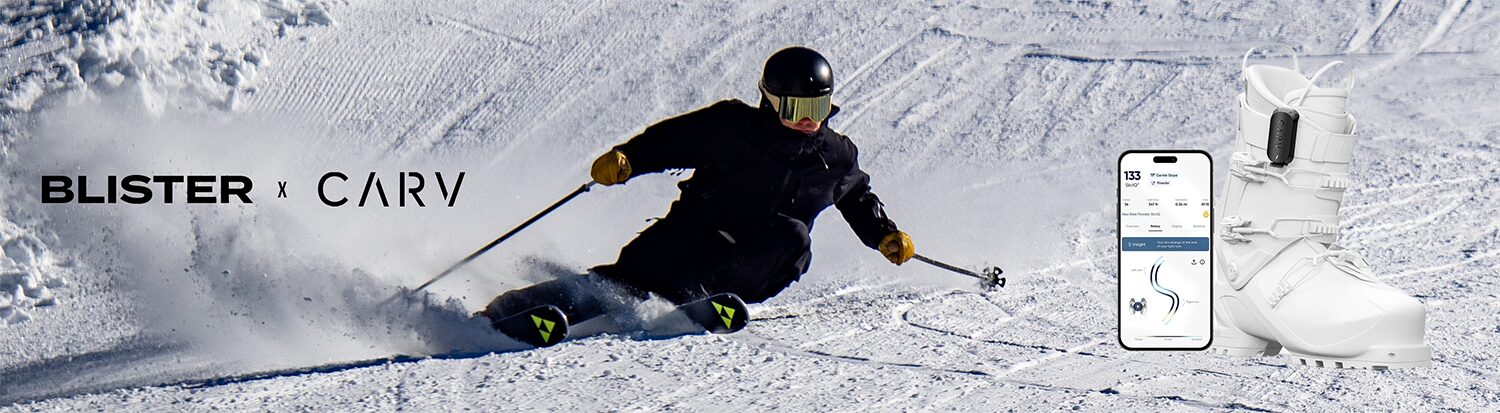
For the 2024-2025 and 2025-2026 seasons, we’ve partnered with Carv to use their Carv 2 sensors and digital ski coach app to not only learn more about our own skiing technique, but also add more useful info to our ski reviews. Here, you’ll see us reference some of the data that the Carv 2 sensors record and analyze while we’re skiing. Check out our announcement and podcasts with Carv to learn more about how Carv works, why we’re excited to use it as a tool for our reviews, and more.
FULL REVIEW
Similarities (and some Context)
Luke Koppa (5’8”, 155 lbs / 173 cm, 70 kg): From my perspective, there are a few key family traits shared between the Supershape e-Magnum, e-Rally, and e-Titan.
The most notable one, relative to the other skis we test that are apt comparisons to these Supershapes, is that these Supershapes generally require more skier input, more speed, and/or better technique to truly carve cleanly on very firm snow, particularly on steeper terrain.
For context, I’d put the e-Magnum, e-Rally, and e-Titan into the ‘recreational carver’ category. By this, I mean that they are definitely not FIS-standard race skis, nor are they race-inspired ‘beer league skis’ like Head’s Worldcup Rebels e-Speed, e-Race, or e-SL. Rather, the Supershapes are piste-oriented skis for folks looking to have fun while they carve a variety of groomed slopes — not get down them the fastest.
Please read that previous paragraph again, because this context / framing is important, especially as we talk about how demanding, precise, damp, energetic, etc. these skis are in relation to their closest competitors. By that, we’re referring to skis like Volkl’s Peregrine series, Fischer’s The Curv GT, Nordica’s Steadfast, and Rossignol’s Arcade collection.
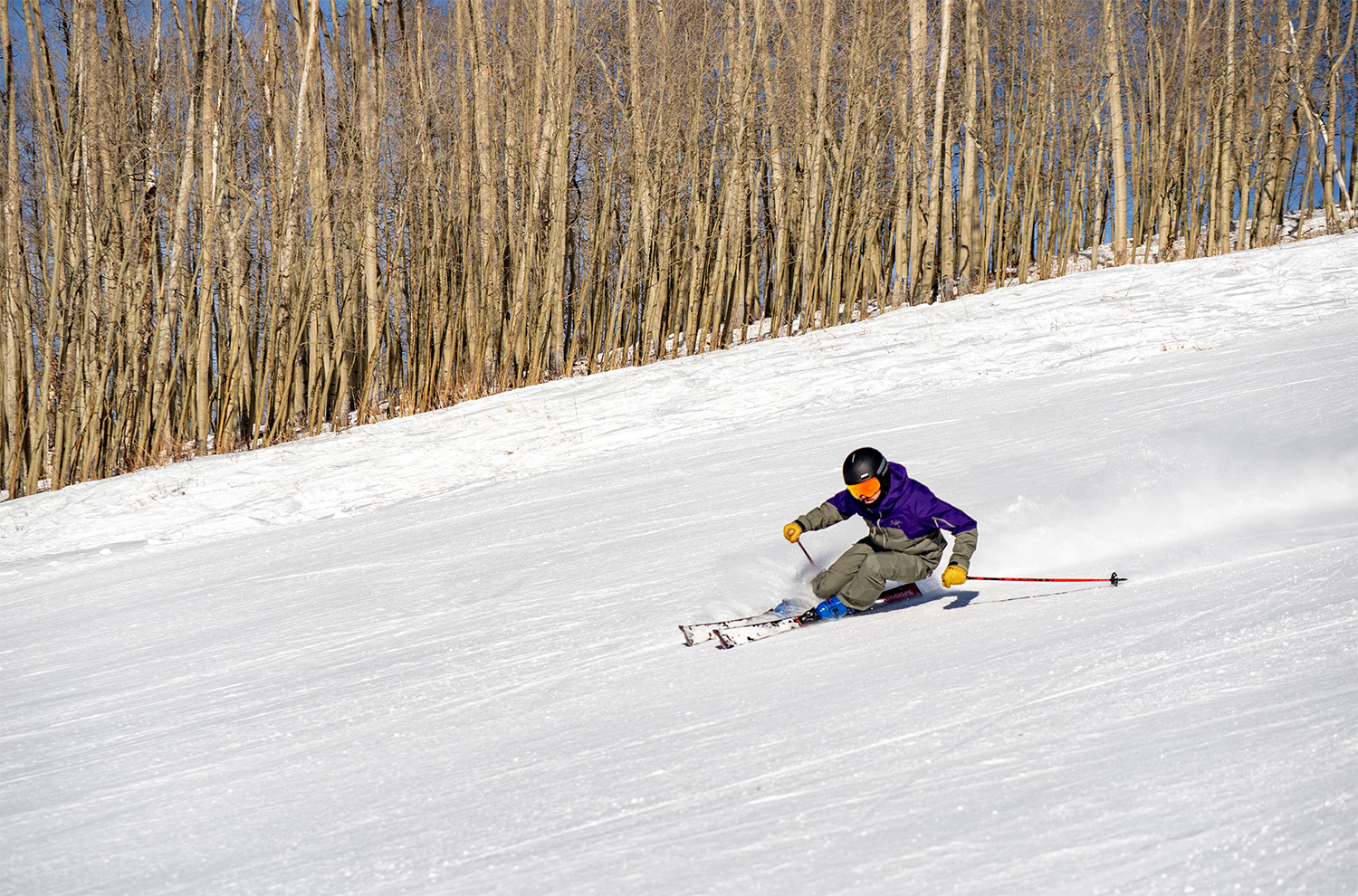
To be clear: these Supershapes are quite easy to casually skid around if you don’t feel like committing to slicing perfect railroad tracks through icy pistes. They’re also not notably difficult to bend and carve on soft snow, or on low-angle slopes (roughly 20° and lower). And the fact that they don’t immediately shoot across the fall line the moment you point them downhill has upsides that we’ll discuss in a moment.
But …
If you’re a beginner or intermediate skier seeking a piste ski that will make it easy to build confidence as you learn to carve super firm snow and/or steep slopes, these wouldn’t be my top picks. And I think Head is right to label these Supershape skis as being for “advanced” skiers.
That aside, I’d say these Supershapes also stand out within their respective categories for offering nice suspension and solid edge hold once you’re properly bending them. We’ll expand on all of this below.
Jonathan Ellsworth (5’10”, ~185 lbs / 178 cm, 84 kg): I just want to jump in here and encourage everyone reading this to read that entire intro again. When we discuss the category of frontside skis, this whole category of skis looks fairly similar, but you can easily end up on a ski that’s not a great fit for you — like, at all. But then, even when you are in the right ballpark of frontside skis, nuance gets really important, and skimming this review and these comparisons is probably not of much use. Ok, back to Luke…
Turn Shapes
Luke: The differences in turn shapes / sizes you can make on the e-Magnum, e-Rally, and e-Titan are what I think most people should first focus on if they’re deciding on which of these three skis is best for them. (There are other notable differences, but I think this is a good place to start.)
The e-Magnum is the tightest-turning of the three, on paper and on snow. We have that ski in a 170 cm length, which has a stated sidecut radius of 13.1 m (the 177’s is 14.3 m). Now, those numbers aren’t that much shorter than the e-Rally (15.3 m @ 177 cm), and the e-Magnum doesn’t hand-flex much softer than the other two.
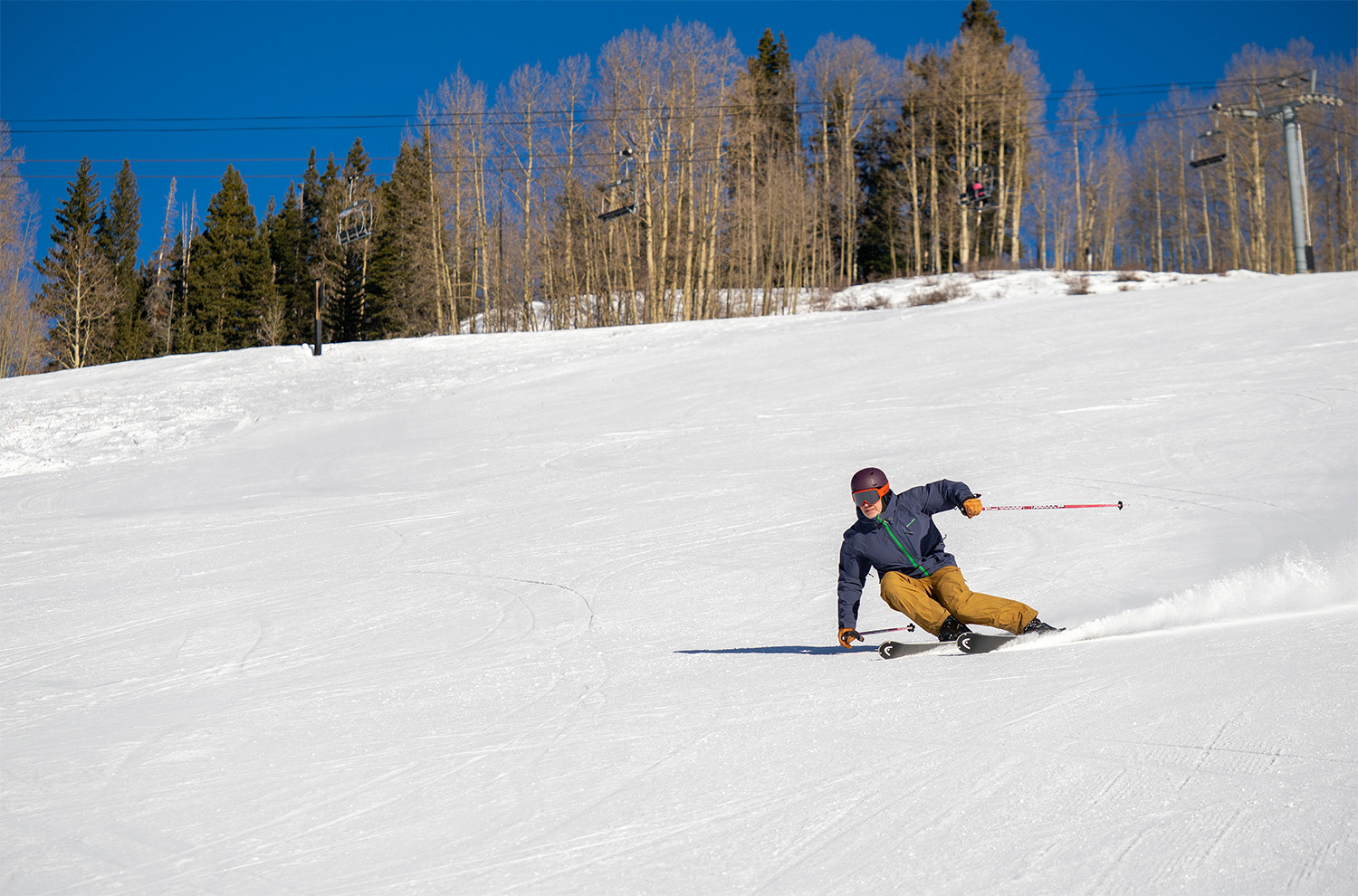
However, on snow, the 170 cm e-Magnum definitely feels like the easiest one to bend and start carving across the fall line, relative to the 177 cm e-Rally and 177 cm e-Titan.
Jonathan: I and fellow Blister reviewer, Paul Forward, both 100% agree with the above statement.
Luke: Our e-Magnum’s shorter length is definitely a factor there, but I’m confident that this would still be true in equivalent lengths (likely just to a slightly lower degree).
That said, relative to many comparable skis with ~13-meter sidecut radii, the 170 cm e-Magnum feels like it has a slightly longer radius — it doesn’t dart across the fall line the moment you start to lean into the front of your boots.
But if you want to carve tighter turns or just want the most accessible option within this group of three Supershape skis, the e-Magnum is the best bet in my book.
Jonathan: Again, Paul and I both agree that the e-Magnum is the most accessible of the three skis, but I’ll be adding an important caveat on that in a bit.
Luke: For reference, my Carv data says that, when I’m doing my best and not skidding my turns, I tend to average turn sizes in the 9-12 meter range on the e-Magnum. That’s in the range of what I’d subjectively label as “tighter” or “pretty short” turns.
When I’m carving the e-Rally well, my turns tend to be in the 14-17 meter range — what I’d typically label as “medium” turns.
On the e-Titan, the turn sizes tend to increase again, averaging out to 15-19 meters; “medium large” in my book.
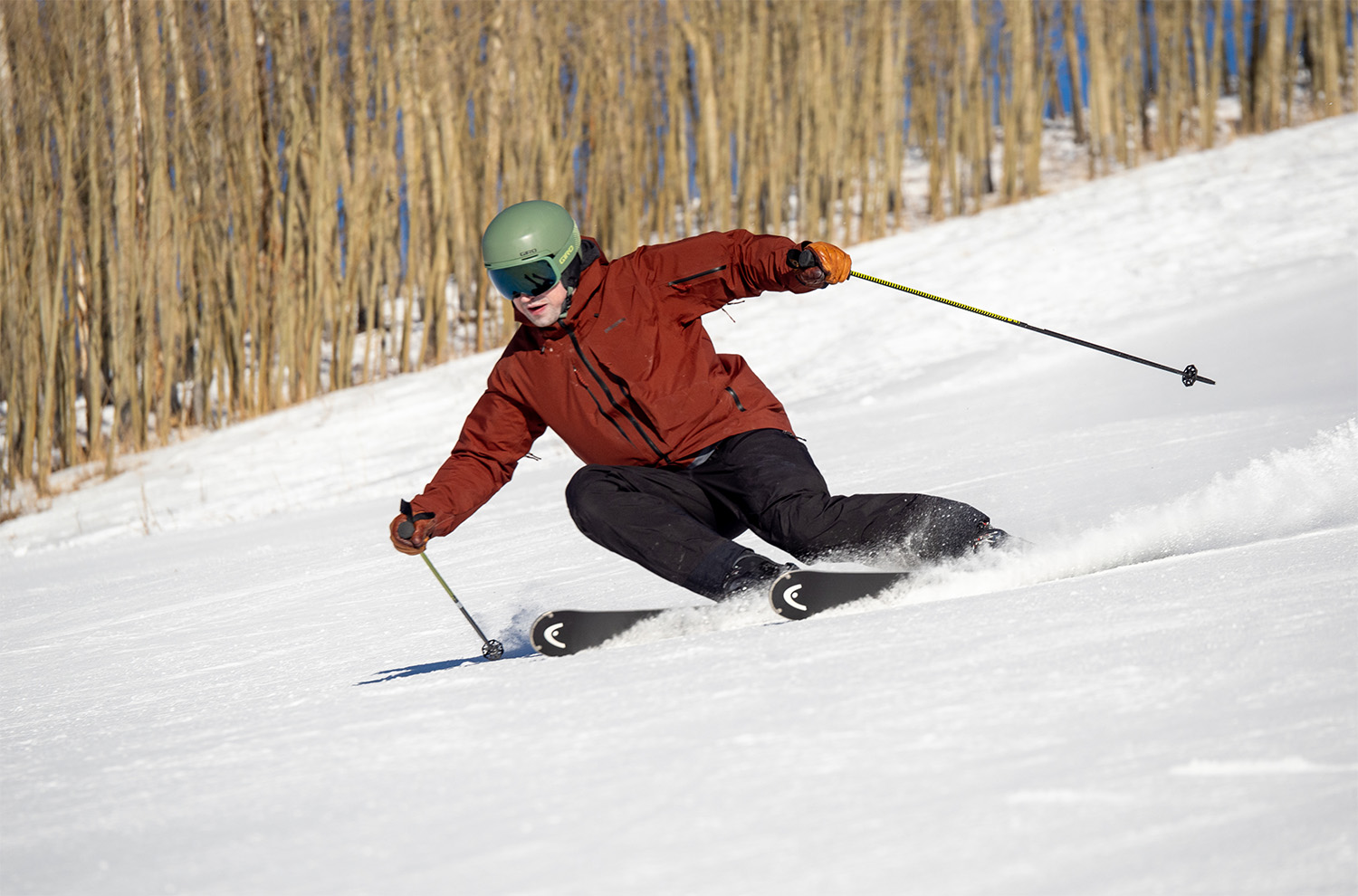
Similar to what I said about the e-Magnum, the e-Rally and e-Titan also ski like they have slightly longer sidecut radii than what’s printed on their top sheets (the e-Titan’s is 17.2 m @ 177 cm). Skiers with ‘quite good’ to ‘excellent’ technique will certainly be able to bend them into tighter turns, but on steeper and/or firmer runs, all three skis generally require more input and/or better technique than many of the direct competitors we’ve tested.
Jonathan: I want to add here that I think it’s not just a matter of having ‘quite good’ to ‘excellent technique, I think power is a really important factor here, too. We’re going to be talking about how much input these skis require, and I think that the more powerful a skier you are (and especially if you’ve got more body weight to combine with that power), the easier time you’ll have bending these skis.
Luke: However, one upside to this is more versatility on the longer-turn side of the spectrum. E.g., I find many tight-radius skis to be pretty unnerving if I force them to make big GS turns, but the e-Magnum feels pretty calm and predictable in that scenario, relative to other skis with similar specs.
Jonathan: Agreed.
Edge Hold
Luke: Under the feet of advanced and expert skiers, all three of these Supershape skis are capable of carving cleanly through the iciest snow I’ve come across.
But they make you work for it.
Again: if you don’t feel like trying to carve icy conditions like you’re on a race course, these Supershape skis are very predictable to skid and slide around on those conditions.
For that approach, they are not demanding / difficult to ski. And they offer tons of much more accessible edge hold on conditions softer than ice, and slopes mellower than roughly 20°.
Jonathan: This is actually quite notable. For as strong and powerful as these skis are, it doesn’t seem like they should be as cooperative if you’re just sliding all of your turns at low speeds, or if you were a very inexperienced skier. It seems like all that power should make these way less manageable than they are to just … make your way down the mountain in a very non-advanced type of way.
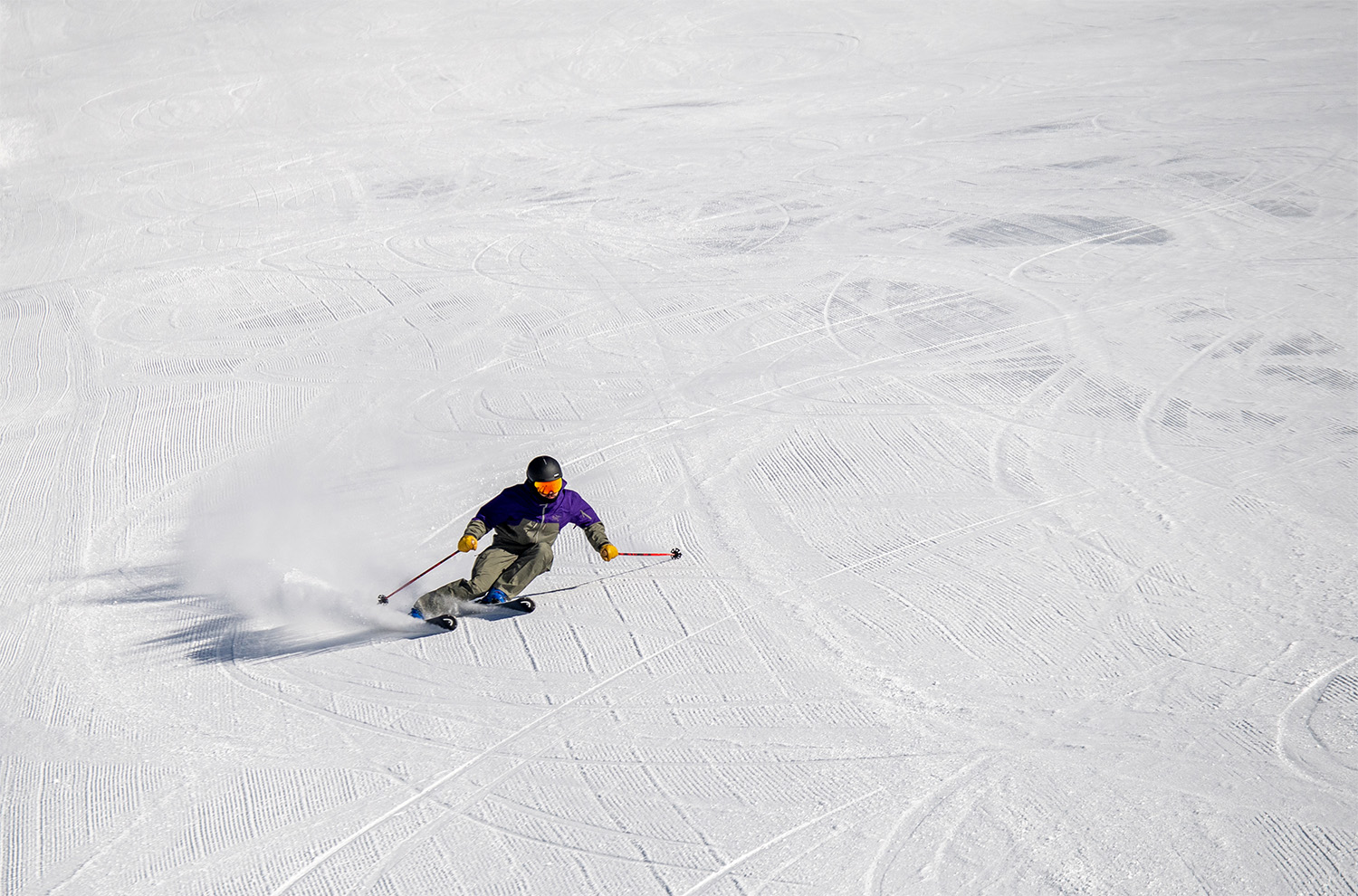
Luke: But if you do want to carve ultra-firm snow without much skidding, these Supershapes require a good bit of commitment and solid technique to bend, dig in their edges, and keep them locked in throughout each carve.
For reference, I did not grow up racing, but I’ve been working hard throughout my skiing life to make up for that. I think it’d be fair to say that I can bend and carve skis better than 90-95% of other skiers at most mountains.
(As a Midwesterner who values humbleness to an arguable fault, typing that sentence went against every single fiber in my being. Yuck.)
Jonathan: The above statements by Luke are true. Which means that the better you know him, the funnier they are.
Luke: Anyway, I mention that to put things into perspective. If you — like me — struggle to commit to proper carves when the snow is firm and the terrain is steeper, these Supershapes wouldn’t be my top pick for making that easier / less intimidating. Of them, the e-Magnum would be my favorite, and I think anyone on the fence between lengths ought to consider sizing down so they have a bit more leverage over these skis.
Jonathan: Agreed. And for what it’s worth, Paul Forward and I just spent the morning A/B-ing the e-Magnum and the e-Titan, and Paul was noting that while the e-Magnum was the shortest ski he’s been on in a very long time, he was not overpowering that ski.
Luke: That important caveat aside, yes, these Supershapes can be excellent tools for carving really firm snow. They reward power and technique with excellent precision. When I’m on my A-game, they’re some of the few skis I’ve tested that let me achieve G-forces higher than 3.0 on properly firm conditions (again, according to my Carv data).
But I wouldn’t call the edge hold of these Supershape skis particularly ‘accessible’ on super firm snow and/or quite steep terrain, relative to their class of recreational carvers that are not designed to get you through gates as fast as possible.
Jonathan: Agreed.
Suspension
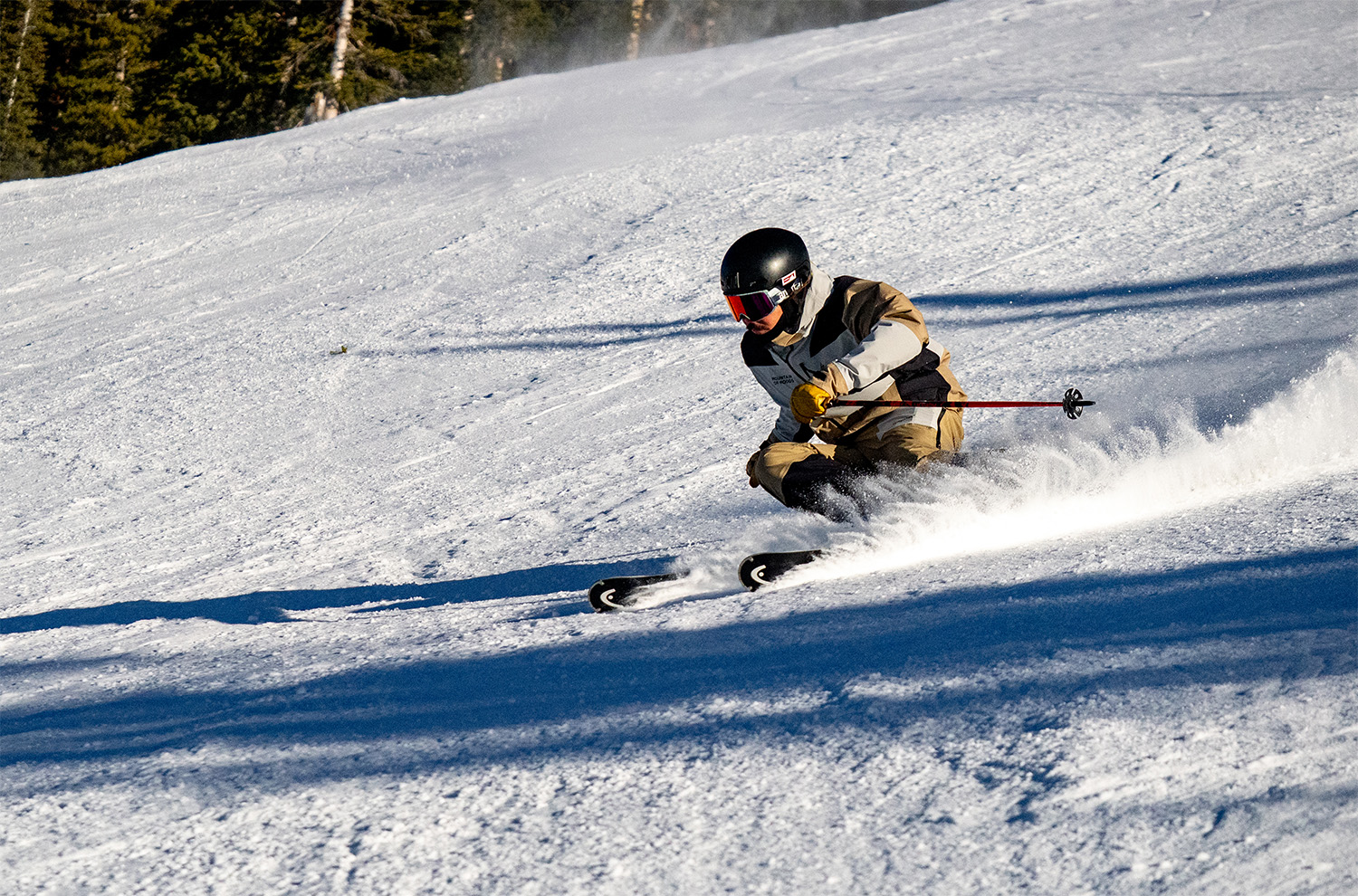
Luke: The Supershape e-Magnum, e-Rally, and e-Titan all stand out for their suspension / damping / ride quality. For each of their respective classes, they outperform many of their closest competitors in this regard.
Of the three, the e-Rally does the best job of muting out vibrations and impacts. It’s a close call between the e-Rally and e-Titan, but the e-Rally is the smoothest-feeling in my opinion. It takes a good bit of speed, snow variability, or straight-up stupidity on my part to get the e-Rally and e-Titan feeling ‘harsh’ or ‘sketchy’ on piste.
The e-Magnum doesn’t feel quite as planted / damp. But, of the skis that I can make similarly tight turns on, the e-Magnum still offers better suspension than most.
Energy / Rebound
Luke: Conversely to how I positioned them regarding suspension, the e-Magnum is the most energetic of the three, while the e-Rally feels the least lively.
None of them feel ‘dead’ to me, at least once I’m properly bending them throughout each turn. But the amount of input required to do so means that they don’t feel particularly lively until you’ve passed a certain threshold of skier input (their heavier weights are likely also a factor here). That threshold is higher than many comparable skis, so, to most people, I think these Supershapes would fall on the less energetic end of the spectrum for comparable skis. But they do produce energy when pushed hard.
Jonathan: I’m not sure that this represents a disagreement here between Luke vs Paul Forward and me, but Paul and I find the rebound produced by the e-Magnum rather shocking. And the more I’ve skied the e-Magnum, the more I’ve really come to love it. As Luke has clearly laid out, the e-Magnum feels a lot like the e-Rally and e-Titan, but throw in a crazy amount of rebound generation to the mix. It makes for really exciting and electric carving … but man, it is not a ski that you ought to get distracted on, or it will throw you.
And I mention this because earlier in this review, we called the e-Magnum the most “accessible” of the 3 skis we’re talking about here. And that is true. But the awesome amount of rebound you can so easily generate on the e-Magnum — if you are doing your best to carve powerful, high-angle turns — can be shocking if you let your mind wander. And in my view, this is probably what I would be inclined to call the biggest difference between the three skis.
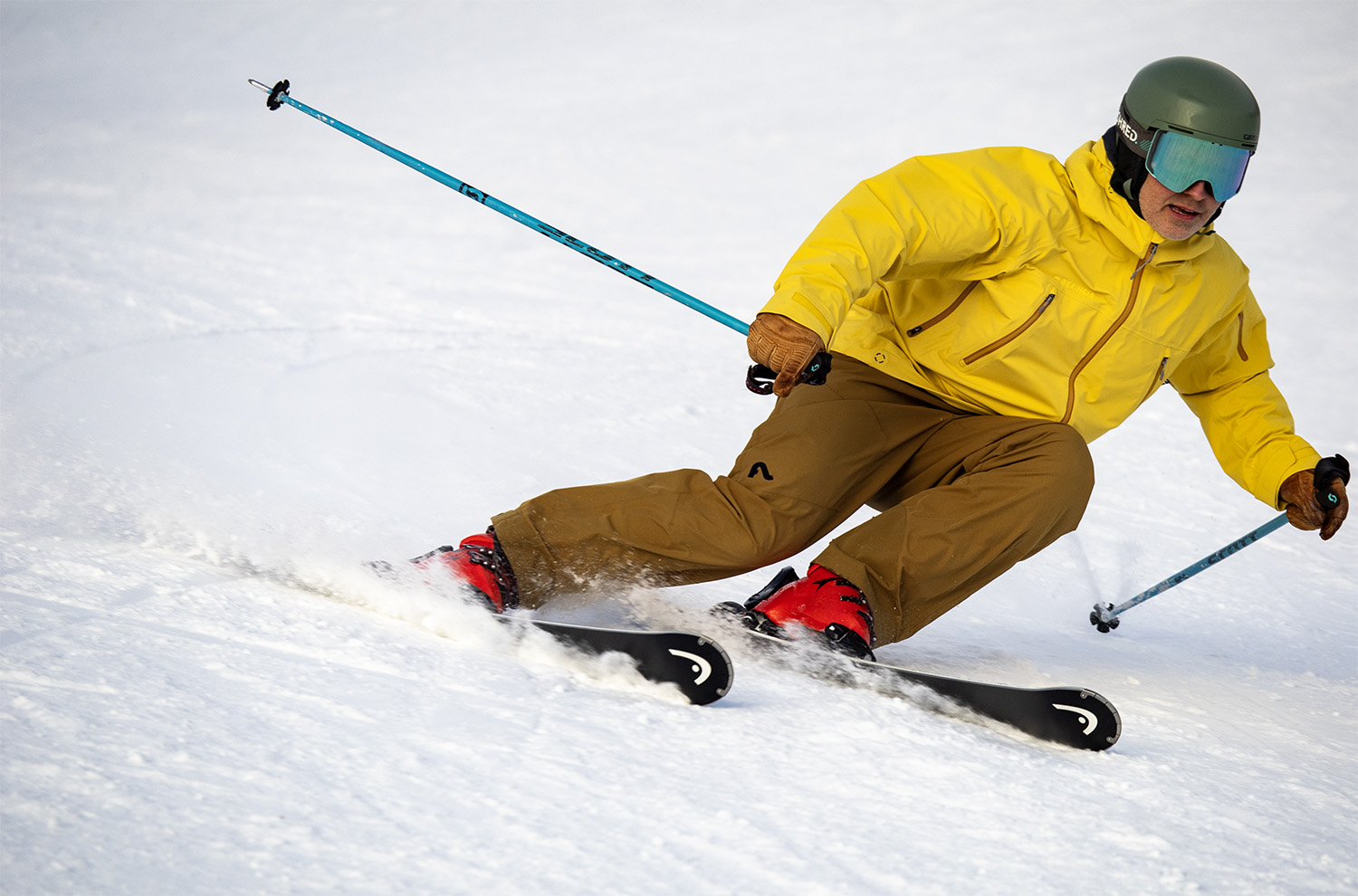
This morning, Paul was saying that he felt like he could relax more while skiing the e-Titan, because it doesn’t shoot you — like a cannonball — out of a turn. And I get that.
But personally, for this type of recreational carver, the combination of stability and energy that the e-Magnum produces is a combination that I really dig. But let’s keep going here.
Variable Conditions
Luke: One of the biggest upsides to the fact that these Supershapes are not super easy to bend is that they don’t feel overly skittish when the groomers are cut-up and variable.
The e-Titan and e-Rally are some of my favorite carving skis for these conditions. If I stay on top of them, they’ll still dig into the firm base underneath and lock in, but they aren’t easily thrown off track by the errant clump of pushed-around snow.
The e-Magnum can get a bit squirrely if you make huge turns on it with the ski barely on edge (i.e., mostly bases-flat). But if you keep it on edge, the e-Magnum handles variable snow better than most skis on which I can make similarly tight turns.
In terms of the outright winner in unpredictable snow, it’s a tough call between the e-Rally and e-Titan. The e-Titan’s longer sidecut radius helps here, but the e-Rally is a bit more damp. Both are wide enough that I rarely worry about ‘booting out’ in 3D snow on groomed trails, so it’s a bit of a toss-up for me.
Jonathan: For me personally, I’d say that the more I was looking for an all-conditions carver, where I might be encountering firm snow but also some really soft spring-like snow or even pushed-around powder, the more I would be inclined to reach for the e-Titan.

Moguls / Off-Piste Performance
Luke: If I was buying a ski that would spend more than ~15-25% of its life off piste, neither Jonathan nor I would get any of these Supershapes. There are so many skis I prefer if I have to make lots of short, choppy, dynamic turns (such as Head’s Kore 88 Ti).
However, I do find these Supershapes more predictable in off-piste terrain than many other recreational carvers. The same aspects that make these Supershapes a bit more game-on when you want to carve firm, steep slopes also tend to make them more intuitive off piste. Because these skis don’t hook up the instant you put some force into their shovels, they’re also less likely to do so when you drive them hard into the trough of a mogul.
Of the three, we’d say that the e-Titan is the most viable off-piste tool. The 170 cm e-Magnum feels like it still mostly wants to carve through tight, off-piste terrain (rather than skid / pivot); the 177 cm e-Rally is easier to pivot around, but its weight doesn’t help in this scenario. The e-Titan feels similarly easy to skid and pivot as the e-Rally, but the e-Titan’s slightly lower swing weight and slightly longer sidecut radius seem to help with its off-piste capability.
Again, something more tapered, rockered, lighter, and/or softer (like the Kore 88 Ti) makes it a heck of a lot easier to execute short, skidded, and dynamic turns in off-piste terrain and conditions. But if you want a carving ski that won’t kill you the moment you head off piste a few times per day, the Supershapes start to become more appealing.
Who Are They For?
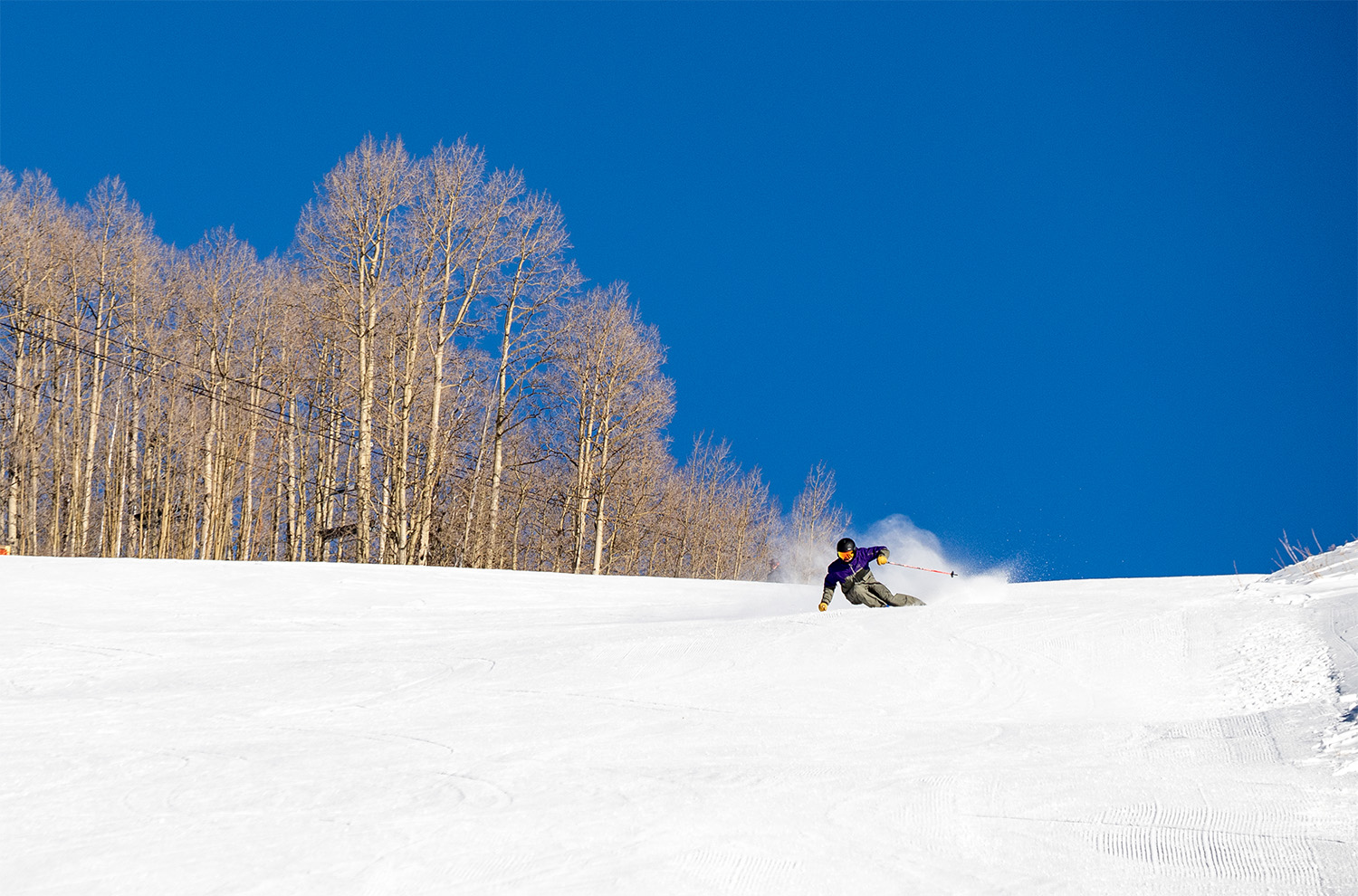
Luke: Overall, these three skis will work best for advanced and expert skiers. To get the most out of them, you do need to know how to — and have the power to — bend a strong ski, but they do not demand that you do so 100% of the time.
And given this, these skis should be particularly appealing to you if you find (1) many ‘recreational carvers’ too soft and / or too eager to cut across the fall line, but (2) you don’t want to spend every carving day on a ‘beer league’ race ski or full-on FIS ski.
That said, here’s how we’d sum up the ideal skier for each model:
Supershape e-Magnum
The e-Magnum is best if you want a carving ski that excels at making fairly tight turns, but you don’t want something reminiscent of a true Slalom ski that will require you to cleanly initiate, hold, and leave every single turn with perfect precision. The e-Magnum is capable of Slalom turns, but it’s surprisingly predictable when you open up your turns and decrease your edge angle.
Supershape e-Rally
The e-Rally is the all-rounder of the bunch, and the most damp. Skilled skiers can make a huge range of turn shapes on this ski, from fairly tight to quite long. It offers an extremely smooth, planted ride quality, but it does require some work to bend.
Supershape e-Titan
The e-Titan is better for medium to larger turn shapes. It’s very similar to the e-Rally overall, but the e-Titan feels a bit calmer when you’re making big turns at high edge angles, and it’s a bit easier to get energy / rebound out of vs. the e-Rally. The e-Titan is also the best of the three off piste, but if that’s a big priority for you, you’d probably be better off on a truly-all-mountain ski.
Bottom Line
The Supershape series has been around for many years, and a case could be made that it’s one of the best long-standing collections in the history of skis. When paired with the right type of skier, these are powerful, beautiful instruments that occupy an important space among the categories of modern skis. Happy carving.
Our Deep Dives, Winter Buyer’s Guide, & Flash Reviews
BLISTER+ members and those who purchase our Digital Access Pass can check out the Deep Dive comparisons linked below, where we compare a given ski, bike, etc. to a whole bunch of other comparable products in its class. Don’t have access? Get our Digital Access Pass to read all of our Deep Dive comparisons, as well as our Flash Reviews, where we provide our initial impressions as soon as we start testing gear.
Or, even better, become a BLISTER+ member to get that + the best worldwide Outdoor Injury Insurance, exclusive deals and discounts on skis, personalized gear recommendations from us, access to our annual Winter Buyer’s Guide, and much more.
On that note, you can also get our thoughts on this ski and 350+ others in our annual Blister Winter Buyer’s Guide. BLISTER+ members already have access, or you can purchase the guide on its own to get the the print copy + digital version at no extra cost, or the digital-only edition.
Deep Dive: Head Supershape e-Magnum, e-Rally, & e-Titan
We compare the Head Supershape e-Magnum, e-Rally, and e-Titan to a bunch of their closest competitors, including the Volkl Peregrine 72, K2 Disruption MTi, Stockli Montero AR, Rossignol Arcade 88, Fischer The Curv GT 85, Folsom Spar 78, Rossignol Forza 70° Ti, Parlor Warbird, Faction Dancer 79, Volkl Peregrine 82, Renoun Atlas 80, Kastle MX84, Black Crows Octo, Volkl Mantra 84, Nordica Steadfast 85, Head Kore 88 Ti, & more.
Blister’s Flash Reviews and Deep Dives are accessible to those who purchase one of our paid subscriptions
To get our comprehensive Deep Dives and our initial, unfiltered reports on new gear, become a member and receive many other services, deals, and discounts.
If you’re already an active member, please log in.
(If you’re already logged in and a member in good standing and seeing this message in error, please refresh this page in your browser.)
Flash Review: 25/26 Head Supershape e-Magnum
We’ve had multiple reviewers on Head’s latest 72mm-wide Supershape e-Magnum, and it’s been a lot of fun. Here are Jonathan Ellsworth and Luke Koppa’s initial takeaways.
Blister’s Flash Reviews and Deep Dives are accessible to those who purchase one of our paid subscriptions
To get our comprehensive Deep Dives and our initial, unfiltered reports on new gear, become a member and receive many other services, deals, and discounts.
If you’re already an active member, please log in.
(If you’re already logged in and a member in good standing and seeing this message in error, please refresh this page in your browser.)
2025-2026 Blister Digital Winter Buyer’s Guide
350+ skis, 70+ boots, and 280+ pages of honest, accurate product reviews and comparisons. Check it all out here.
If you’ve already purchased the guide, Digital Access Pass, or BLISTER+ membership and are seeing this message, please log in and then refresh this page.
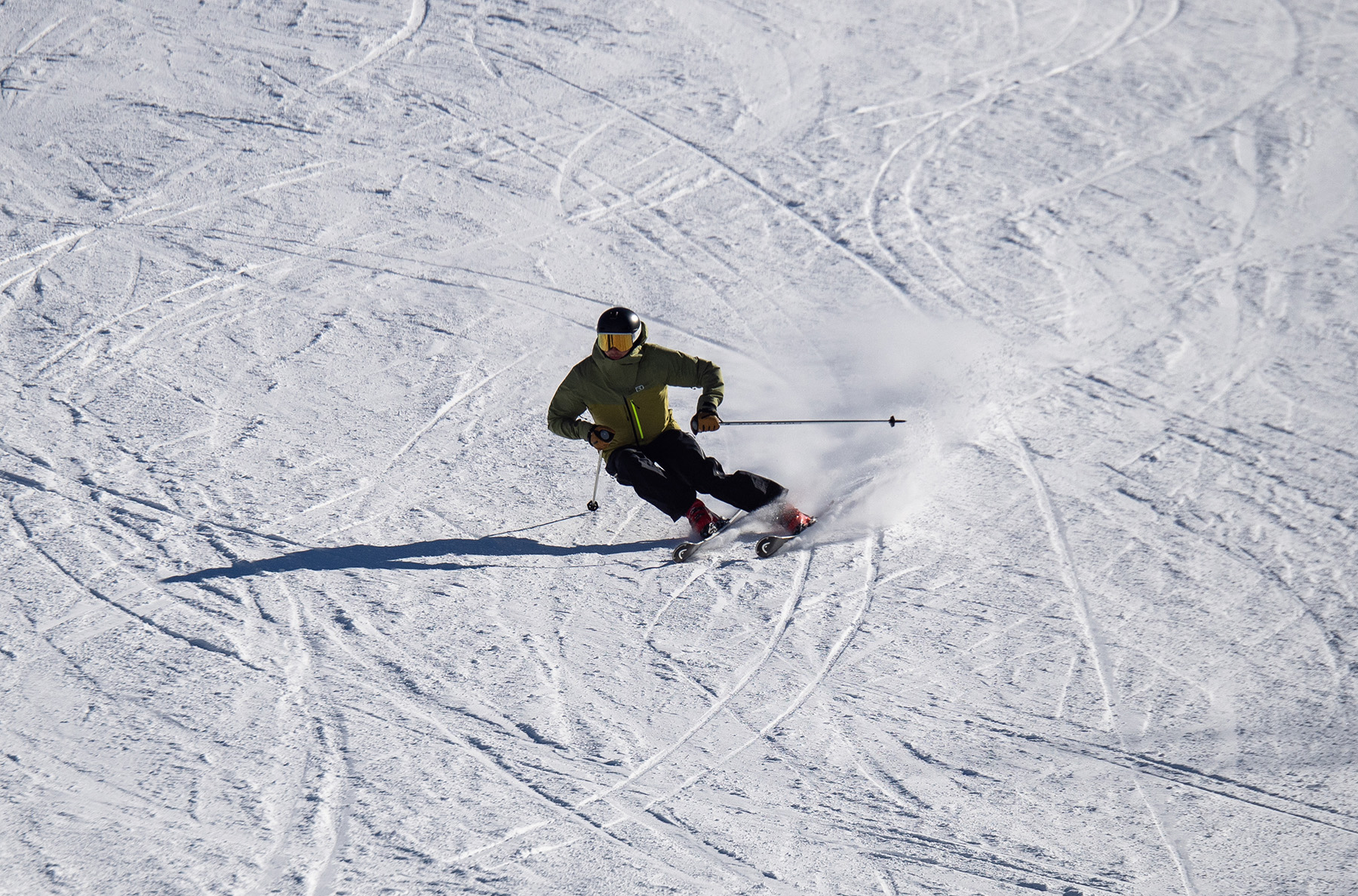
Flash Review: 24/25 Head Supershape e-Rally
We’ve been spending time on the new Head Supershape e-Rally, and directly comparing it to the outgoing version. Check out our initial thoughts.
Blister’s Flash Reviews and Deep Dives are accessible to those who purchase one of our paid subscriptions
To get our comprehensive Deep Dives and our initial, unfiltered reports on new gear, become a member and receive many other services, deals, and discounts.
If you’re already an active member, please log in.
(If you’re already logged in and a member in good standing and seeing this message in error, please refresh this page in your browser.)