

Ski: 2025-2026 Faction Dancer 79, 178 cm
Test Location: Crested Butte, CO
Days Skied: ~10
Available Lengths: 158, 166, 172, 178, 184 cm
Blister’s Measured Tip-to-Tail Length (straight-tape pull): 176.6 cm
Stated Weight per Ski (178 cm): 1640 grams
Blister’s Measured Weight per Ski (178 cm): 1687 & 1693 grams
Stated Dimensions: 118-79-107 mm
Blister’s Measured Dimensions: 118-78.5-106.5 mm
Stated Sidecut Radius (178 cm): 17 meters
Measured Tip & Tail Splay (ski decambered): 52 mm / 18 mm
Measured Traditional Camber Underfoot: 11.5 mm
Core Materials: poplar + titanal (2 layers) + fiberglass laminate
Base Material: sintered
Factory Recommended Mount Points:
“Newschool” line: -6.9 cm from center; 81.4 cm from tail
“Progressive” line: -8.4 cm from center; 79.9 cm from tail
“Classic” line: -9.9 cm from center; 78.4 cm from tail
Boots Used: Lange Shadow 130 LV; Salomon S/Pro Alpha C BOA 130; Atomic Redster CS 130; K2 Cortex 120
Bindings Used: Tyrolia Attack 13

Intro
Faction’s Dancer collection is the brand’s most directional series, built with metal-laminate constructions and flatter tails than their more freestyle-friendly Prodigy and Studio models.
The Dancer lineup previously spanned from the 86mm-wide Dancer 1 to the 116mm-wide Dancer 4, but this season, they added a more piste-oriented option, the Dancer 79 (which is, in fact, 79 mm underfoot).
The Dancer 79 doesn’t initially look all that similar to most similarly narrow skis, so we were excited to see how this new Dancer would compare to its wider siblings, and where it would slot into the Frontside category as a whole. Is this a groomer-specific carving ski? I slimmed down freeride model? Something else entirely? Let’s dive in.
What Faction says about the Dancer 79:
“The all-new Dancer 79 is our first pure piste ski designed with one place in mind; 'la piste de dance'. This ski's home is in and around the resort's groomed runs, where each high-energy turn matters. The Dancer 79 features a progressive mix of minimal rocker, parabolic shape and razor-thin Titanal sheets for class-leading stability at speed and unrelenting grip on hardpack snow. Built for a dynamic riding experience on the piste and its sides, sporting a sharp look and a touch of freeski soul, it's one of our most electrifying skis in the collection. You'll love this ski if... You want to ski fast but under control You want a super-stable ski that can also rip in the crud You want a ski that is easy to turn in all conditions You are skiing 100% on the piste”
— Faction
Construction
Like the wider Dancers, the Dancer 79 is built around a poplar wood core that’s sandwiched between two layers of titanal metal. It’s finished off with a fiberglass laminate, sintered base, Faction’s “XL Full Strength” sidewall, and a micro-cap topsheet finish to reduce chipping.
Note: Faction now offers the Dancer 79 with a few different graphic options, and they offer it flat / unmounted, or as a system ski pre-mounted with Salomon Strive 11 demo bindings.
Shape & Rocker Profile
At first glance, the Dancer 79 looks very similar to its wider siblings. Like them — and in contrast to many “pure piste skis” — the Dancer 79 features a touch of tapering at its tips and tails, though it’s pretty subtle. The Dancer 79 also features a bit of tip and tail rocker, but this ski is mostly cambered.
Flex Pattern
Here’s how we’d characterize the flex pattern of the Dancer 79:
Tips: 7.5-8
Shovels: 8.5
In Front of Toe Piece: 9-10
Underfoot: 10
Behind the Heel Piece: 10-9.5
Tails: 9
Similar to the 96mm-wide Dancer 2, the Dancer 79 is quite strong overall. Apart from its tips and shovels, most of the Dancer 79 requires significant effort to bend when hand-flexing the ski.

Sidecut Radius
As with many of Faction’s skis, the Dancer 79 utilizes their “Elliptical Sidecut” design, which blends a longer-radius sidecut underfoot with a shorter radius at the tip and tail. The goal is to get the best of both worlds — the ability to easily pivot the ski underfoot while still getting quick turn initiation and precision when carving the ski on edge. Faction says the average sidecut radius for the 178 cm Dancer 79 is 16 meters, which isn’t wildly short or long for its class.
Mount Points
Faction prints three mount points on most of their current skis, with the idea being that you can mount on the line that best fits your preferences. The “Newschool” line is the most centered, “Classic” is the most rearward, and “Progressive” slots in the middle.
In the case of the Dancer 79, here’s how those lines measured on our 178 cm test pair:
- “Newschool” line: -6.9 cm from center; 81.4 cm from tail
- “Progressive” line: -8.4 cm from center; 79.9 cm from tail
- “Classic” line: -9.9 cm from center; 78.4 cm from tail
We began our test with the Dancer 79 mounted on the Progressive line, but also experimented with the others, which we touch on below.
Weight (and Comparisons)
Our 178 cm Dancer 79 weighs about 1690 grams per ski. We’ve weighed a lot of similarly sized skis that come in at similar weights, but we’d still label the Dancer 79 as being on the lighter side of average for a piste-focused, ~80mm-wide ski.
Precise weight comparisons are tricky, since many of the Dancer 79’s competitors come pre-mounted with binding plates, and our Dancer 79 did not. But, for example, it’s notably lighter than the Volkl Peregrine 80 & 82, Stöckli Montero AR, and Nordica Steadfast 85.
For reference, here are some of our measured weights (per ski in grams) for some notable frontside and narrow all-mountain skis. As always, keep in mind the length and width differences to try to keep things more apples-to-apples.
1627 & 1640 Head Kore 87, 177 cm (22/23–24/25)
1658 & 1665 DPS Pisteworks 94, 178 cm
1664 & 1671 Kore 87 Ti W, 170 cm
1675 & 1732 Folsom Spar 78, 177 cm
1687 & 1693 Faction Dancer 79, 178 cm
1701 & 1706 Rossignol Forza 70° Ti, 173 cm
1721 & 1734 Völkl Mantra 84 W, 170 cm
1724 & 1735 Parlor Warbird, 178 cm
1724 & 1749 Black Crows Octo, 179.3 cm
1728 & 1750 Renoun Atlas 80, 177 cm
1735 & 1741 Elan Ripstick 96, 182 cm
1735 & 1754 K2 Mindbender 90C, 178 cm
1783 & 1801 Head Kore 88 Ti, 177 cm
1794 & 1795 RMU Zephyr 88, 176 cm
1796 & 1838 Black Crows Mirus Cor, 178 cm
1804 & 1819 ON3P Woodsman 92, 181 cm
1808 & 1834 Northland AM178, 178 cm
1820 & 1867 Kästle Paragon 93, 177 cm
1821 & 1827 Majesty HNX Ti, 178 cm
1823 & 1853 Atomic Maverick 88 Ti, 184 cm (21/22–24/25)
1829 & 1845 Romp Sidehit 89, 178 cm
1832 & 1841 K2 Disruption 78Ti, 177 cm
1833 & 1849 Shaggy’s Brockway 90, 180 cm
1837 & 1854 Fischer The Curv GT 85 Redefine, 175 cm
1848 & 1986 Volkl Mantra 88, 184 cm
1854 & 1863 Salomon Stance Pro 90, 182 cm
1862 & 1931 Salomon QST 94, 180 cm
1868 & 1875 Völkl Mantra 84, 184 cm
1869 & 1886 Völkl Mantra 84, 177 cm
1874 & 1877 Head Kore 94 Ti, 177 cm
1893 & 1897 Salomon QST 92, 184 cm (22/23–24/25)
1900 & 1908 Atomic Maverick 95 Ti, 180 cm (21/22–24/25)
1906 & 1907 Dynastar M-Cross 88, 184 cm
1911 & 1917 K2 Disruption 82Ti, 177 cm
1915 & 1937 K2 Mindbender 89Ti, 182 cm
1917 & 1961 DPS Carbon Wailer 90, 184 cm
1933 & 1977 Line Optic 88, 184cm
1940 & 1949 Kästle MX84, 176 cm
1941 & 1968 Volkl Peregrine 80, 177 cm
1960 & 2004 Kästle MX88, 181 cm
1980 & 1981 ZAG Mata Ti, 178 cm
1981 & 1991 Faction Dancer 2, 182 cm
1982 & 2013 Heritage Lab AM90, 180 cm
1988 & 2067 Rossignol Arcade 94, 178 cm
1999 & 2060 Line Blade, 181 cm
2000 & 2016 Volkl Peregrine 82, 177 cm
2003 & 2011 Head Supershape e-Magnum, 170 cm (w/ binding plates)
2008 & 2015 Folsom Spar 88, 182 cm
2025 & 2028 Meier Quickdraw 88, 181 cm
2045 & 2057 Rossignol Arcade 88, 178 cm
2047 & 2056 Blizzard Anomaly 88, 182 cm
2047 & 2082 4FRNT MSP 91, 181 cm
2058 & 2079 Stöckli Montero AR, 180 cm
2063 & 2094 Moment Commander 92, 182 cm (23/24–24/25)
2072 & 2094 Wagner Summit 91, 182 cm
2096 & 2154 Nordica Steadfast 85 DC, 179 cm
2112 & 2116 Folsom Spar Turbo, 182 cm
2121 & 2147 Head Supershape e-Titan, 177 cm (w/ binding plates)
2148 & 2165 Atomic Redster X9S Retro ARC 735 RS, 175 cm (w/ binding plates)
2180 & 2193 Völkl Peregrine 72, 173 cm (w/ binding plates)
2199 & 2211 Head Supershape e-Rally, 177 cm (w/ binding plates)
2235 & 2236 Elan Wingman 86 CTi, 184 cm (w/ binding plates) (21/22–24/25)
2225 & 2248 K2 Disruption MTi, 175 cm (w/ binding plates)
2271 & 2273 Fischer The Curv GT 85, 175 cm (w/ binding plates)
2286 & 2299 Fischer RC One 82 GT, 180 cm (22/23–23/24)
2335 & 2342 Fischer RC4 Noize, 178 cm (w/ binding plates)
2432 & 2445 Fischer RC4 The Curv, 185 cm (w/ binding plates)
With all the specs covered, let’s get into the Dancer 79’s on-snow performance:

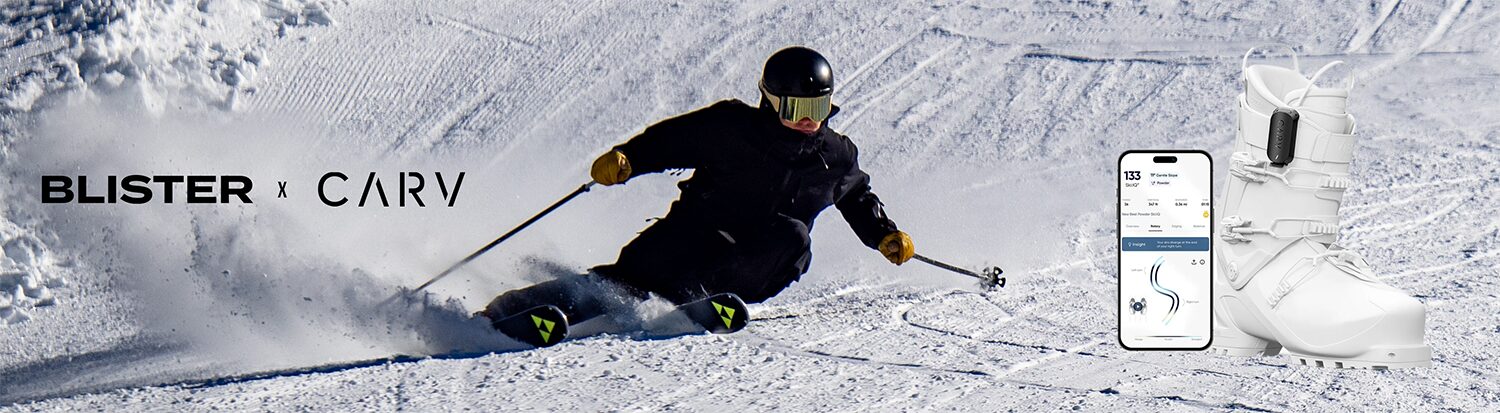
For the 2024-2025 and 2025-2026 seasons, we’ve partnered with Carv to use their Carv 2 sensors and digital ski coach app to not only learn more about our own skiing technique, but also add more useful info to our ski reviews. Here, you’ll see us reference some of the data that the Carv 2 sensors record and analyze while we’re skiing. Check out our announcement and podcasts with Carv to learn more about how Carv works, why we’re excited to use it as a tool for our reviews, and more.
FULL REVIEW
Luke Koppa (5’8”, 155 lbs / 173 cm, 70 kg): To start, I think it’s worth reiterating what Faction says about the Dancer 79. Despite the fact that it doesn’t look like most carving skis, Faction says it’s their “first pure piste ski” and that you’ll love it if “you are skiing 100% on the piste.”
That’s some refreshing clarity. When you look at what other brands say about skis that are similar to the Dancer 79 on paper, many of them tout these sorts of skis’ ‘Do everything! Ski anywhere!’ capabilities. Do some of them live up to that? Yep. But in our experience, that’s far more the exception than the rule.
Piste-specific carving skis are amazing tools in the right scenarios, but there’s often (okay, always) a tradeoff between on-piste performance and off-piste versatility. So we like the fact that Faction is marketing the Dancer 70 as a ski that’s meant for groomed slopes — especially since that is definitely where it feels most at home. So that’s what we’re going to be focusing on.
Turn Shapes
Luke Koppa: Overall, I’d say the Dancer 79 does a good job of covering the middle of the bell curve in terms of turn shapes. It’s not an ultra-snappy, tight-turning machine, nor does it need heaps of speed or a long runway to come alive.
When pushed hard, I’d say the Dancer 79 prefers ‘medium’ to ‘medium-small’ turn sizes. My Carv data says that, when I’m at my best and really trying to bend this ski, my turns on the Dancer 79 tend to fall in the 13-16 meter range. It’s not what I’d get if I was always sticking to lower-angle slopes and wanted to make them as exciting as possible, but it generally falls on the more engaging and exciting end of the carver spectrum.
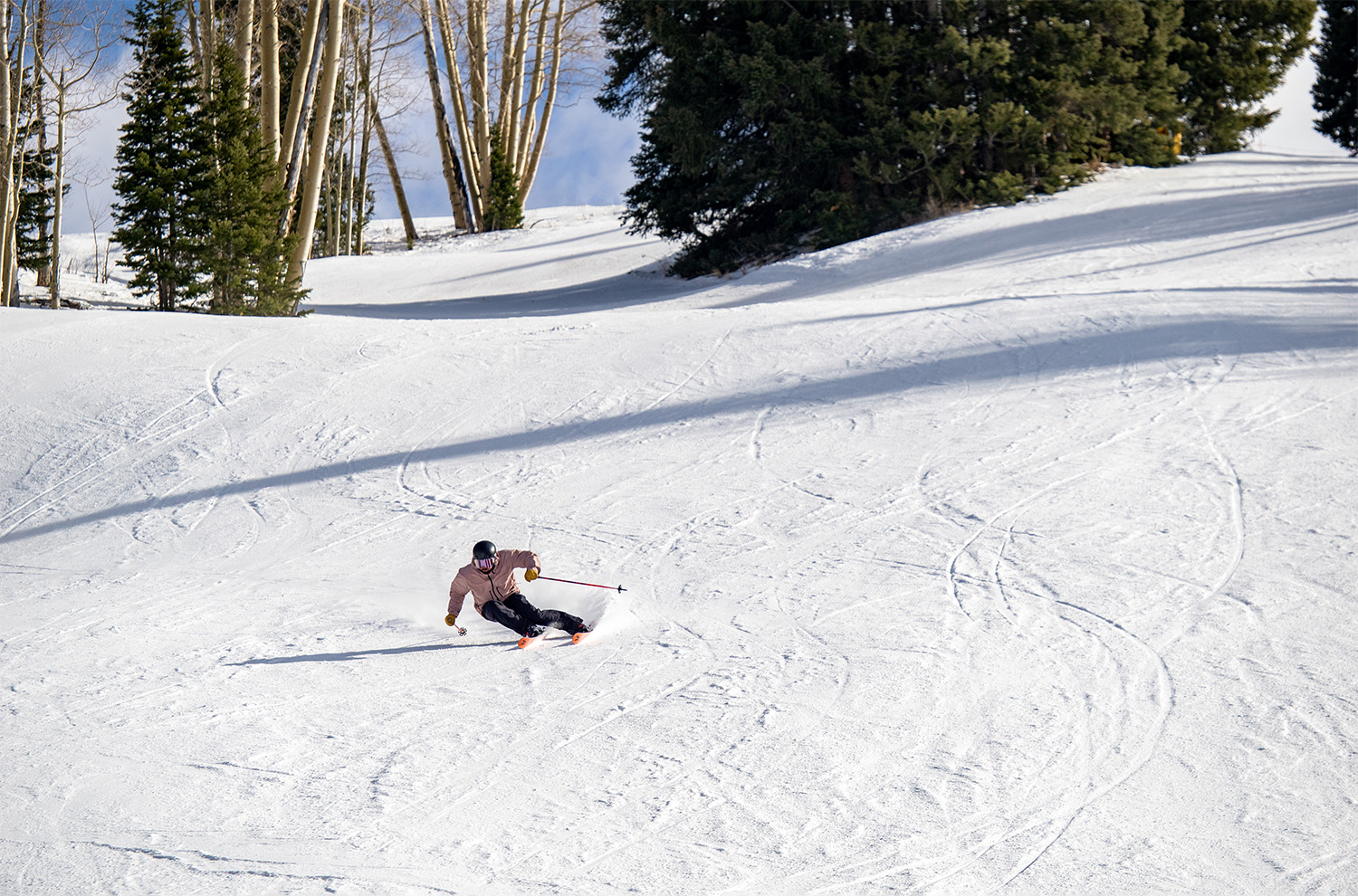
If you ease up on the front of your boots a bit, the Dancer 79 can also feel pretty calm carving much longer-radius turns. I have not found this ski to feel particularly hooky when making very large arcs. There are other reasons that this ski isn’t ideal for those sorts of turns, which we’ll discuss in a moment, but the Dancer 79’s shape and flex pattern don’t feel like they’re fighting against me when I open it up into turns much longer than its stated 16 m sidecut radius.
Also worth noting: the Dancer 79 is pretty easy to feather between tight, high-edge-angle carves, longer turns at lower edge angles, and all sorts of skidded turns in between. This isn’t a ski that demands maximum commitment and tons of skier input to feel intuitive, and it’s happy to take it easy if that’s what’s on the menu.
Edge Hold
Luke Koppa: Despite the fact that the Dancer 79 may look like an all-mountain ski, it is able to match the edge hold of many more traditional-looking piste skis.
Between early spring refreeze mornings last year and scraped-off winter groomers this season, I’ve spent a lot of time skiing the Dancer 79 on very firm snow, bordering on ice. And, when I’m up to the task, the Dancer 79 is fully capable of slicing clean arcs through these conditions.
Personally, I find the Dancer 79’s edge hold to be very ‘accessible.’ By that, I mean that I don’t have to be extremely focused on perfecting my technique or putting every Newton of force I can produce into the downhill ski to get its edges to dig into firm snow.
This is still a stiff ski that requires significant input to bend. But I think most advanced and expert skiers will find it capable of carving very firm snow, and, as I mentioned above, the Dancer 79 is also happy to just break free into a skidded turn if you don’t feel like risking it all on a particularly icy day.
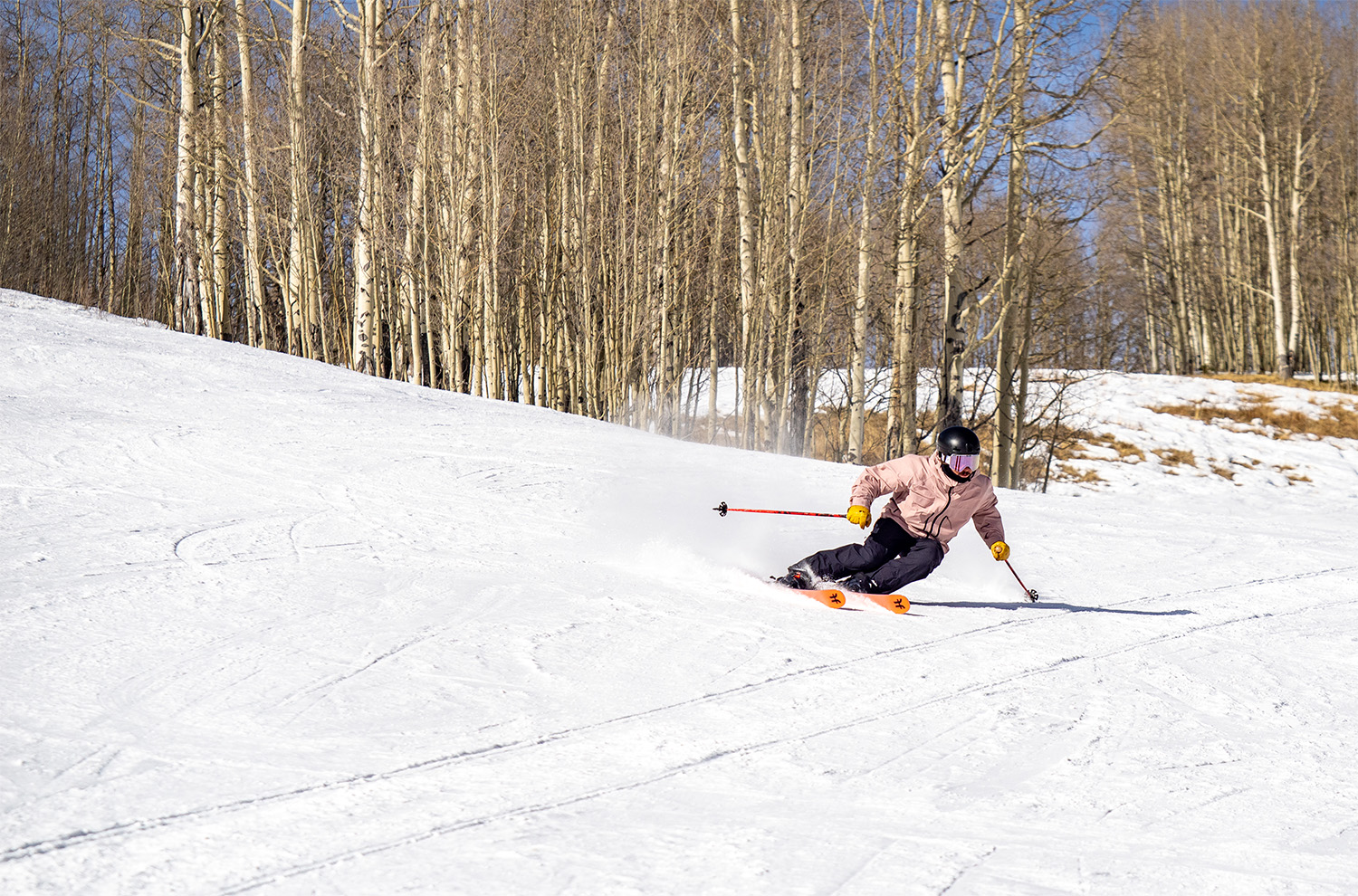
Jonathan Ellsworth (5’10”, ~185 lbs / 178 cm, 84 kg): I want to jump in here to underscore the fact that the looks of this bright-pink ski are pretty deceiving. First of all, I love the look of it, but the shape, the name, and the paint job of the Dancer 79 had me thinking that this might really become my go-to ski when I wanted something that would offer great edge hold and have a shape that worked well in moguls. But while the great-looking topsheets will have you (understandably) thinking “fun carver!” … the Dancer 79 has a flex pattern that has more in common with all those serious carvers whose power and edge hold we are often raving about (while also lamenting their very-Euro-looking topsheets).
But especially when we’ve been dealing with very firm and fast groomers, and I am really, truly, wanting to bend the Dancer 79 to get it going hard across the fall line to control my speed, I’m not always able to do so.
Now, most of the blame here should go toward me, the pilot (a braver and / or stronger pilot than me would be willing to hammer harder on that downhill ski and trust that the ski will bite) … but my main point here is that you should understand that this lightweight ski does want some speed and force to get it to bend to your will.
Luke Koppa: When the groomers are both very firm and bumpy, the Dancer 79 starts to become less ideal. Like many similarly light skis (~1690 g per ski @ 178 cm), the Dancer 79 does not feel particularly planted or ‘glued to the snow.’ If you’re carving it hard across icy snow and then hit a big bump, the Dancer 79 will likely catch some airtime. There are many (much heavier) skis that do a better job of dealing with these scenarios in a calmer fashion. But once you get used to the Dancer 79, this can become a benefit…
Jonathan Ellsworth: The only thing I want to reiterate here is that, on more forgiving, less rock-hard groomers, the Dancer 79 is an absolute blast to carve. But yes, as Luke is saying, the firmer the conditions, the heavier I would like my skis to be.
Energy / Rebound
Luke Koppa: When pushed hard, the Dancer 79 can produce tons of energy. On firm to slightly soft / thawed groomers, it’s rare that I don’t catch at least a tiny bit of air coming out of each apex while carving the Dancer 79.
Again, this is not a soft ski, so it does take some force to bend and release that energy. But, especially compared to many of its similarly stiff but heavier competition, the Dancer 79 stands out for being a notably lively carving ski. And I think it’ll be particularly compelling for folks who want an energetic carving ski that does not feel limited to ultra-tight turns.
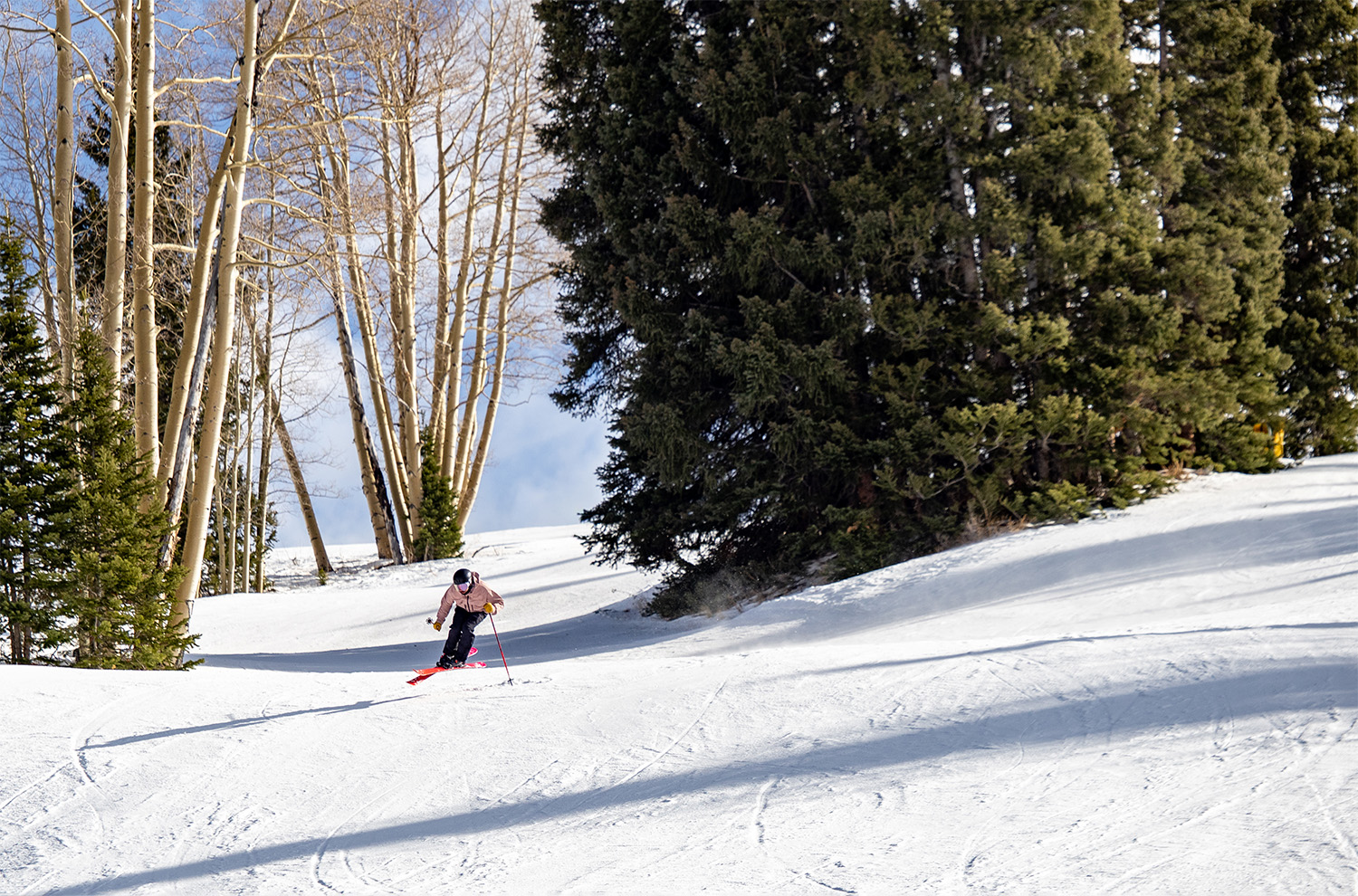
Jonathan Ellsworth: Yep, this is a ski that I think a lot of strong former racers will get on and be able to appreciate. Because it won’t feel just like a watered-down version of what they used to race and train on (the Dancer 79 is a lot lighter and more energetic), but there is still enough muscle here for them to lay down some very powerful turns.
Suspension
Luke Koppa: And now we get to talk about tradeoffs. The Dancer 79’s quick and poppy ride comes at a cost — this isn’t a very damp / planted / smooth ski.
Earlier, I commended Faction for their positioning of the Dancer 79 as a piste-specific ski. However, they also said its construction lends “class-leading stability at speed.” That’s just not true. So if that’s what you want, I’d point you toward skis that weigh at least 300 grams more per ski, and there are many such skis out there.
Compared to, say, the Head Supershape e-Rally, Volkl Peregrine 82, Nordica Steadfast 85, or Stöckli Montero AR, the Dancer 79 does not absorb vibrations and impacts as well, particularly when carving at high speeds.
Now, I personally don’t mind this, because I think the Dancer 79’s lower weight is a big part of what makes it so exciting to ski. But I’m focusing on this to reiterate that, in general, lighter skis are (still) typically less calm, smooth, and predictable when skiing hard — especially on uneven surfaces.
On fresh corduroy, slushy snow, or groomers that are relatively consistent in texture, I still really like the Dancer 79’s combination of energy and suspension…
Jonathan Ellsworth: Me too!
Luke Koppa: … but if you’re looking for a carving ski that will be great at making Super-G turns through variable conditions, this is not what I’d recommend.
Jonathan Ellsworth: Same.
Variable Conditions
Luke Koppa: The Dancer 79’s lighter build doesn’t make it a particularly calm or stable ski within its class, but it does well for what it is.
This ski does not excel at making large turns through these conditions. But if you adopt a more dynamic style, with more turns and fewer straightlines, it can still be plenty of fun.
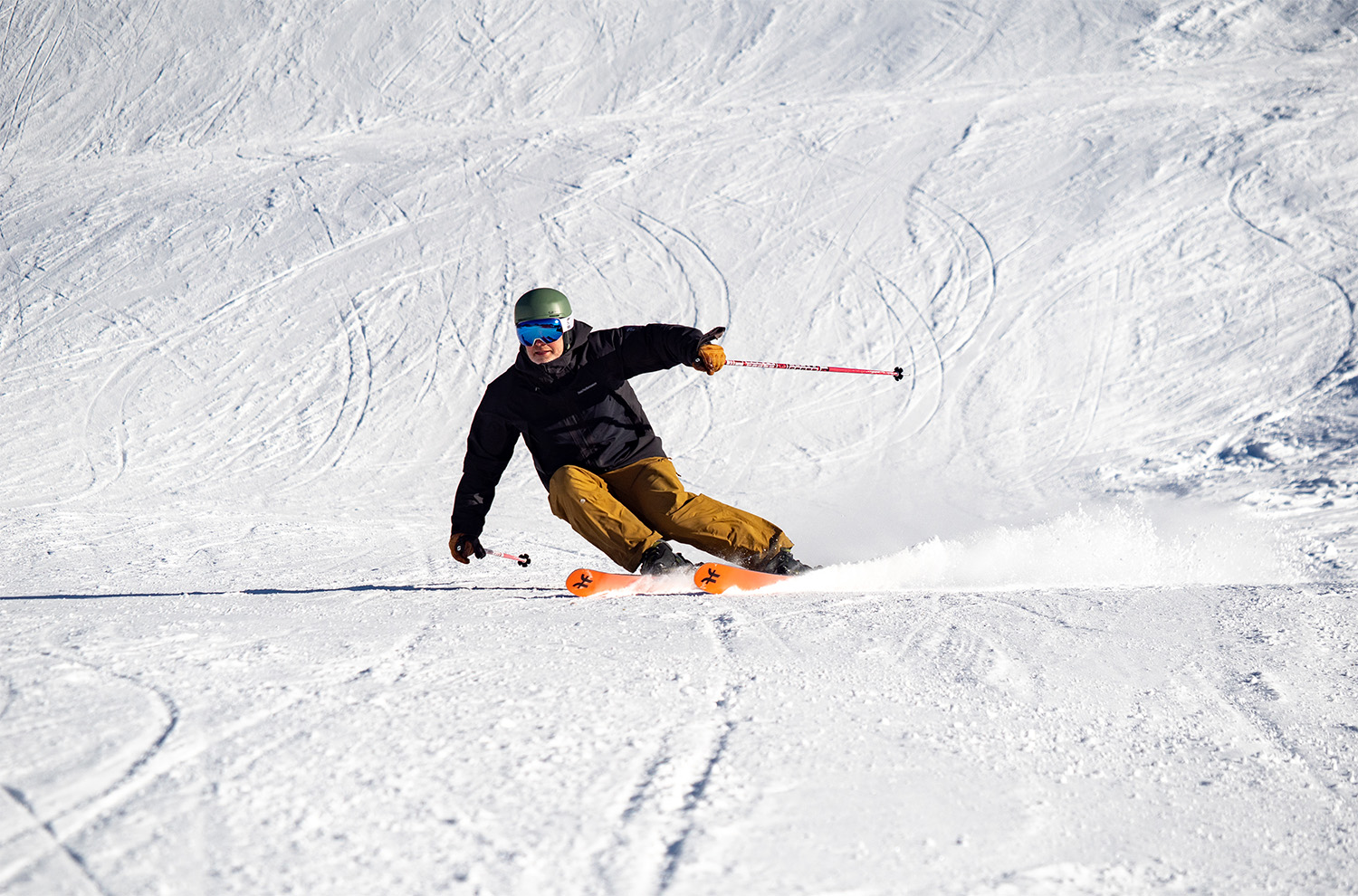
Given its weight, I didn’t expect the Dancer 79 to feel like a steamroller when the groomers are variable. And I was right. But, thankfully, the Dancer 79’s shape, flex pattern, and rocker profile all add up to a ski that doesn’t feel particularly hooky when the snow is unpredictable.
So, if you’re willing to absorb big impacts (or use them as takeoffs…), the Dancer 79 can still be a very capable tool on roughed-up slopes. But it won’t make you forget whatever you just ran over or launched off.
Off-Piste Performance?
Luke Koppa: As we touched on above, some skis that are comparable to the Dancer 79 get positioned as true all-mountain options. Faction’s description of this ski bucks that trend — they call it a pure piste ski. But for those of you who are still curious about its off-piste performance, here you go:
After many mogul laps and adventures through the trees, I mostly agree with Faction: the Dancer 79 definitely excels on groomed slopes. When taking it into off-piste runs that are firm and/or contain big moguls to navigate, the Dancer 79 can feel like a handful. It’s not a loose / surfy ski, and its stout tail is quick to punish a backseat turn.
That said, when the snow is soft and/or you’re not dealing with giant moguls, the Dancer 79 can be fun. It demands an attentive pilot who doesn’t hang out in the backseat, but if you follow those instructions, it can make for a precise and agile off-piste option. I think its low swing weight is a big part of this; this ski can feel overly precise and/or punishing at times, but the fact that it doesn’t take much physical effort to manipulate makes it easier to recover vs. similarly stiff and precise skis that are much heavier.
For me, I’d view the Dancer 79 as a ski that I’ll use on piste at least ~85% of the time. But if the snow is soft and/or there are nicely spaced bump lines next to the groomers, I wouldn’t hesitate to bash a few moguls throughout the day.
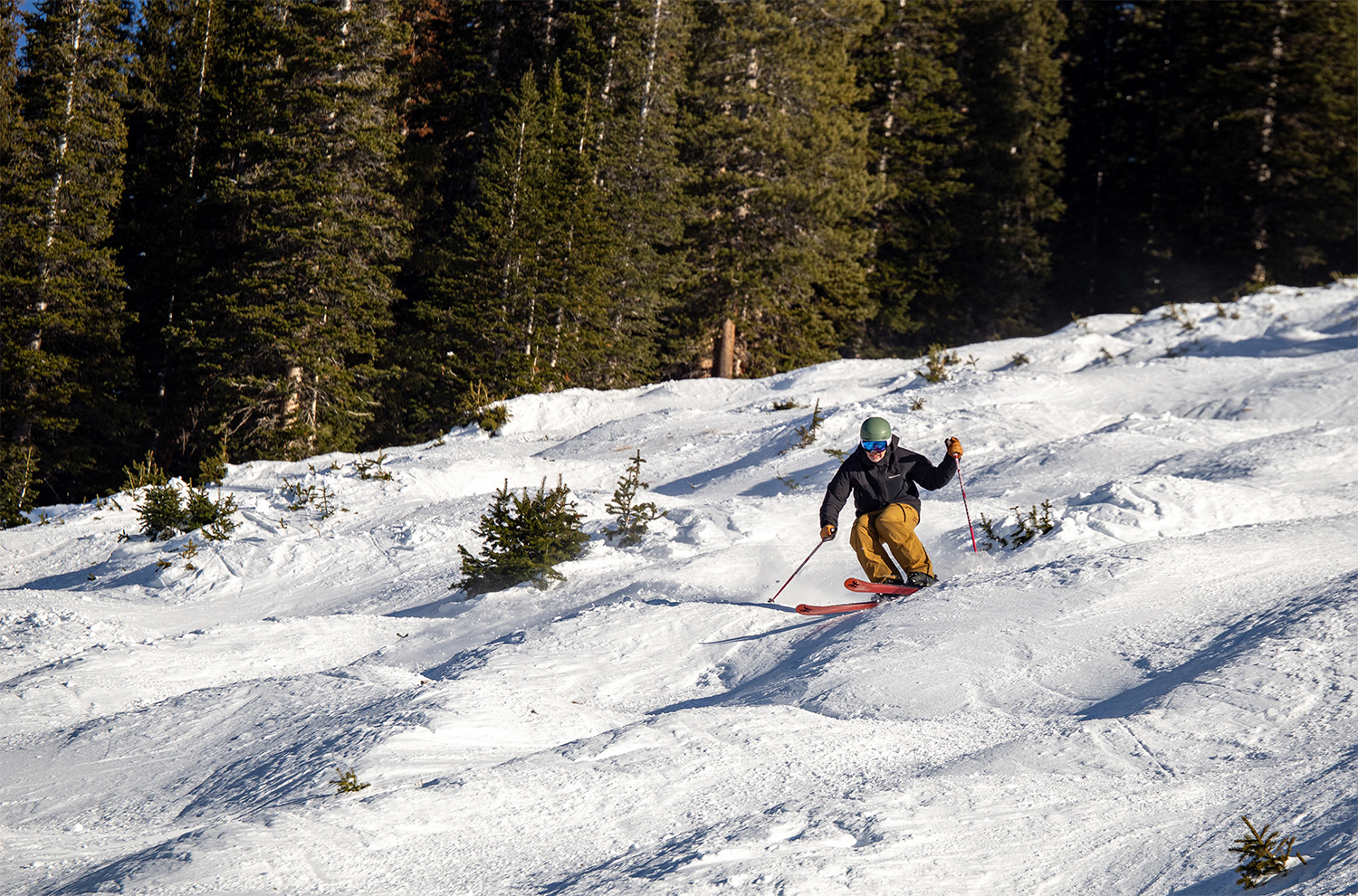
Jonathan Ellsworth: First we praise Faction for not overselling this ski as a narrower ‘all-mountain’ ski … and here we are … talking about its off-piste performance. Faction, you’ve done the right and noble thing here. I applaud you. But still (sigh), if you named a number of the best ~80mm-wide carvers and told me I had to go ski moguls on them, well, I wouldn’t be thrilled to do that on any of them, but I likely would end up choosing the Dancer 79 — especially if we were skiing at a place that has more uniform mogul lines (e.g., Copper Mountain), or off-piste runs that aren’t littered with moguls (e.g., Deer Valley). Again, the shape of the Dancer 79 looks like it would be pretty great in moguls, but its flex pattern is what will remind you that it was actually built to be a powerful carver on groomers.
Mount Points
Luke Koppa: We’ve spent most of our time on the Dancer 79 with it mounted on the middle of its three recommended mount points (the “Progressive” line, which is about -8.5 cm from true center). And, for people who think this is a good ski for them, I think that’s where most of you should mount it.
On the more centered “Newschool” line (-7 cm from center), the Dancer 79 feels a tad quicker in terms of swing weight, but I had a slightly harder time bending the ski on very firm snow, and its tail felt a bit more punishing off piste.
On the “Classic” line, the Dancer 79 was a little bit easier to bend, but it didn’t feel quite as intuitive overall, with the tail being a bit more prone to releasing when driving the front of the ski very hard.
So, for the vast majority of folks considering this ski, I’d start by mounting it on the middle “Progressive” line.
Who’s It For?
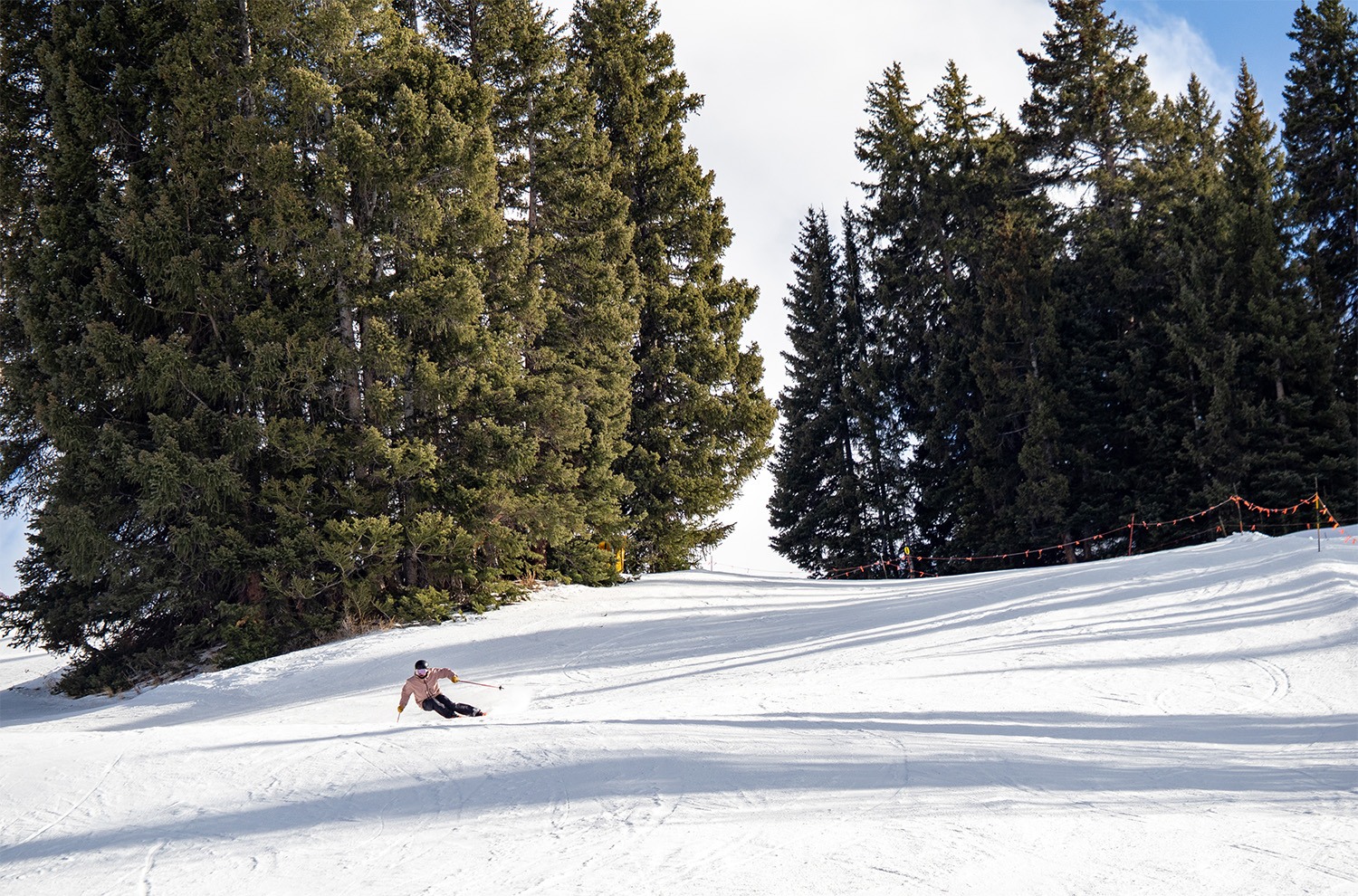
Advanced and expert skiers who want a piste ski that’s lively and dynamic, but who still want to make a fairly wide range of turn shapes.
The Dancer 79 is not an ultra-tight-turning carver. And it’s definitely not a super planted cruiser that’s great for making big turns in variable conditions.
But, on fairly consistent conditions, the Dancer 79 offers tons of energy as well as edge hold. It does a good job of catering to the types of turns many of us like to make while carving groomers. Skiers with good technique can bend it into pretty tight arcs, but it doesn’t feel super skittish when you opt to open up your turns, especially if you’re not dealing with really rough / unpredictable conditions. It’s very capable of slicing through super firm snow (especially when that snow is smooth), but it’s not so narrow and precise that it gets sketchy as soon as there’s more than a centimeter or two of loose snow atop the firm base.
Bottom Line
We love the fact that a company like Faction — that has such strong roots in freeride and freeskiing — is putting out a serious, dedicated carver that can legitimately be compared to some of the best sub-80mm-wide dedicated carvers out there. And we think the Dancer 79 is a very good embodiment of what a dedicated carver from Faction ought to look like and perform like.
The Dancer 79 feels like a natural extension of the Dancer series, and it stands out for being a notably precise, energetic, and agile ski.
It’s a very dynamic and lively carver that can compete with the edge hold of its more traditional-looking competition while still feeling predictable and exciting in many on-piste scenarios.
Our Deep Dives, Winter Buyer’s Guide, & Flash Reviews
BLISTER+ members and those who purchase our Digital Access Pass can check out the Deep Dive comparisons linked below, where we compare a given ski, bike, etc. to a whole bunch of other comparable products in its class. Don’t have access? Get our Digital Access Pass to read all of our Deep Dive comparisons, as well as our Flash Reviews, where we provide our initial impressions as soon as we start testing gear.
Or, even better, become a BLISTER+ member to get that + the best worldwide Outdoor Injury Insurance, exclusive deals and discounts on skis, personalized gear recommendations from us, access to our annual Winter Buyer’s Guide, and much more.
On that note, you can also get our thoughts on this ski and 350+ others in our annual Blister Winter Buyer’s Guide. BLISTER+ members already have access, or you can purchase the guide on its own to get the the print copy + digital version at no extra cost, or the digital-only edition.
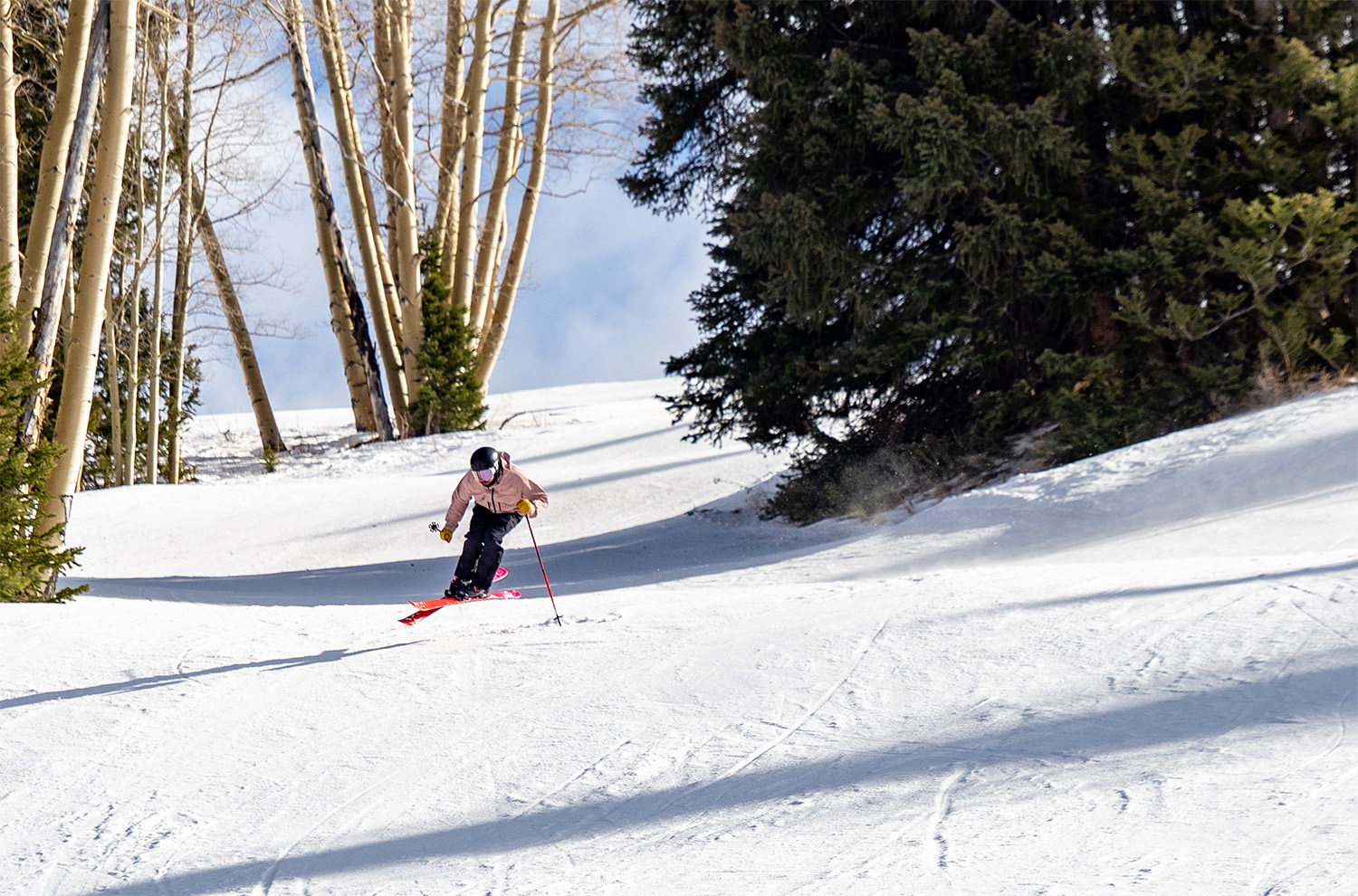
Deep Dive: Faction Dancer 79
We compare the Dancer 79 to the Faction Dancer 2, Folsom Spar 78, Parlor Warbird, Volkl Peregrine 82, Black Crows Octo, Head Supershape e-Rally, Majesty HNX Ti, Renoun Atlas 80, Volkl Peregrine 80, K2 Disruption MTi, Head Supershape e-Titan, Rossignol Forza 70° Ti, Fischer The Curv GT 85, Kastle MX84, Stockli Montero AR, Nordica Steadfast 85 DC, Rossignol Arcade 88, & more.
Blister’s Flash Reviews and Deep Dives are accessible to those who purchase one of our paid subscriptions
To get our comprehensive Deep Dives and our initial, unfiltered reports on new gear, become a member and receive many other services, deals, and discounts.
If you’re already an active member, please log in.
(If you’re already logged in and a member in good standing and seeing this message in error, please refresh this page in your browser.)
2025-2026 Blister Digital Winter Buyer’s Guide
350+ skis, 70+ boots, and 280+ pages of honest, accurate product reviews and comparisons. Check it all out here.
If you’ve already purchased the guide, Digital Access Pass, or BLISTER+ membership and are seeing this message, please log in and then refresh this page.
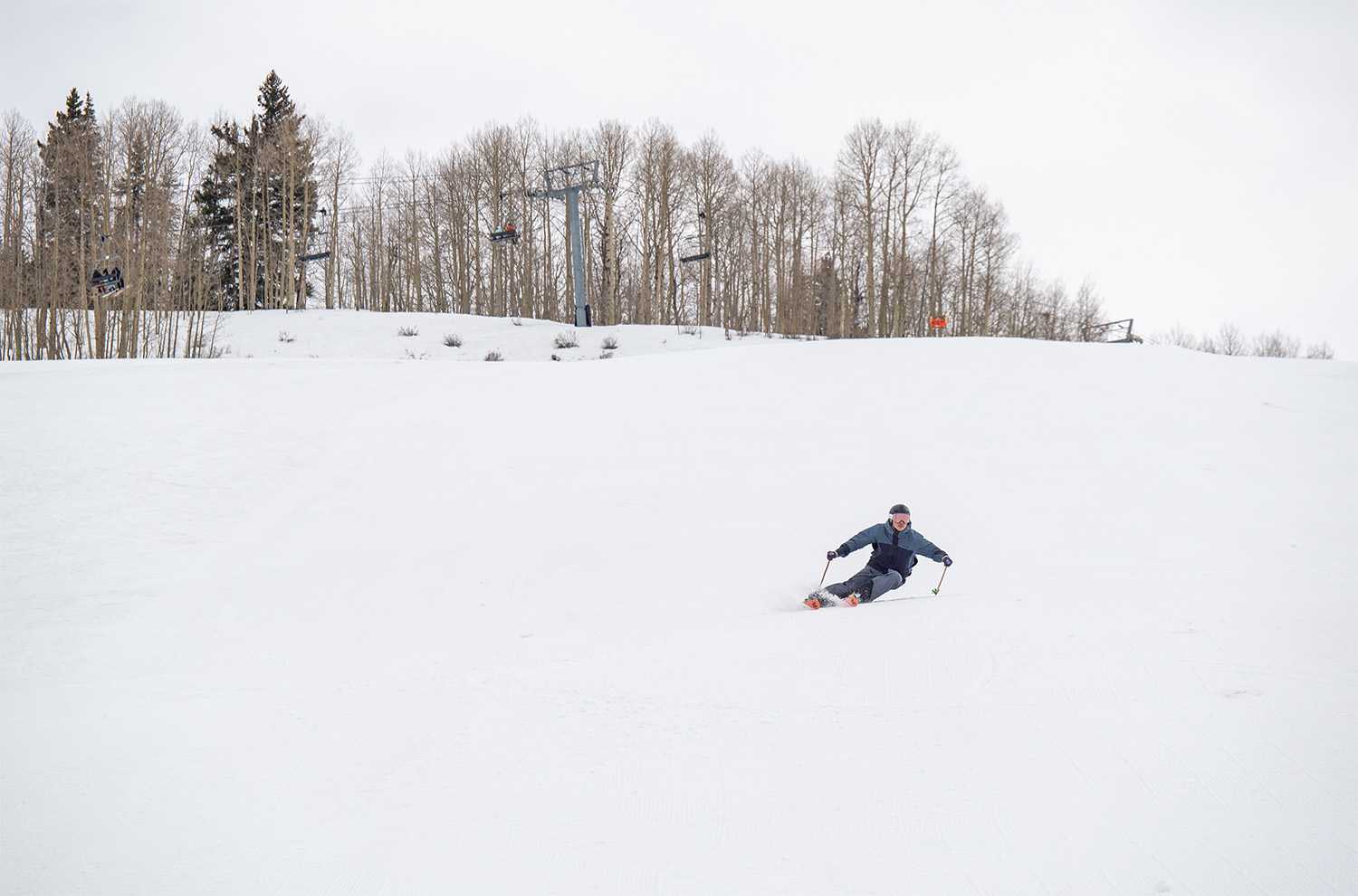
Flash Review: 25/26 Faction Dancer 79
Faction is expanding their Dancer collection of directional, metal-laminate all-mountain skis, and we’ve started getting time on the newest and narrowest ski, the Dancer 79.
Blister’s Flash Reviews and Deep Dives are accessible to those who purchase one of our paid subscriptions
To get our comprehensive Deep Dives and our initial, unfiltered reports on new gear, become a member and receive many other services, deals, and discounts.
If you’re already an active member, please log in.
(If you’re already logged in and a member in good standing and seeing this message in error, please refresh this page in your browser.)
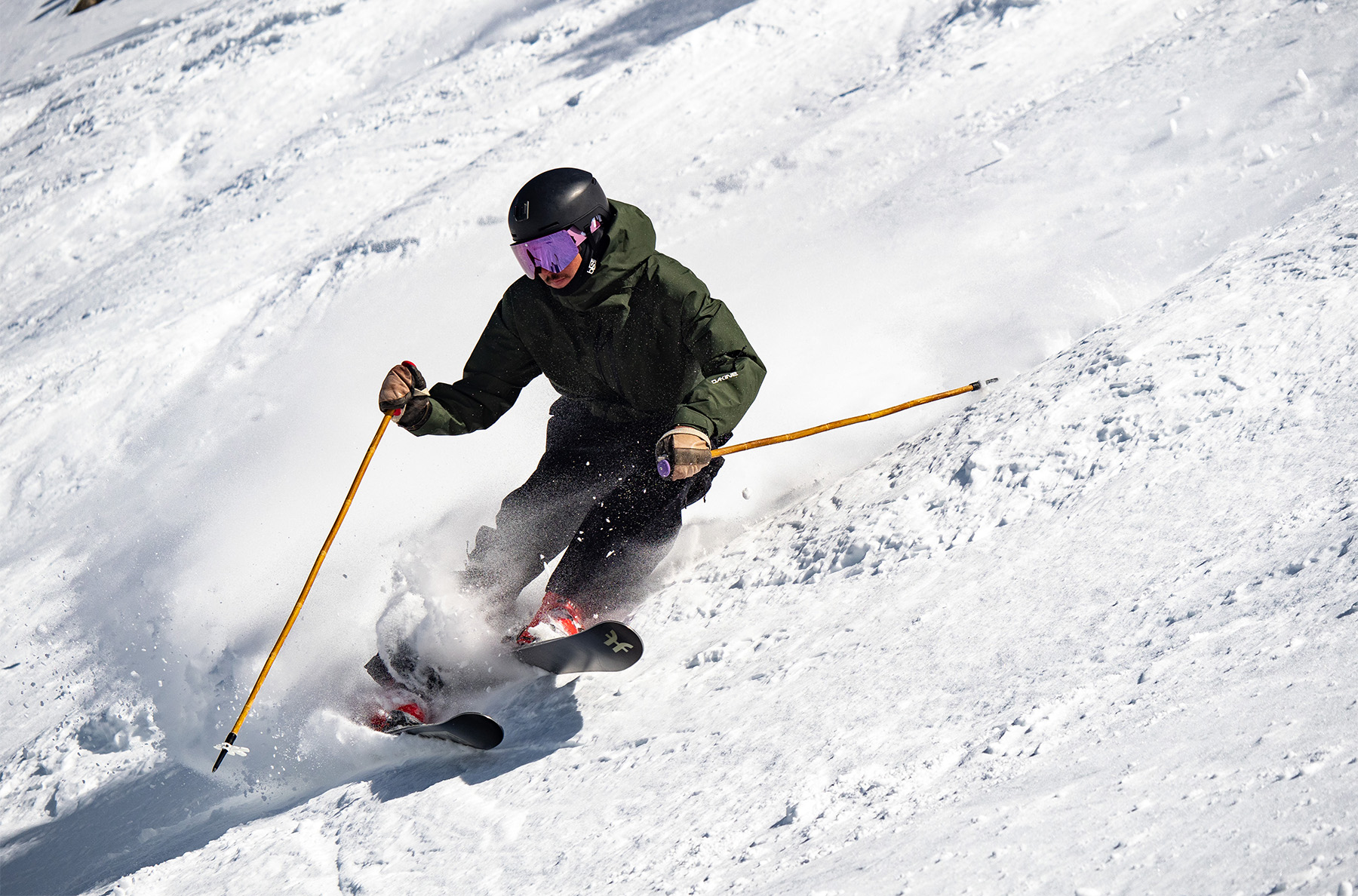
2022-2023 Faction Dancer 2
The Faction Dancer 2 isn’t a super easy-going, “made-for-everyone” ski, but it is a unique ski that could make certain people extremely excited to be on the mountain. Check out our Full Review & Deep Dive comparisons to learn more.
It’s a shame you don’t also compare to the Declivity 82ti also, as seems a similar concept.
I have this ski in 184 cm length. I ride it on the “traditional” line and mostly use it with Raptor 140s. I’m 5’10” and 220#, and used to race. Mine are the 2026 model with white topsheets and pink sidewalls.
I agree with everything here, especially about its power in the carve, edge hold, and skittishness at speed. My other piste skis are Heads (eSpeed Pro plus FIS SL+GS+SG) and the difference in stability and suspension is night and day. Of course the Heads are also _much_ heavier. I also have the Dancer2 and as Luke says the family resemblance is strong.
I’m a little bit more positive on them in bumps than the reviewers. As they say they’re extremely nimble, and they have plenty of stiffness for things like line-to-line “scoots”. I find that they work best with a “playful but directional” approach. You absolutely can’t get back on those tails under any circumstances, except maybe when intentionally levering off the tail to hop over a trough, and then only if you’re able to get your feet back under you before landing.
I’m interested, how would you compare it to the dancer2 ?
Glad you guys are giving these skis a romp. Given my wifes experiencer skiing the dictator/dancer series, (all 178’s) and my own experience, I think you are testing a length suited for 5’4-8″ 120-145lb skiers, and your taller 180lb mass (Jonathon) is likely better suited for the longest size. Maybe the ’79 in 178 is all you can get your hands on but I would encourage you to test the Dancer1 in the 186, of course I have been encouraging you to test these for years…… Detuning the tips and tails to precise measured increments, can really free up the tails to be more friendly in mogul terrain,,, and that will make the tails less punishing on the 1’s,,, mind you at the expense of lowering high end speed stability and grip, by that meaning 60+. I have also only tested the 79’s in the 178, but felt I was crushing them with my weight and levarage, (6’4″ 179lbs). if you get on the 1’s in a “proper” size, I believe you will find out why they are named “Dancer’s”. Loooking forward to testing the 79’s in the 184 sometime soon.